Most Manila itineraries try to do everything. Three days, a Tagaytay day trip, Corregidor, Intramuros and Binondo and BGC and Makati and a sunset cruise and Quiapo and Cubao and “if you have time, swing by Pasig River.” You will not have time. You will be exhausted by Day 2 and skip half of Day 3. The sad part is the parts you skip are usually the parts that would have made the trip.
Three days in Manila is enough, but only if you stop trying to do everything. The actual triage that works is one day for old Manila, one day for modern Manila, and one day either out of the city for a proper day trip or back into the parts of Manila you’ll regret missing. That’s it. Anything fancier and you’re spending more time in Grab queues than in places.
What follows is the schedule I’d give a friend landing at NAIA Friday night with a flight out Monday morning. Specific times, specific Grab fares, specific dishes, and the bookings you actually need to make in advance. Skip the parts that don’t fit your trip. The point of an itinerary is to know what to skip without panicking.
This guide may include affiliate links. If you book through them I earn a small commission at no extra cost to you, and it keeps the lights on around here. The picks are the same either way.
In This Article
- Before You Plan
- Where you should be based
- Jet lag and the first night
- What to skip
- Day 1: History and Old Manila
- 7am to 8am: Wake up, breakfast, and clear NAIA traffic head start
- 8am to 12pm: Intramuros walking morning
- 12pm to 1pm: Lunch in or near Intramuros
- 1pm to 4pm: Rizal Park and the National Museum complex
- 4pm to 6pm: Back to hotel, shower, decompress
- 6pm to 9pm: Binondo dinner crawl
- 9pm onward: Make your way back, sleep
- If it rains on Day 1
- What NOT to add to Day 1
- Day 2: Modern Manila
- How to choose between Makati and BGC for the day
- 8am to 10am: Slow start, decent breakfast
- 10am to 1pm: Greenbelt or Bonifacio High Street walking
- 1pm to 2:30pm: Lunch
- 2:30pm to 4:30pm: Hop or rest
- 4:30pm to 6:30pm: Manila Bay sunset on Roxas Boulevard
- 7:30pm onwards: Poblacion crawl
- If it rains on Day 2
- What NOT to add to Day 2
- Day 3: Day Trip or Manila Deep-Dive
- Option A: Tagaytay (Taal volcano viewpoints + Bulalo)
- Option B: Pampanga Food Trip
- Option C: Manila Deep-Dive (Quiapo + Cubao + sunset cruise)
- Which one I’d default to
- If it rains on Day 3
- Getting Around: Grab Fares You Should Expect
- Restaurant Pre-Bookings to Make Right Now
- If You Have a 4th or 5th Day
- If You Have Less Than 3 Days
- What Three Days Won’t Cover
- Itinerary Mistakes to Avoid
- FAQ
- Is three days enough for Manila?
- Should I base in Makati or BGC?
- Is Tagaytay or Pampanga the better day trip?
- How much should I budget for three days in Manila?
- Is Manila safe at night?
- Do I need to learn Tagalog?
- Can I drink the tap water?
- What’s the best time of year for a 3-day trip?
- The Last Word
Before You Plan
A few things to settle before you draft a minute-by-minute schedule. Most three-day itineraries online ignore them and the trip suffers for it.
Where you should be based
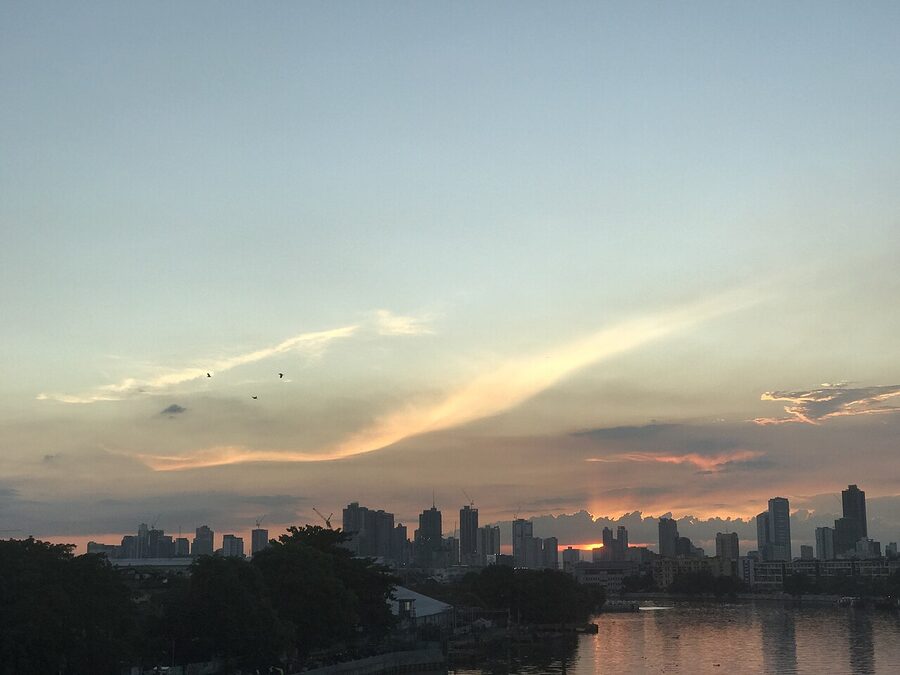
This single decision saves or wastes more time than any other. If your top priority is food and bars, base in Makati (specifically Salcedo Village, Legazpi Village, or the Greenbelt area for cleaner walking and easier Grabs; Poblacion if you want to roll out of bed straight into the bar district). If your priority is shopping, walkable streets, and easier flights out of NAIA Terminal 3, base in BGC. If you came for the history and want short walks to Intramuros, base in Old Manila near Roxas Boulevard or in Intramuros itself. If you have a 6am flight and just need a bed, base in Pasay near NAIA.
The thing nobody tells you: Makati and BGC are 25 minutes apart on a quiet Sunday morning and 90 minutes apart on a Friday at 5:30pm. Picking the right one depends on which day you arrive and which day you leave. I cover the full breakdown in where to stay in Manila, with neighbourhood-by-neighbourhood takes worth reading.
Jet lag and the first night
Most flights to Manila land in the evening. Don’t try to “get a head start” by going out the night you arrive, especially if you’ve come from the US or Europe. NAIA immigration can take 90 minutes if you arrive on a wide-body. By the time you’re in Grab and crawling through traffic to your hotel, it’s 11pm. Eat something light at the hotel or the nearest 7-Eleven. Day 1 starts in the morning.
If you land in the morning instead (common from Tokyo, Singapore, or Hong Kong), you can absolutely use that afternoon. Drop bags, shower, and head out for a Binondo lunch crawl. That technically gives you three and a half days, which is the ideal. Most people don’t get it though, so I’m writing this assuming you don’t either.
What to skip
You will see lists telling you to do all of: Intramuros, Rizal Park, National Museum complex, Binondo, Quiapo, Manila Ocean Park, Mall of Asia, Greenbelt, BGC, Poblacion, Makati Cinema Square, Cubao Expo, plus a Tagaytay day trip and a Corregidor day trip. In three days. That’s a list someone made by Googling “things to do in Manila” and not stress-testing the schedule.
Skip Manila Ocean Park unless you’ve got kids and a rainy afternoon (it’s mid-tier compared to Singapore or Hong Kong). Skip Mall of Asia unless you’re killing pre-flight time at NAIA (it’s a mall; you have malls at home). Skip Corregidor on a three-day trip; it’s a full day round trip including the ferry and you’ll lose Day 3 to a 7am wake-up and a sunburn. Skip the dinner cruise unless your mum’s birthday is the reason you’re in Manila. The food on those is, charitably, fine.
What you should not skip: Intramuros, a Binondo meal, a Manila Bay sunset, and at least one proper Filipino restaurant where the menu is in Tagalog. Build the rest around those.
Day 1: History and Old Manila

Day 1 is for everything that gets cliché-mentioned in headlines about Manila and is actually worth the cliché. Spanish walls. The cathedral that survived being bombed three times. Rizal’s prison cell. A Binondo dinner crawl that will reset what you think Filipino food is.
7am to 8am: Wake up, breakfast, and clear NAIA traffic head start
You’re either jet-lagged awake at 5:30am or barely conscious at 7. Either way, get up. The whole reason this day starts early is to be inside Intramuros before the Manila heat ramps up at 11am and before the Friday school groups arrive at 10. Eat at your hotel or whatever’s open downstairs. Tapsilog (cured beef, garlic rice, fried egg) at any decent tapsihan is the move; ₱120 to ₱180 (~$2 to $3) and you’ll be set until lunch.
8am to 12pm: Intramuros walking morning
Grab from Makati or BGC to Intramuros runs ₱180 to ₱350 depending on traffic and surge. From Pasay near NAIA, ₱200 to ₱300. From Old Manila, you can walk if you’re staying near Roxas Boulevard. Have the driver drop you at Plaza Roma (the square in front of Manila Cathedral) so the walk flows logically.
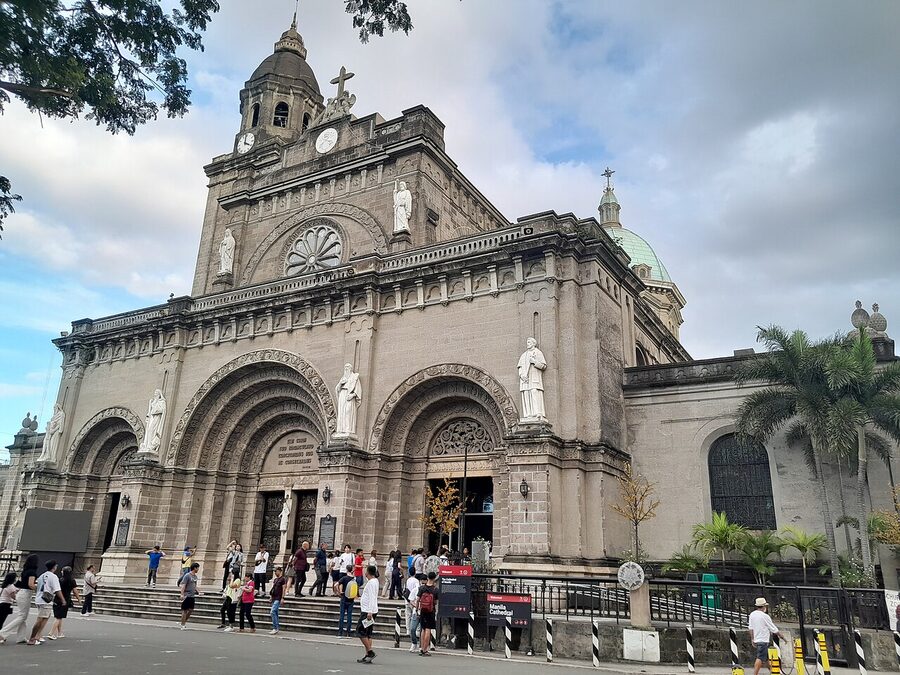
Walk Plaza Roma → Manila Cathedral → San Agustin Church (UNESCO, ₱200 entry to the museum) → Casa Manila → Fort Santiago (₱75 entry, opens 8am) → Rizal Shrine inside the fort. That’s the route. It takes a focused walker about three hours; it takes a curious one closer to four. Don’t rush Fort Santiago; the Rizal exhibits are the point of the whole quarter.
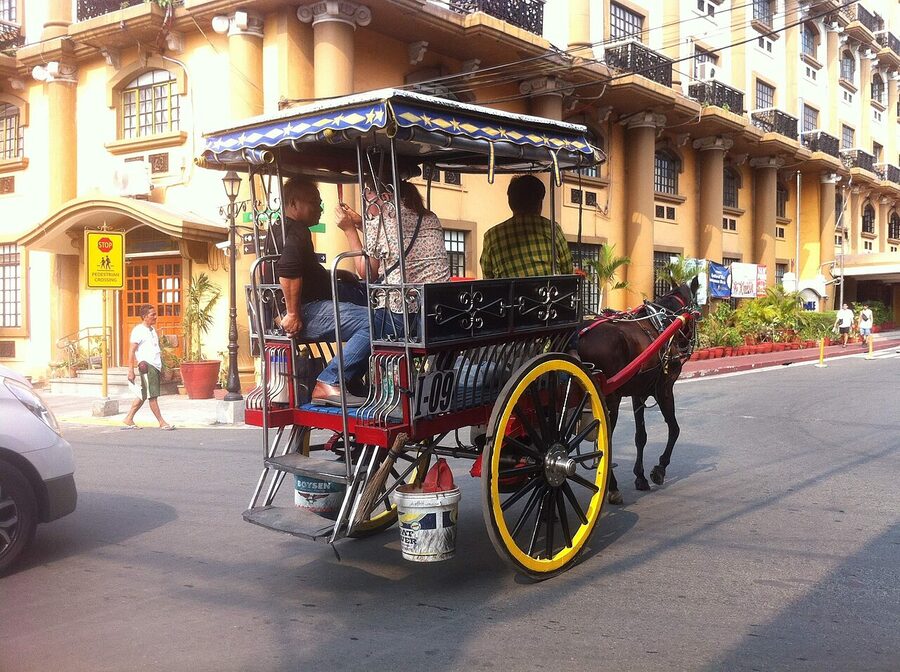
The walk from Manila Cathedral to Fort Santiago is about 800m and entirely on cobblestones and uneven pavement. Wear actual shoes, not slip-ons. Kalesa (the horse-drawn carriages) drivers will quote ₱500 for a “tour”. Fair price is around ₱350 for 30 minutes if you want the experience. If you don’t, walk; Intramuros is small enough that you’ll finish faster on foot than waiting for a kalesa to plod through tourist groups. The full walking guide with stop-by-stop detail is at my Intramuros walking guide.
12pm to 1pm: Lunch in or near Intramuros
Two solid options. Barbara’s Heritage Restaurant right by San Agustin does Filipino classics in a colonial-era house; lunch buffet runs around ₱700 (~$12) per person and is touristy but the cooking is straightforward and uses real ingredients. Ilustrado on General Luna Street is quieter, slightly more refined, and the kare-kare (oxtail in peanut sauce) is genuinely good. If you want to skip Intramuros lunch entirely and save your appetite for Binondo, grab a quick siopao at a local stall and push through.
1pm to 4pm: Rizal Park and the National Museum complex
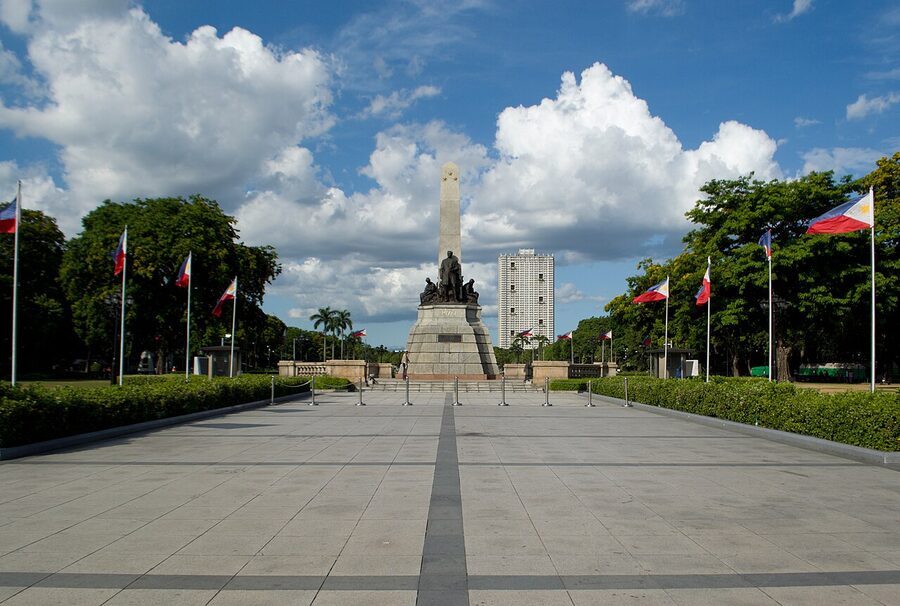
Walk from Fort Santiago south to Rizal Park (about 15 minutes, crossing Padre Burgos). The park itself you can do in 20 minutes, see the Rizal Monument, the relief map of the Philippines, the Chinese and Japanese gardens if you’ve got energy left. The actual reason you’re here is the museums on the north side of the park.
The National Museum complex is three buildings, National Museum of Fine Arts, National Museum of Anthropology, National Museum of Natural History, all free, all air-conditioned, all open Tuesday to Sunday until 5pm. If you only have time for one, the Fine Arts wing is the best (Juan Luna’s Spoliarium is here, and yes it deserves the hype). If your interest is the country’s history beyond the Spanish era, the Anthropology museum is the right one. Two hours in any of them is enough; three hours is enough for two of them.
If it’s brutally hot or raining, skip Rizal Park entirely and just go museum to museum. The point isn’t the park; the point is being inside a free national-level museum in a city that doesn’t always price culture this generously.
4pm to 6pm: Back to hotel, shower, decompress
Yes, this is in the schedule. You’ve been on your feet since 8am in Manila humidity. If you push straight from museums to dinner you’ll be miserable at dinner. Grab back to the hotel (₱150 to ₱300), nap or shower, and reset.
6pm to 9pm: Binondo dinner crawl

Binondo is the world’s oldest Chinatown (1594, predates pretty much every other Chinatown in the world) and at night it’s a different city. Grab to Ongpin Street at the corner of Quintin Paredes (₱150 to ₱350). Walk slowly. Eat at three places, not one.
The route I’d run: Wai Ying for hand-pulled noodles and siomai (steamed pork dumplings), order the beef brisket noodle soup and the hakaw (shrimp dumplings); around ₱500 (~$8.50) for two people. Walk to Lan Zhou La Mien for their xiao long bao and the spicy pulled noodles; another ₱400 to ₱600. Finish at Eng Bee Tin for hopia (mung-bean pastry, the ube version is the best) and tikoy (sticky rice cake) to take home; ₱200 will get you a serious haul.
Honourable mentions: Chuan Kee for fried rice and asado, Dong Bei for hand-shaved noodles, Master Hopia if Eng Bee Tin’s queue is too long. The full Binondo deep-dive with addresses is in where to eat in Manila.
Cash. Most Binondo joints don’t take cards. Bring ₱2,000 in small notes per person and you’re fine.
9pm onward: Make your way back, sleep
Grab from Binondo to Makati or BGC will be ₱200 to ₱400. Crash early. Day 2 you’ll thank yourself.
If it rains on Day 1
Intramuros walking is miserable in heavy rain (Spanish-era cobbles get slippery and there’s almost no covered walkway between sites). Move San Agustin Church and Casa Manila, both indoor, to your morning, save Fort Santiago for whichever afternoon clears, and stretch the museum visit into a 3-hour block instead of an hour. Move Binondo to whichever evening the rain’s lighter; the food survives but walking between stalls in monsoon rain is genuinely no fun.
What NOT to add to Day 1
People will tell you to “tack on” Quiapo Church or Manila Ocean Park or a Pasig River cruise. Don’t. Quiapo’s worth seeing but it deserves 90 minutes minimum, not 30 squeezed between Fort Santiago and Rizal Park. The river cruise is short, cheap, and underwhelming. Save Quiapo for Day 3 if you want it.
Day 2: Modern Manila
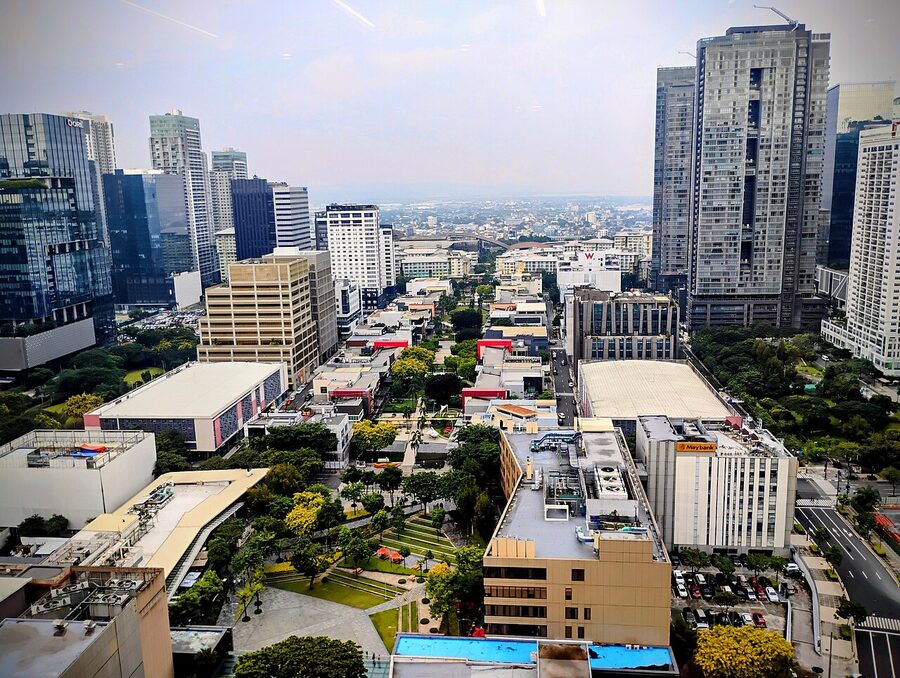
Day 2 is the day you stop pretending Manila is just colonial walls and Catholic guilt. Modern Manila is shopping malls bigger than entire neighbourhoods, glass towers, art walks under highways, and a bar district that genuinely competes with Bangkok and Singapore. The trick is picking either Makati or BGC as your home base for the day, not trying to do both. They’re 25 minutes apart with no traffic and 80 with traffic, and bouncing between them eats four hours you don’t have.
How to choose between Makati and BGC for the day
If you’re staying in Makati, anchor in Makati. If you’re staying in BGC, anchor in BGC. If you’re staying somewhere else and have no preference: Makati if you want food and bars (Poblacion is the engine of Manila nightlife); BGC if you want walkable streets, art, and easier dinner spots. You can do a quick afternoon hop to the other district and still make it back for dinner; the morning and evening should both be in one of them.
8am to 10am: Slow start, decent breakfast
You earned it. Day 1 was 13 hours on foot. Sleep in until 9 if you want. Breakfast options if you’re in Makati: Wildflour in Salcedo (around ₱500 to ₱700 for a full breakfast; their breakfast burrito is famous for a reason), Cafe Adriatico if you’re closer to Malate, or just whatever your hotel does. In BGC: Single Origin at Forbes Town for coffee that’s actually good, or Manam for a Filipino breakfast (their tapa is excellent).
10am to 1pm: Greenbelt or Bonifacio High Street walking
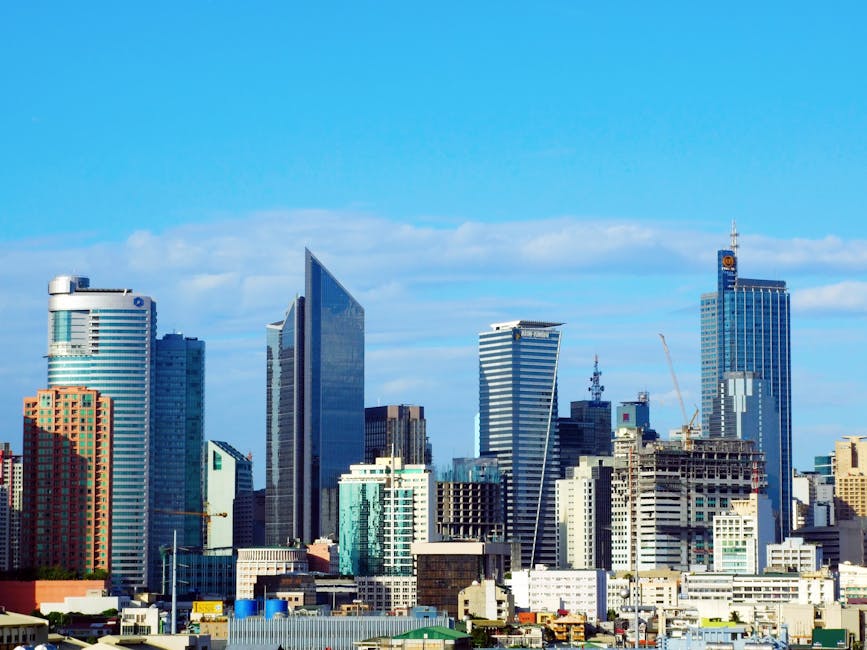
If you’re in Makati: walk Greenbelt 1 through 5 and Glorietta. The chapel in Greenbelt 5 is genuinely surprising, open-air with a koi pond, and a five-minute pause there is one of the few quiet moments you’ll find in Makati. Greenbelt 3 has the better restaurants; Greenbelt 5 has the higher-end shops. If you want a souvenir that isn’t tat, Kultura in Glorietta has decent local design (handwoven textiles, ceramics, food gifts).
If you’re in BGC: walk Bonifacio High Street (the open-air strip), then loop through The Mind Museum if you have kids or an interest in science (₱825/~$14 entry, two hours), and the BGC Art Walk. The Art Walk is the underground passage between High Street and Burgos Circle and it’s covered with rotating murals, it’s better than it sounds. If you’d rather not walk in the heat, The Mind Museum and Pinto Art Museum (technically in Antipolo, 45 minutes by Grab) are options for indoor culture.
1pm to 2:30pm: Lunch
This is your “proper Filipino restaurant” lunch. Two top picks at very different price points. Manam (Greenbelt or BGC) for Filipino comfort food at a reasonable price; their sinigang with watermelon and their crispy pork sisig are the orders. About ₱700 to ₱1,200 (~$12 to $20) per person. Locavore (Kapitolyo, Pasig, slightly out of the way but worth it) for modern Filipino with a louder soundtrack; their sisig rice and bagnet are why people fly in from Hong Kong for the weekend. Around ₱900 to ₱1,500 per person.
If you want the absolute fine-dining tier and you’ve planned ahead: Toyo Eatery (Karrivin Plaza, Makati) is in the World’s 50 Best top 100 and the tasting menu runs about ₱5,500 (~$95) per person. You must reserve 2 to 4 weeks ahead. Same for Hapag (Quezon City) and Helm (BGC). If you didn’t book by the time you’re reading this, those are off the table for this trip. Manam and Locavore take walk-ins or same-day bookings.

2:30pm to 4:30pm: Hop or rest
Two ways to play this. Option A: hop to whichever district you’re not based in (Makati to BGC or vice versa, ₱200 to ₱400 by Grab) for an hour or two of looking around. Option B: head back to your hotel for an actual nap. I’d vote Option B. You’ll need it for the evening.
4:30pm to 6:30pm: Manila Bay sunset on Roxas Boulevard

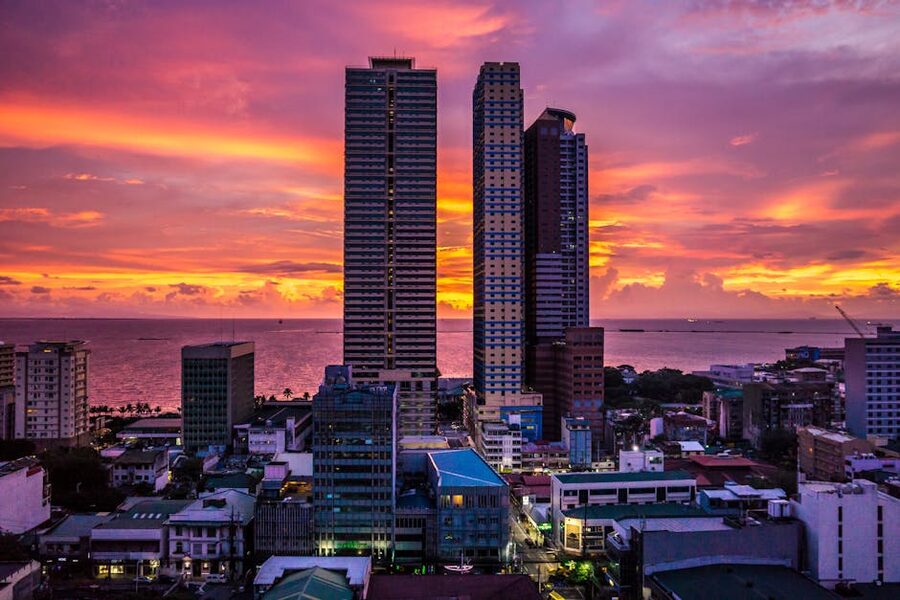
This is non-negotiable if you have one clear evening. Grab from Makati or BGC to Roxas Boulevard near the Manila Yacht Club or the U.S. Embassy stretch (₱150 to ₱300). Sunset varies through the year, March to May around 6:00 to 6:30pm, October to February around 5:30 to 6:00pm. Check the time the morning of and aim to be on the Boulevard 45 minutes before.
The classic move is to walk the Baywalk while the sky goes through its colour shift, then settle in at one of the ihaw-ihaw stalls along the strip near Aristocrat Restaurant. Ihaw-ihaw means “grill grill”, these are open-air BBQ joints serving skewers of liempo (pork belly), isaw (chicken intestine), chicken inasal (lemongrass-marinated chicken), and rice for not much money. ₱500 (~$8.50) per person eats well. Bring small bills and a willingness to share a plastic table. The full ihaw-ihaw primer is in my Manila street food guide.
If ihaw-ihaw is too rough for your evening, Aristocrat Restaurant (the original, opened 1936) on Roxas Boulevard is the sit-down version with their famous chicken barbecue and Java rice. Around ₱800 to ₱1,200 per person. Either way you’re back on the bay road and the sunset is the point.
7:30pm onwards: Poblacion crawl

Poblacion is a 15-block grid in Makati that turned from a slightly-rough neighbourhood into the country’s most interesting nightlife district in about a decade. It’s still slightly rough at the edges. That’s part of the appeal. Grab from Roxas Boulevard to Poblacion is ₱200 to ₱350.
The crawl: dinner at Manam (if you didn’t go for lunch) or Locavore if you don’t mind the trip to Kapitolyo. After dinner, walk. Start at The Curator (a coffee shop by day, hidden cocktail bar by night, back of a coffee shop, you’ll feel silly looking for the door, that’s correct) for one of the best cocktails in Asia. Move to Polilya for natural wine in a courtyard setting. End at Bank Bar (downstairs in the RCBC Plaza, drinks served from a converted bank vault, line at the door after 10pm). If you want a rooftop, OTO on Don Pedro has a great view and a serious cocktail list; not strictly Poblacion but a 5-minute walk.
Drinks run ₱400 to ₱700 (~$7 to $12) at the cocktail bars, less at the dive bars. Cap is on you, but two bars after dinner is plenty if Day 3 is a full day. Three bars and you’ll regret Day 3. The full bar guide is at Manila nightlife.
If it rains on Day 2
Skip the Manila Bay sunset (the rain ruins it and it’s exposed). Move dinner earlier and add a museum block in the afternoon instead, Ayala Museum in Makati is solid on Filipino pre-colonial history, around ₱650 entry, two hours is enough. Then go straight to Poblacion for an indoor evening; the bars don’t care about weather.
What NOT to add to Day 2
You’ll see lists telling you to do BGC, Makati, AND a side trip to Quezon City for Tomas Morato in one day. Don’t. Tomas Morato is mostly chain restaurants and karaoke bars; you can find better in Poblacion without losing 90 minutes to traffic. Skip Mall of Asia unless your flight schedule forces you near Pasay.
Day 3: Day Trip or Manila Deep-Dive
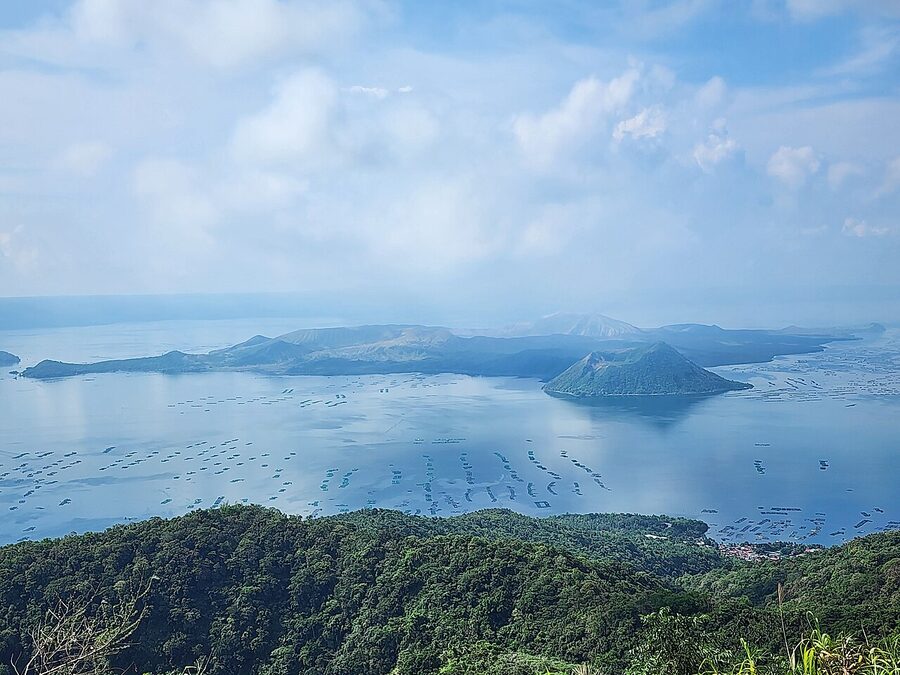
Day 3 is where most three-day Manila itineraries fall apart, because they push three completely incompatible options as if they’re all equal. They’re not. Below are the three real choices, the trade-offs, and which one I’d default to.
Option A: Tagaytay (Taal volcano viewpoints + Bulalo)
The default for most first-time visitors and for good reason. Tagaytay is a ridge town about two hours south of Manila (depending on EDSA traffic, leave by 7am to keep it under three) that sits 600m above Taal Lake, which contains Taal Volcano, which contains its own crater lake. Volcano in a lake in a volcano. The view is the postcard.
The plan: leave Manila 7am by private car (₱2,500 to ₱3,500 / ~$45 to $60 round trip with driver waiting; book through your hotel or via Klook or Viator). Arrive Tagaytay around 9am. Hit a viewpoint, Picnic Grove (₱75 entry, basic) or People’s Park in the Sky (₱50 entry, was once a Marcos-era guest house), for 30 minutes. Don’t try to do both; one is enough.
11am: brunch or early lunch at a café terrace with a Taal view. Bag o’ Beans on the highway is the classic; reasonable food, the view is the point. Sonya’s Garden is a 20-minute drive into Alfonso (Cavite) and is a working herb garden with a set lunch (around ₱750/~$13) that includes the country’s best edible flower salad. Antonio’s is the fine-dining tier, three Michelin-listed, lunch around ₱2,500/~$43 per person, book a week ahead.
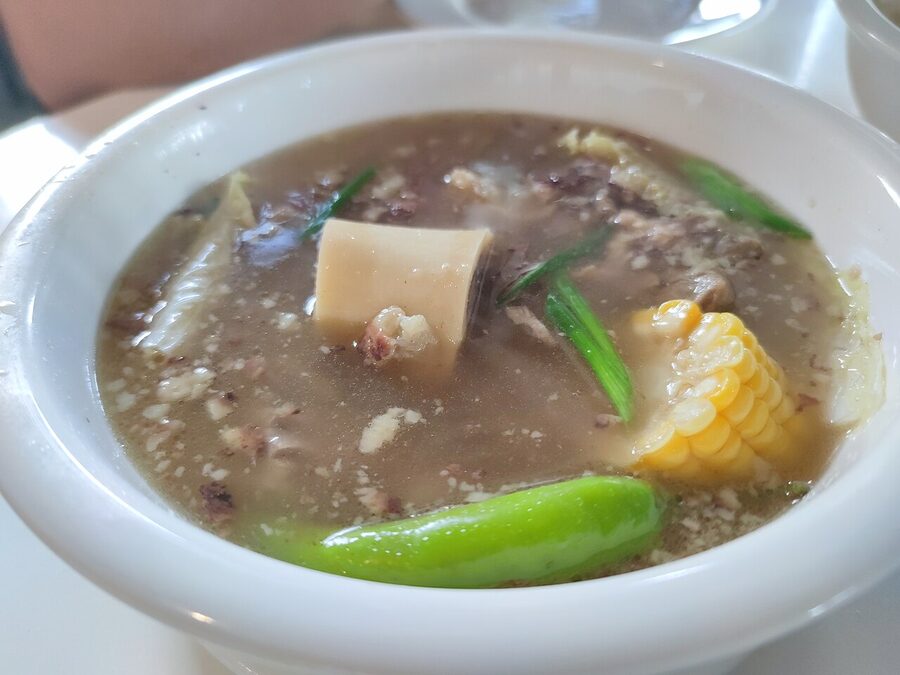
1pm: Bulalo lunch (or a second lunch). Tagaytay’s signature is bulalo, beef shank and bone marrow soup with corn, cabbage, and chili. Cold weather food in tropical Tagaytay air. Mahogany Market is the cheap version (₱200 to ₱350 per bowl, communal tables, no aircon, locals’ choice). Leslie’s and Diner’s are the sit-down versions with the classic Taal view (₱500 to ₱800 per bowl). Get the bowl shared between two people. Detail at my Tagaytay guide.
3pm: leave for Manila. You’ll be back by 6pm with traffic, 5pm without. Use the evening for something light, Manila Bay if you missed it on Day 2, a final Greenbelt walk, or a proper restaurant dinner where you actually sit down for two hours.
Option B: Pampanga Food Trip
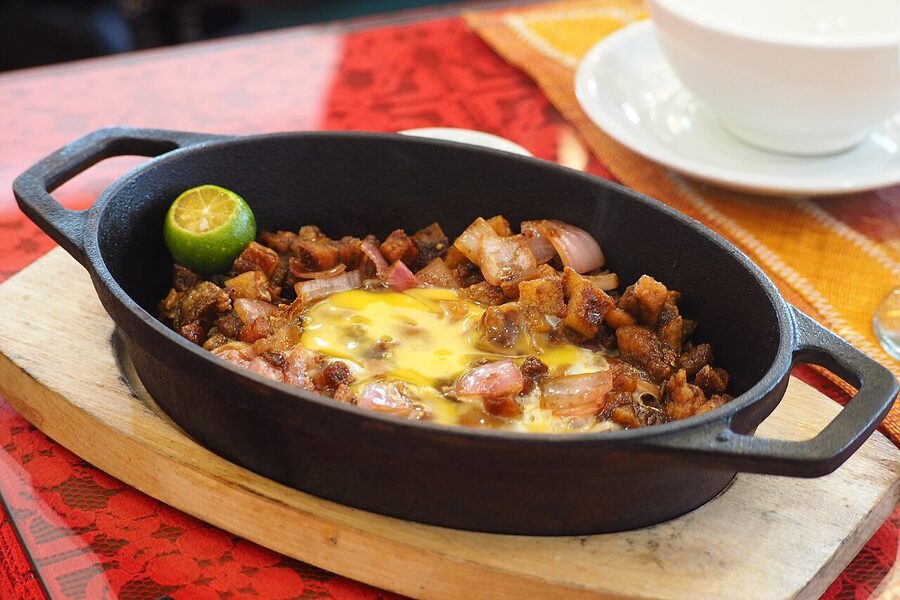
The food nerd’s option. Pampanga is officially the country’s “culinary capital”, Spanish friars trained the cooks here for three centuries and the cuisine never recovered (in a good way). Two hours north of Manila on a working day. Worth the day if your trip’s hook is food.
The plan: leave Manila 7am by private car (₱3,500 to ₱4,500/~$60 to $77 round trip). First stop Aling Lucing’s in Angeles City, the literal birthplace of sisig (Lucia Cunanan, who invented the dish in the 70s). It’s a roadside joint and not pretty. The sisig is ₱150 (~$2.50). Don’t skip it because you saw a fancier version in Manila; this is the source.
Mid-morning: cooking class at Atching Lillian Borromeo‘s in Mexico, Pampanga (book ahead, around ₱2,500/~$43 per person, 3 hours, includes lunch). Atching Lillian is the country’s leading authority on heritage Kapampangan baking, she does the original bibingka recipe with carabao milk that nobody else makes anymore. Skip if you don’t want a class; replace with Razon’s in Guagua for what locals will tell you is the country’s best halo-halo (₱150).
Lunch: Apag Marangle (Bacolor) for the full Kapampangan menu featuring bringhe (turmeric-yellow rice with chicken), kare-kare, betute (stuffed frog if you’re brave), camaru (mole crickets if you’re braver), tibok-tibok (carabao milk pudding). Around ₱700 to ₱1,200 per person. Or Abe’s (the Pampanga branch is the original; the Manila branches are good but lesser).
Afternoon: drive to Angeles City and pick up turrones de casuy (cashew nougat wafers) and sansrival (cashew meringue cake) at any of the heritage bakeries. Drive back to Manila by 4pm to beat the worst of the EDSA northbound rush. The full plan with addresses is at Pampanga food trip.
Option C: Manila Deep-Dive (Quiapo + Cubao + sunset cruise)
The “I love cities” option. Skip the day trip. Instead spend Day 3 in the Manila corners that didn’t make Day 1 and Day 2.
10am: Quiapo. Walk Plaza Miranda (in front of Quiapo Church), the Friday flower stalls, and the streets just north of the church for the country’s densest concentration of palmistry stalls and fortune-tellers. Eat at Globe Lumpia on Hidalgo for the country’s best fresh lumpiang sariwa (fresh spring rolls). Around ₱120 (~$2). Quiapo is rougher than Intramuros, keep your phone deep in your pocket and your bag in front of you. It’s not dangerous, but petty pickpocketing is a thing.
1pm: Cubao Expo. Grab to Cubao (₱200 to ₱350) and find Cubao Expo, a small horseshoe of repurposed warehouses with vinyl shops, vintage clothing, indie restaurants, and at least three bars that are open early. Lunch at Bellini’s (Italian, weirdly excellent for Cubao) or Ali Baba for Persian. Around ₱500 to ₱900 per person.
4pm: head to Pasay for Mall of Asia Bay (the bay side, not the mall itself) for the secondary Manila Bay sunset spot. Less crowded than Roxas Boulevard, slightly less photogenic, but if you want to do a Manila Bay dinner cruise (₱1,200 to ₱2,500/~$21 to $43 per person, 1.5 hours, food is acceptable but nothing special, the views are the point), this is where they leave from. Book through Klook or any of the kiosks at MOA. The cruise itself isn’t life-changing; it’s pleasant.
Which one I’d default to
For first-time visitors who want big nature: Tagaytay (Option A). The view is iconic and you can be back in Manila by 6pm with energy left for a proper dinner.
For travellers whose trip is built around food: Pampanga (Option B). There is no food day trip from Manila that beats it.
For people who hate day-trip logistics or who already know the Philippines and just want more Manila: Option C. The cruise is the weakest of the three options as the closer; if you skip it and instead do a proper farewell dinner at one of Manila’s better restaurants, the day’s stronger.
I cover all three in their own deeper guides at day trips from Manila, with a dedicated Tagaytay walk-through and the Pampanga food trip spelled out hour by hour.
If it rains on Day 3
Tagaytay in heavy rain is bad, you can’t see the volcano (the whole point) and the mountain road gets unpleasant for queasy passengers. Pampanga in rain is fine; the food doesn’t care. Option C in rain can pivot indoors to museums you skipped on Day 1. If your only free day is rained out and you came for Tagaytay, you’ll be sad. That’s the gamble.
Getting Around: Grab Fares You Should Expect
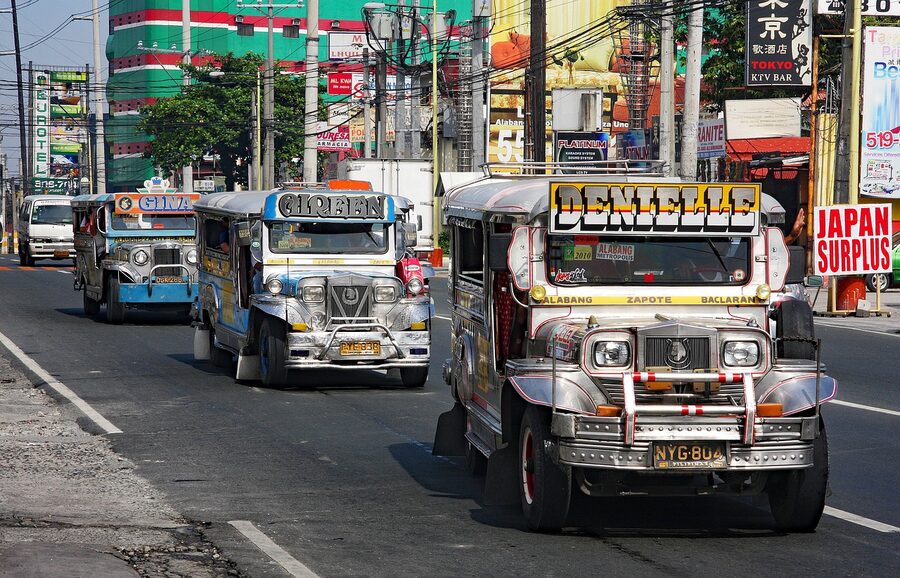
Grab is the default. Trying to ride jeepneys with luggage and tourist confusion turns a ₱13 fare into a 90-minute mistake. Use jeepneys for one symbolic ride and stick to Grab the rest of the trip. Real fare ranges you should expect, off-peak versus peak surge:
- Makati to BGC: ₱180 to ₱350 (15 to 60 minutes depending)
- BGC to Intramuros: ₱250 to ₱500
- Makati to Intramuros: ₱200 to ₱400
- Pasay to Makati: ₱200 to ₱350
- Pasay to BGC: ₱250 to ₱400
- Anywhere to Binondo (from south Manila): ₱200 to ₱400
- NAIA to Makati or BGC: ₱350 to ₱600 (more on a Friday at 5pm)
Surge is real and predictable, Friday 5 to 8pm, Sunday 6 to 9pm (mass exodus from malls), and during heavy rain. If you see a fare that’s twice what’s listed above, wait 15 minutes and refresh. Or call a taxi (₱50 base fare, often cheaper than surge Grab; just confirm meter use before getting in). The full transport breakdown is at getting around Manila.
Restaurant Pre-Bookings to Make Right Now
Before you even land. Some of these book out months ahead, especially Friday and Saturday nights.
- Toyo Eatery (Karrivin Plaza, Makati), book 4 weeks ahead. Tasting menu only. ₱5,500/person.
- Hapag (Quezon City), book 3 to 4 weeks ahead. Tasting menu, around ₱4,500/person.
- Helm (BGC), 3 weeks. Modern Filipino tasting menu.
- Antonio’s (Tagaytay), 1 week ahead minimum, longer for weekends. Lunch around ₱2,500/person.
- Sonya’s Garden (Tagaytay/Alfonso), 3 to 5 days. Set lunch ₱750.
- Atching Lillian Borromeo cooking class (Pampanga), 1 to 2 weeks for weekday slots, longer for weekends.
What you do NOT need to book ahead: Manam, Locavore, Aristocrat, Wildflour, Wai Ying, Lan Zhou, Mahogany Market bulalo, Aling Lucing’s sisig (it’s a roadside joint, you queue), Apag Marangle (a phone call same-day is fine outside of long weekends).
If You Have a 4th or 5th Day
Three days gets you the spine. Four days lets you breathe. Five days lets you treat one of those days as a recovery day, which Manila absolutely deserves.
Day 4 should be whichever Day 3 option you didn’t pick. If you did Tagaytay, do either the Pampanga food trip or the Manila deep-dive. If you did Pampanga, do Tagaytay. If you did the deep-dive, you’ve got freedom, go to Corregidor (the WW2 island fortress, full day, ferry from CCP, around ₱2,500 inclusive), or take the four-hour-each-way trek to Las Casas Filipinas de Acuzar in Bataan if heritage architecture is your thing.
Day 5 is the perfect day for something farther. Anilao in Batangas if you want to scuba (one of the country’s top diving spots, 3 hours from Manila). Subic Bay for the WW2 history and animal sanctuary. Or just stay in Manila and do nothing, get a full massage at one of the Makati spas (The Spa at Greenbelt is consistent, around ₱2,500 for 90 minutes), eat one long lunch, and read a book. Three days at the pace I described earlier earns you a slow day. The full day-trip menu is at day trips from Manila.
If You Have Less Than 3 Days
Two days: cut Day 3. Do Day 1 (history + Binondo) and Day 2 (modern Manila + Poblacion). You miss the day trip but you get the city’s two faces. Acceptable.
One day: pick a half. Either history half (Intramuros + Binondo dinner) or modern half (Makati or BGC + Manila Bay sunset + one Poblacion bar). Trying to compress all of Day 1 and Day 2 into one day produces a frantic blur where you remember the traffic but not the food. Don’t do it.
If you’ve got eight hours between flights and want a Manila taste: Grab to Greenbelt in Makati, walk for an hour, eat a Filipino meal at Manam, Grab back. That’s eight hours, you’ll get fed, and you won’t feel cheated.
What Three Days Won’t Cover
A clear read on what you’re skipping. Three days in Manila gets you a real feel for the capital, and that’s about it. You will not see:
The Philippine beaches. Boracay, Palawan, Siargao, Bohol, Cebu, all of them are flights away. If your trip’s pitch was “Manila and beach,” this isn’t it. Add a 5th to 7th day for Palawan or fly out of Manila for the beach portion entirely.
The Cordilleras (Banaue rice terraces, Sagada). Eight to ten hours by overnight bus from Manila, minimum. Adds three days minimum to a trip.
The Bicol region (Mayon volcano, surfing in Camarines Sur). Either fly or eight to twelve hours overland.
The deeper Philippine food regions (Iloilo for batchoy, Cebu for lechon, Davao for fruit). You’ll get a taste of Filipino food in Manila but each region has cuisine of its own.
You also won’t get the full Manila depth. You’ll skip Quezon City, the University Belt, the architectural ruins of San Sebastian Basilica (the only steel church in Asia), Mandaluyong’s bazaar markets, Pasig River boat rides, and at least 30 worth-the-detour restaurants. Three days is a real introduction. It’s not the whole city.
Itinerary Mistakes to Avoid
The mistakes I see in every “3 days in Manila” guide and that wreck the actual experience:
Trying to do Tagaytay AND Pampanga AND Corregidor. One day trip. That’s it. Trying for two will eat your evenings to traffic and leave you no Manila time.
Booking dinners back-to-back without buffer. Manila traffic is unpredictable. A 7pm reservation on Friday means leaving Makati for BGC at 5:30pm. Always pad 30 minutes. Always.
Doing Intramuros at noon. 11am to 3pm is the sun-stroke window. Either before 11 or after 3. Cool morning is the best.
Skipping the Manila Bay sunset. Easiest single Manila moment to capture and the one most three-day itineraries inexplicably skip.
Eating at the hotel restaurant for dinner. Hotel restaurants in Manila are expensive and mid. The whole point of the city is that ₱500 buys a serious meal at a real place. Use the hotel for breakfast and pre-flight coffee. Eat dinner outside.
Not booking Toyo / Hapag / Helm in advance. If you read this and there’s a “well I’ll just try when I’m there” voice in your head, kill it. Those tables go fast.
Trying to use the MRT during rush hour. The MRT-3 between 7 to 9am and 5 to 7pm is unhinged. People queue for an hour just to get into the station. Tourist with a backpack is a bad time. Save the train for off-peak.
Skipping Binondo. Of all the things people cut from a three-day Manila itinerary, Binondo is the one most often cut and most often regretted afterwards. Don’t.
FAQ
Is three days enough for Manila?
For the city itself, yes, three days gets you Intramuros, Binondo, Makati or BGC, Manila Bay, Poblacion, and one day trip. It’s a tight schedule but workable. For “Manila + beach” or “Manila + the rest of the Philippines”, three days isn’t enough; you need at least 7 to 10.
Should I base in Makati or BGC?
Makati if food and bars are your top priority (Poblacion is in Makati). BGC if you want walkable streets, art, and an easier flight to NAIA Terminal 3. Old Manila if your priority is short walks to Intramuros. The full breakdown is in where to stay in Manila.
Is Tagaytay or Pampanga the better day trip?
Tagaytay for the view (Taal volcano is iconic). Pampanga for the food (Aling Lucing’s sisig, the heritage Kapampangan menu). If you only have one day trip and you’ve never been, Tagaytay is the safer first pick. If you’re a serious eater, Pampanga.
How much should I budget for three days in Manila?
Backpacker tier: ₱2,500 to ₱4,000 per day (~$43 to $69) including hostel, jeepney/Grab, street food, and the occasional bar. Mid-range: ₱6,000 to ₱10,000 per day (~$103 to $172) with a 3-star hotel, sit-down restaurants, Grab everywhere, and entry fees. Comfortable: ₱15,000 to ₱25,000 per day (~$258 to $430) with a 4 or 5-star hotel, restaurant dinners, and a private day-trip car. Tagaytay or Pampanga add ₱2,500 to ₱4,500 in transport on top.
Is Manila safe at night?
BGC, Greenbelt area in Makati, and Poblacion (until about 1am) are fine for tourists. Stick to lit streets, take Grab not jeepneys after dark, and keep your phone in your pocket. Quiapo at night is rougher; the Roxas Boulevard stretch toward Pasay can be too. Don’t walk Roxas after 10pm. Don’t bring valuables you don’t need.
Do I need to learn Tagalog?
No. English is widely spoken in Metro Manila, basically everyone in tourism, restaurants, and Grab speaks fluent English. Learning salamat (thank you) and kuya (older brother, used for any male older than you) is appreciated. That’s enough.
Can I drink the tap water?
No. Bottled or filtered only. Most hotels provide free water; restaurants serve bottled by default. Brushing teeth with tap water is fine.
What’s the best time of year for a 3-day trip?
December to February is cooler and drier (high 20s Celsius, low humidity); the country’s peak season. March to May is hot and dry (mid 30s, brutal humidity by April). June to October is monsoon, heavy rain in bursts; cheap hotels but you’ll lose half your day to weather. The sweet spot is January and February. Avoid Holy Week (March or April depending on year), Manila empties but everything closes for two days.
The Last Word
Three days in Manila is enough if you stop trying to do everything. One day for old Manila, one for modern Manila, one for the day trip or the deep-dive. Eat in Binondo, watch the sunset on Roxas Boulevard, drink a cocktail in Poblacion, and book your Toyo or Antonio’s lunch four weeks ahead. The rest is improvisation. Manila rewards improvisation more than it rewards a packed schedule, and that’s the part most three-day guides get wrong.
If you want the wider context, what to actually do beyond this itinerary, where to base specifically, where to eat at every budget, start at things to do in Manila and work outward. Most of the deep articles I’ve cross-linked here go far deeper than this itinerary on their own subjects. This is the spine. The flesh is in the spokes.