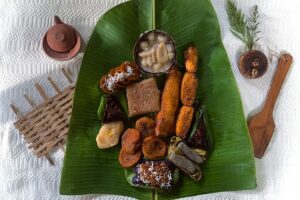
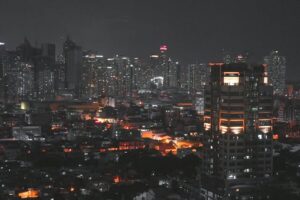
It’s 6pm off Carriedo, just down from Quiapo Basilica, and the smoke from a single ihaw-ihaw stand has rolled out into the street. The vendor flips chicken skin on a rusted grill, brushes it with soy and calamansi from a recycled water bottle, and the soy hits the coals all at once. The smell is half barbecue, half caramel. You can’t walk past. Skewers are 15 pesos, the vinegar dip is on a battered tin tray, and the queue sorts itself out without ever forming a line.
This is Manila street food at the only setting that matters: street level, with people who eat it because it’s dinner, not because it’s an experience. The mall version is fine. The curb version is the real one. Below is where to find it, what to order, what to skip, and how to eat it without spending day two of your trip in the bathroom.
A quick disclosure: some of the booking links in this guide are affiliate links. If you book a tour or a stay through them, I may earn a small commission at no extra cost to you. It helps keep this site going. I only recommend places I’d actually send a friend to.

In This Article
- Quiapo: Where the City Still Eats Cheap
- Quiapo specifics worth knowing
- Binondo: The Filipino-Chinese Food Lab
- Divisoria: Snacks for the Wholesale Crowd
- Roxas Boulevard at Sunset: The Bay-Side Ihaw-Ihaw
- Cubao: Where the Locals Eat (And Tourists Don’t Go)
- Salcedo Saturday Market: The Polished Counterpart
- Mercato Centrale: BGC’s Weekend Pop-Up
- Dishes to Try Across the City
- Isaw and the rest of the grill family
- Balut
- Kwek-kwek and tokneneng
- Taho
- Fishball, kikiam, squidball
- Halo-halo
- Turon and banana cue
- Lugaw and goto
- Batchoy and La Paz batchoy
- Pancit palabok
- Sisig (the street version)
- Lechon manok
- What’s Overrated in Manila Street Food
- Street Food Etiquette and Safety
- How to Plan a Street-Food Day
- FAQs
- Is Manila street food safe to eat?
- How much should I budget for a street-food meal?
- Where’s the best place for first-time street-food eaters?
- Can I drink the water at street food stalls?
- What’s a fair price for a stick of isaw?
- Should I try balut?
- What time of day is best for street food?
- Do I need a guide or can I go solo?
Quiapo: Where the City Still Eats Cheap
If I had to send a first-timer to one neighbourhood for street food, it would be Quiapo. Loud, crowded, the bit of Manila that hasn’t been polished smooth, and the largest concentration of working-class snack carts in the city. The hub is between Quiapo Basilica (Minor Basilica of the Black Nazarene) and Carriedo LRT, with Plaza Miranda in between. Fridays the basilica pulls thousands for Black Nazarene Mass and the food economy fires up to feed them; that’s the day for the full sensory pile-on. Tuesday afternoon is calmer, same vendors.
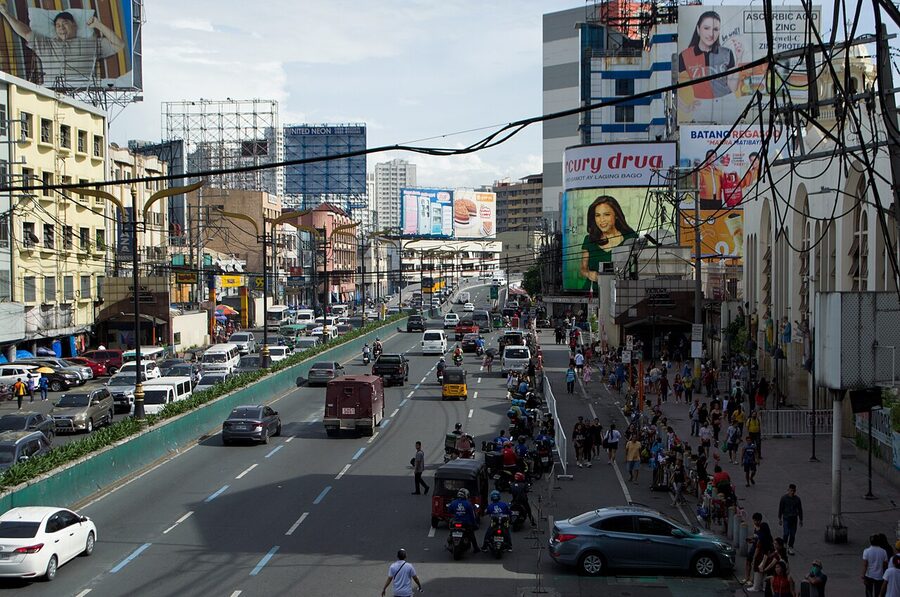
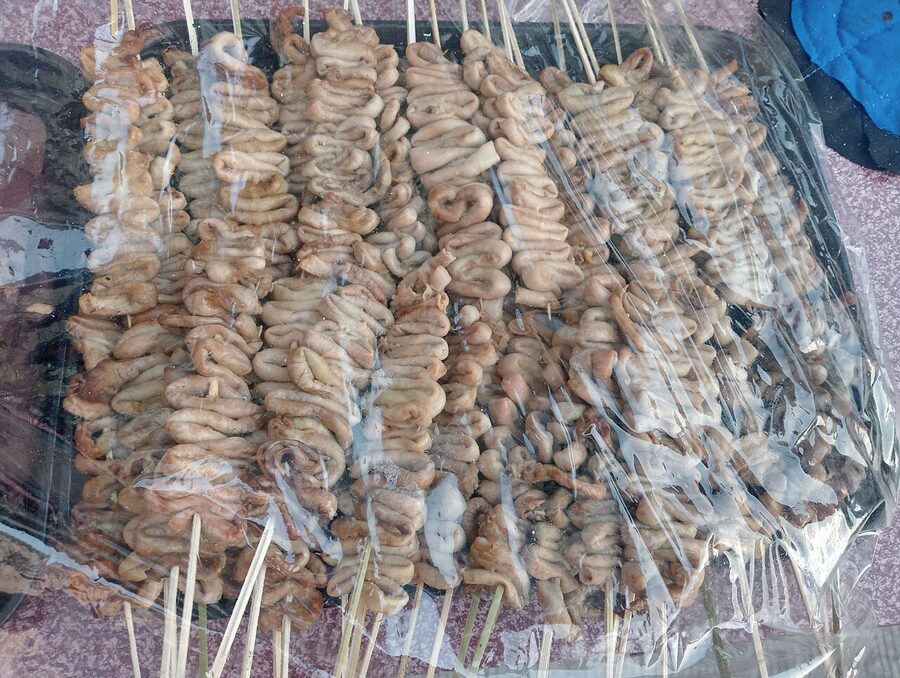
Walk Carriedo opposite the basilica and you hit ihaw-ihaw stalls every fifty metres. Follow the smoke. The signature order is isaw, chicken intestine grilled on bamboo skewers, dipped in a chili-onion-vinegar mix you ladle yourself from a communal bowl. It’s chewier and smokier than you’d expect, and at five to ten pesos a stick it’s the best low-stakes food adventure in the country. If intestine is a bridge too far, the same stalls do Adidas (chicken feet, three-stripe joke), betamax (cubes of pig blood), and a more conservative pork barbecue. Quiapo is where Filipinos who can’t afford much have always eaten well by being clever with cheap parts of the animal; the city’s history of poverty is right there on the grill, and pretending otherwise would be dishonest.
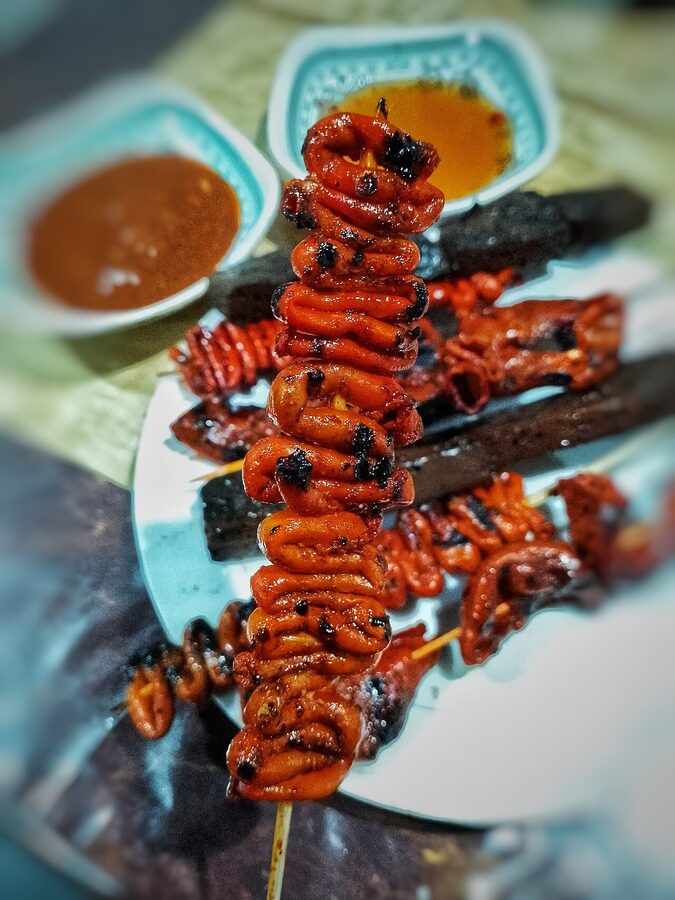
Hidalgo Street, two blocks south, is camera-equipment row by day and a low-key food strip by evening. Plaza Miranda fills with vendors selling kwek-kwek (quail eggs in startling orange batter), tokneneng (chicken-egg version, more substantial), and styrofoam bowls of pancit palabok. The flower market under Quezon Bridge is also a snack market if you know where to look. None of this is on Google Maps with hours; you walk, and stop where the smoke and queue tell you to. Quiapo is Intramuros’ next-door neighbour; if you’re spending half a day at San Agustin and Fort Santiago, walking across Quezon Bridge after sunset and eating your way through the basilica plaza is the cheapest, most filling sequel to a heritage walk in the city.
Quiapo specifics worth knowing
Stalls right around Plaza Miranda are more tourist-aware than ones two streets in, which means a higher opening quote. Standard isaw is five to ten pesos a stick. Kwek-kwek runs three pieces for ten to fifteen. A bowl of palabok is forty to sixty. Anything quoted at fifty pesos a stick is a tourist price; you can pay it (it’s still a dollar) or smile and walk on. Don’t argue.
Binondo: The Filipino-Chinese Food Lab
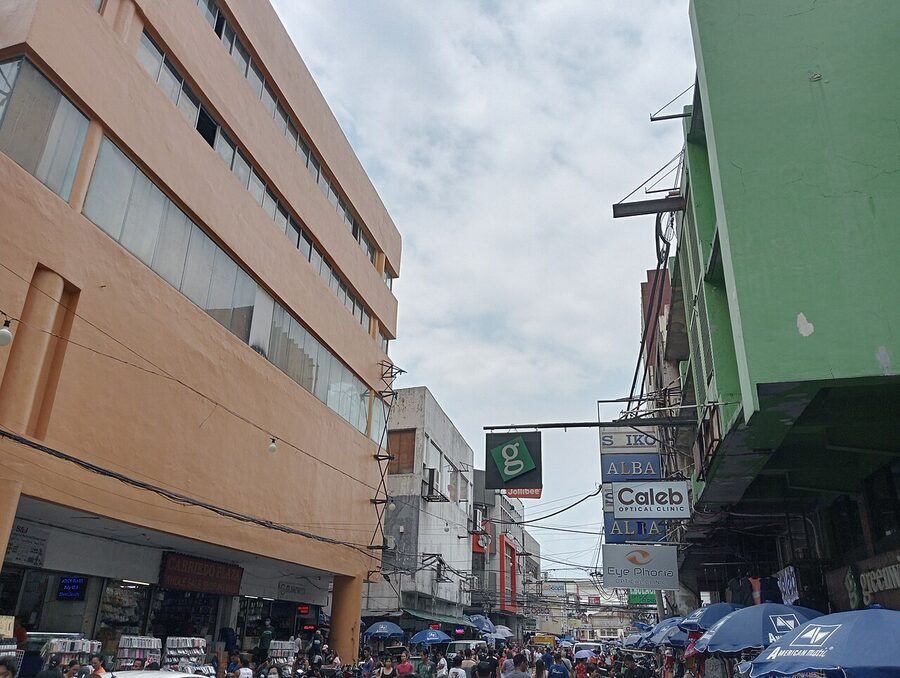
Cross the Pasig from Quiapo on foot and you’re in Binondo, the world’s oldest Chinatown. Established 1594, originally a settlement for Catholic Chinese traders just outside Spanish Manila’s walls. For four-and-change centuries, Filipino and Hokkien Chinese cooking have done the same dance in the same kitchens. Half of what you think of as classic Filipino food, siopao, lumpia, pancit, started here as Hokkien imports and got rewritten by Filipino tongues over generations.
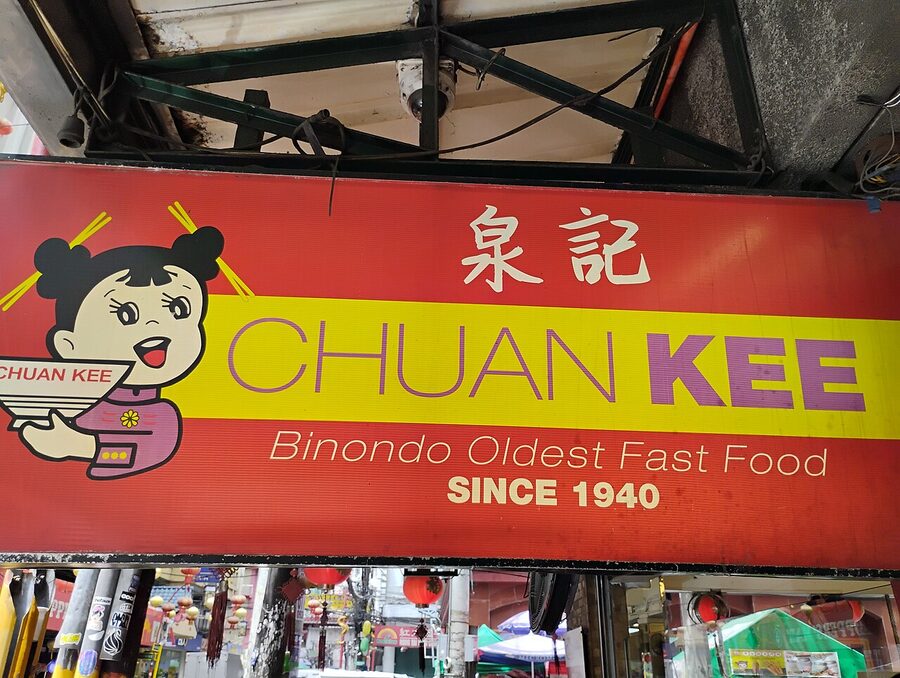
The street-food spine of Binondo is Ongpin Street, running from Binondo Church on Plaza Lorenzo Ruiz down toward Santa Cruz. The institutions are along it: Wai Ying for soy chicken and dumplings; Quik Snack on Carvajal alley, an Indonesian-Filipino-Chinese spot tucked into a covered passageway behind a wet market; Master Hopia for bean-paste pastry; Lan Zhou La Mien for hand-pulled noodles. Salazar Street is where Chuan Kee sits. Carvajal, the narrow cut between Ongpin and Quintin Paredes, is the most genuine Chinatown alley in the city: wet market at one end, dumpling stands in the middle, old men playing xiangqi at the other.
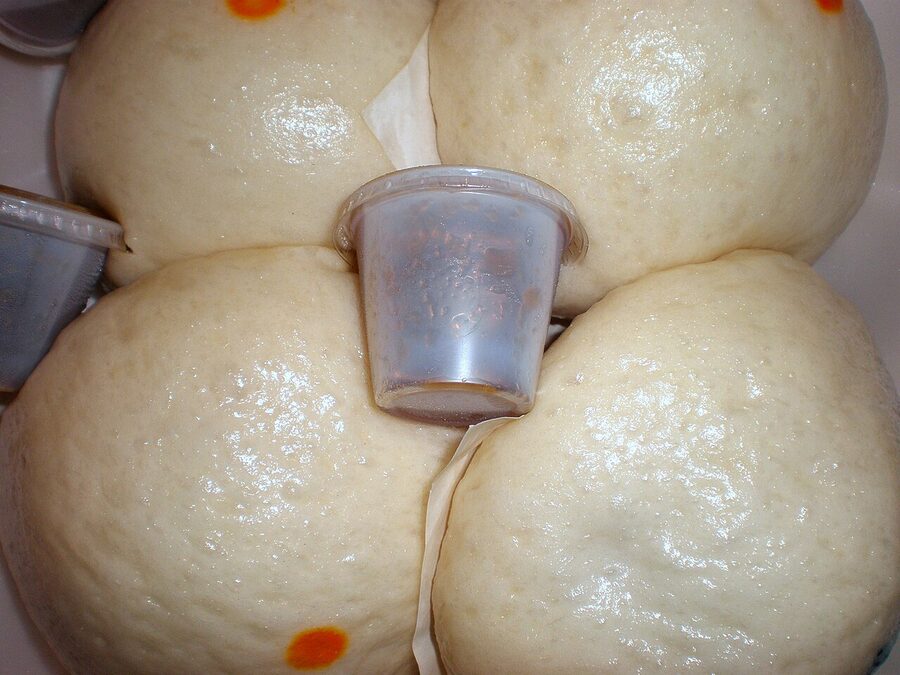
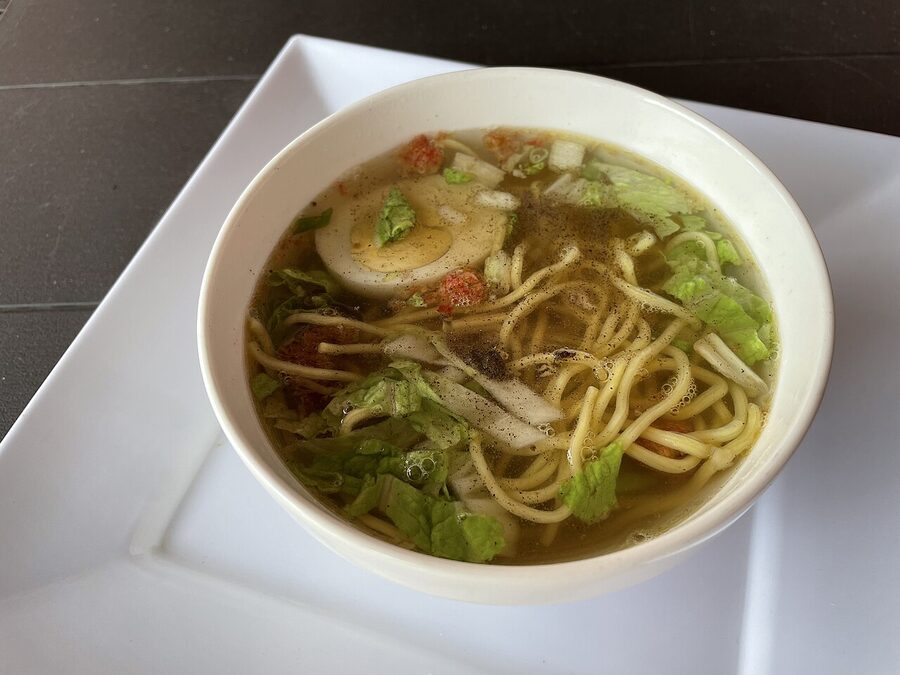
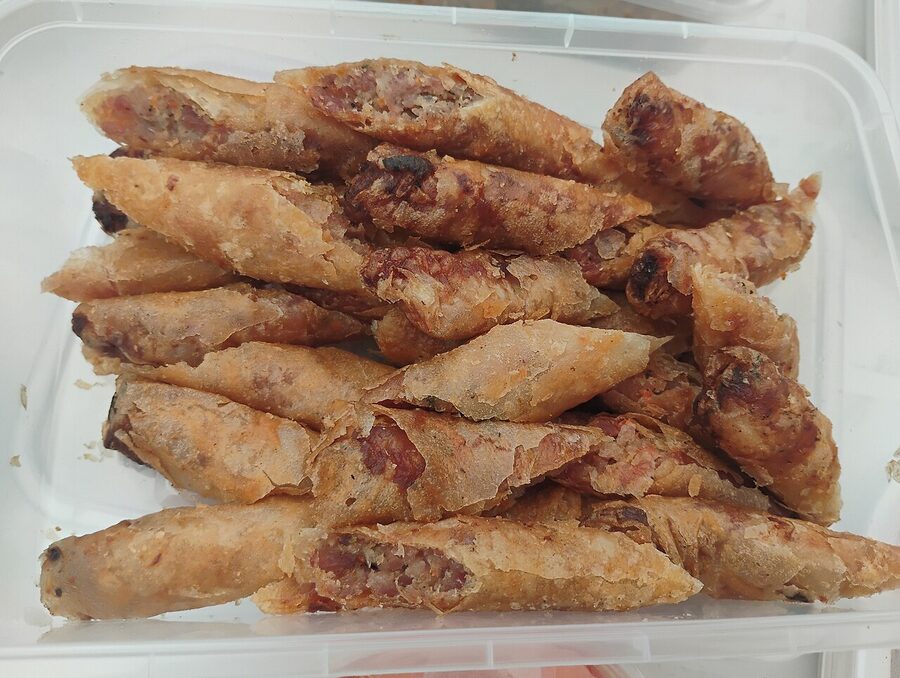
Mami and siopao is the combo that defines Binondo lunch. Mami is a Hokkien-rooted noodle soup, beef or chicken, forty to seventy pesos in a fan-cooled corner shop. Siopao, the steamed bun, comes asado (sweet pork) or bola-bola (meatball, sometimes with a quartered salted egg). The bola-bola at Chuan Kee is the reference point. Order one of each. The lumpiang shanghai at Quik Snack is the best plate of fried things in Manila under a hundred pesos.
One spot worth flagging at the river end: Estero Cienfuegos, a tiny strip running along an estero (small canal) just off Ongpin. The water has clearly seen better decades, but the food is excellent and Filipinos eat there every weekend. If you’re squeamish about kitchens with a stagnant-water view, eat on Ongpin proper. If not, the spicy mami at the back is a Binondo secret weapon.
If you’d rather hand navigation to someone else, the city’s food-tour scene almost always lands in Binondo. Manila food tours on Klook and Viator’s Manila food and night-market options usually do a Binondo plus Quiapo or Tutuban combo: three to four hours, six to eight stops. A self-guided afternoon costs less, but a tour is useful if you don’t speak any Tagalog and want a guide who can introduce the vendor properly.
Divisoria: Snacks for the Wholesale Crowd
North of Binondo is Divisoria, the wholesale shopping district. Filipinos come here for clothes, fabric, school supplies and Christmas decorations by the dozen; the food carts grew up to feed the labour force. It’s not a street-food destination the way Quiapo is. It’s adjacent to one. You go to shop, you eat while you’re there.
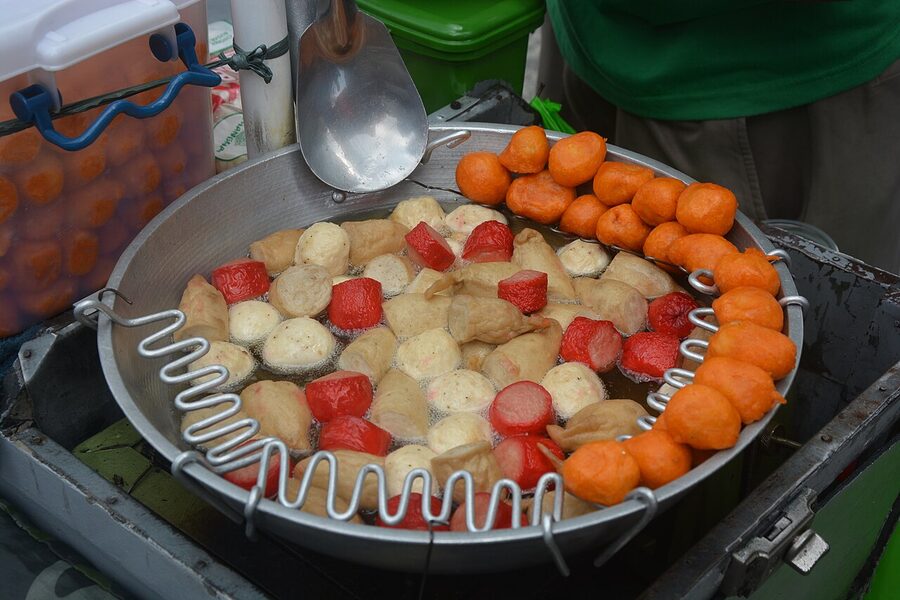
Recto Avenue and the back streets near Tutuban Mall fill with carts selling fishball-and-kikiam combos, sliced fruit, and cups of hot peanuts. Tutuban Night Market on the old PNR train-station grounds runs evenings on the Tondo side and is one of the more under-rated street eats in town. Local food tours start there because the prices are fair, variety is good, and the lighting is just bright enough to see what you’re ordering. Order the sisig from the corner stall closest to Tutuban Centre Mall.
Divisoria isn’t pretty. The crowds are heavy, pickpockets are real, and walking with a camera around your neck is asking for it. Wear a small cross-body bag with the strap across your chest, keep your phone in a front pocket, and you’ll be fine. The food makes the elbows worth it. If you’re already at the city’s main historical sights for the day, Divisoria slots in as a late-afternoon market crawl before you push back south for dinner.
Roxas Boulevard at Sunset: The Bay-Side Ihaw-Ihaw
Roxas from the US Embassy down to the Cultural Centre of the Philippines is, on paper, a six-lane highway along Manila Bay. From 5pm to midnight, the seawall side becomes a long ribbon of grilling. Vendors roll out grills, plastic chairs and folding tables along the baywalk and serve isaw, pork barbecue, grilled chicken, and the city’s biggest selection of ihaw na pusit (grilled squid). Manileños come here on dates and with family, cheap dinner with a Manila Bay sunset thrown in.
The trick is timing. Show up before sunset (5:45-6:15 depending on the time of year) and you grab a table while the grills are still warming up. By 7pm there’s a queue at every stand. Vendors near Pedro Bukaneg Street do the best squid; the ones near CCP gates lean barbecue. Ten to fifteen pesos a stick. A whole grilled squid runs a hundred to two hundred pesos and they’ll split it for you with kitchen scissors. Bring napkins. Don’t wear white.
One quiet recommendation: ihaw na liempo (grilled pork belly) at Roxas is better than what you’ll get at sit-down Filipino BBQ chains in the malls. Longer marinade, properly rendered fat, freshly steamed rice. With a small bowl of sinigang broth on the side, complete meal under three hundred pesos.
Cubao: Where the Locals Eat (And Tourists Don’t Go)
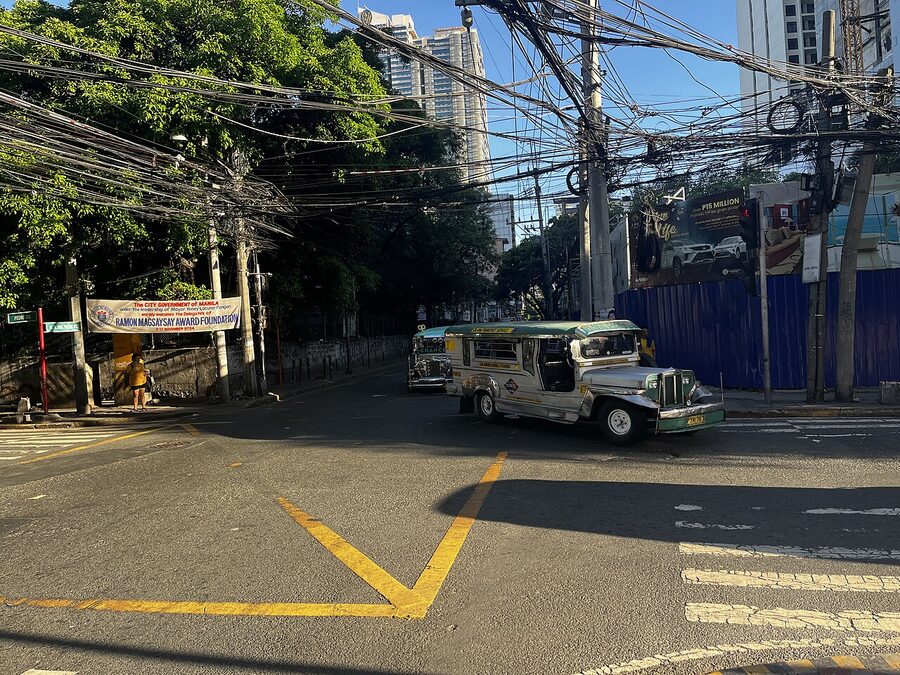
Out of Cubao MRT on the Aurora Boulevard side, ignore the SM mall, ignore Gateway, head toward the small streets behind Araneta Coliseum. A strip of ihaw-ihaw stands, jeepney-stop barbecue, and a couple of decades-old silog joints that almost no tourist sets foot in. This is Manila street food not performing for anyone. Just feeding office workers, jeepney drivers, and PUP-Cubao students. Portions bigger, prices five to ten pesos lower, and nobody hassles you because you look out of place.
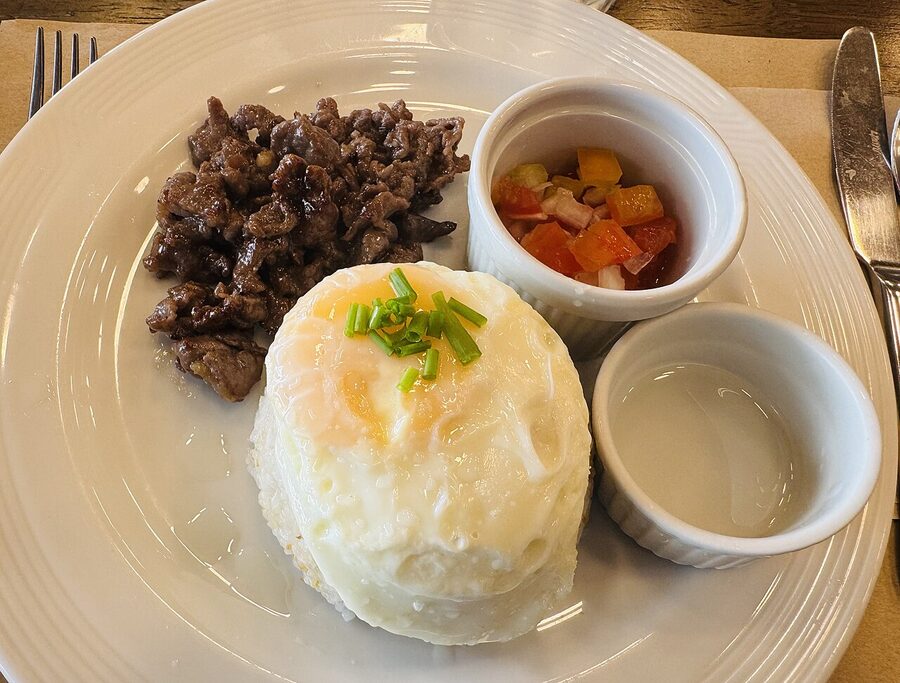
The tapsilog joints around Cubao are open 24 hours. Tapsilog is a portmanteau of tapa (cured beef strips), sinangag (garlic fried rice), itlog (fried egg), the canonical Filipino breakfast for adults. The category extends: tocilog swaps in sweet pork tocino, longsilog uses Filipino longganisa, bangsilog fried milkfish. A plate runs 80-120 pesos with vinegar for the meat. After a Poblacion bar night, a 3am Cubao tapsilog is the better hangover insurance plan.
Salcedo Saturday Market: The Polished Counterpart
Saturday mornings in Makati’s Salcedo Village, between H.V. dela Costa and Tordesillas, the gated park hosts the Salcedo Community Market, roughly 7am to 2pm. Different species of vendor: artisan bakers, organic farmers from Bukidnon, a guy doing wood-fired neapolitan slices out of a converted tricycle, three or four traditional Filipino stalls handling the heritage end (kakanin, longganisa, fresh ensaymada).
If Quiapo is curb-at-sunset, Salcedo is brunch in a cotton shirt. Crowd is mostly expats, Salcedo-Legazpi locals, and Manileños who’ve already been to the gym. Cleaner in every sense, prices two to three times Quiapo’s, benches under shade. With two days in Manila, I’d push you toward Salcedo on Saturday morning to taste regional Filipino specialties (Bicol’s spicy laing, Ilocano empanada, Pampanga longganisa) without a road trip. The Makati hotel cluster sits a 10-15 minute walk away. Salcedo isn’t street food in the original sense; it’s the upscale companion piece to a Quiapo evening, not a substitute.
Mercato Centrale: BGC’s Weekend Pop-Up
Friday and Saturday nights, two open lots on 7th and 26th in BGC turn into Mercato Centrale, a weekend pop-up running since 2010 that has more or less defined “modern Filipino street food” in the post-mall era. Forty to sixty stalls, long communal tables, live acoustic sets. Food spans kapampangan-style sisig with hipster toppings (chicharrón crumble, runny egg yolk), Spanish-Filipino tapas, pork belly tacos, and a cult Cuban sandwich vendor that sells out by 11pm.
It’s not the same Manila as Quiapo, it’s its own thing. Crowd is BGC’s office class, dating couples, families with strollers. Prices land between Quiapo and Salcedo: a sandwich is 250-350 pesos, a paper cup of mango sago a hundred. If you’re at a BGC hotel and want a one-evening intro to modern Filipino street food without committing to a Quiapo run, this is the easy answer. Hours drift, currently roughly 6pm to 3am Friday-Saturday; confirm location with the operator since the lots have moved over the years.
Dishes to Try Across the City
The iconic plates with a one-to-three sentence note each, plus where to find the canonical version. Some are covered above; this is a focused ledger for working from a list rather than a map.
Isaw and the rest of the grill family
Beyond isaw, the wider grill family includes betamax (coagulated chicken or pig blood cubes, named for the cassette shape, surprisingly mild), walkman (pig ear), helmet (chicken head, the brain is the prize), and chicken proven (the bits squeamish menus skip). Vendor reliability beats body part. Busy grill, fast turnover, eat there. Flies on the raw tray, pass.
Balut
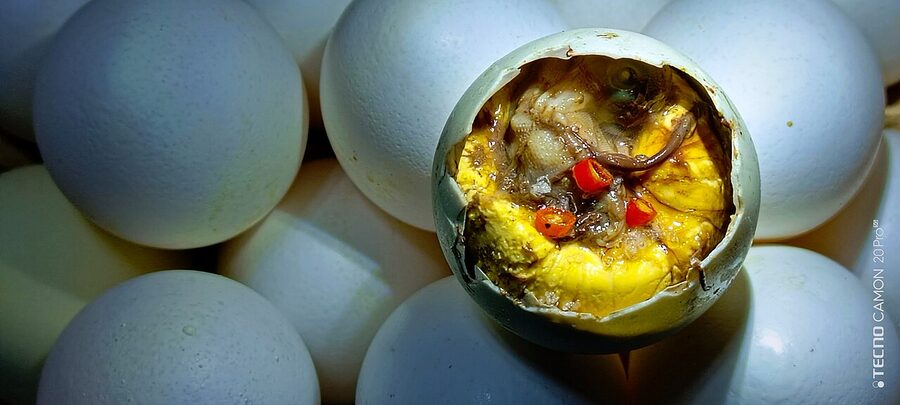
The fertilised duck egg, sold from coolers by walking vendors who shout “ba-LOOT, ba-LOOT” until midnight. Two ages: 14-day (mostly soup and yolk, embryo barely formed) and 17-day (visible duckling). Start with the 14. Ritual: tap the wide end on your knuckles, peel a small hole, sip the liquid (briny, like rich chicken broth), then peel further, season with salt or chili-vinegar, eat in two or three bites. 20-30 pesos. Walking vendors circuit Roxas, Malate and Quezon Avenue around 9pm-midnight.
Kwek-kwek and tokneneng
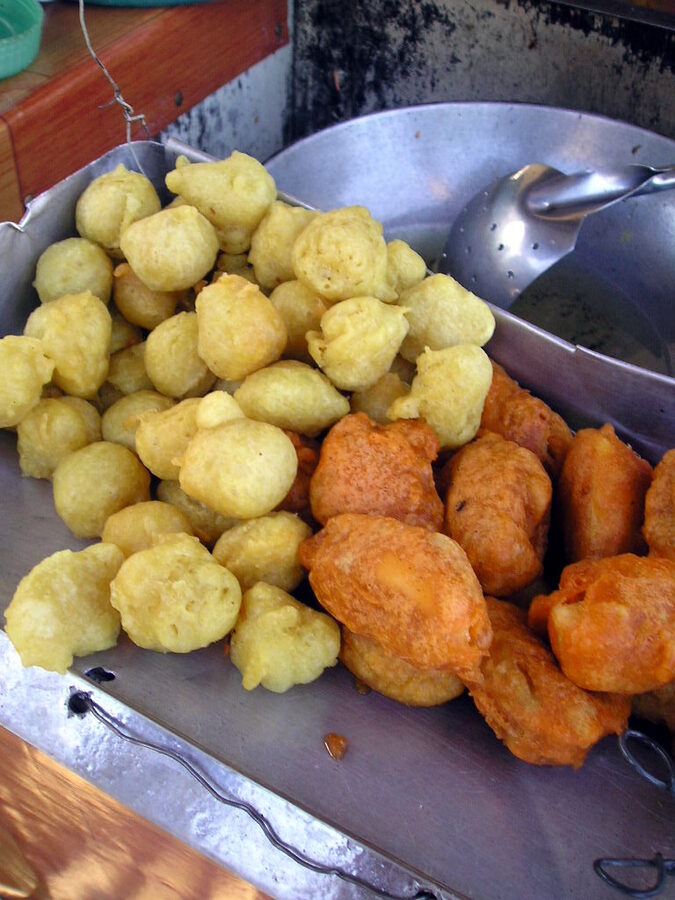
Quail (kwek-kwek) or chicken (tokneneng) eggs hard-boiled, dipped in flour-and-annatto batter, deep-fried. Shocking orange. Six to ten pesos a piece. Three or four in the chili-vinegar bowl, eat warm. The gateway street snack. If you’ve never had Filipino street food, start here.
Taho
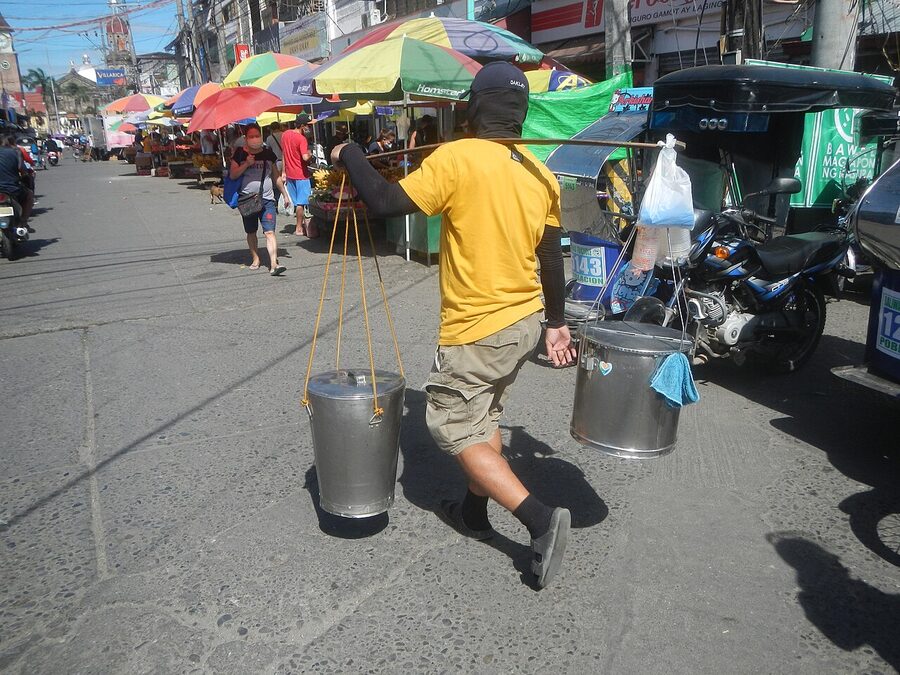
Taho: silken tofu layered with tapioca pearls (sago) and a brown-sugar syrup called arnibal, sold from two metal urns carried on a pole. Vendors start before dawn. If you’re up at 6am anywhere residential, you’ll hear “TAH-hooo” floated down a side street, sustained on the second syllable. 20-30 pesos a cup. The most calming five minutes you can have in Manila, eaten with a plastic spoon on a stoop.
Fishball, kikiam, squidball
The after-school trinity. Fishball: small, flat-ish, beige. Kikiam: darker, slightly sweet, originally Hokkien Chinese. Squidball: round, chewier. Same rolling cart, you spear them on a thin bamboo stick yourself, dunk in the shared sweet-chili or vinegar bowl. One peso a fishball, two kikiam, three squidball. Still under twenty cents US.
Halo-halo
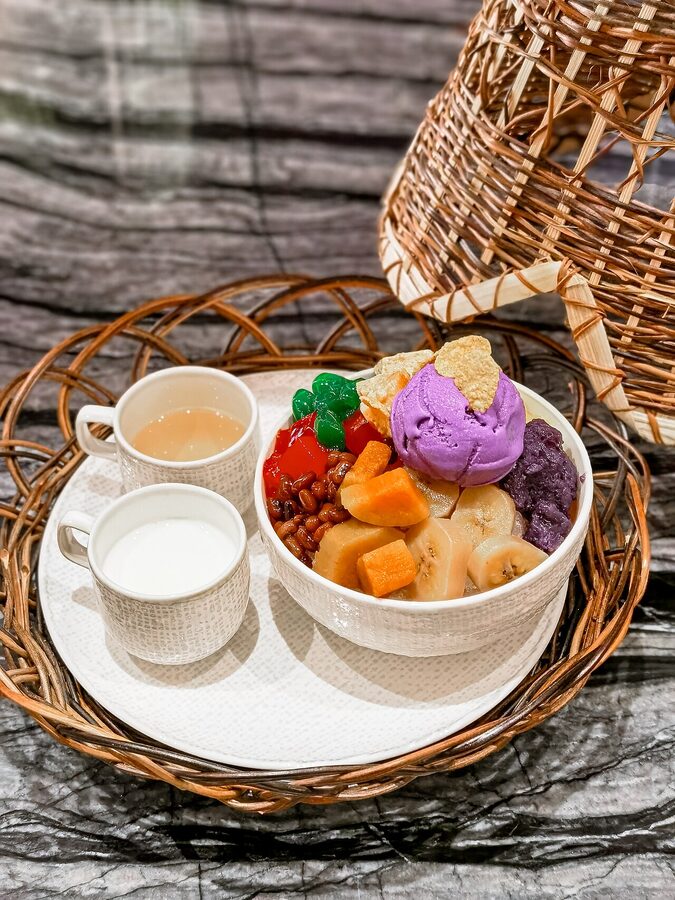
The national dessert, “mix-mix”: shaved ice, evaporated milk, sweet boiled beans, jackfruit, sago, banana, leche flan, ube ice cream, and crispy pinipig rice if it’s a good one. Street version 50-80 pesos; sit-down 200-350. The three names that argue for the city crown: Razon’s (minimalist, milk and macapuno, divisive), Iceberg’s (loaded, more is more), Mang Larry’s (UP-Diliman institution, balanced). I’m a Mang Larry’s loyalist; Razon’s is right for sceptics. The argument is the point.
Turon and banana cue
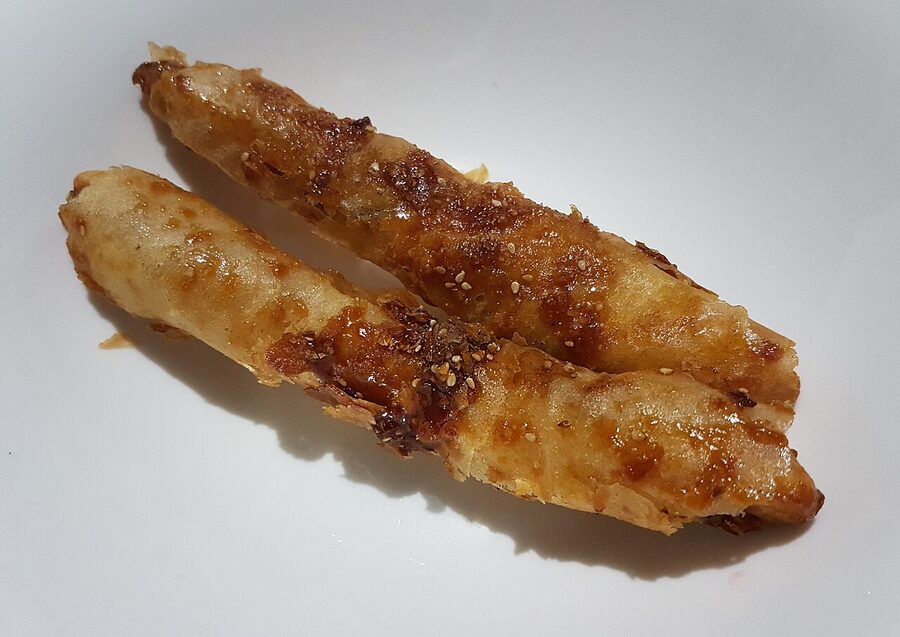
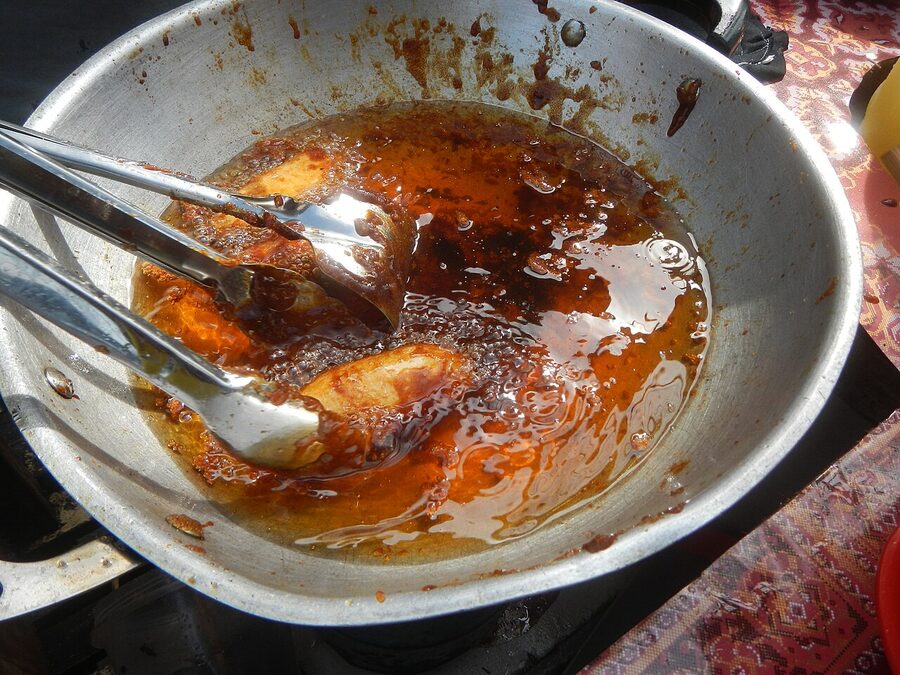
Two fried-banana variants on the saba (small, very firm). Turon wraps saba and jackfruit in a lumpia wrapper, deep-fried in caramelising sugar until brittle and golden. 10-15 pesos. Banana cue is simpler: skewered saba slices deep-fried with brown sugar in the oil. Three skewers for 20 pesos. Either is the perfect 4pm snack and a bizarrely good chaser to a salty isaw stick.
Lugaw and goto
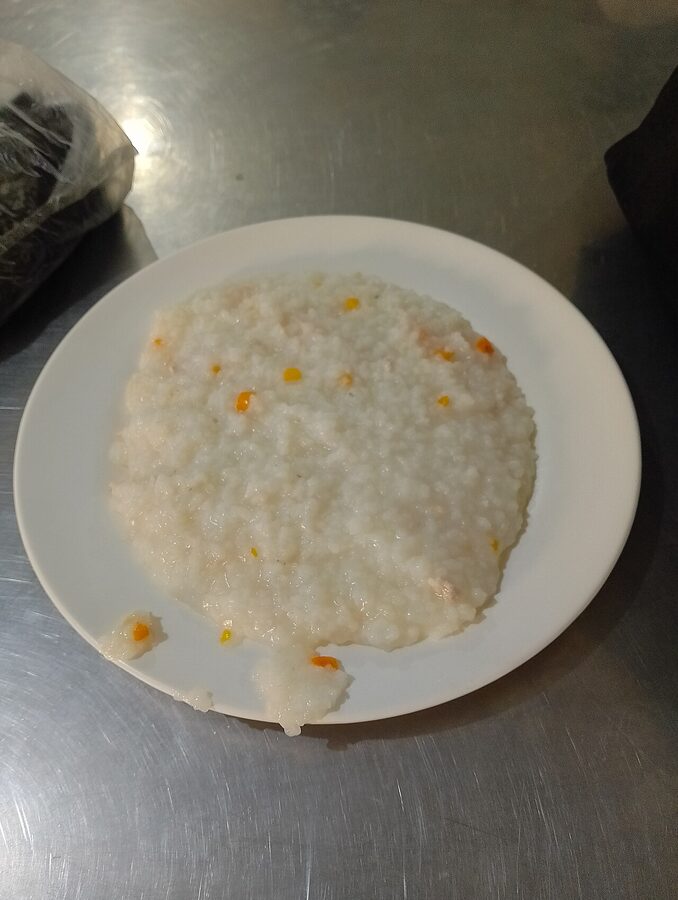
Late-night drunk food and early-morning hangover food at once. Lugaw is plain rice porridge, very thick, almost congee, with ginger, salt, garlic and a soft-boiled egg. Goto upgrades with beef tripe and offal in the same broth. The 24-hour Lugaw Queen chain has branches across Manila at 50-90 pesos a bowl. At 3am, goto with extra calamansi and chicharon crumbled on top. You’ll sleep fine.
Batchoy and La Paz batchoy
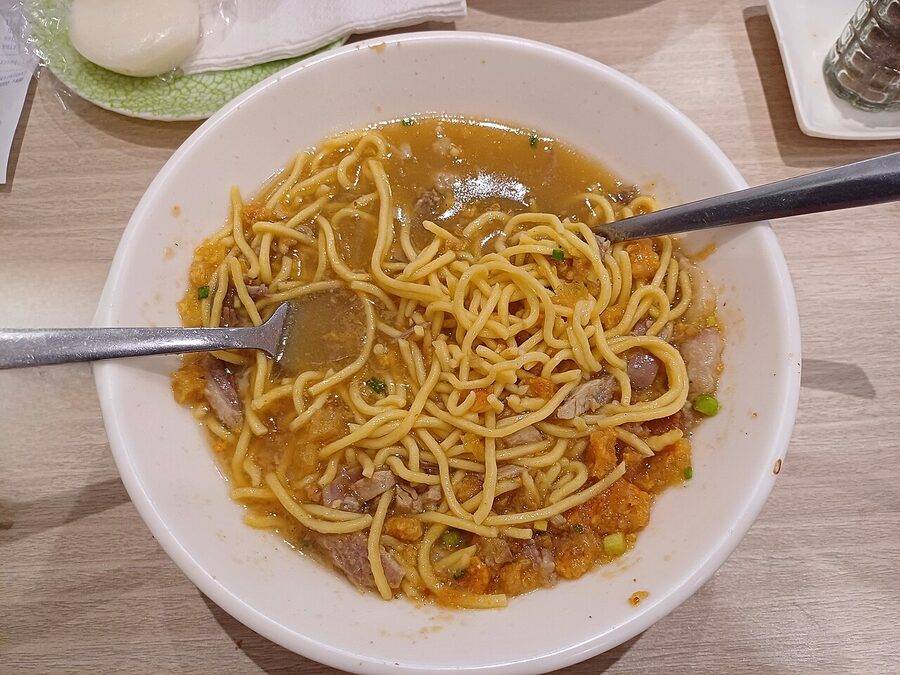
Originally an Ilonggo (Iloilo) noodle soup, La Paz batchoy is named after La Paz Public Market in Iloilo City. The Manila branches of Ted’s Oldtimer La Paz Batchoy are the cleanest, most reliable bowls in the metro: round egg noodles, pork-bone broth, beef, chicken liver, crushed chicharon on top, raw spring onion. 120-150 pesos. Ted’s has been at it across Manila since the 1970s.
Pancit palabok
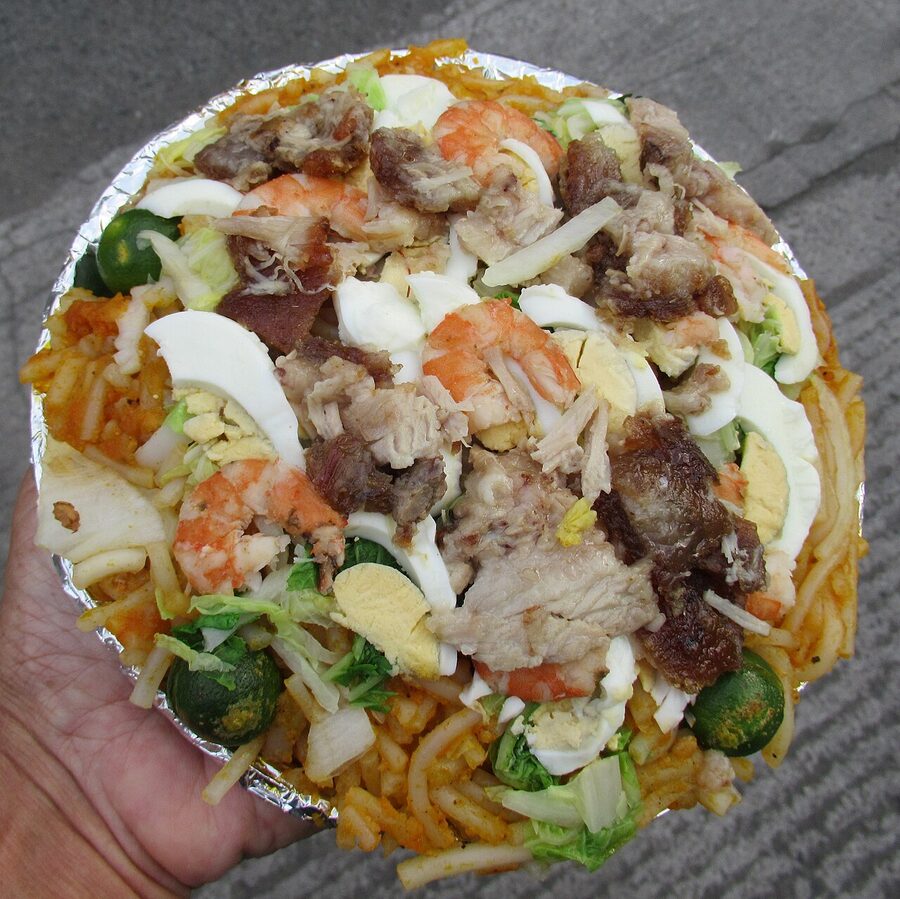
Yellow rice noodles, thick orange shrimp-and-pork sauce, hard-boiled egg slices, smoked fish flakes, chicharon dust, fried garlic, calamansi on the side. Sold styrofoam at Quiapo carts (40-60 pesos), proper portions at Amber or Goldilocks for around two hundred. Plaza Miranda’s palabok is unbeatable for the price. Eat with a spoon, squeeze the calamansi, mix until the sauce coats every noodle.
Sisig (the street version)
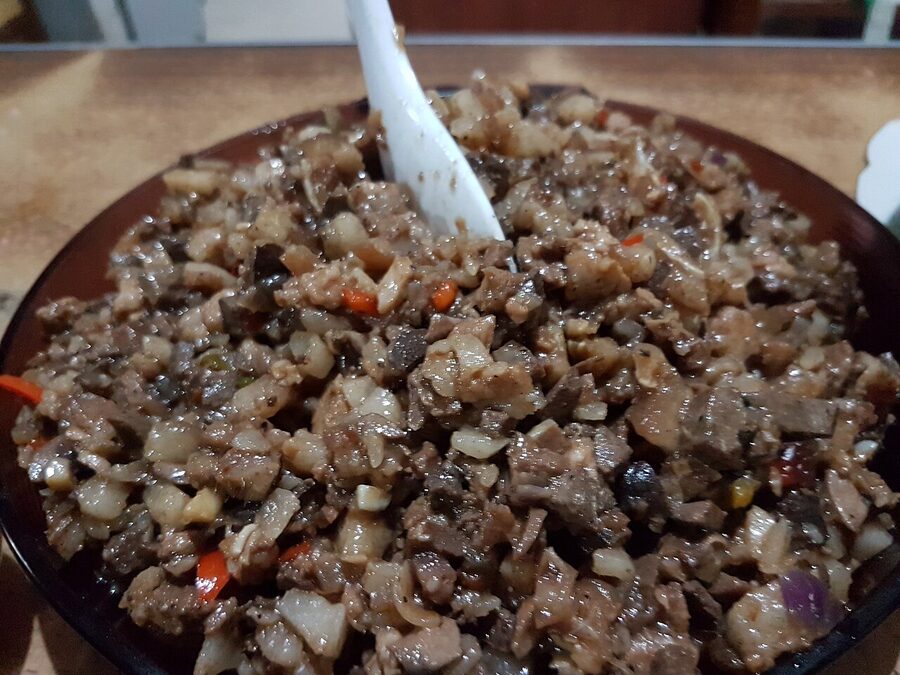
Sisig deserves a caveat. The dish was reinvented by the late Aling Lucing Cunanan in Angeles City, Pampanga, in the 1970s; the proper Pampanga version is a trip in itself, covered in the Pampanga food day-trip article. The Manila street version (Tutuban, ihaw-ihaw stalls, any Filipino canteen) is chopped crispy pig face, ear, sometimes liver, on a cast-iron sizzling plate with a raw egg cracked on top. Calamansi and chili on the side. 80-150 pesos. Best eaten on a bar night with a cold San Mig.
Lechon manok
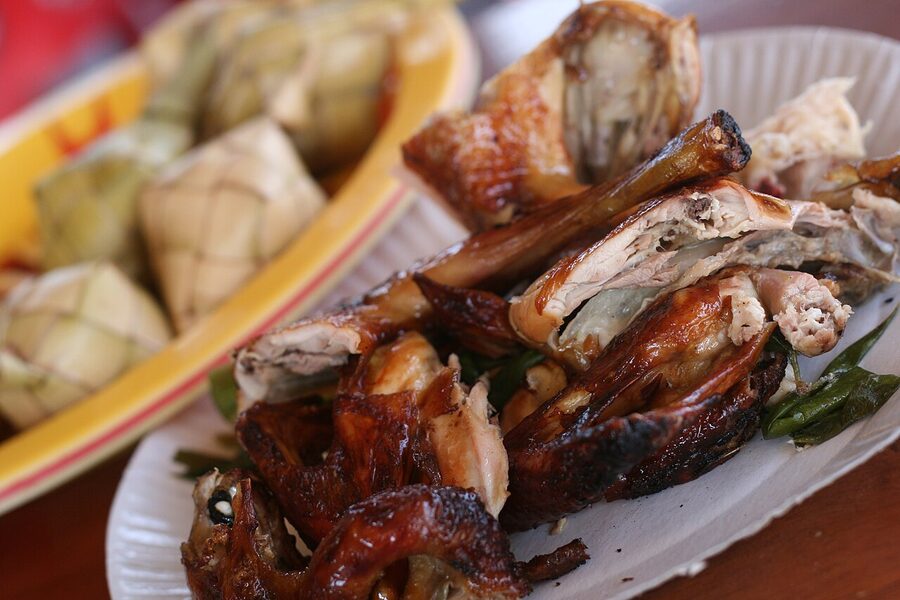
Marinated rotisserie chicken; technically not street food (it’s a chain category), but you encounter it wherever there’s a strip of carts. The two big chains: Andok’s (sweeter marinade) and Baliwag (more savoury, garlicky). Half chicken 90-120 pesos with garlic rice and vinegar dip. People fight about which is better; there’s no winner. Pick the shorter queue.
What’s Overrated in Manila Street Food
The part most guides skip. Take or leave:
Dancing inasal stalls in tourist food courts. Grilled-chicken (inasal) shows up everywhere from Mall of Asia to Greenbelt with names like “Authentic Bacolod Inasal.” Most aren’t, most are expensive (250-350 pesos a quarter chicken). For real inasal you need Bacolod, or Mang Inasal’s actual home branch, not the airport one.
Halo-halo at BGC brunch cafés. The 450-peso “deconstructed halo-halo” is the thing you don’t want. Halo-halo is mix-mix; the whole point is it’s smashed together in a tall glass. Components artfully arranged on a slate plate is not halo-halo. Razon’s is 180 for a glass and twice the dessert.
Tutuban Night Market on Saturday. It’s gotten more crowded each year, prices up maybe a third. Friday is calmer, same food.
“Authentic balut tasting” tours. Some operators charge 1,500-2,000 pesos for one balut and a lecture. A walking vendor on Roxas charges thirty. The lecture is free.
Fishballs from carts that’ve sat in the sun all afternoon. If the oil hasn’t been changed since lunch (look at the colour, dark brown is a no), you’ll know about it later. Specific-vendor problem, not a fishball-as-a-category problem. Choose busy stalls.
Street Food Etiquette and Safety
Manila street food, in the main, won’t make you sick. Filipinos eat it daily; the foreign-tourist food-poisoning rate is roughly in line with the rest of Southeast Asia. A few rules tip the odds further in your favour:
Eat where locals eat. Volume is your best safety check. A stall moving food for two hours has fresh oil, fresh meat, and a working hygiene routine. A stall with cold food and no customers is the one to skip.
Hot food, hot off the grill. Anything cooked in front of you, charcoal-grilled, deep-fried, or boiling in a pot is the safest category. Risk rises with cold pre-prepared things sitting out: cut fruit, room-temperature noodle bowls, pre-mixed sauces in open containers.
Skip tap water. True in any Manila restaurant, not just street. Sealed bottled water and canned soft drinks only. Ice is fine in chains and proper restaurants (machine-made, filtered); ice in a roadside cooler is a coin flip.
Watch the dipping bowls. The shared chili-vinegar bowl on every fishball cart is, by Western standards, not textbook. Most Filipinos use it without consequence. If uneasy, ask for a fresh small dish (“may bagong sawsawan po?”, “is there a fresh dipping sauce?”); most vendors pour you one.
Balut etiquette. Don’t crack the shell open and flashlight the embryo. Don’t film the vendor without asking. Crack a small hole, sip the soup first, peel as you go. Tip a peso or two above asking. Vendors are generally fine with cultural tourism if you treat them with respect.
Two basic Tagalog phrases. “Magkano po?” is “how much?” Use the po (a respect particle to elders or strangers); even a clumsy use scores points. “Pwede po bang sumubok?” is “may I taste a sample?”, useful at a kakanin tray. The Filipino response to a foreigner trying both is very kind.
Cash, small bills. Hundreds and twenties. 500s and 1,000s are an inconvenience for a 15-peso transaction; the vendor often won’t have change. ATMs everywhere; easiest is inside any 7-Eleven.
If you do get sick. Standard Filipino remedy is lugaw with ginger broth and imodium from a 7-Eleven counter (ask by name). Most upset stomachs resolve in 24 hours. If you’re running a fever or symptoms last over two days, the major hospitals (St Luke’s BGC, Makati Medical, Asian Hospital) have international patient desks and accept travel insurance.
How to Plan a Street-Food Day
If you want a single day of street eating, the route I’d run:
6:30am: chase the taho vendor’s call in your neighbourhood. One cup standing up. Walk to the nearest 24-hour silog joint, tapsilog and coffee. By 8am you’re under 200 pesos and functional.
Mid-morning: Grab to Salcedo Saturday Market if it’s the right day, any Makati café if not. By noon, LRT-1 to Quiapo (Carriedo station). Spend the afternoon walking the basilica plaza out along Hidalgo and Carriedo: kwek-kwek, isaw, fishballs, palabok, one halo-halo to cool down.
Cross Quezon Bridge by 5pm into Binondo. Sit at Wai Ying or Chuan Kee for mami, siopao, lumpiang shanghai. Don’t fill up. By 7pm Grab south to Roxas Boulevard for the sunset ihaw run. One stick of everything, shared. 9pm balut from a walking vendor. 10pm you’re done, you’re at peace, and you’ll dream about pork fat. This is also the food-heavy spine of the three-day Manila itinerary.
From the budget hostels in Poblacion or Malate, the whole circuit costs less than one sit-down dinner at most BGC restaurants. That’s the headline argument for street food in Manila. Real food, fair prices, the city without the polish.
FAQs
Is Manila street food safe to eat?
Generally yes, if you choose busy stalls, eat hot food cooked in front of you, drink only sealed bottled water, and use judgement on shared dipping bowls. Most foreign visitors don’t get sick. The real risks are cold prepared food sitting out and tap water/ice from non-reputable sources.
How much should I budget for a street-food meal?
Three hundred to five hundred pesos a day eats very well. Five fishballs are 10 pesos, an isaw stick 5-10, a palabok bowl 40-60, a halo-halo 60-200, a tapsilog 80-120. A full crawl across multiple neighbourhoods comes in under one BGC fine-dining entree.
Where’s the best place for first-time street-food eaters?
Mercato Centrale in BGC on Friday or Saturday night for a sanitised but real intro. Quiapo around the basilica from 5pm onward for the genuine thing. Salcedo Saturday Market in the morning for regional Filipino specialties without the curb stools.
Can I drink the water at street food stalls?
No. Sealed bottled water or canned soft drinks only. Same rule in any Manila restaurant. Ice is fine in air-conditioned chains (machine-made, filtered); at roadside stalls it’s a gamble.
What’s a fair price for a stick of isaw?
Five to ten pesos at most genuine local stalls. Fifteen is a tourist quote; twenty is firmly tourist. Higher-end ihaw places creep up to 25-30, which is overpaying.
Should I try balut?
Yes, if you’re at all curious. Start with a 14-day egg, sip the soup first, peel as you go. 20-30 pesos from a walking vendor; not a 1,500-peso “tasting tour.”
What time of day is best for street food?
5pm to 10pm is when ihaw-ihaw stalls fire up and most carts are out. Pre-dawn (5:30-7am) is taho and silog. Lunch is Binondo territory. Saturday morning is Salcedo. Friday-Saturday nights belong to Mercato.
Do I need a guide or can I go solo?
Solo is fine. Point-and-pay works without language skills, and the neighbourhoods above are all safe with normal urban-travel awareness. A guide is useful if you want names and history while you eat, or if you have one short evening and want a planned route.