
Here is the contradiction nobody warns you about before you arrive in Manila. The best food in the Philippines is not in Manila. It is an hour and a half north, in a province most foreign visitors will never put on the itinerary, and a fair number of locals from the south have not bothered to drive up either. Pampanga has been the country’s culinary capital for two hundred years, and you can blow through the whole of a Manila trip without anyone telling you that.
I have been driving up to Pampanga for as long as I have been writing about food, and the trip still rearranges what I think Filipino food can do. So this is the day plan I run when a friend lands at NAIA and wants the real thing, not another Greenbelt mall lunch. Sisig where it was invented. Lechon stuffed with rosemary and lemongrass. A dessert that tastes like a savoury blancmange. A cake of meringue and cashew that sounds wrong on paper and works in person. And, if your stomach is up to it, mole crickets and stuffed frog.
This site uses affiliate links. If you book a tour or a transfer through one of them, we may earn a small commission at no extra cost to you. The food, the opinions, and the stomach ache are entirely my own.
In This Article
- Why Pampanga Is the Country’s Culinary Capital
- The Day Plan: Leave Manila by 7am, Back by 8pm
- Getting There From Manila
- Private Car With Driver (My Default)
- Genesis or Five Star Bus to Dau
- P2P Bus or Shared Van
- What to Eat in Pampanga
- Sisig at Aling Lucing’s, Angeles City
- Sizzling Sisig (the Modern Plate That Took Over Manila)
- Lechon Pampanga vs Cebu
- Bringhe (Pampanga’s Paella)
- Kare-Kare With Oxtail and Tripe
- Betute and Camaru (Adventurous Diners Only)
- Tibok-Tibok (the Carabao Milk Dessert)
- Sansrival (the Cake That Looks Wrong on Paper)
- Turrones de Casuy (Cashew Nougat to Take Home)
- Where to Go: Restaurants and Heritage Stops
- Aling Lucing’s, Angeles City
- Mila’s Tokwa’t Baboy, Angeles
- Razon’s of Guagua
- Atching Lilian Borromeo’s Cooking Class, Mexico (Pampanga)
- Apag Marangle, Bacolor
- Bale Dutung, Angeles (When Open)
- Susie’s Cuisine and Everybody’s Café
- Honourable Mentions
- The Cooking Class Option
- The Sisig Question: Original vs Sizzling Plate
- When to Go and What to Skip
- Frequently Asked Questions
- How long is the drive from Manila to Pampanga?
- Is a Pampanga food day doable without a car?
- What is the difference between Pampanga sisig and Manila sisig?
- Is Pampanga lechon better than Cebu lechon?
- Are betute (stuffed frog) and camaru (mole crickets) safe to eat?
- How much should I budget for a Pampanga food day?
- What should I bring back to Manila?
Why Pampanga Is the Country’s Culinary Capital
The short version of how Pampanga ended up as the food brain of the Philippines runs through the eighteenth and nineteenth centuries, when the Spanish friars who controlled the parishes here trained the local cooks in the technique of European court kitchens. Pampanga was rich, fertile, and close enough to Manila that the colonial elite passed through. The friars taught Spanish baking, Spanish stewing, the slow-braise treatment of meat, the rendering of pork fat. The cooks were Kapampangan, and they were good. Within a generation or two, Kapampangan kitchens were the gold standard for the entire archipelago.
What you eat on this trip is the residue of that training, plus everything that has happened since: American military influence from the Clark Air Base era (sisig is partly a Clark story), the lahar disaster after the 1991 Mt Pinatubo eruption that scattered families and recipes, and the more recent generation of celebrity Kapampangan chefs (Claude Tayag, Sau del Rosario) who have brought the food into proper restaurants without sanding off the local edges.
I am not going to pretend you can taste two centuries of history in a single day. But you can taste enough to understand why Filipino food is having a global moment right now and why so much of that moment traces back to one province north of Manila. If you are also building a wider Manila itinerary around food, the Manila restaurant survival guide and the street food map from Quiapo to Binondo are the two pieces I would put on either side of this Pampanga day.
The Day Plan: Leave Manila by 7am, Back by 8pm
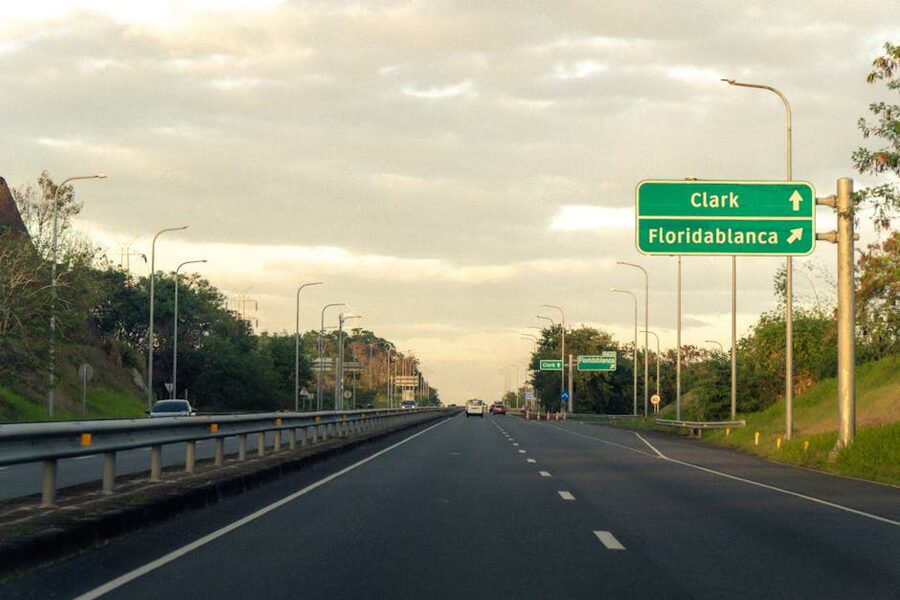
Pampanga is roughly 80 to 100 km north of Manila depending on which town you target. On a clean run, two hours. On a real Manila morning, three. The drive is mostly along NLEX (North Luzon Expressway), which is straight and dull and the safest stretch of highway in the country. You exit at Dau (for Mabalacat and Angeles), San Fernando (for the provincial capital and the Mexico cooking-class spots), or Apalit/Guagua (for Razon’s, Apag Marangle, and the Bacolor side).
This is the day I run. I leave Makati or BGC at 6:30 or 7am with the driver already paid for and a flask of coffee. First stop, Atching Lilian’s heritage breakfast or a market warm-up in Apalit. By 11:30 you are in Angeles for the original sisig, lunch with the locals at Mila’s. Mid-afternoon dessert at Razon’s of Guagua. A late stop at Susie’s Cuisine for the kakanin haul to take home. Back in the car by 5:30, and on the EDSA traffic at sunset, which is its own kind of Manila experience. Home by 8.
Five food stops is the right number. Six is too many; you arrive at the last one too full to taste anything. Four is enough if you build in a cooking class. The temptation to add a stop at the Mt Pinatubo crater or the Sandbox adventure park in New Clark is real, and I would resist. This is a food day. Treat it like one. If you want a non-food day-trip alternative, the day-trips hub covers Tagaytay, Corregidor, and the Bataan options.
Getting There From Manila
You have three real choices. Pick the one that matches your travel style and how locked-in you want the schedule to be.
Private Car With Driver (My Default)
Cost: ₱3,500 to ₱4,500 (~$60 to $80) round trip with driver included for a full day, depending on the operator and whether you want a sedan or an SUV. This is the way I do it nine times out of ten. The car waits while you eat. The driver knows the back road from Angeles to Guagua. You can add or skip a stop on the fly. You can put a sleeping toddler in the back seat. Book through your hotel, through Klook, or through a long-running Pampanga tour operator. If you want a guided version with a Kapampangan host who actually knows the chefs, those run ₱5,500 to ₱8,000 per head and are worth it for first-timers who want context with the meal.
Genesis or Five Star Bus to Dau
Cost: ₱200 to ₱350 (~$4 to $6) one way, depending on whether you take air-con regular or first-class. Buses leave from Cubao or Pasay every 20 minutes through the morning and run to Dau Bus Terminal in Mabalacat, which is the practical jumping-off point for Angeles. From Dau you take a Grab or a tricycle to whichever restaurant you are starting with. This is the cheap, gritty version. It works fine if your day is Angeles-centred, you eat at two or three places within walking distance of each other, and you are happy to come home with a plastic bag full of leftovers on the bus. It does not work for the Bacolor or Guagua spots, which need a private car.
P2P Bus or Shared Van
Cost: around ₱200 to ₱250 (~$4) one way for the P2P from Cubao to Dau. The Genesis P2P runs the same route as the regular bus but skips the in-town pickups, so the trip clocks at 90 minutes when traffic cooperates. Shared vans run too but the schedule is opaque and the comfort level depends on who is driving. I would only take a shared van if a hotel concierge has a specific operator they vouch for.
If you are still building the wider Manila transport picture (Grab, jeepney, MRT, the airport bus), the Manila transport guide covers all of that.
What to Eat in Pampanga
Each of these dishes is worth the trip on its own. Together they make the case that Kapampangan cuisine is the most technically interesting regional food in the country.
Sisig at Aling Lucing’s, Angeles City
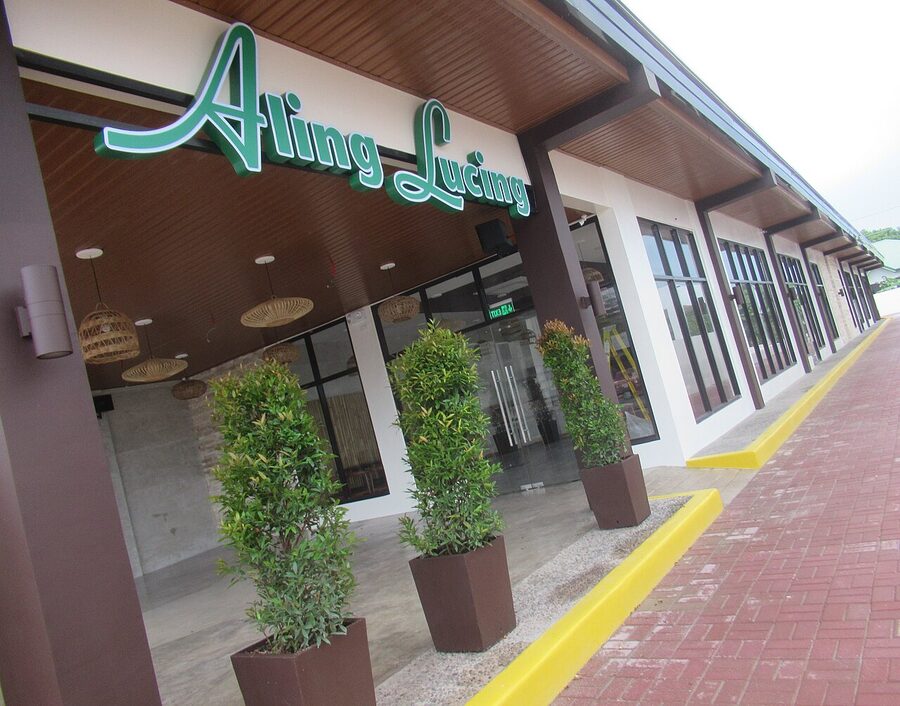
Sisig is the dish that put modern Kapampangan cuisine on the global map, and it was invented by a woman named Lucia Cunanan in Angeles City in the 1970s. She is known as Aling Lucing, and the family still runs the original spot on Glaciano Valdez Street. The space has been rebuilt and tidied up over the years; the recipe has not. Order the sisig (₱200 to ₱300 a portion), a side of rice, and a calamansi on the table. Eat it before it cools.
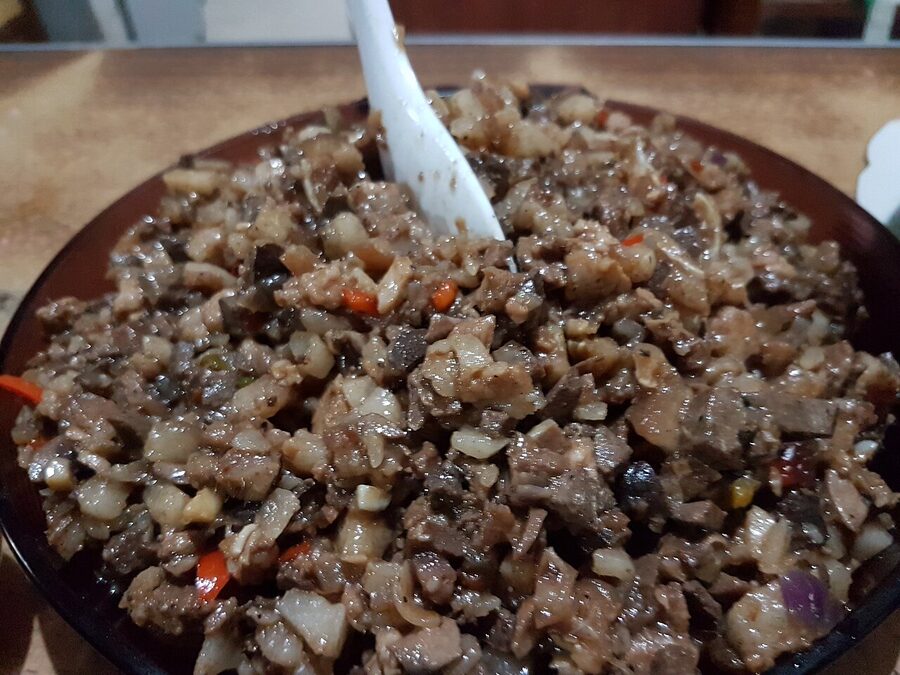
The original Aling Lucing’s sisig is chopped pig ear, cheek, and liver, seasoned with calamansi, onion, and chili. The defining choice was Lucia’s: she boiled the pork, then grilled it, then chopped it. The smoke was the signature. What you get on the plate is savoury, slightly fatty, slightly sour, and quiet. Almost no fanfare. It is, as the locals will tell you, the inventor’s version, before everything got loud.
Sizzling Sisig (the Modern Plate That Took Over Manila)
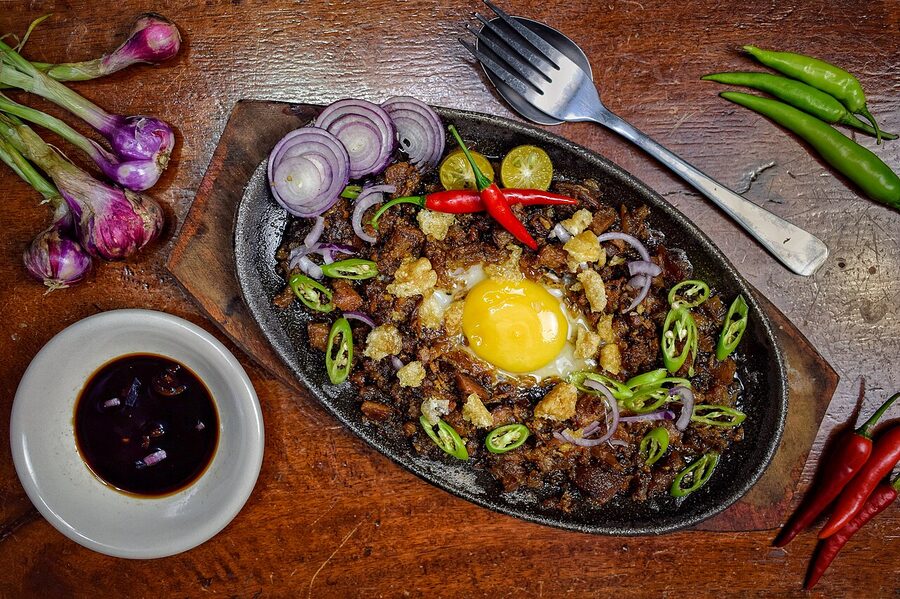
The sisig you eat in Manila bars and Greenbelt restaurants, the one that arrives on a sizzling cast-iron plate, is a later evolution. The story I have heard most often is that someone in Angeles started serving sisig on the spent grill hot plate to keep it warm, the egg got cracked into it for richness, the mayo crept in, the chicharon followed, and within a decade it had become the standard sisig in the rest of the country. Manila treats sizzling-plate sisig as the canonical version. Pampanga purists will tell you the original is what Aling Lucing serves, and the rest is a bar-snack remix that drifted away from the source.
Both are good. They are different dishes. Eat the original at Aling Lucing’s first, ideally with no preconception, and only then judge the sizzling-plate version when you get back to Poblacion or Quezon City. If you have the chance to compare side by side at a place like Mila’s Tokwa’t Baboy, even better.
Lechon Pampanga vs Cebu
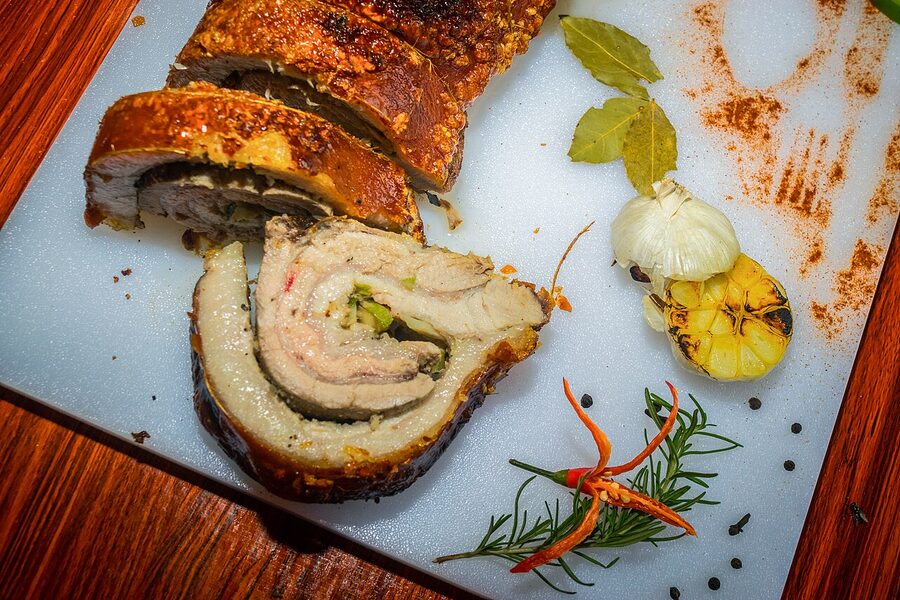
The Cebuanos and the Kapampangans will fight over lechon until the cows come home. I am not going to settle it. What I will tell you is that they are doing different things to the same animal. Cebu lechon, which Anthony Bourdain once called the best pig ever, is salt and lemongrass and bay leaf and skin so crisp it shatters under a knife. Pampanga lechon takes the same animal and stuffs the cavity with rosemary, lemongrass, tamarind leaves, and aromatics, then roasts it slow. The result is a deeper, herbier flavour. The skin is good but it is not the headline. The meat is.
You can eat Pampanga-style lechon at Apag Marangle in Bacolor, at Abe’s Farm in Magalang (when the farm is open for service; check Instagram before you drive out), or at any of the Sunday-lunch spots where a whole pig is the centre of the table. Plan for ₱600 to ₱900 (~$10 to $16) per person if lechon is on the order. The smaller boneless lechon belly version, which has spread to Manila in the last few years, is what you will see most often plated up; the full whole-pig version is a special-occasion dish you usually need to pre-order or come with a group of six.
Bringhe (Pampanga’s Paella)
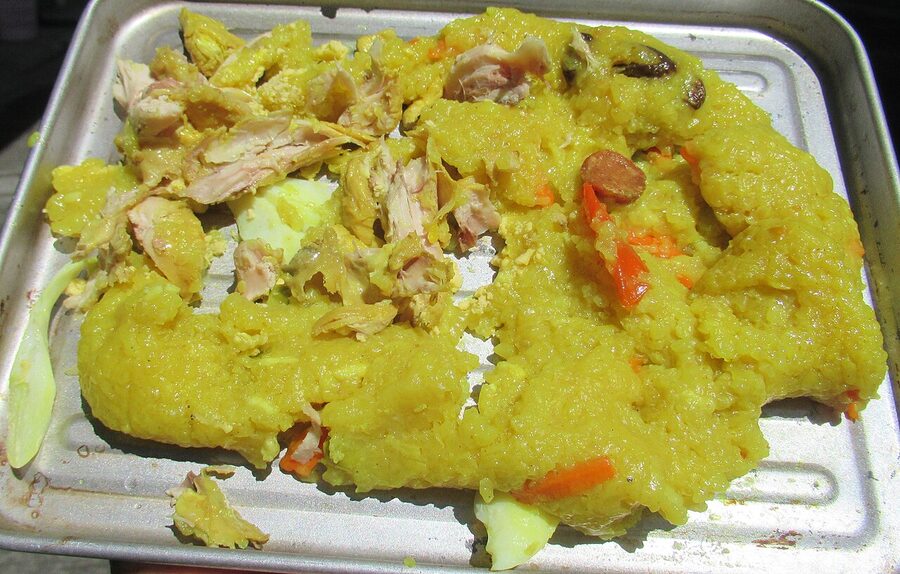
Bringhe is the Kapampangan answer to paella, and it is what a Pampanga grandmother makes for Sunday lunch when there are eighteen relatives in the house. Glutinous rice cooked in coconut milk and turmeric, studded with chicken, chorizo, and sometimes egg or chicken liver. The colour is a deep saffron-yellow that comes from the turmeric (luyang dilaw), not from saffron. The texture is sticky, almost risotto-like at the centre and slightly crusty at the edge of the pan if it has been done properly.
The Bringhe at Abe’s Farm in Magalang is the version I keep going back for. Apag Marangle does a clean rendition too. If your day plan does not include either of those, Susie’s Cuisine in Angeles sells smaller portions to take away, which is one of my favourite ways to eat it: bringhe in the back of a moving car, between stops, before the next meal. Not exactly fine dining, and exactly what a food trip is for.
Kare-Kare With Oxtail and Tripe
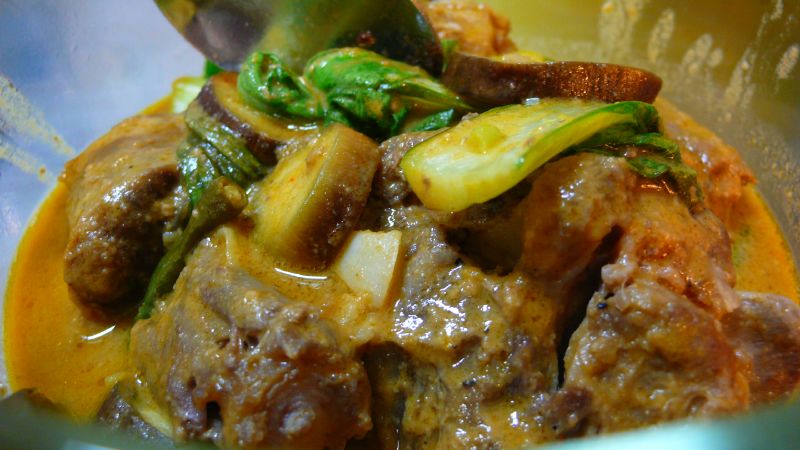
Kare-kare is one of those dishes every Filipino region claims, and Pampanga’s claim is as old as anyone’s. It is a peanut and annatto stew with oxtail, tripe, and a heavy bouquet of vegetables (long beans, bok choy, eggplant, banana heart). You eat it with bagoong, the fermented shrimp paste that does most of the heavy lifting on flavour. Without bagoong it is a pleasant peanut soup. With bagoong it is one of the great dishes of South-East Asia.
The trick with kare-kare is to find a place that grinds the rice properly to thicken the sauce, browns the annatto seeds enough to colour without bittering, and does not skimp on the offal. Apag Marangle’s version is farm-fed and unfussy. The macadamia kare-kare at Cafe Fleur (Chef Sau Del Rosario’s place in Angeles) is a modern riff with crispy pork belly that has its own following. Try the traditional one first, then judge the riff.
Betute and Camaru (Adventurous Diners Only)
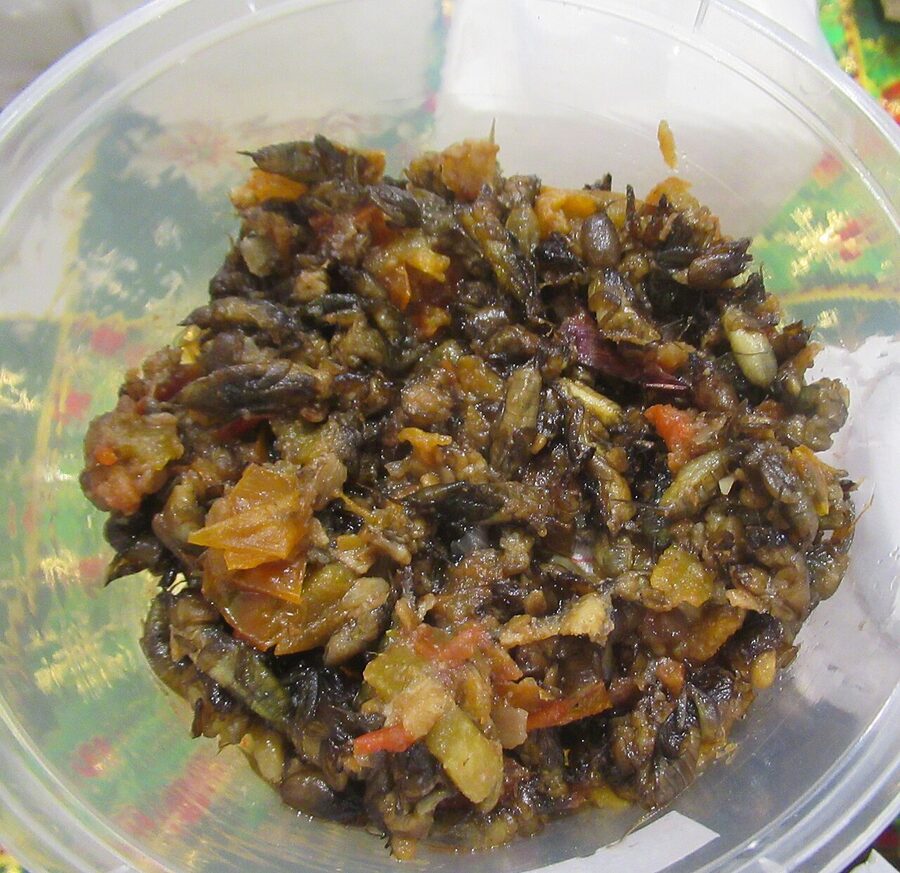
Now we are at the heritage frontier. Betute is stuffed frog. The frog is gutted, deboned, stuffed with minced pork and aromatics, then deep-fried whole. Camaru is mole crickets, gathered from the rice fields after harvest, sautéed in vinegar, garlic, and soy until they crisp up. Both are part of the older Kapampangan country diet, both have survived in a few specific kitchens, and both are easier to eat than they sound.
Apag Marangle in Bacolor is where I have had the best of both. The betute is meaty rather than gamey; you taste the pork stuffing more than the frog itself, with a slight crunch from the legs. The camaru is closer to a crispy pulutan (drinking snack) than to anything mainstream Filipino diners would call dinner. If you ordered them as a set with a cold San Mig and you did not know what was on the plate, you would think they were a particularly good fried-chicken substitute. That said, this is a dare-you order. Bring it out for the table to share, not as your main course. If frogs and crickets are absolutely not your thing, just skip the row and move on. Nobody will care.
Tibok-Tibok (the Carabao Milk Dessert)
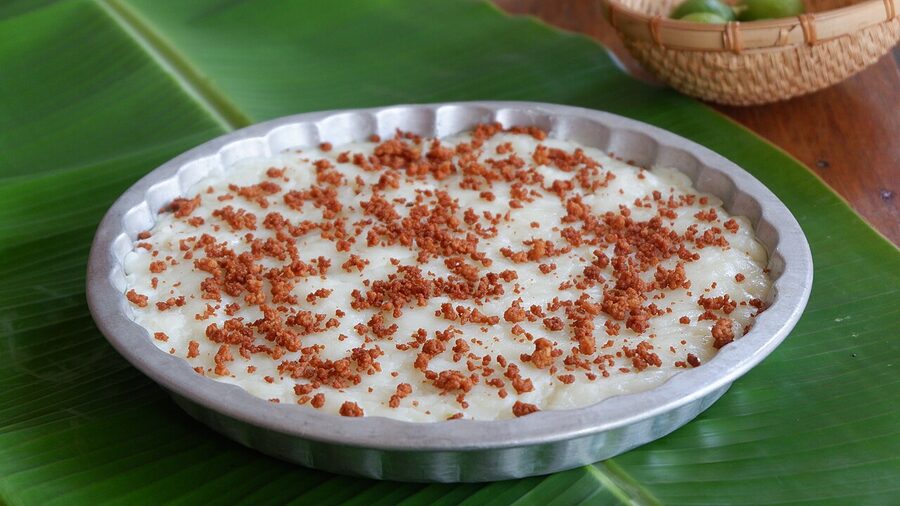
Tibok-tibok is the textural surprise of the trip. Carabao (water buffalo) milk and glutinous rice flour cooked down to a setting custard, topped with crisp latik (toasted coconut curd), served on banana leaf. The name means “heartbeat” in Kapampangan, after the slow trembling motion of the cooked milk on the spoon. It tastes like a gentler, savoury blancmange, with the carabao milk doing the heavy work on flavour. It is not aggressively sweet, which is the point.
Susie’s Cuisine in Angeles is the spot. They have been making it since 1972. A standard portion is ₱120 to ₱180 and you should buy a couple of extra to take back to Manila in a Styrofoam box. It keeps fine for a day. If you have only room for one Pampanga dessert, this is the one I would pick over halo-halo or sansrival, because you cannot easily get a good version anywhere else in the country.
Sansrival (the Cake That Looks Wrong on Paper)
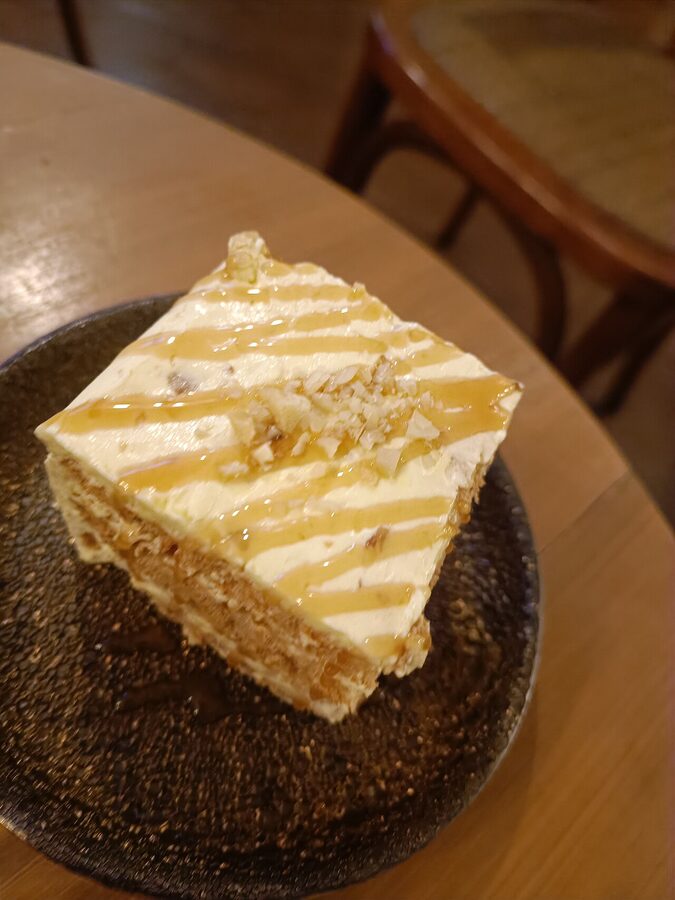
Sansrival is the second name in the title of this article and the dessert most worth driving an hour for. The origin is disputed (the Negros and Pampanga camps both claim it), but the best contemporary versions live in Pampanga bakeries and a few specific Manila branches that source from up here. It is layered cashew meringue and French buttercream, a dacquoise variant with a Filipino accent. On paper, two of those layers (heavy buttercream, sweet meringue) sound like too much. In person, the cashew gives the meringue a savoury weight, the buttercream cuts through it, and the result is a small slice that punches well above its size.
Susie’s again sells small individual sansrivals. The bigger sit-down version is at any of the modern Kapampangan restaurants in Angeles or San Fernando. If you want to taste a properly old-school version, ask Atching Lilian Borromeo if she has any going during your cooking class; her Mexico (Pampanga) kitchen makes a bake-it-yesterday rendition that I would put against any in the country.
Turrones de Casuy (Cashew Nougat to Take Home)
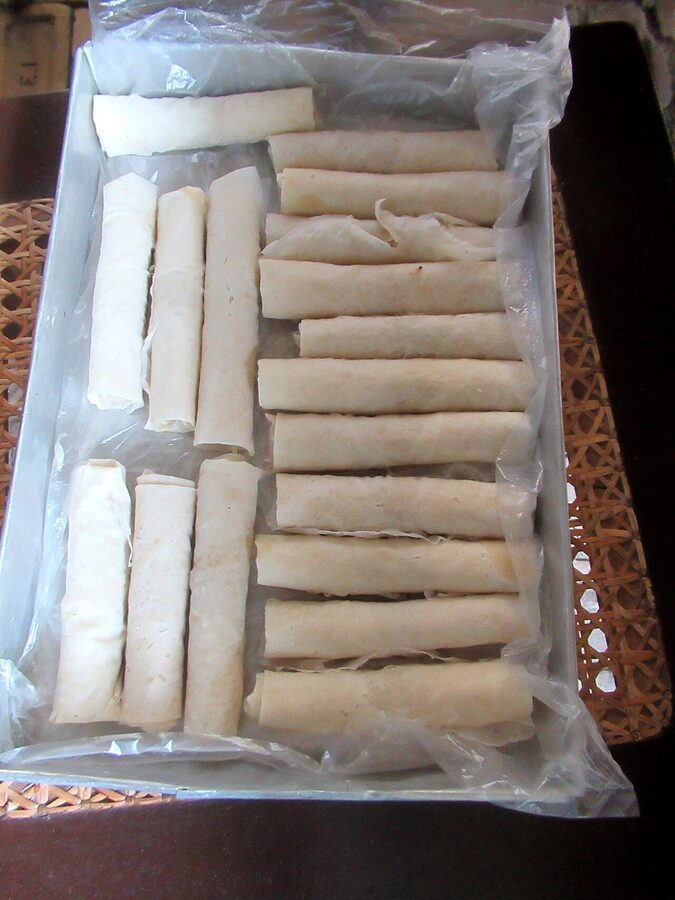
Pampanga has a quiet sideline in cashew confectionery, and the form to look out for is turrones de casuy, a cashew nougat wrapped in white rice wafer (the same papery wrapper you find on Spanish turrón). The province grows cashew, the colonial training grew the bakery technique, and the marriage produced this little square sweet that nobody outside the Philippines knows about. Buy them by the box at La Carabana or Agellie’s, or take whatever pop-up stalls are running in the parking lot of the church plazas you pass through. Twenty pesos each, eat in the car, share at the office on Monday.
Where to Go: Restaurants and Heritage Stops
Five or six places carry most of the weight on a Pampanga food day. Pick three to four for a sane day plan. Save the rest for the next trip.
Aling Lucing’s, Angeles City
Address: Glaciano Valdez Street, Brgy. Agapito del Rosario, Angeles City. The original sisig spot, run by Lucia Cunanan’s descendants. Casual canteen vibe, fluorescent lights, plastic chairs, no nonsense. Order sisig, kare-kare, and a side of pancit. Allow ₱300 to ₱500 (~$5 to $9) per person. Open most days for lunch and dinner; check the Facebook page before you drive because hours can shift on Sundays.
Mila’s Tokwa’t Baboy, Angeles
Address: San Andres Street, Brgy. San Angelo, Angeles. A locals’ carinderia with the best tokwa’t baboy (tofu and pork, vinegar, soy, chili) in the city. The sisig here is also excellent and gives you a useful comparison point if you are doing the original-vs-modern taste test on the same day. ₱200 to ₱350 (~$4 to $6) per head. Tiny, busy, fast turnover. Get there before noon if you want to sit.
Razon’s of Guagua
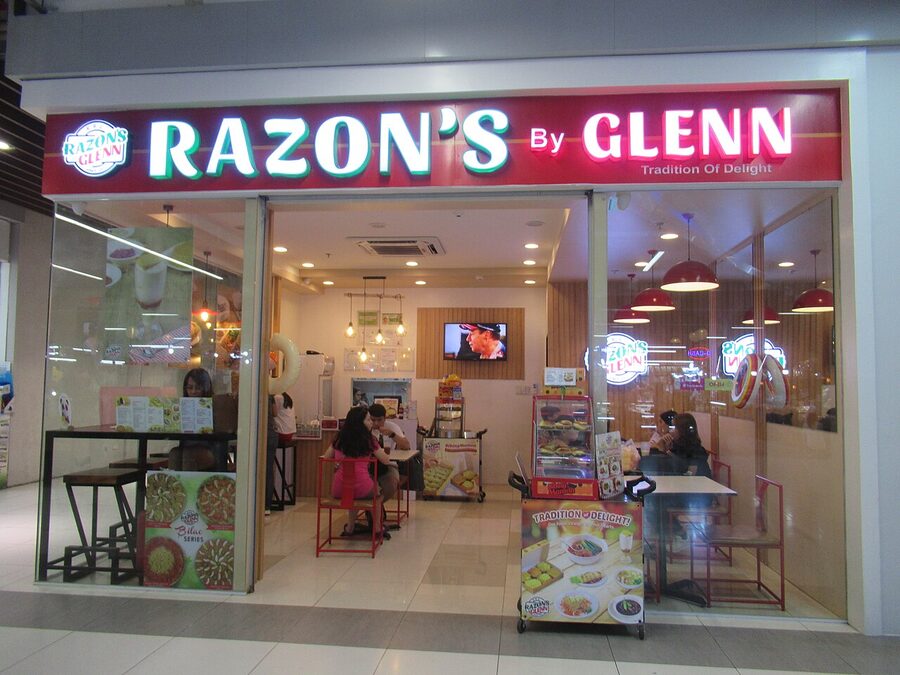
Address: O.G. Road, San Juan Nepo Betis, Guagua. The house that pancit luglug and halo-halo built. Razon’s is famous for two things: a halo-halo that has only four ingredients (sweetened banana, macapuno, leche flan, and milk-based shaved ice), and a pancit luglug that the Manila branches have been chasing for decades. The original spot in Guagua is the one to drive to. Halo-halo at ₱150 to ₱180 (~$3) per glass; pancit luglug at ₱180 to ₱220. Stop here in mid-afternoon between lunch and dinner; do not leave without ordering both.
Atching Lilian Borromeo’s Cooking Class, Mexico (Pampanga)
Address: Brgy. Parian, Mexico, Pampanga. Atching Lilian (atching is the Kapampangan word for elder sister) is one of the country’s most respected heritage cooks and the woman who has done the most to keep the older Kapampangan recipes alive. Her half-day class typically runs ₱2,500 to ₱3,500 (~$45 to $60) per head depending on the menu and group size, and you eat what you cook. The class includes a Kapampangan breakfast spread (tamales, longganisa, dinuguan, traditional pastries) and a one-dish hands-on lesson, usually a tamales or a bringhe. Book directly through her Facebook page or via Manilakad, the Kapampangan walking-tour group that runs scheduled trips. This is the single best money you can spend on a Pampanga day if you actually care about the food.
Apag Marangle, Bacolor
Address: Jose Abad Santos Avenue, Sta. Barbara, Bacolor. A free-range farm restaurant with the most ambitious Kapampangan menu in the province. This is where I send people who want to try betute, camaru, kare-kare, and a proper Pampanga lechon in one sitting. The setting is more rustic than Bale Dutung but nothing about the food is dialed back. Allow ₱600 to ₱1,000 (~$10 to $18) per person and book ahead on weekends.
Bale Dutung, Angeles (When Open)
Bale Dutung is Chef Claude Tayag’s home dining experience in Angeles. It is not a restaurant; it is a long Kapampangan tasting lunch served in his actual house, and you book in advance through his team. When it runs, the price is around ₱4,500 (~$80) per head and the meal is a four-hour affair that doubles as a lecture on Kapampangan history. Bourdain ate here. So has every visiting food writer of any consequence in the last twenty years. Bale Dutung’s availability shifts by season and by the chef’s schedule; if you want a Pampanga meal and you have the budget, email at least a month ahead and check the current status. If it is open while you are visiting, cancel something else.
Susie’s Cuisine and Everybody’s Café
Susie’s Cuisine (multiple branches in Angeles, including Nepo Mart and Dau) is the take-away kakanin and merienda store I keep coming back to. Tibok-tibok, sansrival, pancit, suman, ube macapuno, all of it. Plan to leave with a bag the size of a small dog. Allow ₱500 to ₱800 (~$9 to $14) for a proper haul.
Everybody’s Café (Mac Arthur Highway, San Fernando) is the older sister, founded in 1946. It is the place to eat sisig, kare-kare, and exotic-menu items (crickets, frog, crocodile when in season) in a more sit-down setting than the Angeles canteens. ₱500 to ₱900 per head. Solid food, longer history, calmer room.
Honourable Mentions
Abe’s Farm in Magalang (a quieter sibling of the Manila Abe restaurants, with bringhe and bamboo rice that I rate above the Manila branch) is worth the detour if your day plan stretches that far north. Cafe Fleur and 25 Seeds in Angeles, both Chef Sau Del Rosario’s projects, are the place for modern Kapampangan: sisig paella, macadamia kare-kare, pata tim. The Manila Abe at Serendra in BGC is fine but the Pampanga original is what we are here for. If you are also doing a Manila restaurant round, the same names will come up in the Manila where-to-eat list.
The Cooking Class Option
If you have the time, take the cooking class. Atching Lilian’s is the obvious one, and Manilakad runs a few other heritage-cooking classes through the year. Half a day, two to four hours of hands-on cooking, lunch at the end. You leave understanding why Pampanga food tastes the way it does in a way that no amount of restaurant grazing will give you. ₱2,500 to ₱4,500 (~$45 to $80) per head, depending on the menu and the class size.
If you only have time for either a class or a meal at Bale Dutung, I would pick the class for first-timers and Bale Dutung for repeat visitors. The class teaches; Bale Dutung shows. Both are worth the day.
The Sisig Question: Original vs Sizzling Plate
This deserves its own section because it is the question I get asked most often by friends who have only eaten sisig in Manila bars. The short answer: both are real, both are good, neither is “fake,” and the people who say one is the only correct version are usually trying to sell you a particular take.
The original Aling Lucing’s sisig (1970s, Angeles): boiled, grilled, chopped pork ear and cheek, seasoned with calamansi, onion, chili. Served on a regular plate. Quiet. Smoky. The dish Lucia Cunanan invented and registered into culinary memory.
The sizzling-plate sisig (Manila, late 1980s onward): chopped pork served on a hot cast-iron plate with a raw egg cracked on top, often with mayonnaise and pork rinds folded in. Loud, fatty, fun, photogenic. The version most foreign visitors and most younger Filipinos think of when they think of sisig.
What changed: the Manila bar scene wanted theatre with the food, and the egg, the heat, and the mayo all gave the dish a beer-snack identity that travelled well. Once Anthony Bourdain put sisig on television in the 2000s, the sizzling-plate version became the global ambassador. The original kept on quietly serving its quieter version on Glaciano Valdez Street, which is exactly what the Cunanans wanted. If you are in Pampanga, eat the original. If you are in BGC at midnight, eat the sizzling. They are not in competition.
When to Go and What to Skip
Best months: November to February, when the weather is dry and the highway runs clean. The other useful month is December, when the San Fernando Giant Lantern Festival lights up the provincial capital on the Saturday before Christmas Eve and the lechon volume goes through the roof. If you only have one Pampanga day to spare in a year, the lantern festival weekend is the one to aim for.
Worst months: June through September, the rainy season, when NLEX traffic at the toll plazas can stretch the drive to four hours each way and Pinatubo lahar runoff occasionally closes the Bacolor and Guagua side roads. Plan a different day trip.
Things I would skip on a food-focused day: the Clark mall food courts (you came all this way to eat the Korean-mall version of sisig?), the Sandbox adventure park unless you have kids in tow, the Mt Pinatubo crater trek (a different day, half day minimum, do not try to combine it with a serious eating itinerary), and any tour that promises to do “Pampanga in three hours.” That is not a Pampanga food day. That is a passing-through visit that ends with you regretting the petrol you spent.
Two more practical notes. First, most of the older Kapampangan restaurants close by 8pm and several do not open Sundays at all; check Facebook before you drive. Second, do not try to combine Pampanga and Tagaytay in one day. They are in opposite directions, both eat half a day’s drive, and you will end up doing neither properly. If you have to choose between them, the Tagaytay guide covers the southern option and the three-day Manila itinerary shows where Pampanga fits naturally on a longer trip (Day 3, Option B, with hotel back in Makati or BGC).
Frequently Asked Questions
How long is the drive from Manila to Pampanga?
On a clean morning, two hours from Makati or BGC to Angeles via NLEX. On a real Manila day, two and a half to three. Leave by 7am to avoid the worst of the south-bound rush, and you will get to Apalit or Mexico in time for breakfast.
Is a Pampanga food day doable without a car?
Yes if you stick to Angeles and do two or three places within walking or short Grab distance. Take the Genesis bus to Dau Bus Terminal, hire a Grab from there, eat at Aling Lucing’s, Mila’s, and Susie’s, and return on the evening bus. You miss the Bacolor and Guagua spots (Apag Marangle, Razon’s), which need a car or a guided tour to reach efficiently.
What is the difference between Pampanga sisig and Manila sisig?
The original, Aling Lucing’s-style sisig is chopped boiled-then-grilled pork ear and cheek, seasoned simply, served on a regular plate. The Manila sizzling-plate sisig is the same chopped pork served on a hot cast-iron plate with a raw egg, mayo, and chicharon, evolved in Manila bars in the late 1980s. Both are sisig. The original is quieter, the modern is louder. Eat both.
Is Pampanga lechon better than Cebu lechon?
They are different dishes from the same animal. Cebu lechon is salt, lemongrass, and a shatter-crisp skin with a clean flavour. Pampanga lechon is stuffed with rosemary, lemongrass, tamarind leaves, and spices, with a deeper herbal flavour and a meat-forward profile. If you grew up on Cebu lechon you will probably prefer Cebu. If you grew up on Pampanga lechon you will defend Pampanga. The fair answer is to eat both at least once and decide.
Are betute (stuffed frog) and camaru (mole crickets) safe to eat?
Yes. Both are traditional Kapampangan dishes that have been part of the rural diet for generations. They are deep-fried or sautéed with vinegar, garlic, and aromatics, so any food-safety concerns about the ingredients are well addressed by the cooking. If you eat any other deep-fried or stewed protein, you can eat these.
How much should I budget for a Pampanga food day?
Per person, including transport in a private car, three to four restaurant stops, snacks, and a kakanin take-home haul, expect ₱4,500 to ₱6,500 (~$80 to $115). For a couple, that lands at ₱9,000 to ₱13,000 total for the day, more if you add a cooking class or Bale Dutung dinner. Not a cheap day, but the cheapest version of “best regional cuisine in the country” you will find anywhere.
What should I bring back to Manila?
From Susie’s Cuisine: tibok-tibok, sansrival, suman, kakanin assortment. From Razon’s: a litre of halo-halo (it survives the drive in a chiller). From any pop-up stall in San Fernando or Mexico: turrones de casuy, hojaldres, pastillas, sans rival in slice form. Plan on a small cooler in the back of the car if you are doing the haul properly.
_02.jpg)


