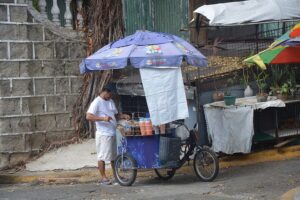
Filipino food is having its global moment. José Andrés calls Manila one of the world’s most exciting food cities. Toyo Eatery sits on Asia’s 50 Best. Lechon shows up on Netflix. Sisig is on menus from Brooklyn to Berlin. And yet most travellers still skip Manila for Bangkok, Singapore, or KL when they’re plotting an Asian eating trip.
That’s the contradiction this guide is here to fix. The food scene in Metro Manila is loud, opinionated, sometimes scrappy, and full of dishes you cannot eat properly anywhere else on earth. You just need to know where to point the Grab driver. So here’s the eating map I give friends when they land at NAIA: 30-odd restaurants from Toyo to a sisig stall on Rada Street, grouped by neighbourhood AND by occasion, with the dishes worth ordering at each one.
Affiliate disclosure: some links in this guide go to booking platforms that pay me a small commission if you book. Prices are the same for you. Restaurant recommendations are my own and I don’t take any payment from restaurants to be included.
In This Article
- Best for: Quick Picks if You’re Short on Time
- Filipino Food Has a Manila Problem (and Why It’s Worth Solving)
- Makati: The Easiest Eating in Manila
- Toyo Eatery
- Helm by Josh Boutwood
- Manam Comfort Filipino (Mega Fashion Hall flagship)
- Mesa Filipino Moderne
- Romulo Cafe
- Lampara
- Hey Handsome
- Metronome
- Sisig sa Rada (the jollijeep)
- BGC: Polished Eating in the New City
- Hapag
- Gallery by Chele
- Asador Alfonso (BGC branch)
- Wildflour Cafe & Bakery (BGC and Salcedo)
- Sebastian’s Ice Cream
- JT’s Manukan Grille
- Fowlbread
- Binondo Chinatown: The Oldest, Cheapest, Best
- Wai Ying Fastfood
- Chuan Kee
- Lan Zhou La Mien
- Dong Bei Dumplings
- Quik Snack
- Eng Bee Tin (the hopia palace)
- Master Hopia
- Globe Lumpia House
- Old Manila: Malate, Ermita, Roxas Boulevard
- The Aristocrat (the original on Roxas)
- Café Adriatico
- Bistro Remedios
- Ilustrado
- Adarna Food and Culture
- Quezon City and Kapitolyo: The Locals’ Eating Map
- Locavore Kitchen and Drinks
- Provenciano
- Rodic’s Diner
- Goto Monster
- The Filipino Dishes You Have to Get Right
- Tourist Traps to Skip
- Filipino Dishes Visitors Often Get Wrong
- Sunday Brunch and Late-Night Specifics
- Practical Eating: Budget, Tipping, Reservations
- FAQ: Where to Eat in Manila
- What’s the must-try Filipino dish in Manila?
- How much does dinner in Manila cost?
- Is Manila vegetarian-friendly?
- Where do locals actually eat in Makati for lunch?
- Do I need reservations for Toyo Eatery?
- Is Binondo safe to eat in for first-time visitors?
- Can I eat well in Manila for under ₱500 a day?
- Where to Go From Here
Best for: Quick Picks if You’re Short on Time

If you only get to read this section before your driver arrives, this is the cheat sheet.
- Best Filipino traditional: The Aristocrat on Roxas Boulevard for the chicken barbecue, then Bistro Remedios for kare-kare and Romulo Cafe for chicken relleno.
- Best modern Filipino: Toyo Eatery in Karrivin Plaza if you can get a reservation. Hapag in Kapitolyo if you can’t. Lampara in Poblacion as the wildcard.
- Best for groups: Manam Comfort Filipino at SM Mega Fashion Hall, or Sarsa at the Power Plant Mall. Both let you order in three sizes so eight people don’t have to pretend they all want the same five things.
- Best Sunday brunch: Wildflour Cafe & Bakery at Salcedo, or Café Adriatico in Malate for tsokolate eh and ensaymada under the original 1979 ceiling fans.
- Best after midnight: Goto Monster on Primo de Riveria for goto and bagnet at 2am. It’s open 24 hours and the porridge fixes everything.
- Best splurge: Helm by Josh Boutwood, ten seats, tasting menu only. Spectrum at Fairmont if you’d rather see the city while you eat.
- Best ₱500 or under: Sisig sa Rada (the jollijeep on Rada Street, lunchtime only), Mang Jimmy’s for tapsilog at 6am, or any of the Binondo Chinatown classics where ₱400 covers a feast for two.
If you want the full breakdown by neighbourhood and use case, that’s the rest of the article. I’ve grouped restaurants by area first since most of you will be picking based on “where am I tonight.” Then there’s a section pulling out the best version of each iconic Filipino dish, a tourist-trap list to skip, and an FAQ at the end with the questions I get asked most.
Filipino Food Has a Manila Problem (and Why It’s Worth Solving)
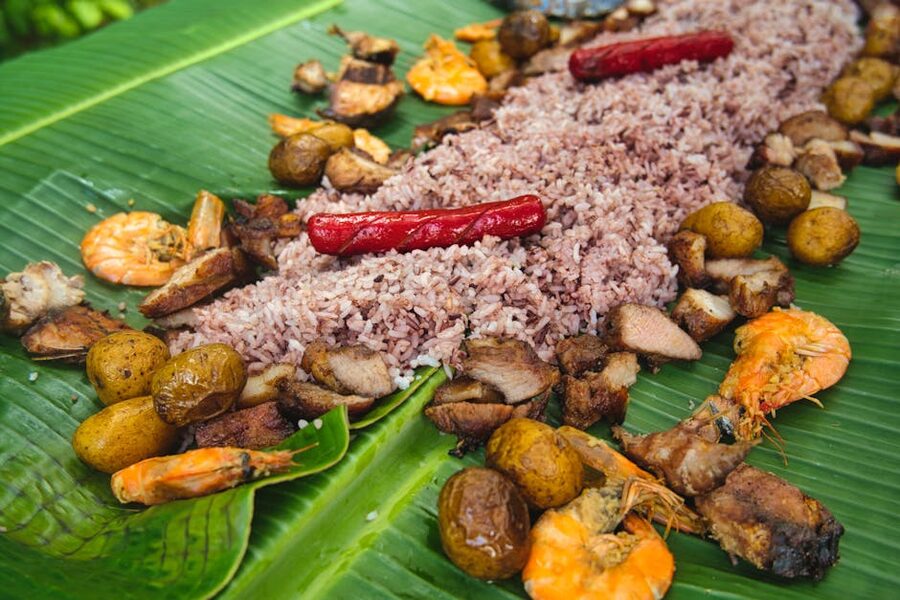
The reason Filipino food has lagged Thai and Vietnamese on the international stage is partly a marketing failure (no government did the work Thailand did) and partly a recipe issue. Filipino dishes are sour, salty, and meat-heavy in a way that doesn’t always translate well to a single photogenic plate. You need the rice. You need the dipping sauce. You need three things on the table at once. Manila is the place to do it properly because every other place serves a translated version.
What the city actually has, once you start looking, is unusual depth. The traditional restaurants have been refined over four generations of family ownership. The modern ones are doing things you cannot eat in any other capital, like Toyo’s seven-rice salad and Hapag’s smoked tuna belly with native chocolate. The Chinese-Filipino lineage in Binondo is the oldest Chinatown in the world, with dim sum recipes that predate Hong Kong’s. And underneath all of it sits a street food culture you can read about over in my Manila street food map from Quiapo to Binondo, which is the natural counterpart to this sit-down guide.
Most international travellers eat one Filipino meal in Manila and decide. Don’t do that. Pace it. Eat sisig at one place, lechon at another, kare-kare at a third. They’re three completely different cuisines under one flag.
Makati: The Easiest Eating in Manila
If you’re staying in a Makati hotel, you’ve already won the food lottery. The CBD has the highest restaurant density in the country and the easiest Grab fares. Most of the restaurants below sit within ten minutes of Greenbelt or Salcedo Village. You can eat your way through Makati for a week without repeating yourself.
Toyo Eatery
This is the one that put modern Filipino on the world map. Chef Jordy Navarra runs a tasting menu that pulls from across the archipelago, with the famous Bahay Kubo salad (named after a children’s song that lists 18 vegetables, all of which appear in the dish). The space is industrial-warehouse-meets-warm-lighting, tucked inside Karrivin Plaza, a converted plaza off Chino Roces Avenue. It’s been in the Asia’s 50 Best list multiple times and has been on most international food critics’ itineraries when they pass through.
Cuisine: Modern Filipino, tasting menu only
Area: Makati, Karrivin Plaza on Chino Roces Avenue Extension
Price: ₱4,500-6,000 per head (~$80-105) for the tasting; pairings extra
Signature: Bahay Kubo salad; pork BBQ skewer; the whole 9-course experience
Hours: Closed Mondays. Dinner only Tuesday to Saturday, lunch and dinner Sundays
Worth it for: Anyone who wants to understand where Filipino fine dining is going. Reservations open one month ahead and book out within hours.
Skip if: You want a quick dinner, you don’t drink, or you don’t enjoy tasting menus. The menu is fixed and runs about two and a half hours.
Helm by Josh Boutwood
Ten seats. Counter only. Multi-course tasting menu that changes constantly. Josh Boutwood runs a tighter ship than Toyo, with food that tilts more European-technique with Filipino ingredients (lapu-lapu in burnt onion and lemongrass tea, bacalao spheres). The room sits on the ground floor of Arya Residences in BGC, but it’s worth grouping with Makati because the BGC border is two minutes away and most diners go on from here for drinks at a BGC rooftop or Poblacion bar.
Cuisine: Modern, technique-driven, Filipino-ingredient-led
Area: Taguig, Arya Residences (BGC border)
Price: ₱5,500-7,500 per head (~$95-130)
Signature: Whatever’s on the current menu. The bacalao course comes back often.
Hours: By reservation only. Dinner only.
Worth it for: A serious quiet dinner where the food is the whole evening.
Skip if: You want conversation room. The chef is two metres away and you can hear the next table.
Manam Comfort Filipino (Mega Fashion Hall flagship)
Manam is the easiest answer to “where should we take the family for proper Filipino food.” The smart move is the Moment group’s three-portion-size menu, which lets you order small versions of fifteen different dishes for a table of four without hitting cartoon-villain levels of overordering. The crispy sisig is genuinely the best version I’ve had with a proper crust on every cubic centimetre. Their sinigang na beef short ribs with watermelon (yes, watermelon in the broth) is one of the few modern twists on a classic that actually beats the original.
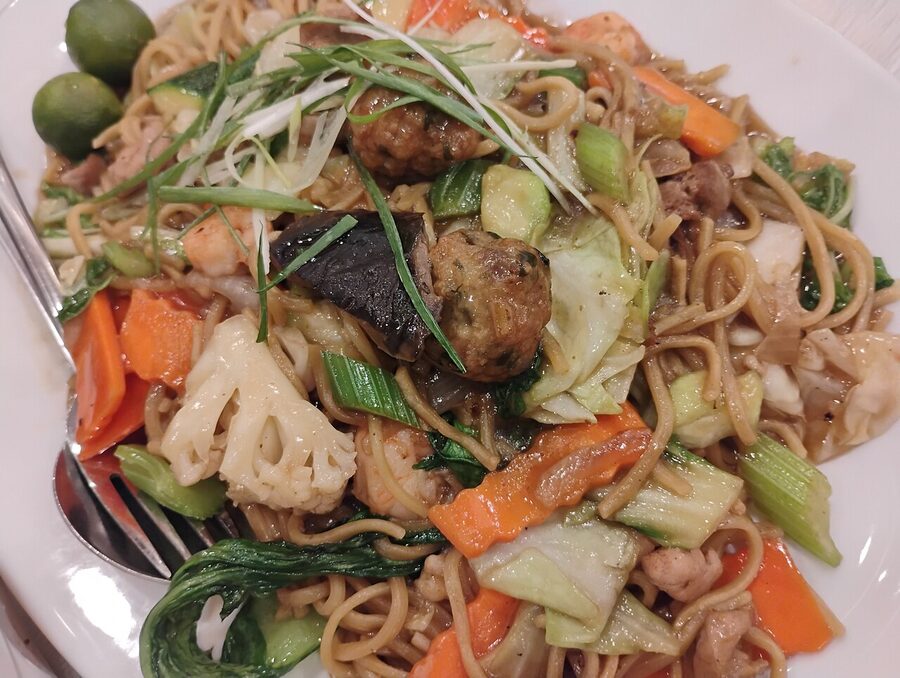
Cuisine: Modern Filipino, fast-casual
Area: Mandaluyong, SM Megamall (and several branches: BGC, Glorietta, Eastwood, Power Plant)
Price: ₱200-400 per dish; figure ₱600-800 per head
Signature: House Crispy Sisig (₱395), Crispy Pancit Palabok (₱200), Sinigang na Beef Short Ribs with Watermelon, Ube + Sago shake
Hours: 11am to 10pm daily
Worth it for: First-timers wanting a survey, families, groups
Skip if: You want quiet. The flagship is loud and lit like a mall, because it is in one.
Mesa Filipino Moderne
Mesa was set up by megastar Sharon Cuneta and her senator husband, which sounds like a recipe for celebrity-restaurant nonsense, but the food is genuinely good. Their crispchon (lechon-style crispy pork served two ways, including pandan crepes) is in the dish-of-the-decade conversation. The baby squid in olive oil might be the best version of that dish anywhere in Metro Manila. They also have a kare-kare made with beef short ribs instead of oxtail that I prefer to the original. It’s not always on the menu, so order it if you see it.
Cuisine: Filipino, modern presentation
Area: Multiple branches; the Greenbelt Makati one is the easiest
Price: ₱350-650 per dish; ₱800-1,200 per head
Signature: Crispchon, Baby Squid in Olive Oil, Crispy Sisig with Egg, Beef Short Rib Kare-Kare
Hours: 11am to 10pm daily
Worth it for: Date dinners, in-laws, the visiting friend who wants to try Filipino but isn’t sure they’ll like it
Skip if: You want the rough-and-ready version. Mesa is upscale-mall, not corner-restaurant.
Romulo Cafe
The Romulo family is one of those Manila dynasties (former president of the UN General Assembly, ambassadors, generals), and the cafe is run by his great-granddaughter. The food is what an upper-middle-class Filipino family ate at home in the 1960s, dressed up just enough for restaurant service. The chicken relleno (whole deboned chicken stuffed with pork, raisins, and chorizo) is the order. So is the kare-kareng bagnet, which substitutes Ilocano deep-fried pork belly for the usual oxtail. Try the Lola Virginia’s Chicken Relleno on a special occasion and you’ll see why people book it weeks ahead for birthdays.
Cuisine: Heritage Filipino
Area: Makati (Jupiter Street); also Quezon City (Tomas Morato)
Price: ₱350-650 per dish; ₱900-1,400 per head
Signature: Chicken Relleno, Kare-Kareng Bagnet, Pinaupong Manok
Hours: 11am to 10pm daily
Worth it for: Anyone wanting the family-table version of Filipino food, beautifully presented
Skip if: You like pork bone in your kare-kare. Bagnet is dryer and more crisp.
Lampara
Second floor of an unmarked apartment building in Poblacion. You walk past it twice. Three young chefs (RJ Ramos, Prince Tan, Alphonse Sotero) run a 30-cover dining room doing neo-Filipino food that’s more confident than restaurants twice their age. The dinuckduckan is duck dinakdakan (the Ilocano grilled-pig-face dish reimagined). The pork course is a porchetta with star anise reduction. They lean into desserts too, the yema-and-tsokolate is exactly what it sounds like and worth ordering even if you’re full.
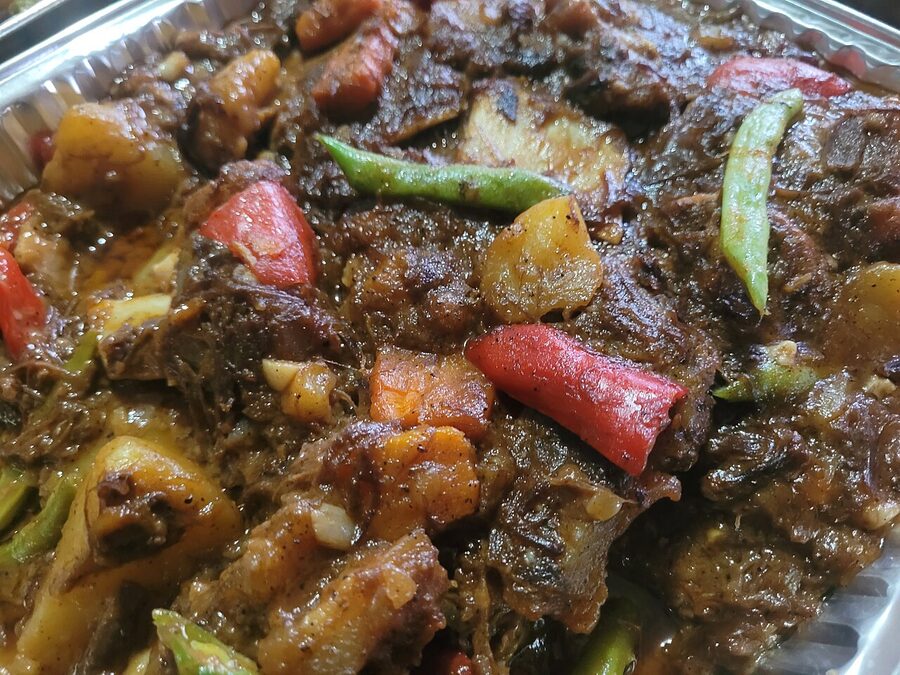
Cuisine: Modern Filipino
Area: Makati, Poblacion (Enriquez Street)
Price: ₱400-700 per dish
Signature: Dinuckduckan, the porchetta, rice cups, yema-tsokolate dessert
Hours: Tuesday to Sunday 6pm to midnight; closed Mondays
Worth it for: Younger crowd, food that pairs naturally with a Poblacion bar crawl after
Skip if: You want a tablecloth.
Hey Handsome
Singaporean-Filipino hybrid in the Smith Bell Building on Salcedo Street. Chef Nicco Santos cooks Singaporean hawker dishes (laksa, hainanese chicken, char kway teow) and has slipped Filipino touches into the margins. The laksa is the best non-Singapore version I’ve had. They also do a Sunday brunch with kaya toast, half-boiled eggs, and a kaya-coconut pancake stack. Reservations recommended for dinner; brunch is walk-in.
Cuisine: Singaporean-Filipino
Area: Makati, Salcedo Village (Smith Bell Building)
Price: ₱400-650 per dish; ₱900-1,200 per head
Signature: Laksa, Hainanese chicken rice, kaya pancakes
Hours: Tuesday to Sunday lunch and dinner
Worth it for: Anyone who’s already eaten 14 sisigs and wants something else for a night
Skip if: You haven’t eaten Filipino food yet. Save it for the second half of your trip.
Metronome
Modern French in Legazpi Village, run by Joël Robuchon-trained chef Miko Calo. This is the Manila stop where you eat foie gras tart with tamarind and ratatouille better than most places in Paris. Lunch is the smart move (a la carte and quicker), dinner runs as a tasting menu. Reservations are essential.
Cuisine: Modern French with Filipino accents
Area: Makati, Legazpi Village (Bolanos Street)
Price: ₱2,800 lunch / ₱5,500-7,000 dinner tasting
Signature: Foie gras tart with tamarind, Iberico secreto, lunch ratatouille
Hours: Tuesday to Saturday
Worth it for: Chef Calo’s technique on a special occasion. Service is excellent.
Skip if: You came to Manila to eat Filipino food, not French.
Sisig sa Rada (the jollijeep)
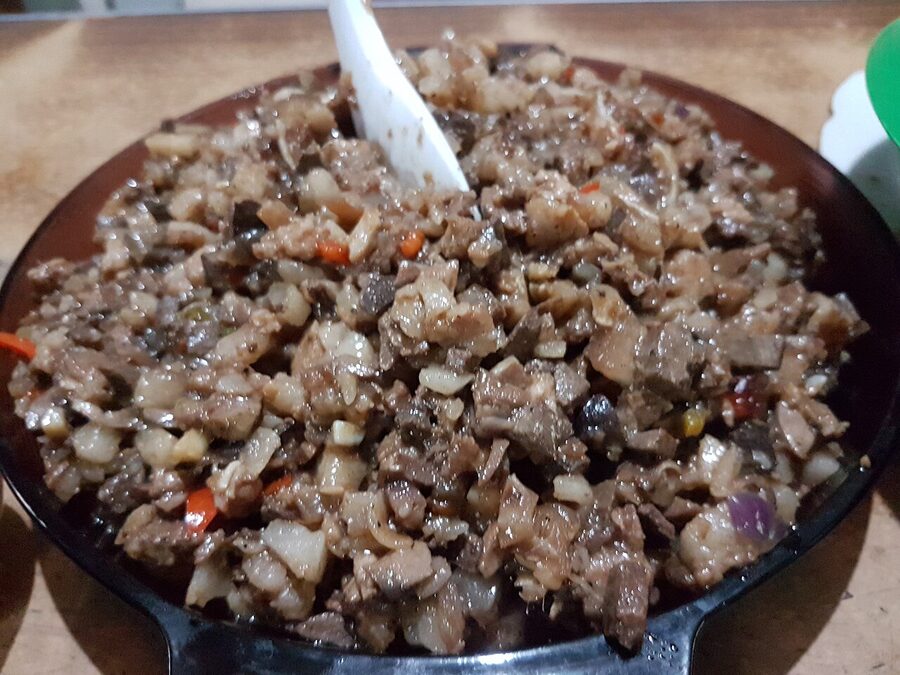
This is a food cart on Rada Street in Legazpi Village. There’s a laminated sign on the front that reads “Sisig sa Rada.” Lines start forming at 11:45am. The sisig is ₱85, served over rice, with onions, chilli, and a fried egg if you ask. It’s the lunchtime food of every office worker in this part of Makati, and it should be on every traveller’s list precisely because it isn’t on most of them.
Cuisine: Sisig over rice; that’s the menu
Area: Makati, Rada Street (Legazpi Village)
Price: ₱85 (~$1.50)
Signature: Pork sisig with egg
Hours: Lunch only, weekdays. Sells out by 1:30pm.
Worth it for: Anyone who wants to see how Manila actually eats lunch
Skip if: You need a chair.
BGC: Polished Eating in the New City
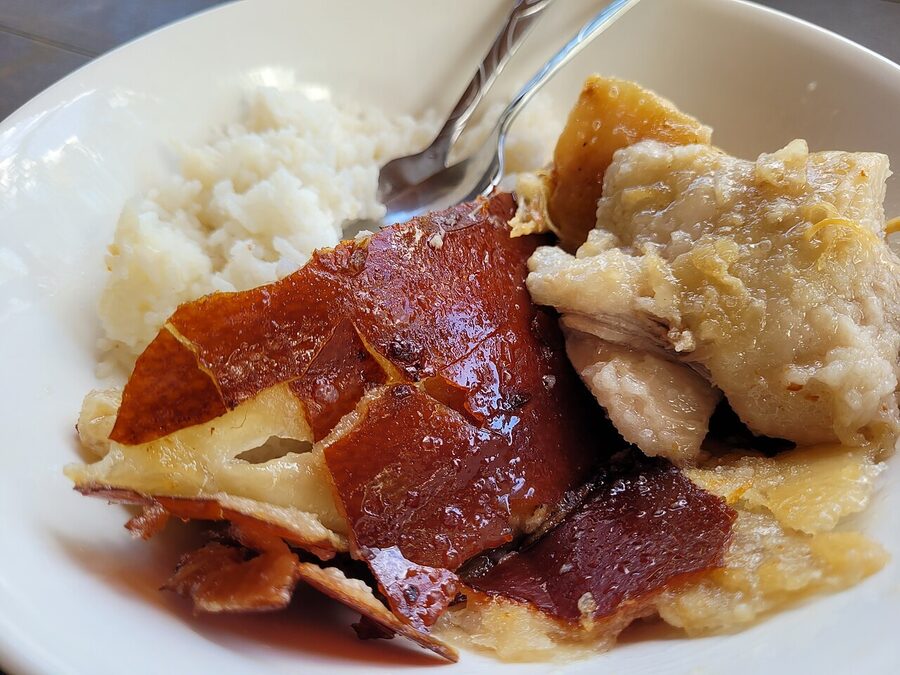
BGC restaurants have the cleanest design language and the highest prices in the country. Most of them sit on Bonifacio High Street or 30th Street, with newer waves opening on the side streets in the Forbes Town and Uptown stretches. If your hotel is in BGC, this is your home base.
Hapag
The other end of Toyo Eatery’s spectrum, in the sense that Hapag is also doing modern Filipino tasting menu but with a different temperament: more lush, more colour, more dessert. Chefs Thirdy Dolatre and Kevin Navoa cook in a 30-seat space where the menu changes seasonally and the dishes are unapologetically Filipino. The smoked tuna belly with native cacao is the best dish I had in Manila in 2025. Multiple times.
Cuisine: Modern Filipino, tasting menu
Area: Quezon City, Kapitolyo (technically Pasig border, take a Grab)
Price: ₱4,800-6,500 per head
Signature: Smoked tuna belly with cacao; whatever’s on the dessert flight
Hours: Tuesday to Sunday dinner; some lunch sittings
Worth it for: Anyone who couldn’t get into Toyo
Skip if: Tasting menus aren’t your thing
Gallery by Chele
Chef Chele Gonzalez’s reboot of his old Gallery Vask. He’s Spanish-trained, Manila-based for over a decade, and the new format adds a la carte to what used to be tasting-only. Local ingredients drive the menu: gotu kola, ulang (river prawn), regional tomatoes. The Clipp Center location in BGC is harder to find than it sounds, the elevator’s around the back.
Cuisine: Modern, Filipino-ingredient-led
Area: Taguig, Clipp Center, BGC
Price: ₱2,500-5,500 per head depending on a la carte vs tasting
Signature: Tasting menus rotate; the prawn course is regular
Hours: Lunch and dinner Tuesday to Sunday
Worth it for: Eating Chef Chele’s food without committing to a full tasting
Skip if: You want strictly Filipino food. The Spanish DNA is real.
Asador Alfonso (BGC branch)
The original is in Tagaytay, run by Chef Chele Gonzalez of Gallery by Chele as a wood-fired Spanish grill. The BGC branch opened a couple of years back and runs the same wood-fire focus: bone-in ribeye, suckling pig, lamb shoulder. Order the suckling pig (cochinillo) if you’re in a group of four or more. They also do Iberico ham at proper Spanish slicing, which is rare in Manila.
Cuisine: Spanish wood-fire grill
Area: Taguig, BGC (Forbes Town)
Price: ₱1,500-3,500 per head depending on the meat course
Signature: Cochinillo (suckling pig), wood-fired ribeye, Iberico carving
Hours: Lunch and dinner daily
Worth it for: A group dinner with serious meat eaters
Skip if: You want vegetables. They do them, but it’s not the point.
Wildflour Cafe & Bakery (BGC and Salcedo)
Brunch institution. The Salcedo branch is the Saturday-morning hub for everyone who’s in Makati for the Salcedo Saturday Market and wants coffee plus a proper meal afterwards. The BGC branch has the bigger room. The food is fundamentally American breakfast: short rib breakfast burrito, eggs benedict on a homemade biscuit, the dirty chai latte. The pastries (especially the cardamom buns) are the best in the city. Avoid the lunch and dinner menus; those aren’t where Wildflour shines.
Cuisine: American brunch and bakery
Area: Multiple. BGC (Net Lima), Salcedo, Podium, Power Plant
Price: ₱350-700 per dish
Signature: Short rib burrito, cardamom bun, dirty chai
Hours: Daily 7am to 11pm
Worth it for: Sunday brunch, every brunch, after a Saturday market
Skip if: You want quiet. The Salcedo branch is loud on weekends.
Sebastian’s Ice Cream
Cult ice cream maker that started as a single counter and now runs at the Podium and a couple of other spots. The classics (cookies and cream, ube, mango) are excellent, but the Filipino flavours (queso real, malagos chocolate, basil olive oil) are why it’s worth the detour. ₱120-150 a scoop. Worth it.
Cuisine: Ice cream
Area: Podium (Mandaluyong) and several mall branches
Price: ₱120-160 per scoop
Signature: Queso real, basil olive oil, sea salt caramel
Hours: Mall hours, 10am to 10pm
Worth it for: Mid-afternoon dessert run, or a sweet ending to dinner
Skip if: You expect a sit-down cafe. Most branches are takeout counters.
JT’s Manukan Grille
The best chicken inasal in Bacolod is hours away, but JT’s runs the closest Manila version. Founded by Filipino actor Joel Torre, the chain has settled into a reliable formula: charcoal-grilled chicken (basted in calamansi, vinegar, and annatto), garlic rice, ice-cold San Miguel. The BGC branch on 32nd Avenue is the original Manila one. Expect a queue at lunch.
Cuisine: Bacolod-style chicken inasal
Area: Taguig, BGC (32nd and Bonifacio Boulevard)
Price: ₱250-450 per head
Signature: Pecho (breast), paa (thigh), liver chicharon, garlic rice
Hours: 11am to 10pm daily
Worth it for: Cheap-and-cheerful Bacolod food fix
Skip if: You’re already going to Bacolod or Iloilo. The original is better.
Fowlbread
BGC fried chicken sandwich shop with a bright blue facade on High Street. The OG is a breaded chicken breast patty, house pickles, and a chicken-skin cracker. Spice levels go from “safe” to “chemical.” The strawberry-hibiscus slushie is the side. ₱350-450 a sandwich. Eat it standing up at the counter, that’s the move.
Cuisine: Fried chicken sandwich
Area: BGC, High Street
Price: ₱350-500 per head
Signature: OG chicken sandwich, banana doughnut
Hours: 11am to 10pm daily
Worth it for: Quick lunch on a BGC day
Skip if: You can’t handle MSG-forward fried chicken
Binondo Chinatown: The Oldest, Cheapest, Best
Manila’s Binondo is the oldest Chinatown in the world (founded 1594, eat that, Yokohama). The grid runs roughly Ongpin to Salazar to Carvajal. You can blow through Binondo in two hours on a guided food walk, but if you have a free afternoon, just wander. Most of the genuinely good places are tiny, scrappy, and don’t take cards. Bring cash. Be patient. Eat in shifts. For the wider context, see my things-to-do guide, which has Binondo as one of its anchor sections.
Wai Ying Fastfood
The most-recommended spot in Binondo for first-timers, and worth the recommendation. Wai Ying does Hong Kong-style barbecued meat (siu mai, char siu, roast duck), congee, hofan noodles, and the dim sum cart that goes around. The asado siopao is small, dense, and properly sweet-savoury. Long queues at lunch on Saturdays. Cash only.
Cuisine: Cantonese-Filipino
Area: Binondo (Benavidez Street)
Price: ₱60-180 per dish; ₱350-500 for a feast
Signature: Asado siopao, hofan noodles, roast duck rice
Hours: 6am to 10pm daily
Worth it for: Cantonese fix at a quarter of mid-range mall prices
Skip if: You can’t handle a queue or you need an English menu
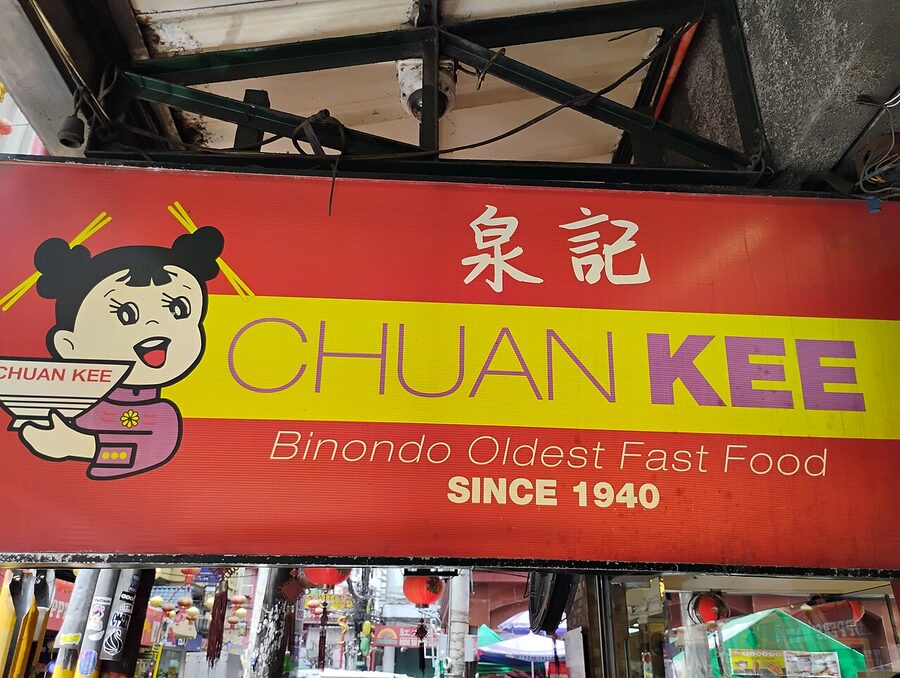
Chuan Kee
Around since 1940, two streets over from Wai Ying. Smaller, scrappier, less famous. Their mami (noodle soup) is the order, with the addition of a few asado siopao on the side. There’s a basic counter inside and outdoor sidewalk seating that gets chaotic at lunch. The pancit bihon is also worth ordering if you’re with two or more.
Cuisine: Cantonese-Filipino
Area: Binondo (Salazar Street)
Price: ₱70-160 per dish
Signature: Mami noodle soup, asado siopao, pancit bihon
Hours: 7am to 9pm daily
Worth it for: Older, quieter Binondo experience away from the tour-group flow
Skip if: You wanted the dim sum trolley. Chuan Kee doesn’t have one.
Lan Zhou La Mien
Hand-pulled noodles, watched-from-the-counter style. The noodles are made fresh in front of you, slammed against the counter, then dropped into the boiling pot. ₱150 a bowl with beef brisket. The chilli oil is house-made. Owner is from Lanzhou and the recipe travelled with him. Open until 10pm, useful late.
Cuisine: Lanzhou-style hand-pulled noodles
Area: Binondo (Benavidez Street)
Price: ₱150-200 per bowl
Signature: Beef brisket noodles
Hours: 11am to 10pm
Worth it for: Anyone who wants a non-Filipino noodle option in Chinatown
Skip if: You don’t want to watch the chef while you wait. The seating is basically counter only.
Dong Bei Dumplings
Northeastern Chinese (Dongbei) dumplings, hand-folded in front of you. The kuchay (chive) and pork is the order, but the lamb-and-cumin batch is the sleeper. ₱150-200 for ten dumplings. Don’t fall for the fried option, the boiled version is the right move; the skin is doing real work.
Cuisine: Northeastern Chinese dumplings
Area: Binondo (Yuchengco Street)
Price: ₱150-250 for 10 dumplings
Signature: Kuchay-pork dumplings, lamb-cumin dumplings
Hours: 10am to 9pm; closed Mondays
Worth it for: Dumpling fans who’ve already eaten siopao
Skip if: You want a beer with your meal. Dong Bei is bring-your-own-cash, no booze.
Quik Snack
Hidden inside an alley off Carvajal Street. Filipino-Chinese kuchay ah (chive omelettes), pancit guisado, fresh lumpia, and a sticky rice cake called tikoy that’s the order if you’re there during Chinese New Year. The address is technically a side door, look for the laminated signs.
Cuisine: Filipino-Chinese alleyway eating
Area: Binondo (Carvajal Street alley)
Price: ₱90-220 per dish
Signature: Kuchay ah, fresh lumpia, tikoy
Hours: 8am to 7pm; closed Sundays
Worth it for: A side-alley find that no tour group has discovered yet
Skip if: You can’t navigate without a Google Map pin
Eng Bee Tin (the hopia palace)
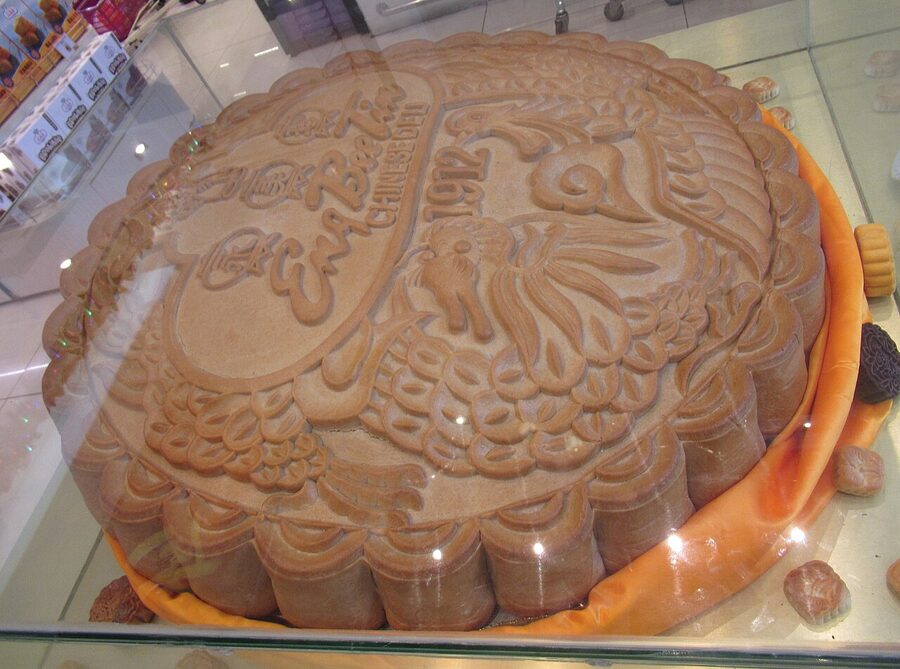
Not a sit-down restaurant, technically, but no Binondo guide is complete without it. Eng Bee Tin makes hopia (the Filipino-Chinese pastry stuffed with mung bean, ube, or pandan) at industrial scale, and they’ve expanded into tikoy, mooncakes, and Chinese deli items. Stock up on hopia for the trip home, but eat the ube one fresh in Manila first. The ube hopia is the gateway item that converts hopia skeptics. Around ₱25 each. Multiple branches; the Ongpin flagship is the one to visit.
Cuisine: Filipino-Chinese pastries and deli
Area: Binondo (Ongpin Street flagship)
Price: ₱25-150 per item
Signature: Ube hopia, mooncakes (in season), tikoy
Hours: 8am to 9pm daily
Worth it for: Souvenir food, mid-walk snack, hopia education
Skip if: You’re avoiding sugar. Everything in here is sweet.
Master Hopia
Eng Bee Tin’s smaller competitor down the road. Some Filipinos swear Master Hopia’s mongo bean version is better. Sample both and pick a side. Sit-down isn’t on offer; eat as you walk.
Globe Lumpia House
Tucked into the old Globe Theater on Raon Street, this place has been turning out fresh lumpia since 1956. Lumpiang sariwa (heart of palm, peanut sauce, garlic) is the move. The line snakes onto Raon at peak hours. ₱85-120 per roll. They sell out by 6pm most days.
Cuisine: Fresh lumpia, Quiapo edge of Binondo
Area: Quiapo/Santa Cruz, Gonzalo Puyat Street
Price: ₱85-150 per roll
Signature: Lumpiang sariwa, lumpiang ubod
Hours: 9am to 6pm; closed Sundays
Worth it for: Anyone who’s read about lumpiang sariwa and never had it
Skip if: You only want fried (lumpiang Shanghai). They do mostly fresh here.
Old Manila: Malate, Ermita, Roxas Boulevard
The west side of Manila proper (the City of Manila, not Metro Manila as a whole) is where the city’s lifestyle-blog era of the 1970s and 80s lives on. Some of these restaurants have been in the same buildings for fifty years. They’re worth eating at for the room as much as the food. If you’re staying in Old Manila, you can walk to most of these.
The Aristocrat (the original on Roxas)
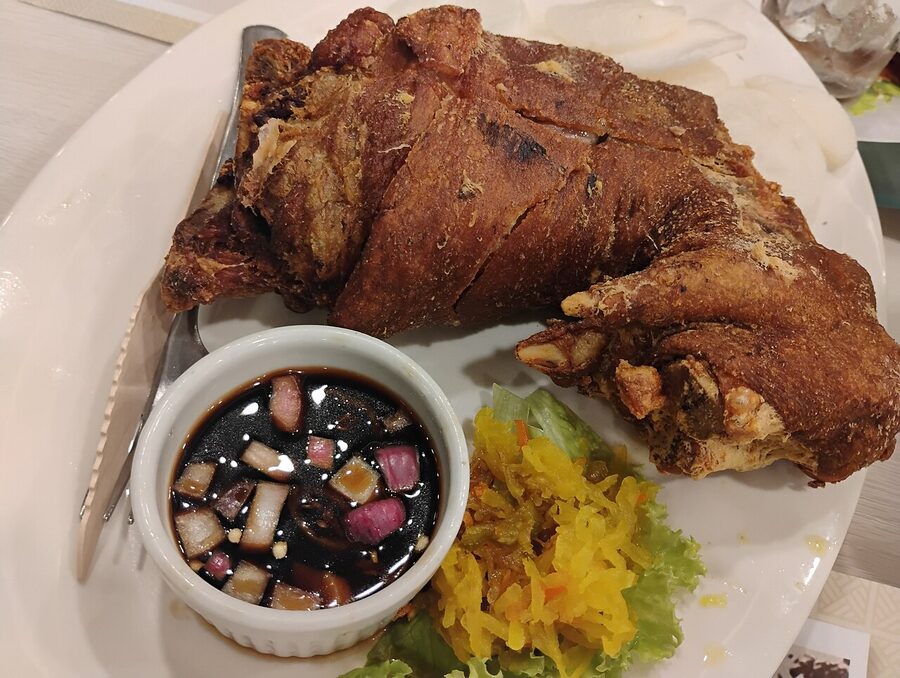
Open since 1936. The Roxas Boulevard branch is the one. The chicken barbecue with java rice, invented here by matriarch Lola Engracia “Asiang” Cruz Reyes, is the dish that launched the chain. The peanut sauce comes on the side, but you want it on top, and you want a Coke in a glass bottle to go with it. Their crispy pata is the benchmark for crispy pork knuckle in Manila. Open 24 hours. There’s no better breakfast at 4am after a long flight.
Cuisine: Heritage Filipino
Area: Malate, San Andres Street (the original Roxas Boulevard branch is the one)
Price: ₱250-650 per dish
Signature: Chicken barbecue with java rice, crispy pata, lumpiang ubod, Flying Saucer sandwich
Hours: 24 hours
Worth it for: First-night dinner after the airport, last-night breakfast before the flight, Sunday lunch with three generations
Skip if: You want minimalist plating. The Aristocrat looks like 1958 and that’s the appeal.
Café Adriatico
The restaurant that started Manila’s bistro era. Larry J. Cruz converted an antique shop on the corner of Adriatico Street and Remedios Circle into a Parisian-style cafe in 1979, and it’s been the unofficial living room of literary Manila ever since. The merienda menu is the order: ensaymada (cheesy soft pastry), suman sa lihiya, and tsokolate eh (thick chocolate in a demitasse). Sundays are crowded; weekday afternoons are perfect.
Cuisine: Filipino bistro and merienda
Area: Malate, Remedios Circle
Price: ₱200-450 per item
Signature: Ensaymada, suman sa lihiya, tsokolate eh, kare-kare
Hours: 11am to 11pm daily
Worth it for: Any Sunday afternoon, a long late lunch
Skip if: You want the new and shiny.
Bistro Remedios
One block from Café Adriatico on the same Remedios Circle. Specialises in Pampanga food, which is the actual best regional cuisine in the Philippines (don’t argue). Their kare-kare with bagnet is among the city’s best, and the morcon (stuffed beef roll) is rare to find in Manila done right. Owners trained in Pampanga proper.
Cuisine: Pampanga / Kapampangan
Area: Malate, Remedios Circle
Price: ₱350-700 per dish
Signature: Kare-kare with bagnet, morcon, sisig (Pampanga style)
Hours: 11am to 10pm; reservations on weekends
Worth it for: Anyone who can’t get to Pampanga itself (and if you can, see the day-trip guide)
Skip if: You’re already going to Angeles City.
Ilustrado
Inside Intramuros, in a colonial-era building on General Luna Street. The room is the move: stone walls, wooden ceiling fans, oil paintings of nineteenth-century ilustrados (the educated Filipino class). The food is heritage Filipino with Spanish overlay, paella negra, callos, lengua. Order the paella in a group of four. Solo lunch is fine but you’ll wonder where everyone is.
Cuisine: Heritage Filipino-Spanish
Area: Intramuros, General Luna Street
Price: ₱400-900 per dish
Signature: Paella negra, callos, lengua estofado
Hours: Lunch and dinner; closed Mondays
Worth it for: Lunch after walking Intramuros (see the Intramuros half-day route in the things-to-do guide)
Skip if: You want a quick meal. Service is slow and intentional.
Adarna Food and Culture
Quezon City spot, on Kalayaan Avenue. Pre-colonial-Filipino cooking research project, run by Adarna Bookstore (yes, the children’s publisher). The menu is regional Filipino food drawn from cookbooks, and it changes monthly. They do an excellent inubaran (chicken stewed in coconut milk and banana stalks) and a pinangat na isda that’s worth the trip alone.
Cuisine: Regional Filipino, research-driven
Area: Quezon City, Kalayaan Avenue
Price: ₱300-600 per dish
Signature: Inubaran, pinangat, kakanin sampler
Hours: 11am to 9pm; closed Mondays
Worth it for: Anyone curious about regional cooking outside Tagalog provinces
Skip if: You want the well-trodden Filipino dish list.
Quezon City and Kapitolyo: The Locals’ Eating Map
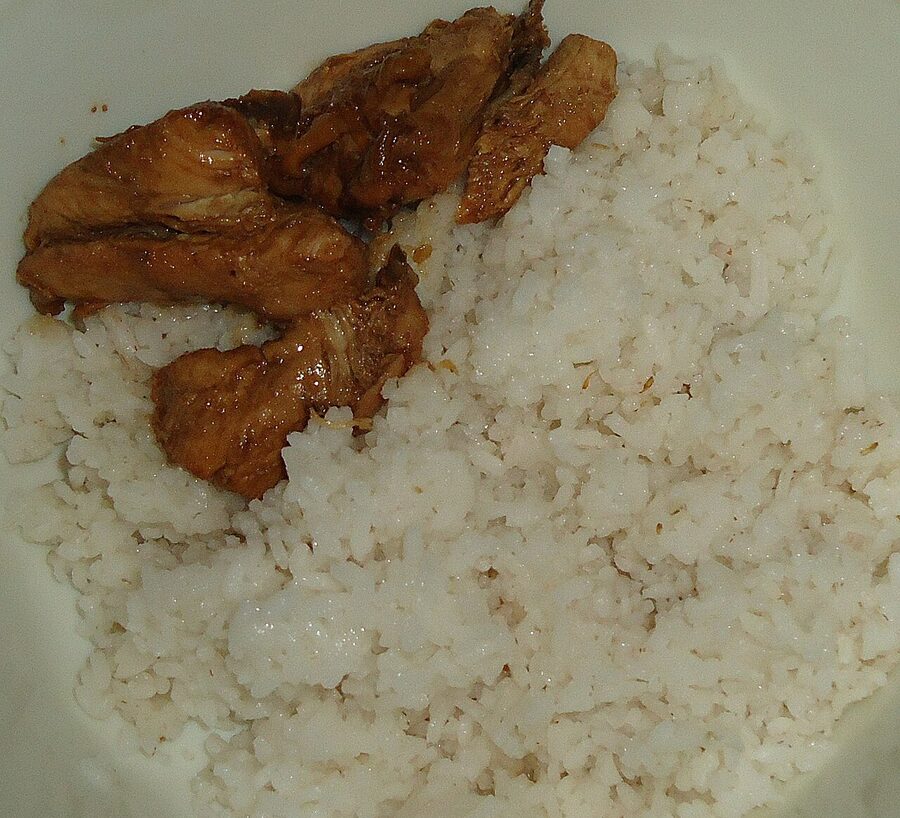
Most travellers stay in Makati or BGC and never come up to QC. That’s a mistake, because half the city’s most interesting restaurants are on Maginhawa Street or in the Kapitolyo grid. Take a Grab; it’s ₱200-350 from Makati depending on traffic. If you’re running a tight three-day itinerary, devote one dinner to QC.
Locavore Kitchen and Drinks
Kapitolyo (Pasig technically, the QC border). Modern Filipino on the more boisterous end. Chef Mikel Zaguirre does the lechon oyster sisig (yes, oysters, not pork, with lechon bits on top) that’s worth the entire trip out. Also order the sugpo con mayonesa (jumbo prawns in mayo and crab fat) and the green-curry Bicol Express. Reservations essential on weekends; the room is loud and packed.
Cuisine: Modern Filipino, casual
Area: Kapitolyo (Pasig)
Price: ₱350-750 per dish
Signature: Oyster sisig, sugpo con mayonesa, pancit luglog, the turon dessert
Hours: 11am to midnight; closed Mondays
Worth it for: Group dinner, modern dish play, the oyster sisig as a must-try
Skip if: You want quiet conversation.
Provenciano
Maginhawa Street in QC. Heritage Filipino in a converted house. Adobong pusit sa bawang (baby squid in vinegar and squid ink) is the order. So is the KBL stew (kadyos beans, baboy pork hocks, langka jackfruit). The bibingka with salted egg is a sleeper dessert. Run by chef Boy Logro’s family.
Cuisine: Heritage Filipino
Area: Quezon City, Maginhawa Street
Price: ₱280-550 per dish
Signature: Adobong pusit sa bawang, KBL, bibingka
Hours: 11am to 10pm; closed Mondays
Worth it for: Maginhawa food crawl, regional Filipino in a casual house setting
Skip if: You don’t like baby squid. Half the menu is squid.
Rodic’s Diner
The original is at UP Diliman; there’s a smaller branch in Tomas Morato. The tapsilog has been their thing since 1949. The tapa is shredded (not chopped or sliced), a trick the founder picked up from her sister to make the dish accessible to kids and the elderly. ₱180 for a plate. ₱220 with extra egg. ₱40 for a bottomless rice. Sunday morning queue at the UP branch is legendary.
Cuisine: Filipino diner / silog
Area: UP Diliman; Tomas Morato; Marikina branches
Price: ₱150-280 per plate
Signature: Tapsilog (shredded tapa), longsilog
Hours: 6am to 10pm
Worth it for: Filipino breakfast as a cultural artefact
Skip if: You don’t eat breakfast meat.
Goto Monster
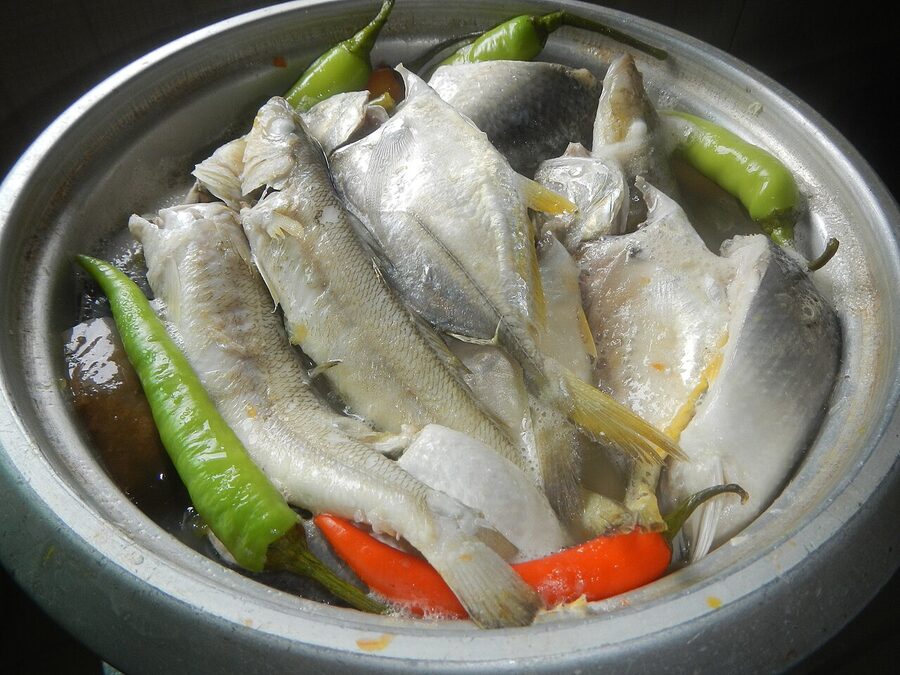
On Primo de Riveria, Makati’s residential side. Open 24 hours. Beef-tripe porridge with twists: order the goto with bagnet (Ilocano deep-fried pork belly) or the chicharon bulaklak version. The leche flan ice cream pop is a real thing and a perfect 3am dessert. Goto Monster is the place to put on the map for the post-bar-crawl meal.
Cuisine: Filipino porridge, late-night
Area: Makati, Primo de Riveria
Price: ₱180-350 per bowl
Signature: Goto with bagnet, chicharon bulaklak, leche flan ice pop
Hours: 24 hours
Worth it for: Anyone leaving Poblacion at 1am hungry
Skip if: You want your offal hidden. Everything here leans into it.
The Filipino Dishes You Have to Get Right
This is the section I write for the friend who lands and texts me, “I have one dinner, what should I order.” Here’s the dish-by-dish best in the city.
Sisig. Invented in Angeles City, Pampanga, by Lucia Cunanan (“Aling Lucing”) in the 1970s, originally as a way to use up pig face. The Manila benchmark is Manam’s house crispy sisig. The street version that everyone in Makati eats is at Sisig sa Rada (the jollijeep on Rada Street). For a sit-down Pampanga-style version with the proper crackle, Bistro Remedios in Malate. If you’re prepared to drive two hours, eat it where it was invented in Aling Lucing’s original spot in Angeles City; the Manila versions are all good, but the original is something else.
Lechon. Whole roasted pig. The Cebu version (lechon Cebu) is the lighter one with lemongrass and herbs in the cavity; the Manila/Luzon version is bigger and more fat-forward. For lechon proper, the chain answer is Zubuchon (yes, Cebu but with Manila branches). For lechon kawali (the deep-fried pork-belly version), Mesa or the Aristocrat. For the experience, go to a Sunday family lunch where someone has bought a lechon from La Loma; that’s not always replicable in a restaurant.
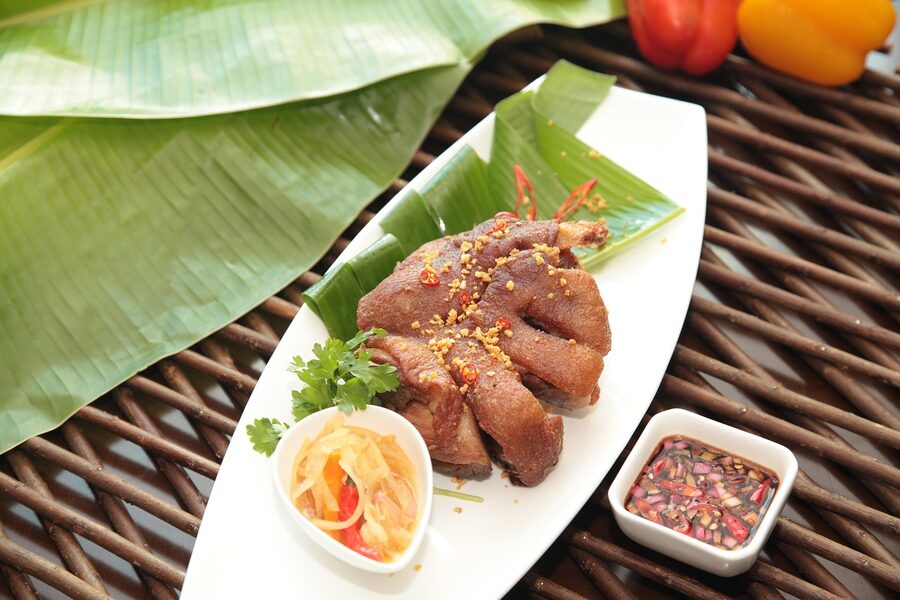
Crispy pata. Deep-fried pork knuckle. The Aristocrat does the benchmark version. Mesa’s is also excellent, slightly more refined. La Cocina de Tita Moning in San Miguel is another good option if you’re doing the Malacañang-area heritage circuit.
Kare-kare. Beef oxtail and tripe in peanut sauce, served with shrimp paste (bagoong) on the side. The shrimp paste is non-negotiable. Bistro Remedios for the bagnet version; Mesa for the beef-short-rib version (when it’s on the menu); the Aristocrat for the traditional oxtail. The bagoong has to be saltier than you think it does, otherwise the dish reads bland.
Adobo. Soy sauce, vinegar, garlic, peppercorns, bay leaf. Chicken or pork. Every Filipino has an opinion on it. For a restaurant version, Café Adriatico does a quiet, classic chicken adobo that won’t surprise anyone but won’t disappoint either. For an outlier version, Locavore’s adobo flakes (shredded, dried, used as rice topping) is worth a try. The best adobo I’ve ever had was at a private home, which is true for most Filipinos. Skip the high-end “interpretation” of adobo at a tasting menu unless you’re already there.
Sinigang. Sour soup, traditionally with tamarind. Variations: na baboy (pork), na hipon (shrimp), na isda (fish). The salty-sour broth is the whole point. Manam’s sinigang na beef short ribs with watermelon is the modern reinvention worth ordering. For the classic, Aristocrat or any of the heritage spots.
Pancit. Noodles. Many varieties. Pancit canton (egg noodle, stir-fried, drier), pancit bihon (rice noodle, lighter), pancit palabok (rice noodle with shrimp sauce, the orange one), pancit Malabon (similar to palabok but with smoked fish). The Aristocrat’s pansit guisado is the old-school version. Manam’s crispy palabok (a mountain of fried noodles dissolved by orange shrimp sauce poured over at the table) is the modern showpiece. Order one of each over different meals.
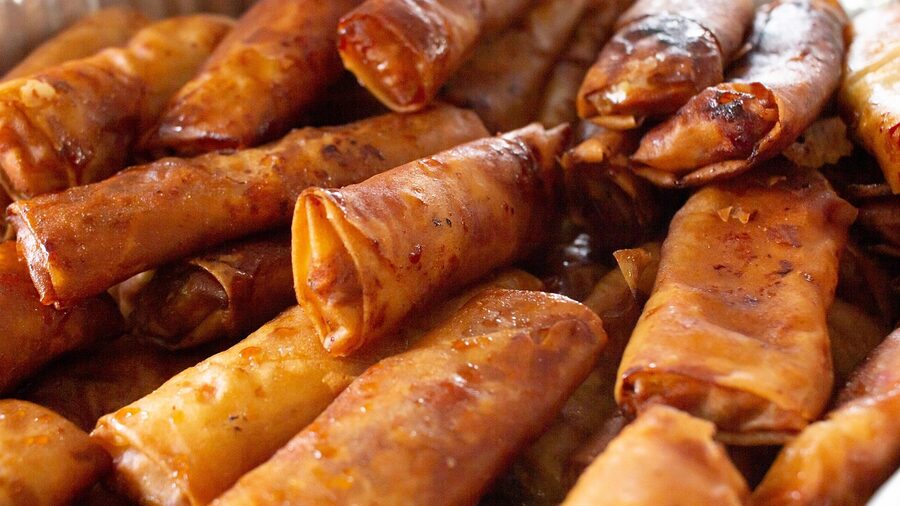
Lumpia. Spring rolls. Lumpiang sariwa (fresh, cold, with peanut sauce) is the move at Globe Lumpia House. Lumpiang Shanghai (fried, smaller, mince pork) is everywhere; the Aristocrat’s is reliable. Mesa’s lumpiang ubod is the upscale version.
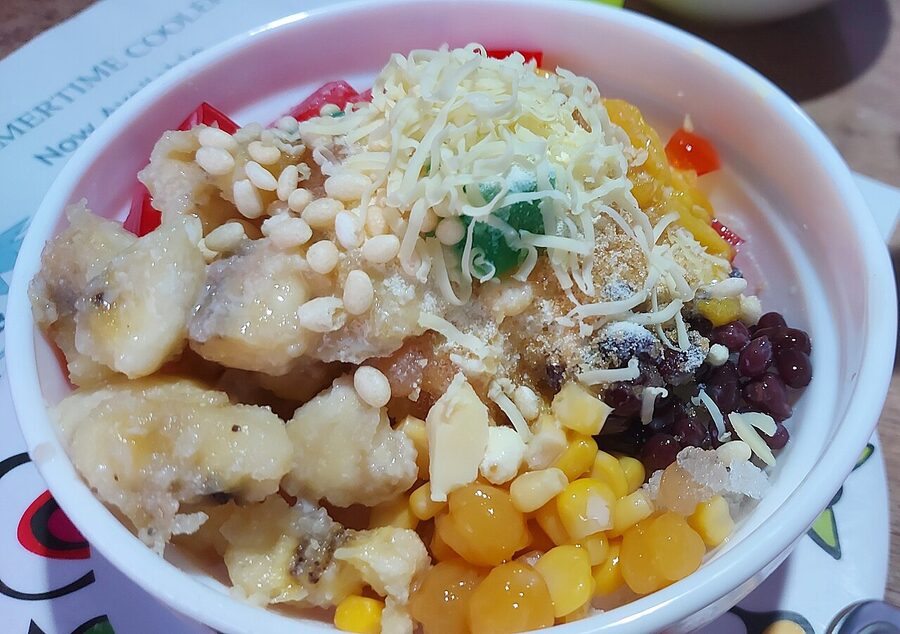
Halo-halo. Shaved ice dessert. Layers: red beans, sweet corn, sago, gulaman jelly, jackfruit, banana, ube, leche flan, and a scoop of ube ice cream on top, with grated cheese (yes, cheese, since the 1940s). Milky Way Café (Antonio Arnaiz Avenue, Makati) is the Manila benchmark. Razon’s of Guagua (multiple branches, including BGC) does a deliberately spare version with just three ingredients (macapuno, leche flan, milk-and-pinipig ice) that purists swear is the real deal. Try both.
Tourist Traps to Skip
Manila has its share of restaurants that survive on visitor traffic and don’t deserve it. Here’s what I’d send a friend away from.
Hotel buffets in general. Most Makati and BGC five-stars run “Filipino food” buffet stations that are mediocre versions of the dishes. ₱2,500-3,500 per head. You’ll eat better and pay a third at any of the restaurants above. The exception is high-tea at the Peninsula Manila lobby, which is a worthwhile experience for the room itself, not the food.
Aristocrat at the Mall of Asia branch. Same chain, different feel. The Roxas Boulevard original is the one. The mall branches are tired and feel like franchise outlets, which they technically are.
Max’s Restaurant (any branch). Filipino institution, fried chicken specialty since 1945, but the food has slipped over the past decade. Locals will tell you the same. If you want fried chicken, Jollibee is the cultural artefact; for chicken inasal, JT’s; for fried chicken with a sandwich, Fowlbread. Max’s is sentimental for Filipinos who grew up with it; for visitors, skip.
Anything inside Mall of Asia advertising “authentic Filipino.” The food court has fine versions of standard dishes, but no restaurant in Mall of Asia is the destination version of anything. Eat in MOA only if you’re killing time before a concert or before a night out at one of the bay-area rooftops.
“Boodle fight” buffets at tourist resorts. The boodle fight (banana-leaf communal eating) is a real Filipino experience, but it’s been packaged into ₱1,500-per-head buffet stations at hotels that are nothing like the actual military-camp version. If you want the real thing, eat at a friend’s home or at Bondi & Bourke in Makati.
“Original Filipino” restaurants on Roxas Boulevard with karaoke and live bands. Most of these are tourist traps charging double for forgettable food and a band that plays Bee Gees covers. The Aristocrat is the exception; everything else on Roxas with neon signs and “Authentic Filipino Cuisine” promises is to be avoided.
Filipino Dishes Visitors Often Get Wrong
A few categories where I see visitors order the wrong thing or come away disappointed because they had the wrong expectation.
Don’t order adobo expecting it to be the best dish on the menu. Adobo is a home dish. It’s the everyday food. In a restaurant, it’s almost always third or fourth on the list of things worth ordering. Order kare-kare or sisig first.
Don’t refuse the bagoong with kare-kare. The shrimp paste is what makes the peanut sauce work. It’s salty and pungent and that’s the point. The bagoong is the seasoning.
Don’t expect lechon to be the “best pork you’ve ever had.” It’s good, but it’s also fatty, salty, and best at room temperature within an hour of being pulled off the spit. Restaurant lechon (reheated) is a different animal.
Don’t eat halo-halo without stirring. The whole point is the layered ice melting into the milk and the toppings mixing. People order it, take a photo, then taste each layer separately. That’s not how it works. Stir hard until it’s an even slurry. Then eat.
Don’t skip the dessert course at modern Filipino tasting menus. Toyo, Hapag, and Lampara all do creative desserts that draw on regional kakanin (rice cakes) and traditional sweets. They’re often the best part of the meal. People sometimes hit their meat-and-rice ceiling and skip dessert; you’ll regret it.
Don’t eat balut on day one. It’s a developing duck egg. Texture is the issue, not flavour. Build up to it after a week and ideally with a beer in your other hand. Or just don’t, it’s fine to skip.
Sunday Brunch and Late-Night Specifics
Sundays in Manila are family lunch. Most of the heritage Filipino restaurants are full of three-generation tables from 12 to 3pm. Reserve. Or, if you’re alone or just two, lean into brunch culture instead.
Wildflour at Salcedo is the obvious move on a Saturday morning because the Salcedo Saturday Market wraps up around 2pm and you can roll directly into brunch from market shopping. On Sundays, the Salcedo branch is quieter than the BGC or Power Plant branches. Café Adriatico does a slow Sunday merienda from 3pm onwards that’s perfect if you’ve spent the morning in Intramuros and want something restorative before the evening.
Manam’s brunch is a recent addition (some branches) and it’s mainly Filipino breakfast classics (silog plates, lugaw, bibingka with salted egg) for ₱200-350. Solid, not memorable.
For late-night eating after midnight: Goto Monster (24 hours, beef tripe porridge), the Aristocrat (24 hours, the Roxas branch), Tetsuo in Poblacion (open until 2am with bao buns and Strong Zeros), and any of the late-night ihaw-ihaw stretches on Roxas Boulevard for grilled meat. The street-food options are covered separately in the street-food guide; for sit-down late, Goto Monster is the answer.
Practical Eating: Budget, Tipping, Reservations
A few things that will save you grief.
Cash and card. Most upscale and mid-range places take card. Binondo Chinatown, jollijeeps, market stalls, and small QC spots are cash-only. Carry ₱2,000-3,000 in mixed bills (you don’t want to pay a ₱85 sisig with a ₱1,000 note; nobody has change).
Tipping. Service charge (10%) is standard at restaurants. Anything beyond that is optional but appreciated. ₱20-100 per meal is normal at casual places. At fine dining, an extra 5% on top of service charge for excellent service is generous and unusual.
Reservations. Toyo, Hapag, Helm, Metronome, Gallery by Chele, and Asador Alfonso all need bookings, often a week or more out. Use OpenTable, Chope, or call directly (most have Instagram bookings now). Casual spots don’t need reservations except Manam on Friday and Saturday nights.
Grab fares. Makati to BGC is ₱150-250. Makati to Binondo is ₱200-400 (worse in traffic). Makati to Quezon City is ₱200-450. Surge times are 5-7pm, plan around them. From the airport (NAIA) to Makati is ₱350-700 depending on terminal.
Best time to eat out. Lunch is 12-2:30pm; dinner starts at 7:30pm and can run until 10:30pm easily. If you’re booked for 6:30pm, you’ll be the first table. Filipino dinner culture skews late.
FAQ: Where to Eat in Manila
What’s the must-try Filipino dish in Manila?
Sisig. It’s the dish that converts more sceptics than any other Filipino dish. Manam’s house crispy sisig at the Mega Fashion Hall flagship is the easiest place to start. If you have an appetite for one more, kare-kare with bagnet at Bistro Remedios or the Aristocrat. Those two cover the meat-forward, salty-sour Filipino register and you’ll know whether to keep eating or stop.
How much does dinner in Manila cost?
It depends entirely on tier. Cheap eats: ₱85-300 a person at jollijeeps, Binondo, and silog joints. Casual mid-range Filipino at Manam, Mesa, the Aristocrat: ₱600-1,200 a head. Modern Filipino with cocktails (Locavore, Lampara): ₱1,200-2,000. Fine dining tasting menus (Toyo, Hapag, Helm, Metronome): ₱4,500-7,500 a head not counting wine pairings. A seven-day eating itinerary across the city averages ₱1,500-2,500 a day if you mix tiers.
Is Manila vegetarian-friendly?
Less than Bangkok or Singapore. Filipino food is meat-heavy at its core. That said, Toyo, Hapag, and Gallery by Chele all do vegetarian tasting menus on request. Adarna in QC has vegetarian options daily. Wildflour and Hey Handsome have plant-based dishes on the regular menu. Outside that, you’ll be ordering vegetable side dishes (pinakbet, ginataang gulay, pancit Bicol) and rice. Vegan is harder; flag it when you book and most modern places will accommodate.
Where do locals actually eat in Makati for lunch?
Sisig sa Rada (the jollijeep), Mary Grace at Greenbelt for cafe-style, Sentro 1771 for Filipino-fusion, the Salcedo Saturday Market on Saturdays, and any of the food courts in the office towers (Glorietta, Greenbelt, Ayala Triangle). The visiting-businessperson lunch is at Wildflour Salcedo or Hey Handsome. The actual office worker is at the jollijeep or eating siomai from a 7-Eleven.
Do I need reservations for Toyo Eatery?
Yes. Reservations open one calendar month ahead and book out within hours. Set a reminder. If you can’t get Toyo, try Hapag in Kapitolyo (slightly easier), or Helm (also tough), or Gallery by Chele (easiest of the three). Booking platforms vary; check the restaurant’s Instagram for the current method.
Is Binondo safe to eat in for first-time visitors?
Yes. The food and the area are both safe. Watch your phone in the busier streets like Ongpin (more for pickpocket-grade theft than anything serious), keep cash in a money belt, and don’t wave a DSLR around. The food is genuinely safe; busy turnover means everything’s fresh. The water in cooked broths is fine; bring bottled for drinking.
Can I eat well in Manila for under ₱500 a day?
Yes. ₱500 a day means: silog breakfast (₱180), Binondo lunch (₱150), street-food merienda (₱60), goto or sisig dinner over rice (₱120). That’s ₱510, basically. The cheap end of Manila eating is excellent and you don’t sacrifice quality. The higher end is a separate trip; pick your evening splurges.
Where to Go From Here
If you’ve worked through the list above, the next moves are: the street-food guide for the hawker-side counterpart to this sit-down list; the Pampanga food day trip if you want to eat sisig where it was invented and lechon at the Kapampangan source; the cocktail-bars and rooftops guide if you’re heading out after dinner; the three-day itinerary if you want a structured day-by-day plan that integrates the eating with everything else. The hotel cluster (where to stay in Manila) covers area-by-area context if you’re still picking a hotel.
One last thing. Filipino food rewards repeat visits more than almost any cuisine I know. Adobo at one place is different from adobo at another, in ways that aren’t obvious until you’ve eaten three. Sisig has regional variants. Halo-halo has loyalists for cheese-on-top versus shaved-ice purists. Pace your week. Don’t try to taste everything in three days. And come back, because you’ll have favourites by the second visit.