The most useful Manila advice I can give you fits on a coaster: open Grab, accept that traffic is a tax, and only ride a jeepney once, on purpose, while paying attention. Do that and your trip works. Skip it and you spend half your week arguing with white-taxi drivers about meters that mysteriously refuse to start.
Manila has more transport options than almost any Asian city and somehow fewer that work for tourists. Grab beats taxi nine times out of ten. The MRT and LRT lines are useful when you know exactly where they go. Jeepneys are a cultural ride more than a practical one. And then there is EDSA, which is less a road than a weather system.
Affiliate note: some links are partner links. Fares quoted are what you pay; booking platforms pay me, not you.
In This Article
- Manila Transport in One Chart
- Grab: Your Default Answer
- What Grab actually costs
- Grab vs taxi
- Jeepney: The One-Time Cultural Ride
- How to ride one
- Where it actually makes sense
- MRT-3, LRT-1, and LRT-2: The Three Train Lines
- MRT-3 (Blue Line, EDSA spine)
- LRT-1 (Yellow Line, Roxas corridor)
- LRT-2 (Purple Line, east-west)
- Beep card vs single journey
- The catches
- Tricycles: The Last 500 Metres
- Kalesas: Intramuros, Once, At a Sane Price
- Buses: P2P When It Helps, City Buses When You Have To
- Walking: Where It Works and Where It Definitely Doesn’t
- Driving: Don’t, But If You Must
- Traffic Patterns by Hour
- The Number Coding Scheme
- Common Tourist Mistakes
- Manila Transport by Trip Need
- NAIA to Makati
- NAIA to BGC
- NAIA to Pasay (MOA / Bay area)
- NAIA to Intramuros
- Makati to Intramuros
- Makati to Tagaytay (day trip)
- Makati to Pampanga (food trip)
- Apps to Install Before You Land
- Saving Money on Manila Transport
- Putting It All Together
- FAQ
- Is Grab safe in Manila?
- Should I use the white taxis?
- Can I get around Manila without Grab?
- What’s the cheapest way from NAIA to Makati?
- Are jeepneys safe for tourists?
- What’s the deal with number coding for tourists?
- Can I rely on Google Maps for Manila transit?
Manila Transport in One Chart
If you read nothing else, read this. The chart covers what each mode is good for, what it absolutely isn’t, the price band, the speed in real Manila conditions (not Google Maps fantasy), and how comfortable you’ll actually be.
| Mode | Best for | Avoid for | ₱ range | Speed | Comfort |
|---|---|---|---|---|---|
| Grab | Almost every tourist trip | Surge windows, NAIA pickups during rush | ₱150-1,200 | Traffic-bound | 9/10 |
| Jeepney | One-time cultural ride | Daily logistics, luggage, after dark | ₱13-15 | Slow + unpredictable | 3/10 |
| MRT-3 | Cubao to Ayala along EDSA | 5-9pm rush hour | ₱13-30 | Fast above traffic | 5/10 off-peak |
| LRT-1 | Roxas Blvd corridor, Pasay to Quiapo | Heavy luggage | ₱13-30 | Fast above traffic | 4/10 |
| LRT-2 | Cubao to Recto for old Manila | Anywhere south of Manila proper | ₱15-30 | Fast | 5/10 |
| Tricycle | Last 500m off the main road | Long distances, EDSA, Makati CBD, BGC | ₱20-100 | Short hops only | 4/10 |
| Kalesa | 30 min around Intramuros, photo trip | Anywhere else, ever | ₱350-500 fair | Walking pace | 6/10 |
| P2P bus | Makati or BGC to NAIA-3 in surge | Anything off the named routes | ₱150-200 | Faster than Grab in rush | 7/10 |
| City bus / EDSA Carousel | Locals’ commute | Tourists with luggage | ₱13-50 | Mixed | 4/10 |
| Walking | Inside Makati, BGC, Intramuros grids | Anywhere else, after 10am, in rain | Free | You decide | Depends on shoes |
Memorise the first three rows and you’ve solved 90% of Manila’s transport question.
Grab: Your Default Answer
Grab is the Southeast Asian version of Uber, and in Manila it has effectively replaced taxis for anyone who reads English. Download it before you land, register with your home phone number, and link a card. Cash works fine but a linked card skips the “no change for ₱500” moment that always somehow happens at midnight.
Three main car options. GrabCar is the standard private car. GrabCar Premium is a nicer car at a 30-50% premium you’ll only notice if you care about leg room. GrabShare, when running, splits the ride with another booking for less money. Most tourists default to GrabCar; that’s the right call. GrabTaxi dispatches a metered taxi through the app, useful when no GrabCars are around.
What Grab actually costs
Off-peak fares for the routes you’ll actually use:
- Makati to BGC: ₱150-300 off-peak, ₱300-500 surge.
- Makati to Intramuros: ₱180-350 off-peak, ₱400-700 surge.
- Makati to NAIA: ₱350-650 off-peak (~$7-13), ₱700-1,200 surge (~$14-24).
- BGC to NAIA: ₱350-700 off-peak, ₱800-1,300 surge.
- Intramuros to Pasay (MOA): ₱200-380.
The app fixes the price before you book. That price doesn’t change in traffic, which is the entire reason Grab works in Manila. The driver can be stuck on EDSA for forty extra minutes and you still pay what was quoted. Surge windows: 7-10am and 5-9pm on weekdays, most of Friday afternoon and evening, and any time it rains. Friday evening in the rain is mathematically the worst combination; the surge sometimes hits 2x and the wait for a car can run thirty minutes.
Grab vs taxi
White Manila taxis have a deserved reputation for not running the meter, “running out of change,” or quoting flat rates that double Grab’s price. Yellow airport taxis at NAIA are better behaved and metered, but Grab’s airport pickup is usually still simpler. If a white taxi’s right there and you’re in a hurry, agree the fare upfront and have small bills. Otherwise, just use Grab.
Jeepney: The One-Time Cultural Ride
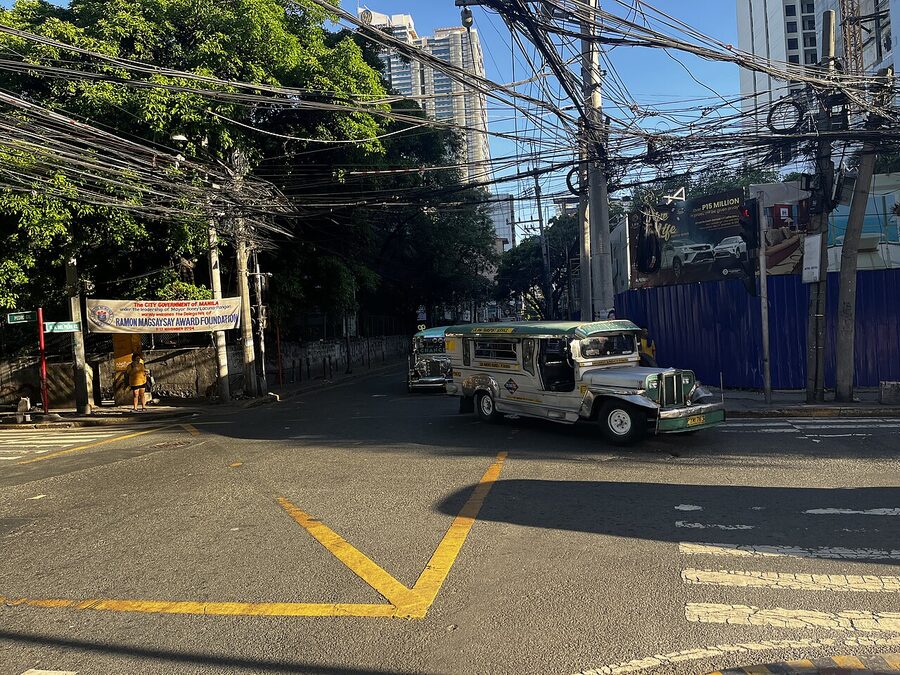
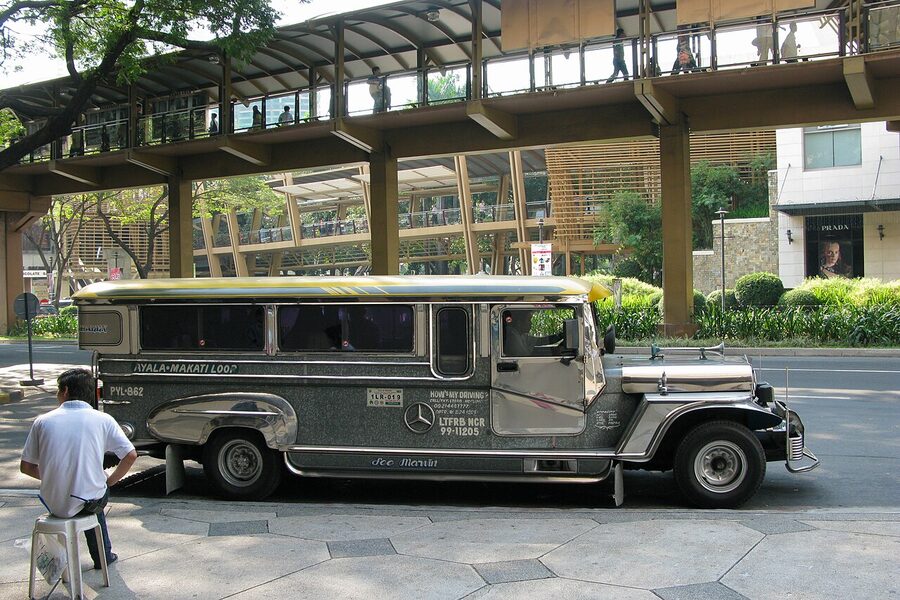
The jeepney is the Philippines’s most famous vehicle and probably the worst daily option for a foreign visitor. Routes don’t show up reliably on Google Maps, destinations are painted in shorthand only locals decode, and pickpocketing isn’t unheard of. Riding one once is part of being in Manila. Do it on a short, well-known route, in daylight, with an empty pocket on the centre-aisle side.
How to ride one
Wave your hand down at hip height as one approaches. Climb in at the back and slide along the bench. The fare is ₱13 for the first 4km and ~₱1.80 per kilometre after, so a typical ride costs ₱13-15. Pass coins forward through the chain of passengers if the driver’s up front; everyone helps. Say “Para po” when you want to stop.
Where it actually makes sense
The most tourist-friendly route is Quiapo to Cubao, which roughly tracks the LRT-2 corridor and serves you a slice of old Manila on the way. Skip jeepneys after dark, with luggage, or when you’re trying to make a flight. Use them once, take a photo, then go back to Grab.
MRT-3, LRT-1, and LRT-2: The Three Train Lines
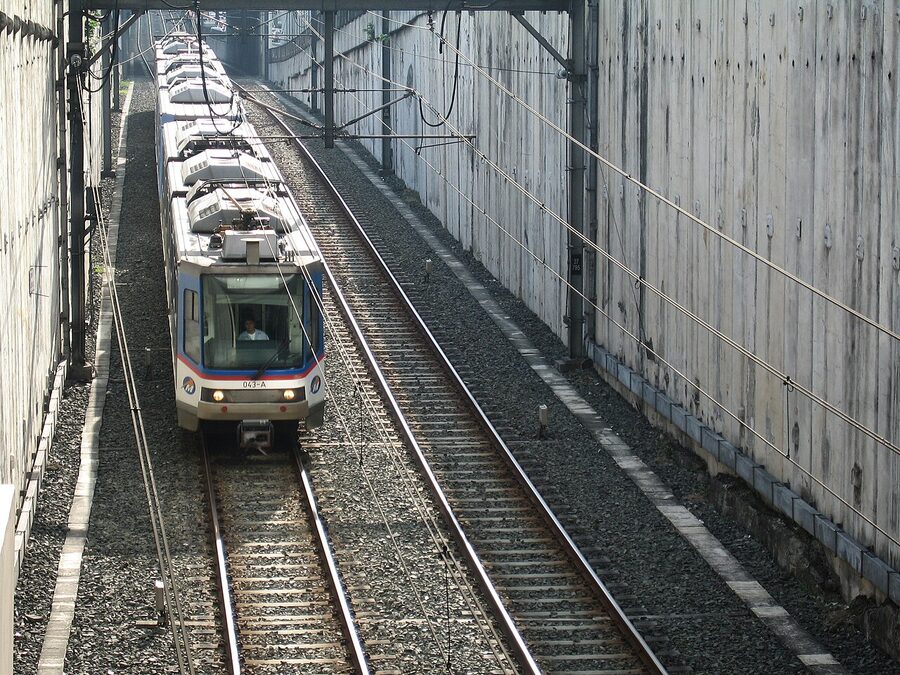
Manila’s elevated rail is genuinely useful, drastically cheaper than Grab, and your one chance to skip EDSA’s gridlock. It’s also overcrowded, occasionally broken, and laid out so that the lines don’t quite line up with where tourists need to go. Three lines, not interchangeable on one ticket.
MRT-3 (Blue Line, EDSA spine)
Runs north-south along EDSA from North Avenue (Quezon City) to Taft Avenue (Pasay), with key stations at Cubao, Shaw, Ortigas, Buendia, Ayala, and Magallanes. First train ~4:36am, last ~9:30pm. Fare ₱13-30. This is the line tourists use most: Ayala station drops you into Makati’s CBD; Taft connects to LRT-1 for the bay area.
LRT-1 (Yellow Line, Roxas corridor)
Runs north-south from Roosevelt in Quezon City through Carriedo (Quiapo), Central Terminal, United Nations, Pedro Gil, Vito Cruz, EDSA, and Baclaran. First train 4:30am, last ~10pm weekdays / 9:30pm weekends. Fare ₱15-30. Useful for the older part of Manila: Carriedo for Quiapo and Binondo, UN for Rizal Park, EDSA to interchange with MRT-3.
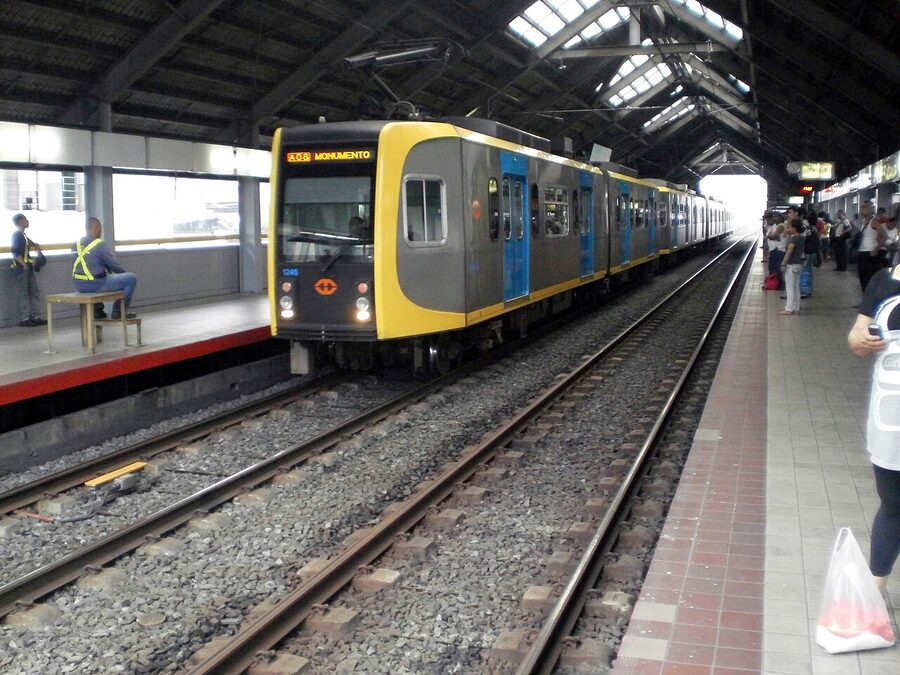
LRT-2 (Purple Line, east-west)
Runs east-west from Antipolo through Cubao (interchange with MRT-3), Pureza, and Recto. First train 5am, last ~9pm. Fare ₱15-30. Useful pairing: Cubao to Recto drops you at the edge of old Manila for a Quiapo and Binondo walk.
Beep card vs single journey
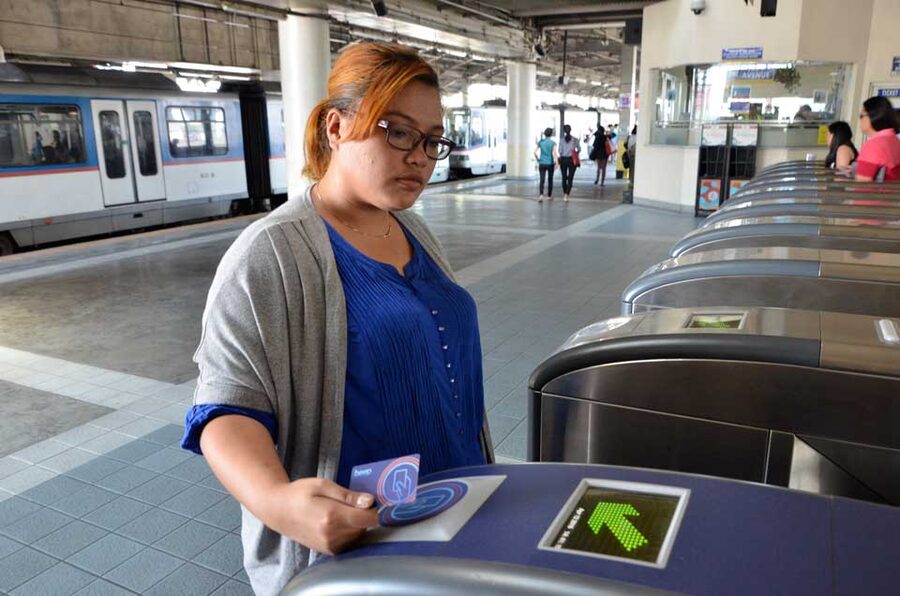
If you’re riding trains more than twice, buy a Beep card (₱30 for the card, top up at any station). Single-journey paper tokens still exist but the queue is the worst part of the trip. Beep cards also work on the EDSA Carousel and some city buses.
The catches
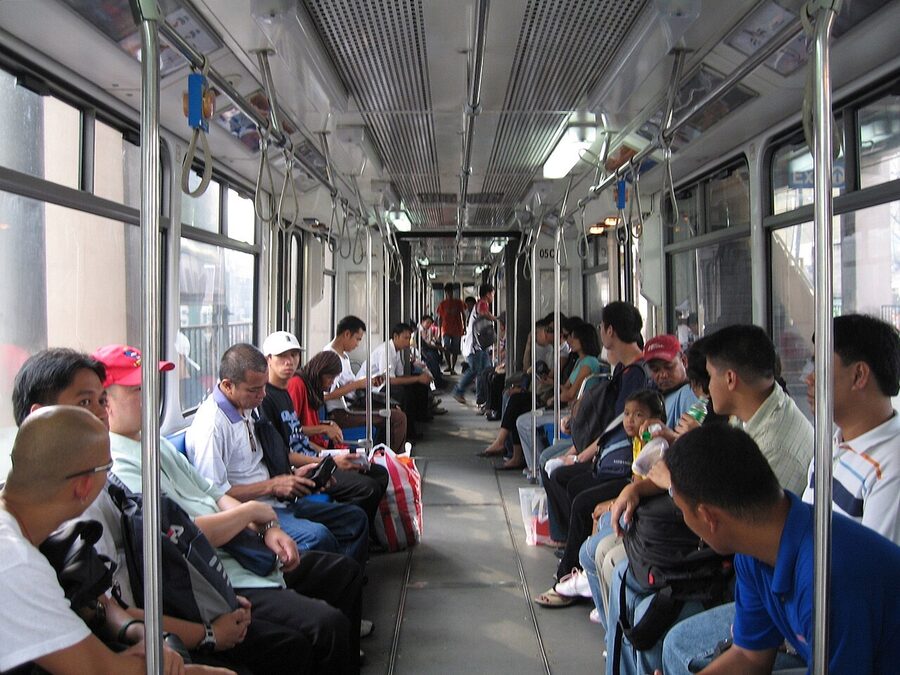
Rush hour on MRT-3 is genuinely awful. Crowds spill onto the stairs; you may skip three trains before squeezing into one. Bag inspection at every entrance is cursory but slow. There are women-only carriages at the front of MRT-3 and LRT-1 trains, marked with pink signage, a fraction less packed. Reliability has improved since the 2018 maintenance crisis, but skip the train entirely if your flight is in three hours and it’s peak.
Tricycles: The Last 500 Metres
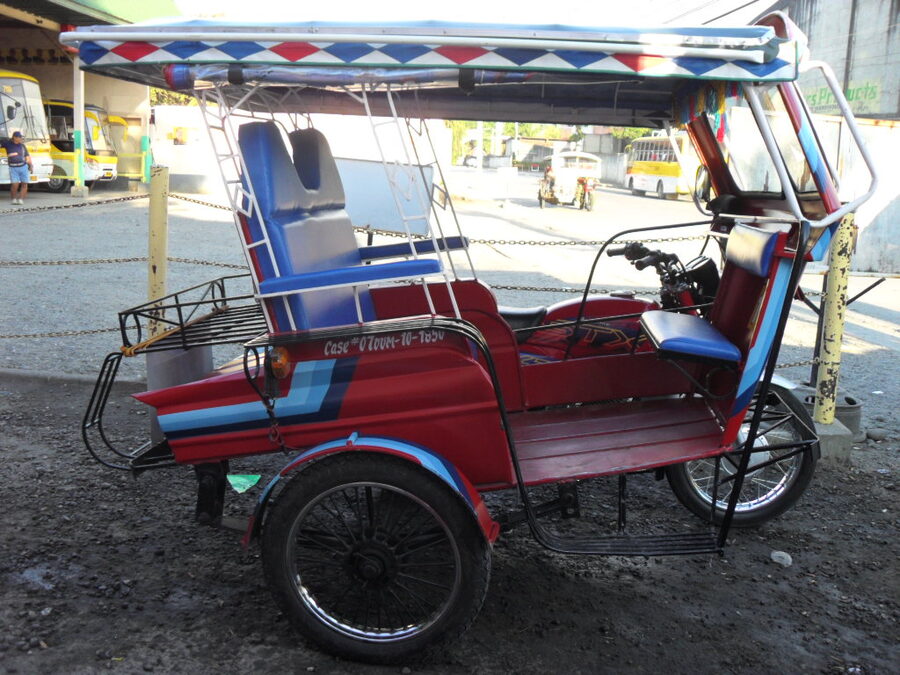
A tricycle is a motorcycle with a sidecar, carrying three uncomfortable adults plus the driver. It’s the workhorse of barangay-level transport everywhere outside the central business districts. Inside Makati CBD, BGC, and most of EDSA, they’re banned. Where they dominate: the interior of Quezon City, parts of Pasig, and the residential edges of every other district.
Pricing is “negotiable” but standard in every driver’s head: ₱20-50 within one barangay, ₱100+ if you’re crossing into another. Tourists get quoted double on the first try; smile and counter once. Don’t take one for any distance you’d happily walk; the seating geometry is engineered for someone smaller than the average traveller.
Kalesas: Intramuros, Once, At a Sane Price
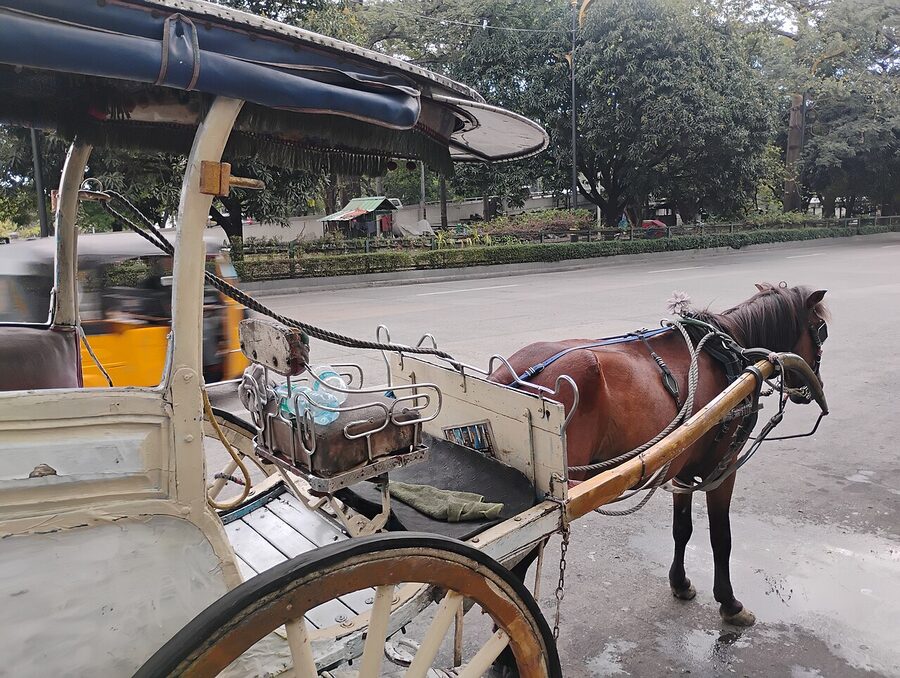
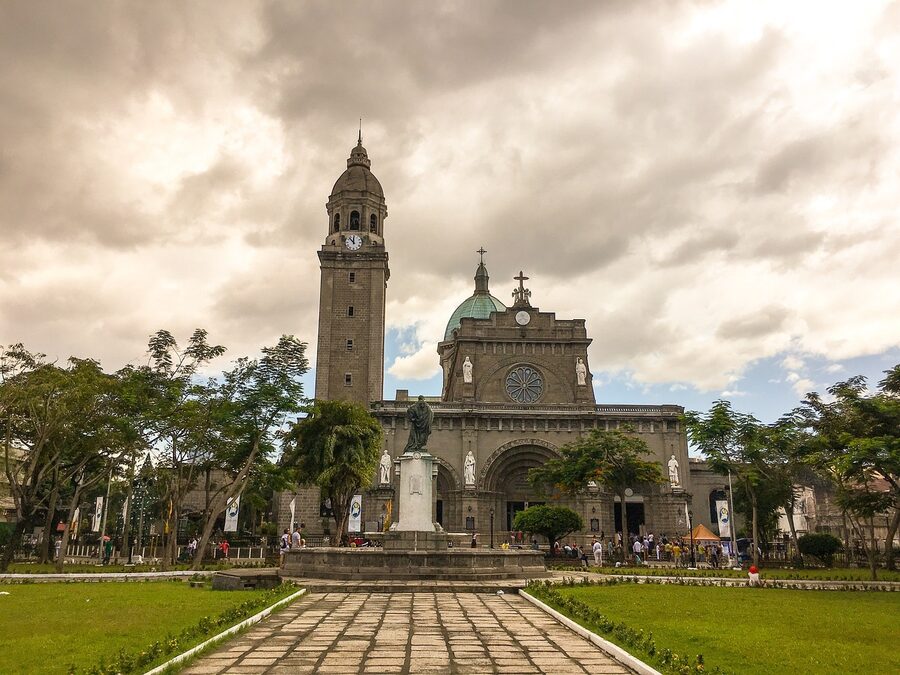
The kalesa is a horse-drawn carriage from the Spanish era, and the only place you should ride one is around Intramuros. Drivers cluster outside Manila Cathedral, San Agustin, and Fort Santiago. The opening price they shout is invariably ₱500-1,500 for a thirty-minute loop. The fair price is ₱350-500 for thirty minutes. Negotiate. Walk away once if you have to; they will follow you.
You get a slow clop around cobbled streets, a driver narrating the obvious in cheerful broken English, and one decent photo. Walking Intramuros is better if you have the time, because half the kalesa loop is on streets faster covered on foot. But if your knees are tired or it’s hot, half an hour in the kalesa is fine.
Buses: P2P When It Helps, City Buses When You Have To
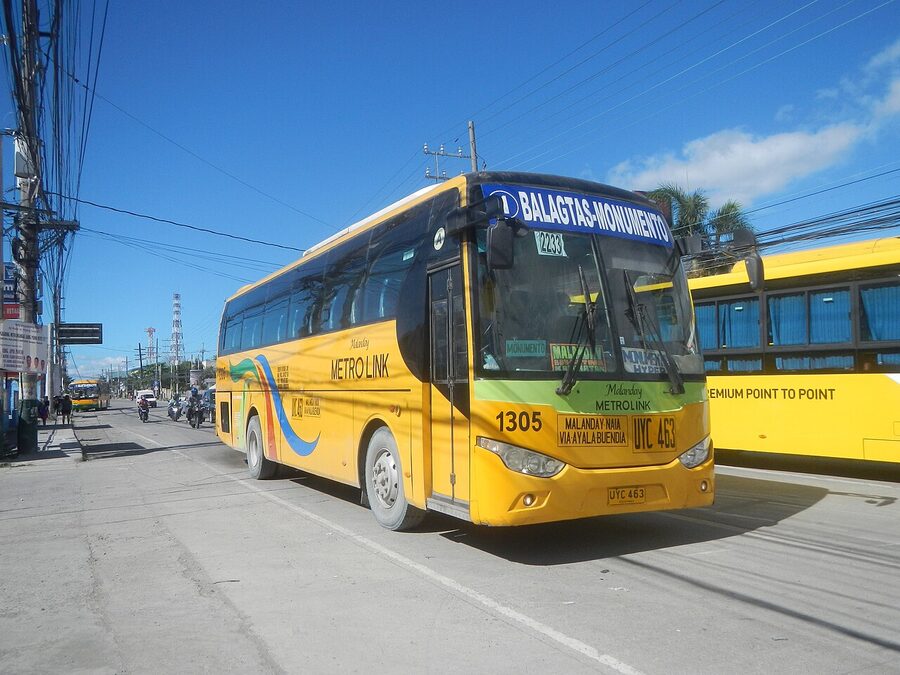
The Point-to-Point (P2P) network is genuinely useful for tourists and most guides bury it. P2P buses are private, air-conditioned, and run direct between named pickup points without intermediate stops. The route you’ll actually use is Makati or BGC to NAIA Terminal 3, fare ₱150-200 (~$3-4), and in Friday-evening surge it can be faster than Grab because the bus uses dedicated lanes private cars can’t enter. Schedules: every 30 minutes, more in peak. Pickup points include Greenbelt 1 in Makati and One Bonifacio High Street in BGC.
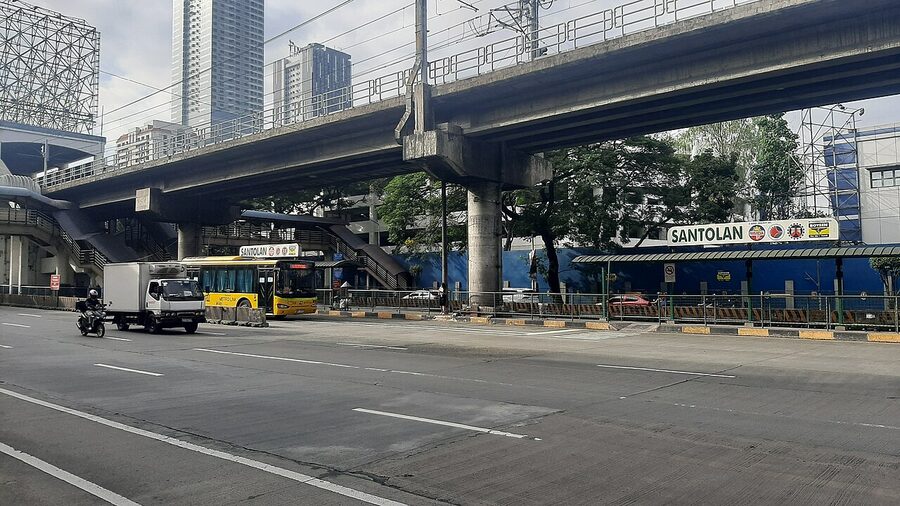
The EDSA Carousel is a dedicated bus lane along EDSA with proper stations and ₱13-50 fares. Locals love it; tourists with a backpack usually find it more friction than it’s worth. Regular city buses are cheap, labyrinthine, and not worth your time.
Walking: Where It Works and Where It Definitely Doesn’t
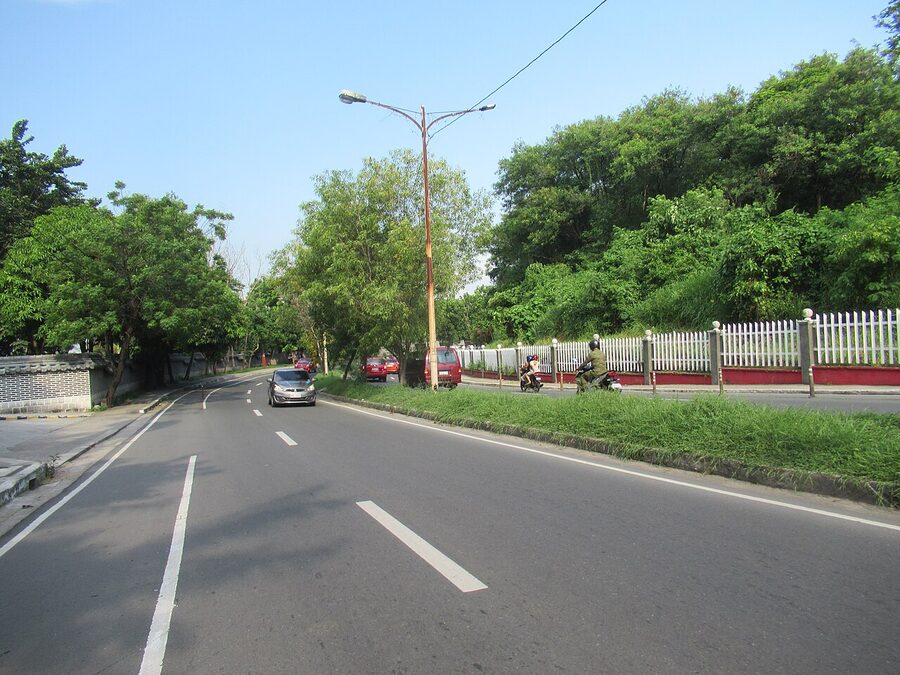
Manila is mostly not a walking city, but there are pockets where it absolutely is. In order of how forgiving they are:
- BGC grid, especially around Bonifacio High Street and 5th Avenue. Wide pavements, shade trees, working pedestrian crossings. You can cover the core in 25 minutes.
- Makati CBD, Ayala Avenue and the Greenbelt-Glorietta-Landmark complex. Mostly walkable, with elevated walkways between malls. Falls apart crossing EDSA toward Poblacion.
- Intramuros walled core, end-to-end in an hour. The Pasig River side is quieter and more atmospheric.
Where walking fails: everywhere else. Pavements vanish halfway down the block. Pedestrian crossings exist but cars treat them as decorative. Heat hits 33°C by 10am most of the year. Don’t walk Makati to BGC; it’s 4km on the map but crosses C5 with no proper pedestrian infrastructure.
Driving: Don’t, But If You Must
Renting a car for Manila itself is a bad idea. Driving here is a contact sport with rules that aren’t written down, and parking is expensive even where it exists. If you’re tacking on a road trip to Tagaytay or Pampanga, pick the car up after escaping NCR and skip the Manila portion entirely. The one Manila-driving rule every visitor needs to know is the number coding scheme; see the next section.
Traffic Patterns by Hour
Manila traffic is not random. It has rhythms you can plan around.
- 7-10am: Morning peak. EDSA northbound (Pasay toward Cubao) is gridlocked. Grab waits stretch.
- 10am-3pm: The window where Manila works. Travel anywhere, eat lunch, see things.
- 4-8pm: Evening peak. The worst window. EDSA southbound (Cubao toward Pasay) is the killer.
- 8-10pm: Tail end. Faster than 6pm but still slow.
- After 10pm: Open roads. Grab fares drop.
Friday is the worst day, full stop. Friday traffic starts at 2pm and doesn’t end until past 10pm. Add rain and you lose three hours on a 6km trip. Saturdays are bad in different places (malls); Sundays are surprisingly fine, especially mornings. Chronic rainy-season chokepoints: EDSA-Aurora, EDSA-Shaw, and EDSA-Ortigas. If your route crosses one of those during peak, add 45 minutes minimum.

The Number Coding Scheme
This is the rule that catches every visitor renting a car or chartering a driver. Manila’s Unified Vehicular Volume Reduction Program (UVVRP, “number coding”) bans cars from NCR roads on certain weekdays based on the last digit of the licence plate:
- Plates ending in 1 or 2: banned Monday
- Plates ending in 3 or 4: banned Tuesday
- Plates ending in 5 or 6: banned Wednesday
- Plates ending in 7 or 8: banned Thursday
- Plates ending in 9 or 0: banned Friday
The ban window varies by city (Makati and Manila currently 7am-8pm with a window in the middle in some areas; check the latest MMDA notice before you travel). In practice: if your private airport pickup is Tuesday morning and the car’s plate ends in 4, the driver swaps vehicles or reschedules. Grab supply also dips on the matching weekdays because part of the fleet can’t drive. If your off-peak Grab wait is longer than usual, this is often why.
Common Tourist Mistakes
The greatest hits, roughly in the order I made them myself:
- Taking a jeepney without checking the destination on the side panel. The route is the words painted on the side; if your destination isn’t listed, this is the wrong jeepney. I once rode all the way to Cubao when I wanted Quiapo. The driver was very polite about it.
- Arguing the meter with a white taxi. The meter is “broken” because the driver wants a flat rate. You can win this argument or you can open Grab. Open Grab.
- Walking Makati to BGC. Map says 4km; reality is no continuous pavement, four lanes of C5 to cross, and a hill. Get a Grab. ₱200, ten minutes.
- Trusting “fixed fare” airport touts at NAIA. Men in unofficial vests near the exit quote ₱2,500 for Makati. The yellow metered taxi from the official rank is ₱400-600. Grab from the dedicated pickup level is ₱350-650. Walk past the touts.
- Booking Grab inside the arrivals hall. NAIA’s geofence sometimes won’t pair you with the closest car. Walk to the signed Grab pickup zone outside before booking.
- Ignoring rush-hour windows when planning a flight. A 6pm flight from NAIA means leaving Makati by 2pm in surge. A 9am flight means a 5am Grab. The airport is 7km from Makati and might as well be on a different island during peak.
Manila Transport by Trip Need
Specific trips, specific advice. The fares assume off-peak; multiply by 1.5-2 in surge.
NAIA to Makati
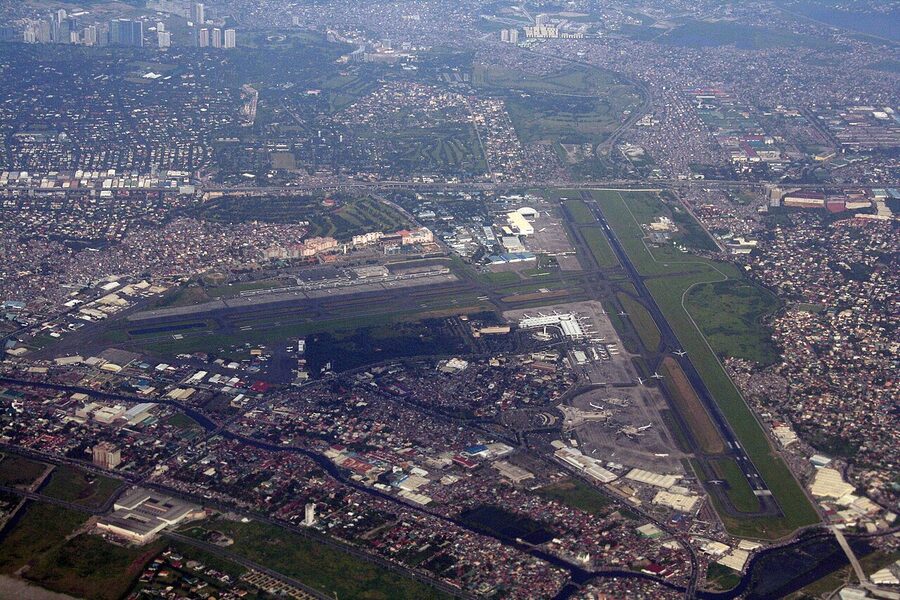
~7km, 25-90 minutes. Grab ₱350-650. Yellow airport taxi ₱400-700. P2P bus ₱150 from Terminal 3 to Greenbelt, faster than Grab during Friday surge. Skip city buses with luggage.
NAIA to BGC
~10km, 30-90 minutes. Grab ₱400-700. P2P ₱150 from Terminal 3 to BGC. P2P is the underrated answer here.
NAIA to Pasay (MOA / Bay area)
4-6km, 15-40 minutes. Grab ₱200-400. Yellow taxi about the same. The shortest airport ride; even in surge it’s manageable.
NAIA to Intramuros
12km, 30-90 minutes. Grab ₱400-700. LRT-1 if you’re brave with a small bag: walk or jeepney to EDSA station, ride to Carriedo, walk into Quiapo and Intramuros from there.
Makati to Intramuros
7km, 25-60 minutes. Grab ₱180-350. MRT-3 + LRT-1: Ayala to EDSA, transfer to LRT-1, ride to Central Terminal or UN Avenue, walk in. Roughly ₱45 total. Two transfers but you skip EDSA.
Makati to Tagaytay (day trip)
65km, 90 minutes-3 hours. Private car with driver ₱2,500-3,500 (~$50-70) round trip. P2P bus from PITX or Buendia ~₱180 each way (need a Grab at the Tagaytay end). See the day trips from Manila guide for the trade-offs.
Makati to Pampanga (food trip)
90km via NLEX, 90-150 minutes. Private car ₱3,500-4,500 round trip is the practical answer because you’ll be hopping between four restaurants. P2P to Angeles + local Grab works for a single stop but loses the food-hop logic.
Apps to Install Before You Land
Five apps, in order of how often you’ll open them:
- Grab: your default for almost every trip. Register before arriving.
- Google Maps: download the offline area for “Metro Manila” before you fly. Manila network coverage is fine but the airport has dead zones.
- GCash: the Philippines’s e-wallet. You can pay sari-sari stores, food deliveries, and some Grab rides with it. Sign-up requires a Philippines SIM, which is why it’s third on the list.
- Beep: the rail/bus IC card has a top-up companion app. Optional if you’re staying under three days.
- Sakay.ph: local route planner. Better than Google Maps for jeepney routes specifically.
Saving Money on Manila Transport
Manila transport is already cheap by global standards. A few moves push it lower:
- Buy a Beep card if you’re riding rail more than twice. The queue saving is bigger than the per-trip discount.
- Use GrabShare off-peak for 20-30% off solo fares.
- Time airport runs. A 5am Grab to NAIA is half the price of a 6pm one and twice as fast.
- P2P over private transfer in surge if you don’t mind a 30-minute wait at the lounge.
- Walk in BGC, Makati CBD, and Intramuros. Free, faster than driving in those grids during peak.
- Don’t tip Grab drivers unless service was exceptional. ₱20-50 rounding up is normal, not expected.
A typical tourist day with four Grabs, one MRT ride, and a sunset walk lands at ₱600-900 (~$12-18) total transport. Friday surge can double that. If you haven’t sorted where you’re sleeping, the where-to-stay guide ranks neighbourhoods by transport friendliness.
Putting It All Together
Used alongside the three-day Manila itinerary, the transport spine is simple. Day 1 (Old Manila): Grab to Intramuros, walk it for half a day, kalesa for thirty minutes if your knees vote yes, jeepney back across the Pasig for the experience, Grab home. Day 2 (modern Manila): mostly walking inside Makati or BGC plus a Grab to Poblacion after dark and another back. Day 3: day-trip choice, private car. Plan around the 4-8pm dead zone and you’ll be fine. The things-to-do round-up covers the destinations these rides connect.
FAQ
Is Grab safe in Manila?
Yes. Driver vetting is decent, every ride is GPS-tracked, and you can share trip details with someone. The most common issue isn’t safety, it’s slow pickups during surge. Use it without hesitation, including from the airport at 2am.
Should I use the white taxis?
Generally no. Many drivers refuse the meter or quote a flat rate double Grab’s price. If you do use one, agree the fare before getting in and have small bills. Yellow airport taxis are better behaved than the white ones.
Can I get around Manila without Grab?
Yes, but you’ll move slower and burn more attention on logistics. MRT-3 + LRT-1 + walking covers most tourist destinations. Add one jeepney for the cultural ride and one P2P bus to NAIA and you’ve done the city without opening the app. Most travellers won’t bother because Grab is so much easier.
What’s the cheapest way from NAIA to Makati?
P2P bus from Terminal 3 to Greenbelt at ₱150 (~$3) is the cheapest practical option. The jeepney + LRT combo runs under ₱50 but requires changing modes twice with luggage. Grab at ₱350-650 is the standard answer.
Are jeepneys safe for tourists?
Mostly yes during the day on busy routes; pickpocketing happens but isn’t endemic. Keep your phone in a front pocket, your bag in your lap, and don’t ride after dark. Skip jeepneys at night and Grab home.
What’s the deal with number coding for tourists?
You don’t need to do anything. The rule applies to vehicle owners, not passengers. The only place it touches you is slightly tighter Grab supply on certain weekdays and slightly higher private airport transfer prices when the operator’s car is coded out. Plan a 10-minute buffer and move on.
Can I rely on Google Maps for Manila transit?
Yes for Grab and for the rail lines. No for jeepneys; their routes don’t show up properly. Use Sakay.ph for jeepney route lookups when you actually need one.