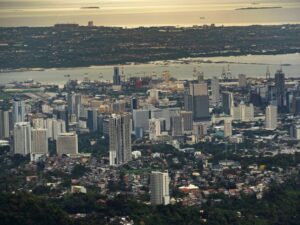
Most Manila hotel guides have the same advice on a loop. Stay in Makati. Book one of the same five towers along Ayala Avenue. Done. And it’s not bad advice, exactly. Makati is safe, walkable, and full of restaurants, and a first-time visitor on a three-day trip can do worse. But it’s also the lazy answer, and after a couple of dozen trips through Manila I can tell you it’s wrong about half the time.
The real answer is that the right neighbourhood depends entirely on what you came for. If you’re chasing Spanish-colonial history, you want to be inside the walls of Intramuros, not a thirty-minute Grab away. If you’re flying in late and connecting onward at 6am, every minute spent in Makati traffic is a minute you could have been asleep next to your terminal. If you came for nightlife you want Poblacion or Malate, not a quiet condotel in Salcedo Village. And if you actually want to feel like you’re in Manila instead of a generic Asian business district, you need to look harder than Makati.
This guide contains affiliate links. If you book through them I earn a small commission at no extra cost to you, which keeps these articles independent and ad-light.
Below I’ve broken Metro Manila into the six areas that actually matter for a traveller, with three to five hotels in each across luxury, mid-range and budget. There’s a comparison table next so you can scan the whole picture in thirty seconds, then a section on getting between areas (because in Manila that part can ruin a trip), then the area-by-area breakdown with my picks. I’ve also included a section on what most guides get wrong, because the conventional wisdom about Manila hotels deserves a kicking.
In This Article
- Manila hotel areas at a glance
- How to choose: getting between Manila’s areas
- Makati: the safe default that’s right more often than it’s wrong
- Raffles Makati: Best Luxury
- The Peninsula Manila: Best Old-School Luxury
- Discovery Primea: Best Mid-High Luxury
- Lub d Philippines Makati: Best Hostel
- Hotel Durban: Best Budget
- BGC: the part of Manila that doesn’t feel like Manila
- Grand Hyatt Manila: Best Luxury Tower
- Shangri-La The Fort, Manila: Best for Families
- Seda Bonifacio Global City: Best Mid-Range
- Intramuros and Old Manila: where the history actually lives
- The Manila Hotel: Most Iconic in the City
- The Bayleaf Intramuros: The Only Hotel Inside the Walls
- White Knight Hotel Intramuros: Best Budget Inside the Walls
- Malate and Ermita: where the bay sunsets actually happen
- Sheraton Manila Bay: Best Mid-Luxury
- New World Manila Bay Hotel: Best Bay-Front Luxury
- Admiral Hotel Manila MGallery: Best Boutique
- Pasay: airport stopovers, casinos, and Bay City
- Conrad Manila: Best Bay-Side Luxury
- Solaire Resort Entertainment City: Best Casino Resort
- Okada Manila: Best for Pool People
- Citadines Bay City Manila: Best Mid-Range Apartment
- Ortigas and Mandaluyong: the underrated middle
- EDSA Shangri-La Manila: Best Resort-Style Luxury
- Marco Polo Ortigas Manila: Best Mid-Luxury Value
- Diamond Hotel Philippines: Best Mid-Range Bay-Adjacent
- What most Manila hotel guides get wrong
- Booking strategy for Manila hotels
- Quick recommendations by traveller type
- Manila hotel FAQ
- Final note
Manila hotel areas at a glance

| Area | Best For | My Top Pick | From ₱/night | Book |
|---|---|---|---|---|
| Makati | First-time visitors, food, business | Raffles Makati (luxury) / Hotel Durban (budget) | From ₱1,800 | Check rates |
| BGC (Taguig) | Walkability, families, modern dining | Grand Hyatt Manila | From ₱5,800 | Check rates |
| Intramuros / Old Manila | History, architecture, museums | The Bayleaf Intramuros | From ₱4,500 | Check rates |
| Malate / Ermita | Manila Bay sunsets, mid-budget, local life | Sheraton Manila Bay | From ₱2,400 | Check rates |
| Pasay (NAIA / Bay City) | Airport stopovers, casinos, malls | Conrad Manila / Savoy Hotel | From ₱2,900 | Check rates |
| Ortigas / Mandaluyong | Business meetings, big malls, value | Marco Polo Ortigas Manila | From ₱5,200 | Check rates |
Prices above are off-peak weekday floor rates from current Booking.com listings (peak Christmas, New Year, Holy Week and SONA week add 20-60%). Treat them as a sanity check rather than a quote.
How to choose: getting between Manila’s areas
This is where Manila punishes a bad accommodation choice harder than almost anywhere else in Southeast Asia. Pick the wrong neighbourhood and you’ll spend three of your seven days inside an air-conditioned car watching EDSA refuse to move. Pick the right one and your hotel becomes a base, not a prison.
Here’s how the transport reality breaks down for a tourist:
Grab. The default. Open the app, type the destination, accept the fare, get in. You’ll pay ₱150-400 (~$3-7) for most intra-Manila rides on a normal day, ₱400-900 in rush hour or rain because of surge pricing. Grab between Makati and BGC takes 12 minutes at 11am and 50 minutes at 6pm. Between Makati and Intramuros it’s 25 minutes at 10am and 90 minutes at 5:30pm. The clock matters more than the kilometres.
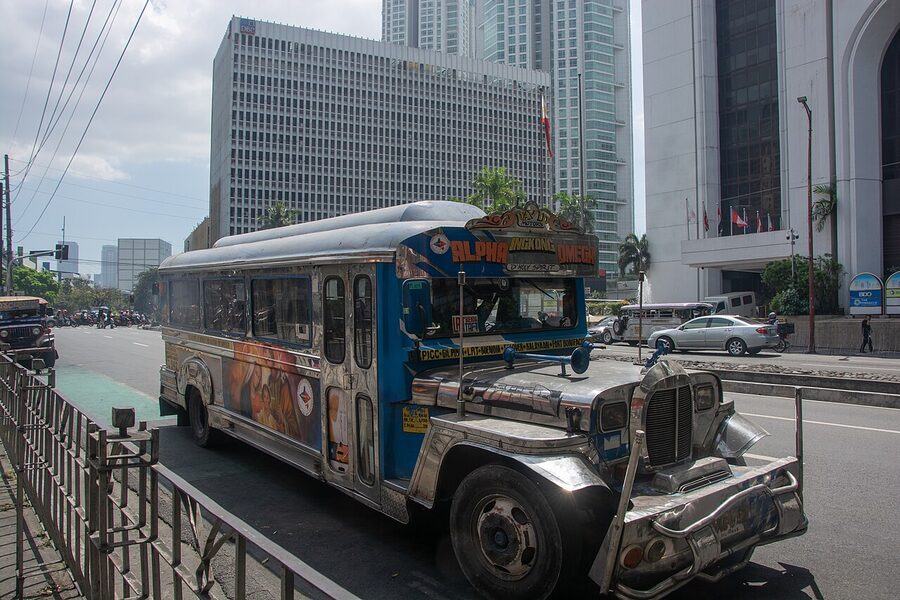
Jeepney. Bright, painted, loud, ₱13-15 a ride, and an institution. As a tourist you’ll take one for the experience and probably never again. They follow fixed routes shouted on the front; you bang the roof or yell “para po” to get off. They’re great for short hops if you’ve already learned the routes, terrible for moving across the city. Skip them on rainy days. Their replacement programme (modern e-jeepneys) is rolling out slowly, so traditional jeepneys still dominate.
MRT-3 and LRT-1/2. The metro lines. MRT-3 runs along EDSA from North Avenue (Quezon City) through Cubao, Ortigas, Shaw Boulevard, Boni, Guadalupe, Buendia, Ayala (Makati), Magallanes and Taft Avenue (Pasay). LRT-1 runs from Roosevelt down Taft to Baclaran. LRT-2 cuts east-west through Recto, Legarda, Pureza, V Mapa, J Ruiz, Gilmore, Betty Go-Belmonte, Cubao, Anonas, Katipunan, Santolan and Marikina. Fares are ₱13-30. Trains are fast (often faster than Grab in rush hour) but utterly packed at 7-9am and 5-8pm, with slow security queues and frequent breakdowns. Women-only carriages are at the front of MRT-3 trains. Most useful pairing: Ayala Station (Makati) to Taft (Pasay) for the airport area.
P2P buses. The unsung hero. Point-to-point air-conditioned buses connect Makati / BGC / Ortigas to NAIA Terminal 3 for ₱150-200, faster and quieter than Grab in surge. Look up Quezon Avenue / Ayala / Market! Market! / Glorietta departure points.
Walking. Works inside Makati CBD (Ayala to Greenbelt to Glorietta), inside BGC’s grid (5th Avenue to High Street to Forbes Town), and inside Intramuros’s walled core. Forget walking between areas. The pavements give up halfway, the heat wins by 10am, and pedestrian crossings are aspirational.
Taxis. Yellow airport taxis are metered and reasonable. White taxis are metered but the meter mysteriously sometimes “doesn’t work”. Use Grab unless you have a reason not to.
The practical implication: pick a hotel where most of what you actually want to do is within a 25-minute Grab ride off-peak. Anything else means trip-killing transit. If you’re doing a heavy Intramuros / Rizal Park / Binondo day, a Makati hotel is fine but a Bay-area hotel saves you a couple of hours of EDSA. If you’re going to be in BGC restaurants every night, don’t stay in Pasay.
Makati: the safe default that’s right more often than it’s wrong
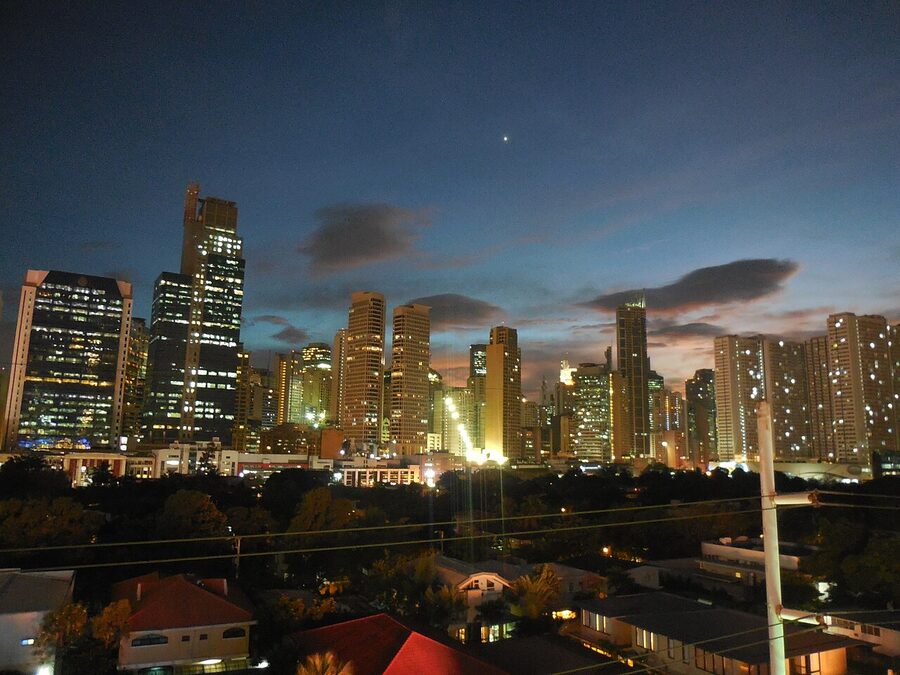
Makati is where the city’s money lives, and like most financial districts that means it’s clean, well-policed, full of restaurants, and a little bit boring around the edges. For a first-time Manila visitor on a three- or four-day trip it’s almost certainly the right call. The Ayala-Glorietta-Greenbelt complex puts shopping, dining, a museum (Ayala Museum), and a half-decent green space (Ayala Triangle Gardens) all inside a fifteen-minute walking radius. Grab fares to most other areas are short. The Ayala MRT station is a usable backup. Expat-grade safety means you can walk back from dinner at 10pm without thinking about it.
Within Makati there are three sub-neighbourhoods worth understanding. Salcedo Village (north of Ayala) is the leafy, lower-rise, residential side, home to the Saturday morning Salcedo Market and a lot of the city’s boutique restaurants. Legazpi Village (south of Ayala) is similar, with the Sunday morning Legazpi Market. The CBD itself, anchored by Ayala Avenue and the malls, is where most international hotel brands sit. Poblacion, on the east side along Makati Avenue, is the bar-and-hostel district: messier, younger, cheaper, and where the real nightlife happens.
Why Makati works: short Grabs to most things, sidewalks that exist, world-class restaurant scene from sisig holes-in-the-wall to Toyo Eatery. The food crawl I describe in my Manila restaurant guide spends two evenings in Makati for a reason.
Why it doesn’t: traffic in and out of the CBD is brutal at rush hour. The CBD itself is glassy and corporate. If your trip is heavy on history (Intramuros, Rizal Park) you’ll spend an hour and change each way getting there. And Makati hotel rates run higher than equivalent rooms in Pasay, Ortigas or Malate.
Raffles Makati: Best Luxury
Nearest station: Ayala (MRT-3), 8-minute walk.
To Greenbelt Mall: 4 minutes on foot, same complex.
Best for: couples, special-occasion travellers, business heavyweights.
From ₱25,000/night (~$430), peak ₱38,000+.
If you have to ask whether a Manila hotel is worth ₱25k a night, Raffles is the answer that justifies the question. The lobby smells like a colonial-era library, the pool deck on the 9th floor looks straight at Greenbelt, and the suites come with butlers who actually do butler things rather than performatively unfold towels. The Long Bar serves a Manila Sling that nobody asked them to invent but is genuinely excellent. The ground-floor Mireio (Provençal) is one of the best dinner restaurants in the city. The Raffles Spa is the most expensive massage in Makati and earns it.
It’s not for everyone. The styling skews older. The clientele is corporate. If you want a young, fun, Instagram hotel this isn’t it.
Good: direct access to Greenbelt 5 (rain-proof shopping), staff that remember names by day two, a bath you can drown a small horse in.
Less good: peak rates pass ₱40,000 (~$700) without much warning, the breakfast buffet is fine but not cheap.
Book Raffles Makati: Booking.com
The Peninsula Manila: Best Old-School Luxury
Nearest station: Ayala (MRT-3), 6-minute walk.
To Greenbelt: 7-minute walk.
Best for: traditionalists, business travellers, afternoon-tea diehards.
From ₱18,500/night (~$320), peak ₱28,000.
The Pen has been the answer to “where do you stay in Makati” for so long that telling a Filipino businessman you’ve booked here gets a small approving nod the way booking the Raffles in Singapore once did. It’s iconic in the literal sense, especially the Lobby Lounge with its enormous coffered ceiling and live string quartet during the daily afternoon tea (₱2,500 per person, book ahead, it’s the move). The rooms are bigger than most newer Makati hotels.
The thing about The Peninsula is that it doesn’t try to be cool. It just keeps doing the things it’s done well since 1976, which is full-service old-money hotel hospitality. If your travel style is “I’d like the same room for the next four mornings, please, with breakfast set up at 7am,” this is the room.
Good: the lobby experience is itself a Manila landmark, location is on Ayala right next to MRT and Greenbelt, the front desk solves problems quickly.
Less good: the pool is small for a five-star, the styling has been called dated for the past decade and that hasn’t changed. Not the right choice if you want chic.
Book The Peninsula Manila: Booking.com
Discovery Primea: Best Mid-High Luxury
Nearest station: Ayala (MRT-3), 9-minute walk.
To Greenbelt: 5-minute walk via Ayala Triangle.
Best for: couples, food-focused travellers, anyone who wants a serious pool.
From ₱11,500/night (~$200), peak ₱17,000.
Discovery Primea sits in the upper-mid-luxury slot where Raffles or the Pen is overkill but Holiday Inn is too plain. The infinity pool on the 16th floor faces the BGC skyline and is the rare hotel pool that locals book day-passes for. The rooms are oversized (40 m² baseline) with proper desks, espresso machines, and a separate tub-and-shower bathroom that’s a small luxury after a sweaty day. The on-site Tapenade and 16 Restaurant + Lounge punch above what hotel restaurants usually deliver.
Filipino-owned (the Discovery group), so the service skews warmer than the chains. Three-minute walk to Greenbelt 5 puts you in the centre of the action.
Good: pool view, room size, in-house restaurants, location at Ayala Triangle.
Less good: some lower floors face the back side and lose the view, lobby gets noisy at events.
Book Discovery Primea: Booking.com
Lub d Philippines Makati: Best Hostel
Nearest station: Guadalupe (MRT-3), then a quick Grab. Or 25-minute walk from Ayala.
To Burgos Street bars: 2-minute walk.
Best for: solo travellers, social backpackers, party-friendly couples.
From ₱900/night dorm bed (~$16), private room from ₱2,400.
Lub d is a Bangkok-born hostel chain that built the largest hostel in the Philippines on Makati Avenue, right opposite the City Garden Grand. The dorms have proper bunks with curtains, lockers, and reading lights, the basics that cheap hostels routinely get wrong. The rooftop bar with city views is busy enough that fellow guests are easy to find without it being a forced-fun nightmare. The downstairs cafe makes a passable flat white. The 6-bed female-only dorm is a nice option for solo women.
Stay here if Poblacion is the reason you came, or if you’ve got a long onward flight and want to socialise for a couple of nights without spending hotel money. Skip if you sleep light: weekend nights are loud until 3am.
Good: dorm beds with curtains and outlets that work, social atmosphere without being feral, free luggage storage if you stay one night and head to the islands.
Less good: Poblacion at 2am on a Saturday outside, the lift is sometimes overrun by airport-bound guests at 4am.
Book Lub d Makati: Booking.com
Hotel Durban: Best Budget
Nearest station: Guadalupe (MRT-3), 10-minute walk; Buendia (MRT-3), 15-minute walk.
To Power Plant Mall: 12-minute walk; to Burgos bars, 4 minutes.
Best for: budget travellers, couples on a short stop, Poblacion explorers.
From ₱1,800/night (~$32), peak ₱2,800.
Hotel Durban is the Poblacion budget option I keep coming back to. Rooms are small, no view to speak of, and the standard double doesn’t have an exterior window, but everything works, the AC is strong, the bathroom is private, and breakfast is included in most rates. The location, two minutes from the Burgos strip and a short walk to Power Plant Mall, is unbeatable for the price. The street outside has a great late-night taho vendor.
Good: dependable AC, private bathroom, walkable to bars, kettle in room.
Less good: windowless standard rooms, the in-house restaurant is forgettable.
Book Hotel Durban: Booking.com
BGC: the part of Manila that doesn’t feel like Manila
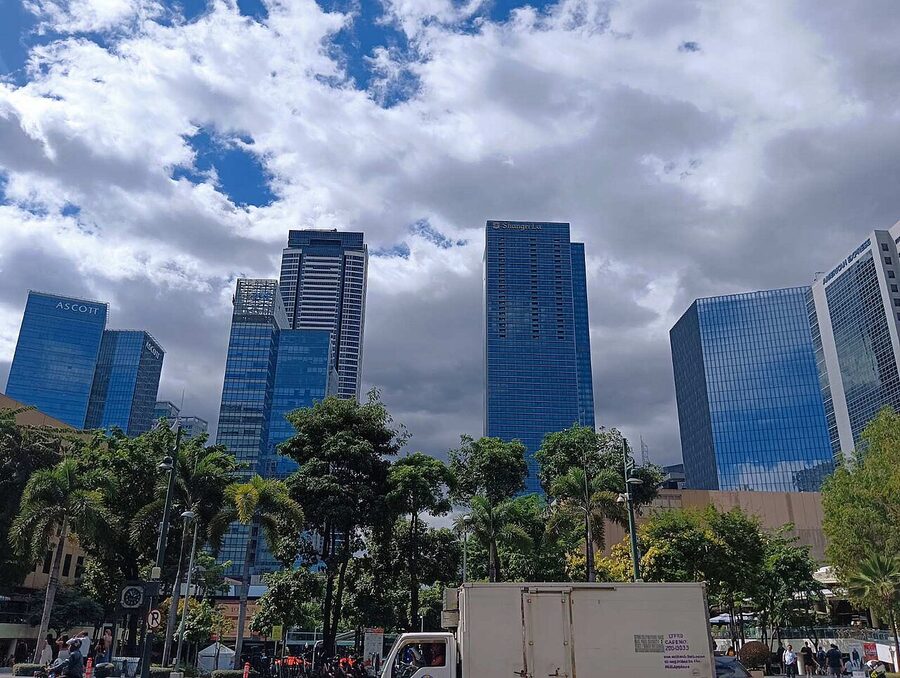
Bonifacio Global City sits across the Pasig River in Taguig, technically not part of the City of Manila proper. That separation is half the appeal. BGC was master-planned on a grid (numbered avenues, lettered streets), with sidewalks that actually accommodate pedestrians and parks that are real parks. International chains and local fine-dining cluster around High Street and Forbes Town. Public art is everywhere; the Bonifacio Art Foundation commissioned murals on most blank walls. There’s a real Sunday brunch culture.
The fair critique is that BGC can feel like an air-conditioned simulation of an Asian city. If you came to Manila for the chaos and the layered colonial history, BGC will read as the un-Manila, clean and corporate, sometimes a bit sterile. If you came to Manila and want a soft-landing base that handles food, walkability and safety in one neighbourhood, BGC is unbeatable.
For things to do nearby, BGC sits about twenty minutes from the Makati food scene and the same again from Intramuros. If you’re going to spend time wandering the Mind Museum or the BGC art walk, see my Manila things-to-do guide for context.
Grand Hyatt Manila: Best Luxury Tower
Nearest station: none direct (BGC has no MRT). Buendia/Ayala MRT 12-minute Grab.
To High Street: 8-minute walk.
Best for: business travellers, families, anyone wanting a real fitness centre.
From ₱8,800/night (~$155), peak ₱14,000.
The Grand Hyatt occupies a 66-storey tower at 8th Avenue and Lane O, and the views from rooms above the 40th floor are the best urban panorama in Metro Manila. East-facing rooms get sunrise over the Sierra Madre. The Grill on 26 is among the few hotel steakhouses I’d recommend; the Peak Club lounge on the 60th floor is worth the upgrade if you can swing it. The pool is small for the building but the spa is generous.
It’s a good luxury choice for travellers who’ll be doing meetings in BGC during the day and want to walk to dinner. Less compelling for a sightseeing-focused trip given BGC’s distance from Intramuros.
Good: view, gym, executive lounge, breakfast spread.
Less good: the lobby is on the upper floors via lifts, a small annoyance with luggage.
Book Grand Hyatt Manila: Booking.com
Shangri-La The Fort, Manila: Best for Families
Nearest station: none direct in BGC.
To Bonifacio High Street: 5-minute walk.
Best for: families with kids, longer stays, fitness-focused travellers.
From ₱11,500/night (~$200), peak ₱18,000.
Shangri-La The Fort is the family pick in BGC. The Kerry Sports facility (included for guests) is a 6,000 m² gym with squash courts, lap pool, and group classes that puts most standalone Manila gyms to shame. There’s a separate kids’ pool, and Horizon Club rooms come with afternoon tea and breakfast in a quieter lounge that helps if you’re travelling with small humans. Rooms are oversized.
The food situation is unusually strong: Canton Road for refined Cantonese, Samba for South American grill, and a dependable breakfast at High Street Cafe. Rates aren’t cheap but the value relative to Hong Kong or Tokyo Shangri-La properties is significant.
Good: the gym is genuinely best-in-class for the city, kids’ programming, room size.
Less good: standard rooms can feel a touch corporate, lobby coffee is expensive.
Book Shangri-La The Fort: Booking.com
Seda Bonifacio Global City: Best Mid-Range
Nearest station: none direct.
To High Street: 6-minute walk.
Best for: mid-budget travellers, couples, business stays under ₱8k.
From ₱5,800/night (~$100), peak ₱9,500.
Seda is Ayala Land’s home-grown hotel brand and it fills a useful niche: clean, modern, no-frills mid-range hotels in good locations. The BGC property is on 30th Street and feels more like a smart city hotel than a budget play. Rooms are small but well-designed (proper desk, real desk lamp, blackout curtains). The rooftop bar Straight Up is a low-key sundowner spot with skyline views. Misto, the all-day restaurant, is fine.
This is the room I book when paying for Hyatt or Shangri-La feels excessive but I want something better than a chain budget hotel. It also has a club-floor option that throws in a small lounge with snacks for the evening.
Good: location, value, friendly Filipino service.
Less good: rooms are not large, gym is small.
Book Seda BGC: Booking.com
Intramuros and Old Manila: where the history actually lives
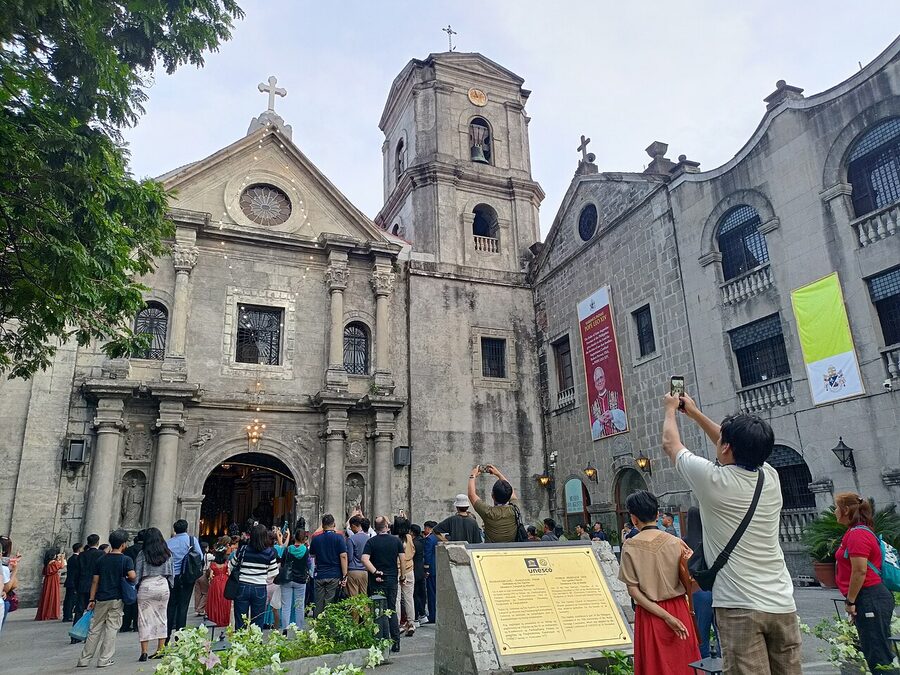
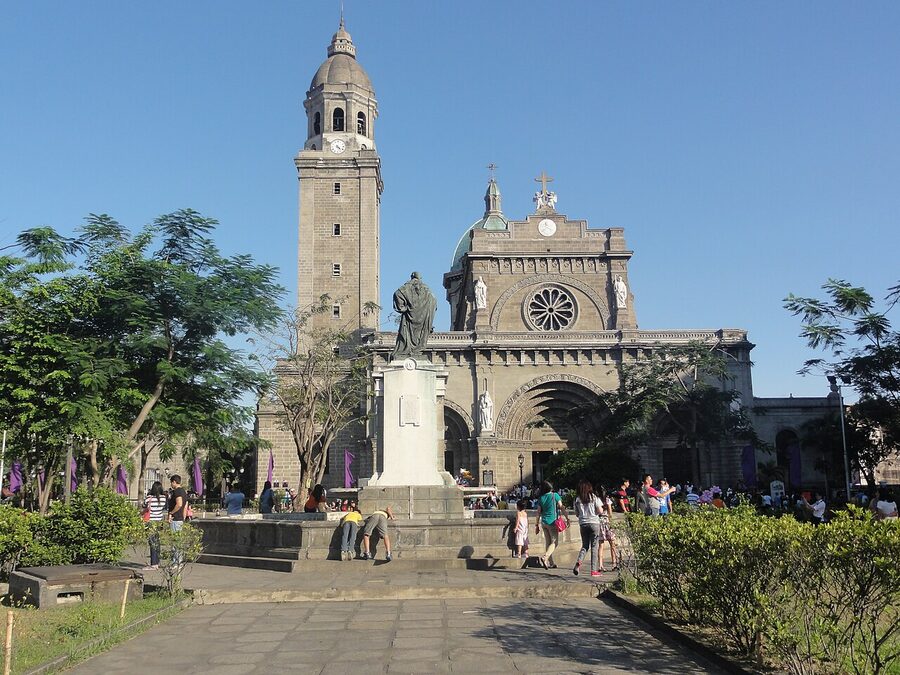
Intramuros is the Spanish-walled core of old Manila, built starting in 1571 and somehow still standing in pieces after centuries of earthquakes, fires, and the World War II bombardment that turned much of the rest of the city to rubble. It’s also the answer to the question Manila’s own tourism people ask least often: where can I stay where the city’s actual history is on my doorstep?
The case for staying inside or right beside Intramuros is straightforward. You wake up, walk to San Agustin Church, walk to Fort Santiago, walk to Casa Manila, the things you came to see in old Manila are five minutes from your room rather than an hour by Grab. The case against is also straightforward: the area shuts down hard at sunset, the dining is limited, and you’re a serious haul from anywhere modern. There’s no MRT inside Intramuros. The closest LRT-1 stations are Central Terminal or United Nations, both on Taft Avenue and a 10-15-minute walk across the moat.
If you only have three days in Manila and history is most of why you came, this is the right call for at least one night. If you’re staying longer, you can split: a night in Intramuros for the dawn walk to San Agustin, the rest in Makati or BGC. For the full walking route around the walled city see my Intramuros guide; the historical context for what you’ll see is there too.
The Manila Hotel: Most Iconic in the City
Nearest station: Central Terminal (LRT-1), 15-minute walk.
To Intramuros gates: 8-minute walk.
Best for: history travellers, special occasions, anyone who reads MacArthur biographies.
From ₱9,800/night (~$170), peak ₱16,500.
The Manila Hotel opened in 1912 with Douglas MacArthur eventually making the penthouse his pre-war residence. There’s a museum-grade lobby, a curving staircase, Italian marble, and that specific smell of polished hardwood and decades of cocktail hours that older Asian grand hotels still hold. The Champagne Room is a serious French restaurant and a special-occasion choice. The Tap Room downstairs is one of the city’s quietly great bars.
It’s not the modernist’s choice. Standard rooms in the older wing show their age (in a good way to some, in a wallpaper-and-carpet way to others). The bay-view rooms on higher floors are the play; ask for a refurbished one.
Good: location two minutes from Rizal Park and the Intramuros gates, a sense of history baked into the bricks, world-class staff.
Less good: some rooms feel tired without recent renovation, traffic outside Roxas Boulevard at evening rush is loud.
Book The Manila Hotel: Booking.com
The Bayleaf Intramuros: The Only Hotel Inside the Walls
Nearest station: Central Terminal (LRT-1), 14-minute walk.
To San Agustin Church: 5-minute walk.
To Fort Santiago: 6-minute walk.
Best for: history travellers wanting to wake up inside Intramuros, photographers chasing dawn light.
From ₱4,500/night (~$80), peak ₱7,800.
The Bayleaf is the only proper hotel inside the walled city, run by Lyceum of the Philippines University as a teaching hotel for hospitality students. Don’t let “teaching hotel” worry you: service is keen, sometimes over-keen, and the rooms are bright and themed. The Skydeck on the 9th floor has the best 360° view of Intramuros, the Pasig River, and Manila Bay; sunset cocktails up there are the move.
The location is the unique selling point. Stepping out of the lobby into the cobblestones at 6am, before the buses arrive, is a Manila moment that no Makati hotel can sell you. The Filipino-fusion restaurant 9 Spoons does a serviceable lunch and dinner.
Good: the Skydeck view, true Intramuros setting, character rooms.
Less good: the area is genuinely dead after 9pm, dinner options outside the hotel are limited, no pool.
Book The Bayleaf: Booking.com
White Knight Hotel Intramuros: Best Budget Inside the Walls
Nearest station: Central Terminal (LRT-1), 13-minute walk.
To Plaza San Luis: 1-minute walk.
Best for: budget history travellers, longer stays under ₱3k.
From ₱2,300/night (~$40), peak ₱4,200.
White Knight is a small mid-budget hotel on General Luna Street, beside the Plaza San Luis Complex. Rooms are simple, clean and quiet, with hardwood floors and small Spanish-tiled bathrooms. There’s no pool and breakfast is basic, but the price is right and the location is unbeatable for the money. Casa Manila and San Agustin are both visible from the front steps.
Good: location, quiet, good value, helpful desk.
Less good: small rooms, no on-site dining of note, the lift can be slow.
Book White Knight Intramuros: Booking.com
Malate and Ermita: where the bay sunsets actually happen
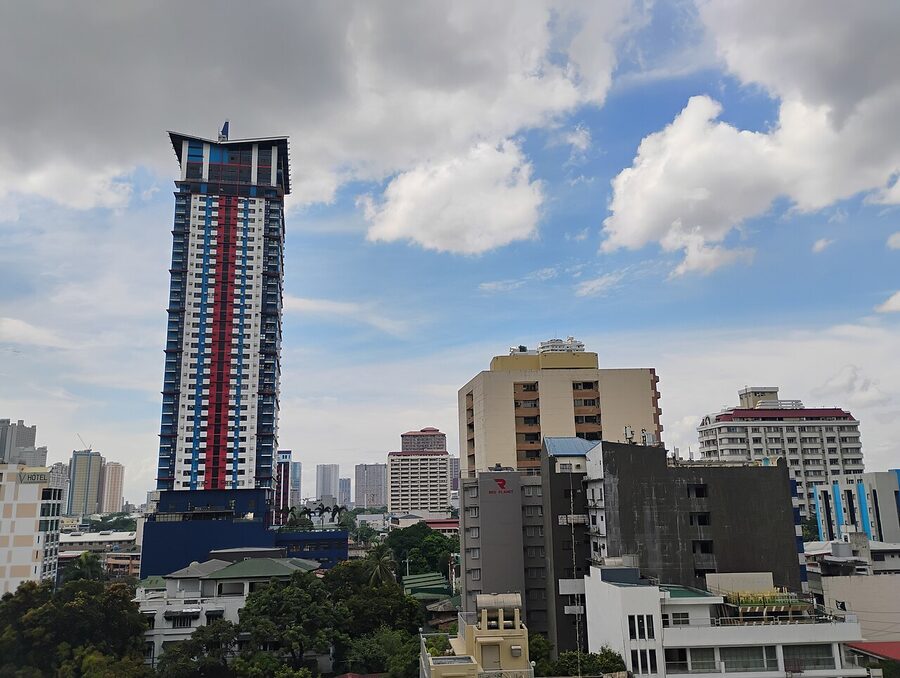
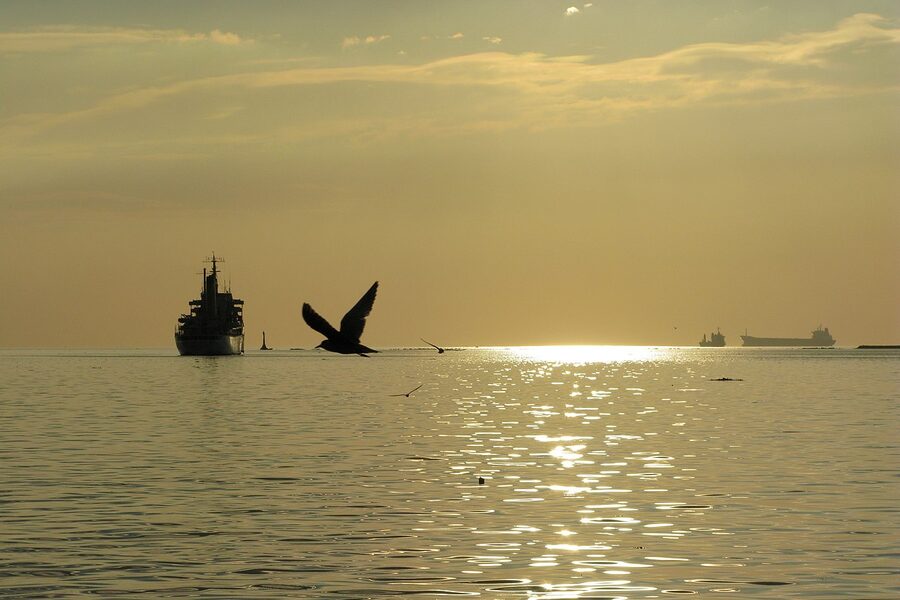
Malate runs along the south end of Manila Bay, and Ermita is its slightly more polished neighbour just to the north. Together they’re the closest you’ll get to staying in the bay-front Manila of the 1920s and 30s, when this stretch was art-deco hotels and sunset boulevards. The Roxas Boulevard waterfront is still the place to watch the sun drop into the bay between November and April; the Manila Baywalk is being redeveloped section by section but already pulls big evening crowds.
Malate has a real personality the corporate districts lack. There’s a long Filipino-Korean-Chinese diaspora history, a thriving expat enclave, the Cultural Center of the Philippines, the original Aristocrat (lechon kawali since 1936), and bars that stay open later than they should. Ermita is calmer, museum-heavy (National Museum complex sits between Ermita and Rizal Park), and has reasonable mid-budget hotels. Together they give you Manila Bay sunsets, walking distance to Intramuros, and lower hotel rates than Makati or BGC.
The fair negative: this part of the city is older and rougher around the edges than Makati or BGC. There are blocks that feel run-down, especially after dark, and tourists do get scammed at the Robinsons mall area if they’re careless. It’s not unsafe, but it’s not Makati-level polished either. Pair Malate with Manila Bay sunset planning and Intramuros walking, and it shines.
If you came for sunsets and Filipino food rather than spreadsheets and skyline drinks, this is your zone. The seafood at Aristocrat, the kare-kare at Café Adriatico, the pancit palabok at the Robinsons food courts, most of my favourite restaurants in Manila are within walking range.
Sheraton Manila Bay: Best Mid-Luxury
Nearest station: Pedro Gil (LRT-1), 12-minute walk.
To Roxas Boulevard / Manila Baywalk: 3-minute walk.
Best for: bay-sunset chasers, mid-luxury travellers, families.
From ₱8,500/night (~$148), peak ₱14,000.
The Sheraton opened in 2018 and is the newest big international name on the Malate strip. West-facing rooms above the 12th floor look straight down Roxas Boulevard at the bay; pay the surcharge for the view, it’s the entire point of staying here. The pool deck on the 9th floor is set up for sunset drinking. Rooms are large for the price (40 m² baseline), with deep tubs and proper TVs in the bathrooms (more useful than you’d think during a 90-minute soak).
The breakfast buffet at Bayview Restaurant is excellent and well-priced for the level. The location puts you a 5-minute Grab from Intramuros and a 12-minute walk from Robinsons Place Manila.
Good: bay-view rooms are exceptional, modern build, large rooms.
Less good: the immediate streetscape is less polished than the building suggests, the bay-view surcharge is steep.
Book Sheraton Manila Bay: Booking.com
New World Manila Bay Hotel: Best Bay-Front Luxury
Nearest station: United Nations (LRT-1), 10-minute walk.
To Robinsons Place Manila: 5-minute walk.
Best for: business travellers, longer stays, casino-curious guests.
From ₱7,800/night (~$135), peak ₱12,500.
New World sits between Malate and the casino strip, with views of Manila Bay from west-facing rooms and a serious club lounge on the upper floors. Rooms are larger than Sheraton’s standard category and the location, on Pedro Gil corner Roxas, is a one-minute walk to the bay. The signature restaurant Wang Fu Cantonese is one of the better Cantonese places in the city.
It’s an older property than Sheraton, 1990s build, refurbished in stages, so some details feel less new. But the bones are solid and the staff service is the strongest in the area.
Good: club lounge, location, restaurant, large rooms.
Less good: some refurbished rooms still show their age, lobby is small for the size of the hotel.
Book New World Manila Bay: Booking.com
Admiral Hotel Manila MGallery: Best Boutique
Nearest station: Pedro Gil (LRT-1), 10-minute walk.
To Manila Bay: 1-minute walk.
Best for: couples, design-focused travellers, longer leisure stays.
From ₱5,200/night (~$92), peak ₱8,800.
The Admiral, part of Accor’s MGallery line, is the Malate hotel I send people to when they want character without paying chain-luxury prices. It’s a 1939 building reimagined as a boutique hotel, with patterned tile floors, warm lighting, and a small rooftop pool that overlooks the bay at sunset. Rooms are small to mid-size depending on category, with spacious bathrooms and big-windowed sea-view options.
The hotel does a daily yoga session on the rooftop at 7am which is a rare nice touch. The breakfast spread leans Filipino and is generous.
Good: the building’s bones, rooftop pool, sea views, breakfast.
Less good: rooms in the lower categories are genuinely small, the gym is tiny.
Book Admiral Hotel Manila: Booking.com
Pasay: airport stopovers, casinos, and Bay City
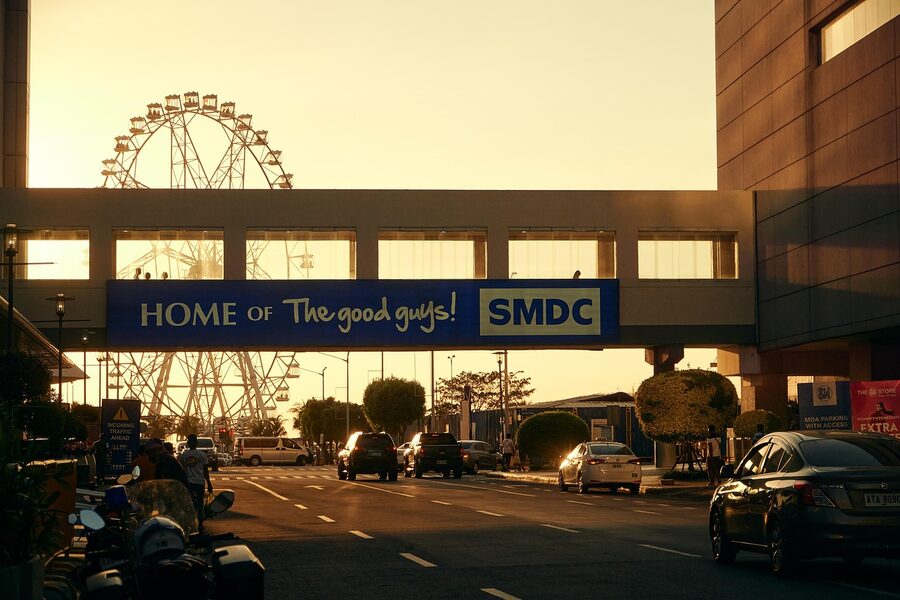
Pasay is the city Metro Manila hides in plain sight. NAIA’s four terminals are here. The Mall of Asia complex (one of the world’s largest) sits on reclaimed land in Bay City. The Entertainment City casino strip, Solaire, Okada, Newport City, adds a Vegas-meets-Tokyo Bay feel. CCP and Folk Arts Theatre. PICC. The big convention centres. None of which sounds romantic, but it adds up to a usable area for a specific kind of trip.
Two reasons to stay in Pasay. First, you have a 6am flight (or you just landed at midnight) and the difference between fifteen minutes and ninety minutes of EDSA traffic matters more than anything else. Second, you’re here to see a show at MOA Arena, hit the casinos, or do a family day at the amusement parks. For everything else, Pasay is too far from the historic core to be a primary base.
NAIA is split across four terminals and the airport’s internal road network is a disaster. Terminal 1 handles most foreign carriers (United, Korean Air, Cathay, Singapore Airlines). Terminal 2 is mostly Philippine Airlines domestic and select international. Terminal 3 is the modern building and handles Cebu Pacific, AirAsia, Emirates, ANA, JAL, and others. Terminal 4 handles low-cost domestic flights. Match your hotel to your terminal: getting from a Terminal 3 hotel to a Terminal 1 flight at 5am still means thirty minutes via airport road and a security queue.
Conrad Manila: Best Bay-Side Luxury

Nearest station: none direct, 12-minute Grab from EDSA-Taft (MRT/LRT junction).
To Mall of Asia: connected via covered walkway.
Best for: families, longer Bay City stays, late-arrival comfort.
From ₱11,500/night (~$200), peak ₱18,500.
The Conrad sits on the edge of the bay in the SM Mall of Asia complex, with the architecture of a docked cruise ship. Rooms above the 8th floor on the west side look straight at Manila Bay sunsets, and the 8-storey atrium lobby is a small spectacle in itself. The pool is one of the bigger hotel pools in the city. Brasserie on 3 has one of Manila’s better breakfasts.
It’s a 20-30 minute Grab to NAIA depending on terminal and time. Direct walking access to Mall of Asia is genuinely useful. Less compelling for a history-heavy trip given the distance from Intramuros.
Good: bay views, pool, MOA access via skybridge, the breakfast.
Less good: nothing within walking distance besides the mall, taxi/Grab queues at MOA can be slow on weekends.
Book Conrad Manila: Booking.com
Solaire Resort Entertainment City: Best Casino Resort
Nearest station: none direct.
To NAIA Terminal 1/2: 12-minute Grab off-peak.
Best for: casino guests, family resort stays, business meetings.
From ₱11,000/night (~$192), peak ₱22,000+ during fight nights.
Solaire opened in 2013 as the first integrated casino resort in Bay City and has stayed the most polished. The hotel itself is independent of the casino floor, so you can stay here without dealing with cigarette smoke or slot machine noise (which a few of the competitors fail at). Rooms are oversized, with deep marble bathrooms and proper soundproofing. Yakumi (Japanese) is one of Manila’s best Japanese restaurants. The 2,000-seat Theatre at Solaire books decent international acts.
It’s a self-contained world. Don’t book Solaire if you came to walk Manila, book it for a casino-and-resort weekend or a high-end airport stopover.
Good: the spa, room size, restaurants, soundproofing from the casino.
Less good: the resort bubble means you’ll never naturally see Manila itself, weekend rates jump on big shows.
Book Solaire Resort: Booking.com
Okada Manila: Best for Pool People
Nearest station: none direct.
To NAIA Terminals: 10-15 minute Grab.
Best for: pool-and-resort travellers, longer leisure stays.
From ₱9,500/night (~$165), peak ₱18,000.
Okada’s hook is the Cove Manila pool club and the Crystal Dragon (a giant Lalique-glass tree-pillared atrium that sounds ridiculous and works in person). The pool complex is one of the largest in Asia, with adult-only and family zones, swim-up bars, and cabanas. Rooms are huge and Tokyo-tinged in their styling. There’s a fountain show in the front lagoon every evening.
If you want a multi-day pool resort within commuting distance of NAIA, Okada is the answer. It’s a less interesting building than Conrad architecturally and a less polished operation than Solaire, but the pool tips the balance for many guests.
Good: the pool club, room size, fountain spectacle.
Less good: the casino floor is harder to avoid than at Solaire, the food is more uneven.
Book Okada Manila: Booking.com
Citadines Bay City Manila: Best Mid-Range Apartment
Nearest station: none direct.
To Mall of Asia: 7-minute walk.
Best for: longer stays, families, anyone wanting a kitchenette.
From ₱4,500/night (~$80), peak ₱7,500.
Citadines is the Ascott group’s serviced-apartment chain and the Bay City property fills the gap between hotel and AirBnB. Studios have proper kitchenettes (induction hob, kettle, mini-fridge, microwave), useful for stays over three nights or anyone with picky eating needs. The pool deck is on the 7th floor and gets sun until late afternoon. Free shuttle to NAIA Terminals 1, 2 and 3 makes morning departures simple.
Good: kitchenette, free airport shuttle, Mall of Asia walking distance.
Less good: no full restaurant, smaller rooms in studio category, the immediate street outside is flat and empty.
Book Citadines Bay City Manila: Booking.com
Ortigas and Mandaluyong: the underrated middle
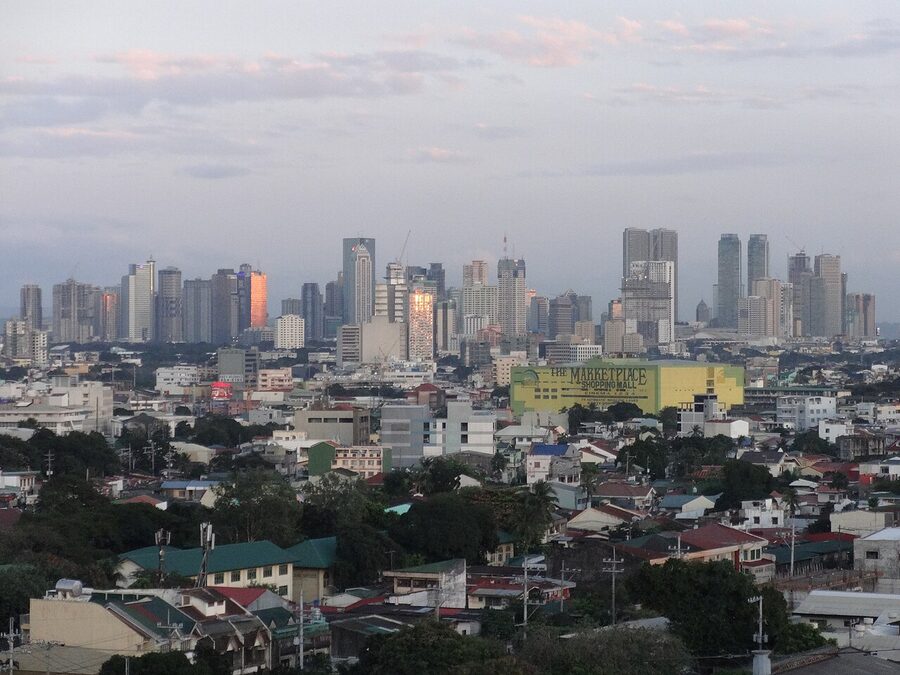
Ortigas Center is Metro Manila’s third major business district after Makati and BGC, sitting on the boundary between Pasig and Mandaluyong with parts crossing into Quezon City. SM Megamall is here, along with Robinsons Galleria, The Podium, and a serious cluster of mid-range hotels. It’s connected by MRT-3 (Ortigas, Shaw Boulevard, Boni stations), the only major hotel zone outside the Makati MRT corridor that has direct rail links.
The honest pitch for Ortigas is value. You get city-centre amenities (huge malls, decent dining, gyms) with hotel rates 20-30% under equivalent Makati or BGC rooms. The trade-off is character: Ortigas is even more business-district than Makati, with less to love after dark. Most tourists ignore it, which is fair if you’re on a four-day history-and-food trip but a missed opportunity if you’re staying a week or doing a long business stay.
The MRT-3 connection is the sleeper advantage. Ortigas station to Ayala station is 12 minutes; you can stay here, eat in Makati, and not deal with EDSA traffic during rush hour. If you’re going to be doing meetings in Makati and BGC and want a base that beats the rates of either, Ortigas earns the look.
EDSA Shangri-La Manila: Best Resort-Style Luxury
Nearest station: Ortigas (MRT-3), 8-minute walk via SM Megamall.
To SM Megamall: 3-minute walk via skybridge.
Best for: families, longer stays, anyone wanting a real garden.
From ₱9,200/night (~$160), peak ₱14,000.
EDSA Shangri-La is the rare Manila hotel that pulls off resort-style grounds in the middle of a business district. The pool is set in a tropical garden with a slide for kids, palm trees that have actually grown for thirty years, and a koi pond. Rooms are spacious and recently refurbished. Senju (Japanese) and Heat (international buffet) are both reliably good. Chi The Spa is one of the best in the city.
If you have kids and don’t want them locked in a city-tower hotel, this is the strongest pick in Metro Manila, better even than the BGC options for resort feel. The MRT and direct mall access make logistics easy.
Good: the gardens and pool, mall access, kid-friendly without being garish.
Less good: the lobby is large and impersonal, premier rooms are needed to escape the business-traveller mid-floor noise.
Book EDSA Shangri-La: Booking.com
Marco Polo Ortigas Manila: Best Mid-Luxury Value
Nearest station: Ortigas (MRT-3), 5-minute walk.
To SM Megamall: 4-minute walk via Sapphire Road.
Best for: business travellers, couples, value-conscious mid-luxury.
From ₱5,200/night (~$92), peak ₱8,500.
Marco Polo is, on the spreadsheet, the best mid-luxury value in Metro Manila. Rooms are oversized, the views from upper floors stretch from Makati to the Sierra Madre, and Cucina (the all-day restaurant) does a generous breakfast. The Sky Bar on the 45th floor has the best urban panorama in Ortigas; it’s also a sunset cocktail spot worth a visit even if you stay elsewhere. The indoor pool is a nice rainy-day asset.
Service runs warmer than the bigger international chains. The clientele leans Filipino business and visiting overseas Filipinos rather than Western leisure, which I find a positive: it’s a Manila hotel that feels like Manila.
Good: room size, views, Sky Bar, value at this rate.
Less good: the pool is small and indoor, gym is functional rather than impressive.
Book Marco Polo Ortigas: Booking.com
Diamond Hotel Philippines: Best Mid-Range Bay-Adjacent
Nearest station: Vito Cruz (LRT-1), 8-minute walk (note: Diamond is technically Malate-adjacent, not Ortigas, but listed here as a value alternative on the upper-mid tier).
To Roxas Boulevard: 1-minute walk.
Best for: bay-view stays under ₱6k, longer leisure visits.
From ₱5,800/night (~$100), peak ₱9,500.
Diamond Hotel sits on Roxas Boulevard between Malate and the Cultural Center area, with bay-view rooms above the 7th floor that catch the same sunset as Sheraton at a meaningful discount. Rooms are smaller and the styling is older, late-90s makeover that hasn’t aged perfectly, but the location, bay views, and price work together. The pool is on the 5th floor with bay-side loungers. The Bistro Filipino restaurant is reliably good for a hotel restaurant.
Good: bay views, location, value, pool side.
Less good: rooms feel dated, lobby cocktail hour is forgettable.
Book Diamond Hotel Philippines: Booking.com
What most Manila hotel guides get wrong
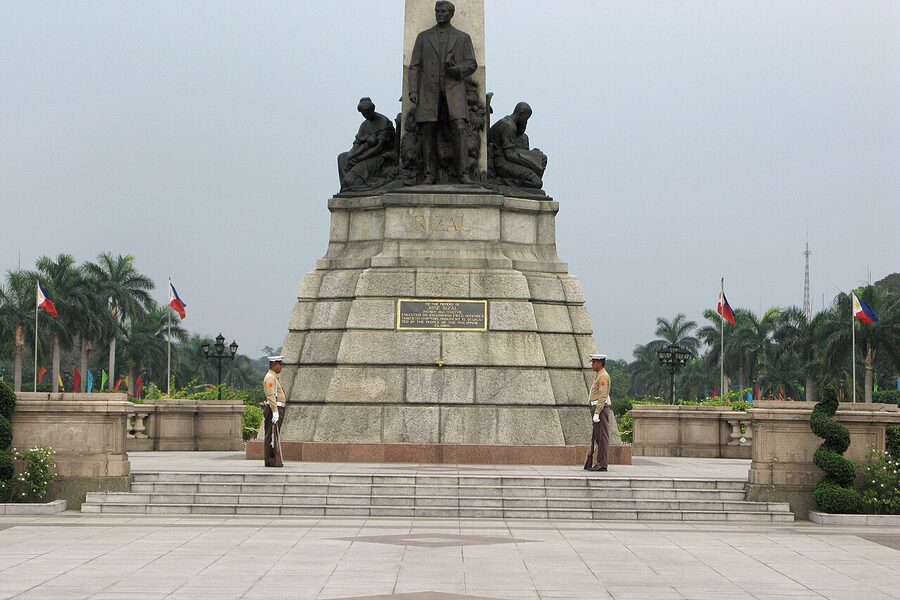
Two stubborn pieces of conventional wisdom about Manila hotels deserve to be retired.
“Just stay in Makati, you can’t go wrong.” Half right. You can definitely go wrong, and the wrongness usually shows up on the third morning when you’ve burnt three hours commuting to Intramuros and the National Museum. Makati is the right answer when food and shopping are your priorities and you’re staying three nights or fewer. It’s the wrong answer when half your itinerary is in old Manila. Pair smarter: Makati for the modern stuff, Intramuros for one history night, or split between Bay-area and BGC if you want a longer trip with more variety. The “always Makati” default is the kind of advice an article writes when the writer has spent two days in Manila instead of two weeks.
“Stay in Pasay because it’s near the airport.” Mostly wrong. Pasay is the right call only when you have a sub-12-hour layover, a 5am flight, or you came specifically for Solaire / MOA / casinos. For an actual Manila trip, Pasay is the worst-positioned base in the city. NAIA traffic is bad both directions, and the things you came to Manila to see (Intramuros, Binondo, Makati food, BGC art walk) are all 25-90 minutes away depending on hour. The reduced rates on Pasay hotels look like a deal until you cost in Grab fares and lost daylight.
The underdog pick I’ll keep arguing for is Ortigas. It’s the best mid-range value in the city, has direct MRT to Makati and Quezon City, and the lobby of Marco Polo or EDSA Shangri-La is a calmer place to come back to than Burgos Street at midnight. Most Manila guides skip Ortigas because it’s not glamorous. That’s fine; it makes the rates better.
And the most overrated single hotel in Manila? Truly, it’s the Manila Hotel itself in standard rooms: the iconography is real, the lobby is real, the breakfast room is real, but if you book a non-renovated standard room you get a tired hotel charging luxury rates because of the building’s history. Book a refurbished bay-view room or stay somewhere else.
Booking strategy for Manila hotels
A few Manila-specific tactics that save money or stress:
Book three to four months out. Manila has fewer hotel rooms per visitor than Bangkok or Kuala Lumpur, and the international chains fill up on the upper end. Booking three to four months ahead consistently gets the best rates. Booking last minute under three weeks usually means paying 30-50% more on the same rooms.
Avoid Christmas, New Year, Holy Week, and big concert / fight nights. Christmas Day to early January, Maundy Thursday to Easter Sunday, and Pacquiao-style mega-fights at MOA Arena send rates skyward. SONA week (the State of the Nation Address, late July) closes major roads in Quezon City and pushes people into Makati / BGC, raising rates there. If you can travel shoulder-season (February, late May, October), Manila’s hotel pricing is genuinely reasonable.
Compare Booking.com vs Agoda vs direct. Booking.com tends to win on luxury hotels (better Genius discounts), Agoda often has lower headline rates on mid-range and budget. Hilton and IHG direct rates plus loyalty status often beat both for their flag properties.
Cancellation flexibility matters in Manila more than usual. Typhoons, flight delays, and the occasional NAIA shutdown happen. Pay the small premium for free cancellation up to 24 hours; the peace of mind is worth it.
Read the room category small print. “City view” often means a parking lot. “Bay view” sometimes means a partial sliver of bay through other towers. The price between a guaranteed view category and a “subject to availability” can be small; if the view is the reason you booked, lock it in.
Quick recommendations by traveller type
Skip the rest if you only want the answer for your situation.
First-time visitor, three nights, history and food. Two nights at Discovery Primea in Makati, one night at The Bayleaf Intramuros. The split is worth the two transfers; you’ll thank me at dawn in Intramuros. For pacing, see my Manila three-day itinerary.
Couples, special-occasion, no kids. Raffles Makati, three nights, all in. Or if a bay sunset matters more than the Long Bar, Sheraton Manila Bay bay-view rooms.
Families with kids. EDSA Shangri-La in Ortigas (real garden pool) or Shangri-La The Fort in BGC (gym, kids’ programming, room size). Both are stronger family picks than the more famous Makati names. Read the broader Manila luxury hotels guide if you want a fuller comparison set at the top end.
Long stay (a week or more). Citadines Bay City for the kitchenette and value; Marco Polo Ortigas for the value-luxury balance.
Solo, social, budget. Lub d Makati if you want bars and conversation; The Bayleaf if you want history and quiet.
Backpackers, multi-week. Lub d Makati for first nights, then up the islands. Save the Manila spend for Palawan boats.
Business traveller, meetings in Makati. The Peninsula if budget allows; Discovery Primea if not. Avoid Pasay or Ortigas if traffic timing is tight on meeting days.
Late arrival, early departure. Savoy Hotel Manila connects to Terminal 3 by skybridge; book it specifically for stopover convenience and don’t waste the night fighting traffic into the city.
Manila hotel FAQ
What’s the best area to stay in Manila for first-time visitors?
Makati is the safest default for a three-to-four-day first trip. It puts food, shopping, and the MRT line within walking distance, and the Grab fares to Intramuros and BGC are short. If your trip leans heavily on history, mix one night in Intramuros (The Bayleaf) into the schedule.
Is Manila safe for tourists, and which areas should I avoid?
Manila is safer for tourists than its reputation suggests. Makati, BGC, Intramuros, Ortigas and the bay-front parts of Malate / Ermita are fine for ordinary urban awareness. The areas to actively avoid for hotel choices are Tondo, parts of Caloocan, and the streets immediately around the LRT-1 station at Pedro Gil after dark. Standard precautions apply: don’t flash valuables on jeepneys, use Grab not white taxis after midnight, and watch the drink-spiking pattern in Malate’s red-light blocks.
How much should I budget for a hotel in Manila?
Hostel dorm: ₱700-1,200 (~$12-21) per night. Mid-range hotel double: ₱3,500-6,500 (~$60-115). International chain mid-luxury: ₱7,000-12,000 (~$120-210). Five-star luxury: ₱18,000-35,000+ (~$320-620+). Peak periods add 30-60%, off-peak shoulder months can be 20% under these floors.
How far in advance should I book?
Three to four months out for mid-luxury and luxury during peak periods (December, Holy Week, July SONA week). Six to eight weeks out for shoulder-season trips. Last-minute bookings under three weeks consistently cost 30-50% more.
Should I stay near the airport?
Only if you have a sub-12-hour layover, an early-morning departure, or you specifically came for the casino strip and Mall of Asia. For an actual Manila trip, Pasay is the worst-positioned base for sightseeing.
What’s the best area for nightlife?
Poblacion in Makati is the engine; BGC has more polished rooftop bars; Malate has the older-school dive scene.
How do I get from NAIA to my hotel?
Grab from inside the terminal arrival hall is the simplest. Avoid the white taxi touts at the door who quote a flat fare. Yellow airport taxis at the official rank are metered and reasonable. P2P buses go to specific drop-off points in Makati, BGC and Ortigas for ₱150-200. From Terminal 1 to Makati expect 30-60 minutes depending on time. From Terminal 3 to Makati is 25-45 minutes.
Are Booking.com and Agoda reliable for Manila?
Yes for both. Booking.com tends to win on luxury, Agoda on mid-range and budget. Cross-check both before booking. Direct hotel rates plus chain loyalty (Hilton Honors, IHG One, Marriott Bonvoy, Accor ALL) sometimes beat both for chain properties, especially with status upgrades.
Final note
The right Manila hotel depends on what brought you to Manila. There is no single right answer and the guides that pretend there is have spent more time on listicles than in the city. Pick the area that matches your trip, then pick the property within that area that matches your budget and travel style. If you do that, the hotel becomes a small good thing in the trip rather than a problem you have to manage.