
Review · Bohol Countryside & Chocolate Hills
From Bohol & Panglao Island: Full-Day Bohol Tour
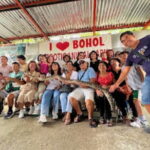
Bohol packs a lot into one day. This 8-hour tour links the island’s best-known sights with older churches, local crafts, a river cruise, and the famous Chocolate Hills. I like the mix of scenery and culture, especially the Loboc River lunch cruise and the chance to see places beyond the main viewpoints. I also like the small-group format, limited to six people, which should make the day more personal than a large coach trip.
The main drawback is that the schedule may not always run exactly as advertised. One booking lasted about 6.5 hours instead of eight, skipped the craft demonstration, and visited a different church. At $123 per person, I would book this for convenience, transport, and a guide, not because it is the cheapest way to see Bohol.
In This Review
- Key points at a glance
- Why this Bohol day tour works well
- The Blood Compact Site in Tagbilaran City
- Baclayon Church and early stone architecture
- Local metalwork, Nipa roofing, and a Boholano home
- Looking for tarsiers near the Loboc River
- Bilar’s man-made mahogany forest
- The Chocolate Hills viewpoint
- Lunch on the Loboc-Loay River
- Transport, guide quality, and group size
- Is $123 a fair price?
- Who should book this experience?
- My verdict on the Bohol full-day tour
- FAQ
- Where does this Bohol tour take place?
- How long does the tour last?
- What language is the tour conducted in?
- How many people are in the group?
- Is transportation included?
- Is lunch included?
- Are entrance fees included?
- Are snacks included?
- What should I bring?
Key points at a glance
- The Chocolate Hills are the grand finale: Over 1,200 rounded hills turn brown in the dry season, creating Bohol’s most unusual view.
- Lunch comes during a Loboc-Loay River cruise: You eat on board while Nipa palms and countryside pass by.
- The day has a useful cultural balance: The route includes the Blood Compact Site, Baclayon Church and Museum, local metalwork, Nipa weaving, and the Clarin Ancestral House.
- The group is very small: With a maximum of six participants, you can ask questions and avoid the feel of a large bus tour.
- Transport and entry fees are covered: Air-conditioned transport, a licensed English-speaking guide, entrance fees, and lunch are included.
- The timing deserves attention: The advertised duration is eight hours, but one recent booking finished in roughly 6.5 hours and missed some listed stops.
Why this Bohol day tour works well
Bohol is easy to underestimate. On a map, the island’s attractions can look like simple dots connected by roads. In reality, they are spread across the countryside, and arranging transport between them can take time and patience. This tour gives you a single vehicle, a licensed guide, and a planned route through several parts of the island.
I like that the day is not built around one attraction alone. You get the Chocolate Hills, but also a historic church, a political landmark, small-scale craft work, a family home, a forest, and a river meal. That makes the tour a better introduction to Bohol than a quick drive to the hills and back.
The small group matters. Six people is enough for a social outing but small enough for the guide to answer questions without shouting across a coach. A 4.6 rating from 29 bookings and an 88 percent perfect score for transport suggest that the basic operation is working well, though the itinerary variation is worth keeping in mind.
A few more Tagbilaran City tours and experiences worth a look
The Blood Compact Site in Tagbilaran City
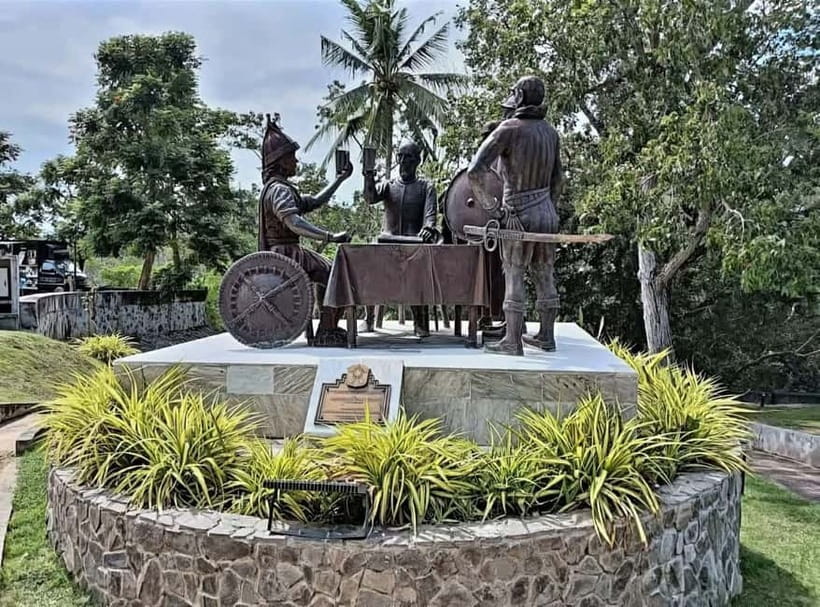
The first stop is the Blood Compact Site in Tagbilaran City. It marks a 16th-century ritual meant to create friendly relations between Spanish representatives and Filipinos. The ceremony involved a shared blood ritual, a formal act of alliance that now has a place in the story of early Spanish contact in the Philippines.
This is a short historical stop rather than a major sightseeing session. Its value comes from the explanation. Without a guide, you could easily see the monument, take a photo, and miss why the event matters. I would listen closely here, especially if you want a quick introduction to Bohol’s place in Philippine colonial history.
Do not expect a long museum visit or a broad archaeological site. The Blood Compact Site works best as a scene-setter before the older church and countryside stops.
Baclayon Church and early stone architecture
The route continues to Baclayon Church and Museum in the town of Baclayon. It is considered one of the oldest stone churches in the Philippines, with religious objects and relics connected to the early 16th century.
This stop gives the day some weight. The Chocolate Hills are visually striking, but Baclayon offers a connection to the built history of Bohol. I like the contrast between the church’s stone walls and the natural sights later in the day. The museum adds context, allowing you to see religious items rather than only the church exterior.
There is one practical caution. The exact church visit may vary. One booking visited a different church instead, so you should treat Baclayon as the planned stop rather than an absolute guarantee. That is not necessarily a problem, but it matters if this church is the main reason you are booking.
Local metalwork, Nipa roofing, and a Boholano home
The itinerary then moves into everyday craft traditions. In Loay, you may watch local craftspeople make bolos and other metal tools by hand. Bolo knives have long been useful in rural life, so this is a chance to see practical workmanship rather than a staged cultural show built only for photographs.
You may also see Nipa leaves being woven into roofing material. Nipa palms are part of the river and coastal environment, and turning their leaves into roofs shows how local materials can serve a useful purpose. I find stops like this valuable because they explain how people have worked with the environment around them.
The plan also includes the Clarin Ancestral House, described as a typical Boholano home. A home visit can say more about local life than another lookout point, though the word typical should be treated carefully. One historic house cannot represent every family in Bohol. Still, it helps connect the tour to domestic life, building styles, and older patterns of living.
This is also the part of the schedule most likely to be shortened if the day runs behind. One recent booking did not include the craft-making visit. If these hands-on stops matter to you, ask the operator to confirm them before departure.
Looking for tarsiers near the Loboc River
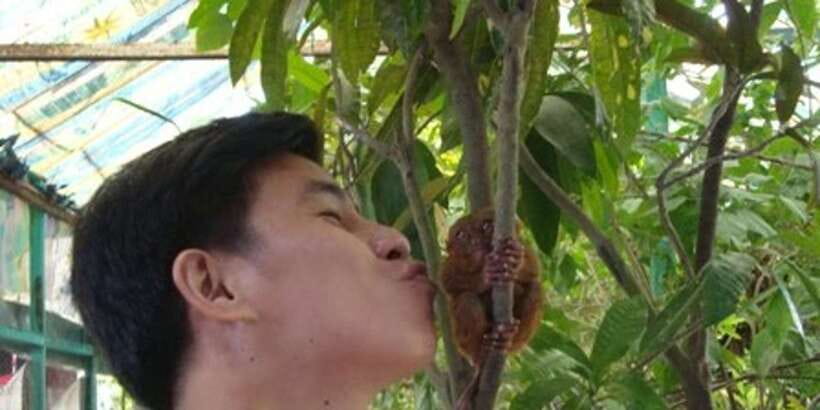
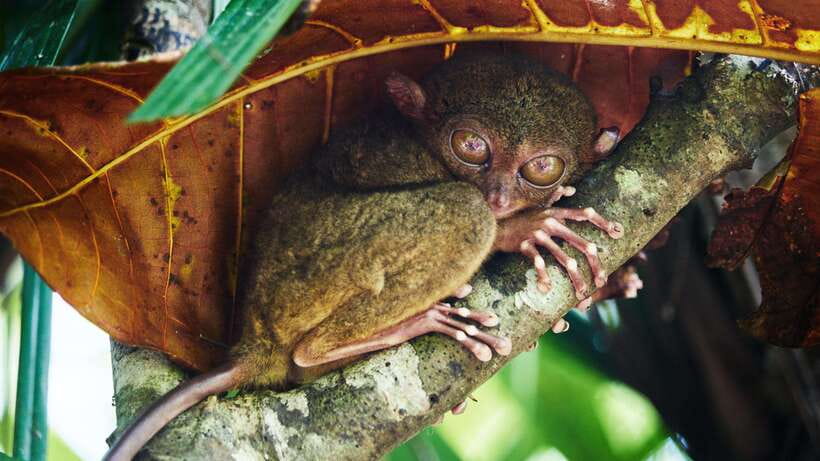
The Loboc River section adds one of Bohol’s best-known small animals: the tarsier. The tour description calls it the smallest monkey in the world, and it is famous for its tiny body and large eyes. You are told to keep watch along the water, but a sighting should not be treated as guaranteed.
The important point is to follow the guide’s instructions. Tarsiers are delicate animals, and the appeal is seeing them in a quiet, respectful setting rather than turning the encounter into a noisy photo stop. The supplied information does not identify a separate tarsier sanctuary or guarantee close viewing, so I would keep expectations modest.
You also walk along the Loboc River during this portion of the day. That gives you a change from riding in the vehicle and lets you notice the river at a slower pace. The river is not just a transport route here. It is part of the daily setting, framed by palms and rural scenery.
Bilar’s man-made mahogany forest
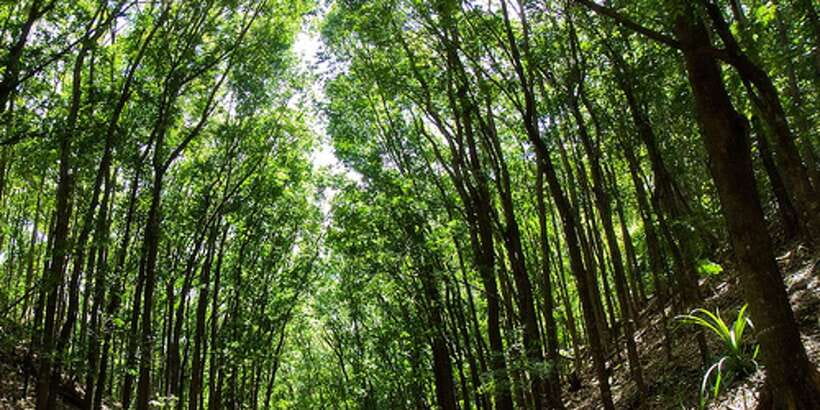
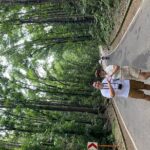
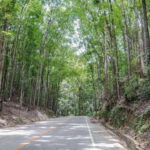
The road then passes through the man-made forest of Bilar. Thousands of mahogany trees were planted here, creating a long, cool-looking corridor beneath the canopy.
This is a simple stop, but it breaks up the day nicely. After churches, homes, and craft work, the forest provides shade and a different sense of scale. The straight rows of trees also show that not every memorable view in Bohol is entirely natural. This is a planted environment, shaped by people over time.
You may only pause briefly here, depending on traffic and the timing of the rest of the route. I would enjoy it as a scenic transition rather than expect a full forest walk.
The Chocolate Hills viewpoint
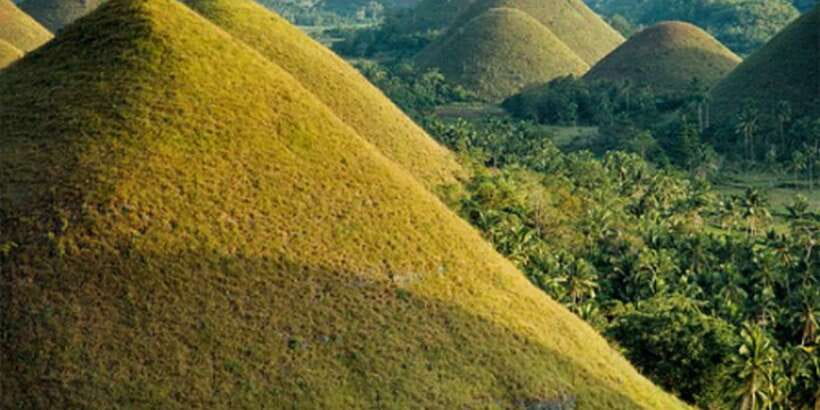
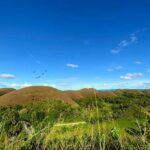
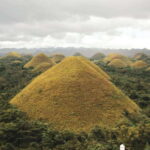
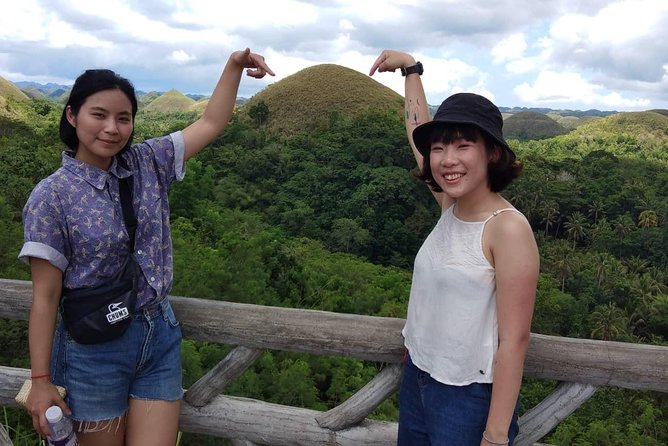
The Chocolate Hills are the tour’s big visual moment. More than 1,200 rounded hills sit close together across central Bohol. During the dry season, their grass turns brown, giving them the name Chocolate Hills. In the wetter months, they appear green.
The sight is unusual because the hills have such similar shapes and are packed across the countryside. From the viewing area, you get the broadest panorama of the day. The hills have also been proposed as a UNESCO World Heritage Site, which reflects their importance as a major natural feature of the Philippines.
I would plan for heat here. The supplied advice is sensible: bring a sun hat, sunglasses, sunscreen, and water. The viewpoint is exposed, and the combination of sun and a full day on the road can wear you down. Snacks are not included, so pack something if you need more than the included lunch.
This is also where a guide adds value. The formation is easy to admire, but the explanation helps you understand why the hills are so distinctive. Ask about the dry-season color change and how the hills fit into Bohol’s wider geography.
Lunch on the Loboc-Loay River
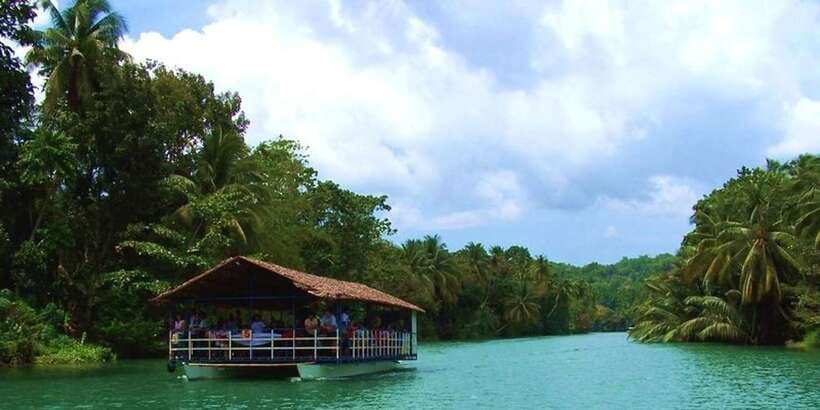
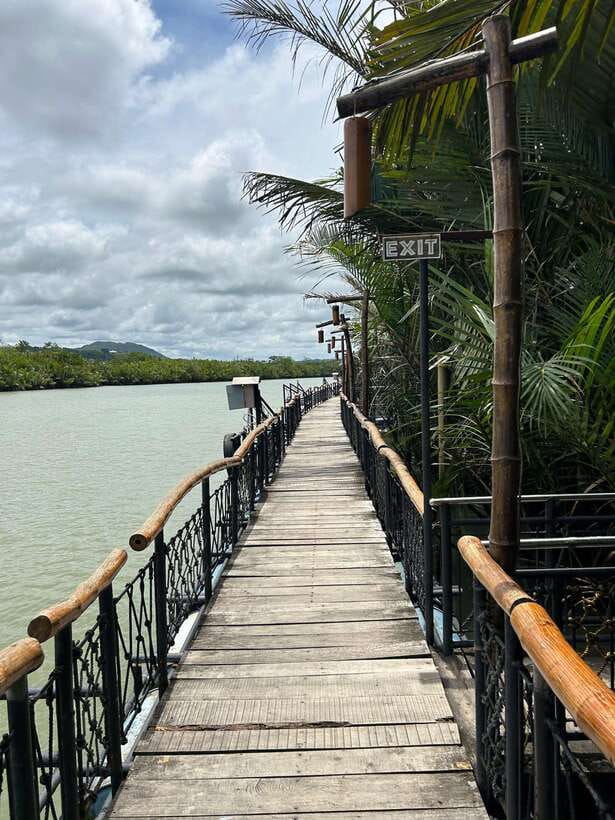
The final major activity is a cruise along the Loboc-Loay River, with lunch served on board. This is one of the strongest parts of the package because it combines a meal, a break from road travel, and a scenic ride.
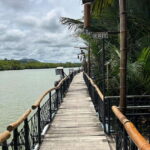
You can relax while Nipa palms and the riverbank pass by. After a morning of stops, you may appreciate the chance to sit down without having to make another decision. The river cruise also gives you a different view of Bohol. Instead of looking at the countryside from a road, you see it from the water.
Lunch is included, but the information does not specify the menu. If you have dietary needs, ask before booking rather than assume the meal will suit you. Snacks are not included, so bring your own small supply, along with water.
The order of the river cruise may vary. The description places it at the end, while other wording also refers to walking along the river earlier in the route. That is normal for a busy full-day itinerary, but it reinforces the need to confirm the precise schedule on the day.
Transport, guide quality, and group size
Air-conditioned transport is included, and that is important in Bohol’s heat. You spend a fair amount of the day moving between Tagbilaran, Baclayon, Loay, Bilar, the Chocolate Hills, and the river. A cool vehicle makes the long route much more comfortable.
The tour includes a licensed English-speaking guide. The strongest praise is aimed at the people running the day. Guides Chan and Raymond have been singled out for their care, history explanations, flexibility, and willingness to answer questions. Frederic also described a guide who adapted to requests and gave detailed explanations about the Philippines.
That personal attention is the chief reason to choose this organized tour over arranging separate rides. You are paying for someone to handle the route, explain what you see, and keep the day moving. The small-group limit of six should make that service more useful.
Still, the shorter 6.5-hour booking is a fair warning. An eight-hour tour should give you time to enjoy each stop, but a compressed schedule can turn craft visits and historical sites into quick pauses. If you have a fixed evening plan, leave a buffer rather than scheduling something immediately afterward.
Is $123 a fair price?
At $123 per person, this is not the budget choice. One booking noted that arranging the day locally would have cost much less. I would not dismiss that point. Bohol has transport options, and independent planning can reduce the price if you are comfortable negotiating rides and managing the route yourself.
The package becomes easier to justify if you value convenience. You receive air-conditioned transport, entrance fees, a licensed guide, and lunch on the river. You also avoid piecing together separate drivers for a route that covers several towns and attractions.
The value is strongest for solo visitors, couples, and small groups who want one organized day with cultural explanation. It is weaker for people who already have a private driver, prefer a slow schedule, or mainly want the Chocolate Hills. In those cases, a shorter local arrangement may suit you better.
The ability to cancel up to 24 hours ahead for a full refund and reserve without paying immediately also gives you some flexibility. Those terms are useful when your Bohol plans are still moving, though you should check the available starting time before committing.
Who should book this experience?
I would choose this tour if you have only one full day for Bohol and want the main sights plus some local context. It is a good fit if you prefer a guide to explain the Blood Compact Site, Baclayon Church, the ancestral home, and the Chocolate Hills instead of simply taking you to photo stops.
It also suits you if you are staying on Panglao Island and do not want to arrange a full-day vehicle independently. The air-conditioned transport and included lunch remove much of the planning work.
I would hesitate if you want every listed stop guaranteed in exact detail. The craft demonstration may be omitted, the church may change, and the total day may be shorter than eight hours. Families should also note that pets are not allowed, and anyone sensitive to heat should bring water, sunscreen, sunglasses, and a hat.
My verdict on the Bohol full-day tour
I like this as an all-round introduction to Bohol. The best parts are the small group, thoughtful mix of culture and scenery, capable guides, Chocolate Hills, and the calm river meal. You get more than a single famous viewpoint, and the route gives you a useful sense of the island.
The price is the main question. At $123, you are paying for comfort and simplicity. If you want the lowest cost, arrange local transport. If you want a guided day with most major sights handled for you, this is a sensible choice.
Book it when your time is short, your group is small, and you want history included with the views. Before paying, confirm the start time, the church stop, and whether the craft demonstrations are running that day. Those three checks will help ensure the tour matches what you want.
FAQ
Where does this Bohol tour take place?
The tour takes place in the Visayas, on Bohol, with the route including Tagbilaran City, Baclayon, Loay, Bilar, the Chocolate Hills, and the Loboc-Loay River.
How long does the tour last?
The advertised duration is eight hours. One booking finished in about 6.5 hours, so you should allow flexibility in case the schedule is shortened or adjusted.
What language is the tour conducted in?
The live tour guide speaks English.
How many people are in the group?
The tour is described as a small-group experience limited to six participants.
Is transportation included?
Yes. Air-conditioned transportation is included in the price.
Is lunch included?
Yes. Lunch is served during the Loboc River cruise and is included.
Are entrance fees included?
Yes. Entrance fees are included.
Are snacks included?
No. Snacks are not included, so bring your own if you need food between stops.
What should I bring?
Bring sunglasses and a sun hat. Sunscreen and water are also suggested because of the sun and heat. Pets are not allowed.
More Full-Day in Tagbilaran City
More Tours in Tagbilaran City
More Tour Reviews in Tagbilaran City
Not for you? Here's more nearby things to do in Tagbilaran City we have reviewed



Bohol Countryside & Chocolate Hills: how the alternatives stack up


The lists this tour appears in