
Review · Bohol Countryside & Chocolate Hills
From Tagbilaran City/Panglao Island: Bohol Mangrove Kayaking
Mangrove tunnels reward a slower kind of sightseeing. This five-hour Abatan River trip gives you your own kayak, local paddlers, and a rare look at Bohol’s flooded forests without engines or crowds. I like the peaceful route and the way guides such as Vince and Jeremy explain the plants, birds, crabs, and river communities. I also like that transport, gear, food, changing facilities, and water refills are included.
The main consideration is the physical side. You paddle for up to two hours, and the tour is not suitable for non-swimmers, children under six, or people with mobility impairments. The drive can also take about an hour from Panglao or Loboc, though Tagbilaran is much closer.
In This Review
- What makes this Bohol kayak trip special
- Entering the Abatan River from Panglao or Tagbilaran
- Safety first, then time on the water
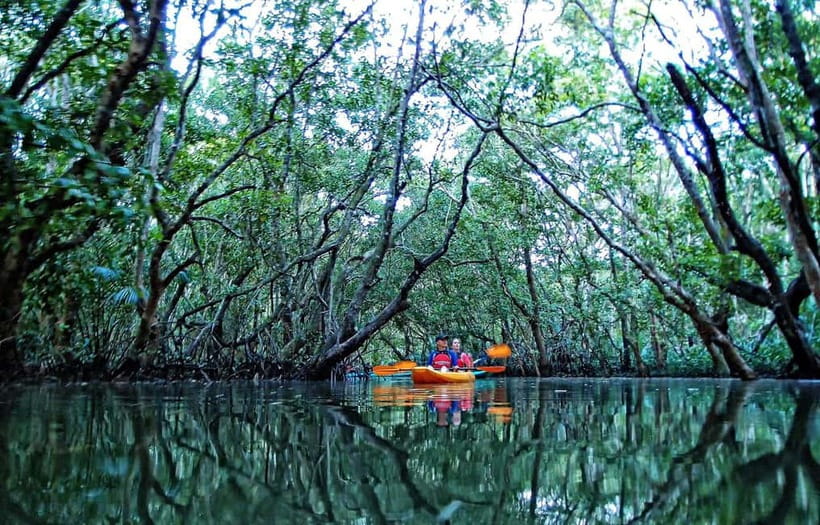
- The mangrove tunnels are the main event
- Why the mangroves matter
- Local guides make the difference
- Wildlife viewing without a zoo feeling
- Snacks, food, and a useful finish
- Is $64 a fair price?
- How this compares with a typical Bohol day out
- Practical ways to enjoy the route
- Who should book the Mangrove Tunnels Trail?
- Should you book it?
- FAQ
- How long does the Bohol mangrove kayaking experience last?
- Where does the tour provide pickup?
- How long is the drive to the Abatan River?
- Is kayaking experience required?
- Do I need to know how to swim?
- What languages does the guide speak?
- What is included in the price?
- What should I bring?
What makes this Bohol kayak trip special
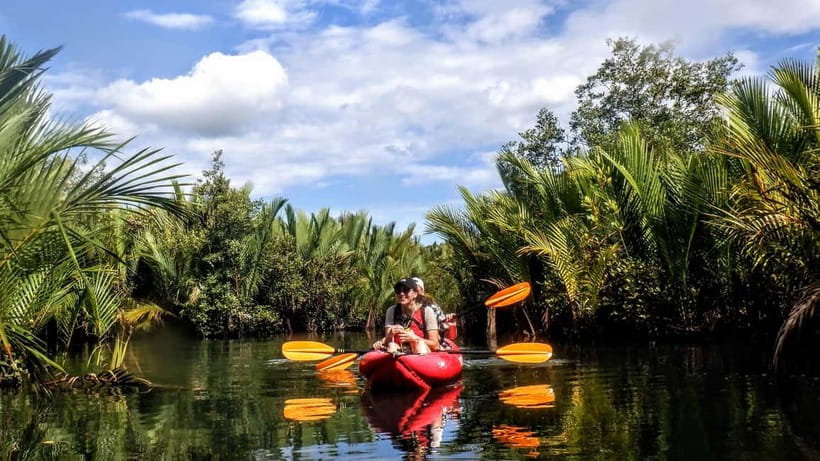
- A 7-kilometer paddle through mangrove tunnels: You steer through narrow waterways and open river sections rather than sitting in a motorboat.
- A working conservation corridor: The area contains 32 mangrove species, including the endangered Camptostemon philippinense.
- Local guides with time to explain: Vince has taken photos for guests and never rushed the route, while Jeremy is praised for his strong environmental background.
- A quiet alternative to Bohol’s famous stops: There are no selfie stations, loud boat engines, or crowds built into the experience.
- Food and facilities are included: You get local snacks, food and drinks, water refills, lockers, washroom access, and changing rooms.
- Simple for visitors based in Bohol’s main resort areas: Round-trip transport is provided from Panglao Island or Tagbilaran City.
Entering the Abatan River from Panglao or Tagbilaran
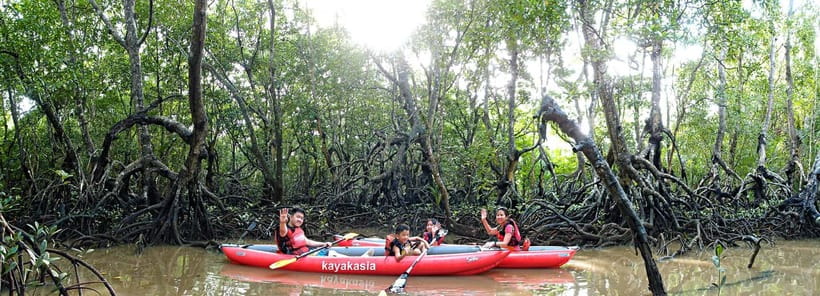
The experience begins with pickup from your resort in Panglao Island or Tagbilaran City. A van takes you to the Abatan River station. The drive is listed at around 30 minutes in the basic schedule, but the practical guidance gives a more useful range: about one hour from Panglao or Loboc, and only about 15 minutes from Tagbilaran City.
That difference matters when you plan your day. From Panglao, this is not a quick morning add-on before lunch. Allow extra room around the five-hour tour, especially if your accommodation is farther from the main pickup area. From Tagbilaran, the river is a much easier half-day outing.
The transfer is valuable because reaching a river station independently can be awkward. You do not need to arrange a separate taxi, find the launch point, or work out where the community fees are paid. Round-trip transport is included in the $64 price.
Safety first, then time on the water
At the river station, you receive a basic kayaking lesson and a full safety briefing before setting off. That is important even if you have paddled before. A kayak reacts differently from a canoe, and narrow mangrove passages reward calm steering rather than brute force.
The activity is suitable for beginners, but beginner-friendly does not mean effortless. You will be responsible for paddling and steering, so expect some upper-body work. The maximum water time is two hours, which keeps the outing manageable while leaving time for instruction, stops, wildlife viewing, and food.
You should be able to swim before booking. Children under six cannot join, and the trip is not suitable for people with mobility impairments. If you are unsure about your fitness, ask before reserving rather than hoping the river will make the decision for you.
Kayak equipment is supplied. You also get use of lockers, washrooms, and changing rooms, which makes it easier to arrive in practical clothing and change afterward. Bring swimwear, comfortable clothes, sunscreen, insect repellent, and a camera. Water refills are available, although bringing a reusable bottle is sensible.
The mangrove tunnels are the main event
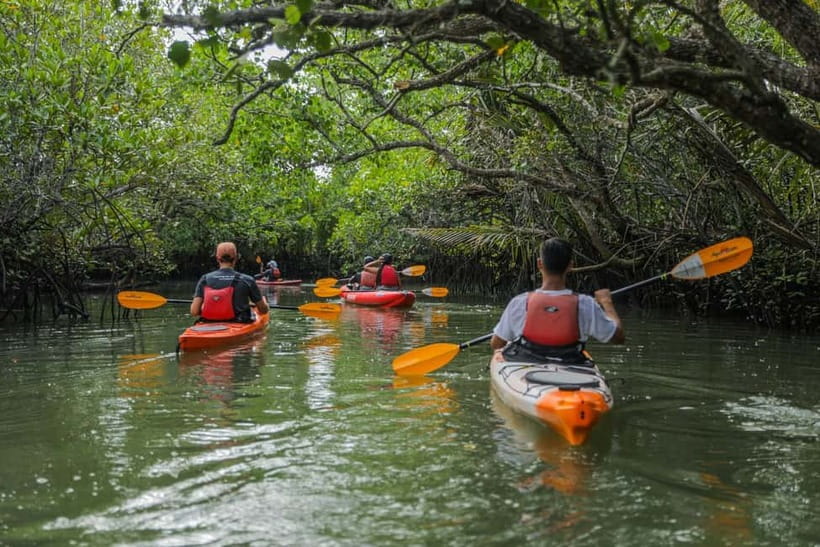
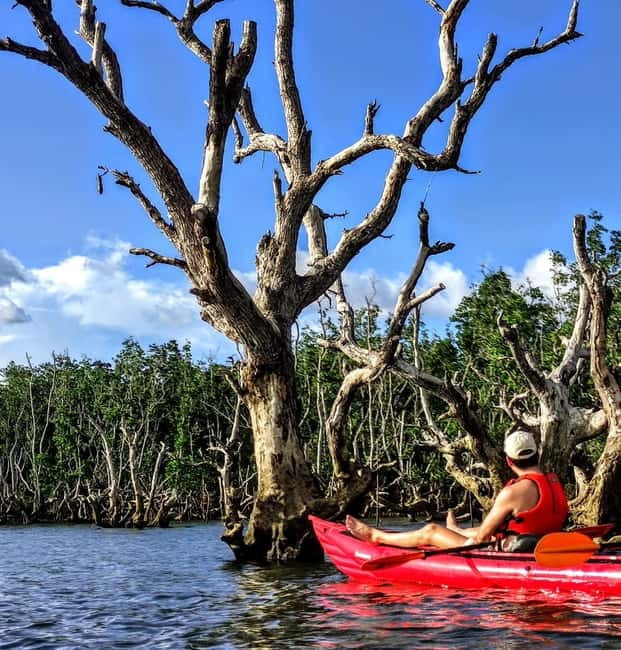
Once you launch, the character of Bohol changes quickly. The route leads into winding mangrove corridors, with some passages acting as narrow links to less-accessible sections of the forest. Other sections open back onto the main river.
You are not being carried through the scenery. You steer, choose your line, and set the rhythm of the trip. That makes the experience more involving than a standard sightseeing cruise, but it also means you need to pay attention to your paddle and direction.
The quiet is one of the best parts. There is no motor noise and no guide shouting across a large boat. You hear the paddle, the water, and the occasional bird overhead. That calm gives you time to notice the small details, including crab holes in the mud and the way roots hold the river edge together.
The route is not presented as a stage set. The forests are there because they are protected and because the local river community has a reason to preserve them. That gives the outing more meaning than simply passing through attractive scenery for a few minutes.
Why the mangroves matter
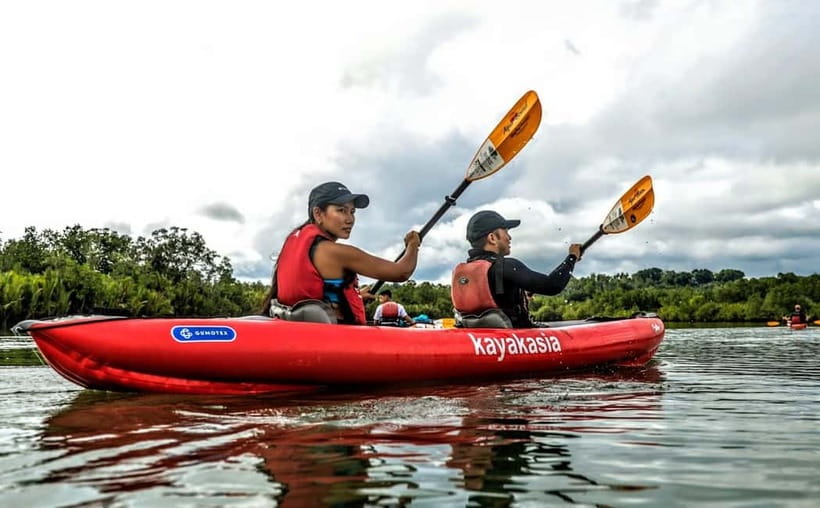
The Abatan River mangroves are not just background greenery. The corridor contains 32 species, including Camptostemon philippinense, an endangered mangrove species. These forests help reduce coastal erosion, provide nursery areas for fish, and store carbon.
Your guide can connect those broad facts to things you can see from the kayak. Roots, mud, crab holes, birds, and changing water channels become part of a living system rather than a collection of pretty views.
The guides also discuss local conditions. The route includes information about nearby culture and communities, as well as the damage typhoons once caused in the area. The mangroves are part of the effort to protect the river edge and help the environment recover.
I appreciate that the conservation message is tied to the place itself. You are not asked to sit through a long lecture before seeing anything. The explanations come during pauses and along the route, where the subject is right in front of you.
Local guides make the difference
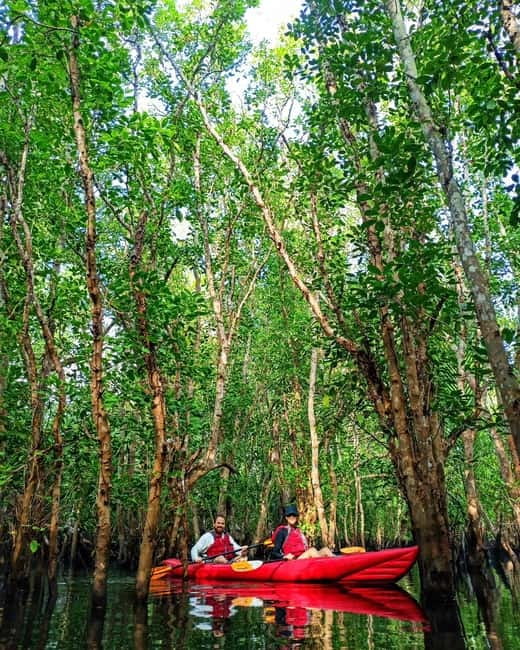
The guide can make or break a kayak trip. Here, the guides are local paddlers who know the river and are trained and certified for the activity. That local connection matters in a narrow waterway, but it also improves the storytelling.
Vince received special praise for being informative, taking plenty of photos, and allowing the group to move at a comfortable pace. If you want pictures but do not want to keep risking your phone over the side of a kayak, that is useful. Jeremy is also noted for his strong background in the environment.
The guiding style appears to be conversational rather than rushed. At stops, you can expect explanations about plants, wildlife, the ecosystem, and local communities. The guide languages are English and Tagalog.
This is a good setting for questions. Ask about the mangrove species, the river’s recovery after typhoons, or the role of the community in protecting the area. You will get more from the trip if you treat the guide as a river interpreter, not just someone showing you where to paddle.
Wildlife viewing without a zoo feeling
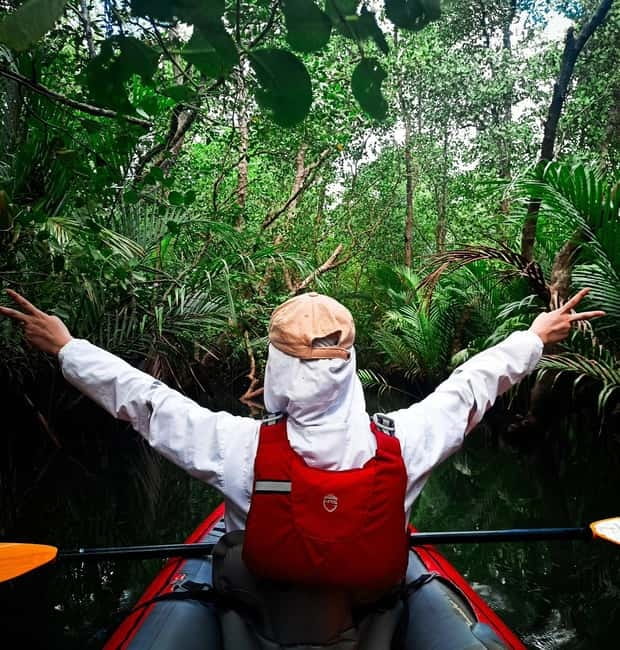
Wildlife is part of the route, but it is not guaranteed on demand. You may see birds, including herons, and signs of smaller creatures along the muddy banks. The guides point out what is easy to miss when you are focused only on steering.
That uncertainty is part of the appeal. There are no staged animal encounters here. You are moving through a functioning habitat, so patience helps. Keep your camera ready, but do not let the search for a perfect photograph spoil the quiet.
The route’s small scale improves your chances of paying attention. A large group can turn a natural setting into a noisy procession. This experience is designed around limited slots and small groups, which helps protect the area and keeps the guide’s attention available.
The exact group size is not given, so you should not expect a private trip unless you confirm that when booking. Still, the limited-slot approach is a good sign for anyone who values silence and close contact with the guide.
Snacks, food, and a useful finish
After the water portion, local snacks are served. Food and drinks are included, as are refreshments between and after the kayaking. The food is not an afterthought. Several people specifically praised the meal, with one describing it as both delicious and sufficient.
That matters because paddling works up an appetite. You do not need to rush off to find lunch immediately after returning to the station. The meal also adds a small taste of local hospitality to an outing that is otherwise focused on water and forest.
The changing rooms, washroom, lockers, and water refills make the end of the trip more comfortable. You can change out of wet clothes before getting back in the van. Bring a bag for damp swimwear and keep valuables secured rather than loose in the kayak.
Is $64 a fair price?
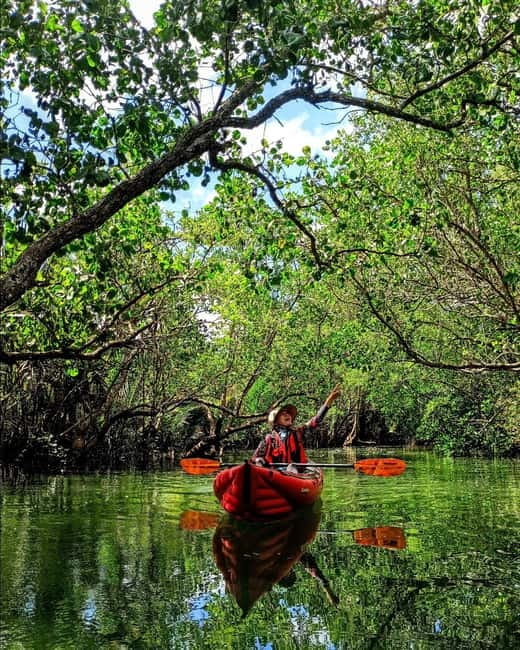
At $64 per person, this is not the cheapest way to spend a morning in Bohol. The value depends on what you compare it with.
You are paying for a five-hour outing, round-trip transport from Panglao or Tagbilaran, kayak gear, instruction, a professional guide, river and community fees, food, drinks, facilities, and water refills. You are also paying for a small-group activity in a protected area rather than a quick commercial boat ride.
For someone based in Panglao, the included transport adds real value. It removes the trouble of reaching the river and makes the price easier to justify. For someone staying in Tagbilaran, the short transfer makes the half-day schedule particularly convenient.
The trip is less compelling if you want a cheap, passive sightseeing ride or a long day packed with several attractions. This is one focused experience. Its reward is quiet water, careful guiding, and time in the mangroves, not a list of ten stops.
The conservation and community fees are also worth noting. Your money is not only covering equipment and transport. It helps give the river and the local people an economic reason to protect the area. That does not make every eco-claim automatically perfect, but the structure here is more convincing than simply placing a green label on a motorized attraction.
How this compares with a typical Bohol day out
Bohol is famous for major sights and easy photo stops. Those places can be worthwhile, but they often involve bus transfers, crowds, and a steady march from one viewpoint to the next.
This kayaking trip asks for a different pace. You spend most of your active time in one river corridor, with the guide explaining how the environment works. The reward comes from attention rather than from collecting landmarks.
I would choose this for a second or third day in Bohol, when you have already seen some of the island’s major attractions and want something quieter. It also suits anyone who prefers participation over sitting in a vehicle.
It may not suit you if you dislike getting wet, have no interest in wildlife, or want guaranteed animal sightings. The route is peaceful, but peaceful does not mean empty of effort. You still paddle, steer, and manage your own kayak.
Practical ways to enjoy the route
Wear clothes you can move in and do not mind getting wet. Swimwear under comfortable clothing is a sensible choice. Sunscreen and insect repellent are both useful because the route includes open water and forested sections.
Protect your camera and phone. The tour includes photography help from guides such as Vince, but your personal device still needs care around water. A waterproof pouch is a practical addition, though it is not listed as supplied equipment.
Use the safety lesson properly, even if you think you already know how to kayak. Learn how to keep the kayak straight, how to turn in a tight passage, and what to do if you lose balance. Calm paddling is more useful than speed here.
Finally, leave room in your schedule. The stated duration is five hours, and the drive from Panglao may take about an hour each way. Do not place a tightly timed flight, ferry, or separate tour immediately afterward.
Who should book the Mangrove Tunnels Trail?
I would recommend this trip to couples, solo visitors, small groups, and families with older children who can swim and manage a kayak. It is especially good for people who want nature, local interpretation, and a break from busy sightseeing.
It is also a strong choice for repeat visitors to Bohol. The route shows a side of the island that is easy to miss if you stay near beaches and major attractions.
I would skip it if you are a non-swimmer, cannot paddle comfortably, or want a fully passive activity. You should also think twice if your schedule is so tight that the transfer time will make you anxious.
Should you book it?
Book this Abatan River kayak trip if you want quiet nature, active participation, and serious local guiding. The strongest points are the calm mangrove tunnels, the conservation focus, the useful explanations from guides such as Vince and Jeremy, and the food and facilities included afterward.
The $64 cost is fair for a five-hour, transport-inclusive experience, especially from Panglao. Just allow for the drive, accept that wildlife sightings cannot be guaranteed, and remember that you will be paddling for up to two hours. If that sounds like your kind of Bohol day, this is a thoughtful choice that feels far removed from the usual sightseeing circuit.
FAQ
How long does the Bohol mangrove kayaking experience last?
The full experience lasts five hours. The maximum time on the water is two hours, with transport, instruction, stops, snacks, and food included in the wider schedule.
Where does the tour provide pickup?
Round-trip transport is provided from resorts in Panglao Island or Tagbilaran City.
How long is the drive to the Abatan River?
The drive is about 15 minutes from Tagbilaran City. From Panglao or Loboc, allow about one hour, although the basic schedule also gives a shorter van transfer estimate.
Is kayaking experience required?
No. The activity is suitable for beginners, and a basic kayaking lesson plus safety briefing is provided before you start.
Do I need to know how to swim?
Yes. Non-swimmers are not suitable for this activity.
What languages does the guide speak?
The live tour guide service is available in English and Tagalog.
What is included in the price?
The price includes round-trip transport, kayak equipment, instruction, a professional guide, river and community fees, food and drinks, local snacks, lockers, washrooms, changing rooms, and water refills.
What should I bring?
Bring swimwear, comfortable clothes, sunscreen, insect repellent, water, and a camera. A waterproof way to protect your phone or camera is also sensible because you will be kayaking.
More Kayak & Canoe Tours in Cortes Bohol
More Tour Reviews in Cortes Bohol
Bohol Countryside & Chocolate Hills: how the alternatives stack up



The lists this tour appears in