
Review · Bohol Countryside & Chocolate Hills
Panglao: Seastar Abandoned Mansion & Art Exhibit
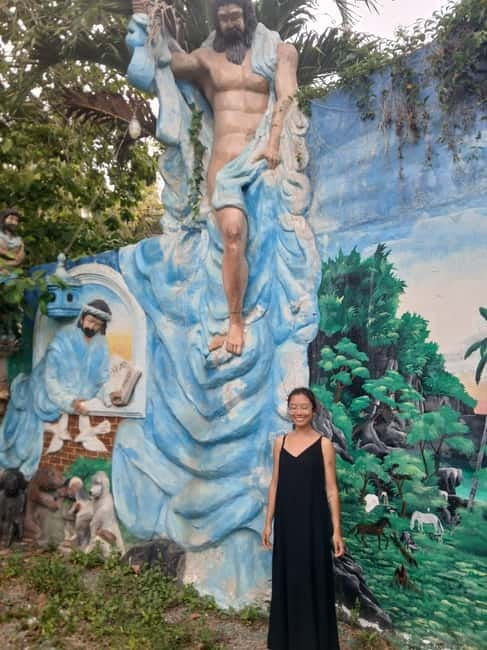
Expect the unexpected inside this Panglao mansion. The Seastar Mansion and Art Exhibit offers a one-hour guided look at unusual architecture, hundreds of statues, murals, water features, and rooms that seem to come from one person’s untamed imagination. Built in 2005 and worked on until 2021, the property is part home, part art project, and part unfinished puzzle.
I like the strong personal vision behind the place, especially the links to Kafka, Gaudi, and religious imagery. I also like the small-group format, with no more than eight people, since a guide can explain the stranger details without turning the visit into a rushed march. The main drawback is clear: the mansion is in various states of completion, so anyone expecting a polished historic house or formal museum may find it rough around the edges.
I also appreciate the short format. At $9 per person, this is an easy addition to a Panglao day, especially if you enjoy odd buildings, outsider art, and places that refuse to look like anything else. It is not suitable for children under 18, and the experience depends heavily on your interest in the owner’s unusual vision.
In This Review
- Key points to know before you go
- Why Seastar Mansion is unlike a normal Panglao stop
- Starting at Cobadonga near McDonald’s
- The gate, courtyard, and first impression
- Inside the living areas and unfinished rooms
- Statues, murals, and water features
- Kafka, Gaudi, and religious ideas
- The widow’s possible personal insight
- Is one hour enough?
- What the $9 price really gets you
- Who should book this Panglao experience?
- Should you book Seastar Mansion?
- FAQ
- Where is Seastar Mansion located?
- Where is the meeting point?
- How long does the tour last?
- How much does the experience cost?
- What languages are available?
- Can children join the tour?
Key points to know before you go
- A mansion built as an ongoing personal project: Construction began in 2005 and continued until 2021, leaving the property with finished areas beside incomplete ones.
- Art fills nearly every corner: Expect statues, murals, water features, religious references, and home-built design rather than conventional gallery displays.
- Kafka and Gaudi shape the mood: The artistic influences point toward surreal ideas, strange forms, and architecture that values imagination over neat function.
- The visit begins at Cobadonga: Meet at this quaint English pub near McDonald’s in Panglao, with transport available for a small additional fee.
- Small groups make the tour more useful: The maximum group size is eight, giving you a better chance to hear the guide and ask questions.
- The owner’s widow may add another layer: If she is present, she may share personal insight into the property and its creator.
Why Seastar Mansion is unlike a normal Panglao stop
Panglao is best known for beaches, water activities, resorts, and easygoing island days. Seastar Mansion gives you something quite different. It is not a conventional cultural attraction with tidy rooms, labeled objects, and a carefully controlled display.
Instead, the property presents a personal act of building and collecting. The mansion grew over many years, with the owner continuing to add to the design and fill available space. That makes the visit less about a single architectural style and more about following an individual mind through concrete, decoration, religious symbolism, and fantasy.
I would think of it as a guided encounter with an unfinished work of art. The lack of a final polished form is part of the appeal, but also part of the warning. You need to enjoy questions more than answers.
The name abandoned mansion may suggest an empty ruin. The actual experience is more active than that. You will see the gate, courtyard, entrance, living areas, and a collection of built and painted details that reveal the property’s long evolution. The guide helps connect these parts, explaining what you are seeing and how the owner’s ideas shaped the house.
You can also read our reviews of more tours and experiences in Panglao.


Starting at Cobadonga near McDonald’s
Your meeting point is Cobadonga, described as a quaint English pub near McDonald’s. This is useful because it gives you a clear place to begin rather than asking you to find an obscure entrance on Panglao Island.
Transportation can be arranged for a small fee if you need it. Since the meeting point and mansion are separate parts of the outing, check the transport option when booking if you do not already have a way to reach the property. The available information does not give a fixed pickup route or transfer time, so you should not assume transport is included in the $9 price.
The small-group limit matters from the start. With no more than eight people, you are less likely to lose the guide’s explanation among a large crowd. That is especially helpful here because the house contains many visual details, and the meaning behind them may not be obvious at first glance.
Tours are offered in English and Spanish. The activity lasts 60 minutes, so arrive ready to begin on time. This is a compact visit, not an open-ended afternoon at the property.
The gate, courtyard, and first impression
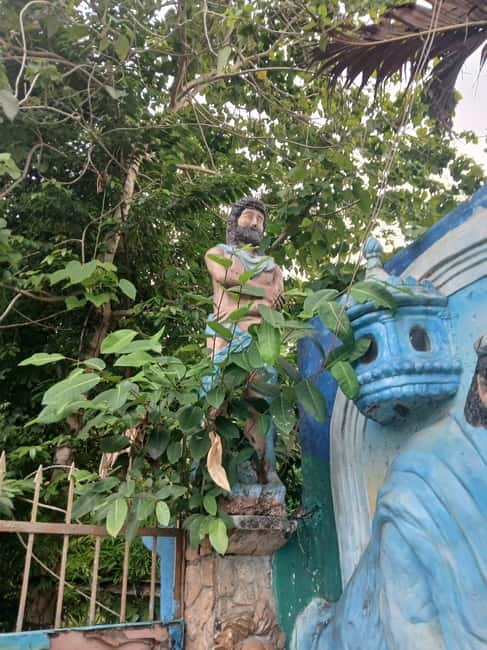
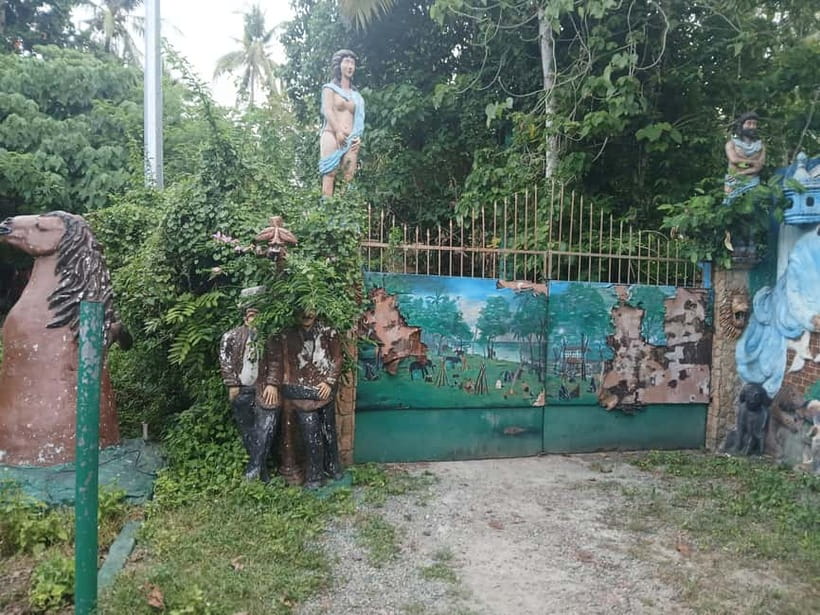
The tour takes you through the property’s gate and courtyard before moving into the entrance and interior spaces. Even from this first section, the design aims to make you question what kind of building you have entered.
A typical house gives you an immediate idea of its purpose. Seastar Mansion appears to blur those lines. Water features, statues, murals, and decorative structures compete for attention, and the architecture reflects a need to build more and fill more space over the years.
I would pay attention to how the exterior prepares you for the interior. The courtyard is not simply a passage between the gate and the house. It helps introduce the property’s visual language, where ornament and construction are closely mixed.
The guide’s narration is important here. Without context, you might see only an eccentric collection of objects. With an explanation of the owner’s aims and influences, the courtyard becomes part of a larger story about a person trying to turn a home into a complete imaginative world.
Inside the living areas and unfinished rooms
The route continues through various living areas. These rooms show the mansion as a place intended for living, but they also reveal its transformation into an art project. You might find completed decorative sections beside spaces that feel unfinished or still subject to change.
That contrast is one of the strongest reasons to visit. A finished museum usually tells you what the artist wanted you to see. Seastar Mansion gives you a more complicated picture, with the owner’s plans visible in both the completed work and the gaps.
The house was built in 2005 and remained a work in progress until 2021. That long period helps explain why the property does not follow one clean style. Ideas accumulated. Materials and images were added. Rooms became part of a larger attempt to keep building and filling.
You should expect a place that feels personal rather than professionally staged. Some people will find that exciting. Others may prefer clear labels, orderly galleries, and a more predictable route. The tour is best for you if you can accept unfinished areas as part of the story instead of treating them as flaws to overlook.
Statues, murals, and water features
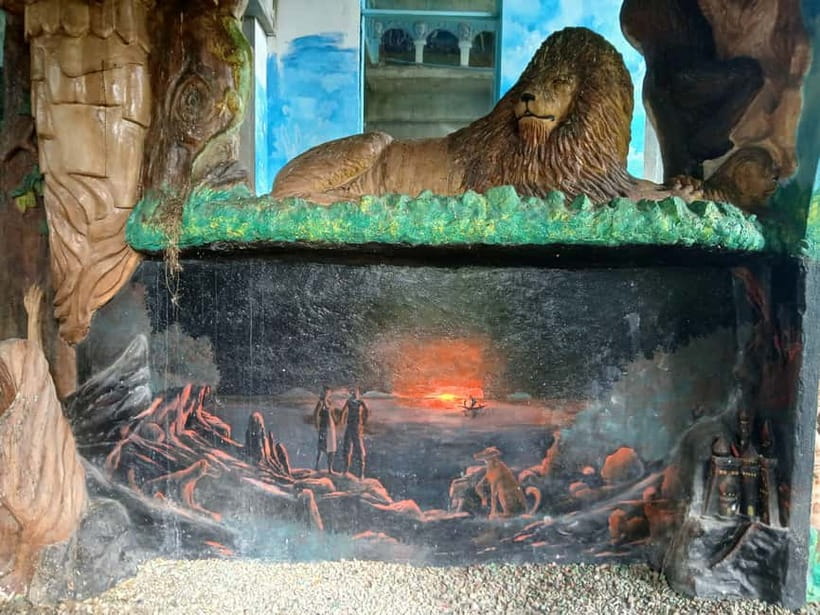
The main visual attraction is the sheer amount of material packed into the mansion. The property includes hundreds of statues and murals, along with water features that add movement and sound to the built environment.
These details are not presented as a standard sculpture collection. They are integrated into the mansion itself. A statue may relate to a room, wall, passage, or larger design idea. Murals help turn ordinary surfaces into part of the owner’s private mythology.
The water features also matter because they keep the architecture from feeling entirely static. You are not only looking at walls and objects. The house brings together stone, painted surfaces, figures, and water in ways that may feel theatrical or dreamlike.
Still, the quantity can be overwhelming during a one-hour tour. You cannot study every statue or mural at length. I would focus on the guide’s explanations and select the details that catch your eye rather than trying to inspect everything equally.
This is also why a small group helps. If you want to ask why a particular figure appears in a room or how a feature fits the owner’s vision, you have a better chance of doing so in a group of eight or fewer than in a large organized visit.





Kafka, Gaudi, and religious ideas
The mansion’s art draws from Kafka, Gaudi, and deep religious themes. Those references give you useful clues, but they do not reduce the property to a simple imitation of either artist.
Kafka suggests unease, strange transformations, and a world that follows its own rules. Gaudi points toward unusual shapes, decorative excess, and architecture that refuses to stay plain. Religious imagery adds another layer, making the house feel symbolic as well as decorative.
The result is not a quiet display of fine art. It is a place where architecture and personal belief overlap. You may find the house funny, unsettling, fascinating, or simply strange. All of those reactions fit the experience.
I like that the tour does not ask you to admire everything in the same way. The value is in seeing how one person turned a private idea into a physical setting. You are given enough context to think about the building, but you are also left room to form your own response.
The phrase a journey into a man’s mind is fitting, though you should treat it as a prompt rather than a promise of psychological certainty. The tour can show you the owner’s choices, influences, and desire to keep adding. It cannot explain every part of his inner life.
The widow’s possible personal insight
On some visits, the owner’s widow may be present. If she is there, she may offer additional insight into the property and the person who created it.
This possibility adds a personal layer that a standard guidebook description cannot provide. A guide can explain the structure and known background, while the widow may bring a closer connection to the mansion’s purpose and development.
Her presence is not guaranteed, so you should not book the tour solely for that reason. Treat it as an extra benefit if it happens. The regular tour remains built around the guide’s narration, available in English or Spanish.
The guide’s role is especially important because the property can be hard to read on your own. A good explanation can connect the art, architecture, history, and unfinished sections into a clearer experience. Without that narration, you might miss why the mansion looks as it does.
Is one hour enough?
One hour is enough for an introduction, but not enough for a slow study of every room and object. The compact length works well if you want an unusual cultural stop between other Panglao plans.
You will see the gate, courtyard, entrance, and various living areas, while hearing about the owner’s vision and artistic influences. The route gives you a broad look at the property rather than unlimited time to wander.
That distinction matters. If you enjoy photographing every mural, examining each statue, or thinking through the religious references, you may wish the visit were longer. If you want a focused experience with a clear beginning and end, 60 minutes feels practical.
I would place it early or midway through a day rather than building an entire day around it. The mansion is a specific kind of attraction. It is unusual and memorable, but it is not a full-day sight.
What the $9 price really gets you
At $9 per person, the price is reasonable for a guided 60-minute visit, particularly because the experience is unlike the usual Panglao excursions. You are paying for access to a private-feeling property, a guide’s explanation, and a chance to see a large body of personal art and architecture in one place.
The value depends on your interests. If you enjoy strange buildings, outsider art, surreal ideas, and unfinished creative projects, the tour offers good use of an hour and a modest budget. If you mainly want beaches, polished interiors, or traditional landmarks, the same $9 may feel less rewarding.
Transportation is not part of the basic price, though it can be included for a small fee. Keep that extra cost in mind when comparing the total outing price. The tour also offers free cancellation up to 24 hours before the visit and a reserve-now, pay-later option, which gives you some flexibility when planning a Panglao schedule.
Who should book this Panglao experience?
I would recommend Seastar Mansion to adults who enjoy unusual places and do not need every room to look finished. It suits you if you like asking how a building came to exist, noticing personal symbols, and hearing the story behind art that does not fit neatly into a gallery.
It is also a good choice for repeat visitors to Panglao who have already spent time around the island’s standard attractions. The mansion gives you a different subject for conversation and photography.
You may want to skip it if you are traveling with children under 18, since the activity is not suitable for them. You should also think twice if unfinished construction or visually crowded rooms frustrate you. The property’s eccentric quality is the point, but it will not appeal to every taste.
Bring patience and curiosity. Do not expect a formal museum, a luxury home tour, or a carefully restored heritage building. Expect a personal, strange, and sometimes hard-to-categorize work that a guide helps you understand.
Should you book Seastar Mansion?
Book this tour if you want a short, affordable Panglao experience with real personality. The combination of statues, murals, water features, Kafka, Gaudi, religious themes, and unfinished rooms makes it far more distinctive than a routine sightseeing stop.
Skip it if you want a polished attraction with a predictable design and broad appeal. For the right visitor, though, Seastar Mansion offers something rare: a chance to see what happens when one person keeps building, decorating, and following an idea for years. At $9 and one hour, it is a sensible choice for curious adults who enjoy the unusual.
FAQ
Where is Seastar Mansion located?
Seastar Mansion is in Doljo on Panglao Island, in the Visayas region of the Philippines.
Where is the meeting point?
The meeting point is Cobadonga, a quaint English pub near McDonald’s.
How long does the tour last?
The guided tour lasts 60 minutes.
How much does the experience cost?
The listed price is $9 per person. Transportation can be added for a small fee.
What languages are available?
The tour is offered with a live guide in English or Spanish.
Can children join the tour?
No. The experience is not suitable for children under 18.
More Tour Reviews in Panglao
Not for you? Here's more nearby things to do in Panglao we have reviewed










Bohol Countryside & Chocolate Hills: how the alternatives stack up





The lists this tour appears in