WaterColors – Open Water Diver Certification in Boracay
Get certified where the sea is the classroom. This four-day WaterColors course takes you from basic theory and videos to shallow-water practice and boat-based sessions around Boracay, with a PADI-qualified instructor guiding each step. I especially like the steady progression from shore skills to open water and the fact that equipment, course materials, boat transport, and certification processing are included. The main caution is time: four days can feel full, especially if weather or unfinished skills push work into the final catch-up day.
The $545 price is not a casual introduction to scuba. It is a full certification course, which gives it reasonable value if you want a qualification you can use elsewhere. I also like the personal tone reported by past participants, particularly the patience of instructors Jimmy and Darwin. Still, food, hotel transfers, towels, and souvenir photos cost extra, and you should not plan to fly within 24 hours after your last underwater session.
In This Review
- Key points to know before booking
- Why Boracay makes a useful classroom
- Day one: paperwork, theory, and your first descent
- Day two: repetition turns instructions into habits
- Day three: putting the pieces together
- Day four: catch-up work, exam, and certification
- What the $545 fee really covers
- The instructors are a major part of the value
- Health forms, age rules, and flight planning
- Weather, cancellations, and the practical risk
- Who should book this course?
- Should you book WaterColors?
- FAQ
- How long does the PADI Open Water course take?
- What is included in the $545 price?
- What is not included?
- Where does the course start and finish?
- How old must participants be?
- Can I fly soon after the course?
Key points to know before booking
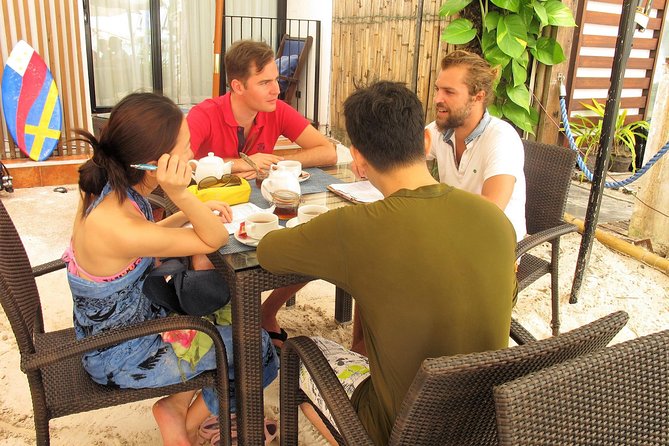
- Four days from classroom to open water: You study PADI materials, complete quizzes, practice skills in confined water, and then move to boat-based sessions.
- Up to five open-water sessions: The course description says you will complete five, though the daily schedule names four specific sessions, so confirm the final count when booking.
- Jimmy and Darwin earn strong praise: Their calm explanations, patience, humor, and attention to safety are recurring strengths.
- Most equipment costs are covered: Scuba gear, instructor support, course materials, certification processing, and boat transport are included.
- The group limit is 15 people: That is the maximum for the activity, but the exact instructor-to-student ratio is not stated.
- Plan around flying restrictions: Flying within 24 hours of scuba activity is not recommended, so leave room at the end of your Boracay stay.
Why Boracay makes a useful classroom
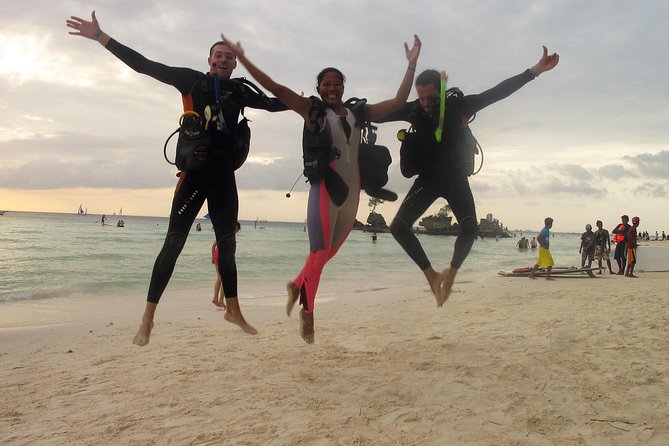
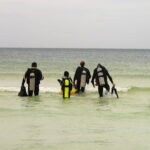
Boracay is best known for its broad White Beach, but the island also offers a practical setting for learning scuba. You can begin on shore, practice skills in shallow water, and then board a boat for sessions at a suitable site. That gradual change matters when you are still learning how your mask, buoyancy, breathing, and equipment work together.
The course is based at WaterColors Boracay Dive Resort on White Beach near Station 1, Willy’s Rock, and Balabag Plaza. This is a handy location if you are staying near the main beach area. You meet at the shop, and the activity finishes back there, which keeps the start and end simple.
The exact underwater sites can depend on conditions and the needs of the class. That is sensible. A first certification course should use a site that matches your comfort and skill level, not chase the most dramatic location. Boracay’s warm water and established scuba scene help, but the real value comes from the instruction and the orderly progression.
You can also read our reviews of more tours and experiences in Panay Island.
Day one: paperwork, theory, and your first descent
The first morning starts at 10 am with registration and documentation. This is when the practical details get sorted, including your required health information, course paperwork, and equipment needs. All participants must provide their height and weight when booking, so have those details ready.
At 11 am, the theory portion begins. Expect a briefing, video material, reading, knowledge reviews, quizzes, logbook work, and a session to discuss what happened underwater. This may sound like a lot of classroom time, but it is where you learn the rules that keep scuba safe: how equipment functions, how to plan a session, and how to respond when something feels wrong.
Lunch is scheduled from noon to 1 pm, but food is not included unless specifically stated. You should budget for your own meal and drinks. Keeping lunch reasonably light may also make the afternoon more comfortable, though the course information does not prescribe a particular meal.
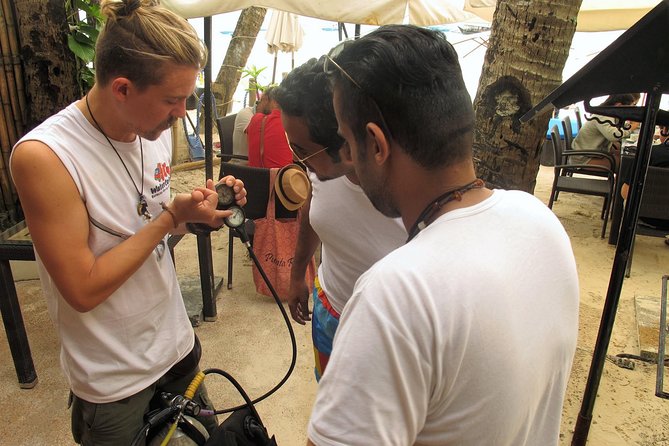
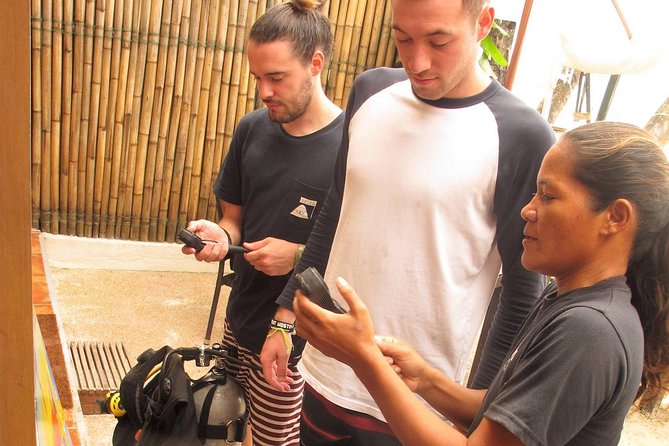
At 1 pm, you move to confined-water training. The instructor starts at the beach in shallow water, then progresses to an area where you can no longer stand. This change is important. It lets you first get comfortable with the equipment before asking you to manage skills while fully supported by the water.
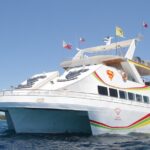
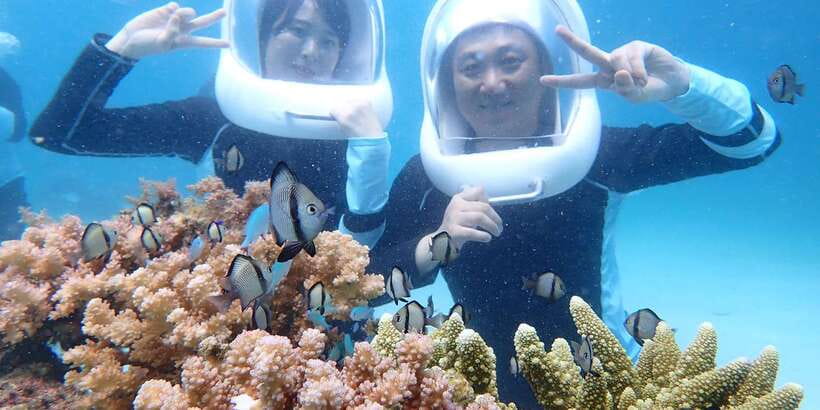
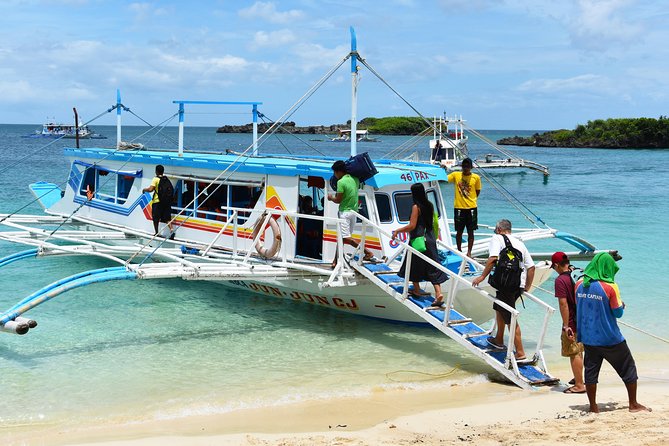
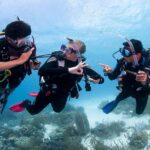
Your first open-water session is planned for 3 pm. Once your instructor decides you are ready, you take a boat to a suitable depth for the course. The goal on day one is not to rush you through a spectacle. It is to apply the basic skills in a real setting while staying within a controlled training plan.
At about 4:30 pm, you return to logging and theory. Expect the day to feel full. You will be learning physical skills, absorbing safety information, and processing your first experience underwater. That evening, give yourself time to rest rather than scheduling a packed excursion.
Day two: repetition turns instructions into habits
The second day starts early, with confined-water practice at 8 am. Repetition is a strength of this program. You do not simply hear a skill once and move on. You practice it, receive corrections, and then use it again in a more demanding setting.
The second open-water session is scheduled for 9 am. Afterward, theory resumes at 11 am, followed by lunch at noon. The afternoon returns to confined water at 1:30 pm, then a third open-water session at 3 pm.
This back-and-forth rhythm can seem repetitive, but that is exactly what a certification course needs. Scuba skills should become familiar enough that you can perform them without panic. Calm instructors matter here, and past participants repeatedly praised Jimmy and Darwin for clear explanations, patience, and careful attention to comfort underwater.
The schedule also includes logging and theory at 4 pm. Keep your logbook organized as you go. It is not just a souvenir. It records the work you have completed and helps your instructor track which requirements remain.
The main drawback is the pace. You are likely to spend much of the day in lessons, equipment, or transport rather than relaxing on the beach. If your goal is a leisurely Boracay holiday with one quick underwater outing, this is the wrong product. If you want a real qualification, the structured schedule is appropriate.
Day three: putting the pieces together
Day three begins with theory at 8 am, then confined-water work at 10 am. Lunch comes at noon, followed by the fourth open-water session at 1 pm. After that, you log the session and complete any remaining theory or skills.
This day is less crowded on paper than day two, but do not assume it will be easy. The course is designed to make sure you have met the required skills, and the instructor may use this time to revisit anything that needs more practice. That is good news if you are nervous or have been away from scuba for years.
One participant returned to scuba after an eight-year break and credited Darwin’s clear instructions, patience, and close attention with making the experience comfortable. That detail is useful if you are not a complete beginner but feel rusty. Tell the instructor early. A good course should leave room for you to rebuild confidence rather than pretend you remember everything.
The schedule says you will complete five open-water sessions by the end of the course, but the listed daily plan specifically shows one on day one, two on day two, and one on day three. Day four is reserved for catch-up work. Because of that mismatch, ask WaterColors how the fifth session is scheduled for your class. It may be included in the general course plan or moved according to conditions, but the supplied schedule does not explain it.
Day four: catch-up work, exam, and certification
The final day runs from 8 am to 5 pm and is deliberately flexible. You may use it to finish skills, theory, or underwater sessions that were not completed earlier. The course then moves to the final exam and certification paperwork.
This flexible day is one of the better features of the schedule. Weather, equipment issues, comfort levels, and learning speed can affect a water-based course. A program with no spare time would force every student into an artificial timetable. Here, you have a built-in chance to finish properly.
The tradeoff is that you should not treat day four as a free day. Keep your calendar open from morning through late afternoon. Once the exam and paperwork are complete, the course ends with a celebration at the shop.
What the $545 fee really covers
At $545 per person, this is a serious holiday expense. The value depends on what you want from Boracay. For a one-time introductory session, it is too much. For a PADI Open Water certification with four days of instruction and practical training, the package is more reasonable.
Included in the price are:
- A PADI scuba instructor
- PADI course materials
- Certification processing
- Use of scuba equipment
- Boat transport to and from the underwater site
Those inclusions remove several costs that can add up elsewhere. You are not separately renting the main equipment or arranging a boat to the site. The certification processing is also handled as part of the course.
You still need to pay for food and drinks, hotel transfers, towels, and optional souvenir photos. Hotel transfers are worth noting because the shop is at Station 1, not every accommodation is close by, and the course does not promise pickup.
The maximum group size is 15 people. That is not necessarily the size of your class, and the instructor ratio is not provided. If you want very close personal attention, ask how many students are assigned to your instructor before you pay. The strongest praise for Jimmy and Darwin centers on personal support, calm instruction, and careful checks, so group size can affect how much of that you receive.
The instructors are a major part of the value
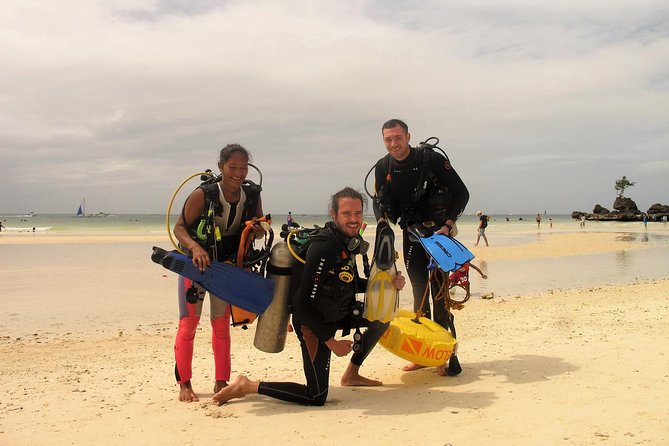
Scuba certification is equipment-based, but the instructor shapes the experience. Jimmy receives repeated praise for being friendly, patient, responsible, humorous, and clear. He is also credited with checking that students were comfortable underwater. Darwin receives similar praise for calm explanations and helping a returning participant regain confidence after eight years away.
That consistency is encouraging, though instructors can vary by date. You may have a multilingual guide available, but you should inquire about language availability for your course. If you have concerns about anxiety, past bad experiences, or rusty skills, mention them during registration rather than waiting until the first session.
I would also ask who will teach your group, how many students are assigned, and how the promised five open-water sessions fit into the four-day schedule. These are simple questions, but they help you understand the level of attention and the actual timetable.
Health forms, age rules, and flight planning
The minimum age is 10. The course is described as suitable for most participants, but scuba is not something to book without checking the medical requirements.
You must complete and sign the PADI Diver Medical Form and bring the printed document to WaterColors. You also need to complete a health questionnaire before scuba activity. If your answers indicate that you need medical clearance, the provided guidance directs your physician to the Undersea and Hyperbaric Medical Society screening system.
Read the form before booking. It is better to discover a medical requirement at home than at the beach on day one. You should also provide every participant’s height and weight when making the reservation.
Do not schedule a flight within 24 hours of scuba activity. The course lasts about four days, so place it early enough in your Boracay visit to give yourself the required buffer. This is one of the most important planning details in the entire package.
Service animals are allowed, and the meeting point is near public transportation. The shop is open daily from 8 am to 8 pm, though your actual course follows the timetable provided by the instructor.
Weather, cancellations, and the practical risk
The course requires good weather. If poor conditions cancel the activity, you are offered another date or a full refund. That policy is reassuring, but it also means you should avoid placing the course on the final possible days of your island stay.
You can cancel for a full refund up to 24 hours before the local start time. Cancellations or changes made within 24 hours are not refunded or accepted. Because the course runs across several days, clarify how the policy applies if you need to stop after the first day for personal reasons.
Weather is not just an administrative issue. It can affect boat transport, site choice, visibility, and comfort. A responsible instructor will choose a suitable location or postpone rather than force a class into poor conditions.
Who should book this course?
I would choose WaterColors if you want a recognized PADI qualification and can give four full days to the process. It suits first-time scuba students, pairs of friends, and people who want to continue later into an advanced course. Several participants moved directly toward advanced training after finishing, which suggests the program can leave you eager for more.
It also suits you if calm coaching matters more than a rushed holiday activity. Jimmy and Darwin are praised for patience and reassurance, useful qualities when you are learning to manage equipment and breathing in open water.
I would not choose it if your schedule is tight, you dislike classroom work, or you want a single scenic boat outing. The course includes theory, quizzes, logging, an exam, paperwork, and repeated practice. You need to be ready to work, not just show up for an island pastime.
Should you book WaterColors?
Book it if you want to earn your PADI Open Water certification in Boracay and value a course that moves carefully from theory to shallow water and then to the sea. The included gear, boat transport, materials, and certification processing make the $545 fee easier to justify, while the positive comments about Jimmy and Darwin point to a reassuring teaching style.
Before booking, confirm three things: your instructor, the student-to-instructor ratio, and how the fifth open-water session fits into the published four-day timetable. Complete the medical form early, keep the final day free, and leave at least 24 hours before flying.
With those details settled, this is a strong choice for a serious beginner who wants more than a quick underwater introduction.
FAQ
How long does the PADI Open Water course take?
The course lasts approximately four days. The schedule includes theory, confined-water practice, open-water sessions, logging, a final exam, and certification paperwork.
What is included in the $545 price?
The price includes a PADI scuba instructor, PADI course materials, certification processing, scuba equipment, and boat transport to and from the underwater site.
What is not included?
Food and drinks, hotel transfers, towels, and souvenir photos are not included unless specifically stated. Photos may be available for purchase.
Where does the course start and finish?
The course starts at WaterColors Boracay Dive Resort on White Beach near Station 1, Willy’s Rock, and Balabag Plaza. The activity ends back at the meeting point.
How old must participants be?
The minimum age is 10 years.
Can I fly soon after the course?
Flying within 24 hours of scuba activity is not recommended. Plan your course early enough in your trip to allow that time before departure.