
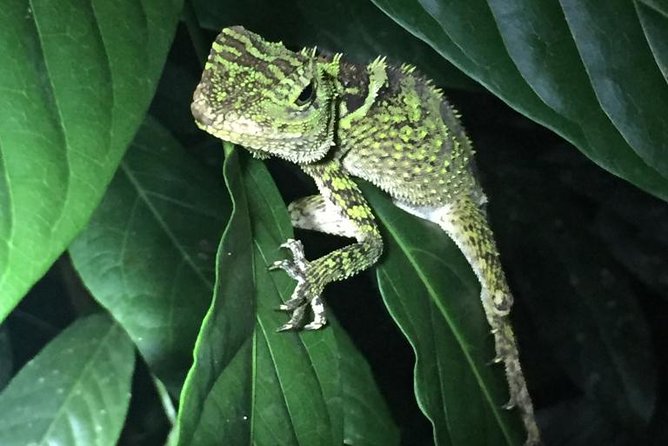
Bohol: Bilar – Night Safari Tour
The forest changes after sunset. This private Bohol night safari takes you into Rajah Sikatuna Protected Landscape near Bilar, where tarsiers, bats, frogs, owls, snakes, and night insects become active after dark. I like the chance to see nocturnal wildlife in its natural active period, and I also like the ease of hotel pickup, round-trip transport, snacks, and water.
The main drawback is the guiding. The driver and main tour guide are friendly and speak English reasonably well, but the local safari guide may have limited English and may spend more time searching than explaining. At $97.44 per person, this can be good value for a private forest outing, but your satisfaction will depend heavily on how many animals the guide finds and how much communication you want along the way.
In This Review
- Key points to know before booking
- What makes a Bohol night safari different
- The ride from your hotel to Bilar
- Entering Rajah Sikatuna after sunset
- Looking for tarsiers in their natural habitat
- The guide’s role and the language issue
- How the private format affects value
- Timing, comfort, and practical expectations
- Who will enjoy this most
- Should you book the Bilar night safari?
- FAQ
- Where does the Bohol night safari take place?
- How long does the night safari last?
- How much does the tour cost?
- Is hotel pickup included?
- Is this a private tour?
- What animals might I see?
- Are snacks and water provided?
- Can children join the safari?
- Can I cancel or change the booking?
Key points to know before booking
- The safari lasts about three hours inside Rajah Sikatuna Protected Landscape, although the full outing can take between one and five hours depending on transfers and timing.
- Tarsiers are one of the main targets, but sightings are not guaranteed. You might also find flying lemurs, civet cats, bats, fruit bats, owls, frogmouths, nightjars, snakes, frogs, and insects.
- The forest soundtrack is part of the experience. Frogs and insects become far more noticeable after sunset, when sight depends less on scenery and more on sound.
- Hotel or port pickup and drop-off are included, making the tour practical if you do not want to arrange your own evening transport to Bilar.
- This is a private activity, so only your group participates. That gives you more control than a large shared excursion.
- English communication may be uneven, especially with the local safari guide. Keep expectations realistic and focus on the forest experience, not a long naturalist lecture.
What makes a Bohol night safari different
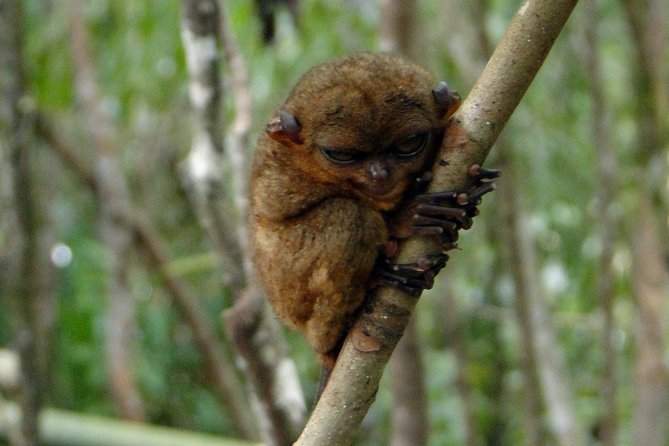
Bohol is well known for its tarsiers, but daytime visits do not show you the full range of the island’s forest life. Many creatures remain hidden or inactive while the sun is up. After dusk, the forest becomes a different place, and the guide’s job shifts from pointing out scenery to detecting movement, calls, reflections, and small sounds.
I like that this outing is based in Rajah Sikatuna Protected Landscape rather than a simple animal display. The stated aim is to find creatures in their natural habitat during the hours when they are naturally active. That matters if you care more about observing wild behavior than checking off a photo opportunity.
You will use more than your eyes. Frogs and insects create a constant night chorus, while small shining eyes may appear in the darkness. The tour also mentions glowing mushrooms, which can add a faint fairy-tale quality to the walk, although you should treat all sightings as possibilities rather than promises.
This is not a polished evening show with animals placed along a path. The guide has to search. That means quiet stretches, patient scanning, and the chance of finding only a few creatures on one night. For me, that uncertainty is part of a real wildlife outing, but it is also the main reason some people may find the tour less satisfying than expected.
The ride from your hotel to Bilar
The experience includes hotel or port pickup and return transport, along with a driver and guide. This removes one of the awkward parts of a night trip: arranging a safe and reliable way to reach a forest area after dark and then finding your way back.
The tour is sold for $97.44 per person and is usually booked about 10 days ahead. That price needs to be judged as a private outing rather than a simple admission ticket. You are paying for transport, a driver, a local guide, round-trip service, and the convenience of having your own group rather than joining strangers.
The value is stronger if your hotel or port is not near Bilar, if you are short on time, or if you prefer not to arrange transport yourself. It is less compelling if you already have a car and mainly want a short wildlife walk. In that case, the price may feel high if sightings are limited.
The driver and main guide have been described as friendly and punctual. A useful touch is the bag of snacks and water provided during the outing. That is not the reason to book, but it makes an evening transfer more comfortable, especially when the tour stretches beyond the core forest visit.
The exact total length can range from one to five hours, while the activity inside the protected area is listed at about three hours. Ask yourself how much evening time you want to give the trip. This is not an instant stop between dinner and another attraction.
Entering Rajah Sikatuna after sunset
The central part of the trip takes place inside Rajah Sikatuna Protected Landscape in Bilar. After dusk, you can expect the guide to search the forest for signs of movement and to help you understand what you are hearing around you.
The setting is valuable because the animals are encountered in their own habitat. You are not simply looking at a single featured species. The forest may reveal a tarsier in a tree, bats passing overhead, frogs calling from the undergrowth, or a nocturnal bird hidden in the dark.
The guide may also look for flying lemurs and civet cats. These animals are not guaranteed, and their appearance depends on luck, conditions, and the guide’s ability to spot them. The same applies to owls, fruit bats, frogmouths, and nightjars.
Snakes can also be encountered. The tour notes that trained guides accompany the activity, so you should follow instructions and avoid reaching into vegetation or wandering away from the group. The presence of snakes may sound alarming, but it is simply part of entering a wild forest at night. A calm, attentive approach is the sensible one.
You should also expect small discoveries. Frogs and insects may provide much of the evening’s sound, and the guide may point out glowing mushrooms or reflective eyes in the dark. These details can be more memorable than a single large animal because they show how much life is active after sunset.
Looking for tarsiers in their natural habitat
Tarsiers are the headline attraction for many people visiting Bohol. They are small, nocturnal primates with large eyes, and a night safari gives you a chance to look for them when they are naturally awake rather than visiting during their resting hours.
The wording matters: you have a chance to spot tarsiers, not a guarantee. Wildlife viewing always involves uncertainty, and the tour’s other possible sightings help broaden the experience if a tarsier stays hidden.
A good approach is to arrive with patience. You may not see an animal immediately, and the guide may need time to scan branches and foliage. Avoid expecting a rapid procession of sightings. The forest is not a zoo, and the guide cannot summon an animal on demand.
The private format should help your group stay together without the pressure of a large crowd. Only your party participates, which can make it easier to listen, pause, and ask for help when you do spot something. Still, private does not automatically mean highly interactive. The local guide may focus on finding animals rather than offering long explanations.
The guide’s role and the language issue
Your experience will depend on two guiding roles. The driver and main tour guide handle the transport and general assistance. A local safari guide searches for wildlife inside the forest.
The driver and main guide are friendly and speak English adequately, which helps with the practical side of the evening. They arrive on time and provide snacks and water, two small details that make the outing feel organized.
The local guide may speak very little English. That does not mean the guide is ineffective at finding animals. In fact, the guide is described as searching hard. The issue is that you may receive limited explanation or conversation while the search is happening.
If you want a detailed lesson in Bohol’s ecology, this may feel thin. If your main goal is to look for wildlife with someone who knows where to search, the arrangement may work better. I would set expectations before departure and make clear that you would appreciate simple explanations when an animal is found.
This is also a good reason to pay attention to the main guide during the transfer. Use that time to ask how the evening will run, how long you will spend inside the forest, and how the guides will signal when something has been spotted.
How the private format affects value
Only your group takes part in the activity. That is useful for couples, families, and small groups who want a quieter outing or prefer not to match their pace to strangers.
A private trip can also be more forgiving when wildlife takes time to find. You may be able to pause rather than hurry along with a larger party. Children can remain with their accompanying adult, and most people can participate according to the tour information.
The private format does not remove the basic limits of a night safari. You still may see only a few animals, and the local guide may not provide much English commentary. The price is therefore easiest to justify when you value privacy, transport, and the chance to explore after dark.
At $97.44 per person, the cost is not a budget add-on. I would compare it with the cost and effort of arranging a private vehicle, a local guide, and access to the protected area yourself. If you are already planning a Bilar visit and can share the price across a small group, the package becomes easier to defend.
The included admission and transport also simplify planning. The tour promises to avoid long lines, although queues are not usually the main concern on a forest outing. The more meaningful benefit is having the arrangements handled in advance.
Timing, comfort, and practical expectations
The activity inside the protected area is about three hours, but the total outing may be shorter or longer depending on pickup and return transfers. Keep your evening open rather than scheduling a tight dinner reservation immediately afterward.
The forest will be dark, and the experience is built around that darkness. You should be ready to listen, wait, and follow the guide’s movements. The supplied information does not specify a clothing list or equipment list, so do not assume that special gear, meals, or extra equipment are included beyond the stated snacks and water.
Children must be accompanied by an adult. Most people can participate, but the tour is still an evening forest activity, not a quick roadside viewpoint. If someone in your group dislikes darkness, quiet waiting, or uncertain wildlife sightings, this may not be the best match.
The mobile ticket makes access convenient, and confirmation is received at booking. The experience is non-refundable and cannot be changed for any reason, so I would book only after your date and group plans are firm.
Who will enjoy this most
I would recommend the tour most strongly to nature lovers who want to see Bohol at a different hour. It suits people who enjoy the search itself, including the sounds of frogs and insects, rather than needing a guaranteed list of animals.
It is also a practical choice if you want private transport from your hotel or port and do not want to arrange a night trip to Bilar. Families can benefit from the private setup, provided children remain with an adult and are comfortable in a dark forest.
Photography-focused visitors should keep expectations modest. The provided information does not promise special lighting or photography support, and nocturnal wildlife can be difficult to capture. The better reward may be seeing a tarsier or hearing the forest come alive, rather than returning with perfect pictures.
I would be more cautious if you want a fluent, detailed wildlife presentation. The local guide’s limited English and minimal interaction may frustrate you, even if the searching is careful. You may also feel the cost is too high if your priority is simply seeing a tarsier quickly.
Should you book the Bilar night safari?
Book this experience if you value wildlife in a natural setting, private transport, and the unusual sounds of Bohol after dark. The chance to find tarsiers, flying lemurs, civet cats, bats, owls, frogs, snakes, and night insects makes it more varied than a single-species visit.
I would not book it expecting guaranteed sightings or a polished lecture from the local guide. The experience received a middling rating from the available feedback, with the strongest praise going to the punctual, friendly driver and main guide, plus the included snacks and water. The weakest point was limited English and interaction from the safari guide.
For me, the decision comes down to your idea of value. If you see a night in the forest as an adventure, the private pickup and natural setting make the price reasonable. If you need certainty, extensive commentary, or a full schedule of animal sightings, keep looking for a tour that promises more structured interpretation.
FAQ
Where does the Bohol night safari take place?
The safari takes place inside Rajah Sikatuna Protected Landscape in Bilar, Bohol, in the Visayas region of the Philippines.
How long does the night safari last?
The wildlife activity inside the protected area lasts about three hours. The overall experience can take between one and five hours, depending on the transport and schedule.
How much does the tour cost?
The listed price is $97.44 per person.
Is hotel pickup included?
Yes. Hotel or port pickup and drop-off are included, along with round-trip transfer service.
Is this a private tour?
Yes. Only your group participates in this private tour or activity.
What animals might I see?
Possible sightings include tarsiers, flying lemurs, civet cats, bats, fruit bats, owls, frogmouths, nightjars, snakes, frogs, and various insects. Sightings are not guaranteed.
Are snacks and water provided?
Yes. A bag of snacks and water are provided during the outing.
Can children join the safari?
Yes. Children can participate, but they must be accompanied by an adult. Most people can participate.
Can I cancel or change the booking?
No. The experience is non-refundable and cannot be changed for any reason.
More Tours in Visayas

More Tour Reviews in Visayas
Safari: how the alternatives stack up
The lists this tour appears in