Full-Day Historical Heritage Guided Tour of Tacloban and Palo
History hits close to home here. This private Tacloban and Palo heritage tour links World War II sites, churches, government buildings, and Super Typhoon Haiyan landmarks into one thoughtful day across Leyte. You will also hear about the Waraynons, the people of this part of the Visayas, and the hard work of rebuilding after the 2013 storm.
I like the way the tour connects major events to ordinary lives. I also like the private, air-conditioned transport, included lunch, and the chance to ask your guide questions without a large group listening in. The main drawback is the pace: with nine stops in six to seven hours, most visits are short, usually about 15 minutes.
The tour costs $51 per person and begins at 8:30 am. That is a fair price for a private vehicle, guide, lunch, and a full route through Tacloban, Palo, and nearby landmarks. Guide Jeff receives particular praise for his friendly explanations of World War II and Haiyan, so the quality of the storytelling is a major part of the value.
In This Review
- Key points to know before booking
- Why Tacloban and Palo deserve a full day
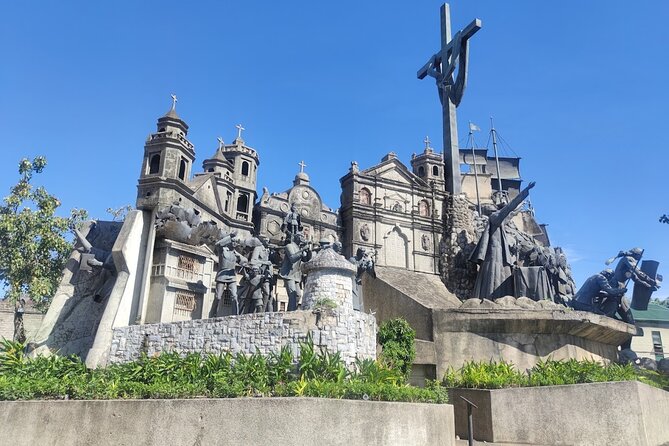
- Sto. Nino Shrine and Heritage Museum: a curious first stop
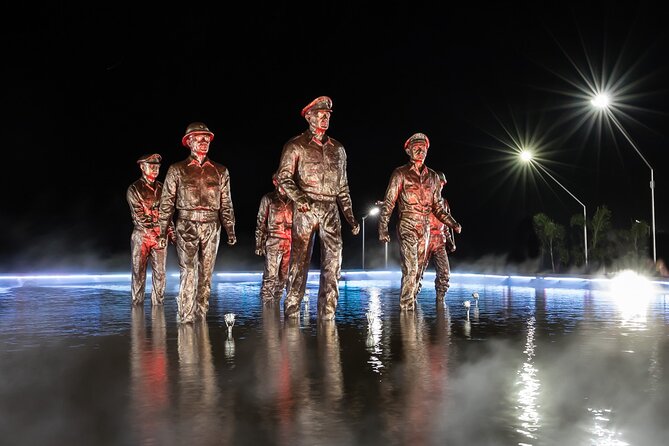
- Leyte Landing Memorial and the return of MacArthur
- Palo Cathedral and the wartime role of churches
- M/V Eva Jocelyn Shrine and the force of Haiyan
- Tacloban City Hall and the view over Cancabato Bay
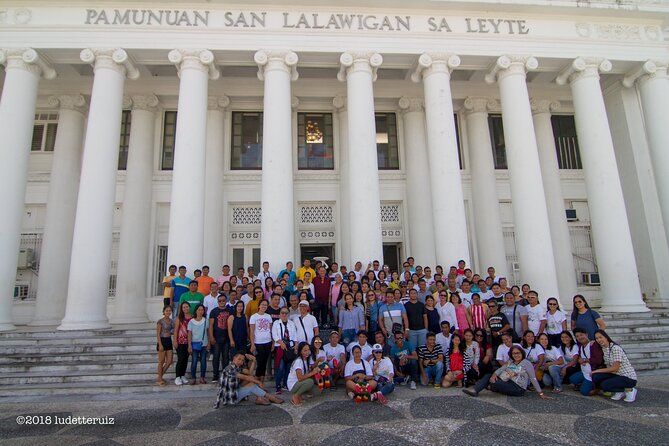
- Leyte Provincial Capitol and a wartime government
- San Juanico Bridge across the channel
- Madonna of Japan: a peace memorial
- Sto. Nino Church and the endurance of local faith
- How the day works in practice
- Is $51 a fair price?
- Who will enjoy this tour most?
- Booking advice and cancellation terms
- Should you book the Tacloban and Palo tour?
- FAQ
- How long does the Tacloban and Palo tour last?
- What time does the tour begin?
- Is hotel pickup offered?
- Is this a private tour?
- Is transportation included?
- Is lunch included?
- Are admission tickets included?
- Is bicycle use included?
- Are service animals allowed?
- What happens if bad weather cancels the tour?
Key points to know before booking
- The tour links two major stories: World War II and Super Typhoon Haiyan, known locally as Yolanda.
- Guide Jeff adds useful context: He is praised for clear, friendly explanations and extra background at the main sites.
- You visit nine locations: Expect churches, memorials, civic buildings, a ship shrine, and San Juanico Bridge.
- The tour is private: Only your group participates, making it easier to ask questions and adjust the conversation.
- Lunch and transport are included: Your air-conditioned vehicle covers the movement between stops.
- Short visits keep the day moving: Most stops last 15 minutes, while the Sto. Nino Shrine and Heritage Museum gets about 30 minutes.
Why Tacloban and Palo deserve a full day
Leyte is not a place you understand by looking at one monument and moving on. Its story runs through military history, religion, government, disaster, and recovery. This tour gives you a useful framework for seeing those connections.
World War II is central. In October 1944, General Douglas MacArthur returned to the Philippines through Leyte, beginning the campaign to push Japanese forces out of the country. The landing led to the Battle of Leyte Gulf, one of the largest naval battles ever fought. The tour places that event beside churches and civic buildings that continued to serve local communities.
Then comes November 8, 2013, when Super Typhoon Haiyan struck the region. In Tacloban and nearby areas, storm water pushed ships into streets, damaged homes and churches, and changed daily life for years. The tour does not treat Haiyan as a distant disaster story. It introduces you to local accounts of survival and recovery, which gives the sightseeing a more human scale.
The tour is also a practical way to meet Leyte’s Waray-speaking culture, often described here through the term Waraynons. You are not simply collecting photographs. You are being shown how the area remembers its past and explains itself today.
Sto. Nino Shrine and Heritage Museum: a curious first stop
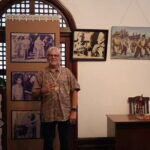
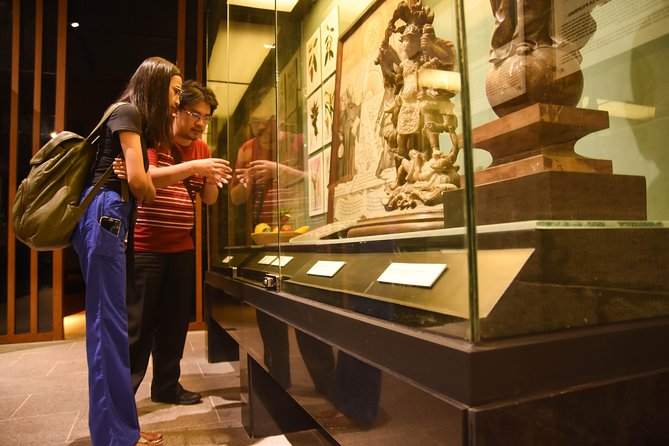
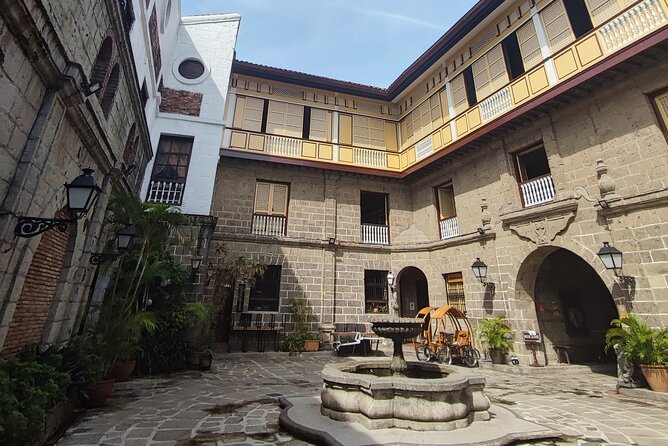
The Sto. Nino Shrine and Heritage Museum is scheduled for 30 minutes, twice the time given to most other sites. That extra time matters because the museum contains art collections gifted to the Marcos family during the presidency of Ferdinand Marcos Sr.
This is a different opening from a standard city tour. Instead of beginning with a battlefield or church, you start with art, politics, and the country’s modern past. The museum can help you place Leyte within the wider story of the Philippines, though half an hour is still a compact visit.
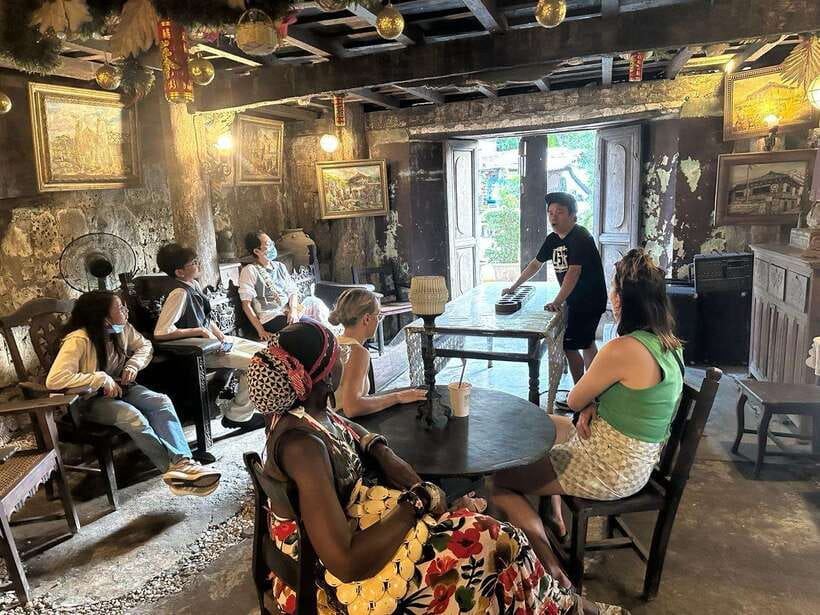
I would pay close attention to the guide’s explanation here. The objects are more useful when you understand their political and cultural setting, rather than viewing them as a simple collection of decorative pieces. If museums are your main reason for booking, note that this is the longest museum visit of the day, not an extended gallery tour.
Leyte Landing Memorial and the return of MacArthur
At the Leyte Landing Memorial, the tour reaches its most important World War II site. The park commemorates General Douglas MacArthur’s landing in Leyte Gulf during the liberation of the Philippines from Japanese occupation.
The memorial is also tied to the Battle of Leyte Gulf, a huge naval clash that followed the landing. Even a 15-minute stop can carry weight here. The value comes from knowing what happened on this coast and why the return mattered to the Philippines.
Access conditions may change. One especially useful detail is that the memorial was once closed for repairs, but the guide and tour company arranged access to the construction site so a participant could still see it. Do not assume that this will happen on every departure, but it shows the company’s willingness to make a reasonable effort when a major stop has restricted access.
For many people, this will be the emotional high point of the day. The site gives a clear physical place to a turning point in Philippine history.
Palo Cathedral and the wartime role of churches
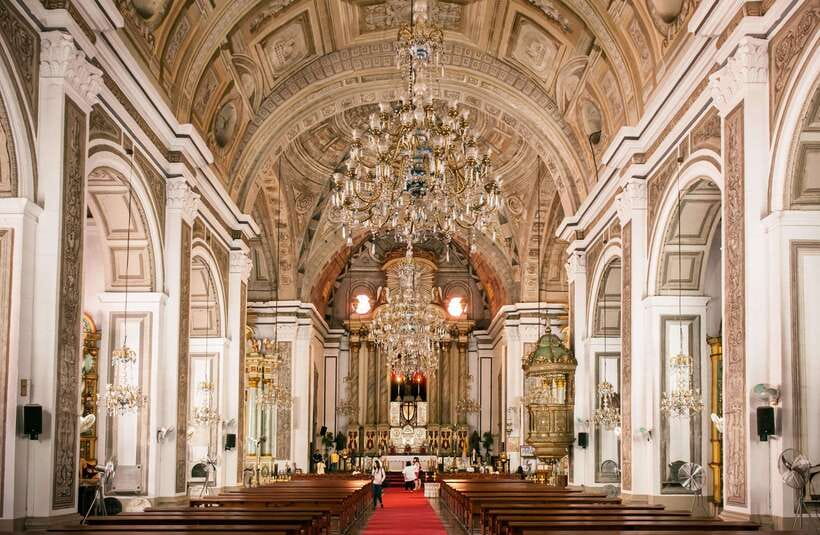
The Metropolitan Cathedral of Our Lord’s Transfiguration is better known locally as Palo Cathedral. It sits in the center of Palo and carries both religious and wartime importance.
During World War II, the cathedral was converted into a hospital for wounded Allied soldiers. That detail changes how you see the building. It was not only a place of worship, but also a place of emergency care during a violent period.
The scheduled visit is about 15 minutes, enough for a look at the exterior and a brief explanation. As with several stops, the tour is designed to give you context rather than a long, quiet architectural visit. You will likely appreciate the church most if you listen for how the building’s role changed over time.
M/V Eva Jocelyn Shrine and the force of Haiyan
The M/V Eva Jocelyn Shrine is one of the most direct reminders of Super Typhoon Haiyan. Seventeen ships ran aground during the storm on November 8, 2013, and the Eva Jocelyn was one of them.
Storm water pushed the ship into the middle of a street. That single fact is difficult to picture until you see the site. The ship became a memorial connected to the people who lived through the storm, lost homes or loved ones, and began the long work of rebuilding.
The stop lasts about 15 minutes, but the subject deserves your full attention. This is not just an unusual photograph. It is a place where the scale of the storm becomes easier to grasp.
The tour’s approach to Haiyan is one of its strongest features. You hear stories of struggle and recovery, including the personal impact of the disaster. The result is serious, but not hopeless. The emphasis is on people and their ability to rebuild.
Tacloban City Hall and the view over Cancabato Bay
Tacloban City Hall sits on top of a hill, giving you a scenic viewpoint over Cancabato Bay. The stop is partly about local government and partly about seeing Tacloban from above.
This is a good place for photographs, especially if you want a pause between the heavier historical stops. You can look out across the bay while your guide explains the city’s civic setting.
The visit is brief, around 15 minutes. Treat it as a viewpoint and orientation stop rather than a formal tour of the building. The hilltop position gives you a better sense of the city’s setting than a street-level drive alone.
Leyte Provincial Capitol and a wartime government
The Leyte Provincial Capitol Building adds an important political layer. It served as the seat of Leyte’s government until 2019 and also housed the Philippine Commonwealth government from October 23, 1944, to February 25, 1945.
That makes the building more than an old civic structure. During the liberation period, it became part of the functioning government of the Philippines. The return of national government institutions to Leyte gave the military campaign a political meaning as well as a military one.
You get about 15 minutes here. The stop works best when your guide points out the building’s place in the Commonwealth story. Without that explanation, it could look like another government office. With it, the building becomes part of the country’s wartime return to self-rule.
San Juanico Bridge across the channel
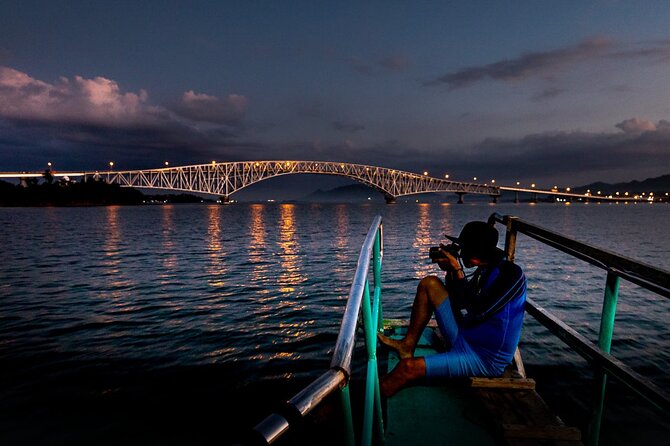
San Juanico Bridge is one of Leyte and Samar’s best-known landmarks. It stretches 2.16 kilometers across a body of seawater and was once the longest bridge in the Philippines.
The bridge matters as a piece of engineering, a transport link, and a symbol shared by Leyte and Samar. It gives the day a change of rhythm after the museums, memorials, and churches.
The scheduled stop is only about 15 minutes, so do not expect a long bridge walk or an extended engineering tour. You will have time to take in the view and photograph the structure. The air-conditioned vehicle is especially useful here because the itinerary keeps you moving between sites rather than asking you to spend long periods walking outdoors.
Madonna of Japan: a peace memorial
The Madonna of Japan represents peace between Filipinos and Japanese people. The monument was erected 33 years after World War II to remember the soldiers who fought and died in battle.
The statue stands on a rock or small island setting, giving the memorial a strong visual quality. Its message is different from the MacArthur site. One recalls liberation and military action, while the other points toward remembrance and reconciliation.
You have about 15 minutes at the site. That is enough for a short visit and photographs, though not for an extended meditation if the group is keeping to schedule. I would listen closely to the explanation of how this monument fits into the relationship between the Philippines and Japan.
Sto. Nino Church and the endurance of local faith
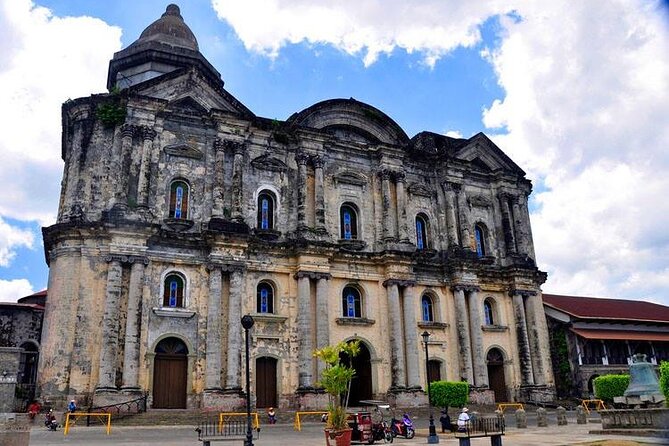
The Sto. Nino Church is another important Tacloban landmark. It has faced typhoons and earthquakes, and it was partly damaged during Super Typhoon Haiyan.
The church also provided shelter during the storm. That detail brings the disaster story back to a living community. Religious buildings in the region were not only places for services. At times, they became places of protection when people needed cover.
The visit lasts roughly 15 minutes. You may not have time for a detailed architectural study, but you will see how the church fits into Tacloban’s daily and historic life. It also creates a useful contrast with the Sto. Nino Shrine and Heritage Museum, which is a separate stop with a very different focus.
How the day works in practice
The tour begins at 8:30 am and lasts around six to seven hours, including driving time between attractions. That timing is important. Nine stops may sound leisurely on paper, but the schedule is active.
Most visits are 15 minutes. Only the museum receives about 30 minutes, so you should be ready to get out, listen, take a few photographs, and move on. The benefit is broad coverage. You see far more than you would by arranging a casual visit to one or two Tacloban sites.
The tradeoff is limited time for personal exploration. If you want long museum visits, extended church interiors, or unhurried photography, this may feel fast. If you want a clear introduction to the area and its main stories, the pace is sensible.
Your group travels in an air-conditioned vehicle, and lunch is included. That adds real value in a warm Philippine setting, especially when the day includes repeated short stops. Bicycle use is not included, so this is a vehicle-based tour rather than a cycling experience.
Pickup is offered, and the tour is private, meaning only your group participates. Service animals are allowed, and the experience is near public transportation. Most people can participate, though the supplied details do not describe specific vehicle or site accessibility arrangements, so you should ask the provider if you have mobility concerns.
Is $51 a fair price?
At $51 per person, the value depends on how many people are in your private group. For one or two people, the price buys convenience, transport, lunch, and a guide for a full day. For a larger group, the cost becomes even more attractive because the private vehicle and guiding are shared.
You are also paying for local interpretation. A map can show you the landing memorial, cathedral, bridge, and ship shrine, but it cannot explain why a ship ended up in a city street or how a cathedral became a wartime hospital.
The strongest value comes from the combination of transport and storytelling. Tacloban and Palo sites are spread across the area, and fitting them together independently would require planning and local transport. This tour removes that work while giving you a single narrative.
The price does not include bicycle use, but that is not central to the advertised experience. Lunch and the air-conditioned vehicle are included, which keeps the extra costs simpler.
Who will enjoy this tour most?
I would recommend this experience to first-time visitors who want a serious introduction to Leyte. It suits you if you care about World War II, local culture, religious sites, disaster recovery, or Philippine government history.
It is also a strong choice if you prefer a private setting. You can ask Jeff or another guide to explain a point again, focus on World War II, or spend more time discussing Haiyan and local recovery.
Families and mixed-interest groups may find the variety helpful. Children may not absorb every political detail, but the bridge, ship shrine, churches, and memorials create visual breaks through the day.
You should think twice if you dislike short stops or want a slow architectural tour. The schedule favors breadth. It gives you a strong first look, not an exhaustive study of every building.
The tour has a 5 out of 5 rating from 11 ratings, with a 100 percent recommendation rate. The most praised points are the educational value, friendly guiding, and the way the tour explains both World War II and the 2013 typhoon. Guide Jeff is named directly in the feedback, and his clear, welcoming approach is a reason to value the experience beyond its sightseeing list.
Booking advice and cancellation terms
The tour starts at 8:30 am, and it is commonly booked well ahead, around 42 days in advance on average. If your dates are fixed, booking early is sensible.
You can cancel up to 24 hours before the start time for a full refund. Changes or cancellations made less than 24 hours before departure are not accepted for a refund. The tour requires good weather, and if poor weather forces cancellation, you are offered another date or a full refund.
Confirmation is normally sent at booking. If you book within 12 hours of departure, confirmation comes as soon as possible and depends on availability.
Should you book the Tacloban and Palo tour?
Book it if you want the main historic and cultural sights explained in one private day. The tour is especially worthwhile for its combination of the MacArthur landing, the wartime cathedral and capitol, the Eva Jocelyn ship shrine, and personal accounts of Haiyan recovery.
You should choose it with the right expectation: this is a fast-moving introduction, not a slow museum day. The nine-stop route is broad, the visits are short, and the guide’s storytelling is central to the experience.
For $51 per person, including lunch and air-conditioned transport, I consider it a good-value way to get your bearings in Tacloban and Palo. If you want a thoughtful first look at Leyte’s past and present, with a private guide who can add context along the way, this is an easy tour to recommend.
FAQ
How long does the Tacloban and Palo tour last?
The tour lasts approximately six to seven hours, including travel time between attractions.
What time does the tour begin?
The tour starts at 8:30 am.
Is hotel pickup offered?
Pickup is offered, though the supplied details do not specify the exact pickup locations.
Is this a private tour?
Yes. Only your group participates in the activity.
Is transportation included?
Yes. An air-conditioned vehicle is included.
Is lunch included?
Yes. Lunch is included in the tour price.
Are admission tickets included?
Admission to the Sto. Nino Shrine and Heritage Museum is included. The other listed attractions have free admission.
Is bicycle use included?
No. Bicycle use is not included.
Are service animals allowed?
Yes. Service animals are allowed.
What happens if bad weather cancels the tour?
Because the tour requires good weather, you will be offered a different date or a full refund if poor weather causes cancellation.