
Bohol: SUSTAINABLE Mangrove Tunnels & Firefly Kayaking trail
Magic begins after sunset. Bohol’s Abatan River offers a rare mix of quiet paddling, narrow mangrove tunnels, and synchronous fireflies that blink together above the dark water. I especially like the expert local guidance and the peaceful, motor-free route. The home-cooked Filipino dinner is another real strength. The main consideration is that kayaking takes steady effort, and clouds, rain, or insects can affect your comfort and the firefly viewing.
This five-hour trip suits families, couples, solo visitors, and anyone who wants more than a quick photo stop. Guides such as Vince, Jeremy, and MacMac bring strong knowledge of the river and a clear concern for its future. You should know, though, that this is an outdoor experience, not a polished show. You may get wet, paddle through changing weather, and work for your view.
In This Review
- Five things to know before you book
- Why the Abatan River feels different from a standard Bohol tour
- Pickup from Bohol accommodations and the trip to Maribojoc
- The first paddle through mangrove tunnels
- A local snack break beside the river
- Night kayaking and the synchronous fireflies
- Guides who make the conservation message personal
- The Filipino dinner is more than an afterthought
- Family suitability, effort, and comfort
- Practical timing and cancellation advice
- Should you book the Abatan River firefly tour?
- FAQ
- How long does the Abatan River kayaking experience last?
- Where can pickup and drop-off be arranged?
- How long is the journey to the river?
- Do I need kayaking experience?
- What is included in the price?
- Is dinner included?
- What should I bring?
- Can I cancel the booking?
Five things to know before you book
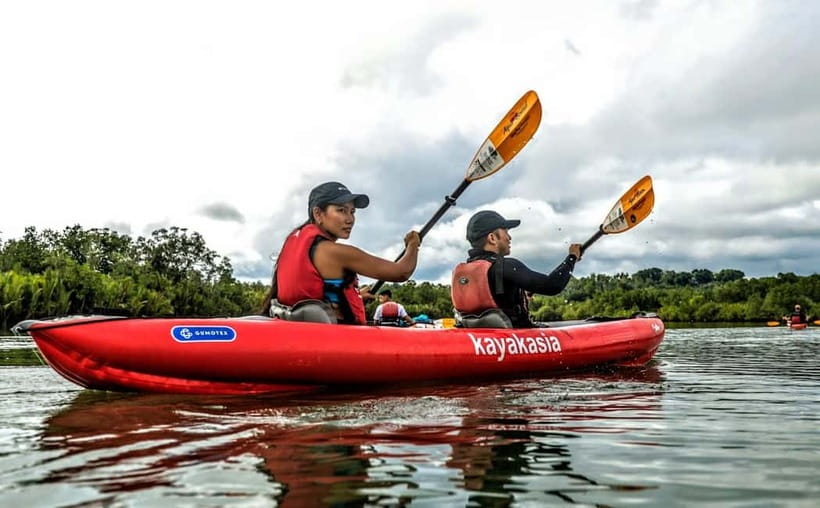
- The fireflies are seen from kayaks: You watch them quietly from the river instead of joining a motorboat tour.
- The Abatan River has several moods: Expect mangrove tunnels, nipa palms, forest channels, wildlife, and open stretches of calm water.
- Conservation is part of the experience: Guides explain mangrove protection, firefly habitat, local livelihoods, and river cleanups.
- Food is a major part of the evening: Local snacks come during the break, followed by a fresh, home-cooked Filipino dinner.
- The trip is beginner-friendly: You receive a safety briefing, basic instruction, a life jacket, and support from local guides.
- Transfers save time and planning: Pickup and drop-off are available from accommodations in Panglao, Tagbilaran City, and Loboc.
Why the Abatan River feels different from a standard Bohol tour
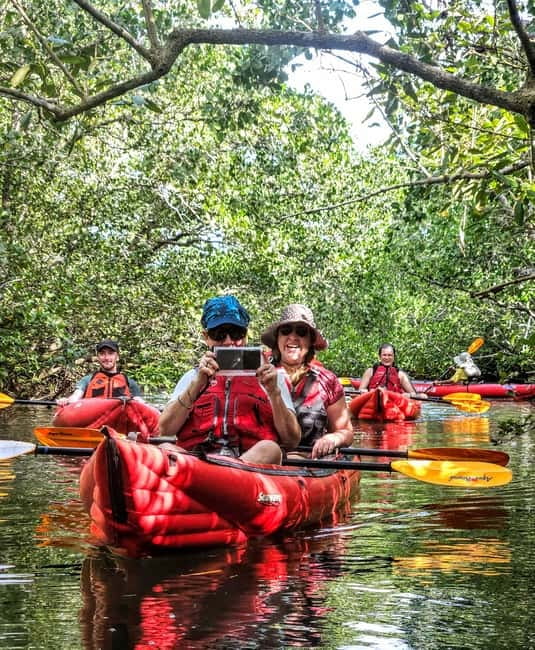
Bohol is known for beaches, countryside sights, and the Chocolate Hills. The Abatan River offers a slower side of the island. You move by paddle through water channels where nipa palms and mangroves press close to the boat, and the silence becomes part of the attraction.
This is not a sightseeing trip where you sit back while an engine does all the work. You help move the kayak, so you notice the current, the bends, and the changing width of the river. That effort is modest but real. The reward is a close view of a wetland ecosystem without the engine noise of a motorboat.
The local connection also matters. The guides grew up beside these waters and explain how the river supports nearby communities. They discuss mangrove species, marine life, birds, natural disaster protection, and the threats facing the ecosystem. You get a better sense of why these trees matter, rather than simply being told that the scenery is beautiful.
The experience has also been featured in National Geographic’s top 100 nights in the world. The fireflies are the headline attraction, but the daytime paddle gives the evening its meaning. By the time darkness arrives, you have seen the habitat that makes the display possible.
You can also read our reviews of more tours and experiences in Bohol.

Pickup from Bohol accommodations and the trip to Maribojoc
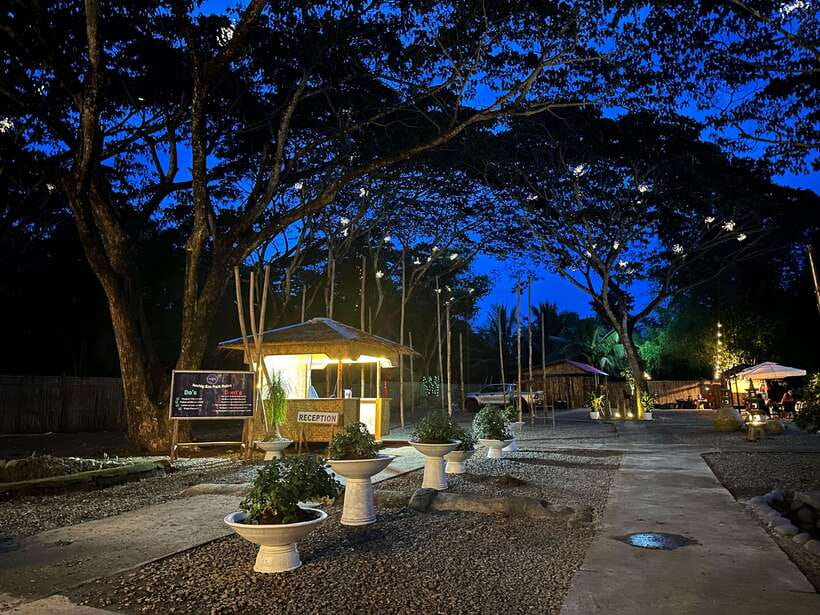
The tour includes round-trip transport from accommodations in Panglao, Tagbilaran City, or Loboc. The trip to the river station takes about 15 minutes from Tagbilaran, while Panglao and Loboc can take roughly an hour. The stated van schedule also includes about 30 minutes of travel each way, so your actual timing depends on your starting point and the day’s route.
This transfer is useful because the activity begins in the late afternoon and finishes after dinner. You do not need to arrange a separate ride back in the dark. Pickup was described as punctual, and the organization appears to be one of the stronger parts of the outing.
If you stay in Panglao, allow extra time for the road journey. The tour itself lasts about five hours, but your full afternoon and evening will be longer once transfers are included. From Tagbilaran, the outing is easier to fit into a busy Bohol schedule.
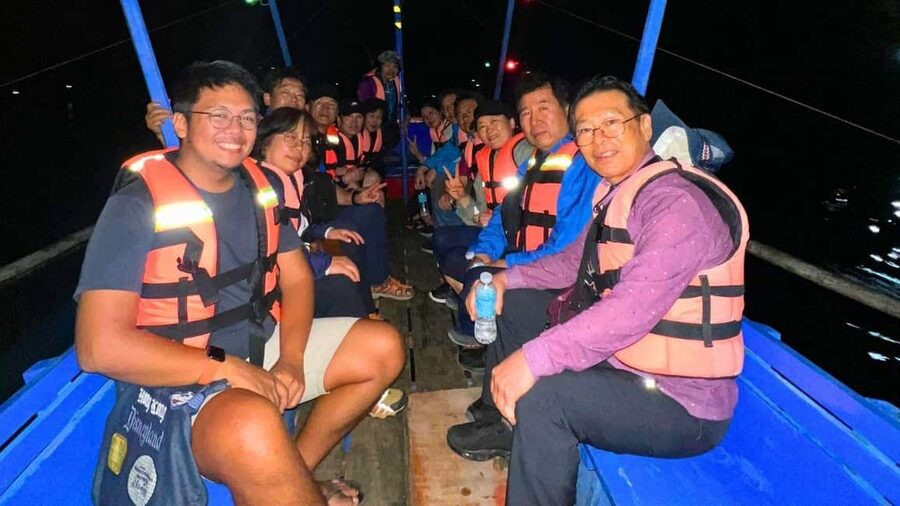
At the river station, you receive a safety briefing and a short kayaking lesson. No prior kayaking experience is required. Life jackets and the necessary equipment are provided, and guides remain with you throughout the route.
The first paddle through mangrove tunnels
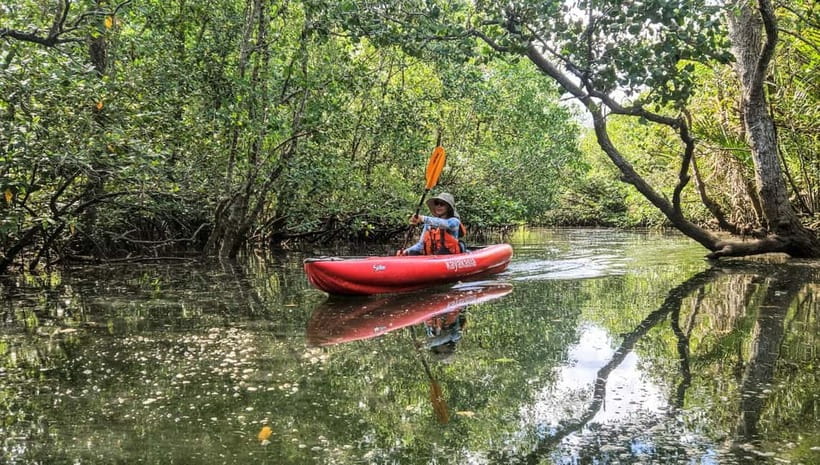
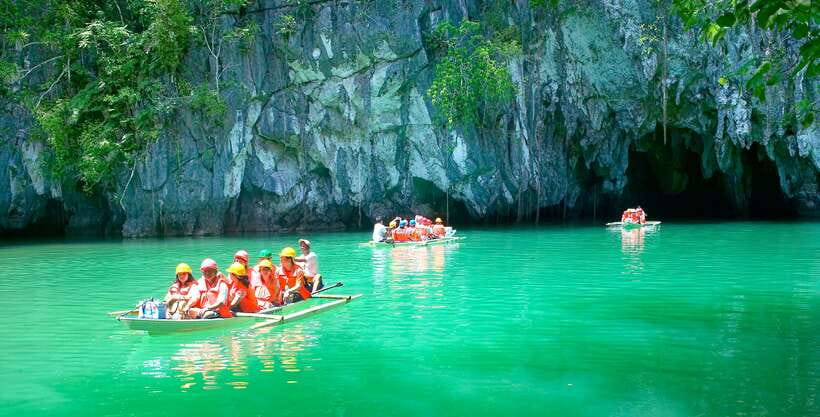
The daytime kayaking section lasts about two hours. You travel through narrow mangrove passages, nipa palm groves, winding channels, and flooded forest areas. These smaller waterways are the reason to choose a kayak. You can enter places that are not suited to larger boats, and the low seating position puts you close to the roots, leaves, and waterline.
The setting is peaceful, but it is not empty. The mangroves provide nursery areas for marine life and shelter for wildlife. Guides point out the plant life and explain how the trees help protect river communities from natural disasters. You might also see birds, as one visitor with an interest in birding found during a rainy outing.
I like this section because it gives you something to notice beyond the scenery. You learn how mangroves support fish, wildlife, and people. The explanations also help you understand the reason for the tour’s conservation focus.
The route can involve plenty of paddling. One person described the experience as a good workout, especially because the kayaks move without motors. Comfortable outdoor clothing is important, and a change of clothes is a sensible idea. Rain is possible, and a downpour may turn the outing into a wetter adventure than expected.
The good news is that rain does not automatically ruin the experience. The river can look especially atmospheric in changing weather. The less appealing side is simple: if you want a dry, effortless excursion, this is not the right choice.
A local snack break beside the river
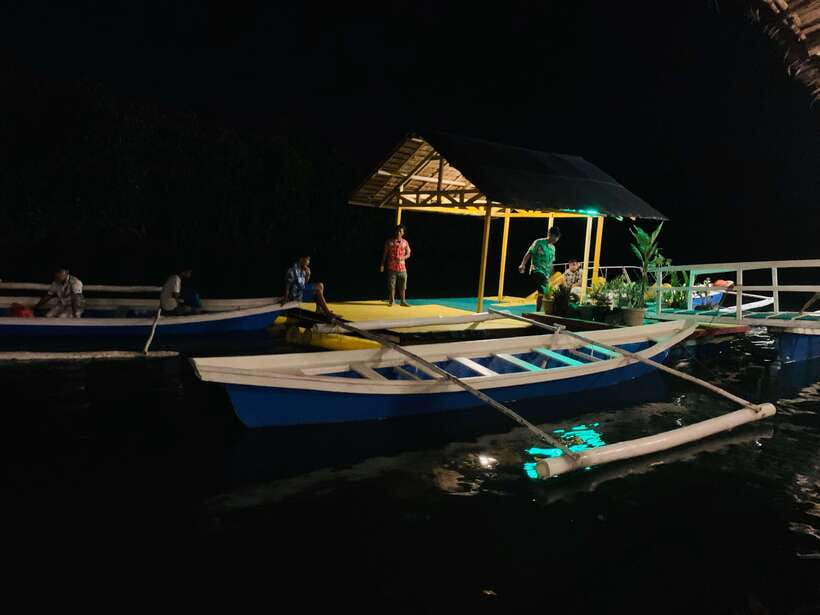
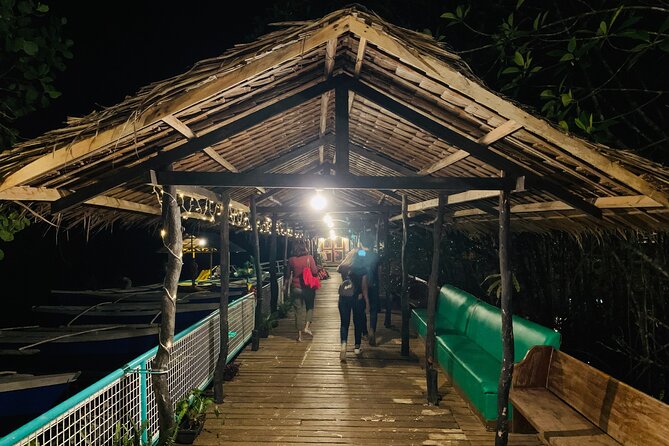
After the first paddle, you stop at the river station for about 45 minutes. Light local snacks and refreshments are included. This pause breaks up the physical part of the tour and gives you time to dry off, use the facilities available at the base, and chat with the guides.
The food receives unusually strong praise. The snacks are homemade, and generous portions are part of the appeal. This is not just a quick packaged drink handed over between activities. It is a chance to taste local cooking and spend time with the people who run the experience.
The stop also gives you a transition from afternoon to evening. The first session is about mangrove ecology and river scenery. After the break, the focus shifts to quiet movement and firefly watching. You will want to use the time to apply more insect repellent, drink water, and prepare for darkness.
Bring your own water, sunscreen, sun hat, and insect repellent. Outdoor clothing that allows easy movement is best. The organizers ask you not to smoke, litter, or touch the plants, which are sensible rules in a fragile wetland.
Night kayaking and the synchronous fireflies
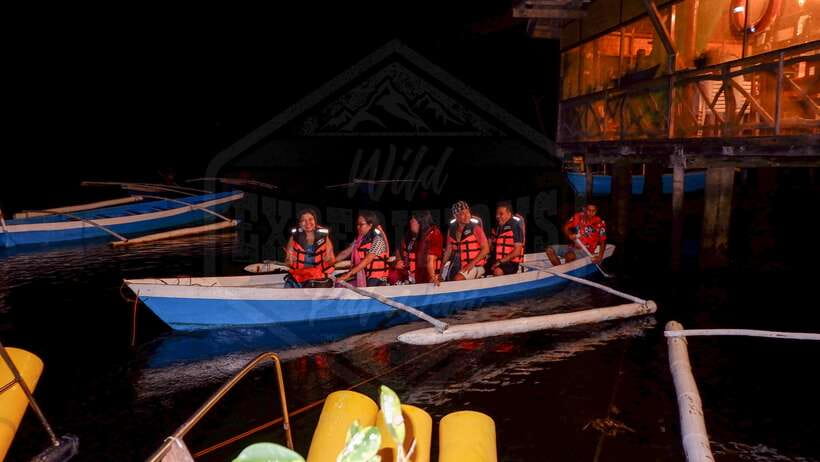
After twilight, you return to the water for another guided kayaking session lasting about two hours. This is the part most people remember. The river becomes dark and still, and the guides take you toward areas where synchronous fireflies gather.
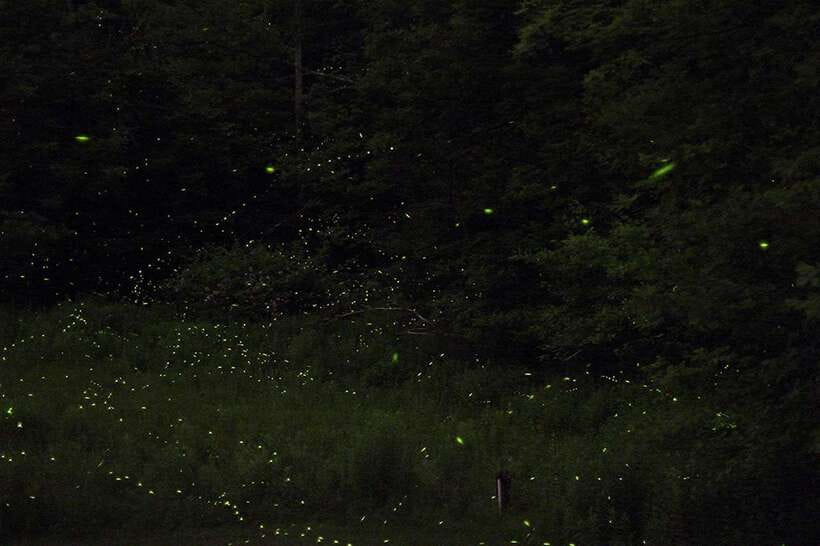
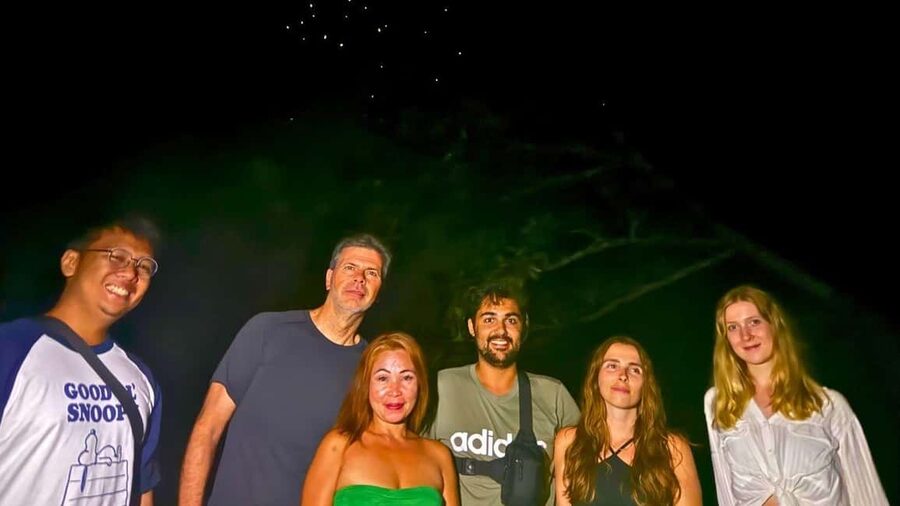
These insects blink together, creating points of light in the trees. The effect is especially striking when the flashes reflect on calm water. You are not watching a staged performance. The display depends on the living habitat, the weather, and the fireflies themselves, so the experience has a natural uncertainty that makes quiet observation important.
The fireflies are described as synchronous and as endemic to the Philippines in this abundance. The guides explain their behavior and the conservation challenges they face. You also learn why viewing them from a paddle-powered kayak is less invasive than using a motorboat. The lack of engine noise adds to the mood and reduces disturbance around the river.
You should keep your expectations sensible. The fireflies are not guaranteed to appear in exactly the same numbers every night, and clear skies are not assured. The strongest experience comes when you accept the conditions rather than expect a fixed light show. On a clear night, the sight can feel surreal. Under cloud or rain, it may be more subdued.
The nighttime paddle also requires attention. You need to follow guide instructions and handle the kayak carefully in low light. Beginners are supported, but you still need to be comfortable sitting in a kayak and paddling for a sustained period.


Guides who make the conservation message personal
The guides are central to the quality of this experience. Jeremy is praised for making the mangrove trip informative and interesting. Vince is noted for his calm instruction, safety support, and strong concern for mangroves, birds, fireflies, and the wider community. MacMac is described as friendly, helpful, and well informed about the plants and the challenges facing fireflies.
These details matter because conservation talk can sometimes feel like a lecture added to a tour. Here, it appears to be part of the guides’ daily work and local identity. They explain how the river has supported families for generations and how ecotourism can help protect the place.
The operation also reuses materials recovered from river cleanups. Old kayak material and other refuse are turned into practical items such as wallets, slippers, keychains, and card holders. You may find these at the base, and buying one supports the group’s effort to reduce waste.
I appreciate that the rules are clear and direct. Do not touch plants. Do not litter. Do not smoke. These are small instructions, but they show that the activity puts the river before convenience.
The Filipino dinner is more than an afterthought
The final meal lasts about 30 minutes and consists of a home-cooked Filipino dinner made with fresh, locally sourced ingredients. It is a strong finish after several hours on the water.
The meal has been described as a three-course dinner with generous servings. The cooking is handled by local women at the base, and the food gives the evening a more personal feel than a standard buffet at a resort. You end the outing around a table, sharing stories rather than simply being sent back to the van.
This is also where the $85 price begins to make more sense. You are paying for transport, equipment, two guided paddling sessions, snacks, dinner, and local expertise. Part of the fee also supports community-based conservation and local livelihoods.
The value is strongest if you want an evening with several connected elements. If you only want to see fireflies for a few minutes, cheaper options may exist. But those may not include the long mangrove route, local instruction, food, transfers, and conservation work. The price is fair for a five-hour experience with this amount of support.
Family suitability, effort, and comfort
The tour is suitable for families, and children aged seven and ten were reported to have enjoyed paddling. Beginners are welcome, and the safety briefing helps you get started. Still, parents should remember that this is an active outdoor outing, not a ride where children simply sit still.
Couples may like the quiet mood of the evening session. Solo visitors can expect plenty of contact with guides and other participants, especially during the shared food stop. Groups should find the format social without losing the peaceful quality of the river.
You should be comfortable with:
- Sitting in a kayak for several hours, with a break in between
- Paddling through narrow waterways
- Possible rain and wet clothing
- Insects in a natural wetland
- Darkness during the firefly session
- Following strict rules around plants and wildlife
Bring a camera, but do not expect easy firefly photographs. The display is best experienced with your eyes. A phone camera may capture little in the dark, and using bright lights can spoil the atmosphere for others and disturb the viewing area.
Practical timing and cancellation advice
The activity lasts five hours, with pickup and drop-off added around that time. Starting times vary, so check availability when booking. The schedule generally moves from transport to a 15-minute safety briefing, two hours of daytime kayaking, a 45-minute snack break, two hours of evening kayaking, dinner, and the return ride.
The tour is conducted in English. You can cancel up to 24 hours in advance for a full refund, and a reserve-now, pay-later option is available. Those terms are useful if your Bohol plans are still changing, though you should still confirm the exact departure time and pickup details before the day.
Weather is the main practical variable. Pack a dry change of clothing, insect repellent, sun protection, and water. Comfortable clothes suited to kayaking are more important than dressing for photographs.
Should you book the Abatan River firefly tour?
I would book this tour if you value nature, local food, and conservation as much as the fireflies. The combination is the strength: you learn about mangroves in daylight, paddle quietly through the same ecosystem at night, then finish with a generous Filipino meal.
It is especially good for families with active children, couples seeking a calm evening, and visitors who prefer community-based experiences over large commercial attractions. The guides are a major reason to choose it, with Jeremy, Vince, and MacMac each praised for clear instruction and care for the river.
I would hesitate only if you dislike physical activity, insects, rain, or uncertain wildlife sightings. The fireflies are magical, but nature does not follow a timetable. At $85 per person, the tour offers good value for a full half-day of transport, equipment, food, guiding, and conservation support. If that sounds like your kind of Bohol evening, book it.
FAQ
How long does the Abatan River kayaking experience last?
The activity lasts about five hours, not including any additional time needed for pickup and drop-off from your accommodation.
Where can pickup and drop-off be arranged?
Round-trip transfers are available from accommodations in Panglao, Tagbilaran City, or Loboc.
How long is the journey to the river?
Travel time is about 15 minutes from Tagbilaran City and approximately one hour from Panglao or Loboc, depending on the route and pickup point.
Do I need kayaking experience?
No. The tour includes a safety briefing and basic kayaking instruction, and it is designed to be beginner-friendly.
What is included in the price?
The $85 price includes transfers, guided kayaking, firefly watching, snacks, refreshments, dinner, safety instruction, life jackets, kayaking equipment, and local guide support.
Is dinner included?
Yes. You receive a home-cooked Filipino dinner prepared with fresh, locally sourced ingredients.
What should I bring?
Bring a sun hat, change of clothes, sunscreen, water, insect repellent, a camera, and comfortable outdoor clothing suitable for kayaking.
Can I cancel the booking?
Yes. You can cancel up to 24 hours in advance for a full refund. A reserve-now, pay-later option is also available.
More Tour Reviews in Bohol
Not for you? Here's more nearby things to do in Bohol we have reviewed






Firefly Watching: how the alternatives stack up
The lists this tour appears in