The first time I checked the weather forecast for a January trip to Coron and saw five sunny days in a row, I almost cancelled because a friend in Manila said it was raining at her place. She lives in Quezon City. Coron is 600 km south. The Philippines is one country with at least three or four entirely different rain patterns running at the same time, and pretending otherwise has tripped up more travellers than typhoons have.
So forget the dry-season-versus-wet-season binary you have been reading on every other site. The real question is when is the best time to visit your Philippines, because Manila in February behaves nothing like Siargao in February, and a wet day in Boracay can be a perfect day in Tubbataha.
This guide walks through the month-by-month picture, the regional differences nobody warns you about, what typhoon season actually looks like on the ground, the festival calendar worth planning around, and a clear-eyed read on shoulder versus peak.
Some of the booking links below are affiliate. I earn a small commission if you book through them, it covers the hosting bill, that is it.
In This Article
- Quick Answer: When to Go
- Why the Philippines Has No National Best Time
- Manila and Northern Luzon
- Visayas (Cebu, Bohol, Boracay)
- Palawan (El Nido, Coron, Puerto Princesa)
- Eastern Visayas, Mindanao, and Siargao
- Month by Month: What to Expect
- January
- February
- March
- April
- May
- June
- July
- August
- September
- October
- November
- December
- Typhoon Reality Check
- Festival Calendar Worth Planning Around
- Sinulog: Cebu, Third Sunday of January
- Ati-Atihan: Kalibo, Aklan, Third Weekend of January
- Panagbenga: Baguio, All of February
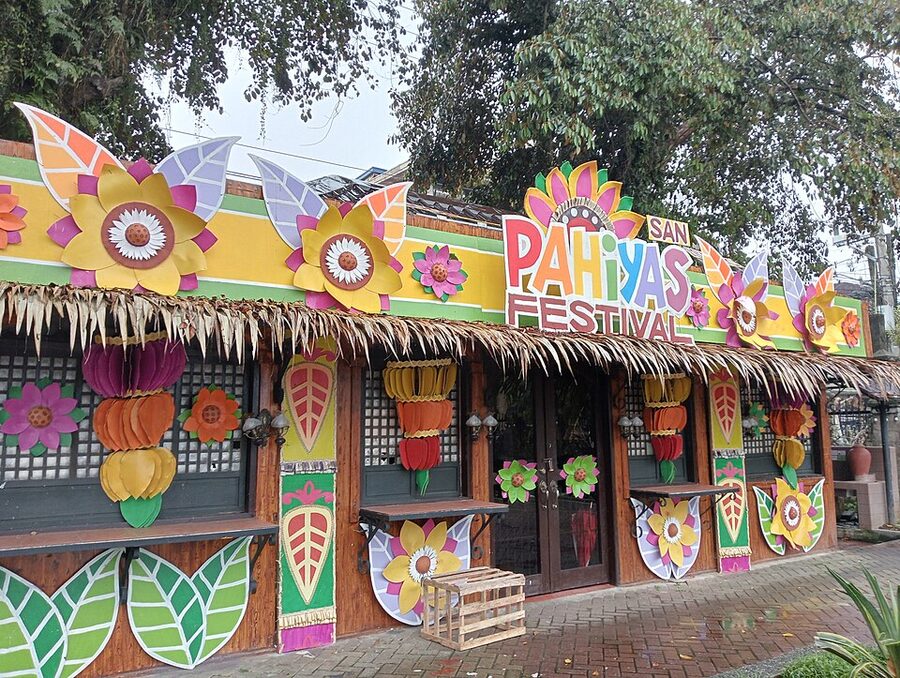
- Pahiyas: Lucban, Quezon, May 15
- MassKara: Bacolod, Third and Fourth Weekends of October
- Higantes: Angono, Rizal, Third Weekend of November
- Christmas: All of September Through January
- Chinese New Year: Manila Binondo, Late January or Early February
- Best Months by Activity
- Diving
- Beach and Island Hopping
- Hiking and Rice Terraces
- Surfing
- City Sightseeing
- Holy Week, Christmas, and Other Crowd Spikes
- Holy Week
- Christmas and New Year
- SONA Week
- School Breaks
- Chinese New Year
- Phivolcs Alert: Taal Volcano
- What to Do If Your Trip Overlaps a Wet Day
- Shoulder vs Peak Season: The Real Tradeoff
- Frequently Asked Questions
- What is the absolute best month to visit the Philippines?
- Is it safe to visit during typhoon season?
- When is the cheapest time to fly to the Philippines?
- Will my El Nido tour get cancelled in the wet season?
- Does Boracay close during typhoon season?
- Are festivals worth planning a whole trip around?
- Is October a bad time to visit?
- Pulling It Together
Quick Answer: When to Go
If you only read one section, read this. January through early March is the sweet spot for most travellers. Cool by Filipino standards, dry across most of the country, calm seas for island hopping, and fewer typhoons than at any other time of year. Avoid Holy Week (the moveable feast that lands somewhere in late March or April) if you hate crowds, and avoid mid-July through October if you cannot reschedule a cancelled flight.
The second-best window is late November through mid-December, after the last typhoons clear out and before Christmas crowds arrive. Cooler than April, cheaper than January, and the Christmas decorations are already up because the Philippines starts the season in September. March and April are bone-dry and gorgeous but also the hottest months and the busiest, with school holidays and Holy Week stacking up. May through October is the gamble: fewer crowds, lower prices, lots of green, and a real chance your boat trip gets cancelled or your flight to Caticlan delayed by a tropical depression nobody saw coming on Monday.
Why the Philippines Has No National Best Time
The country sits on more than 7,600 islands stretched across 1,800 km north to south. PAGASA, the national weather bureau, recognises four distinct climate types depending on which side of which mountain range you are on. So the textbook “dry season runs November to May” line gets you in trouble the second you step off the plane.
Manila and Northern Luzon
Manila, Tagaytay, Baguio, Banaue, and most of the western Luzon coast follow the classic pattern: dry from late November to May, then the southwest monsoon (habagat) arrives in June and dumps rain through October. Peak typhoon strikes also hit this part of the country hardest. If your trip is Manila plus Banaue plus Vigan, January to April is your window.
Visayas (Cebu, Bohol, Boracay)
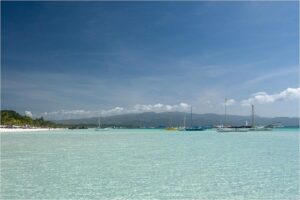
The central islands have a softer dry-wet split. Boracay, Cebu, Bohol, and Negros are reliably dry from December to May with a wet patch from June to November, but the rain is much less intense than in Luzon, and Boracay’s leeward (west) side stays calm even during the wider wet season. The cool dry months from December to February are the best, March to May the hottest, and even the wet months are workable if you accept afternoon showers.
Palawan (El Nido, Coron, Puerto Princesa)
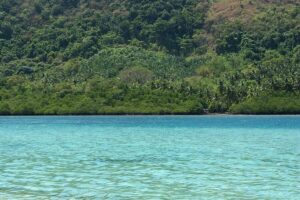
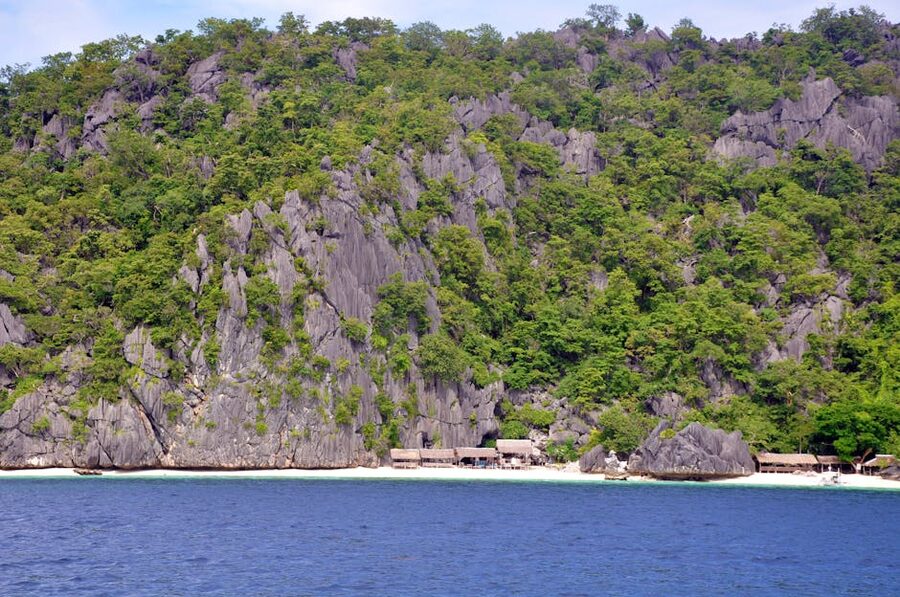
Palawan has the most reliable dry season in the country, running roughly mid-November through May. June to October sees serious rain, and the lagoon tours that El Nido is famous for can be cancelled when waves get rough. If you only have one shot at El Nido, go between January and April. Tubbataha Reefs, the country’s premier dive site, only allows liveaboards from mid-March through mid-June and that window is firm.
Eastern Visayas, Mindanao, and Siargao
Here the seasons flip. The eastern seaboard (Samar, Leyte, eastern Mindanao, Siargao) gets its rain mostly from October to January when the northeast monsoon (amihan) dumps moisture against the windward slopes. Siargao’s surf season runs August through November precisely because that is when the Pacific swell rolls in, which means the surfers’ best months are the rest of the country’s worst. Davao and most of the rest of Mindanao stay reasonably dry year-round and rarely see typhoons because they sit south of the storm belt.
Month by Month: What to Expect
January
The single best month to visit. Cool (by Filipino standards, meaning daytime highs of 28-30C in Manila, low 20s in Baguio), low humidity, almost no rain across Luzon, the Visayas, and Palawan. Seas are calm, visibility is excellent for diving, and the country is alive with festivals. Sinulog in Cebu lands on the third Sunday of January, Ati-Atihan in Kalibo runs the third weekend, and Dinagyang in Iloilo follows the fourth weekend. The whole month is essentially the country’s collective party. The catch: hotel prices are at their peak everywhere except domestic-tourist hotspots, and flights from Manila to Caticlan or Puerto Princesa can be hard to find on short notice.
February
Statistically the driest month of the year nationwide and my personal favourite. Same cool weather as January, fewer crowds because the holiday rush has cleared, and the Panagbenga Flower Festival fills Baguio with parades through the whole month, peaking on the last Sunday. Chinese New Year in Binondo (Manila’s Chinatown) is also a draw, dates moving each year between late January and mid-February. If you want a beach week in Boracay or Palawan without the January price spike, this is the slot.
March
Dry season hits its stride and the heat starts climbing. By late March, Manila is regularly above 33C, and the smaller cities feel it more because they have less greenery to break the sun. Beach weather is perfect, water clarity is excellent, and the surfing season on the west coast is winding down while east-coast spots stay flat. Tubbataha liveaboards open in the second half of the month, the only window divers get all year. Holy Week sometimes lands in late March, which is when local domestic travel goes berserk and prices in Boracay or El Nido double.
April
Hottest month after May, with Manila highs regularly hitting 35C and the humidity making it feel worse. Holy Week almost always lands somewhere here, and the entire country seems to take the same week off. Boracay, Palawan, and Tagaytay get slammed with domestic tourists, restaurants in Manila close for several days, and traffic in Metro Manila genuinely thins out as families leave. Outside Holy Week itself the conditions are still excellent, just hot. Pahiyas Festival in Lucban happens on May 15 but the build-up is in late April, and inland mountain destinations like Banaue stay comfortable.
May
The peak of the hot dry season, and the gamble starts. Most years the rains hold off until late May or early June, but every few years the southwest monsoon arrives early and you get a wet last week. Tubbataha’s diving season is ending, the surfing on Siargao is starting to pick up, and the heat in lowland cities is genuinely uncomfortable by midday. May 15 is Pahiyas in Lucban, where every house in town gets dressed in kiping wafers and rice-stalk decorations to thank the harvest gods. It is one of the prettiest single-day festivals in the country and worth the day trip from Manila.
June
The monsoon onset is the biggest variable in the Philippine calendar. Some years the first proper rain arrives in early June, some years it holds off until July. PAGASA officially declares the start of the rainy season around the second week of June most years. Expect afternoon thunderstorms, mornings still mostly sunny, and a real chance of the first tropical depression. Prices drop noticeably from mid-June onwards. Independence Day on June 12 is a domestic travel weekend, and after that things go quiet.
July
Properly wet now. Manila gets some of its heaviest rainfall of the year, with localised flooding in low-lying parts of the city after a typical afternoon downpour. The State of the Nation Address (SONA) in late July creates a one-day traffic and security event around Quezon City you should plan around if you are in town. Boracay and Palawan are still doable but boat trips get cancelled regularly. The upside: hotels are at their cheapest, beaches at their emptiest, and the rice terraces in Banaue and Batad are at their greenest.
August
The single most likely month for a major typhoon to hit Luzon. Historical hits in this month include Yolanda’s predecessor patterns and the deadly Ondoy floods of 2009 that submerged half of Metro Manila. If you are determined to visit in August, build flexibility into your itinerary, take travel insurance with weather coverage, and avoid booking back-to-back domestic flights with no buffer. Surfing in La Union and Siargao starts producing decent swells from mid-August.
September
Statistically the wettest month in Manila, and another peak typhoon month. The flip side: this is when the country starts decorating for Christmas, which begins in earnest the second the calendar flips to a “ber” month (September, October, November, December are collectively called the “ber months” and the locals start playing carols). If you happen to be in Manila in late September, the malls already feel festive. Expect afternoon storms most days and at least one named tropical system you have to track.
October
Late typhoon season. The MassKara Festival in Bacolod runs through the third and fourth weeks of October, and despite the city being on Negros Island it is one of the most photogenic events of the year. The wide masks, the street dancing, the food. If you are going, build buffer days because October weather can ruin a tight itinerary. By the last week of the month the rain starts thinning out across Luzon and Palawan.
November
The transition month and a quietly brilliant time to come. The northeast monsoon (amihan) starts kicking in, which dries out Luzon and the Visayas while sending the rain to the eastern seaboard. Most years the typhoon threat drops off by mid-November. Higantes Festival in Angono lights up the third weekend of the month with paper-mache giants paraded through town, and Christmas decorations are everywhere. Hotel prices are still in shoulder-season territory until the last week. If you can swing a late-November trip, do it.
December
The Christmas season is genuinely a thing here, the longest in the world by most measures. The first half of the month is quiet and pleasant, with prices climbing as the 20th approaches. From December 22 through January 2 everything is busy, expensive, and joyful in equal measure. Domestic flights to Boracay and Cebu double in price, family-run hotels fill weeks in advance, and Manila empties out as residents head to their home provinces. The 24th is Noche Buena when most of the country eats midnight dinner together. If you are in Manila on Christmas Eve, find a Filipino family willing to host you and you will eat better than at any restaurant in the city.
Typhoon Reality Check
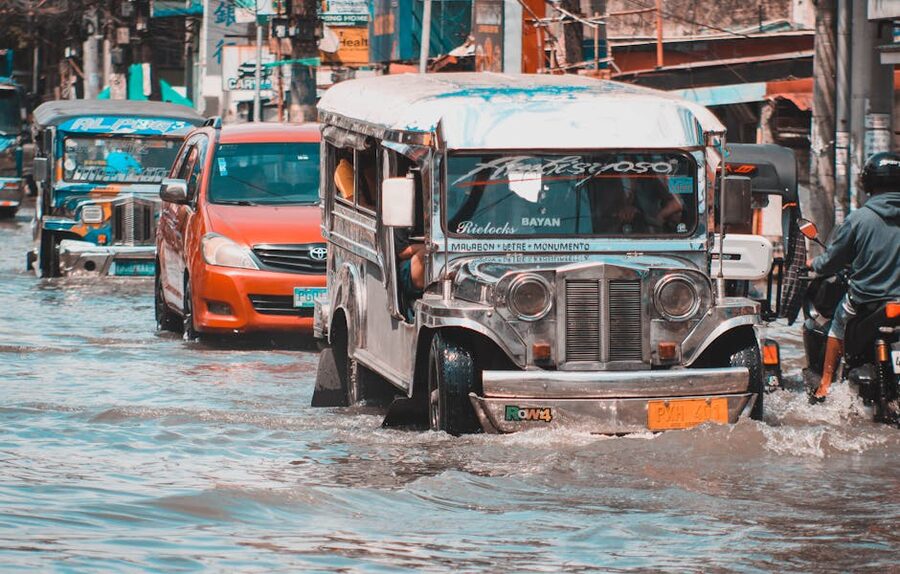
The Philippines averages around 20 named tropical cyclones entering its area of responsibility each year, of which 8-9 actually make landfall somewhere in the country. The peak months are August through October, with September the statistical worst. Most of these storms come in from the Pacific and track west or northwest, hitting Luzon and the eastern Visayas hardest. Palawan and most of Mindanao are usually spared because they sit outside the main storm corridor.
If you are travelling in the wet half of the year, here is what actually matters:
- Watch PAGASA, not international weather sites. The Philippine Atmospheric, Geophysical and Astronomical Services Administration tracks systems with local naming and signal warnings. International models often miss the smaller systems that still cancel boats.
- Signal warnings 1 through 5 are the official scale. Signal 1 means winds of 39-61 km/h within 36 hours, classes get suspended, light. Signal 3 (89-117 km/h) is when most domestic flights cancel. Signal 4 and 5 are full evacuation territory.
- Domestic carriers cancel cautiously. Cebu Pacific, AirAsia, and Philippine Airlines will pull flights to Caticlan, Tacloban, or Calbayog at the first hint of trouble. Same-day rebooking is rarely possible during a major storm.
- If your trip overlaps a typhoon, the safest move is to head to Manila or somewhere south. Davao, Bohol, southern Negros, and most of Palawan rarely lose more than a day to weather. The eastern Visayas and Bicol take the brunt.
- Travel insurance with weather and trip-disruption cover is not optional in storm season. Read the policy. Some only pay out for full cancellation, not for the flight you missed because the highway flooded.
Festival Calendar Worth Planning Around
Filipino festivals (fiestas) are not tourist productions. They are barangay (neighbourhood) celebrations that visitors are welcome to join, and going to one rearranges how you understand the country. These are the big ones with national pull.
Sinulog: Cebu, Third Sunday of January
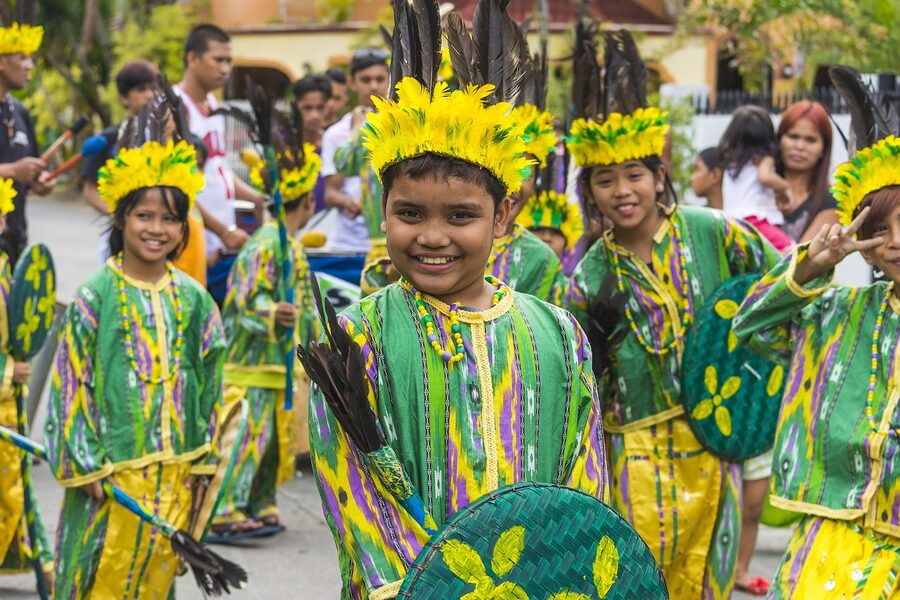
The biggest festival in the country by attendance, honouring the Santo Nino. Streets close, sound systems compete, and the central parade route fills with dance contingents in feathered costumes. Get a hotel near the basilica or the SM City complex booked at least two months out. The festival peaks on Sunday but the energy starts on Friday. If you only see one Filipino festival, this is it.
Ati-Atihan: Kalibo, Aklan, Third Weekend of January
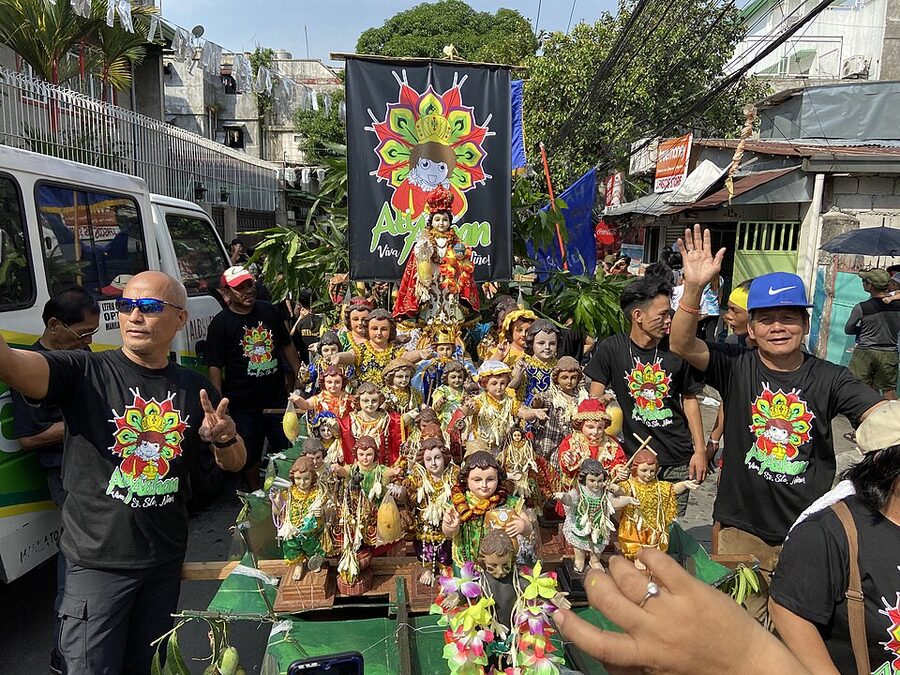
Older than Sinulog and arguably louder. Participants paint themselves in soot to honour the indigenous Ati people, the drumming is relentless, and the procession is a physical experience more than a visual one. Kalibo is on Panay Island, an hour from Caticlan (the gateway to Boracay), so it pairs well with a Boracay trip a few days later.
Panagbenga: Baguio, All of February
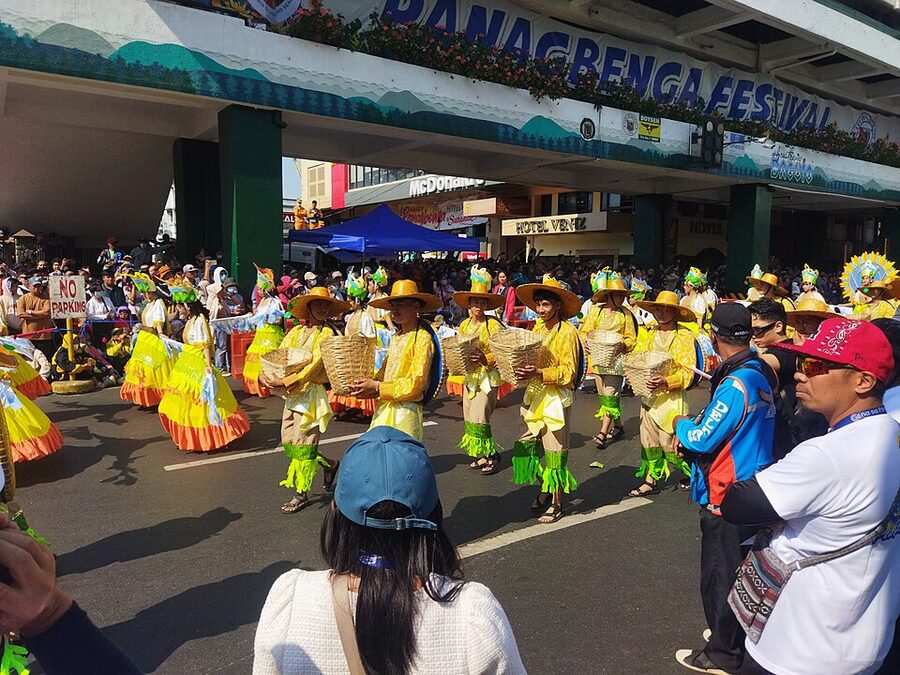
The Flower Festival, with parades of flower-covered floats through the whole month and a peak Grand Float Parade on the last Sunday. Baguio is up at 1,500 metres in the Cordillera mountains, so it is also the only major Philippine city you can comfortably wear a sweater in. The float parade and the street dance the day before are the must-sees.
Pahiyas: Lucban, Quezon, May 15
One day, one town, and arguably the most photogenic festival in the country. Every house in Lucban dresses its facade with kiping (rice-paste wafers in saturated colours), strings of vegetables, and woven rice stalks to thank San Isidro Labrador for the harvest. Lucban is a 3-hour drive from Manila, doable as a day trip, but if you go on the 14th you can see the houses being built up. The kiping is genuinely edible after the festival.
MassKara: Bacolod, Third and Fourth Weekends of October
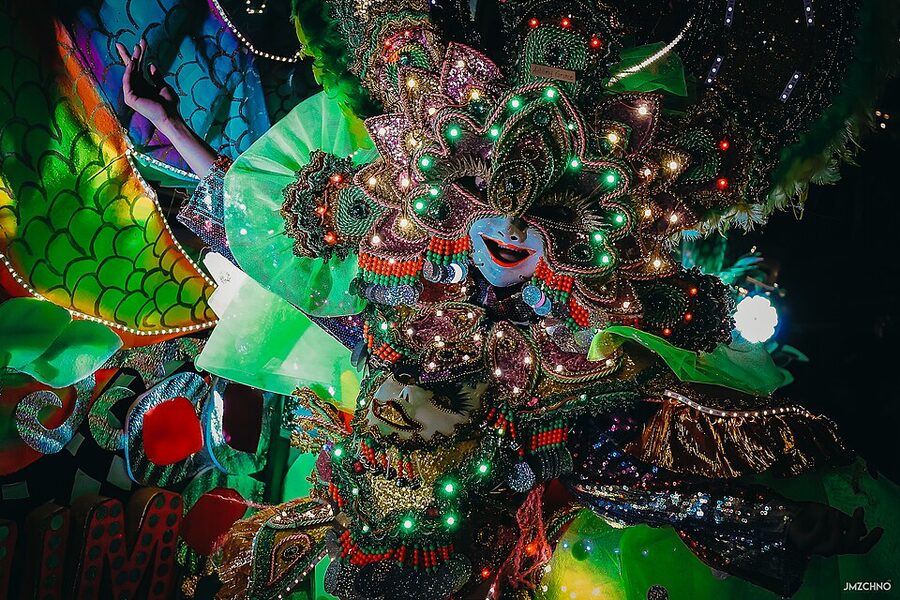
Negros island hosts the most visually striking festival the country has, with smiling masks dancing through the streets in full Mardi Gras spirit. The festival was created in 1980 in response to a sugar industry crash and a maritime tragedy, and the masks are deliberately joyful as an act of resilience. The catch is October weather. Build a buffer day or two into your itinerary.
Higantes: Angono, Rizal, Third Weekend of November
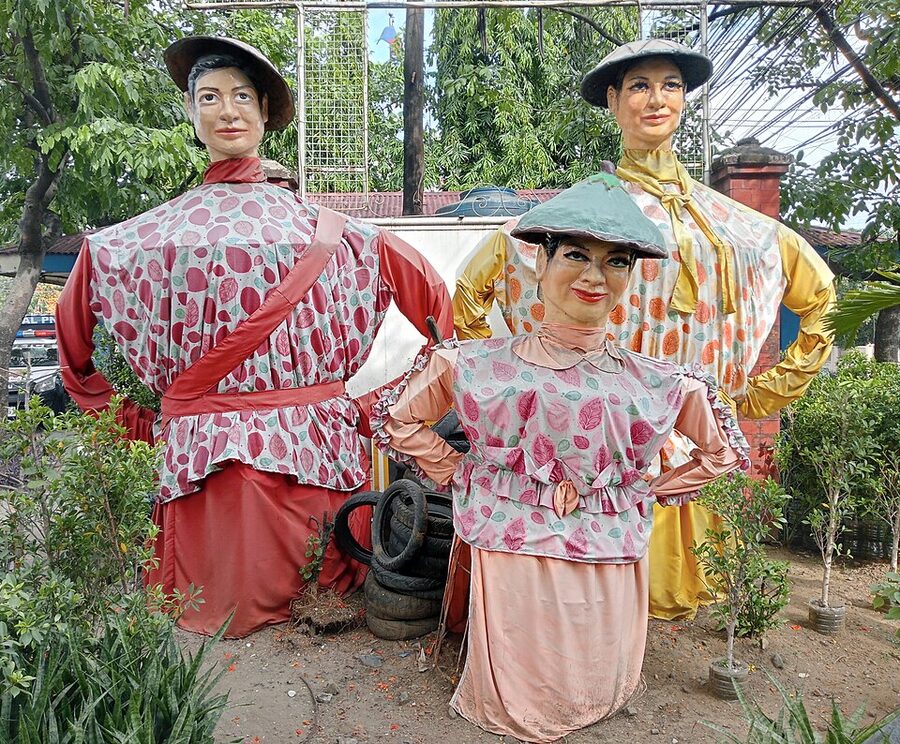
An hour east of Manila, paper-mache giants 10 to 12 feet tall are paraded through the town in honour of San Clemente. It is small enough to feel like a village affair, big enough that you should grab a spot early. Pair it with a stop at the Angono petroglyphs the same morning.
Christmas: All of September Through January
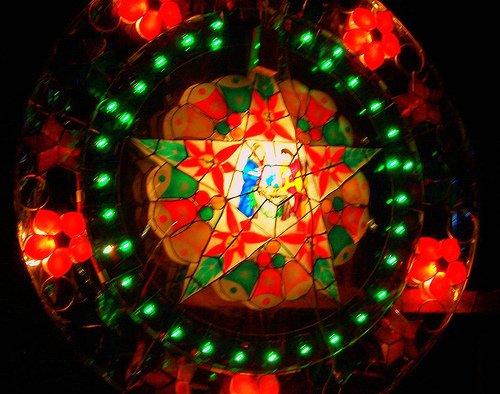
The Philippines starts Christmas the moment September begins (the “ber months”) and does not let it go until the Feast of the Three Kings in January. Simbang Gabi, the nine-night dawn mass tradition, runs from December 16 to 24. Every barangay has a parol-making competition. Quiapo Church on the 24th evening is a scene. If you can be in Manila for the Misa de Gallo on the 24th, you will understand why Filipinos abroad come home for it.
Chinese New Year: Manila Binondo, Late January or Early February
Binondo is the oldest Chinatown in the world, established in 1594. The dragon dances along Ongpin Street, the lion dances at temple gates, and the pancit lines outside Wai Ying go around the block. Date moves each year with the lunar calendar.
Best Months by Activity
Diving
For most reefs, December through May. Visibility climbs into the 25-30 metre range when the rains stop, currents calm, and the popular spots in Anilao, Coron, and Apo Island are at their best. Tubbataha Reefs Natural Park is the country’s holy grail, and it is only accessible by liveaboard from mid-March through mid-June. That window is firm because the seas are flat enough to safely cross from Palawan to the atoll. If Tubbataha is on your list, book a boat 6-12 months ahead.
Beach and Island Hopping
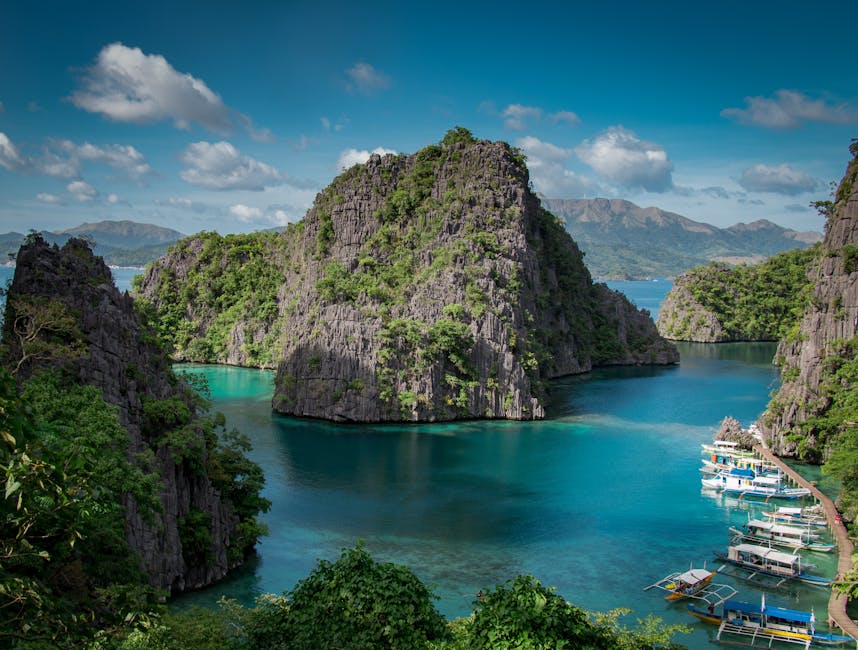
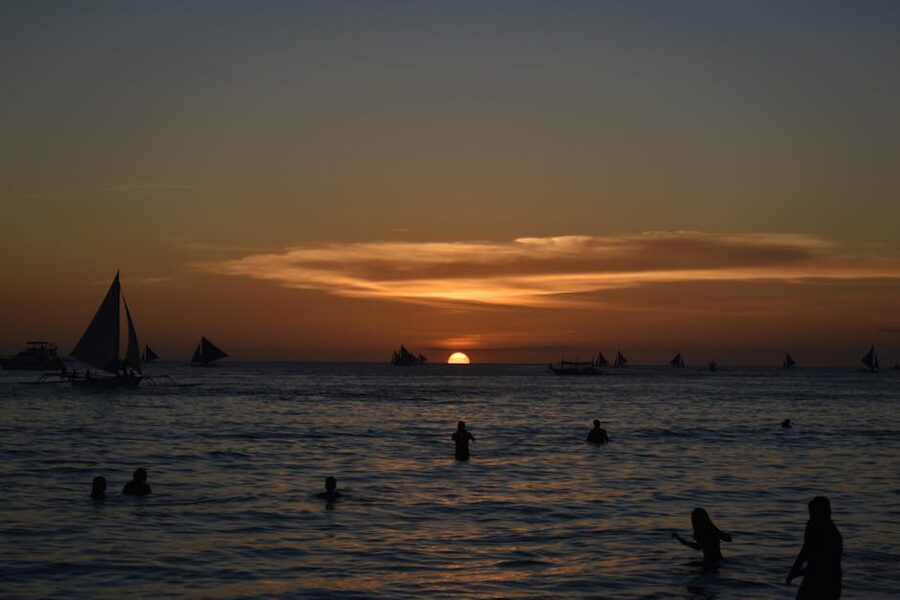
November through April. Calm seas, blue water, dry beaches, and the bangka boat tours run reliably. Boracay’s White Beach is at its best from December to May because the leeward side stays calm. El Nido’s Tour A is gorgeous in March, miserable in August. Coron’s lakes and lagoons are essentially closed for tour boats during the worst of the wet season.
Hiking and Rice Terraces
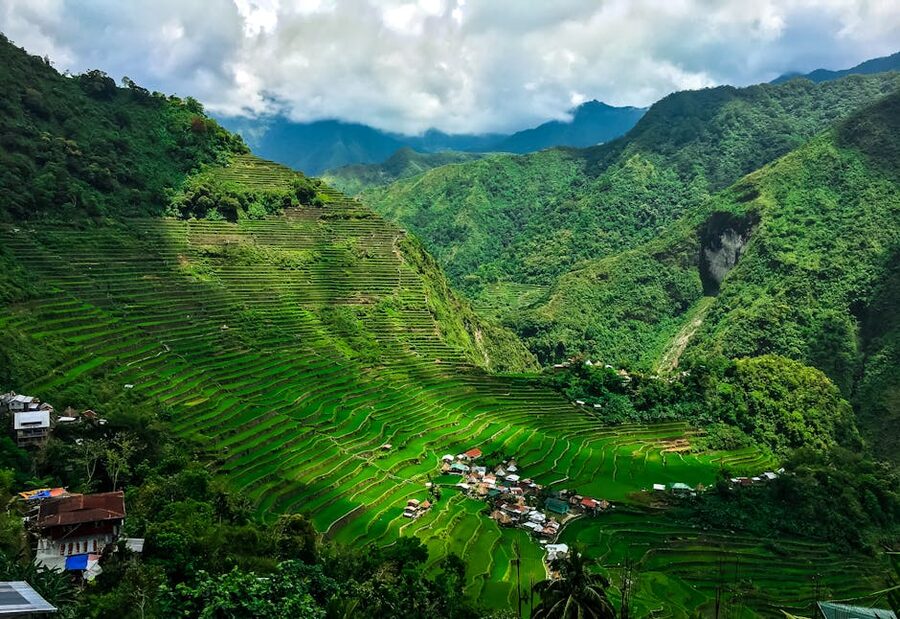
Banaue, Batad, and the Cordillera mountains: January through April. Trails are dry, the terraces are emerald-green from the planting cycle (planting in late January, harvest in June-July), and the temperatures up at 1,500 metres are pleasant. Mount Pulag’s sea-of-clouds sunrise is most reliable from December to February. The dry months also make Mount Apo and the Mindanao volcanoes safer.
Surfing
This is where the seasonal logic flips. La Union (the most accessible surf spot from Manila, 4-5 hours north) and Siargao (the country’s surf capital) get their best swells from August through November when most of the country is dealing with rain. Locals call this Habagat surf season. The west coast goes flat from December to April. So if surfing is your reason for coming, the wet half of the calendar is your friend.
City Sightseeing
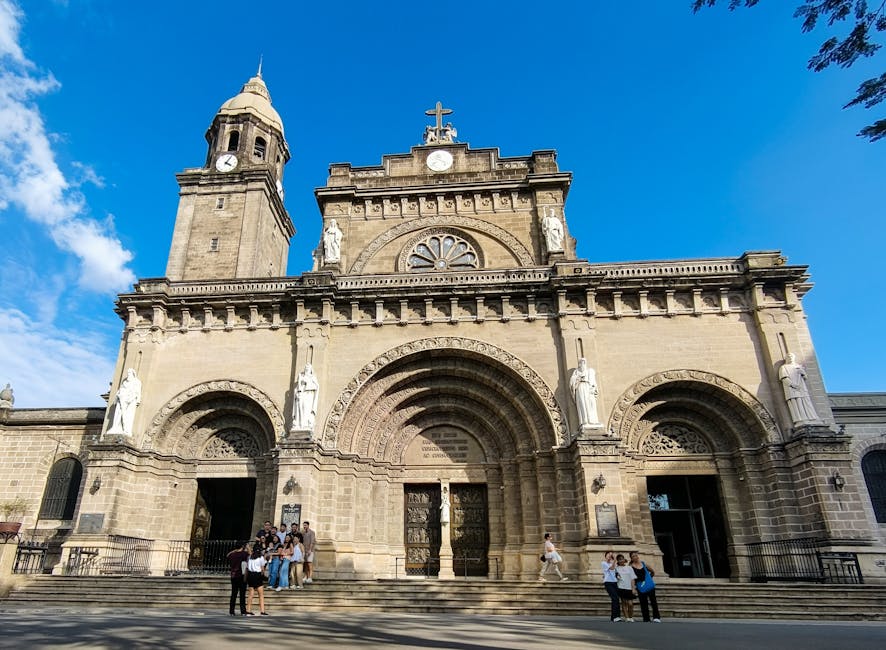
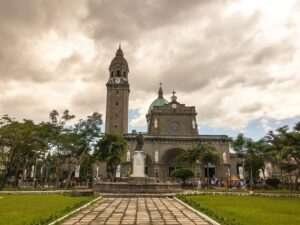
Manila is doable year-round but visibly more pleasant from December to February when humidity drops and the smog lifts a little. The cooler months also mean you can actually walk Intramuros without melting. If you are doing the urban tour and not chasing beaches, even September is fine because the rain mostly hits in the afternoon and you can plan around it. A 3-day Manila itinerary works in any month, just with different clothing.
Holy Week, Christmas, and Other Crowd Spikes
If you are coming from outside the country, the Filipino domestic-travel calendar will hit you blind unless you know about it.
Holy Week
Easter is moveable but typically lands somewhere between late March and late April. The country effectively shuts down from Maundy Thursday to Easter Sunday. Manila empties out as people return to their home provinces, traffic eases briefly then locks up around bus terminals, and Boracay, Palawan, and Tagaytay get hammered with domestic tourists. Hotel prices in beach destinations double for the week. Restaurants in Manila are partially closed, especially Filipino-family-run ones. If you want quiet beaches, this is the worst week to come. If you want to see the country at full religious intensity, the Lenten processions in San Pedro Cutud (with actual crucifixion reenactments, look it up) and Marinduque’s Moriones Festival are extraordinary.
Christmas and New Year
December 22 through January 2 is the busiest stretch of the year. Domestic flights are at peak prices, Manila to Cebu fares can triple, and beach destinations are full of returning Filipino expats. Manila itself is quieter on the actual holidays because most of the metro empties for the provinces, and traffic is the lightest you will ever see it. New Year’s Eve fireworks across Metro Manila are a spectacle but the safety quality varies wildly.
SONA Week
The State of the Nation Address happens on the fourth Monday of July. Around the Batasan Complex in Quezon City, expect heavy traffic, road closures, and demonstrations. It only directly affects QC, but the security build-up the weekend before can affect movement around northern Metro Manila.
School Breaks
Filipino schools used to break in March-May (the old school calendar), then briefly switched to August-October during the pandemic. The calendar reverted to a March-May break in 2025. So domestic travel surges in late March, all of April, and the first half of May, on top of Holy Week.
Chinese New Year
Less of a national event than in mainland China but big enough in Manila that hotel rates near Binondo spike for the long weekend. If you specifically want the dragon-dance experience, book early.
Phivolcs Alert: Taal Volcano
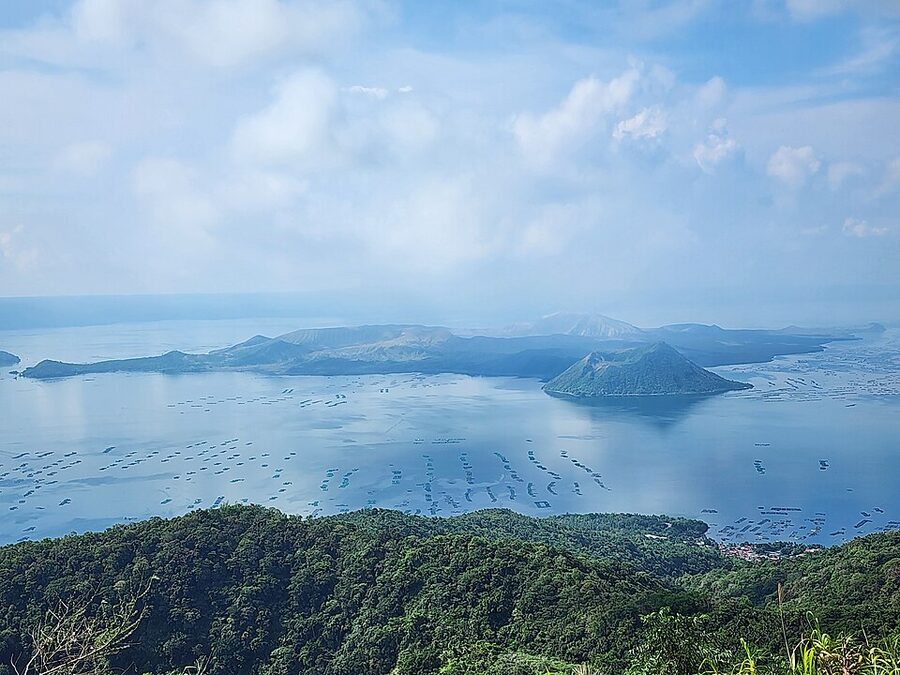
The Philippines sits on the Pacific Ring of Fire and has 24 active volcanoes. The one most likely to affect a traveller’s plans is Taal, the small island volcano in the middle of a lake an hour south of Manila that erupted dramatically in January 2020. It is also one of the most popular day trips from the city.
The Philippine Institute of Volcanology and Seismology (Phivolcs) maintains a 5-level alert system for Taal and every other active volcano in the country. Alert Level 1 means low-level unrest. Alert Level 2 means restive, no boats to the volcano island, but Tagaytay viewpoints stay open. Alert Level 3 and above means restricted travel zones around the lake. Before you book a Tagaytay day trip, check the current alert level on Phivolcs (phivolcs.dost.gov.ph) the day before. The 2020 eruption put the entire surrounding region under ashfall and shut Manila’s airport for two days, so this is not theoretical. Mayon (in Albay province in the Bicol region) and Pinatubo can also affect travel plans, but Taal is the one most travellers will be near.
What to Do If Your Trip Overlaps a Wet Day
Even in the dry season you will get rain. Even on the wettest day in August there are good things to do. A short list of moves that have saved my Manila trips:
- Make Intramuros your bad-weather day. Most of it is roofed (museums, churches, the cathedral, Casa Manila), and the kalesa drivers wait under cover at Plaza San Luis. A full Intramuros walking guide is probably the single best wet-day Manila move.
- Eat your way through Binondo. Wai Ying, Dong Bei, Lan Zhou La Mien, Cafe Mezzanine. Most of these have indoor seating, and the Chinatown alleys are interesting in any weather. My street food map covers the area in detail.
- Bohol pivot. If your beach week is rained out in Boracay, a same-day flight to Bohol will often have you in dry weather within four hours. Bohol’s eastern slopes catch the rain, but the central Chocolate Hills and Loboc area can be sunny while Panay is flooded.
- Mall day, but the right mall. Greenbelt in Makati, Power Plant in Rockwell, or Glorietta. The Mall of Asia is a museum of bad food and bad fluorescent lighting on a wet day, skip it.
- Spa or massage. Genuine traditional Filipino hilot massage in Quezon City or Pasig is around ₱700 (~$13) for a full hour and worth twice that. The mall chains charge ₱1,500 (~$28) and are not as good.
- The Mind Museum in BGC. Underrated for a Manila wet-day fallback, especially if you have kids.
Shoulder vs Peak Season: The Real Tradeoff
If you read between the lines on every other guide, they all say “go in the dry season.” That is correct but also useless. Here is the actual breakdown.
Peak (mid-December to mid-January, plus Holy Week): The weather is genuinely the best, the festivals are unmatched, and you will pay double for hotels. If your dates are fixed, accept the prices and book three months out. White Beach Boracay, El Nido town, and Tagaytay’s ridge resorts go to Manila-on-a-bad-day capacity.
High shoulder (mid-January to mid-March): The sweet spot. Same dry weather as peak, festival energy in January, prices 25-40% off peak, and crowds noticeably thinner. February in particular is the move. If you can land on a January or February date, do not overthink it.
Hot peak (late March to mid-May): Beautiful but punishing. Heat is real, Holy Week scrambles everything, and the inland destinations like Banaue stay great while the lowlands cook. Worth it if you specifically want Tubbataha diving or you are happy to be at the beach all day.
Onset gamble (June): The best value for money if the weather holds. Some years the rains do not arrive in earnest until July, in which case June is essentially dry-season weather at half-price. Other years you get the first typhoon in the second week and your Boracay beach week becomes a Boracay book week. I would only recommend June if you have flexible plans and good travel insurance.
Wet peak (July to October): Cheap, empty, green, and risky. Boracay does have empty beaches and dirt-cheap hotels, but you will lose 30-50% of your beach days to weather. The cities (Manila, Cebu City, Davao) work fine. Surfing on Siargao or La Union is at its peak. Not a great window for first-time visitors but rewarding for repeat travellers who know what they want.
Late shoulder (November to mid-December): The hidden value. The typhoons are mostly done, the rains are easing in Luzon, the Christmas decorations are everywhere, and the prices are still in shoulder territory until the 15th. November in particular is sneakily one of the best months to come.
Frequently Asked Questions
What is the absolute best month to visit the Philippines?
February. Statistically the driest month nationwide, comfortable temperatures, January’s holiday rush has cleared, Panagbenga and Chinese New Year add festival energy, and prices are below the December-January peak. Late January is a close second.
Is it safe to visit during typhoon season?
Yes, with caveats. Mindanao (especially Davao), Palawan, and Bohol rarely see direct typhoon hits and remain reasonably reliable from June to October. Manila and the Visayas can lose individual days to storms but rarely entire trips. Avoid the eastern Visayas (Samar, Leyte, eastern Mindanao) in August and September. Always carry travel insurance with weather coverage.
When is the cheapest time to fly to the Philippines?
Late January (after the holiday rush), early June, and September. International airfares from the US and Europe drop noticeably outside school holidays and the Christmas window. Domestic flights between Manila and Cebu, Boracay, or Palawan are cheapest in June, September, and the first half of November.
Will my El Nido tour get cancelled in the wet season?
Quite possibly. Tour A and Tour C (the lagoon tours that El Nido is famous for) run when the seas are calm. From July through September, cancellations of one-third or more of all tours in a given week are common. Operators reschedule rather than refund, but if your trip is short you may not have flexibility. Plan El Nido for January through April if you only have one shot.
Does Boracay close during typhoon season?
The island itself stays open, but boat operations between Caticlan jetty and Boracay can pause for a day or two during a major storm, and flights to Caticlan are the first to cancel when bad weather is forecast. The famous 2018 closure was for environmental rehabilitation, not weather, and that is a one-off rather than an annual event. A full Boracay guide walks through the practical logistics.
Are festivals worth planning a whole trip around?
Sinulog and Ati-Atihan absolutely. Both are once-a-year events with a depth of community involvement you cannot fake, and both happen in destinations (Cebu, Kalibo on the way to Boracay) that work as the spine of a longer trip. Pahiyas in Lucban is worth the day trip from Manila. MassKara in Bacolod is worth a weekend if your dates align.
Is October a bad time to visit?
October is divided. The first three weeks are properly wet typhoon territory and not great for beaches. The last week often clears as the northeast monsoon kicks in, and that’s when prices are still low and the weather is improving. MassKara in Bacolod runs through this window and works as a long weekend. For a multi-week beach holiday, no, October is not the move. For a city-and-festival trip, it works.
Pulling It Together
If you have flexibility, January and February are the easy answer. If your dates are fixed and they fall in the wet half of the year, focus on the destinations that hold up: Manila, Cebu, Bohol, Davao, Siargao for surfing, La Union for surfing, and Palawan if you go in early June or late November. Avoid scheduling tight back-to-back domestic flights in August or September. Take travel insurance.
And remember the binary is misleading. There is no national best time. There is your best time, for the islands you want, for the activities you came for. Get that right and the country delivers.
Once you have your dates locked, the next question is where to go. A practical 3-day Manila plan covers the city baseline, Boracay and El Nido are the headline beach destinations, Cebu pairs the festival capital with island hopping, and closer beach options near Manila are there if you only have a long weekend.