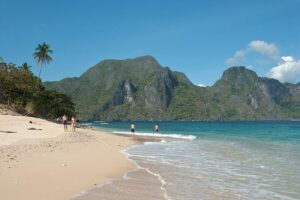
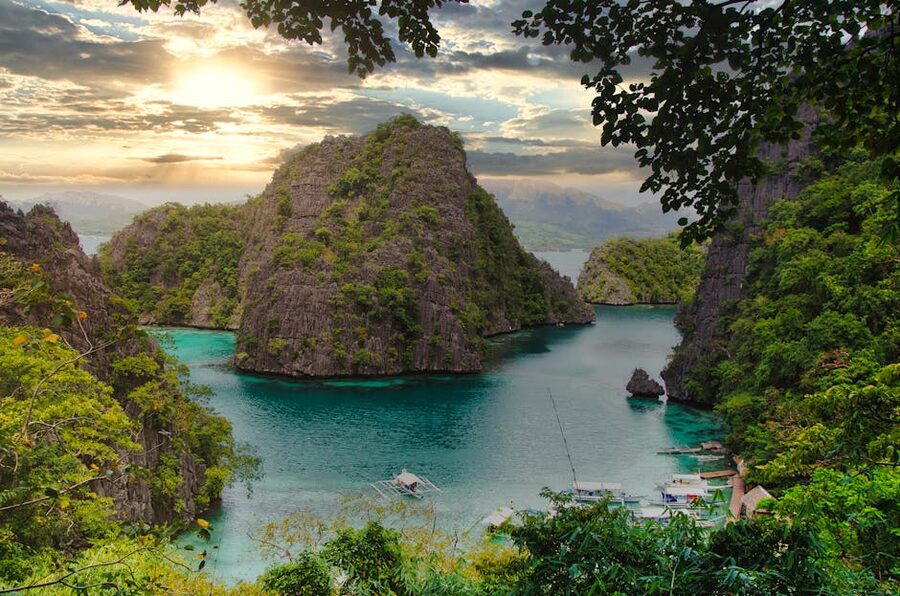
From a drone above Coron Bay, the limestone karsts look like fragments of a much bigger world. The Twin Lagoons cut a figure-eight through grey rock and turquoise water. Kayangan Lake hides behind a ridge, the colour of old jade. To the north and east, dozens more islands trail off into the haze. And this is just one corner of Palawan.
The first thing to understand about Palawan is that it is bigger than people realise. The island stretches roughly 450 kilometres from north to south, with mountains running its full length and around 1,780 smaller islets scattered around it. You can fly into one end and never see the other. People talk about “going to Palawan” the way they talk about going to Bali, as if it is a single beach town with one strip of resorts. It is not. It is a province the length of Florida’s panhandle, and you have to pick your hubs.
I have been to Palawan in dry March, in damp September, on a budget van and on the ₱11,000 short-hop flight. Each combination gave me a different province. This guide is the version I would hand a friend before they book anything: what is here, where to base yourself, how to get between hubs, what to skip, and the booking lottery nobody warns you about.
I earn a small commission on bookings made through links here. It covers the hosting bill.
In This Article
- What Palawan Actually Is
- Puerto Princesa and the Underground River
- Honda Bay Island Hopping
- Iwahig Firefly Watching
- Plaza Cuartel and the Crocodile Farm
- El Nido: The Lagoons
- Coron and the Wreck Diving
- The Twin Lagoons
- Kayangan Lake
- Mt Tapyas
- Maquinit Hot Springs
- WWII Wreck Diving
- Black Island
- Bulog Dos and the Sandbar
- Port Barton: The Quiet Alternative
- San Vicente Long Beach
- Transport Between the Three Hubs
- The Underground River Booking Lottery
- Tubbataha for Divers
- When to Go
- Which Town Fits Which Traveller
- What’s Overrated in Palawan
- Frequently Asked Questions
- How many days should I spend in Palawan?
- Is the Underground River worth the day-trip from Puerto Princesa?
- El Nido or Coron, which is better?
- Is Coron easy to reach from El Nido?
- Do I need to book the Underground River permit in advance?
- Can I do Palawan as a beach holiday with kids?
- What’s the budget for a week in Palawan?
What Palawan Actually Is
Palawan is one province, but for travel purposes it is three places stacked north to south.
Puerto Princesa (PPS) sits roughly in the middle. It is the capital, the biggest airport, and the gateway to the Underground River and Honda Bay. Everyone arrives here at some point, because most domestic flights from Manila land at PPS. The city itself is not pretty. It is a working capital with a long highway running through it. You spend a day or two for the river and the bay, then you move on.
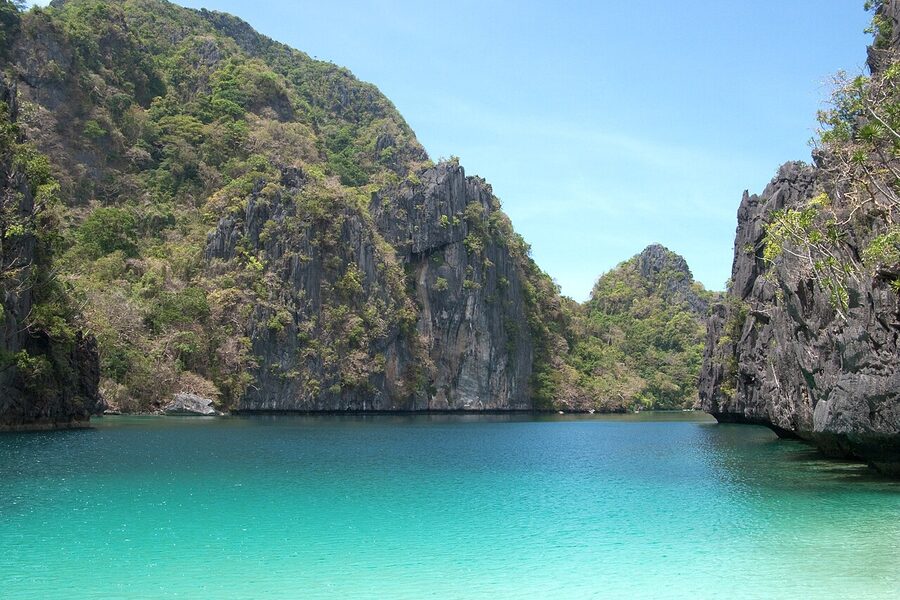
El Nido sits at the northern tip, about 230 kilometres up the coast from PPS. This is where the postcard lagoons live: Big Lagoon, Small Lagoon, Hidden Beach, the limestone cathedrals at sunset. The town is a low-rise village that has gone tourist-busy fast. Boats leave the public pier every morning for Tours A through D. If you have only seen one photo of Palawan in your life, it was probably El Nido.
Coron is on a separate island called Busuanga, north of mainland Palawan. To get here from PPS or El Nido, you fly via Manila or Cebu, or you take the four-hour fast ferry from El Nido. Coron is the diving hub. It has the World War II Japanese shipwrecks, the cleanest lake in the country, and a 724-step climb to a viewpoint that punishes you for the cocktails the night before.
Squeezed between PPS and El Nido are a couple of slower options worth knowing about: Port Barton, a fishing village that the developers haven’t quite reached, and San Vicente, which has the longest white-sand beach in the country and almost nobody on it. I’ll get to both.
This whole geography matters because the transport between the three hubs is the hard part of any Palawan trip. If you only have five days, you have to pick. If you have ten, you can do two of them well. If you have two weeks, you can do all three, and you should.
Puerto Princesa and the Underground River
PPS is a base. You don’t come for the city; you come because the city has the airport and the access to two of Palawan’s heavy hitters: the Subterranean River National Park and Honda Bay.
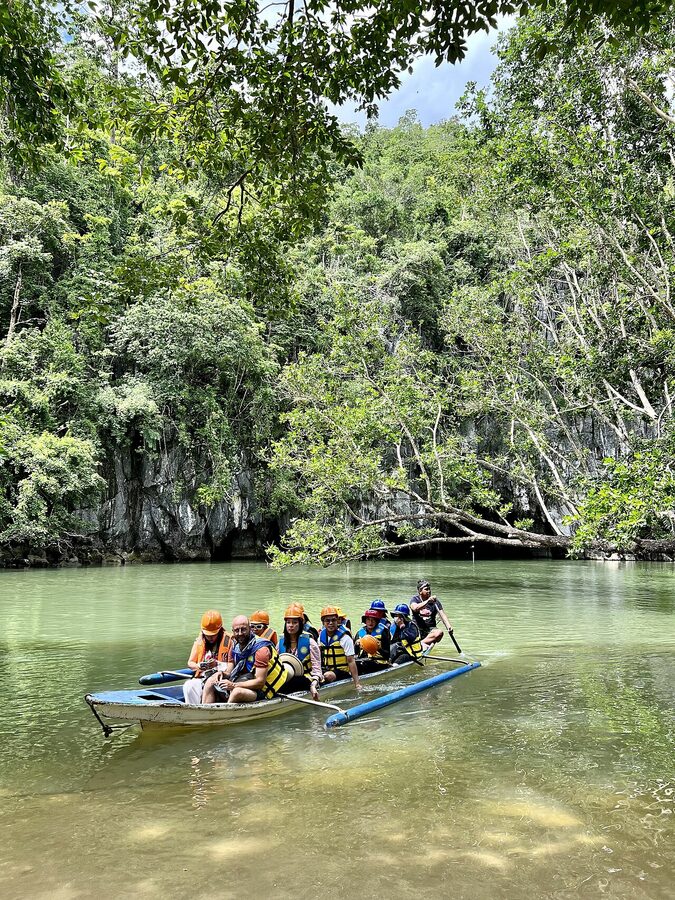
The Puerto Princesa Underground River is one of the New 7 Natural Wonders of Nature. It is also a 2-hour drive plus a 20-minute boat from town, and tourist numbers are capped at 900 per day. That cap is the reason you cannot just turn up. You need a Sabang permit, which you secure in advance through the City Hall Tourism Office on Rizal Avenue, or through any reputable hotel concierge in PPS. Most travellers book a packaged tour that bundles the permit, the van, the boat, and lunch. Expect to pay ₱1,500 to ₱2,500 (~$26-43) all in. Solo with your own permit you can do it for less, but the savings rarely justify the hassle.
Book one to two weeks ahead in dry season (December to May). I have seen people fly into PPS expecting to do the river the next morning and end up with no slot for four days. That is the Underground River booking lottery and you do not want to be on the wrong side of it.
Inside the cave the boat ride is short, maybe 45 minutes, and the guide does an enthusiastic narration about rock formations shaped like vegetables and saints. The cave is genuinely impressive at the entrance and gets darker and more dramatic deeper in. Bring a hat for the drive into Sabang and a light jacket for the boat. Wear shoes you don’t mind getting splashed. The audio device they hand you is not optional, it is part of the new visitor protocol.
Honda Bay Island Hopping
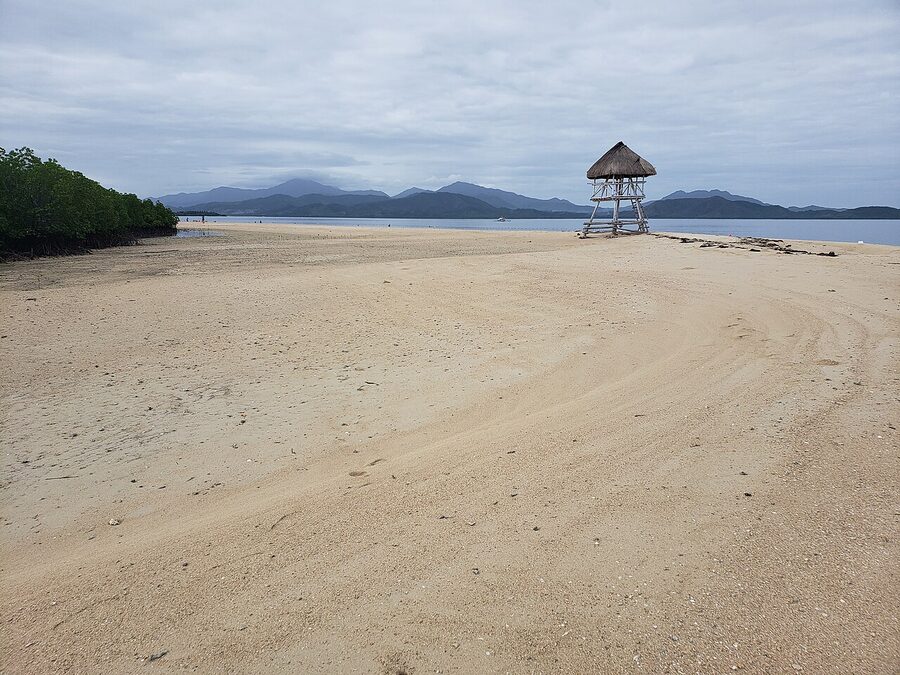
The other reason to give PPS more than one night is Honda Bay, a sheltered bay 30 minutes north of town with a string of small islands you boat between. The standard tour visits three or four: Luli (a tidal sandbar that surfaces at low tide, hence the name “lulubog-lilitaw,” sinking-rising), Cowrie (the most developed, with a restaurant and chairs), Pandan (quieter, good snorkelling on the side facing the open sea), and Starfish (which has, unsurprisingly, starfish, plus a hard rule that you do not pick them up).
Boats leave from Sta. Lourdes wharf. A standard hop with three islands costs around ₱1,400 to ₱1,800 (~$24-31) per person including boat, lunch, and entrance fees. Bring your own snorkel if you have one; the rentals are tired. Sunscreen needs to be reef-safe; rangers actually check.
Iwahig Firefly Watching
If you are in PPS for two nights, the firefly tour at the Iwahig River is worth the detour. After dark, you paddle out in a small bangka and the mangrove trees along the river light up like Christmas. It sounds twee until you see it. The tour also doubles as your dinner; most operators feed you a buffet at a riverside restaurant first, then drive you out to the boat. Tour cost is around ₱1,200 to ₱1,500 (~$21-26) per person.
Plaza Cuartel and the Crocodile Farm
If you have a free morning in town, walk Rizal Avenue down to Plaza Cuartel, a small park with the ruins of a Spanish-era guardhouse. It is also the site of the December 1944 massacre, when Japanese forces burned 139 American POWs alive in air-raid tunnels. There is a quiet memorial. Eleven men escaped and made it to American lines; their names are on the wall. It takes ten minutes to walk through and stays with you longer.
The Palawan Wildlife Rescue and Conservation Center (the old crocodile farm) is on the way to the airport, so it works as a fill-in if you have an afternoon flight. Entry is around ₱100 (~$1.70). The crocs are the headline; the more interesting part is the rescued cockatoos and bearcats out the back.
El Nido: The Lagoons
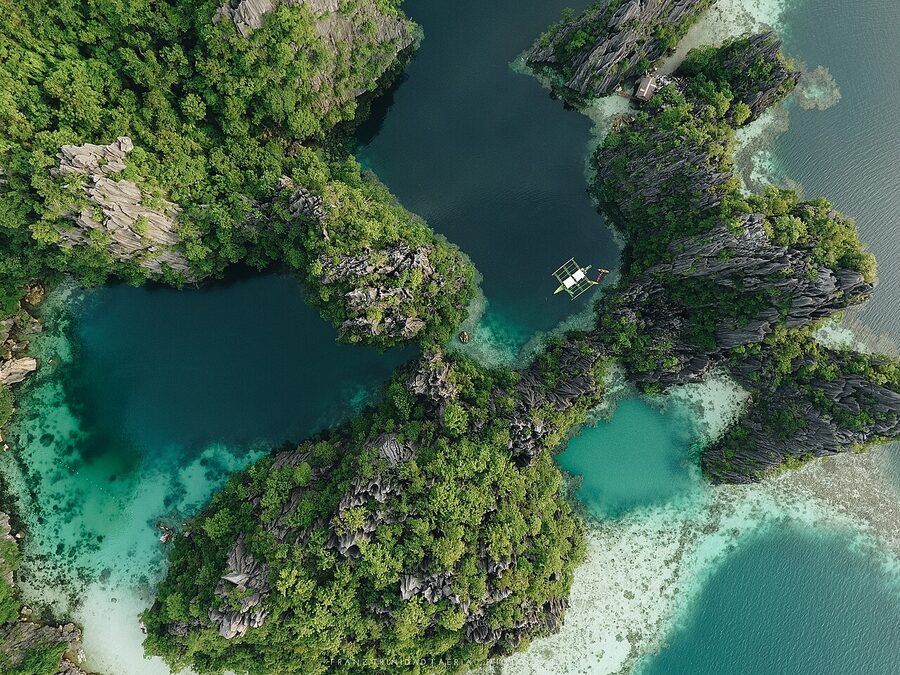
I’m not going to repeat my full El Nido travel guide here, because that article exists and goes deep on the four standard tours, where to eat (Trattoria Altrove for pizza, Republica Sunset Bar for the drink), and which beach to walk to at sunset. What you need to know for planning a Palawan trip is this: El Nido is the lagoons, the lagoons are remarkable, and the lagoons are also crowded. Tour A on a public group boat with 25 strangers can break the spell. Tour A on a private boat for ₱8,000 to ₱12,000 (~$140-210) total, split between four or five of you, is the version that earned the photos.
El Nido town itself is a strip of low buildings on a small bay, with sandy lanes and one main road. Power cuts are still a thing. The water comes back up the cliff faces at sunset and the karsts behind town turn pink. If you can stay three nights, do; one night is wasted because the tours fill the days, not the evenings. For where to base yourself between town, Corong-Corong (sunset side), Lio Estate (luxury), and the Bacuit Bay private islands, the El Nido hotels guide breaks it down.
Coron and the Wreck Diving
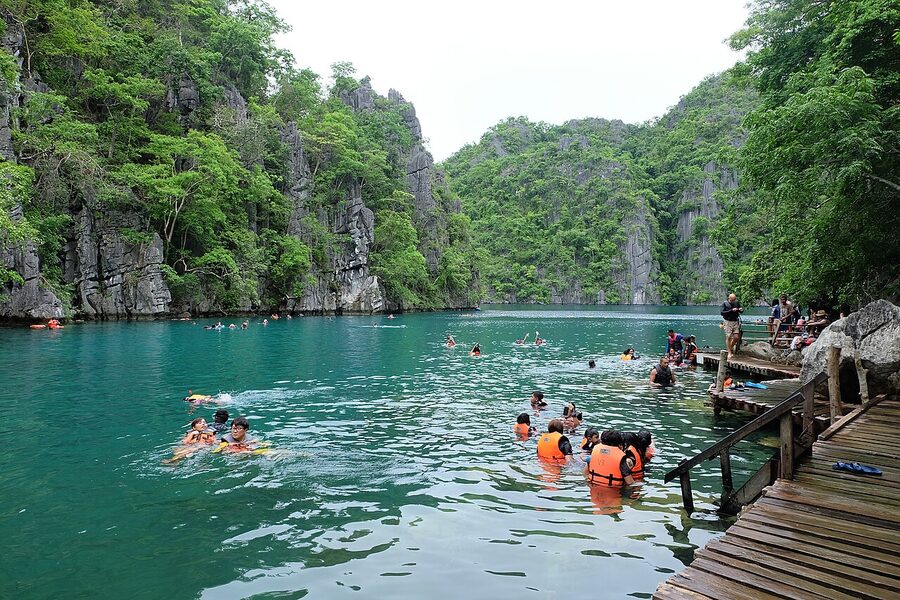
Coron is the one I keep going back to. It has the karst-and-water drama of El Nido but with about a third of the crowd, and it has the wrecks, which nowhere else in the country can match.
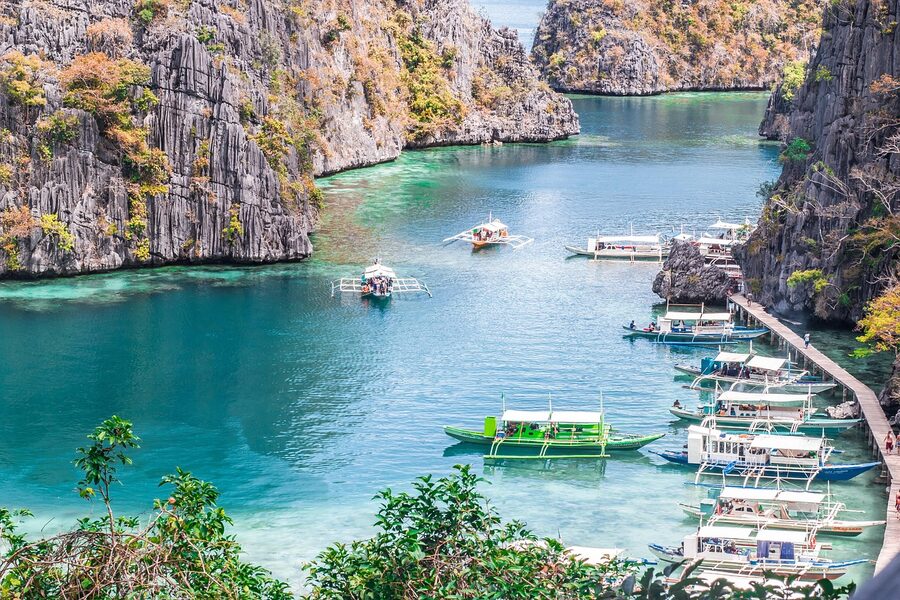
The Twin Lagoons
The signature swim. You arrive by bangka, jump into the outer lagoon, and at low tide you swim under a low rock arch into the inner lagoon. At high tide there is a wooden ladder and a small gap to climb over. Inside, the cliffs rise sheer on all sides and the water shifts colour as the sun moves. Go on a Tour A or a private trip; the experience is materially different when 50 people are not floating around you.
Kayangan Lake
The “cleanest lake in the Philippines” tagline is real. The water is so clear you can see eight metres down. You climb a steep set of stairs from the boat dock, then descend the other side to a wooden pier where you can swim out into the lake. Limestone cliffs rise all around. Bring water shoes; the climb is hot stone in the dry season and slick when it rains. Entry is included in most Tour A packages.
Mt Tapyas
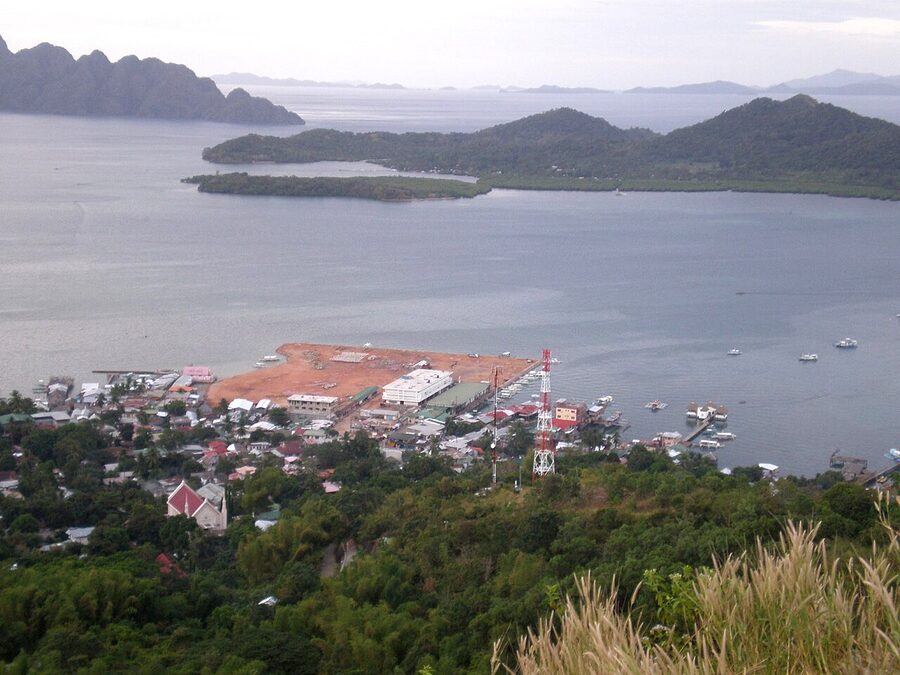
The town hill. 724 concrete steps to the top. There is a giant white cross at the summit and a 360-degree view of Coron Bay, the islands, and the karst spine running south. Allow 25 to 35 minutes up at a sane pace, and time it for the hour before sunset. Bring water; there are vendors at the base and one at the top, but they pack up early. After the descent, your knees will agree with what comes next.
Maquinit Hot Springs
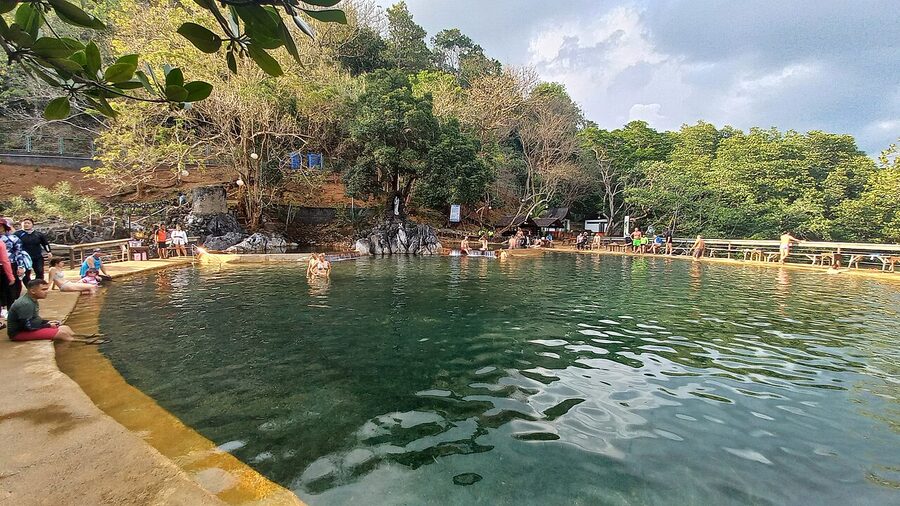
About 30 minutes by tricycle east of town, Maquinit is one of the few saltwater hot springs in the world. Two pools, both around 40°C, ringed by mangroves. Entry is around ₱200 (~$3.50). It opens until 11pm, which makes it the perfect post-Tapyas reward. Take the late slot; the early evening pools are quieter than the afternoon, and you can see the stars through the mangrove canopy.
WWII Wreck Diving
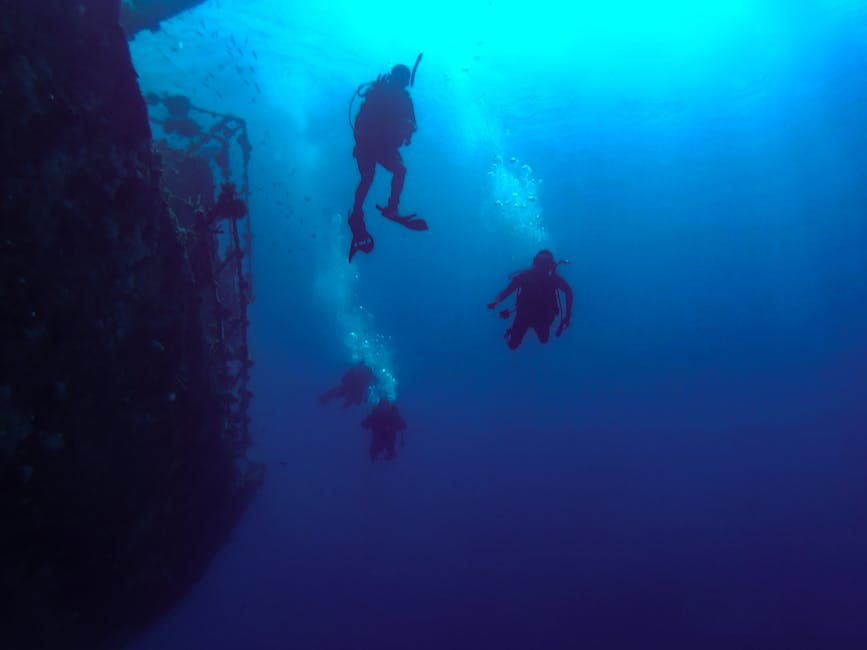
This is what built Coron’s diving reputation. On 24 September 1944, US carrier-based aircraft attacked a Japanese supply fleet sheltering in Coron Bay and sank around a dozen ships in the same afternoon. Most still sit on the bay floor in 10 to 40 metres of water. The shallow ones (the Skeleton Wreck, the Lusong Gunboat) you can snorkel; the deeper ones (the Irako, the Akitsushima, the Olympia Maru) are advanced diving with good visibility on a calm day. A two-tank wreck dive with a reputable Coron operator costs around ₱4,500 to ₱6,000 (~$78-105) including tanks, weights, lunch, and boat. If you are Open Water certified but new to wrecks, take a guide who has done these dives 200 times. Currents pick up around the deeper wrecks and a couple of them have light penetrations that are not for the casual.
Black Island
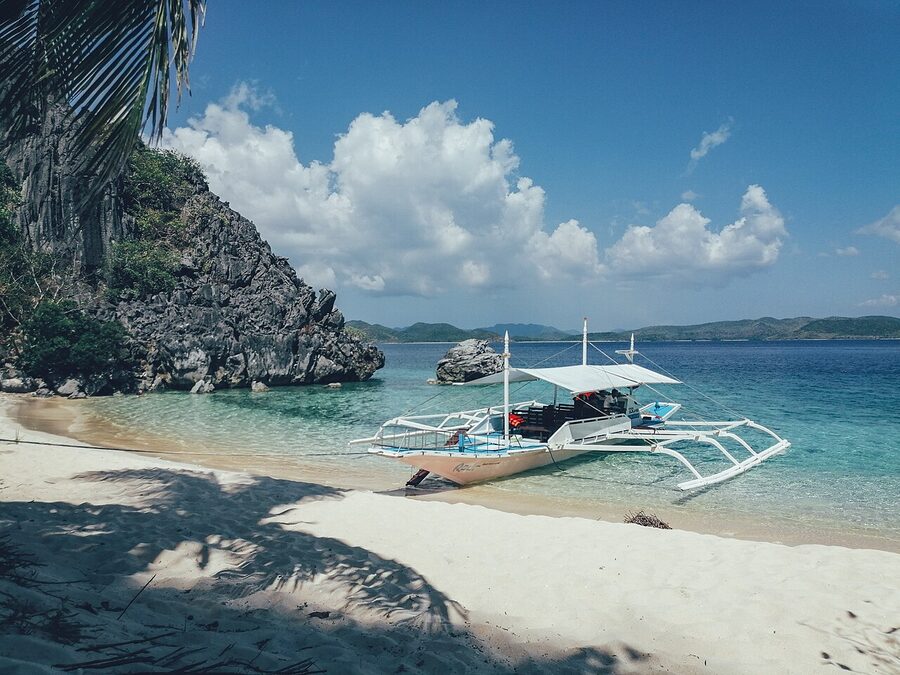
A long boat ride north of Coron town, Black Island has a white-sand beach, a sea cave, and a small wooden shipwreck that you can free-dive. It is the day trip that takes the whole day, and the seas can shut it down June to September. Worth it on a calm day; not worth booking blind in typhoon season.
Bulog Dos and the Sandbar
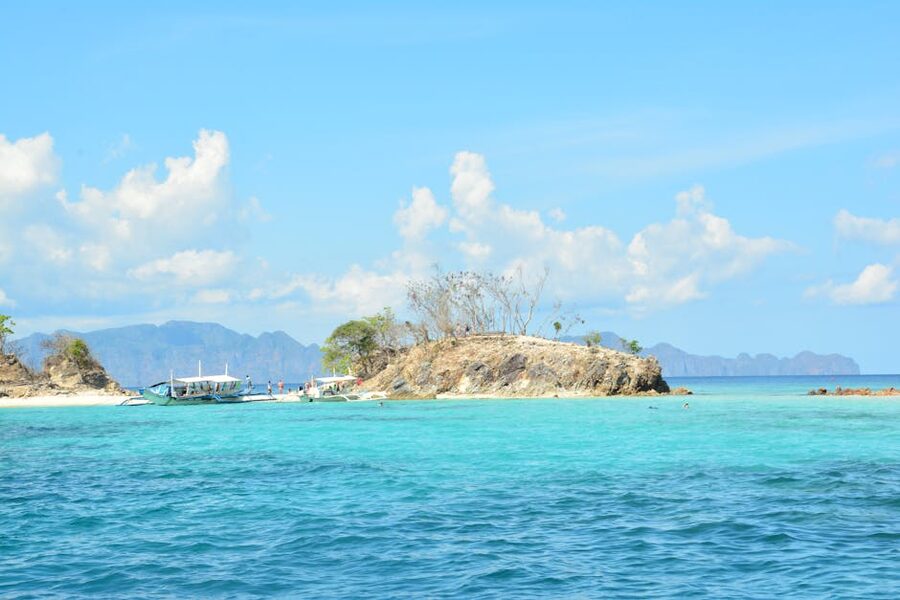
Bulog Dos is the iconic curving sandbar that connects to a tiny pinnacle of an island. Most “Coron Loop” tours stop here for an hour. The water is glass on a calm morning and chop in the afternoon when the wind picks up. The neighbouring Banana Island has the picnic-shack lunch most operators serve. Pair this with the Skeleton Wreck snorkel and you have your second full day in Coron sorted.
Port Barton: The Quiet Alternative
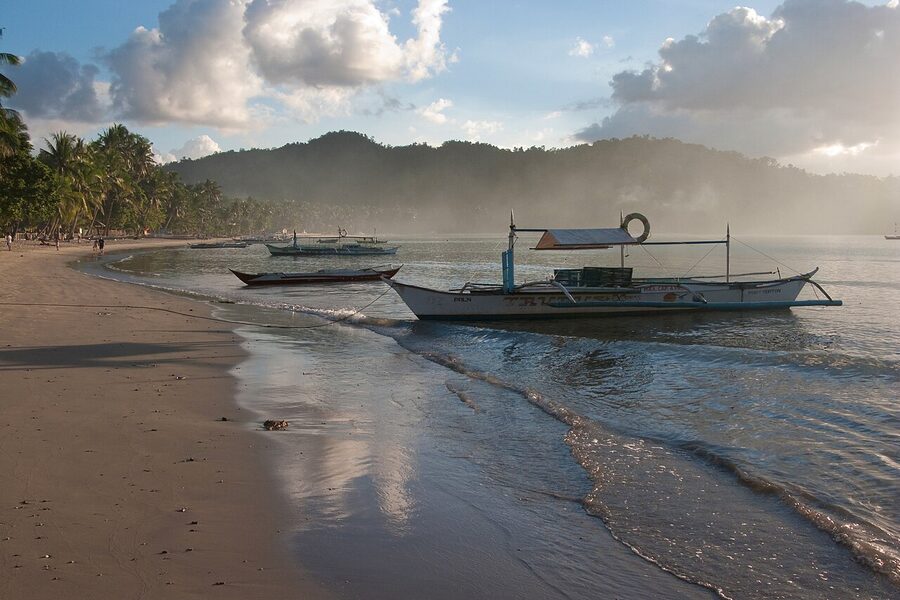
Halfway between PPS and El Nido on the west coast sits Port Barton, the village El Nido was twelve years ago. One main beach, one rough road in, no big resorts. The people who come here have already done El Nido and want the slower version, or have decided they want to skip El Nido entirely and get the same lagoons-and-island-hopping experience without the crowds.
The Port Barton tours visit the same archetypes: secret lagoons, snorkelling reefs, sandbars, beaches you cannot reach by road. Costs are about 30% less than El Nido. The reef around Twin Reef and German Island is genuinely good. There is no nightlife to speak of; restaurants close at 10pm and the bars by 11pm. Power is on a generator schedule (typically 6pm to midnight) and 4G is patchy at best.
To get here, you take a van from El Nido (3 hours, ₱700) or from PPS (4 hours, ₱700). Both stop at the junction outside Roxas; from there it is a tricycle into the village. If you want a single base for a “get away from everything” stretch in the middle of a Palawan trip, this is the one.
San Vicente Long Beach
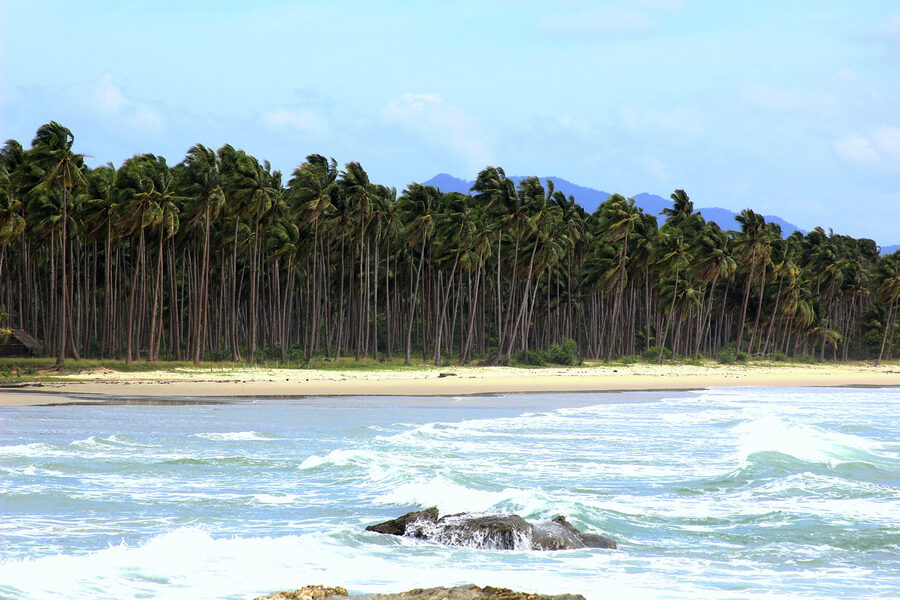
San Vicente has the country’s longest white-sand beach. 14 kilometres of it. The plan was to make this the next Boracay; an airport was built, a few resorts went up, and then the road from El Nido didn’t get finished, and then the pandemic happened, and now you can walk for an hour at sunset and see maybe ten other people.
The beach is split into Long Beach proper, with a few small resorts at the south end (in the village of New Agutaya), and a fully wild middle stretch where there is nobody and nothing. The water is calm on the leeward side; the sand is soft and unbroken. There are no convenience stores in the middle of the beach, so eat before you walk it.
Getting here is the friction. From PPS the van is around 4 hours; from El Nido about 2.5 hours. You can fly into San Vicente Airport directly from Manila on Cebu Pacific a few times a week, but flights are inconsistent. If you have already booked PPS or El Nido, day-tripping San Vicente is hard; you basically need to overnight.
Transport Between the Three Hubs
This is the part nobody tells you when they show you the lagoon photos.
PPS to El Nido: a 5- to 6-hour van on a road that has been improved but still has stretches of rough bitumen and switchbacks. Vans leave PPS at 6am, 7am, 9am, noon, and 1pm. Costs ₱700 to ₱1,200 (~$12-21) one way depending on whether you take a shared van or a private one. Travel-sickness pills are not optional for the back seats. The view is decent; the ride is not.
El Nido to Coron: a 4-hour fast ferry across the Linapacan Strait. Two operators run the route: Montenegro Lines and 2Go’s Coron Galaxy fast ferry. Tickets are ₱1,800 to ₱2,500 (~$31-43) one way. From July to September the seas can be rough enough to cancel sailings; bookings are released about a week ahead and the morning departures are the safer bet. Some travellers split the journey across an “expedition tour” of three or four days, hopping islands between the two on a backpacker boat with sleeping mats and basic food. That option is genuinely lovely if you have the time and the back for it.
PPS to Coron: there is no direct land or short ferry route. You either fly via Manila or Cebu (most flights connect through Manila and the schedules can eat half a day), or you go PPS to El Nido by van, then El Nido to Coron by ferry. The latter sounds painful but is often the saner choice; the flight connections through Manila add up to similar total time once you factor in airport layovers.
Manila to PPS: 1 hour 30 minutes by air, ₱2,000 to ₱6,000 (~$35-105) one way. Cebu Pacific, AirAsia, and Philippine Airlines all run the route multiple times a day.
Manila to El Nido (direct): 1 hour 10 minutes on AirSWIFT into Lio Airport. Premium price, ₱8,000 to ₱15,000 (~$140-265) one way. Limited daily flights. The convenience is real if your time is tighter than your budget.
Manila to Coron: 1 hour 15 minutes into Busuanga Airport (USU). Cebu Pacific and Philippine Airlines run two to three flights a day. ₱2,500 to ₱7,000 (~$44-122) one way.
The other thing worth saying: do not try to do all three on a five-day trip. You will spend half of it in vans, ferries, and airport queues. Five days is two hubs, end to end. Ten days is three hubs done well. Manila to El Nido walks through the airport-and-bus options if El Nido is your first stop.
The Underground River Booking Lottery
I called this out in the PPS section but it deserves its own block, because it is the single most-fumbled piece of Palawan planning.
The Sabang permit is the gating item. Only 900 visitors are allowed inside the Underground River per day. The permits are released by the City Hall Tourism Office in PPS in batches, and tour operators with concierge access lock them up first. If you walk into the office cold the morning of, in dry season, you will probably not get a slot. Two routes work:
One, book a packaged Underground River tour through your PPS hotel a minimum of one week ahead in dry season (December to May), three to four days ahead in wet season. Hotel concierges have allocations and they secure the permit for you at no extra cost beyond the package.
Two, if you are travelling independently, email the City Tourism Office directly at least ten days out. They will hold a slot under your name; you collect it the day before at the office on Rizal Avenue. The downside is you still have to organise your own van transport to Sabang (about 2 hours), then queue at the boat ramp for your time slot.
One more wrinkle: the Underground River occasionally closes after heavy rain or after seismic activity in the karst (rare but it happens). Always have a Plan B day for Honda Bay or the firefly tour. The single biggest mistake I see is travellers booking exactly one PPS night with the Underground River as the only thing on the schedule; if it cancels, the whole stop is wasted.
Tubbataha for Divers
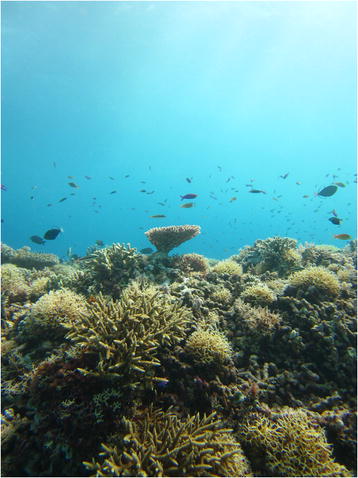
If diving is the reason you came to Palawan, you need to know about Tubbataha. Two atolls in the middle of the Sulu Sea, around 180 kilometres south-east of PPS, declared a UNESCO World Heritage Site in 1993. The reef is genuinely world-class: 600+ fish species, 360+ corals, sharks, manta rays, the works. It also has no land you can sleep on, which is what makes it a project.
You go on a liveaboard. Boats sail from Puerto Princesa and you spend six nights on board, diving up to four times a day. Rates are ₱150,000 to ₱300,000 (~$2,600-5,200) for the trip including food, dives, tanks, weights, and the park fee. The big operators are Discovery Fleet, Atlantis, Stella Maris Explorer, and a couple of smaller boats. The season is short: March through June, weather-dependent. Outside that window, the Sulu Sea is too rough.
This is a once-or-twice-in-a-diving-life trip and the planning lead time is correspondingly long. Most boats sell out 6 to 12 months in advance for the peak May weeks. If you are not advanced certified with at least 30 logged dives, do not book; the conditions can include current, depth, and the kind of swell that punishes a tired diver. If you are, this is one of the best dive trips on Earth.
When to Go
Palawan has a dry season from late November through May and a wet season from June through October, but those labels hide the detail that matters.
December to early March is the prime dry stretch. Cool by Philippine standards (low to mid 20s°C at night), low humidity, calm seas, blue skies. This is when the international flights are full and the Tour A boats are at capacity. Book everything early. Christmas and New Year are nuts and prices double.
March to May stays dry but gets hot. April-May daytime can hit 35°C and the lagoon water feels lukewarm rather than cool. This is also Tubbataha season, so divers fly in. May has lower hotel rates than the December peak and is my pick for fewer-people-and-still-blue-skies.
June to September is the wet season proper. Daily afternoon rain is the rule, often clearing for sunset. Typhoon risk is real; most of the big ones track north of Palawan and hit Luzon, but a couple cross every year and shut things down for two or three days at a time. Coron is less affected than El Nido in this stretch because it sits further north and slightly inland from the typhoon corridor; if you have to travel July-September, weight the trip towards Coron.
October to November is the shoulder. Weather can go either way, hotel rates are at their lowest, and you can sometimes have an entire Tour D boat to yourselves. I have had stunning weeks here and washed-out ones; the gamble is real but the upside is significant. The when-to-go-Philippines guide has more on the regional differences.
Which Town Fits Which Traveller
Decision tree, no fluff.
If this is your first Philippines trip and you have a week: Manila for two nights (the Manila 3-day itinerary compresses well to two if you trim Pampanga), El Nido for three, Coron for two. You will spend a day in transit, but you will see the headline lagoons and the headline wrecks, and you will know whether you want to come back.
If you have already done El Nido and want the wrecks: fly Manila to Coron direct. Skip PPS. Five days in Coron is the right amount: a Tour A or Tour B day, a wreck-diving day, a Mt Tapyas plus Maquinit afternoon, an island-hopping day to Black Island or Malcapuya, and a flex day for whatever the weather offers.
If you want the slow version of Palawan: fly Manila to PPS, van to Port Barton, three nights there, then van to El Nido for two more nights, fly out of El Nido. This skips Coron entirely. It is the version of Palawan most travellers do not see.
If you are a diver: Tubbataha if you have advanced cert and money and the season is right. Otherwise Coron for the wrecks and Apo Reef on a side trip. Honda Bay is a snorkel day, not a dive trip.
If you are travelling with kids: El Nido is harder than Coron because the boat days are long and the tides matter at the lagoons. Coron has Maquinit, the easy Kayangan walk, and Bulog Dos’s calm water. Pick Coron.
If you are doing the romantic-getaway version: Lio Estate in El Nido or one of the Bacuit Bay private islands. Both are covered in my El Nido hotels guide. The lagoons-at-golden-hour private boat is what you came for.
If you are doing the budget backpacker version: PPS for the underground river on a group day, Port Barton for three nights at a guesthouse, El Nido for three nights at a hostel. Total trip cost (excluding flight in) under ₱25,000 (~$435).
What’s Overrated in Palawan
Three things I would skip on a return visit.
Honda Bay starfish island. The main island is loved to death. The water is choppy from too many boats and the starfish are stressed. Pandan and Cowrie are fine; Starfish Island can come off the schedule.
The Underground River if your trip is short. It is a 12-hour day round trip from PPS for a 45-minute boat ride. If your overall Palawan stay is five nights, you can get more from a relaxed Honda Bay day plus an Iwahig firefly tour and skip Sabang entirely. The river is impressive, but the maths only works if you are spending three or more nights in PPS.
Coron’s town beach. There is no real swimming beach in Coron town. People show up expecting Boracay-style sand at their hotel. The hotels know this; the lobby brochures push the day-trip islands hard. Take the boat trips and use Coron town as a base, not a beach.
And one thing I would not skip even though half the internet does: Tour C in El Nido. People say Tour A is the only one worth doing. Hidden Beach on Tour C is the better swim and the boat sees a different cluster of islands. If you have two boat days in El Nido, do A and C, not A twice with different photographers.
Frequently Asked Questions
How many days should I spend in Palawan?
Five nights is the absolute minimum if you want to see more than one hub, and seven to ten is the sweet spot for two hubs done properly. Two weeks lets you do all three (PPS, El Nido, Coron) plus Port Barton without rushing. Anything less than five nights, pick one hub and do it well.
Is the Underground River worth the day-trip from Puerto Princesa?
If you have three or more nights in PPS, yes. If your whole Palawan trip is five nights, the 12-hour round trip eats too much of your week. Save it for a longer Palawan visit and do Honda Bay plus the firefly tour instead.
El Nido or Coron, which is better?
El Nido has the more dramatic lagoons; Coron has the more dramatic everything else (wrecks, hot springs, the lake, the viewpoint, the calm sandbars). If you can only do one, pick El Nido for the photos, Coron for the variety. If you can do both, El Nido first then Coron is the natural flow because the fast ferry only runs in that direction reliably in season.
Is Coron easy to reach from El Nido?
The 4-hour fast ferry runs daily in dry season (December to May) and most days in shoulder. From July to September seas can cancel it. Book one day ahead, not on the morning of, and have a flexibility buffer in your overall Palawan schedule.
Do I need to book the Underground River permit in advance?
Yes, especially in dry season. Only 900 visitors per day are allowed and the slots are taken by tour operators a week or more out. Book through your PPS hotel concierge or the City Tourism Office at least one week ahead in December-May, three to four days ahead in shoulder season.
Can I do Palawan as a beach holiday with kids?
Yes, but pick Coron over El Nido. The boat days in El Nido can be long and the lagoon scrambles need adult bodies. Coron has the calm Kayangan Lake walk, the easy Maquinit hot springs, and the gentle Bulog Dos sandbar. Stay at a resort with a pool for the off days.
What’s the budget for a week in Palawan?
A budget week (hostels and group tours) runs ₱20,000 to ₱30,000 (~$350-525) per person excluding flights. A mid-range week (mid hotels, some private boats) is ₱45,000 to ₱75,000 (~$790-1,310). A high-end week at Lio Estate or Pangulasian, with private tours and helicopter transfers, can clear ₱200,000 (~$3,500) easily. Per-person flight from Manila is ₱4,000 to ₱20,000 (~$70-350) round trip depending on lead time and which hub.