
The Original Cebu City Historical and Food Walking Tour
Cebu’s best stories are often on foot. This four-hour evening route links major landmarks with local food stops, a jeepney ride, and the everyday streets many visitors miss when they head straight for the coast. I especially like the mix of history and street food, plus the chance to ask a local guide how Cebu works beyond the postcard sights. The main caution is value: at $69.99, you will want the full route, all planned food stops, and a guide who keeps the group moving at a steady pace.
I also like that the tour begins at 4 p.m., when the heat should be easing, and ends at Carbon Market, where you can continue exploring or arrange your own ride. Guides such as Kyle, Lorelei, Lorilie, Philip, Necian, and Phillip have been praised for being friendly, patient, and easy to talk with. Still, this is not a private car tour, and getting back to your hotel is your responsibility.
In This Review
- Five things to know before you book
- Why this route is useful on a first Cebu visit
- The Heritage of Cebu Monument opens the story
- Yap-Sandiego Ancestral House shows Cebu’s older domestic life
- Santo Niño Basilica brings Cebu’s faith into focus
- Magellan’s Cross needs context, not just a photograph
- Cebu Metropolitan Cathedral adds another layer of church history
- Carbon Market is where the tour becomes most local
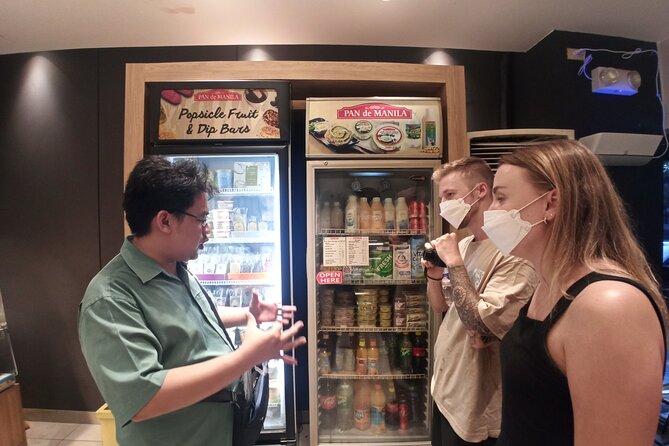
- What the food portion is really like
- The jeepney ride is a small but valuable detail
- Guides make or break the evening
- Timing, comfort, and practical planning
- Is $69.99 a fair price?
- Who should book this Cebu experience?
- FAQ
- How long does the Cebu City walking tour last?
- Where does the tour start?
- Where does the tour end?
- Are food and entrance fees included?
- Is transportation included?
- How many people can join the tour?
- What happens if the weather is poor?
Five things to know before you book
- The route connects six major Cebu sights: You visit the Heritage of Cebu Monument, Yap-Sandiego Ancestral House, Santo Niño Basilica, Magellan’s Cross, Cebu Metropolitan Cathedral, and Carbon Market.
- Food is part of the experience, not the whole experience: Expect several local food and drink stops, but the strongest feedback describes this as a history tour with snacks rather than a full-scale food crawl.
- A jeepney ride may be part of the fun: Several people enjoyed using local public transportation, but you should not expect private transfers between every stop.
- The group can reach 20 people: Smaller groups may feel more personal, while a full group could make street-food ordering and conversations slower.
- Bring curiosity and an adventurous appetite: Possible tastings have included lechon, tuslob buwa, balut, and other local dishes, though the exact food selection can vary.
- Plan your own trip home: The tour ends at Freedom Park in the Carbon area, not at your hotel.
Why this route is useful on a first Cebu visit
Cebu City can be confusing at first. The sights are spread through busy central districts, traffic is serious, and the most interesting food stalls are not always easy to identify on your own. A guide removes much of the guesswork and gives the landmarks a local frame.
The tour also helps you see how Cebu’s Spanish colonial, Chinese-Filipino, Catholic, and modern commercial influences overlap. You move from monuments and churches to an old family home, then into a market where daily trade matters more than polished presentation.
That combination is the strongest reason to book. You are not simply ticking off famous sites. You are also learning about jeepneys, local eating habits, neighborhood history, and the practical rhythm of central Cebu.
The route begins at Ayala Terraces on Biliran Road at 4 p.m. From there, the group follows the guide through a series of central Cebu stops. The published timing allows about 30 minutes at each listed attraction, but the total duration is approximate. Walking speed, traffic, crowds, weather, and food queues can all affect the finish time.
You can also read our reviews of more tours and experiences in Cebu.
The Heritage of Cebu Monument opens the story
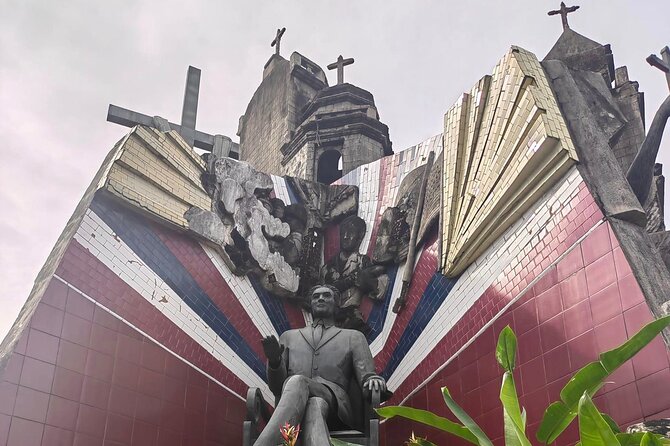
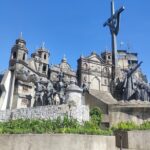
The Heritage of Cebu Monument is a large tableau showing several important scenes from Cebu and Philippine history. Its subjects include the Battle of Mactan, the inauguration of Sergio Osmeña as president of the Philippines, and the canonization of Pedro Calungsod.
This is a useful opening stop because the artwork gives your guide plenty to explain. Instead of meeting Cebu’s past as a long list of names, you see several episodes gathered into one visual scene. Allow about 30 minutes, including the guide’s explanation and time for photographs.
The monument is also a good reminder that Cebu’s story is not limited to Magellan. Spanish contact is important, but local resistance, Filipino political history, and Catholic tradition all have a place here.
Yap-Sandiego Ancestral House shows Cebu’s older domestic life
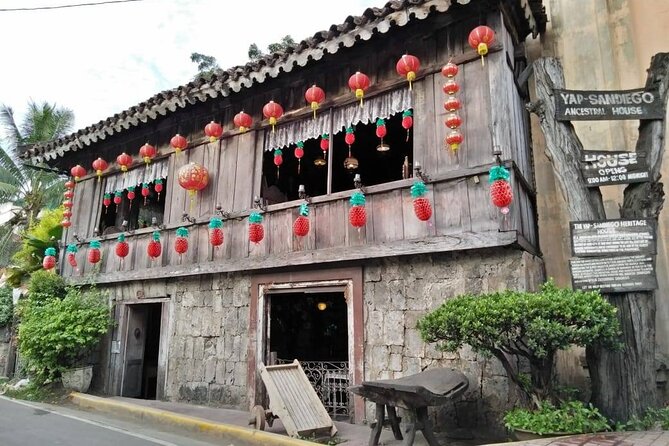
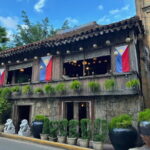
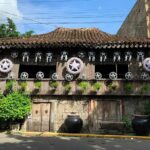
The Yap-Sandiego Ancestral House is one of the most atmospheric stops. Built around 1680, it is among the oldest residential homes in the Philippines. The house combines wood and coral stone with Spanish and Chinese design influences.
This stop adds something that churches and public monuments cannot. You get a sense of how a historic Cebu family home was built and maintained, and how different cultural influences shaped domestic architecture. The old materials and intimate rooms make the visit feel more personal than a quick look at a modern city street.
Admission is included, and the planned visit lasts about 30 minutes. One useful point to clarify with your guide is how much time you will spend inside each site. The house has been entered on the route, while the cathedrals may be viewed from outside or visited only briefly, especially when services are taking place or crowds are heavy.
Santo Niño Basilica brings Cebu’s faith into focus
The Basilica Minore del Santo Niño de Cebu, commonly called the Santo Niño Basilica, was founded in 1565 by Fray Andrés de Urdaneta. It is one of the city’s central religious landmarks and an important place for understanding Cebu’s Catholic identity.
The basilica is not just another old church stop. The Santo Niño devotion is a major part of Cebu life, and the site connects religious practice with the city’s earliest Spanish period. Your guide can help explain why this particular image and basilica matter.
The planned stop is about 30 minutes, with admission included. Keep your expectations flexible about entering the church. The route may coincide with worship, a crowded period, or a Sunday service, and one account specifically noted that the churches were not entered during a busy visit.
Dress and behave respectfully here. This is an active religious site, not simply a historic building.
Magellan’s Cross needs context, not just a photograph
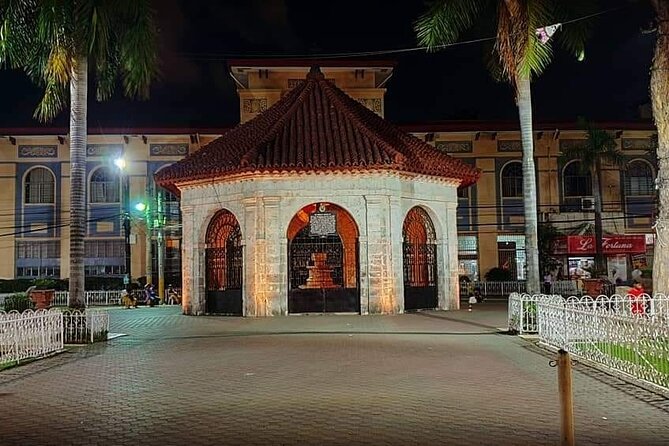
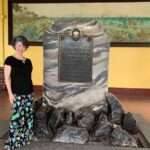
Magellan’s Cross is housed in a stone pavilion beside the Santo Niño Basilica on Plaza Sugbo. The cross is associated with the arrival of the expedition led by Ferdinand Magellan and the introduction of Christianity to Cebu.
The pavilion itself is a quick stop, but the story behind it is more complicated than a simple arrival tale. Your guide can help place the cross alongside the Battle of Mactan and the relationships between Spanish explorers and local leaders.
Expect roughly 30 minutes, including explanation and photographs. The cross is close to the basilica, so this part of the route may feel concentrated. That is useful if you have limited time, but it also means the experience depends heavily on the guide’s storytelling.
I would pay attention here rather than treating it as a photo stop. The site has more value when you understand how it fits into Cebu’s larger political and religious history.
You can also read our reviews of more historical tours in Cebu
Cebu Metropolitan Cathedral adds another layer of church history
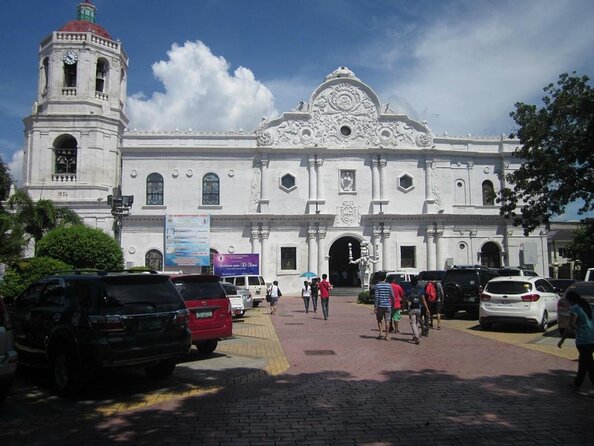
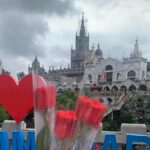
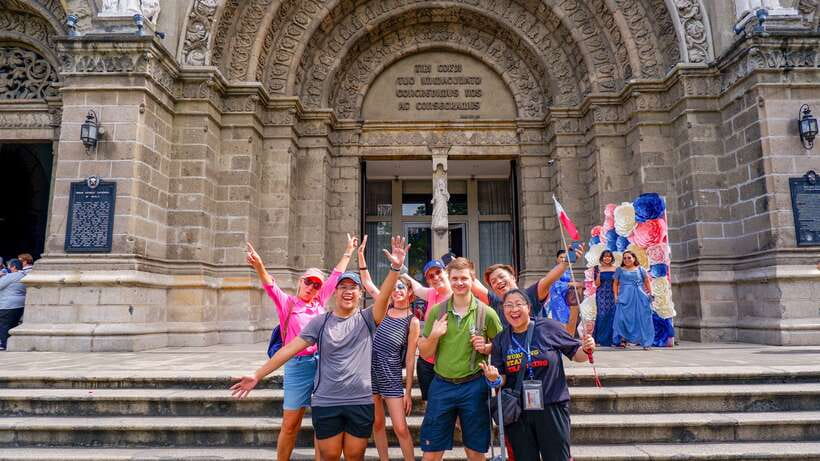
The Cebu Metropolitan Cathedral, officially the Metropolitan Cathedral and Parish of Saint Vitalis and of the Immaculate Conception, is another major central landmark. Much of the cathedral was destroyed during World War II, giving the building a different historical angle from the older Santo Niño Basilica.
The two churches work well together on one route. The basilica connects you to Cebu’s early Spanish period and Santo Niño devotion, while the cathedral also points to wartime destruction and rebuilding.
Again, the planned visit is about 30 minutes, but entry is not guaranteed in practical terms. You may see the building from outside or spend only a short time inside if services or crowds make a longer visit inappropriate. Ask the guide what is possible that day.
Carbon Market is where the tour becomes most local
Carbon Market is the final listed stop and one of the most useful parts of the experience for anyone who wants to see everyday Cebu. Its name comes from carbón, the Spanish word for coal. The area was said to be near a coal depot serving the old Cebu Railway, which operated from the nineteenth century.
This is not a polished market built for sightseeing. That is precisely why it can be interesting. You may see the practical side of food buying and selling, with stalls, local products, and the movement of people through one of Cebu’s best-known market areas.
Several people especially enjoyed walking through the food market and wished they had more time there. That is worth noting. The tour provides an introduction, but it may not satisfy you if you want a long, unhurried market visit.
The route ends at Freedom Park in the Carbon area. You can continue exploring from there, but you need to arrange your own return transport.
What the food portion is really like
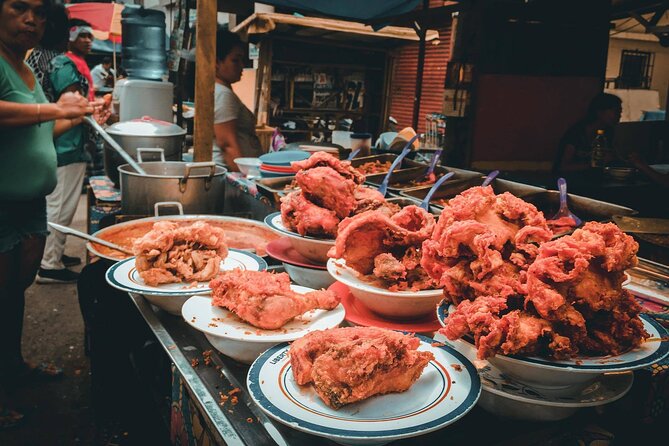
The food is a major draw, but I would describe this as a cultural walking tour with several tastings rather than a dedicated food tour. The operator describes three food stops, while some accounts describe four places serving food. That suggests the number and order of tastings may change.
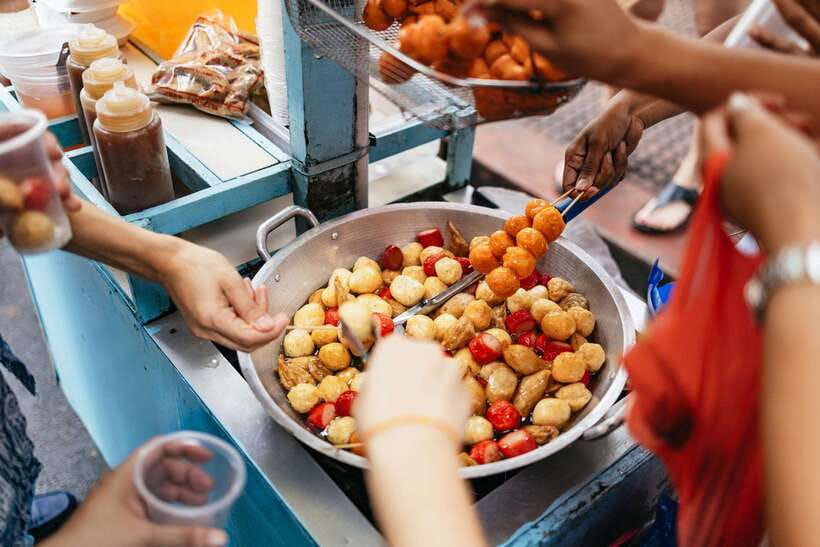
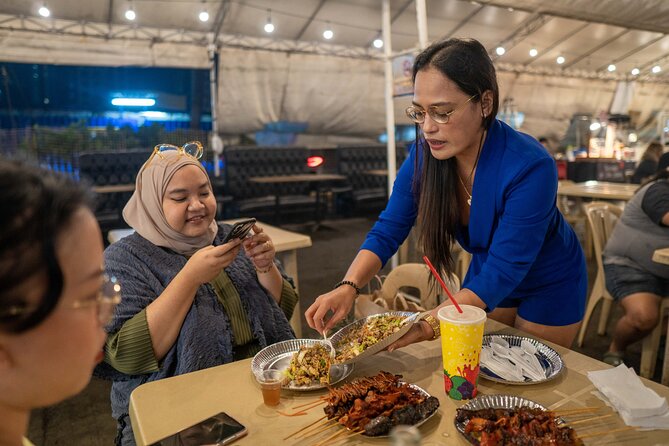
Possible highlights include lechon, tuslob buwa, balut, local snacks, and drinks. Lechon received especially warm praise, while tuslob buwa gave people a chance to try a dish they might not have ordered alone. Balut may be included, but one person specifically did not encounter it, so do not book expecting one fixed menu.
This is food meant to show local street eating. It may be unfamiliar, strongly flavored, or simply not to your taste. That is part of the point, but it also explains why the food reviews are mixed. If you want carefully chosen restaurant dishes, this may not be the right experience.
Come ready to sample small portions and ask questions. If you have allergies, dietary restrictions, or strong food preferences, clarify what can be accommodated before booking. The supplied information does not promise a vegetarian, vegan, halal, or allergy-specific menu.
The jeepney ride is a small but valuable detail
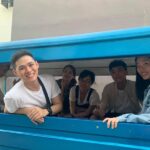
Several accounts highlight the jeepney ride as one of the most memorable parts. Cebu’s jeepneys are a familiar form of local transportation, and riding one gives you a practical look at how people move through the city.
This also explains an important point: the tour does not provide private transportation throughout. You may walk between stops and use public transportation, depending on the route and guide. Some people loved that local feel. Others expected a vehicle supplied by the tour and were disappointed.
If you enjoy ordinary city experiences, the jeepney is a plus. If you want air-conditioned transfers and a quiet ride between attractions, choose a different format.
Guides make or break the evening
The strongest praise goes to the guides. Kyle is described as friendly, patient, clear in English, and good at helping people try unfamiliar food. Lorelei and Lorilie were praised for energy, organization, and enthusiasm for Cebu’s food culture. Philip and Phillip were noted for kindness, helpfulness, and strong local explanations. Necian was described as conversational and informative.
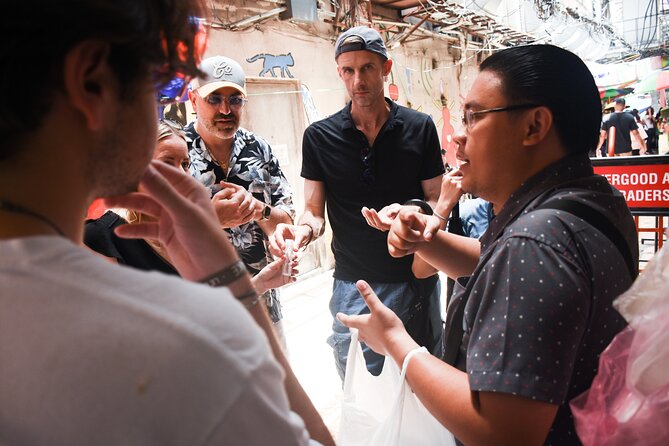
That range of comments suggests the human side of the tour is its greatest strength. The guide is not just leading you from one pin on a map to another. The guide explains food, answers questions, helps you navigate public transport, and can make a mixed group feel comfortable.
The group limit is 20 people. A smaller group may offer more time for questions and easier movement through food stalls. A full group can still work, but expect less individual attention and more waiting at narrow market areas.
Timing, comfort, and practical planning
The tour starts at 4 p.m. and lasts about four hours. Evening timing helps avoid the worst midday heat, though Cebu can still be warm and humid. Wear comfortable walking shoes and clothing suitable for visiting churches.
The route may finish in about three and a half hours, while one experience ended after roughly two and a half hours because the group moved quickly. The operator explains that pace affects the end time. If you want the full value, do not rush between stops, and ask your guide if a listed attraction or food tasting has been skipped.
Weather matters. The experience requires good weather, and poor conditions can lead to a new date or a full refund. Light rain did not ruin one evening, but you should still carry suitable rain protection and avoid scheduling this as a tight connection before another fixed activity.
Confirmation is provided at booking, public transportation is nearby, and most people can participate. The group can contain up to 20 people. The mobile ticket is convenient, but keep your phone charged and make sure you can reach the meeting point at Ayala Terraces by 4 p.m.
Is $69.99 a fair price?
At $69.99 per person, this is not a cheap walk. The price includes food stops and admission to the listed attractions, but it does not include your ride back to the hotel. The value depends on what you would otherwise spend on entrance fees, meals, local transport, and a private guide.
I think the price is reasonable for a first evening in Cebu if you receive the full four-hour experience, several tastings, the heritage-house entry, and strong guiding. It is less convincing if the tour ends early, food stops are reduced, or you only view several landmarks from outside.
The most important value question is not simply how many sights you see. It is how much help you want with navigation and food choices. If you are nervous about trying street food or using a jeepney alone, the guide may be worth the premium. If you are comfortable exploring markets and churches on your own, $69.99 may feel high.
One practical warning: the booking is non-refundable and cannot be changed for any reason. Only cancellations caused by poor weather or failure to meet the minimum number of participants qualify for a new date or full refund.
Who should book this Cebu experience?
I would recommend it most strongly for a first-time Cebu visitor with one free evening. You get a useful overview of central history, a look at local market life, and a guided introduction to foods you might otherwise avoid.
It also suits solo visitors who want company and reassurance while walking through unfamiliar areas. One solo woman specifically felt safe and well cared for, and several people praised the guides for being attentive.
Food-focused visitors should book only if they enjoy surprise and variety. This is not a carefully controlled tasting menu. The route may include dishes such as lechon, tuslob buwa, and balut, but the exact selection can change.
I would be more cautious if you need private transport, guaranteed entry into every church, a fully fixed food menu, or a strict four-hour schedule. In those cases, the tour may not match your expectations.
FAQ
How long does the Cebu City walking tour last?
The advertised duration is approximately four hours. Actual timing can vary with walking pace, traffic, crowds, weather, and time spent at food stops. Some experiences have lasted closer to three and a half hours, while one ended after about two and a half hours.
Where does the tour start?
The meeting point is Ayala Terraces, 8W94+H97, Biliran Road, Cebu City, 6000 Cebu, Philippines. The scheduled start time is 4 p.m.
Where does the tour end?
The route ends at Freedom Park in the Carbon area of Cebu City. You are responsible for arranging transportation from there to your hotel or next destination.
Are food and entrance fees included?
The tour includes food stops and admission to the listed attractions. The exact food selection can vary, and the supplied information does not promise that every possible dish, such as balut, will be served on every outing.
Is transportation included?
Private transportation is not provided between all stops. The route involves walking, and some outings include a jeepney or other public transportation.
How many people can join the tour?
The maximum group size is 20 people.
What happens if the weather is poor?
The experience requires good weather. If the operator cancels because of poor conditions, you will be offered another date or a full refund.
More Tours in Cebu

More Tour Reviews in Cebu
Not for you? Here's more nearby things to do in Cebu we have reviewed

Food Tours: how the alternatives stack up
The lists this tour appears in