Bohol: Budgeted Country Eco-Cultural Tour
Bohol packs a lot into one day. For $112 per person, this private, six-to-nine-hour outing links the island’s best-known sights with hotel pickup, a floating lunch on the Loboc River, and several wildlife stops. I especially like the easy door-to-door transport and the chance to see both tiny Philippine tarsiers and a huge reticulated python in one trip.
I also like the mix of nature, food, scenery, and history. You are not spending the whole day at viewpoints. The main concern is the word budgeted: some entrance fees, especially at Baclayon, may not be covered, and the schedule can feel rushed if every stop runs long.
In This Review
- Key points to know before you book
- What $112 buys you in Bohol
- Starting with Bohol’s Sandugo monument
- Baclayon Church and the cost of history
- Meeting the Philippine tarsier in Corella
- Lunch and music on the Loboc River
- The two-kilometer mahogany forest
- Butterflies, plants, and local conservation
- The Chocolate Hills viewpoint
- Prony and Bohol’s giant python
- Timing, transfers, and what to bring
- Who should choose this tour?
- Should you book the Bohol Budgeted Country Eco-Cultural Tour?
- FAQ
- How long does the Bohol eco-cultural tour last?
- Is hotel pickup included?
- Is lunch included?
- Are the tarsier sanctuary and other attraction fees included?
- Is this a private tour?
- What happens if bad weather cancels the tour?
Key points to know before you book
- A full Bohol sampler: You visit the Chocolate Hills, mahogany forest, tarsier sanctuary, butterfly center, python park, Baclayon Church, and Blood Compact Site in one day.
- Two memorable wildlife encounters: A tarsier weighs about 100 grams, while Prony, the famous female python, is described as weighing more than 300 kilograms.
- Loboc River lunch included: The buffet meal comes during an approximately one-hour cruise with music and local entertainment.
- Private transport matters: Your group travels by air-conditioned vehicle with hotel pickup and drop-off, rather than arranging several separate rides.
- Check what is covered: Tour fees and lunch are included, but alcohol, souvenirs, personal expenses, and possibly Baclayon museum entry are extra.
- Good for a first visit: The day is busy, but it gives you a useful introduction to Bohol if your time is limited.
What $112 buys you in Bohol
The main value here is not one single attraction. It is the amount of ground you cover without having to piece together taxis, entrance tickets, meals, and transport yourself.
At $112 per person, the price is reasonable for a private day with an air-conditioned vehicle, hotel transfers, a river lunch, and several admissions. It is less attractive if you want a slow, quiet day or already have transport arranged. You are paying for convenience and coverage, not a leisurely pace.
The private format is useful for couples, families, and small groups. Only your own group participates, so you can ask questions and manage your pace to some degree. Still, the number of scheduled stops means you should not expect long, unhurried visits at every site.
The advertised duration is six to nine hours. That wide range matters. Travel time, traffic, pickup arrangements, lunch service, and the amount of time spent at the Chocolate Hills can push the day toward the longer end. Keep your evening flexible rather than booking a tight onward connection.
You can also read our reviews of more historical tours in Tagbilaran City

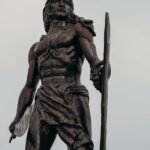
Starting with Bohol’s Sandugo monument
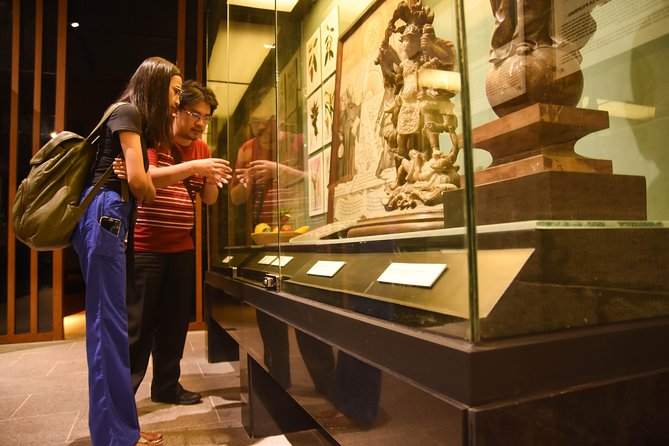
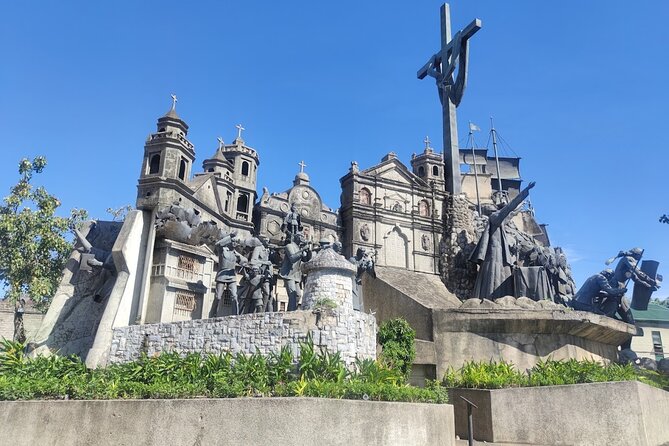
The Blood Compact Site in Barangay Bool, Tagbilaran City, honors the 1565 agreement between Spanish explorer Miguel López de Legazpi and Rajah Sikatuna of Bohol. The event is known as Sandugo, or blood compact, and is remembered as a friendship treaty between different peoples, religions, and cultures.
The sculpture shows five life-sized men gathered around a table, with Legazpi and Sikatuna taking part in the ceremony. It was created by Napoleon Abueva, a National Artist from Bohol.
This is a short stop, but it gives the day a useful opening lesson. Bohol is not only about hills, rivers, and animals. Its story also includes contact between local leaders and colonial Spain, and the monument gives you a physical place to begin that conversation.
One practical caution: the scheduled order can change, and the Blood Compact Site has reportedly been missed on at least one version of the day. I would ask your guide at pickup to confirm that it is included. If this stop matters to you, say so early.
Baclayon Church and the cost of history
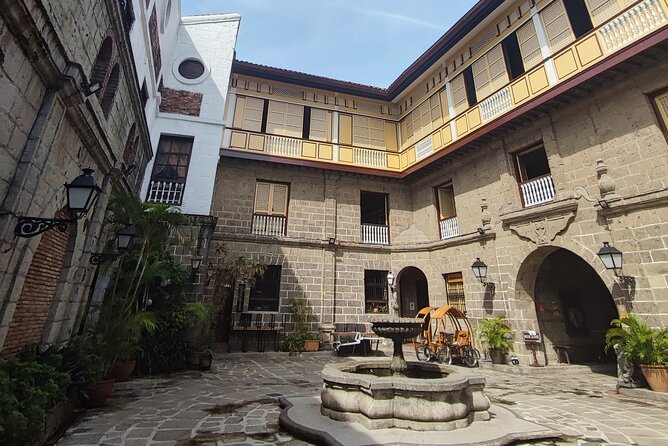
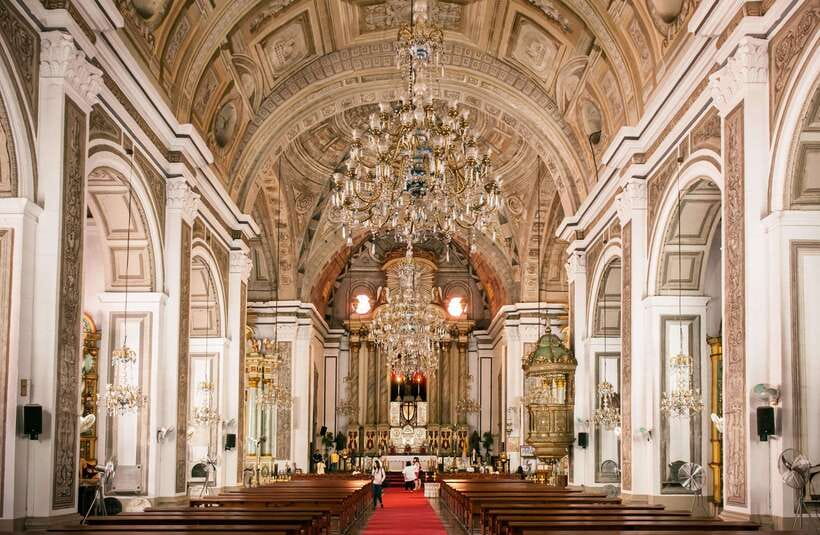
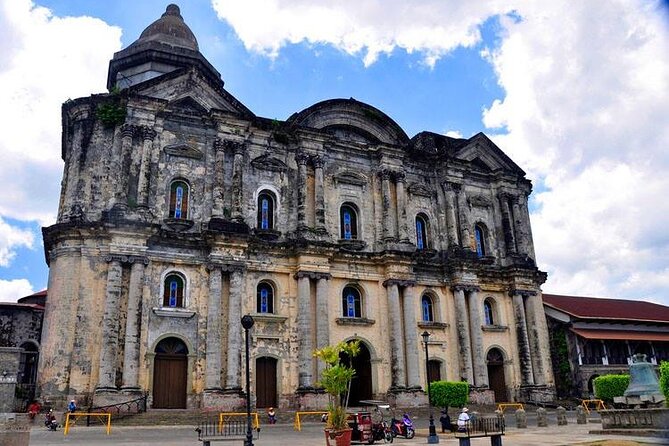
The Church of Immaculate Conception in Baclayon is one of the Philippines’ oldest churches. Construction began in 1717, and the present building was completed in 1727. Native laborers cut and moved coral blocks from the sea, using bamboo to lift and position the stone.
The church is traditionally said to have used egg whites as part of its cement. In the nineteenth century, Augustinian Recollects added the facade and other stone buildings around the church.
The building is worth seeing for its coral-stone construction alone. It also helps you understand how Spanish-era religious sites shaped local towns. Look closely at the old materials and the surrounding structures rather than treating this as a quick photo stop.
There is an important price detail here. The operator’s clarification indicates that entry to the Baclayon Ecclesiastical Museum is not included in the budget price, even though the church itself may be accessible during the visit. Bring some extra money and ask exactly which areas your tour fee covers. This is the clearest point where the advertised inclusions and the practical experience may not match.
Meeting the Philippine tarsier in Corella
The Philippine Tarsier and Wildlife Sanctuary in Canapnapan, within the municipality of Corella, is one of the day’s best stops. A short jungle trail leads to a viewing area where guides help you locate the small primates among the trees.
More than 100 tarsiers are said to live in the surrounding sanctuary, although only about eight are kept in the viewing area. That limited viewing zone helps keep the visit manageable and gives you a better chance of seeing one without wandering through the entire forest.
The tarsier is astonishingly small. It weighs about 100 grams, fits in the palm of your hand, and can leap around five meters. Its eyes are enormous in proportion to its body, and its head can turn almost 360 degrees. Its ears also move toward sounds, which makes the animal seem almost animated.
You need to follow the rules here. Flash photography is not allowed, and you should keep your voice low. The tarsiers are sensitive, nocturnal animals. The visitor center has information boards, and the forested setting feels more respectful than a simple animal display.
Allow about 30 minutes. Wear shoes that are comfortable on a short jungle path, and keep your camera ready before you reach the viewing area. One particularly strong account of this tour praised the guide’s help in getting clear tarsier photos, but you should still avoid touching, feeding, or crowding the animals.
Lunch and music on the Loboc River
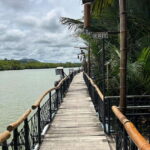
The two-hour Loboc River portion includes an approximately one-hour cruise and buffet lunch aboard a floating restaurant. This is more than a meal break. It gives you time to sit down, cool off, and watch the riverbanks while local musicians perform native and novelty songs.
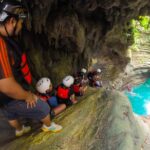
The river is known for its clean water and calm scenery. The boat may stop for souvenir shopping and native dancing, and there can be opportunities to request songs. Near the end, you can see Loboc Falls and, if you have suitable swimwear, take a quick dip.
I like the balance of this stop. After several short visits, you get a stretch of time with food, music, and moving scenery. It is also an easy way to sample local entertainment without arranging a separate evening show.
The buffet format is convenient, though you should not expect a quiet restaurant meal. Live music, group dining, and the boat’s schedule shape the experience. Alcohol is not included but can be purchased. If you want to swim at the falls, bring appropriate clothing and a small towel. Otherwise, you can simply take photos from the boat.
The two-kilometer mahogany forest
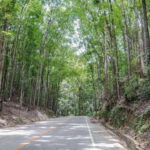
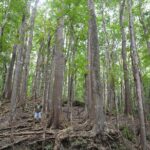
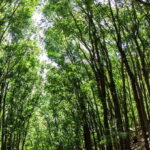
Between Loboc and Bilar, the road passes through a two-kilometer stretch of planted mahogany trees. The trunks rise in unusually straight rows, and their branches form a shaded canopy above the road.
Before and after this planted section, naturally grown forest includes different tree species and large ferns. That contrast is useful. You can see the difference between a managed tree project and a more mixed forest rather than assuming every green section is untouched woodland.
This is often a brief roadside stop or drive-through. It works best for a quick photo and a look upward at the canopy. Do not expect a long forest walk unless your guide specifically says one is possible.
The mahogany forest was confused with the Bilar Town Hall stop in one account of the experience. There is no entrance fee for the forest, though a donation may be accepted. Ask your guide to identify the area clearly so you know which scheduled stop you are seeing.
Butterflies, plants, and local conservation
The Simply Butterflies Conservation Center, also described as the Bohol Habitat Conservation Center, gives the day another ecological angle. It breeds butterflies, studies host plants, and releases butterflies to support local populations.
The center also trains local residents to breed butterflies. Income comes from breeding common species for export and from butterfly-related products. That makes the visit more interesting than a standard garden filled with colorful insects. You are seeing a small conservation and livelihood project at work.
The visit lasts about 30 minutes. You may see butterflies close up and learn how plants support their life cycle. The center’s work also points to a wider problem: host plants are reduced by deforestation and illegal plant collection.
This is a modest stop, not a major attraction. I would value it most if you enjoy nature and want some context about local conservation. If your only goal is the Chocolate Hills, the extra stop may feel like a delay, but the short visit keeps it from taking over the day.
The Chocolate Hills viewpoint
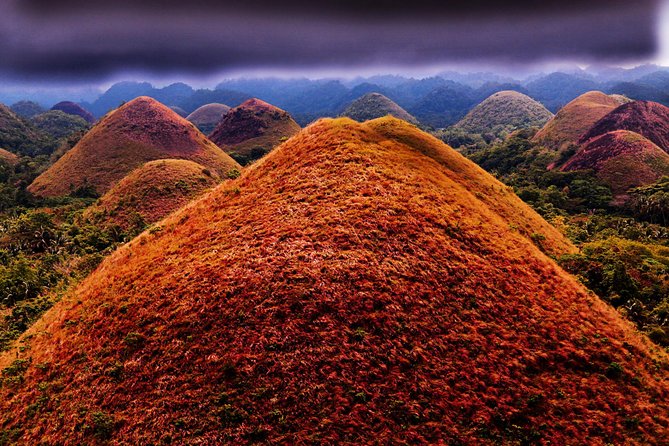
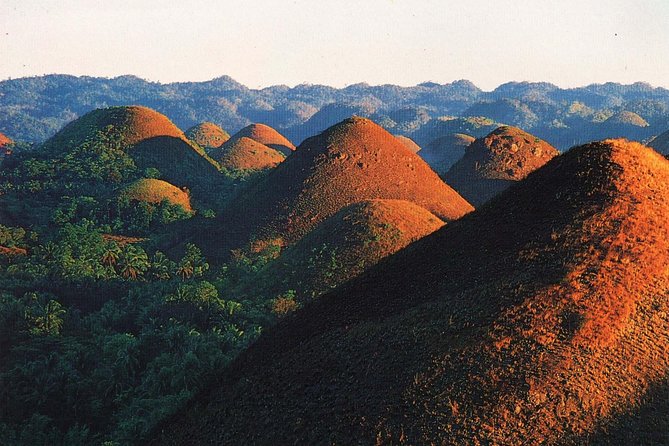
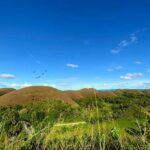
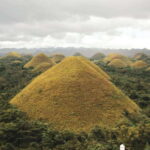
The Chocolate Hills are Bohol’s most famous sight. More than 1,200 rounded hills spread across the interior, with many rising roughly 30 to 50 meters high. During the dry season, the grass turns brown, giving the hills their chocolate-colored name. In wetter months, they are green.
The usual visit includes about 45 minutes at the natural monument. That gives you time for the viewpoint, photos, and a look at the unusual repeated shapes. The hills resemble giant rounded mounds, and their regular form makes them seem artificial at first glance.
The color is seasonal, so do not arrive expecting brown hills at every time of year. The shape is the constant attraction. You are looking at a broad field of rounded peaks rather than one dramatic mountain.
An ATV ride near the Chocolate Hills may also be offered, and one account of this outing praised the experience and the local guide there. Since the ATV ride is not listed among the included features, treat it as a possible extra and confirm the price before agreeing. It could add fun and motion, but it also adds cost and may reduce your time for the main viewpoint.
Prony and Bohol’s giant python
The Bohol Python and Wildlife Park is the day’s most startling animal stop. Prony, a female reticulated python also called baksan locally, is described as measuring 27 feet, or 8.23 meters, and weighing more than 300 kilograms.
The snake was captured in 1996 in Upper Sta. Filomena in Albur and has lived in the area for many years. The figures are remarkable, although exact animal measurements can vary. You can still expect a very large captive python, not a small exhibit snake.
This stop lasts about 30 minutes. It contrasts nicely with the tarsier visit: first you see one of the Philippines’ smallest primates, then one of its most imposing reptiles. That size comparison is a memorable thread running through the day.
The park is a wildlife attraction, so expectations should stay realistic. It is not a wilderness encounter. You are seeing a captive animal in a managed setting, with the educational value coming from the animal’s size and local story.
Timing, transfers, and what to bring
Hotel pickup and drop-off are included in an air-conditioned vehicle. That is a major help in Bohol, where the attractions are spread across different towns. You avoid arranging separate transport to Corella, Loboc, Bilar, and the Chocolate Hills.
Because this is a private tour, you travel only with your own group. The format is especially useful if you have children, older relatives, or someone who wants to ask many questions. Children must be accompanied by an adult, and most people can participate.
Bring:
- Comfortable walking shoes for the tarsier sanctuary
- Sun protection for the Chocolate Hills viewpoint
- Swimwear and a towel if you want to enter the water at Loboc Falls
- Cash for drinks, souvenirs, donations, possible museum entry, and personal expenses
- A phone with enough battery for photos and the mobile ticket
The day needs flexibility. The official length is six to nine hours, and stops may be adjusted. Bad weather can cancel the experience, in which case a different date or a full refund is offered. Otherwise, the booking is non-refundable and cannot be changed, so choose your date carefully.
Who should choose this tour?
I would choose this outing if I had one free day in Bohol and wanted to see the main sights without organizing transport. It is particularly useful for a first visit, cruise passengers with a long day ashore, families, and small groups who prefer a private vehicle.
You will get the most from it if you enjoy variety. The day moves from monuments to coral-stone church, then tarsiers, river dining, forest, butterflies, hills, and python. That range is the appeal.
I would skip it if you prefer slow travel, long nature walks, or detailed time at historic buildings. You may find the schedule too packed. I would also ask for a written list of included entrance fees before paying, especially for the Baclayon Ecclesiastical Museum.
Should you book the Bohol Budgeted Country Eco-Cultural Tour?
Book it if your priority is seeing Bohol’s headline sights in one organized day. The floating lunch, hotel transfers, private vehicle, and wildlife stops give the $112 price solid value when you would otherwise need to arrange several rides and meals.
Book with caution if you expect every listed stop and fee to be handled without questions. Confirm the Blood Compact Site, Baclayon Church and museum access, Bilar area, and any optional ATV ride before departure. If the operator can clarify those points, this is a practical, energetic introduction to Bohol. If not, choose a slower tour with fewer stops and clearer admissions.
FAQ
How long does the Bohol eco-cultural tour last?
The experience lasts approximately six to nine hours. The exact length can vary depending on the day’s timing, transfers, and stops.
Is hotel pickup included?
Yes. Round-trip pickup and drop-off from your hotel are included in an air-conditioned vehicle.
Is lunch included?
Yes. Lunch is served as a buffet during the Loboc River cruise. Alcoholic drinks are available to purchase but are not included.
Are the tarsier sanctuary and other attraction fees included?
The tour includes stated tour fees and admission to the Philippine Tarsier and Wildlife Sanctuary, Loboc River Cruise, butterfly center, Chocolate Hills Natural Monument, and Bohol Python and Wildlife Park. Confirm Baclayon Church or museum entry before departure, as museum admission may cost extra.
Is this a private tour?
Yes. Only your own group participates in the activity.
What happens if bad weather cancels the tour?
If poor weather causes cancellation, you can choose a different date or receive a full refund. The experience is otherwise non-refundable and cannot be changed after booking.