Cebu City famous historical tour
Cebu’s past comes with a mountain view. I like the way this 8-hour tour joins major historic sites with Sirao Garden, Temple of Leah, and TOPS Lookout. I also like the small maximum of eight people and air-conditioned vehicle, which make a long day easier. The tradeoff is its fast pace: most stops last only 30 minutes, so you will see a lot without lingering long.
This is a useful first look at Cebu’s Spanish, Filipino, Chinese, and modern cultural layers. Guide Leila received special praise for her clear grasp of Cebu’s past and for offering practical advice about living in the city. One detail needs checking before you pay: the stated location is Tagbilaran City, while every stop is in Cebu, so confirm the pickup area.
In This Review
- Key points to know before booking
- What the $138 price really covers
- Starting with Cebu’s story at the Heritage of Cebu Monument
- Fort San Pedro and the first Spanish settlement
- Faith and memory at the Basilica and Magellan’s Cross
- A different side of Cebu at the Taoist Temple
- Flowers and photographs at Sirao Pictorial Garden
- Temple of Leah, Cebu’s oversized love letter
- TOPS Lookout and the best view of the day
- Lapu-Lapu and the Battle of Mactan
- The pace, vehicle, and guide make the difference
- Who should book this Cebu day tour?
- Should you book it?
- FAQ
- Where does the tour take place?
- What time does the tour start?
- How long does the experience last?
- How many people can join the tour?
- Is pickup available?
- Is transportation included?
- Are admission fees included?
- Are meals included?
- Is the tour suitable for most people?
- What happens if bad weather cancels the tour?
Key points to know before booking
- Nine stops in about eight hours: You cover central Cebu, Busay’s hills, and the Lapu-Lapu monument in one packed day.
- History comes first: Fort San Pedro, Magellan’s Cross, the Basilica del Santo Niño, and the Heritage of Cebu Monument create a strong introduction to the city.
- Sirao adds a colorful break: The flower garden gives you a more relaxed, photo-friendly stop after the churches and fort.
- TOPS is the longest visit: You get one hour for city and island views, with sunset described as the best time to arrive.
- The group stays small: A maximum of eight people is more personal than a large coach tour.
- Lunch and dinner cost extra: The $138 price includes the vehicle and admission fees, but not meals.
What the $138 price really covers
At $138 per person, this is not a bargain-priced sightseeing loop. Its value depends on how much you want to cover in one day and how useful you find having transport between scattered locations.
The price includes an air-conditioned vehicle, pickup, mobile ticketing, and all stated admission fees. That matters in Cebu, where the day moves from the historic center to the hills of Busay and then toward the Lapu-Lapu monument. Arranging separate rides for those areas could take time and add cost, especially for a first visit.
You do need to budget for lunch and dinner. The tour begins at 9:00 a.m. and lasts about eight hours, so lunch will fall during the day even though it is not included. Ask the operator how the meal stop is handled before setting out, since no restaurant or meal allowance is specified.
The group limit of eight is another part of the value. You will not have the scale of a big bus group, and it should be easier to hear the guide and ask questions. Still, the short visits mean the tour is designed for orientation, not a slow study of every site.
You can also read our reviews of more historical tours in Tagbilaran City

Starting with Cebu’s story at the Heritage of Cebu Monument
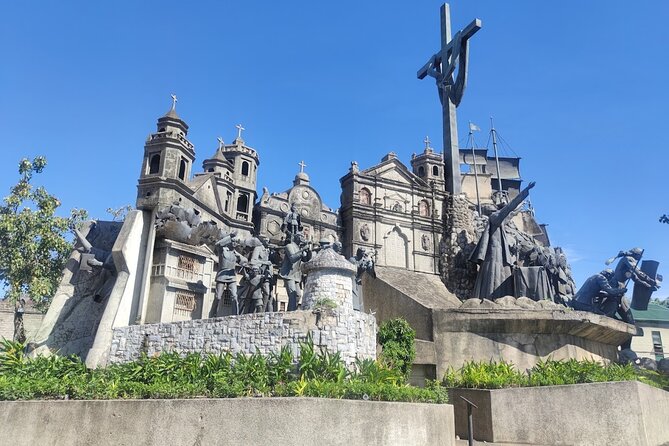
The Heritage of Cebu Monument is a strong opening because it compresses several chapters of local history into one sculptural scene. It sits in the original Plaza Parian, an area tied to old Cebu, and the work was created by national artist Edgardo Castrillo.
The monument traces events from Rajah Humabon’s time through the beatification of Cebuano martyr Pedro Calungsod. It also recalls the Spanish-era churches that shaped the city: the Church of St. John the Baptist in Parian, the Metropolitan Cathedral, and the Basilica del Santo Niño.
Look for the representation of Sergio Osmeña Sr., Cebu’s grand old man and the fourth president of the Philippines. General Leon Kilat also appears in the story, linking the monument to resistance against Spanish colonial rule. These figures help show that Cebu’s past was not only about Spanish arrival and Catholic conversion.
You have 30 minutes here, enough for an explanation and a close look. I would pay attention to the guide rather than simply taking photographs. The monument packs in many names and events, and a good explanation makes the sculptural tableau far easier to read.
Fort San Pedro and the first Spanish settlement
Fort San Pedro offers a more physical look at colonial Cebu. The first fortification began in 1565 under Spanish conquistador Miguel López de Legazpi, using logs and mud before later construction created the stone stronghold you see today.
The fort takes its name from Legazpi’s flagship, the San Pedro. It is described as the oldest and smallest fort in the Philippines, built mainly to protect Spanish settlers from pirates in the area.
Its size is easy to picture: the site covers about 2,025 square meters, with walls 20 feet high and 8 feet thick. Three bastions carry the names La Concepción, Ignacio de Loyola, and San Miguel. Towers rise about 30 feet above the ground.
You have another 30-minute visit, so expect an overview rather than an exhaustive inspection. The value here is the sense of scale. Numbers about wall thickness and bastions become more meaningful when you are standing inside a compact fort that once served as a defensive base.
This is also a place where the guide’s historical context can improve the visit. The fort is not simply an old military building. It marks the beginning of the first Spanish settlement in the Philippines and helps explain why Cebu became such an important colonial center.
Faith and memory at the Basilica and Magellan’s Cross
The Basilica del Santo Niño and Magellan’s Cross are separate stops, but they make sense together. Both connect to the arrival of Christianity and to the continuing importance of the Santo Niño, the small image of Jesus honored by many Filipino Catholics.
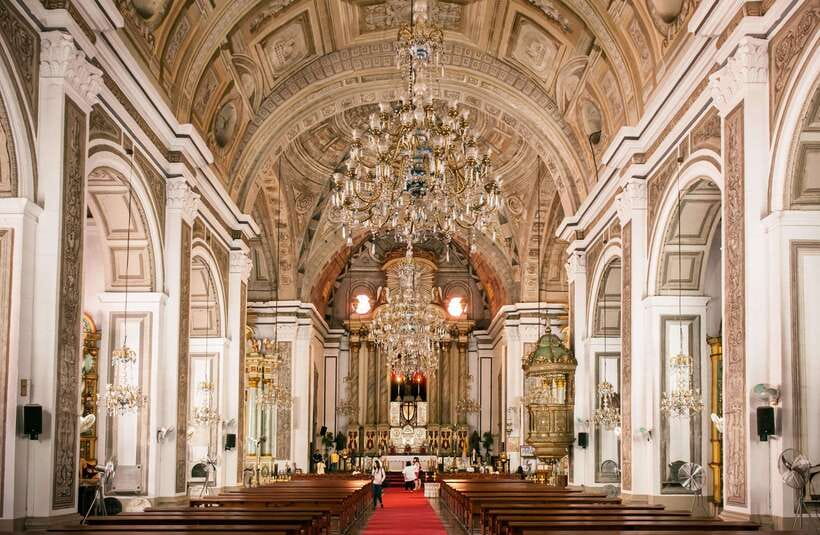
At the Basilica, you will visit one of the oldest churches in the Philippines. The stated 30-minute stop is enough to experience the setting and hear about the devotion surrounding the image, though it may feel brief if you want quiet time for prayer or detailed architectural study.
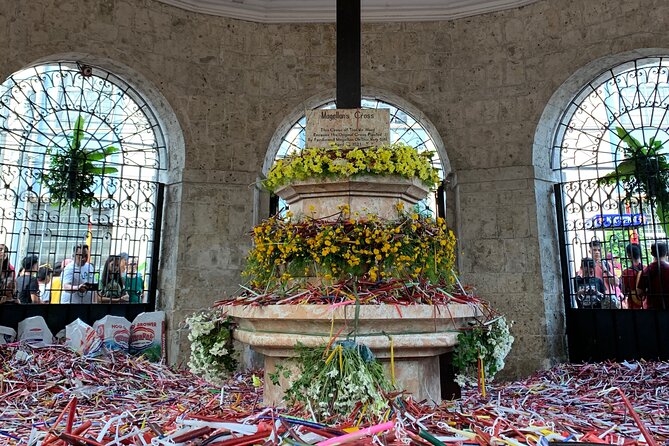
Magellan’s Cross recalls the 1521 baptism of Rajah Humabon, his wife, and hundreds of native warriors. Father Pedro Valderama conducted the baptisms, and Magellan planted a cross to mark the spread of Roman Catholic faith in Cebu.
The cross you see is protected inside another wooden cross. The original was enclosed after people began chipping pieces away because they believed it had healing powers. Government officials later secured it inside a small kiosk made with Tindalo wood and topped with a tile roof.
That detail gives the stop a human edge. The cross is both a religious symbol and an object shaped by centuries of belief, protection, and public attention. You have 30 minutes here, so listen for the explanation and leave room for the crowds that can gather around a famous landmark.
Together, the Basilica and cross show that Cebu’s Catholic identity is not only a Spanish-era subject. It remains part of the city’s daily religious life. At the same time, the history deserves a careful telling, since the arrival of Christianity involved both local leaders and foreign colonial power.
A different side of Cebu at the Taoist Temple
The Taoist Temple changes the subject and the setting. Built in 1964, it reflects Cebu’s established Chinese community and its contribution to the city’s industrial growth.
The building is a classic example of Chinese architecture and houses the teachings of Lao-Tze, the Chinese philosopher associated with the sixth century BC. A familiar teaching connected with him is that giving a person a fish feeds him once, while teaching him to fish provides lasting help.
You have 30 minutes to see this cultural site. Its importance is not only visual. After the fort and churches, the temple reminds you that Cebu developed through several communities, not one straight colonial story.
The stop also provides a useful contrast in architecture and belief. The churches and cross represent Catholic traditions, while the Taoist Temple points to Chinese influence and philosophy. If you prefer tours that connect buildings to the people who shaped a city, this is one of the more valuable stops.
Flowers and photographs at Sirao Pictorial Garden
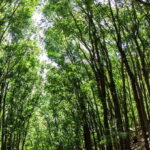
Sirao Pictorial Garden brings a lighter mood after the city’s historic core. It is a flower garden in the hills, with local flowers and views that give you a chance to get closer to nature.
The stop lasts 30 minutes. That is enough for photographs and a short walk, but not for a long garden visit. The garden is especially useful if you want variety in your day. You move from fort walls and religious landmarks to flowers, open views, and photo settings.
One direct account of the tour singled out the Sirao photo sites as a favorite part of the day. That makes sense if you enjoy taking pictures for social media or simply want a visual change from the older monuments.
Keep your expectations measured. This is a short pictorial stop, not a full botanical tour. Its role is to add color, fresh air, and a pause before the grander hilltop attractions that follow.
Temple of Leah, Cebu’s oversized love letter
Temple of Leah is one of Cebu’s newer attractions and one of its most theatrical. It was built as a husband’s tribute to his late wife, Leah Albino-Adarna, and holds her memory and treasures.
The couple are the grandparents of actress Ellen Adarna, a detail that gives the site a connection to a known Filipino family. The temple has been compared with the Taj Mahal, though the comparison has limits. The Taj Mahal is a mausoleum, while Temple of Leah is a shrine and memorial.
The reported cost of the project was P80 million. That figure helps explain the scale and the strong opinions it can produce. Some people find the design romantic and impressive, while others see it as excessive. I would treat that difference of opinion as part of the attraction.
You have 30 minutes here. Use the time to look at the architecture, the memorial purpose, and the views from the hill rather than expecting a museum with a long indoor visit. This is a stop for curiosity and visual impact, not a traditional historical monument.
TOPS Lookout and the best view of the day
TOPS Lookout gets the longest visit, one hour, and that extra time is well chosen. Located in the cool hills of Busay at about 2,000 feet, or 610 meters, it offers broad views of Metro Cebu and the islands of Mactan and Olango.
The circular structure is used for picnics and evening parties, but its main appeal for this tour is the view. Sunset is described as the best time to reach the viewing deck, before darkness settles over the city.
At night, the lights below create a different scene. The hills also bring cooler air, with mango orchards, flower gardens, and vegetable farms along the winding road. The changing temperature is worth noting: the location can feel colder as the evening progresses.
The timing of your tour may affect this stop. With a 9:00 a.m. start and nine scheduled visits, sunset is not guaranteed. Ask the guide about the expected arrival time, especially if TOPS is your main reason for booking.
Still, even in daylight, the stop gives you a chance to pause. After several 30-minute visits, an hour at a viewpoint lets you slow down, take photographs, and see how Cebu’s urban area relates to the hills and nearby islands.
Lapu-Lapu and the Battle of Mactan
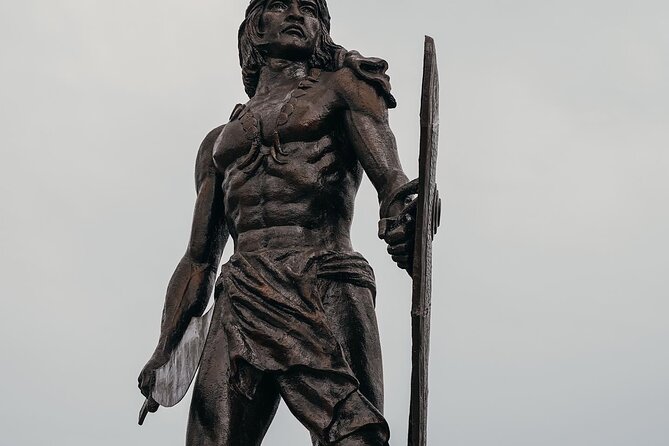
The final stop is the Lapu-Lapu Monument, which connects Cebu’s colonial story to resistance. Lapu-Lapu is honored as the first Philippine national hero to resist foreign rule, and the monument recalls his role in the Battle of Mactan.
The battle is remembered as a conflict between Magellan and the Spanish colonizers and local forces led by Rajah Lapu-Lapu. The stop also points to the way history lives in popular culture. A yearly reenactment recalls the event, actor-politician Lito Lapid made a film called Lapu-Lapu, and novelty singer Yoyoy Villame wrote a folk song about Magellan.
You have 30 minutes here. That is enough for the monument and a concise explanation, but the story deserves more than a quick photograph. I would ask the guide to explain how Lapu-Lapu, Magellan, Rajah Humabon, and the Christian conversion fit together.
Ending with Lapu-Lapu gives the day a useful balance. You begin with monuments to Cebu’s layered past and finish with a figure associated with resistance to foreign control. The Spanish arrival is not presented as the only viewpoint.
The pace, vehicle, and guide make the difference
This is a full day with limited time at most stops. Nine locations in roughly eight hours means you should expect road time, short visits, and a steady change of subject. That works well for a first orientation, but less well if you prefer sitting quietly in churches or reading every display.
The air-conditioned vehicle is important. Cebu’s heat and the climb toward Busay can make an open or poorly ventilated ride tiring. Pickup is offered, and mobile tickets simplify the start, though the pickup details should be confirmed carefully because the stated location mentions Tagbilaran City while the route is Cebu-based.
The group maximum is eight people. That size should make it easier to hear explanations and raise questions than on a large bus. It also gives the guide more room to respond to your interests, although no private tour is promised.
Guide Leila is a notable strength. She was praised for explaining Cebu’s history clearly and for giving practical recommendations about places to stay if you are considering a longer move to Cebu. That kind of local advice can be more useful than another memorized list of dates.
Who should book this Cebu day tour?
I would choose this tour if you have one free day and want a broad introduction to Cebu. It suits first-time visitors, couples, families who want an organized route, and anyone who wants both historic landmarks and hilltop views.
It is also a good fit if you enjoy photography. Sirao, Temple of Leah, and TOPS offer the strongest visual variety, while Fort San Pedro, Magellan’s Cross, and the Lapu-Lapu Monument provide the historical frame.
I would hesitate if you want a slow religious tour, a detailed architectural study, or long unstructured time at each site. The 30-minute format keeps the route moving, but it can make the experience feel like a sampler.
The $138 cost is easiest to justify when you value included admissions, air-conditioned transport, pickup, a small group, and a guide who can connect the stops. If you are comfortable arranging rides yourself and visiting fewer places, you may find the price harder to defend.
Free cancellation is available up to 24 hours before the start time. Changes or cancellations inside that window are not refunded, and poor weather can lead to a new date or full refund. Confirm the meeting point, especially the Cebu and Tagbilaran wording, before booking.
Should you book it?
Book this tour if you want Cebu’s main history sites, a Chinese temple, flower gardens, memorial architecture, and hill views in one organized day. The strongest reasons are the small group, air-conditioned vehicle, guide Leila’s local explanations, and the chance to see both the colonial center and Busay.
Skip it if your priority is depth over coverage. You will get a useful introduction, not a leisurely scholarly visit. For most first-time visitors with limited time, the mix is worthwhile, as long as you accept the quick stops and arrange your own meals.
FAQ
Where does the tour take place?
The stops are in Cebu, including central Cebu, Busay, and the Lapu-Lapu Monument. The stated location is Tagbilaran City, so confirm the exact pickup area before booking.
What time does the tour start?
The tour starts at 9:00 a.m.
How long does the experience last?
The tour lasts approximately eight hours.
How many people can join the tour?
The activity has a maximum of eight travelers.
Is pickup available?
Yes, pickup is offered.
Is transportation included?
Yes. An air-conditioned vehicle is included.
Are admission fees included?
Yes. All fees and taxes are included, along with admission tickets for the listed stops.
Are meals included?
No. Lunch and dinner are not included.
Is the tour suitable for most people?
Yes. The activity information says most travelers can participate.
What happens if bad weather cancels the tour?
You will be offered a different date or a full refund if poor weather causes cancellation. You can also cancel for a full refund if you do so at least 24 hours before the start time.