Cebu City: Half-Day Tour with Shopping
Cebu’s past is packed into four hours. This private city tour gives you a useful first look at the Philippines’ oldest colonial city, moving from Magellan’s Cross and Santo Niño to Fort San Pedro, an ancestral home, and selected shopping stops. I like the air-conditioned transport, a real comfort in Cebu’s heat, and I like having an English-speaking guide to explain why these places matter instead of simply pointing at them. The main catch is pace: six stops in half a day means you need comfortable shoes and a willingness to keep moving.
I also like the convenience of hotel pickup in Cebu City and the private-group format. Guides such as Belle, Liz, LizAnn, Stuart, and Mr. Oanio have earned praise for clear explanations and friendly service, while drivers have been valued for handling Cebu’s difficult traffic. The shopping portion may not always happen as advertised, and the Taoist Temple is temporarily closed, so you should book this for the historic sights first, not for a guaranteed shopping spree.
In This Review
- Key points to know before booking
- Why this four-hour Cebu tour works well
- Magellan’s Cross and the beginning of Cebu’s Catholic story
- Basilica Minore del Santo Niño, Cebu’s oldest Catholic church
- Fort San Pedro and the first Spanish settlement
- The Heritage Monument and the story in stone
- Yap-San Diego Ancestral House and a more personal past
- Beverly Hills and the temporarily closed Taoist Temple
- Shopping and the question of what is actually included
- What the private transport adds in Cebu traffic
- How fast is the pace?
- The guides make the difference
- Who should book this Cebu city tour?
- Booking details worth keeping in mind
- Should you book it?
- FAQ
- How long does the Cebu City tour last?
- What is the price per person?
- Is hotel pickup included?
- Is the tour private?
- What language does the guide speak?
- Is transportation air conditioned?
- Are entrance fees included?
- Is food included?
- Is the Taoist Temple open during the tour?
- Can I cancel for a full refund?
Key points to know before booking
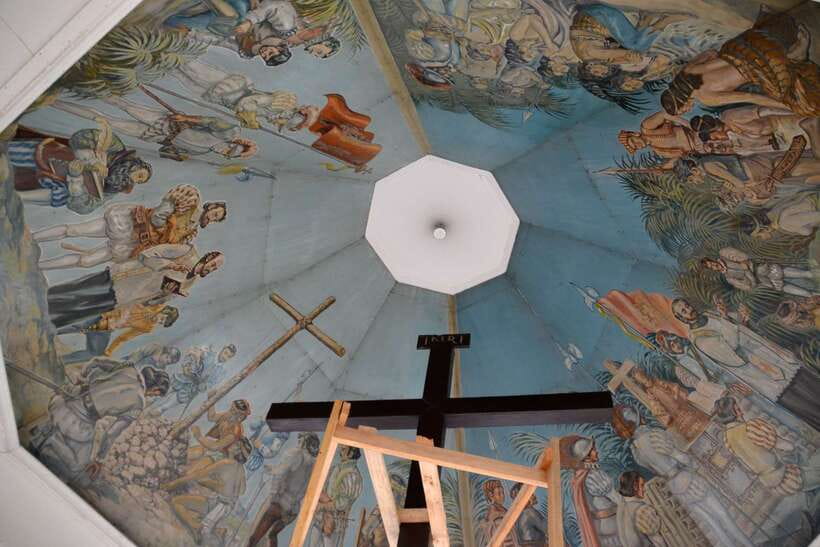
- Magellan’s Cross begins the history lesson: See the pavilion linked to the 1521 baptisms that introduced Catholicism to Cebu.
- Six inner-city stops fit into four hours: Expect short rides of roughly 10 to 15 minutes between several sites and a fairly brisk walking schedule.
- Fort San Pedro combines walls and a museum: The fort marks the center of the first Spanish settlement in the Philippines.
- Yap-San Diego Ancestral House adds a personal view: This old home offers a more intimate look at Cebu’s Spanish-era past than a formal monument.
- A private, air-conditioned vehicle makes the route easier: Hotel pickup and a skilled driver matter in heavy Cebu traffic.
- Shopping is the least certain part: Handicraft stores are planned, but one tour guest found that shopping was not included in practice.
Why this four-hour Cebu tour works well
Cebu City can feel confusing at first. Major churches, colonial sites, busy roads, shopping areas, and newer districts sit close together, but walking between them is not always pleasant or practical. This tour gives you a fixed route, a driver, and a guide who can connect the places into one story.
The price is $65 per person. For a private four-hour tour, that can be fair value if you want transport, entrance fees, hotel pickup, and live English commentary without arranging each stop yourself. You are paying for convenience as much as sightseeing. A solo visitor or couple may find the price less appealing than a larger private group, since the cost is charged per person, but the private format gives you a more personal setup than a large coach tour.
The timing is useful on a first day in Cebu or before an evening departure. One booking lasted about four hours and worked well before checking out and going to the airport. I would not treat this as a slow historical walk. It is a quick city orientation with several stops, short explanations, and time to look around.
Magellan’s Cross and the beginning of Cebu’s Catholic story
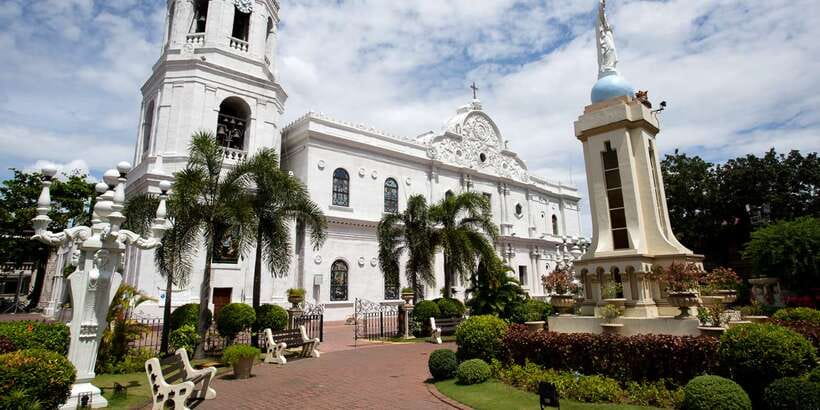
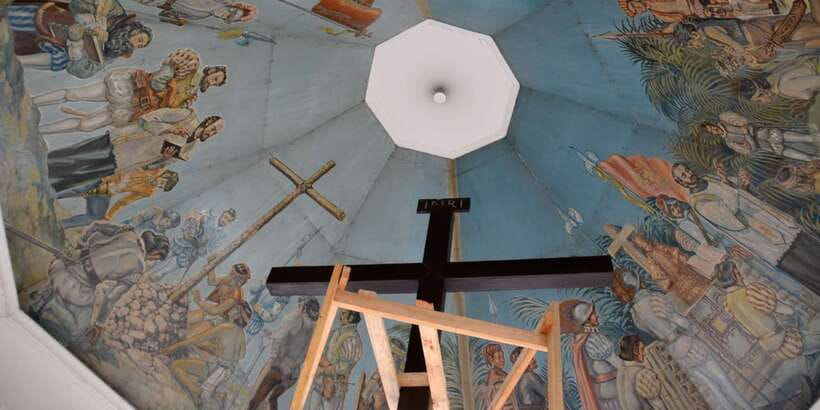
Magellan’s Cross is the emotional starting point. The cross was planted in 1521 to mark the baptism of native Filipinos into the Catholic faith. The pavilion is stately, but the real value comes from understanding what happened here and why the site remains so important.
Your guide should explain the cross in its setting rather than present it as an isolated object. Cebu’s Catholic identity is closely tied to this moment, and the nearby Santo Niño church continues that story. I find this pairing useful because the first stop introduces the arrival of Spanish influence, while the church shows how Catholic devotion became part of Cebu’s public life.
Do not expect a long visit. The tour has several sites to cover, so you will likely hear the key background, take in the pavilion, and move on. Bring sunglasses and a sun hat. The heat can be strong, and one person specifically suggested carrying an umbrella or fan for shade at some stops.
Basilica Minore del Santo Niño, Cebu’s oldest Catholic church
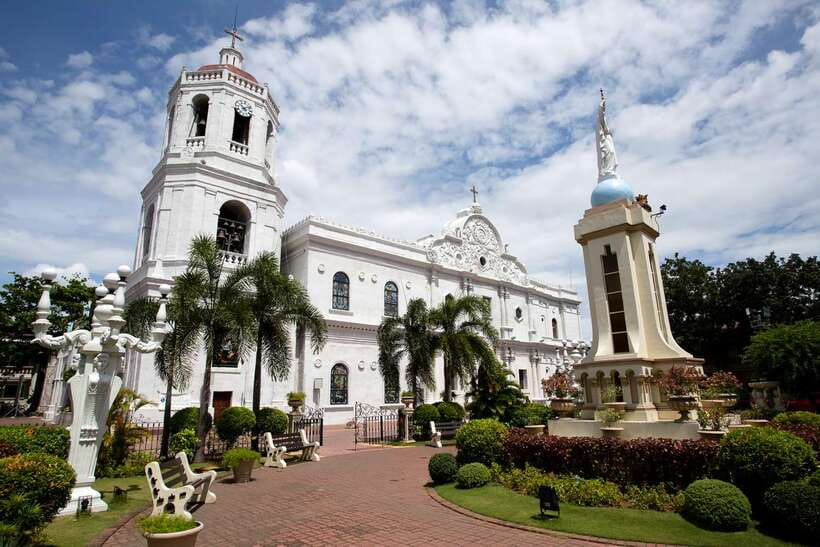
The Basilica Minore del Santo Niño is described as the oldest Catholic church in Cebu. It is one of the tour’s most important stops because it connects the 1521 baptism story with an active place of worship.
A guide can help you understand the church’s place in Cebu rather than leaving you to view it as just another old building. The name Santo Niño refers to the Holy Child, and devotion to the image is central to Cebu’s religious life. The tour description also links the church with the major Santo Niño celebration, a period when the city can be especially busy.
This stop calls for respectful behavior. Dress comfortably for the heat, but remember that you are entering a church. The visit may be brief, especially when traffic or crowds affect the schedule. Still, it is a strong stop for anyone interested in religion, colonial history, or the way old traditions remain part of daily life.
Fort San Pedro and the first Spanish settlement
Fort San Pedro gives the tour a different mood. Instead of a church or memorial, you get a fortified site that served as the nucleus of the first Spanish settlement in the country. The fort has been turned into a museum park, so the visit combines outdoor walls with historical displays.
I like this stop because it gives you a clearer sense of how Spanish power was organized. The fort is not just a scenic photo stop. Its location and military purpose help explain why Cebu became such an important base during the colonial period.
The adjacent museum adds useful context, though four hours does not allow for a long, careful museum visit. You should listen closely to the guide and focus on the displays that best explain the fort’s role. The fort also gives you a break from the church-heavy part of the route, although the open setting may feel hot in the middle of the day.
The Heritage Monument and the story in stone
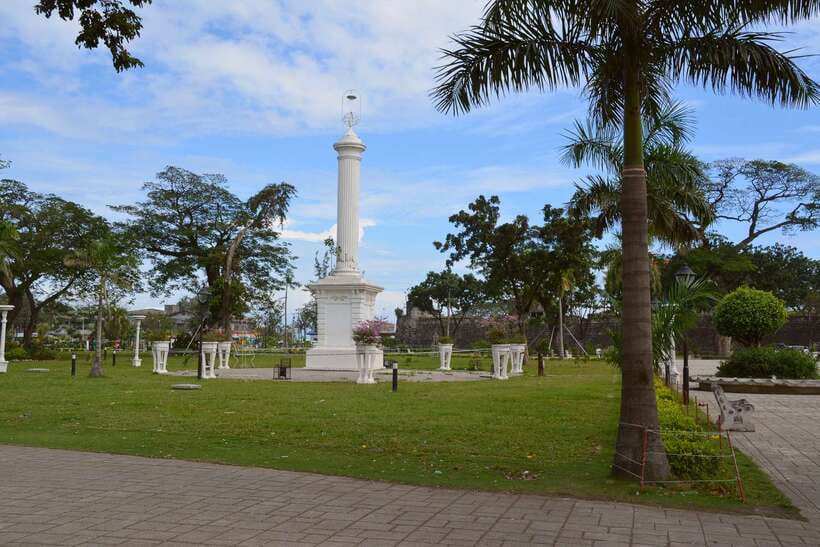
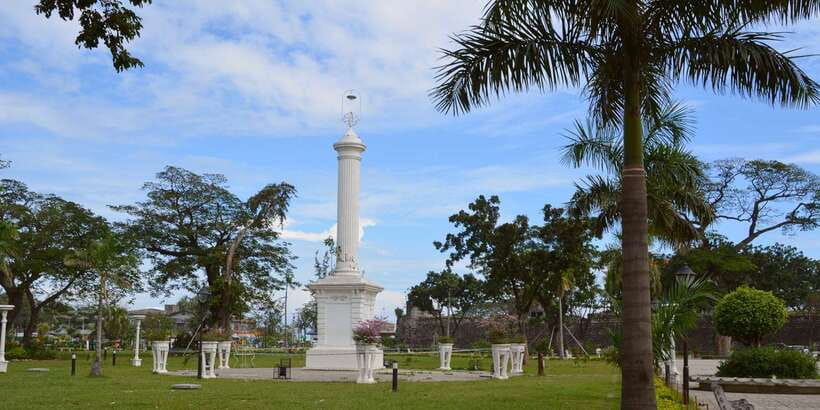
The Heritage Monument is included among the inner-city stops. It offers a visual summary of important moments in Cebu’s past through a large sculptural display.
This is the sort of place that benefits from a guide. Without explanation, you may see a group of figures and scenes but miss the meaning behind them. Your guide can point out the events represented and tie the monument back to the earlier stops at Magellan’s Cross, Santo Niño, and Fort San Pedro.
Treat this as a short interpretation stop rather than a museum visit. You will likely have time to look, take photographs, and hear the main points before the vehicle moves on. The value is in seeing Cebu’s story presented in one place.
Yap-San Diego Ancestral House and a more personal past
The Yap-San Diego Ancestral House is one of the most appealing stops for visitors who prefer lived-in history to grand civic monuments. The tour presents it as a way to travel back to 1600s Spain, through an old home filled with the character of an earlier period.
An ancestral house can make the past easier to picture. At a fort, you think about soldiers and settlement. At a church, you think about faith and public ritual. In a home, you get a closer look at domestic life and the families connected to Cebu’s colonial era.
The description does not promise a long guided house tour or list every object inside, so keep your expectations sensible. You are getting a short visit within a packed route. Still, this is the stop I would especially value after the larger monuments, since it gives the itinerary a human scale.
Beverly Hills and the temporarily closed Taoist Temple
The route includes the Taoist Temple at Beverly Hills, but it is temporarily closed. This is important. Do not book the tour assuming you will enter the temple or receive the full visit described in older plans.
The stop may be adjusted by the operator, but no replacement attraction is specified. I would confirm the current arrangement before booking if the temple is a major reason you want the tour. Since the core route includes several other historic sites, the closure does not erase the value of the experience, but it does reduce the number of available attractions.
This is also a reminder to keep your schedule flexible. Cebu traffic can be heavy, and a guide may need to manage the order of stops. One guide and driver were praised for covering six places despite difficult traffic, with the driver using local road knowledge to avoid jams.
Shopping and the question of what is actually included
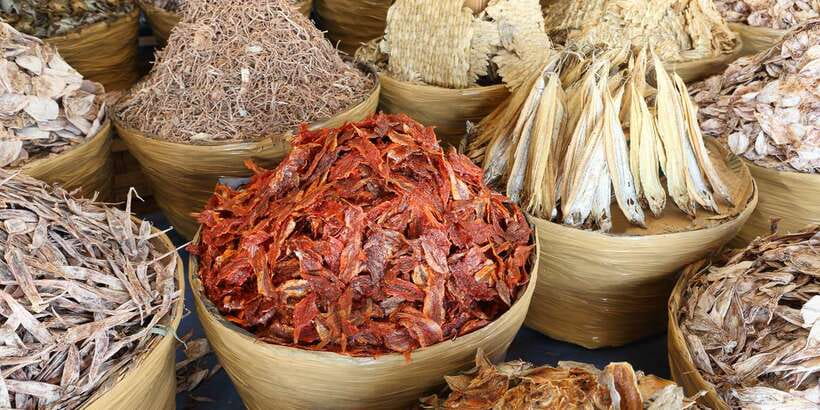
The final planned stop is at handicraft stores. This can be handy if you want souvenirs without spending another afternoon searching for shops. You may find locally made gifts and have a chance to browse after the historical visits.
But shopping is the uncertain part of this experience. One person enjoyed the educational route but said the advertised shopping did not take place. That does not mean the stop will always be skipped, but it does mean you should not make shopping the deciding reason to pay $65.
If you want a particular product, ask your guide early in the tour. The guide may be able to clarify the day’s plan and the available time. Remember that food, drinks, and gratuities are not included, so keep shopping money separate from the tour price.
What the private transport adds in Cebu traffic
The air-conditioned vehicle is not a minor perk. Cebu can be hot, and moving between several city sights by car is far easier than walking long stretches beside busy roads. The itinerary involves rides of about 10 to 15 minutes between several places, and those short breaks let you cool down before the next stop.
The driver’s role matters just as much. Several bookings praised drivers for being friendly, safe, punctual, and able to maneuver through crowded streets. One driver was specifically credited with getting the group around heavy traffic jams. That can make the difference between seeing the final stop and losing it to road delays.
The vehicle also makes this a practical option for a first orientation. You can see how the historic core fits together without spending energy on directions. It is not a sightseeing bus with panoramic windows, though. The point is to reach the sites efficiently, not to watch every street from the road.
How fast is the pace?
The tour lasts four hours and covers six places in the inner city. That is a lot for one morning or afternoon. You should expect quick visits, short walks, photographs, and compact history lessons.
A former participant described the tour as moving quickly and advised wearing good shoes. I agree with that advice. Use footwear that handles uneven walking and frequent stops. Sunglasses and a sun hat are listed as useful items, while an umbrella or handheld fan can provide extra shade.
The pace is a strength if you have limited time. It is a weakness if you want to sit quietly in each church, study every museum display, or spend a long time shopping. You can ask a private guide questions, but the clock still governs the route.
The guides make the difference
The strongest part of this tour is the human service. The overall rating is 4.8 from 36 reviews, and the transport received a perfect score from 94 percent of people who rated it. The repeated praise centers on friendly guides, clear English, historical explanations, and drivers who keep the route moving.
Several guide names appear in the booking record, including Belle, Liz, LizAnn, Stuart, Oliver, and Mr. Oanio. Belle was praised for explaining history and interesting places, while LizAnn was described as professional, pleasant, and skilled at bringing local sites to life. Stuart was valued for fluent English, punctuality, and flexibility.
Of course, a named guide is not guaranteed unless the operator confirms one. The useful point is that the tour depends heavily on the person assigned to you. A good guide turns a list of stops into a connected story. A less engaging guide could leave you with little more than photographs, so use the private format to ask questions.
Who should book this Cebu city tour?
I would recommend it to first-time visitors who want a quick introduction to Cebu City. It also suits people with a short stay, anyone staying in a Cebu City hotel, and those who prefer a private vehicle to public transport or independent navigation.
It is a sensible choice before checking out, before an evening flight, or at the start of a longer Philippine trip when you want to get your bearings fast. Families and couples may appreciate the air conditioning and hotel pickup, although the tour is not suitable for wheelchair users.
History and church lovers will get the most from the route. You will see the key colonial and religious landmarks, plus an ancestral home that adds a domestic view of the past. Shoppers may be less satisfied if the handicraft stop is changed or omitted.
Booking details worth keeping in mind
The price is $65 per person and includes air-conditioned transportation, an English guide, entrance fees, and pickup from Cebu City hotels. Food, drinks, and gratuities are extra.
The activity is a private group experience, so you are not joining an unspecified large coach party. You can reserve now and pay later, which helps if your schedule is still changing. Cancellation is free up to 24 hours before the tour for a full refund.
Check the starting time when you book, since availability changes. Also confirm the Taoist Temple situation and ask about the handicraft stop if either one is important to you.
Should you book it?
Book this tour if you want Cebu’s main historic sights handled in one comfortable, well-organized half-day. The strongest reasons are the private vehicle, hotel pickup, good transport record, and guides who have repeatedly been praised for friendly English explanations. Fort San Pedro and the Yap-San Diego Ancestral House also keep the route from feeling like a parade of churches.
Skip it if you want a slow, detailed museum day, guaranteed shopping, or access to the Taoist Temple while it is closed. For most first-time visitors with only four hours, I think the value is solid, especially if traffic and city navigation would otherwise eat up your time. Wear good shoes, bring sun protection, and treat shopping as a possible extra rather than the main event.
FAQ
How long does the Cebu City tour last?
The tour lasts four hours.
What is the price per person?
The price is $65 per person.
Is hotel pickup included?
Yes. Pickup is included from hotels in Cebu City.
Is the tour private?
Yes. It is listed as a private-group experience.
What language does the guide speak?
The live tour guide speaks English.
Is transportation air conditioned?
Yes. Air-conditioned transportation is included.
Are entrance fees included?
Yes. Entrance fees are included in the tour price.
Is food included?
No. Food and drinks are not included.
Is the Taoist Temple open during the tour?
The Taoist Temple at Beverly Hills is temporarily closed.
Can I cancel for a full refund?
Yes. You can cancel up to 24 hours in advance for a full refund.