Makati: Hands on Manila Cooking Class
Food tells the story of the Philippines. This two-hour class gives you a practical way to hear it, through pancit noodles, lumpia spring rolls, and sweet turon. I like the small groups of up to four, which give you real time at the cooker rather than a spot in the back of a demonstration. I also like the warm, personal teaching style of Chyl, whose stories connect simple snacks with family life and Filipino customs.
The class is aimed at beginners, but experienced home cooks can ask questions and take the lead. You prepare three dishes from start to finish, then sit down to eat what you made. The main drawback is the price: at $60 per person, it is not a cheap snack stop, especially since the venue may be open to the weather and the exact meeting point can take some care to find.
The name says Makati, while the supplied location information also lists Nueva Vizcaya. Since the meeting directions point to an outdoor courtyard in Makati, near the Peninsula Hotel and Greenbelt Mall, confirm the map pin with the operator before setting out. The Grab app is the easiest way to reach the area.
In This Review
- Five things to know before you book
- Why this short class works so well
- Meeting Chyl in outdoor Makati
- Pancit, lumpia, and turon on your own cooker
- Pancit noodles
- Lumpia spring rolls
- Turon for dessert
- What the two hours feel like
- The culture lesson behind the recipes
- How personal is the teaching?
- Is $60 a fair price?
- Getting there without losing your afternoon
- Who should book this cooking class?
- Should you book it?
- FAQ
- How long does the cooking class last?
- What dishes do you make?
- Is the cooking class taught in English?
- How many people can join?
- Is transportation included?
- Can children join the class?
Five things to know before you book
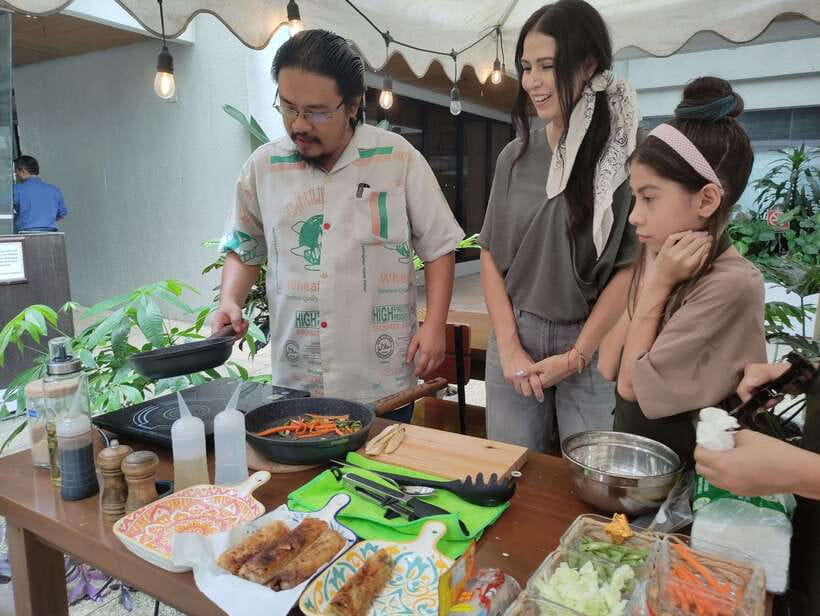
- Three substantial Filipino snacks: You make pancit, lumpia, and turon, a meal-sized spread despite the word meryenda, which means snack.
- Chyl is the key ingredient: Her calm, patient teaching and stories about family, food, and Filipino life are praised again and again.
- Only four people per group: You should get hands-on time with the ingredients, induction cooker, pans, and utensils.
- A useful class for home cooks: The recipes use simple ingredients and are easy to repeat in your own kitchen.
- Outdoor Makati setting: The location is convenient and pleasant, but rain can disrupt the setup because the area is not fully covered.
- Best for ages nine and up: The activity is wheelchair accessible, taught in English, and not suitable for children under nine or visually impaired participants.
Why this short class works so well
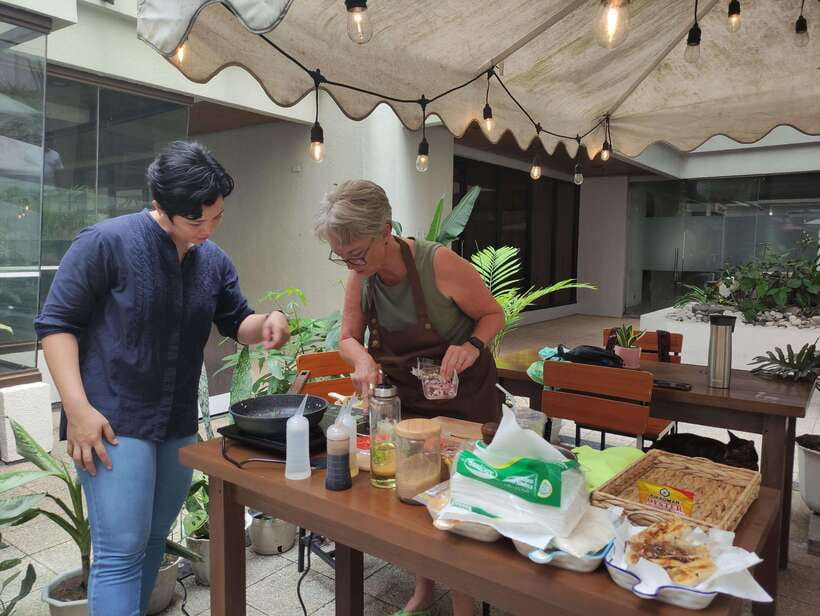
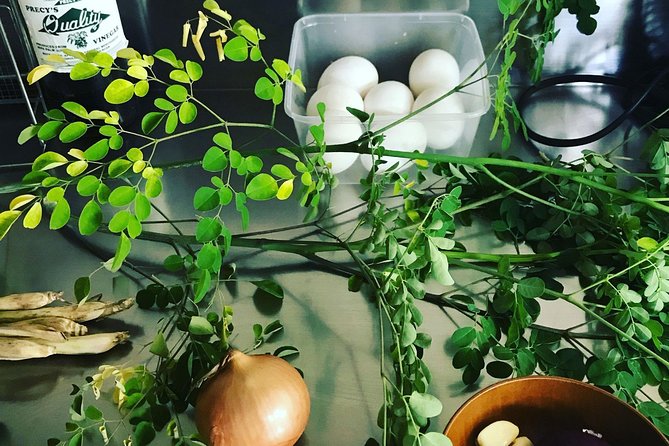
Many food classes leave you watching someone else chop, stir, and plate. This one is built around your own cooking station. Ingredients and equipment are set out ahead of time, so the two hours can focus on preparation, cooking, and conversation rather than a long introduction.
That matters if you have limited time in Manila. You get a clear taste of Filipino food culture without giving up half a day. The pace is also friendly to beginners. Chyl explains each step, then lets you handle the work, offering help when needed instead of taking over.
I like the balance. You are not simply handed a finished plate, but you are also not thrown into a complicated kitchen with no support. One person who arrived late because of traffic and a delayed Grab still received the full cooking time, although you should not count on every delay being handled so generously.
The class has earned a perfect rating from 49 reviews, and the praise is unusually consistent. The strongest theme is not only the food. It is Chyl’s manner: clear, calm, cheerful, and willing to explain the cultural meaning behind the dishes.
You can also read our reviews of more tours and experiences in Makati.


Meeting Chyl in outdoor Makati
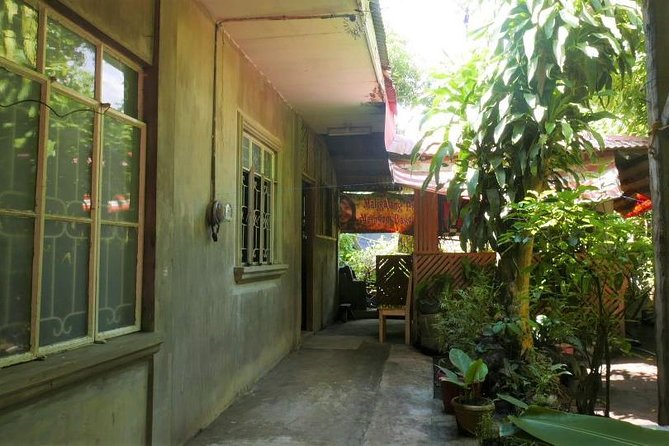
The class meets at an outdoor courtyard in front of a coffee kiosk. Look for the instructor there. The setting is close to the Peninsula Hotel and Greenbelt Mall, which makes it easy to pair with an afternoon in central Makati.
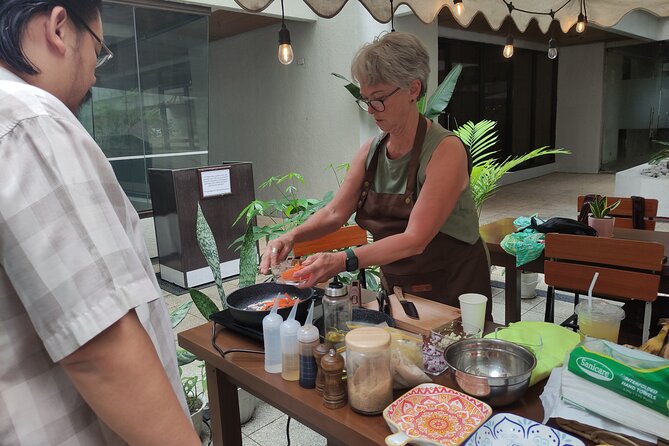
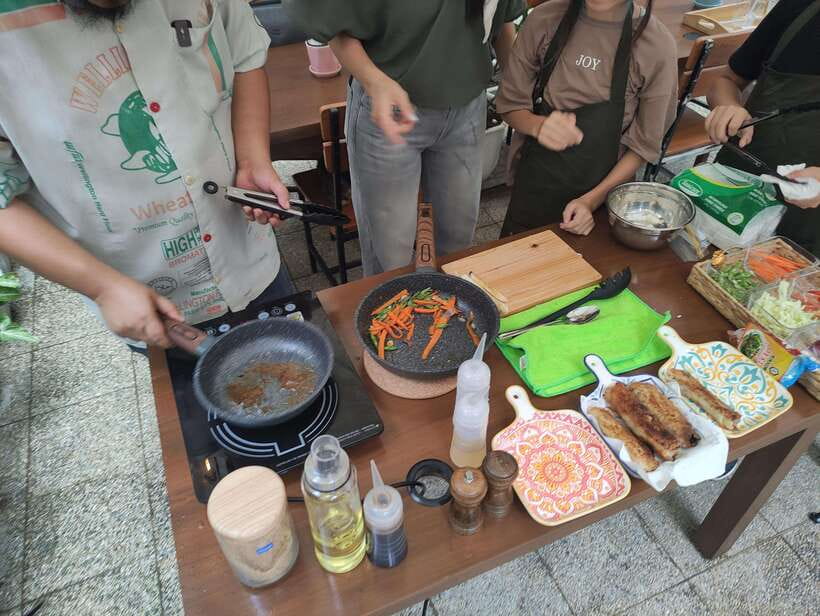
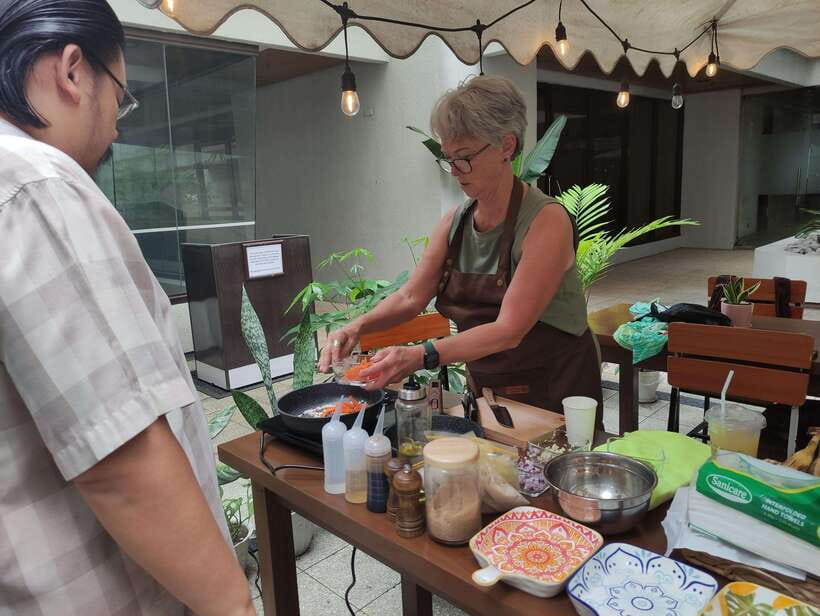
The courtyard gives the class a relaxed, open-air feel. One description notes that the tables are arranged with ingredients already prepared, and another praises the clean, modern equipment. A cold lemonade or another nonalcoholic drink is included, which is a small but welcome touch in Manila’s heat.
There is one practical catch. The courtyard is not fully covered. Rain has forced the staff to rearrange and dry equipment during at least one session. If the forecast looks poor, contact Explore Manila Tours before leaving your hotel and ask how the class will operate.
The directions say to find the instructor by the coffee kiosk, but one participant found the venue a little hard to locate without contacting the organizer first. I would save the operator’s contact information and check the exact pin rather than relying only on the general Makati address.
Pancit, lumpia, and turon on your own cooker
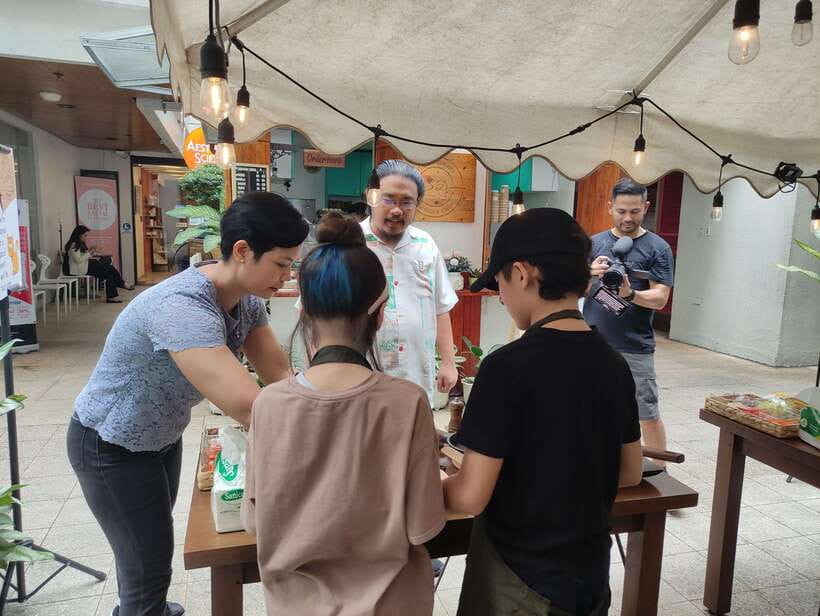
The menu is a smart introduction to Filipino home cooking because it covers savory, crunchy, and sweet flavors.
Pancit noodles
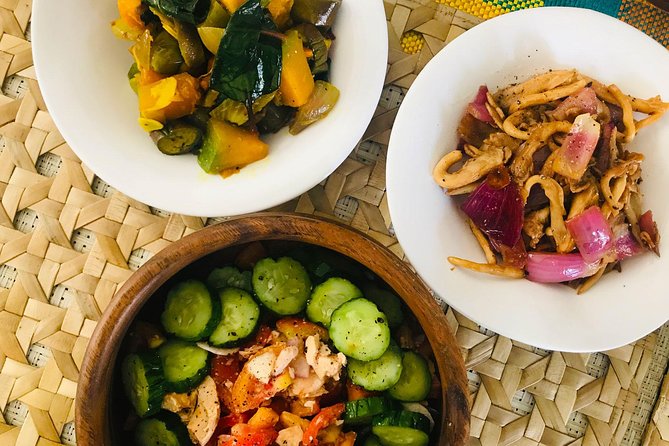
Pancit is the filling part of the meal. You work with noodles, vegetables, and a savory stir-fry method. The class gives you the chance to prepare the ingredients, operate the cooker, and adjust the dish as it comes together.
This is useful beyond the class. Stir-fried noodles are easy to adapt at home, even if the exact ingredients available in your country differ from those used in Manila. You learn the basic method rather than simply memorizing a restaurant-style presentation.
The class is especially helpful if you like stir-fried food but have little experience cooking Filipino dishes. Chyl’s instructions are described as clear and easy to follow, and the recipes are forgiving enough to help beginners feel capable.
Lumpia spring rolls
Lumpia adds the hands-on work. You prepare savory filling, wrap the rolls, and cook them until crisp. The contrast with the soft noodles makes the finished plate feel like a proper meal rather than a sample tasting.
This is also the part most likely to reward a second attempt at home. Rolling takes a little practice, and you can learn by doing rather than watching. Chyl guides the process and lets you take responsibility for your own portion.
The class uses fresh ingredients and provides the equipment, so you do not need to arrive with anything beyond comfortable clothes. Hotel pickup is not included, and you will need to make your own way to the venue.




Turon for dessert
Turon is the sweet finish, made with bananas fried and wrapped in a crisp crepe or wrapper. It may sound simple, but the class uses it to explain how an everyday snack can connect to family kitchens and wider Filipino food traditions.
That cultural context is one of the best reasons to take the class. You are not only learning that bananas can be wrapped and fried. You are hearing how familiar foods develop, change, and become part of daily life.
The dessert also rounds out the menu well. You leave having cooked a noodle dish, a savory spring roll, and a sweet treat. The result is far more food than the word snack suggests.
What the two hours feel like
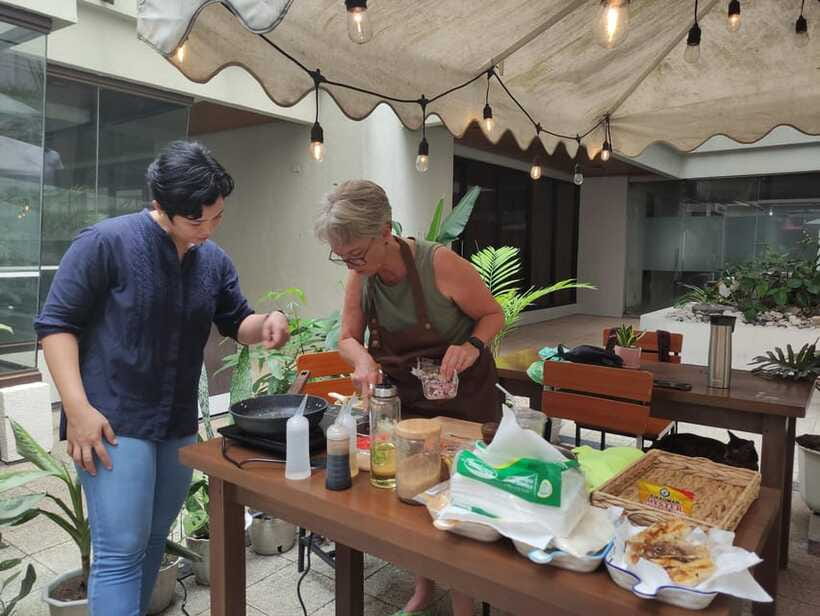
The session begins with the ingredients and tools ready at your table. You receive a nonalcoholic drink, meet the instructor, and get an introduction to the dishes.
From there, Chyl leads you through preparation. Expect to chop, assemble, wrap, stir, and cook rather than sit through a long lecture. Her teaching includes food trivia, family stories, and explanations of how Filipino people enjoy familiar home comforts.
The small group format helps here. With a maximum of four participants, the instructor can watch each person’s progress. If you are new to cooking, that means you can ask for help without slowing a large class. If you already cook often, you can ask more detailed questions and take a larger role.
The timing is well judged. Two hours is long enough to prepare all three dishes but short enough to fit into a day of sightseeing. The end is reserved for eating and comparing the finished food.
Plan to arrive hungry. Several people found the portions so generous that the food became two meals, with leftovers for dinner or breakfast. The class includes the food you prepare, but hotel transport is not part of the package.
The culture lesson behind the recipes
Filipino cuisine reflects the country’s many islands, mountain regions, coastal communities, and long history of exchange. You do not get a full survey of that subject in two hours, nor should you expect one. What you do get is a personal entry point through dishes that people grow up eating.
Chyl’s strongest contribution is her storytelling. She talks about family, childhood, food customs, and the role of snacks in Filipino life. The lessons help explain why a humble banana dessert or a pan of noodles can carry more meaning than its ingredient list suggests.
I find this more useful than a long list of dates and culinary terms. You learn how food fits into ordinary life, celebrations, and family comfort. The class also gives you a better chance of recognizing these dishes later at a market, food stall, or local restaurant.
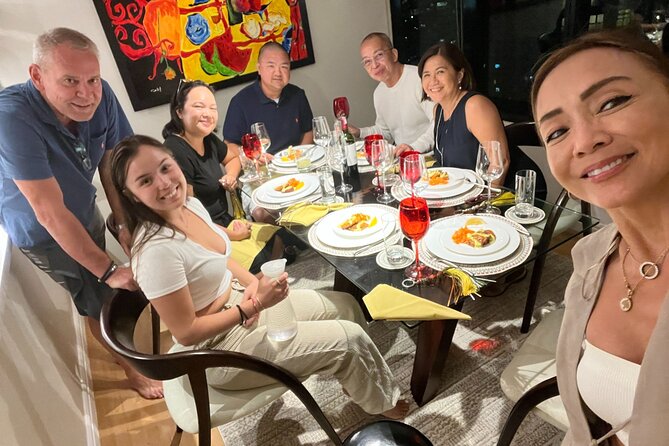
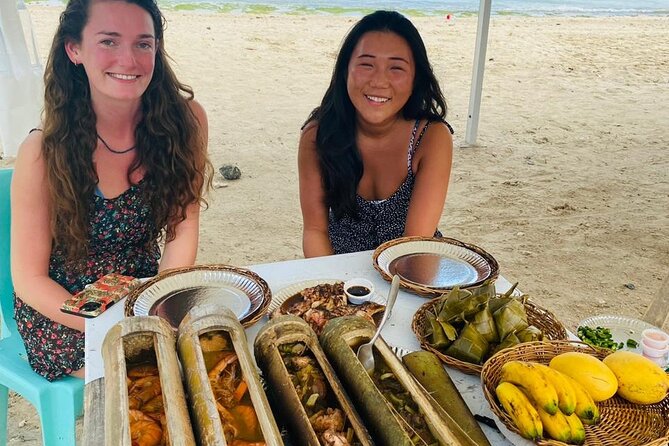
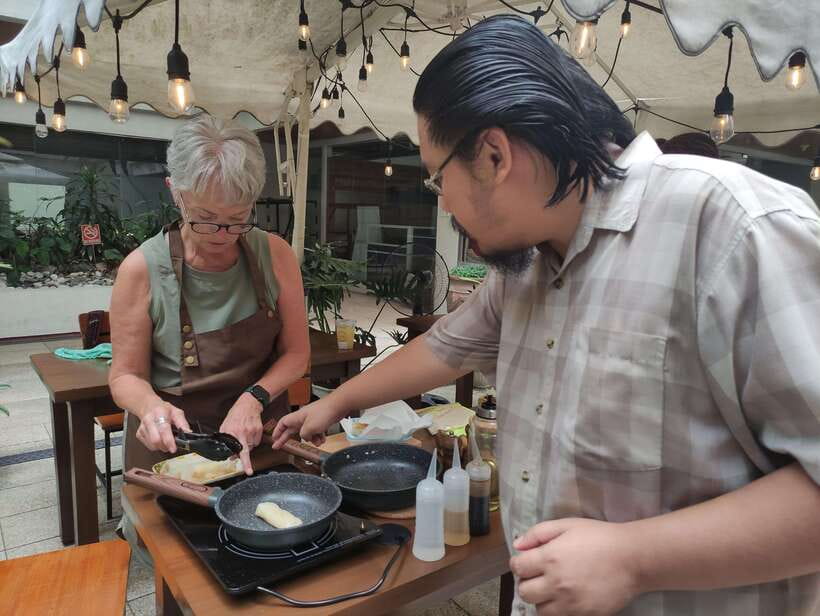
The setting adds to that feeling. Cooking outdoors around shared tables creates room for conversation. Solo participants can talk with the instructor and other cooks, while families or friends get a relaxed activity that is more social than a standard meal.
How personal is the teaching?
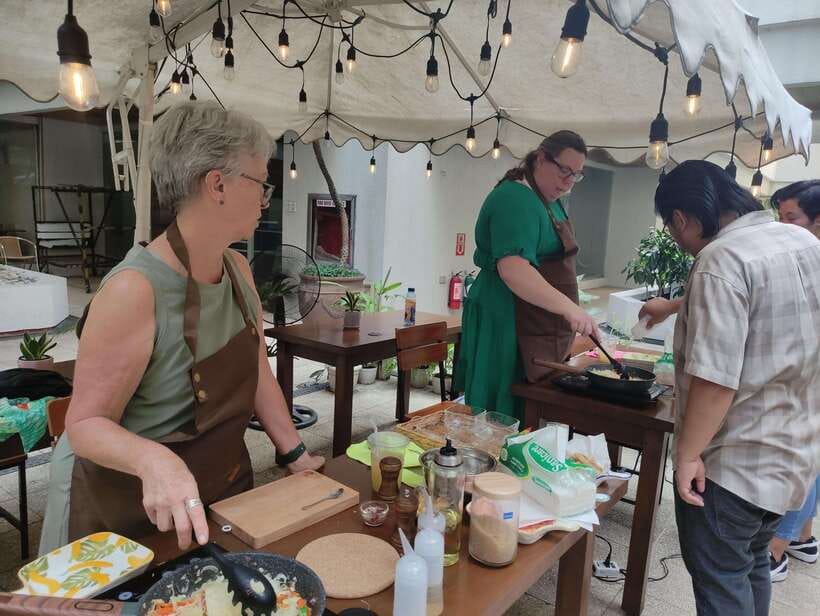
The answer depends partly on the size of your booking. With one to four participants, the lesson can feel almost private. One solo participant received a highly personal class and had plenty of time to ask questions.
That is a major advantage for a nervous beginner. Chyl is described as patient and supportive, and she can guide you through the recipes from scratch. You do not need previous cooking experience.
It also works for a confident cook. You can take the lead, compare techniques, and ask why a particular method is used. The class is not designed as advanced chef training, so experienced cooks should book it for Filipino food and cultural context, not for technical kitchen instruction.
Families should note the age rule. Children under nine cannot join, but the two-hour length makes the experience suitable for older children who can follow cooking instructions. It is wheelchair accessible, though the outdoor setting and weather conditions may still be worth confirming in advance.
The class is not suitable for visually impaired participants. English is the teaching language.
Is $60 a fair price?
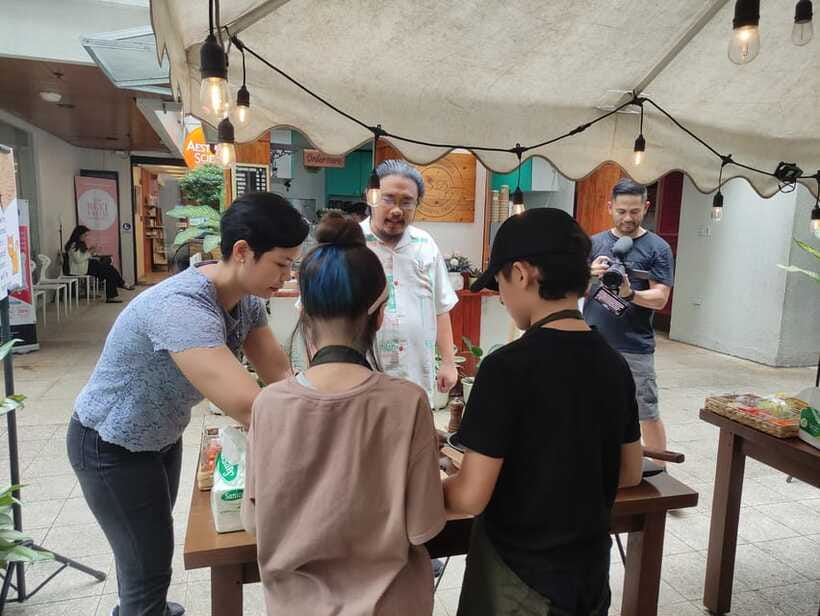
At $60, this class sits above the cost of simply eating pancit, lumpia, and turon at a local restaurant. If you only want lunch, it is not good value. You are paying for instruction, ingredients, equipment, a drink, and a small-group experience.
The value improves if you care about learning. You cook all three dishes yourself, receive guidance throughout, and leave with recipes you can try at home. The equipment is supplied, and the ingredients are prepared for the lesson, which keeps the experience simple for visitors staying in hotels.
The group limit is important. Four participants per instructor offers a level of attention that a large food tour cannot match. A private or nearly private session can justify the higher price, especially for solo visitors who want conversation as well as cooking.
Still, the cost may feel high to local residents or budget-minded visitors. One assessment suggested a lower price would make the class more attractive. The outdoor venue is pleasant, but it is not a polished culinary school, and weather can cause problems.
My advice is simple: book it if you want a guided cultural activity and recipes to take home. Skip it if your priority is the cheapest possible meal or a serious professional cooking course.
Getting there without losing your afternoon
The class does not include hotel pickup or drop-off. Download Grab before you need it. It is the local ride-hailing app and is more practical than trying to flag down transport while carrying your phone, directions, and cooking-class confirmation.
Traffic can make a short trip take much longer. Give yourself extra time, and confirm the meeting point with Explore Manila Tours before the session. The outdoor courtyard is in central Makati according to the meeting details, but the supplied location also names Nueva Vizcaya, so you should not ignore that discrepancy.
Wear comfortable clothes. You will be preparing ingredients and cooking for much of the session, so restrictive clothing or anything you would hate to splash with oil is a poor choice. No special equipment is required.
The venue’s proximity to Greenbelt Mall and the Peninsula Hotel makes it easy to build the class into a Makati day. You can shop or sightsee nearby before or after, but keep the schedule loose enough to allow for traffic and the full two-hour cooking period.
Who should book this cooking class?
I would put this near the top of the list for:
- Solo visitors who want a small, social activity
- Couples and friends looking for more than a restaurant meal
- Families with children aged nine and above
- Beginner cooks who want clear, forgiving recipes
- Experienced home cooks interested in Filipino food and food culture
- Anyone who wants a practical souvenir rather than another photograph
I would hesitate if you dislike outdoor activities, need a fully weatherproof venue, or want dishes that are more unusual than popular Filipino snacks. The menu is friendly and familiar, not an intensive survey of regional specialties. If you are hoping to cook dishes such as dinuguan or lelot balatong, this class may not meet that goal.
The recipes are chosen for success. That is good for most people, but it means the lesson is more approachable than adventurous.
Should you book it?
Yes, if you want a warm introduction to Filipino cooking in a compact format. The best part is the combination of hands-on work and Chyl’s personal stories. You make enough food to count as a full meal, learn recipes you can repeat at home, and gain a better sense of how Filipino food fits into family life.
Book with three cautions in mind: $60 is a premium for a two-hour activity, the outdoor courtyard may be affected by rain, and the Makati versus Nueva Vizcaya location detail needs confirmation.
For most visitors staying in Makati, the class offers good cultural value and unusually close instruction. Arrive hungry, wear comfortable clothes, use Grab, and verify the exact meeting point. If those conditions suit you, this is a tasty and useful way to spend an afternoon.
FAQ
How long does the cooking class last?
The class lasts two hours. You prepare the dishes, cook them, and eat the finished food during that time.
What dishes do you make?
The class includes pancit noodles, lumpia spring rolls, and turon, a sweet banana-based Filipino snack.
Is the cooking class taught in English?
Yes. English is the listed teaching language.
How many people can join?
The class is a small-group activity with a maximum of four participants.
Is transportation included?
No. Hotel pickup and drop-off are not included. The activity advises downloading Grab to arrange a car.
Can children join the class?
Children under nine are not permitted. The activity is described as family friendly for older children who meet the age requirement.