
Review · Bohol Countryside & Chocolate Hills
Market Tour and Provincial Filipino Cooking Class in the Countryside
Food tells the local story. This private four-hour experience takes you from Nagcarlan’s public market to Rex’s rural family home, where you help prepare East Laguna dishes with ingredients picked, pressed, or bought that day. I like the personal welcome, especially the backyard cacao drink, and I like that the cooking uses pako, coconut, honey, and carabao meat rather than standard restaurant fare. The main consideration is the short duration: market time, public transport, cooking, and lunch all share four hours.
I also like the small-group format. Your party travels with Rex, shops with him, and cooks in a real home instead of a teaching kitchen built for tourists. This makes the experience feel relaxed and highly personal, though anyone seeking a polished culinary school, a long market visit, or a large menu of dishes may find the setting simple and the schedule brisk.
In This Review
- Key details at a glance
- Why East Laguna food makes this class different
- Meeting Rex at SM City San Pablo Mall
- Exploring Pamilihang Bayan ng Nagcarlan
- Traveling by public transport to a family home
- A cacao drink from the backyard
- Pressing coconut milk by hand
- Making pako salad with stingless-bee honey
- Cooking carabao with coconut milk and green papaya
- Eating lunch in a simple country home
- Is $88.21 a fair price?
- Who will enjoy this four-hour experience?
- Should you book the Nagcarlan cooking class?
- FAQ
- Where does the tour begin?
- Where does the tour end?
- How long does the experience last?
- Is this a private activity?
- How do you get to Rex’s home?
- What food will you prepare?
- Are food and drinks included?
- Is cancellation free?
Key details at a glance
- Start at SM City San Pablo Mall: Meet Rex at the mall in San Pablo City, then travel together toward Nagcarlan.
- Shop at Pamilihang Bayan ng Nagcarlan: The market visit focuses on ingredients and delicacies used in provincial Filipino cooking.
- Receive a backyard cacao welcome drink: Rex’s family serves cacao made from beans grown at home.
- Make coconut milk from scratch: You press freshly grated coconut, an old-fashioned step that shows how much work sits behind familiar Filipino dishes.
- Cook unusual regional ingredients: Pako, or fiddlehead fern, appears in a salad, while carabao meat cooks with coconut milk and green papaya.
- Finish back at the meeting point: The private activity lasts about four hours and returns to SM City San Pablo Mall.
Why East Laguna food makes this class different
Filipino food changes from place to place. A dish you see in Manila or a resort restaurant may look familiar, but it will not always show how families cook in the provinces. This class gives you a direct look at East Laguna food through local ingredients and household methods.
The strongest part is the connection between the food and the place. Coconut does not arrive as a carton of prepared milk. You see freshly grated coconut and press it yourself. Green papaya comes from the family’s backyard. Honey comes from stingless bees around the home. Cacao also comes from the property, turning the welcome drink into more than a pleasant refreshment.
I find that kind of detail more useful than a generic lesson in Filipino cooking. You learn what grows nearby, what families buy at the market, and how a rural kitchen makes the most of what is available. The recipes are tied to daily life rather than designed only for presentation.
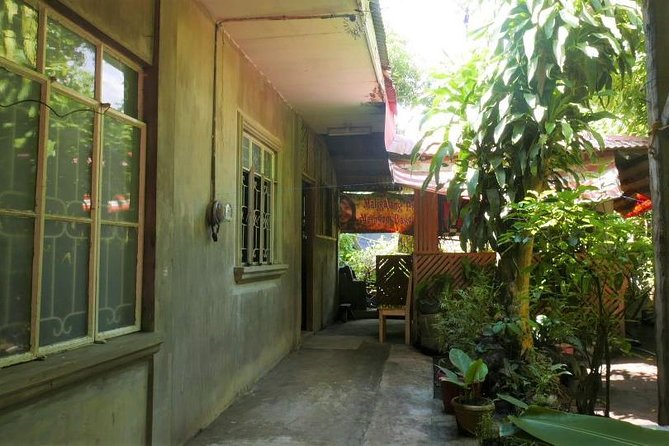
The setting also matters. Rex lives with his family in a simple country home in a farm community in Nagcarlan, Laguna. You are not touring a staged heritage house or a commercial restaurant. You are visiting a working home, so the experience may feel informal and modest. That is part of its appeal, but you should not expect a restaurant-style dining room or a highly polished cooking studio.
You can also read our reviews of more shopping tours in Luzon

Meeting Rex at SM City San Pablo Mall
The experience begins at SM City San Pablo Mall on the National Highway in San Pablo City. Rex meets you there and accompanies your party for the rest of the activity. Having a host with you from the start is helpful because the day involves a market visit and public transport to his home.
The meeting point is practical for anyone already staying in or passing through San Pablo City. You should allow enough time to find the mall meeting point, since the activity begins there rather than at the countryside home. The exact transfer time to Nagcarlan is not provided, so the four-hour schedule includes more than the cooking itself.
Because this is a private activity, only your group participates. That makes it easier to ask questions, pause over an unfamiliar ingredient, or adjust the conversation to your interests. It also means the price is most attractive when shared by several people. Group discounts are available, so check the total for your party rather than judging the value only by the per-person figure.
Exploring Pamilihang Bayan ng Nagcarlan
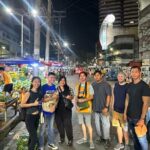
The market visit gives you the clearest look at everyday food in the area. At Pamilihang Bayan ng Nagcarlan, Rex points out local ingredients and delicacies used in provincial Filipino cooking. You also purchase a few ingredients before heading to his home.
This is not described as a long market tour with a separate tasting program. Instead, it is a focused shopping trip that prepares you for the cooking lesson. That distinction matters. You will see the ingredients in their ordinary market setting, then handle and cook some of them shortly afterward. The market is part of the meal, not just a sightseeing stop.
I like this approach because it helps you understand Filipino cooking as a practical routine. You can connect what you see at the stalls with what later appears on the table. The visit may also be more rewarding for you if you ask Rex about unfamiliar produce, local delicacies, and how people in the area use them at home.
The tradeoff is time. With only about four hours for the entire experience, you should expect a compact market visit rather than an hour-by-hour food expedition. If your main goal is to browse every stall or shop slowly for souvenirs, this may feel too quick. If you want a clear introduction to local ingredients before cooking, the format makes sense.
Traveling by public transport to a family home
After shopping, you travel with Rex to his home using public transport. This small detail adds an everyday quality to the experience. You are not simply driven from one attraction to another. You make the same sort of local transfer that helps connect San Pablo City with the rural community around Nagcarlan.
The transport arrangements are not described in detail, so you should be ready for a practical rather than luxurious transfer. Public transport can be less predictable than a private vehicle, and the home is in a farm community rather than in a central commercial district. That is worth keeping in mind if you need a tightly timed connection after the class.
Still, this part supports the purpose of the experience. The class is about provincial daily life, and the journey helps move you out of the mall and into that setting. You arrive at a family home where the food, ingredients, and surroundings all relate to one another.
A cacao drink from the backyard
Rex’s family welcomes you with a drink made from cacao grown in their backyard. This is one of the most memorable details because it starts the class with something specific to the household. You are tasting an ingredient connected to the property before you begin preparing lunch.
The welcome drink also sets the tone. You are entering a family home, not checking into a formal cooking venue. The atmosphere is meant to be relaxed, friendly, and rooted in local life. One strong appeal of the experience is exactly this calm contact with the family and home setting.
The tour also includes opportunities to taste homegrown honey, local wine, and vinegar. The supplied details do not specify when each is served or how much you taste, so consider them part of the food experience rather than a separate tasting flight. If you enjoy trying small-batch household products, these details add variety to the meal.


Pressing coconut milk by hand
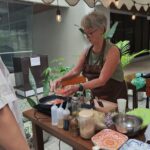
The cooking class begins with freshly grated coconut. You learn to make coconut milk by pressing the grated flesh, a step that many modern kitchens skip by using canned or packaged milk.
This is a useful lesson because coconut milk appears in many Filipino dishes, but the finished ingredient can hide the work involved. Pressing it yourself shows how a common local product becomes part of lunch. It also links the kitchen to the surrounding countryside, where coconut is a familiar ingredient rather than a specialty item.
The process may be hands-on and somewhat messy. That is not a flaw, but you should come prepared for a home kitchen experience rather than a demonstration where you sit back and take notes. You will get more from the class if you are willing to help with the basic preparation, ask questions, and accept that the meal may develop at a natural household pace.
Making pako salad with stingless-bee honey
Next, you use freshly picked pako, or fiddlehead fern, to make a salad with a honey dressing. Pako is a good example of how regional Filipino cooking can differ from the dishes most often found outside the country. It is not just a garnish. Here, it becomes part of the meal.
The dressing uses honey made by stingless bees around the family home. That detail gives the salad a strong sense of place. You are not only learning a recipe. You are tasting a product connected to the family’s surroundings and seeing how a simple ingredient can carry local character.
I would pay close attention during this part of the class if you want ideas you can adapt at home. The combination of a local fern and homegrown honey is unlikely to appear in a standard restaurant meal, which is exactly why this activity suits curious eaters. At the same time, ingredient availability may make the dish difficult to reproduce outside the Philippines. Its value is as a window into the area, not necessarily as a recipe you can make every week.
Cooking carabao with coconut milk and green papaya
The main savory lesson uses carabao, or water buffalo meat, cooked with coconut milk and green papaya. This is the sort of regional dish that gives the class its strongest reason to exist. It uses an ingredient you may not encounter on an ordinary restaurant menu and pairs it with coconut and backyard-grown papaya.
Carabao meat may be unfamiliar to you, so this is a good moment to ask Rex about its place in local cooking and how the family prepares it. The supplied information does not provide a specific recipe, cooking time, or spice list, so you should expect to learn through participation and conversation rather than follow a printed formula.
The green papaya adds another direct link to the home. Instead of treating vegetables as anonymous ingredients, the meal shows how a family uses what grows around them. That connection between the backyard and the cooking pot is one of the class’s best features.
You should also keep your food preferences in mind. The ingredients listed include carabao meat, coconut, and fiddlehead fern. If you avoid any of these, tell the provider in advance and confirm what substitutions are possible. No specific dietary adaptations are provided, so do not assume that every request can be met.
Eating lunch in a simple country home
Once the cooking is finished, you eat a lunch of regional East Laguna specialties with Rex and his family. The meal is the payoff, but it is also another chance to understand how the dishes fit together.
You are not simply served food prepared by someone else. You have seen the market ingredients, helped make the coconut milk, prepared the pako salad, and cooked the carabao dish. That sequence makes lunch more meaningful, even if you have limited cooking experience.
The home setting is central to the experience. You get a glimpse of how a Filipino family lives in a simple rural house, with food production and household life close at hand. The visit is likely to suit you if you prefer conversation and local contact to formal sightseeing.
There is a practical limit, however. A family home may not provide the comfort, space, or service of a restaurant. The description does not promise air-conditioning, a formal dining setup, or a long multi-course meal. I would book it for the welcome, the shared work, and the connection to the family, not for luxury.
Is $88.21 a fair price?
At $88.21 per person, this is not a bargain-priced market walk. The value depends on what you want from the day. You are paying for a private experience, a host who stays with your group, a market visit, public transport to a rural home, a cooking class, lunch, and contact with a local family.
That package is easier to justify for a small group, especially since group discounts are available. For one person, the price may feel high for four hours. For a couple or family that wants a private activity, the personal format can make the cost more reasonable.
I would also compare it with the quality of the ingredients and access. You are not merely buying a meal. The activity includes homegrown cacao, stingless-bee honey, local wine and vinegar, freshly grated coconut, pako, green papaya, and carabao. Several of those foods are difficult to find in a typical restaurant setting.
The best value comes if you enjoy asking questions and taking part. If you only want to eat lunch, the price will seem less attractive. If you want a food-focused encounter that shows how ingredients move from market and backyard to family table, the cost has a clear purpose.
Who will enjoy this four-hour experience?
I would recommend this class to you if you enjoy local food, informal cultural contact, and unusual ingredients. It suits couples, families, and small groups that want a private activity rather than a large class with strangers.
It is also a good choice if you have already seen major city sights and want time in the countryside. The activity offers a slower change of pace, and the strongest praise it earns comes from its relaxing atmosphere, enjoyable food, and easy contact with local life.
You may want to choose another activity if you need a luxury setting, a fully detailed recipe workbook, extensive market shopping time, or a menu built around familiar food. The class is intentionally simple. Its charm comes from that simplicity, but the same quality will not suit everyone.
The experience is scheduled for about four hours, and you return to the starting point at SM City San Pablo Mall. That makes it easier to fit into a day based in San Pablo City, but the unlisted transfer time means you should avoid booking a tight onward connection immediately afterward.
Booking confirmation arrives within 48 hours, subject to availability. You can cancel for a full refund up to 24 hours before the local start time. Changes or cancellations made inside that 24-hour window are not refunded, so check your plans before confirming. Service animals are allowed.
Should you book the Nagcarlan cooking class?
Book it if you want food with a real sense of origin. The market, public transport, backyard cacao, stingless-bee honey, hand-pressed coconut milk, pako, and carabao all connect the meal to East Laguna life. Rex’s personal hosting and the private format make the experience feel more like an afternoon with a local family than a standard cooking lesson.
Skip it if you prefer a polished culinary school, a long market tour, or guaranteed flexibility for special diets. For everyone else, this is a thoughtful way to spend four hours outside the usual restaurant circuit. The food may be the first reason you book, but the calm family setting and the chance to see how provincial ingredients become lunch are likely to be what you remember.
FAQ
Where does the tour begin?
The activity begins at SM City San Pablo Mall on the National Highway in San Pablo City, Laguna.
Where does the tour end?
The activity ends back at the meeting point at SM City San Pablo Mall.
How long does the experience last?
The experience lasts approximately four hours.
Is this a private activity?
Yes. Only your group participates in the activity.
How do you get to Rex’s home?
After meeting Rex and visiting the Nagcarlan market, you travel to his home using public transport.
What food will you prepare?
You make coconut milk from freshly grated coconut, prepare a pako fiddlehead fern salad with honey dressing, and cook carabao meat with coconut milk and green papaya.
Are food and drinks included?
The experience includes a lunch of regional Filipino specialties, a cacao welcome drink, and opportunities to taste homegrown honey, local wine, and vinegar.
Is cancellation free?
You can cancel up to 24 hours before the experience start time for a full refund. Cancellations or changes made less than 24 hours before the start time are not refunded.
More Shopping Tours in Luzon
More Tours in Luzon

More Tour Reviews in Luzon
Not for you? Here's more nearby things to do in Luzon we have reviewed






Bohol Countryside & Chocolate Hills: how the alternatives stack up





The lists this tour appears in