3-Hour Small Group Cebu City Tour
Cebu’s story fits into three useful hours. This compact morning tour gives you a quick, low-cost introduction to the city through Magellan’s Cross, Basilica Minore del Santo Niño, Colon Street, and the Heritage of Cebu Monument. You also reach the Philippine Taoist Temple and Yap Sandiego Ancestral House, two stops that add religious and family history to the usual downtown sights.
I like the small group of 12 or fewer, since it should be easier to hear the tour coordinator and ask a question than on a large coach trip. I also like the practical transport plan: pickup is offered in Cebu City, the vehicle is air-conditioned, and everyone finishes at Ayala Center Cebu. The main drawback is time. Three hours covers a lot, but several stops are short, and Fort San Pedro is not included.
In This Review
- Key points to know before booking
- Why this three-hour route works
- Magellan’s Cross and the beginning of Cebu’s Spanish story
- Basilica Minore del Santo Niño and a dress-code reminder
- Taoist Temple in Beverly Hills
- Yap Sandiego Ancestral House and old Cebu family life
- Colon Street and Cebu’s historic downtown
- Heritage of Cebu Monument in ten minutes
- Fuente Osmeña Circle and the final city view
- What the $38 price really covers
- Timing, pickup, clothing, and group size
- Who should book this Cebu tour?
- Should you book the 3-Hour Small Group Cebu City Tour?
- FAQ
- How long is the Cebu City tour?
- What time does the tour start?
- Where does the tour begin?
- Where does the tour end?
- Is hotel pickup included?
- How many people can join the tour?
- What attractions are visited?
- Is admission included?
- What should I wear?
- Is there a minimum age?
Key points to know before booking
- A fast introduction to Cebu’s past: You visit major religious, civic, and family heritage sites in one morning.
- Small group, maximum 12 people: This is more personal than a large city bus, with a better chance to hear the guide.
- The route mixes downtown and uptown Cebu: Expect churches and old streets, then a trip toward Beverly Hills for the Taoist Temple.
- Pickup and drop-off are useful but limited: Cebu City hotel pickup is included, while Mactan resort pickup and drop-off are not.
- Short visits keep the tour moving: Most stops last 10 to 15 minutes, so this is an overview rather than a slow museum visit.
- Guide Chen earned special praise: One posted comment highlighted Chen’s politeness, guiding, and photography help.
Why this three-hour route works
Cebu City can feel awkward to tackle on your own when you have only a morning. The sights are spread between the old downtown core and the higher Beverly Hills area, and arranging transport for several brief stops can cost more than expected. This tour solves that problem with a shared, air-conditioned vehicle and a fixed route.
At $38 per person, the value comes from combining transport, a tour coordinator, admission charges where applicable, and several important locations. You are not paying for an entire day of sightseeing, meals, or a private guide. Instead, you are buying a practical orientation to Cebu.
That distinction matters. I would choose this tour if I had just arrived in the city, had a flight or another appointment later, or wanted help identifying places worth revisiting. I would not choose it if I wanted long visits, extended shopping time, or a detailed look at every church and historic house.
The group limit of 12 is a helpful middle ground. You still share the outing, so the price stays modest, but you avoid the scale of a full-size bus. The tour’s published score is 3.9 from eight ratings, which suggests a generally positive but not flawless experience. The strongest praise centers on the guide, especially Chen, who was singled out for being polite and helpful with photographs.
You can also read our reviews of more city tours in Cebu
Magellan’s Cross and the beginning of Cebu’s Spanish story
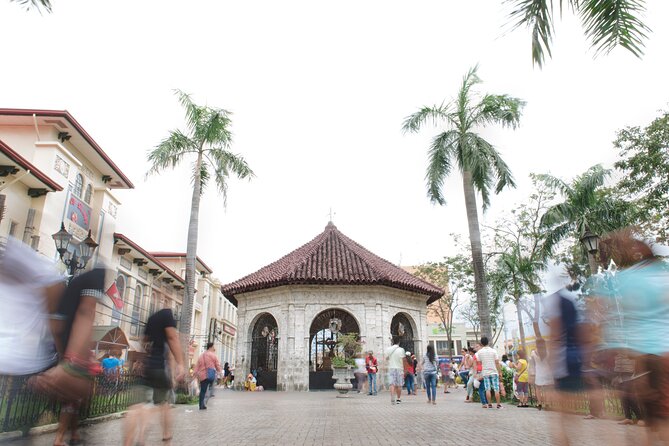
The first stop is Magellan’s Cross, with about 10 minutes scheduled and no admission charge. The cross is associated with the arrival of Portuguese and Spanish explorers under Ferdinand Magellan on March 15, 1521.
This is a short stop, but it carries unusual weight in Cebu’s story. It marks the beginning of a lasting Spanish and Catholic influence in the Philippines. You will not have time for a long historical lecture here, so listen closely to the guide’s explanation and use the stop to get your bearings in the old city center.
Ten minutes is enough for a look and a few photographs. It is not enough for a slow visit if the area is crowded or if you want to examine every detail. Keep your expectations sensible: this is a historical marker and a quick introduction, not a large museum.
Basilica Minore del Santo Niño and a dress-code reminder
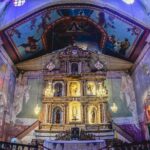
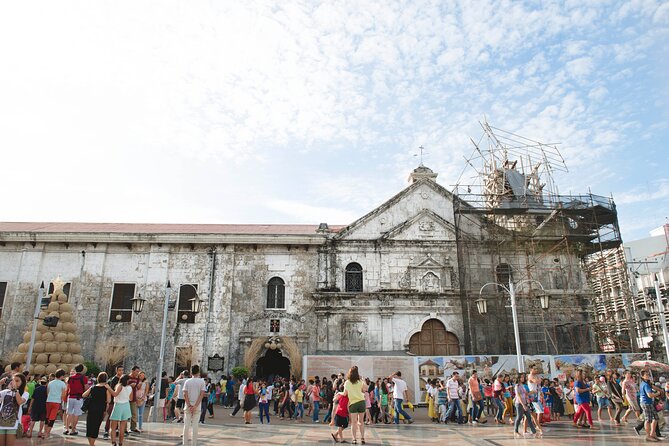
The next stop, Basilica Minore del Santo Niño, lasts about 15 minutes and is also listed with free admission. It is regarded as the oldest Roman Catholic church in the Philippines and was built on the site where the Santo Niño de Cebu image was found during the expedition of Miguel López de Legazpi.
This church gives the tour a stronger sense of Cebu’s living religious identity. Magellan’s Cross introduces the arrival of Christianity, while the basilica shows how that faith became part of the city’s daily and cultural life.
Dress matters here. Sleeveless shirts are not allowed, so wear smart casual clothing that covers your shoulders. Comfortable walking shoes are also recommended, since the morning combines vehicle time with short walks and standing visits.
The 15-minute schedule means you should follow the group’s timing. You may have enough time to look inside and take in the atmosphere, but not enough to study the building at leisure. If church interiors are your main interest, treat this tour as a first look and plan a separate visit later.
Taoist Temple in Beverly Hills
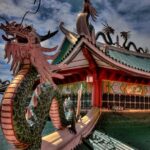
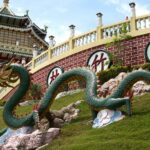
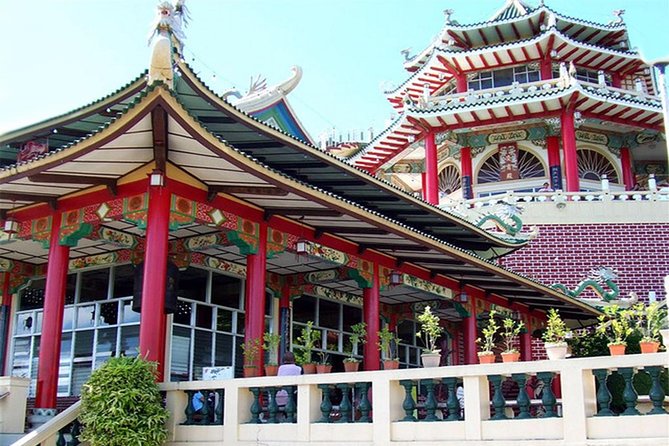
The route then moves to the Philippine Taoist Temple in Cebu’s Beverly Hills subdivision. Built by Cebu’s Chinese community in 1972, the temple provides a different religious and cultural perspective from the Catholic sites downtown.
This contrast is one of the tour’s best features. In less than an hour, you move from a Spanish-era Christian landmark to a temple connected with Cebu’s Chinese community. That variety helps you see the city as more than a collection of colonial sites.
The stop lasts about 15 minutes, and admission is included. Because the temple is outside the main downtown cluster, having a vehicle is especially useful. You do not need to work out a separate ride to reach it, and the air-conditioning will be welcome during Cebu’s warm weather.
The short visit may leave you wanting more time. You might find the temple grounds worth a longer look, but this tour is designed to keep moving. Listen for the cultural context and enjoy the change of setting rather than trying to inspect every feature.
Yap Sandiego Ancestral House and old Cebu family life
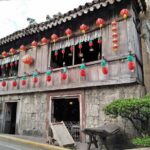
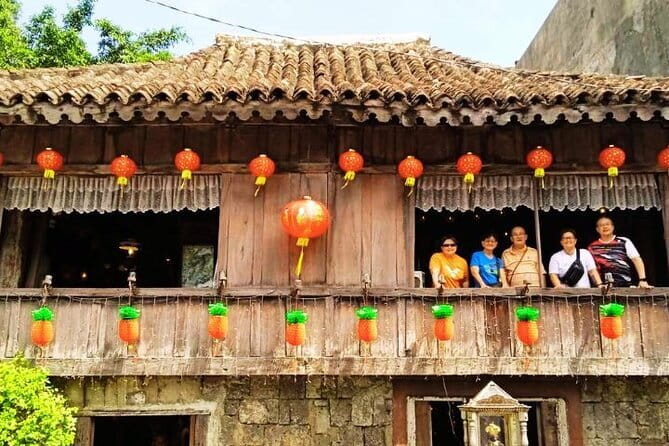
Yap Sandiego Ancestral House offers a more intimate look at the city. The house dates from sometime between 1675 and 1700 and was originally owned by Chinese merchant Don Juan Yap and his wife, Doña Maria Florido.
This stop is valuable because it shifts the focus from public landmarks to domestic history. A church tells you about religious institutions. A family house gives you a better sense of how people lived, preserved traditions, and shaped Cebu’s Chinese-Filipino character over time.
Around 15 minutes is planned here, with admission included. That is enough for a compact visit, though the schedule leaves little room for lingering. If old homes and household objects interest you, this may be one of the most rewarding stops on the route.
The house also helps break up the tour. You are not simply moving from one grand landmark to another. Instead, the route gives you a sequence of different scales: a famous cross, a major basilica, a community temple, and an old family residence.




Colon Street and Cebu’s historic downtown
Colon Street is included as part of the city drive and sightseeing route. It is named after Cristóbal Colón and is often described as the oldest and shortest national road in the Philippines.
The important thing here is the urban context. You see a street tied to Cebu’s early colonial and commercial development, rather than visiting a single enclosed attraction. The tour gives you a quick way to connect the major heritage stops with the city around them.
Do not expect a long walking tour of Colon Street. The schedule lists no separate admission or lengthy stop, so the experience is likely a passing look or a brief orientation. That is useful for a first visit, but anyone hoping to explore shops, side streets, or street life should return independently.
This is also where the tour’s limits become clear. Cebu’s downtown story cannot be fully explained in a few minutes. You get the framework, then you can decide which areas deserve more of your own time.
Heritage of Cebu Monument in ten minutes
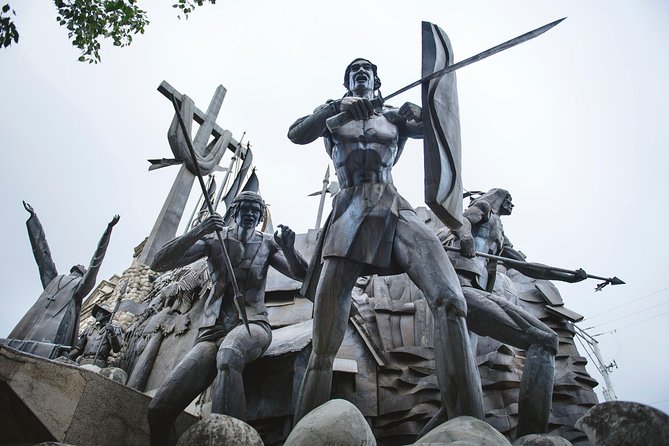
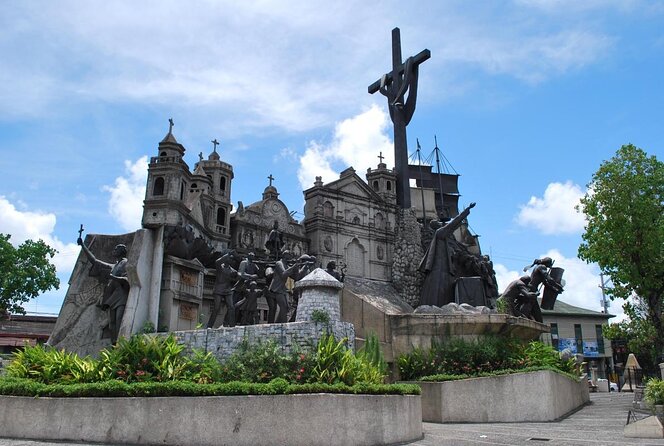
The Heritage of Cebu Monument is a tableau of sculptures made from concrete, bronze, brass, and steel. It presents scenes connected with important events and structures in Cebu’s past.
At about 10 minutes, this is another focused photo and explanation stop. The monument works well on a short city tour because many stories are gathered into one visual display. Instead of traveling to several separate places to hear about Cebu’s past, you can see a condensed presentation in one location.
I would pay attention to the guide’s explanation here. A sculpture group can be difficult to understand without context, and the value of the stop depends on knowing what the figures and buildings represent.
The stop is free, which helps keep the overall price reasonable. Still, it is best viewed as an introduction. You will gain a useful sense of Cebu’s historical sequence, but you will not have time for a detailed study of each scene.
Fuente Osmeña Circle and the final city view
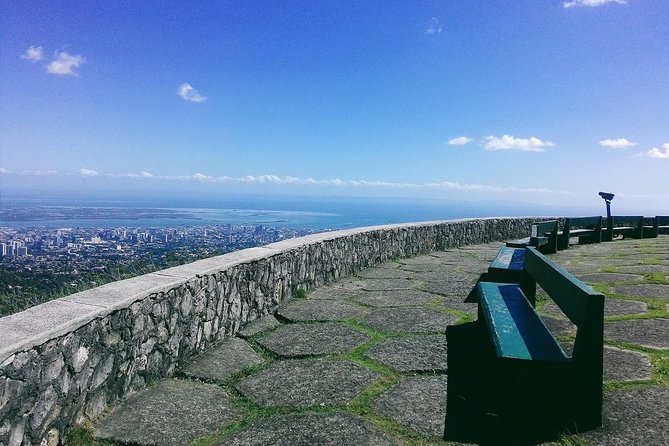
The route also includes Fuente Osmeña Circle, a rotunda park in uptown Cebu City with a fountain in the center. It is a well-known focal point of the Queen City of the South.
This is less about a single historic building and more about seeing one of Cebu’s familiar civic landmarks. The circle helps connect the old downtown sights with the modern city center and gives the tour a change of pace near the end.
The information provided does not assign a separate duration to this stop, so your time there may depend on traffic and the day’s schedule. Think of it as a brief orientation point rather than a major attraction requiring a long visit.
From there, the tour finishes at Ayala Center Cebu in Cebu Business Park. That is a practical endpoint if you want to continue shopping, eat lunch, use public transport, or arrange your next activity from a central location.
What the $38 price really covers
The $38 price is fair for visitors who value convenience. You receive Cebu City hotel pickup, an air-conditioned vehicle, a tour coordinator, taxes, fees, and handling charges. Admission is included for the Taoist Temple and Yap Sandiego Ancestral House, while the other listed stops have no admission charge.
The strongest value is the transport. Cebu’s attractions are not all clustered together, and the Taoist Temple requires a trip away from the central heritage area. Paying separately for several rides could reduce the savings of exploring independently, especially if you are alone or traveling as a small party.
The tour does not include food or drinks. That is not a serious issue for a three-hour morning, but plan your meal afterward. The drop-off at Ayala Center makes that easy, since it gives you a clear place to continue your day.
An earlier comment wished for better souvenir shopping and preferred something other than the Island Souvenirs store. Keep that in mind if shopping is important to you. The tour may include a souvenir stop, but the available information does not promise a particular shopping experience, and this should not be your main reason for booking.
Timing, pickup, clothing, and group size
The listed start time is 8:00 a.m., with the meeting point at SM City Cebu on Juan Luna Avenue. Hotel pickup is offered in Cebu City, but pickup and drop-off at Mactan resorts are not included. All participants are dropped at Ayala Center Cebu.
Because the route begins in the morning, confirm your exact pickup arrangement when booking. The information gives both a hotel pickup option and a specified meeting point, so you should not assume every hotel receives door-to-door service.
Wear smart casual clothing and comfortable walking shoes. Cover your shoulders for the basilica, and choose clothing suitable for both religious sites and warm outdoor stops.
There is no minimum age requirement. Children must be accompanied by an adult, and the child rate applies only when sharing with two paying adults. Most people can participate, but the tour does involve getting in and out of a vehicle and walking during the stops.
The maximum group size is 12. That is small enough for a more direct exchange with the coordinator, though it is still a shared tour. If you need a private pace or extra time at the basilica or ancestral house, this format may feel too fixed.
Who should book this Cebu tour?
I would recommend it to first-time Cebu visitors, cruise or hotel visitors with only a morning available, and anyone who wants a simple introduction without arranging several rides. It also suits families who prefer a fixed schedule and travelers who want an air-conditioned vehicle between sights.
The tour is especially useful if you want both the major Catholic landmarks and a glimpse of Cebu’s Chinese cultural influence. The combination of Magellan’s Cross, Santo Niño Basilica, the Taoist Temple, and Yap Sandiego Ancestral House gives you more range than a route focused only on downtown monuments.
I would hesitate if your priority is Fort San Pedro, since it is not included. I would also look elsewhere if you want serious souvenir shopping, a long meal, or extended time at any one location.
Free cancellation is available up to 24 hours before the start time for a full refund. Changes or cancellations made less than 24 hours before departure are not accepted for a refund.
Should you book the 3-Hour Small Group Cebu City Tour?
Book this tour if you want a compact, affordable city introduction with transport handled for you. The route covers Cebu’s most recognizable heritage points, adds two less familiar cultural stops, and ends at a useful central location.
Skip it if you already know Cebu well or want a slow, specialist tour. Three hours moves quickly, but that is also the point. With a maximum of 12 people, a praised guide such as Chen, and a price that includes the vehicle and coordinator, it is a sensible first look at Cebu rather than a complete study of the city.
FAQ
How long is the Cebu City tour?
The tour lasts approximately three hours.
What time does the tour start?
The listed start time is 8:00 a.m.
Where does the tour begin?
The stated meeting point is SM City Cebu on Juan Luna Avenue, Cebu City.
Where does the tour end?
All participants are dropped off at Ayala Center Cebu in Cebu Business Park.
Is hotel pickup included?
Pickup at Cebu City hotels is included. Pickup and drop-off at Mactan resorts are not included.
How many people can join the tour?
The group has a maximum of 12 participants.
What attractions are visited?
The route includes Magellan’s Cross, Basilica Minore del Santo Niño, the Philippine Taoist Temple, Yap Sandiego Ancestral House, Colon Street, the Heritage of Cebu Monument, and Fuente Osmeña Circle.
Is admission included?
Admission to the Taoist Temple and Yap Sandiego Ancestral House is included. Magellan’s Cross, the basilica, and the Heritage of Cebu Monument have no admission charge listed.
What should I wear?
Smart casual clothing and comfortable walking shoes are recommended. Sleeveless shirts are not allowed at the Basilica Minore del Santo Niño.
Is there a minimum age?
No minimum age is required. Children must be accompanied by an adult, and the child rate applies only when sharing with two paying adults.