Cebu City Tour
Cebu’s oldest stories fit into three busy hours. This private Cebu City tour links Chinese, Spanish, Filipino, and Catholic landmarks in one compact outing, with hotel pickup, a private vehicle, and drop-off included. I like the easy transport, especially in Cebu traffic, and I like the mix of major sights with the Yap Sandiego Ancestral House, where the city’s past feels more personal. The main drawback is simple: at about $38 per person, the tour may feel costly if you want a slow visit or already know Cebu’s central sights.
I also like the choice of guide service. A coordinator is included, while a Department of Tourism certified guide is available as an upgrade. That distinction matters here because several stops need explanation to make sense, and guides such as Vernie, Angelica, Chen, and Josh were praised for making the history easier to follow. The schedule is brisk, so you should expect an efficient introduction rather than a leisurely day of exploring.
In This Review
- Key points to know before booking
- What the three-hour route actually gives you
- Taoist Temple in Beverly Hills Subdivision
- Heritage of Cebu Monument and the city in sculpture
- Yap Sandiego Ancestral House, Cebu’s most personal stop
- Magellan’s Cross and the arrival of Christianity
- Santo Niño Basilica, the emotional center of the route
- Why the private vehicle matters in Cebu
- Is $38 per person a fair price?
- Who will get the most from this tour?
- Practical tips for a smoother visit
- Should you book the Cebu City Tour?
- FAQ
- How long does the Cebu City Tour last?
- What places are included?
- Is hotel transportation included?
- Is this a private tour?
- Is a Department of Tourism certified guide included?
- Can I cancel for a full refund?
Key points to know before booking
- Five central Cebu sights in about three hours: You visit the Taoist Temple, Heritage of Cebu Monument, Yap Sandiego Ancestral House, Magellan’s Cross, and Santo Niño Basilica.
- Private hotel pickup and drop-off: Your group rides in a private vehicle instead of arranging taxis between stops.
- The Taoist Temple adds a different side of Cebu: Built in 1972 by Cebu’s Chinese community, it gives the tour a religious and cultural range beyond Spanish-era landmarks.
- The ancestral house is the most intimate stop: The Yap Sandiego home, built between 1675 and 1700, offers a glimpse into an old merchant household.
- A certified guide is worth considering: The stronger guide feedback focused on clear commentary, not just transportation.
- The pace is quick: Some stops last only five minutes, so this works best for orientation and sightseeing rather than detailed study.
What the three-hour route actually gives you
This is a private half-day-style city tour, but the stated duration is about three hours. The listed visits add up to roughly 55 minutes of stop time, which leaves the rest for hotel pickup, driving, traffic, and moving between sites. That breakdown tells you a lot: you cover ground efficiently, but you will not have long stretches at any one attraction.
The private format is one of the tour’s strongest practical features. You are not waiting for a large group to finish shopping, finding taxis in unfamiliar streets, or negotiating several short rides. One review described the benefit clearly: with a driver, the two people in the group could jump out, see a stop, and get back into the vehicle while Cebu traffic carried on around them.
You should still think of this as a structured introduction. The route touches several important places, but the short visits leave little room for extended photographs, quiet reflection, or extra time inside the church complex. If you have only one free morning, the pace is useful. If you have several days in Cebu City, you might prefer a longer and more focused cultural visit.
You can also read our reviews of more city tours in Cebu
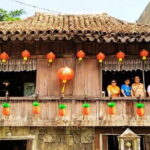

Taoist Temple in Beverly Hills Subdivision
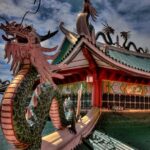
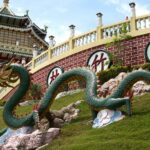
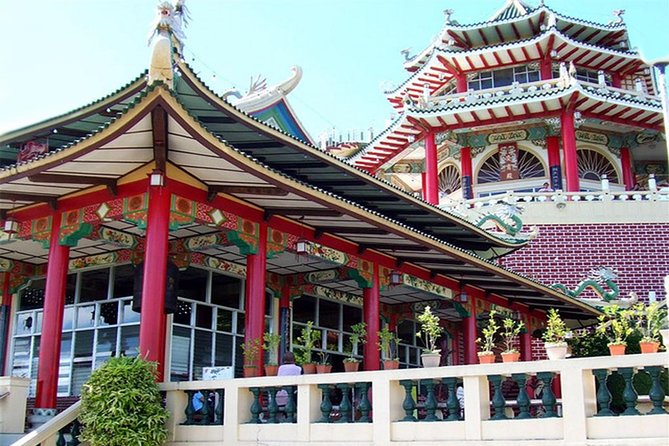
The first stop is the Taoist Temple in Cebu City’s Beverly Hills Subdivision. Cebu’s Chinese community built the temple in 1972, giving you an immediate reminder that the city’s identity is not limited to Spanish colonial history or Catholic tradition.
The temple broadens the tour nicely. You begin with a place connected to Cebu’s Chinese community, then move toward landmarks tied to Spanish exploration and Filipino Catholic life. That sequence helps you see the city as a meeting point of cultures rather than a collection of disconnected monuments.
The scheduled visit is 15 minutes, and admission is listed as free. That is enough time for a quick look and photographs, but not a long architectural study. Your guide or coordinator can add the context that a short stop cannot provide on its own.
Because the temple is in Beverly Hills Subdivision, the private vehicle is especially useful. You avoid spending part of your morning figuring out the route by taxi. The tradeoff is that the stop may feel brief if this is the place you most want to study.
Heritage of Cebu Monument and the city in sculpture
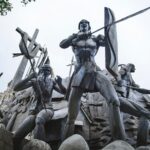
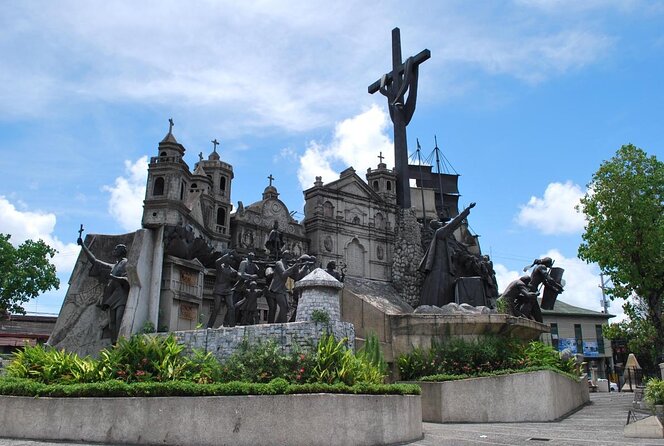
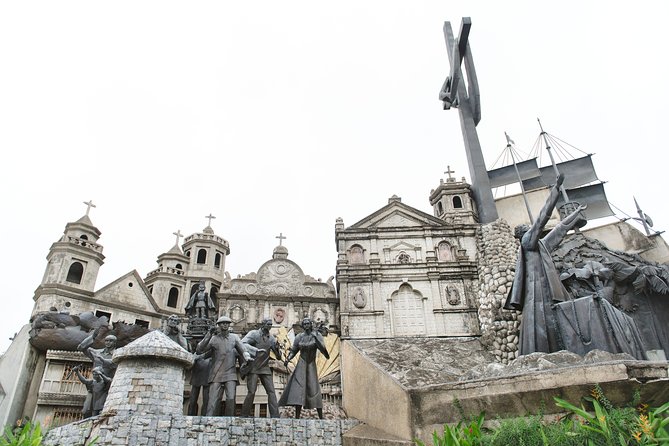
The Heritage of Cebu Monument is a tableau made from concrete, bronze, brass, and steel. Its sculptures show scenes linked to Cebu’s history, including important events and structures.
You get only about five minutes here, so treat it as a visual introduction rather than a full museum visit. The monument works well with a guide because the figures and scenes need some explanation. Without context, you may simply see a large public artwork. With a clear account of what the scenes represent, the stop becomes a quick lesson in how Cebu remembers its past.
This is one of the places where the quality of your guide can change the experience. Angelica was praised for bringing the sites to life through her commentary, while Chen was credited with explaining the important points clearly. A good guide turns five minutes into something useful. A weak one leaves you with a photograph and little else.
Yap Sandiego Ancestral House, Cebu’s most personal stop
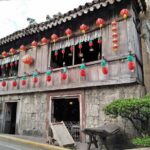
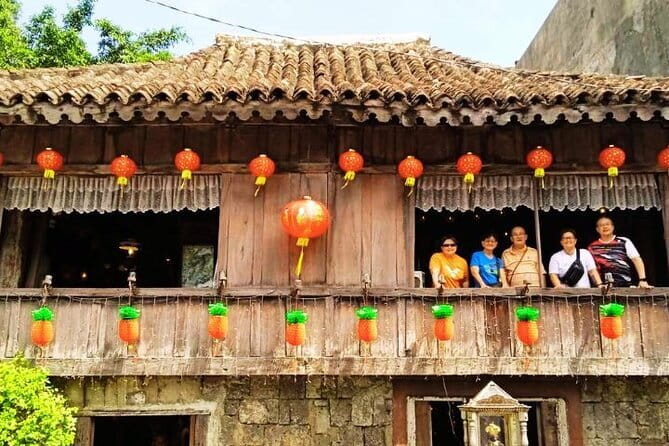
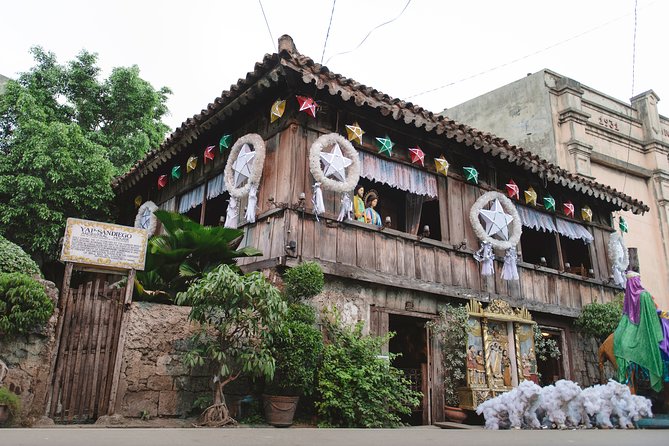
The Yap Sandiego Ancestral House gives the tour its strongest connection to everyday life. It was built sometime between 1675 and 1700 and was originally owned by the Chinese merchant Don Juan Yap and his wife, Dona Maria Florido.
Compared with a monument or church facade, an old house can show how people lived, stored belongings, and arranged domestic space. That makes this stop valuable even though it lasts only about 15 minutes. You are not just looking at a public symbol. You are seeing a preserved household linked to Cebu’s Chinese merchant community.
I would pay close attention here, since the short timing means you may need to move along before you have examined every object or room. This is also a place where a Department of Tourism certified guide could add real value by explaining the house’s owners and its place in Cebu’s past.
The ancestral house is a good reason to choose this tour over a simple drive past the major churches. It adds texture to the route. The tour does not only tell you about famous arrivals and religious landmarks. It also gives you a glimpse of an older family home.
Magellan’s Cross and the arrival of Christianity
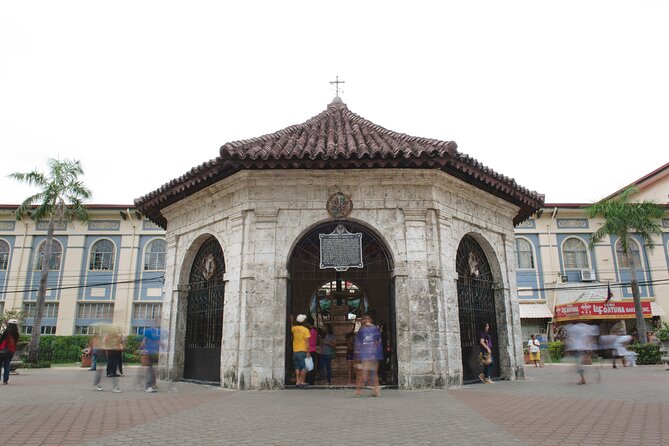
Magellan’s Cross marks the Christian cross planted in Cebu by Portuguese and Spanish explorers under Ferdinand Magellan’s orders on March 15, 1521. The stop is scheduled for about five minutes, so you will have time to see the site and hear its basic story, but not much more.
The cross is important because it connects Cebu to the beginning of the Spanish-era Christian chapter in Philippine history. It also helps explain why the next stop, the Santo Niño Basilica, carries such weight.
Five minutes can feel tight at a site with such a large historical meaning. The value comes from placing it in the wider route. On its own, it is a very short visit. In sequence with the ancestral house, monument, and basilica, it becomes one piece of a larger account of Cebu’s changing religious and political life.
If you want detailed discussion of Magellan, the Spanish expedition, or the effects of colonization, confirm that your selected guide includes more than basic coordination. The tour’s guide option matters most at stops like this.




Santo Niño Basilica, the emotional center of the route
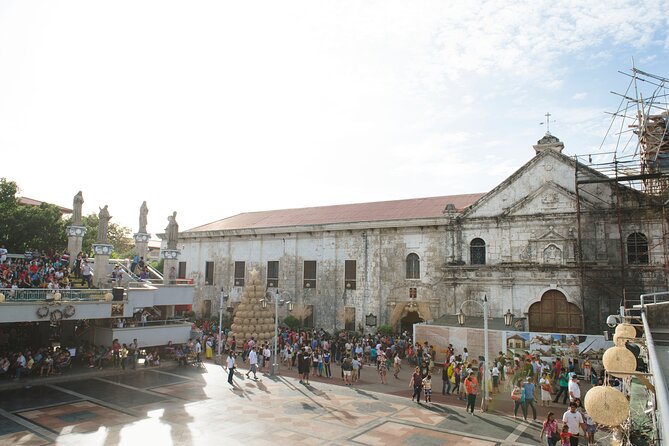
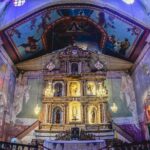
The Basilica Minore del Santo Niño de Cebu is identified as the oldest Roman Catholic church in the Philippines. It was built on the spot where the image of the Santo Niño de Cebu was found during Miguel Lopez de Legazpi’s expedition.
This is likely to be the most meaningful stop for visitors interested in Philippine Catholic history. The basilica connects the arrival of Christianity, the Santo Niño image, Spanish rule, and Cebu’s continuing religious life in one place.
The scheduled visit is about 15 minutes. That gives you a reasonable first look, but the time may pass quickly if services, crowds, or church activity are underway. The tour information also notes that sleeveless shirts are not allowed, so dress with the basilica’s rules in mind. You do not want a clothing issue to cut your visit short.
The church is more than a photo stop. Pause long enough to notice the setting and listen to the explanation. A guide can help you understand why this church matters instead of treating it as the final item on a checklist.
Why the private vehicle matters in Cebu
Hotel pickup and drop-off are included, along with round-trip private transportation. All taxes, fees, handling charges, activities, and a tour guide are also included. Food and drinks are not included, though the tour lasts only about three hours, so that omission is not a major concern for most people.
Cebu traffic is the practical reason to value the vehicle. The route includes several stops, and each one would require another short ride if you arranged the day independently. A private driver lets you keep moving without the friction of finding a taxi after every visit.
The vehicle also makes this a useful choice on the day you arrive in Cebu. One person used the half-day tour after arriving by flight and still found the experience full enough for that arrival day. I would not book it with a tight flight connection, since pickup timing and traffic can vary, but it can help you use a free arrival morning or afternoon.
The private setup means only your group participates. That gives you more control than a large group outing, though the itinerary itself remains fairly fixed. Ask about pickup details at booking and check whether your package includes a coordinator or the upgraded certified guide.
Is $38 per person a fair price?
At $38 per person, the price is reasonable if you value convenience, private transport, and a guide. It is less attractive if you are comparing it only with the admission cost of the sights, since the listed attractions have free admission.
The real cost is for the vehicle, hotel service, time saved, and interpretation. Cebu traffic can make a short self-guided route more tiring than it appears on a map. If you are a pair or small group, the private format may feel worthwhile because you are not paying for a large coach experience.
Still, the concern about value is fair. One rating described the city tour as just okay because Cebu City has relatively few major sights on this particular route. You are paying to connect five stops efficiently, not for a full day of museums, markets, and long guided walks.
The guide upgrade deserves careful thought. Strong praise went to Angelica for her commentary, and to Vernie, Chen, and Josh for clear, friendly help. If the difference in price is modest, I would choose the Department of Tourism certified guide. If you mainly need a driver and basic coordination, the standard option may be enough.
Who will get the most from this tour?
This tour suits you if you have a short stay, an arrival day to fill, or limited interest in planning local transport. It is also a good fit if you want a private experience for your own group rather than a shared coach.
Families may appreciate the simple door-to-door format, though the child rate applies only when a child shares with two paying adults. Children must be accompanied by an adult. Most people can participate, according to the supplied tour details.
History and religion enthusiasts should consider the certified guide option. The route covers a wide range of subjects, but the short stops mean your understanding depends heavily on the explanations you receive.
You may want something else if you prefer slow travel. Five minutes at the Heritage of Cebu Monument and Magellan’s Cross leaves little space for lingering. A self-guided day, or a longer private tour, would suit someone who wants to explore each site at length.
Practical tips for a smoother visit
Wear clothing that complies with the basilica’s sleeveless-shirt rule. That small detail can prevent an awkward pause at the final stop.
Keep your camera ready, but do not let photography use up the entire visit. The stops are short, and the guide’s explanation may be more useful than collecting another quick snapshot.
If history matters to you, select the Department of Tourism certified guide when available. The best feedback focused on commentary that made the sites understandable, not simply on the comfort of the vehicle.
Plan for traffic rather than assuming the tour will take exactly three hours. The duration is approximate, and the private driver helps, but no vehicle can remove Cebu’s road delays.
The tour has free cancellation if you cancel at least 24 hours before the start time. Cancellations or changes made less than 24 hours ahead are not accepted for a refund, and the experience can be changed or refunded if its minimum number of participants is not met.
Should you book the Cebu City Tour?
Book it if you want a compact, private introduction to Cebu, especially with hotel pickup and a certified guide. The mix of Taoist, Chinese Filipino, Spanish, and Catholic sites gives the route more range than a basic church tour.
I would hesitate if you already know Cebu’s central sights or want a relaxed pace. The five-minute stops are enough for orientation but not detailed exploration, and the $38 price is harder to justify if you only want transportation.
For most first-time visitors with limited time, I think the private vehicle and strong guide option make this a useful half-day choice. Choose the certified guide, wear appropriate church clothing, and treat the tour as a well-organized first look at Cebu rather than the final word on the city.
FAQ
How long does the Cebu City Tour last?
The tour lasts approximately three hours. The listed stops have scheduled visit times ranging from about five to 15 minutes, with the remaining time used for transportation and hotel pickup and drop-off.
What places are included?
The route includes the Taoist Temple, Heritage of Cebu Monument, Yap Sandiego Ancestral House, Magellan’s Cross, and Basilica Minore del Santo Niño de Cebu.
Is hotel transportation included?
Yes. Hotel pickup and drop-off, round-trip private transfer, and transport by private vehicle are included.
Is this a private tour?
Yes. Only your group participates in the tour or activity.
Is a Department of Tourism certified guide included?
A tour guide or coordinator is included, and the experience offers an upgrade to a Department of Tourism certified guide. Check the option you select when booking.
Can I cancel for a full refund?
Yes, if you cancel at least 24 hours before the experience start time. Cancellations or changes made less than 24 hours before the start time are not accepted for a refund.