Cebu City Historical Tour
Cebu’s past fits neatly into one morning. This private half-day tour links the city’s key heritage sites with hotel pickup, a local driver-guide, and entrance fees included. I like the easy door-to-door setup, and I like the mix of grand religious sites, an old family home, a small fort, and a hilltop Taoist temple.
The tour is especially useful if you have only a short time in Cebu City or want a clear introduction before exploring on your own. The main consideration is pace: seven stops in four to five hours means about 30 minutes at each place, so you get a broad look rather than long museum visits. The $92 price is reasonable for a private vehicle, guide, bottled water, insurance, and pickup across Cebu, Mandaue, and Lapu-Lapu, but it is less attractive if you are traveling alone and prefer to linger.
In This Review
- Key points to know before booking
- Why this Cebu tour works well for a first visit
- Santo Niño Basilica, where Cebu’s story begins
- Fort San Pedro and Cebu’s defensive past
- Yap-Sandiego Ancestral House and domestic history
- Heritage of Cebu Monument in one compact scene
- Taoist Temple above Cebu City
- Magellan’s Cross and the 1521 turning point
- Museo Sugbo, the best place to gather the pieces
- What the $92 price includes
- Timing, comfort, and who should book
- Should you book the Cebu City Historical Tour?
- FAQ
- How long does the Cebu City Historical Tour last?
- Is hotel pickup included?
- Is this a private tour?
- Are entrance fees included?
- Is a professional tour guide included?
- What happens if bad weather cancels the tour?
Key points to know before booking
- Seven major Cebu sights in one morning: You visit the Santo Niño Basilica, Fort San Pedro, Yap-Sandiego Ancestral House, Heritage of Cebu Monument, Taoist Temple, Magellan’s Cross, and Museo Sugbo.
- Private transport makes the route easier: Only your group takes part, with hotel pickup and drop-off available in Cebu, Mandaue, and Lapu-Lapu.
- The tour balances Spanish, Filipino, and Chinese heritage: Churches and colonial-era sites share the day with a Chinese-Filipino ancestral home and Taoist temple.
- The schedule is brisk but sensible: Each stop is planned for about 30 minutes, making this a good first look at Cebu rather than a slow museum tour.
- The driver-guide is included: A DOT-accredited tour guide can be added as an optional extra, so clarify what level of guiding you want when booking.
Why this Cebu tour works well for a first visit
Cebu City is the oldest city in the Philippines, and its historic center brings several layers of the country’s past close together. Spanish-era Christianity, local royalty, Chinese-Filipino trade, colonial defense, and modern museum work all appear within a compact route.
I like the private format because it removes much of the usual friction. You do not need to find a meeting point in the heat, work out several taxi rides, or wait for a large group to gather. Pickup begins at 9:00 a.m., and transportation continues between the sites.
You also get flexibility that a large group tour often lacks. If your group needs a little more time at the ancestral house or wants a shorter stop at the monument, you can ask. The listed timing is still the best guide, though. With seven stops and a four to five hour duration, this is a survey tour.
The experience received a four-out-of-five rating, with particular praise for the way it helps people understand Filipino culture and history, especially if Cebu is new to you. That is the tour’s main strength. It gives you a useful framework for the city instead of presenting isolated photo stops.
You can also read our reviews of more historical tours in Cebu
Santo Niño Basilica, where Cebu’s story begins
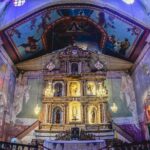
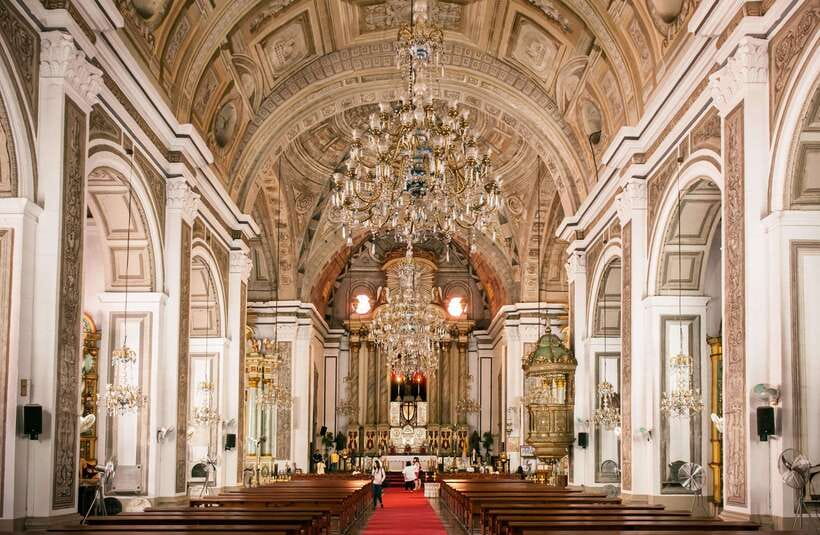
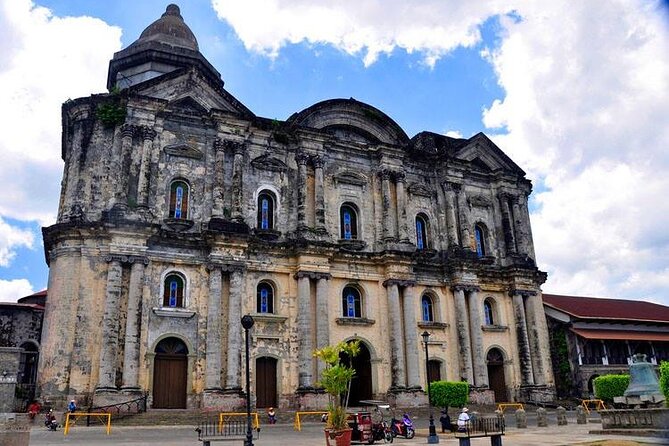
Your first stop is the Basílica Menor del Santo Niño de Cebú, commonly called the Santo Niño Basilica. The basilica was founded in 1565 by Augustinian friars Andrés de Urdaneta and Diego de Herrera.
The stop is scheduled for 30 minutes, and admission is free. That gives you enough time to see the main setting and absorb its importance without turning the morning into a lengthy church visit.
The basilica matters because it connects Cebu’s religious life with the arrival of Spanish colonial rule. The Santo Niño image is central to Cebu’s Catholic identity, and the site helps explain why the city’s religious traditions remain such a major part of local culture.
I would listen closely to your guide here. A good explanation can turn a short church stop into a useful lesson in how religion, politics, and local customs shaped Cebu. If you prefer quiet reflection, remember that this is an active religious place, not simply a historic building.
Fort San Pedro and Cebu’s defensive past
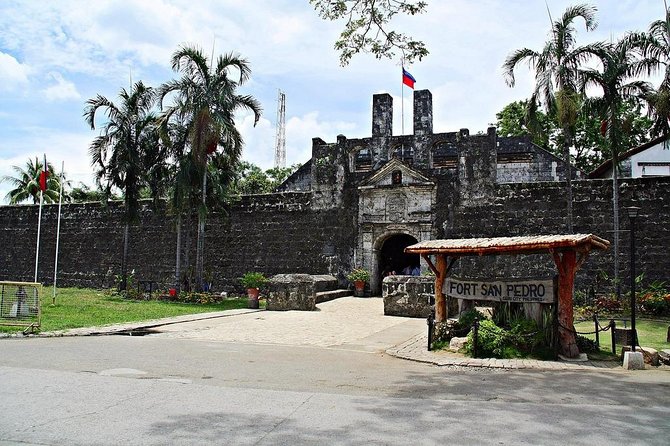
Fort San Pedro is described as the oldest and smallest fort in the Philippines. It covers about 2,025 square meters, with walls 20 feet high and 8 feet thick.
The fort forms a triangle. Two sides face the sea, while the landward side contains the present entrance gate. That shape tells you a lot about the fort’s original purpose. It was designed to protect the settlement from threats approaching by water while also controlling access from land.
You have about 30 minutes here, with admission included. This is enough time to walk through the compact grounds, look at the walls, and picture the fort as part of a coastal defense system. Do not expect the scale of a European fortress. The appeal is its size and position within Cebu’s urban center.
For me, Fort San Pedro is one of the clearest stops on the route because its physical structure explains its role at a glance. The thick walls are not just decorative remains. They show how exposed a port city could be during the early colonial period.
Yap-Sandiego Ancestral House and domestic history
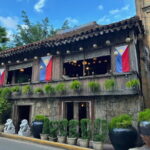
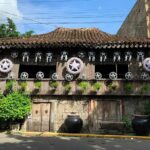
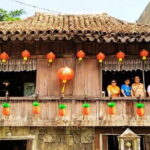
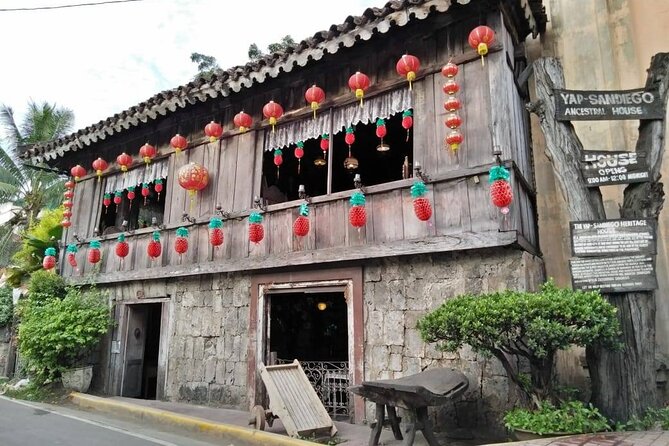
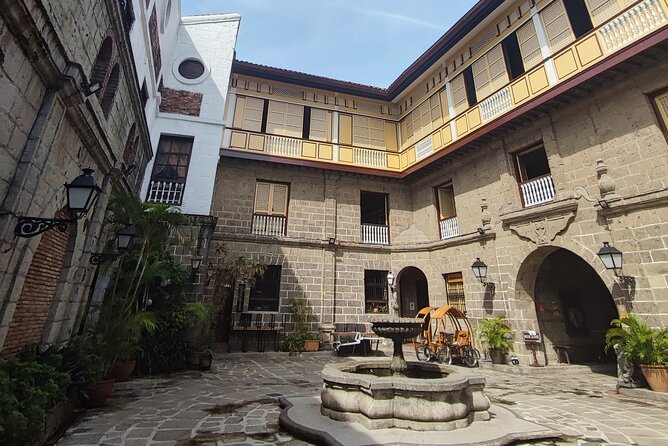
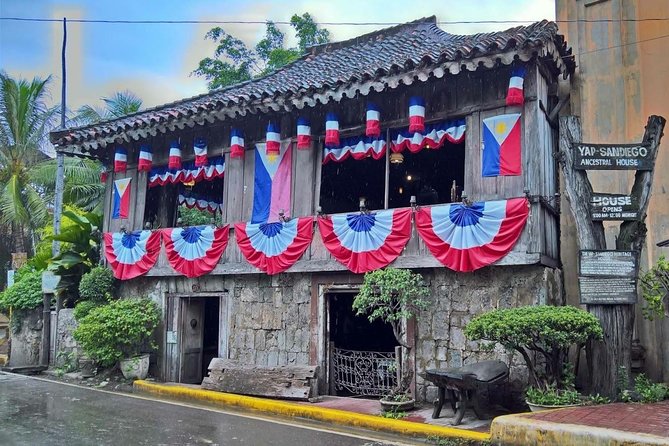
The Yap-Sandiego Ancestral House offers a change of mood. Built around 1680, it is one of the country’s oldest residential homes. The house uses wood and coral stone, with Spanish and Chinese influences woven into its design.
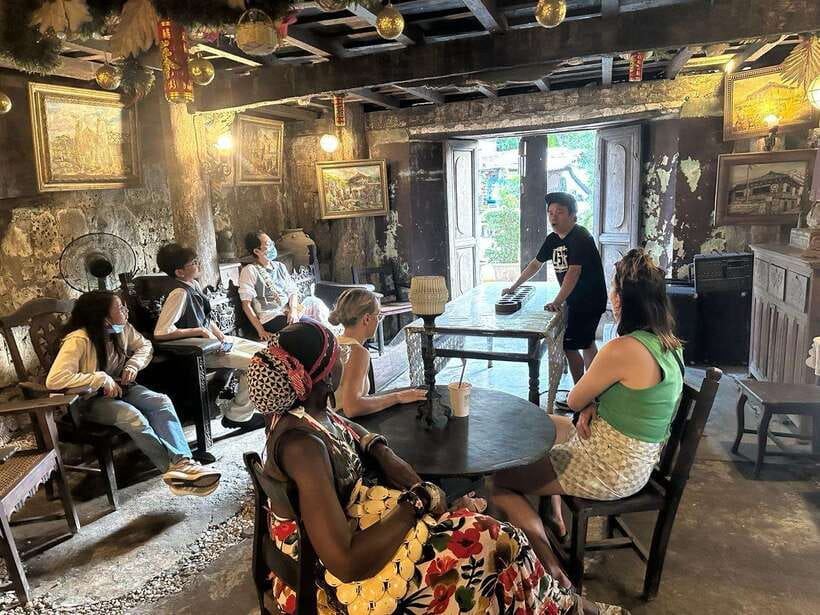
Inside, you can see old furniture, religious art, antiquities, and other household objects. The 30-minute visit is short, but the house gives you something the fort and basilica cannot: a sense of how a prominent Cebuano family lived.
I especially like this stop because domestic history often explains a place better than monuments do. A home shows taste, family life, religious practice, and trade connections in one setting. The Spanish and Chinese design elements also reflect Cebu’s role as a meeting point between cultures.
The house is atmospheric, but that also means you should not expect a large museum with extensive displays or long written explanations. Your guide’s comments will help connect the objects to Cebu’s past. Watch your pace here, since it is easy to spend the whole half hour looking at one room.
Heritage of Cebu Monument in one compact scene
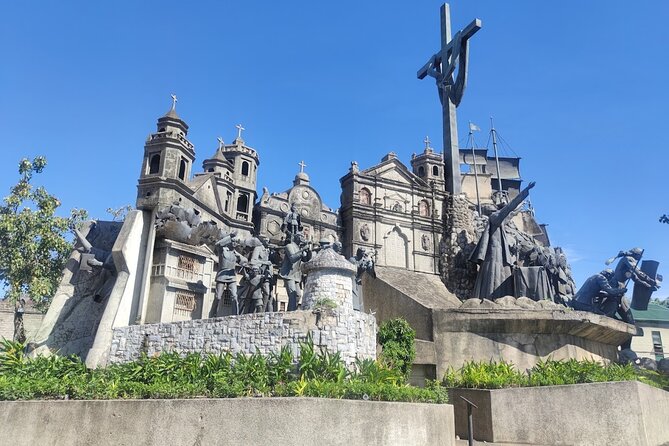
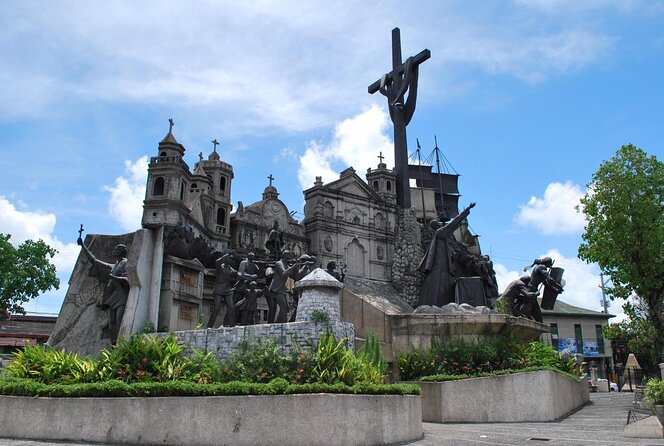
The Heritage of Cebu Monument is a large sculptural representation of important events in Cebu’s history. It reaches from the time of Rajah Humabon to the beatification of Cebuano martyr Pedro Calungsod.
Local artist Eduardo Castrillo created the monument. It compresses many moments into one visual scene, so your first impression may be crowded and difficult to sort. That is why this stop benefits from a guide who can point out the figures and explain the sequence.
You have 30 minutes, and admission is free. I would use the time to look closely rather than simply take one photograph and leave. The monument is most useful as a visual outline of Cebu’s story, linking precolonial leadership, Spanish contact, Catholic tradition, and later Filipino history.
This is not a substitute for a museum or a detailed history lesson. It is better understood as a public artwork that gives you talking points. If you enjoy monuments with symbolic scenes, you may find it one of the more memorable stops. If you prefer quiet, uncluttered displays, it may feel busy.



Taoist Temple above Cebu City
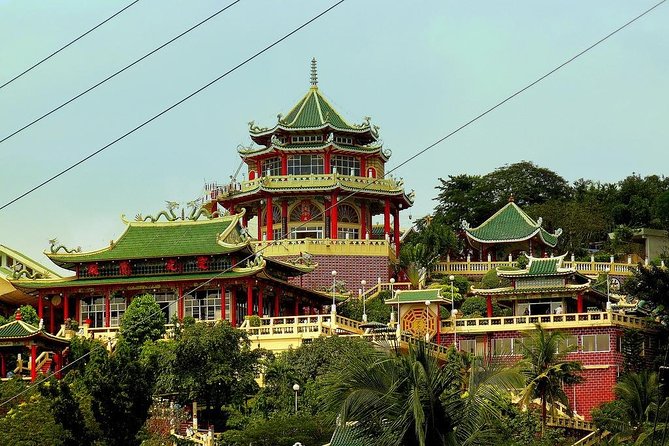
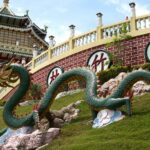
The Cebu Taoist Temple was built in 1972 by Cebu City’s Chinese community. It sits in the Beverly Hills Subdivision on a hill about 300 meters above sea level and rises in several tiers.
The temple is open to non-worshipers from 8:00 a.m. to 5:00 p.m., and there is no separate admission fee listed for this tour. The half-hour stop adds a different religious and cultural tradition to the morning.
I like the contrast. After the Catholic focus of the basilica and Magellan’s Cross, the Taoist Temple shows another part of Cebu’s identity. The stop also breaks up the older historic sites with a hilltop setting and a change in architectural style.
Keep the visit respectful. You are entering a functioning religious center, not just a scenic viewpoint. The tour includes only about 30 minutes, so you will get an introduction rather than a detailed study of Taoist practice. Still, it adds useful balance to a route that might otherwise focus too heavily on Spanish influence.
Magellan’s Cross and the 1521 turning point
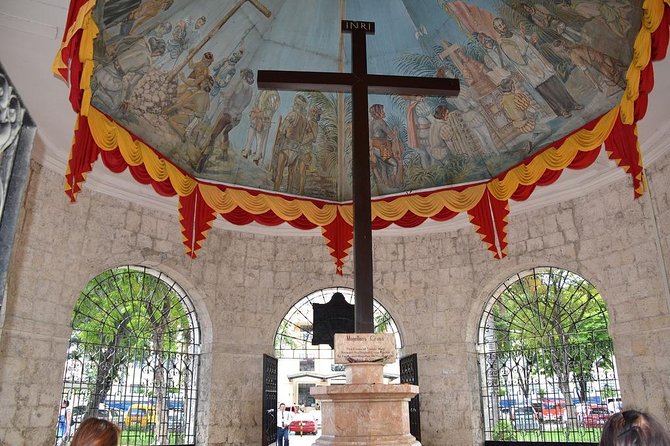
Magellan’s Cross is housed in an octagonal kiosk and marks one of the best-known moments in Cebu’s story. The cross is believed to have been planted on March 15, 1521, when Portuguese and Spanish explorers led by Ferdinand Magellan arrived in Cebu.
The site is free to visit and receives about 30 minutes on the schedule. Its importance comes from what it represents: the arrival of Christianity and the beginning of a major period of Spanish influence in the Philippines.
I would pair this stop mentally with the Santo Niño Basilica. The two places help explain the religious tradition that shaped Cebu after the explorers’ arrival. Seeing them separately is useful, but understanding the connection makes the morning more meaningful.
The kiosk itself is small, and the visit may feel brief. That is not a flaw in the tour so much as a feature of the site. Magellan’s Cross is an important marker, but it is not a large complex with many rooms to explore. Let your guide supply the wider context.
Museo Sugbo, the best place to gather the pieces
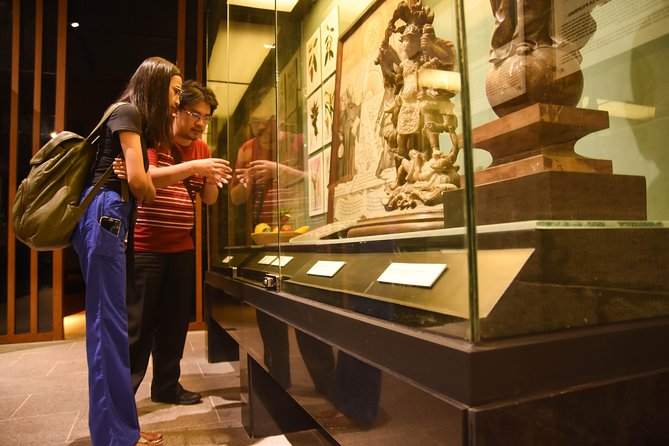
The final stop is Museo Sugbo, Cebu City’s museum. Admission is included, and the planned visit lasts about 30 minutes.
Because the earlier stops cover separate pieces of Cebu’s past, the museum can help bring them together. You will already have seen religious buildings, defensive walls, a historic home, a public monument, and a Taoist temple. A museum visit gives those places a broader setting.
The short timing is the main limitation. Thirty minutes may be enough for a first look, but not enough for a careful examination of every exhibit. If museums are your priority, you may want to return independently after the tour. If you are using the morning to get oriented, the visit fits the route well.
I appreciate that the tour includes a museum rather than ending only with monuments and photographs. It gives the historical route a more grounded finish.
What the $92 price includes
At $92 per person, this is not the cheapest way to see Cebu’s old center. The value depends heavily on how many people are in your private group.
The price includes:
- Hotel pickup and drop-off within Cebu, Mandaue, and Lapu-Lapu
- Transportation throughout the tour
- A local driver-guide
- Bottled water
- Entrance fees
- Passenger tour insurance
A DOT-accredited tour guide is available as an optional add-on, and tipping is not compulsory. The wording around the guide is worth clarifying before payment: the local driver-guide is included, while the accredited guide is listed separately as optional.
For a couple, family, or small group, the private vehicle and door-to-door service can make the cost fair. You are paying for convenience as much as for admission tickets. Group discounts may improve the price for larger parties, so check the total rather than judging only the per-person figure.
For a solo visitor, the price is harder to justify unless you value private transport and a guided introduction. Cebu’s sites may be visited in other ways, but this tour bundles the route, driving, water, entrance fees, and insurance into one booking.
Timing, comfort, and who should book
The tour starts at 9:00 a.m. and lasts approximately four to five hours. Since the route includes seven stops, you should expect movement and short visits rather than a relaxed afternoon at one or two sites.
Hotel pickup is offered from properties in the tri-cities area: Cebu, Mandaue, and Lapu-Lapu. Confirm that your hotel falls within that area before booking. A mobile ticket is provided, and confirmation is received at booking.
Most people can participate, according to the supplied tour information. No special physical requirement is listed. Still, you should be ready for several site visits in one morning and follow local rules at religious places.
This tour suits you best if:
- You are visiting Cebu for the first time
- You want historical context without planning every transfer
- You are staying in Cebu, Mandaue, or Lapu-Lapu
- You prefer a private vehicle to a large group
- You want a broad introduction in half a day
- You are traveling with family or a small group
It may not suit you if you want long museum visits, extensive time for photography, or a slow, highly detailed treatment of each location. The schedule is efficient, not leisurely.
Should you book the Cebu City Historical Tour?
Book it if you want an easy, well-rounded introduction to Cebu’s past, especially when your time is limited. The strongest features are the private transport, hotel pickup, local driver-guide, and the unusual range of stops, from a 1680 ancestral house to a 1972 Taoist temple.
I would be most comfortable recommending it to couples, families, and small groups who can share the private-tour cost. The morning gives you enough cultural and historical background to make later exploring more rewarding.
Think twice if you are traveling alone on a tight budget or if you prefer to spend an hour or more at each museum and monument. This tour gives you the outline of Cebu, not every detail. For many first-time visitors, that is exactly the point.
FAQ
How long does the Cebu City Historical Tour last?
The tour lasts approximately four to five hours and begins at 9:00 a.m.
Is hotel pickup included?
Yes. Pickup and drop-off are included from hotels within Cebu, Mandaue, and Lapu-Lapu.
Is this a private tour?
Yes. Only your group participates in the activity.
Are entrance fees included?
Yes. Entrance fees are included. Admission is listed as free at the Santo Niño Basilica, Fort San Pedro, Heritage of Cebu Monument, Taoist Temple, and Magellan’s Cross. Fees are included for Yap-Sandiego Ancestral House and Museo Sugbo.
Is a professional tour guide included?
Transportation and a local driver-guide are included. A DOT-accredited tour guide is available as an optional add-on.
What happens if bad weather cancels the tour?
If poor weather causes cancellation, you will be offered a different date or a full refund. If the minimum number of participants is not met, you will also be offered a different date or experience, or a full refund. The booking itself is otherwise non-refundable and cannot be changed for any reason.