
Cebu Street Food, Historical & Mountain Journeys
Cebu packs centuries into one long day. This $100 Cebu tour links the city’s key churches, forts, monuments, temples, guitar makers, and mountain viewpoints in a single air-conditioned ride. I like the broad mix, and I like that pickup and admission fees are included, so you can focus on the day instead of arranging several separate visits.
The tradeoff is pace. With ten stops in roughly 8 to 9 hours, most visits are short, often 10 to 30 minutes. You get a strong first look at Cebu, but not much time for slow museum visits, long meals, or quiet wandering. Lunch, dinner, and drinks are not included, so plan for those costs separately.
In This Review
- The quick take on Cebu’s full-day route
- Why this Cebu tour works for a first visit
- Alegre Guitar Factory and Cebu’s local craft
- Lapu-Lapu Monument and the island’s hero
- Santo Niño Basilica and Magellan’s Cross
- Fort San Pedro and the old city center
- The Taoist Temple and Cebu’s Chinese influence
- Temple of Leah, Cebu’s hillside monument
- Tops Lookout for the broad city view
- Sirao Pictoral Garden and the mountain finish
- What the $100 price really covers
- The guide can make the fast pace work
- Who should book this experience
- Should you book the Cebu city and mountain tour?
- FAQ
- How long does the Cebu tour last?
- What time does the tour start?
- Is pickup offered?
- How many stops are included?
- Is transportation included?
- Are admission fees included?
- Is lunch included?
- How large can the group be?
- Can I cancel for a full refund?
The quick take on Cebu’s full-day route
- A ten-stop route covers city, coast, and mountain sights, from Lapu-Lapu to Tops Lookout and Sirao Garden.
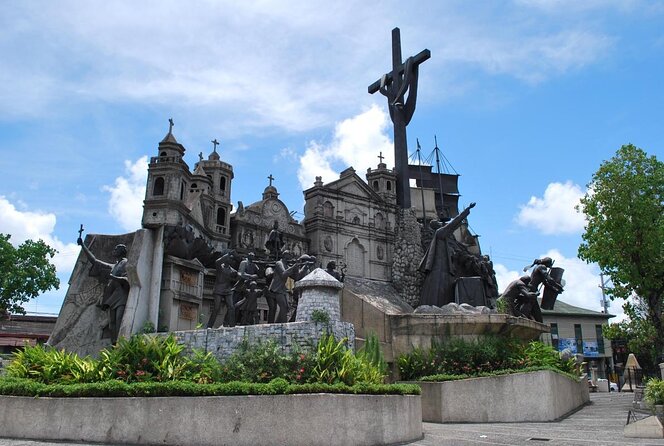
- The historical core is packed into short visits, including Magellan’s Cross, Santo Niño Basilica, Fort San Pedro, and the Heritage of Cebu Monument.
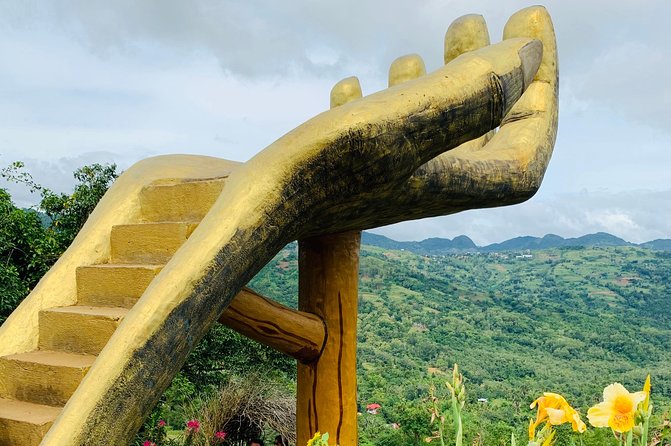
- The mountain section brings the best wide views, with Temple of Leah, Tops Lookout, and Sirao Pictoral Garden.
- Alegre Guitar Factory adds a local craft stop, giving the day more variety than a standard monument tour.
- The group is capped at 15 people, a useful middle ground between a private tour and a large coach outing.
- Elaine receives the clearest praise in the available feedback, with one five-star note calling her an excellent guide and recommending the experience to friends and family.
Why this Cebu tour works for a first visit
Cebu City can feel scattered on a map. The old center sits away from the upland viewpoints, while Mactan and the mountain roads add another layer of driving. This route gathers those pieces into one organized day.
I like the way the tour moves through several sides of Cebu instead of treating the city as only a set of Spanish-era landmarks. You see religious sites, military history, Chinese influence, local craft, patriotic monuments, gardens, and city views. That variety gives you a better sense of Cebu as a living place.
The day begins at 9:00 am and lasts about 8 to 9 hours. That is a serious outing, but the air-conditioned vehicle matters here. You will be moving between lowland city streets and higher viewpoints, and a vehicle keeps the day practical.
The maximum group size is 15. I would not call that intimate, but it is small enough to be more manageable than a large bus. Pickup is offered, though the supplied details do not specify every pickup location, so confirm the exact arrangement when booking.
You can also read our reviews of more historical tours in Cebu
Alegre Guitar Factory and Cebu’s local craft
The first stop is Alegre Guitar Factory, where you spend about 20 minutes seeing guitar making. This is a useful opening because it puts a local product before the monuments begin.
Cebu is well known for guitar production, and this stop gives the day a hands-on cultural angle. You are not simply looking at buildings and statues. You are seeing a craft connected to the island’s working life.
Twenty minutes is enough for a quick look, not a long workshop visit. If guitar making is a major interest, you may want to treat this as an introduction rather than a full craft tour. The admission fee is included, so there is no separate entry charge to manage.
Lapu-Lapu Monument and the island’s hero
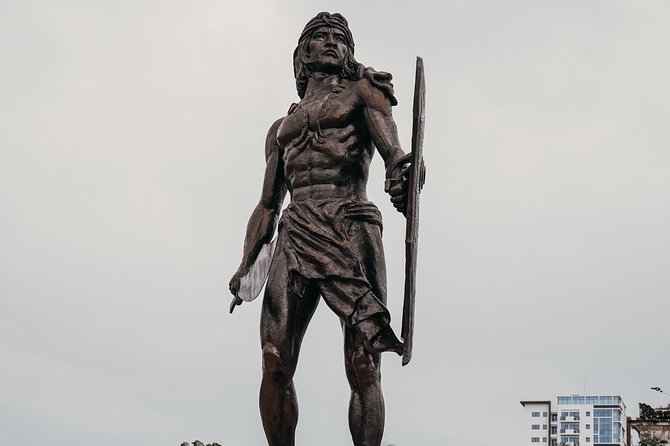
The Lapu-Lapu Monument takes about 20 minutes. It honors a local hero remembered for bravery, and it gives the tour an early connection to the events surrounding the arrival of Ferdinand Magellan.
This stop helps set up the historical meaning of Magellan’s Cross later in the day. Cebu’s story is not only about Spanish arrival. It also includes local resistance and the people who shaped the encounter.
The visit is short, so your guide’s explanation will matter. The available feedback gives special praise to Elaine, and this is the kind of stop where a clear guide can make a simple statue feel connected to the larger story.
Santo Niño Basilica and Magellan’s Cross
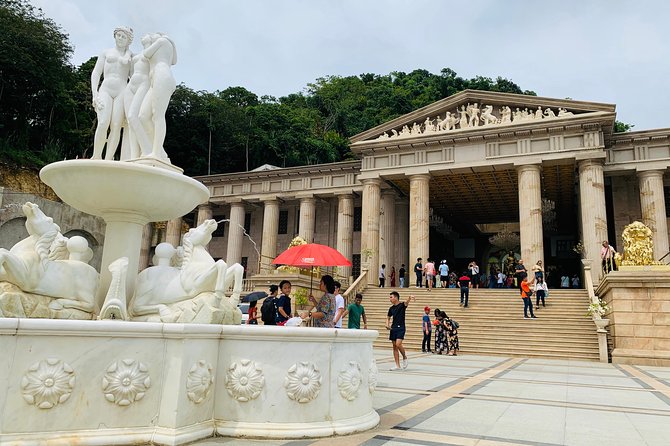
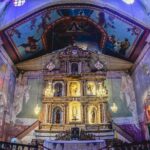
The Basilica Minore del Santo Niño is one of the most important religious sites in Cebu. It is the oldest Roman Catholic church in the Philippines and houses the Santo Niño statue, which Magellan gave to Rajah Humabon and Queen Juana.
You have about 20 minutes inside or around the church. That is enough to see the main features and understand why the site matters, but it is not a long church visit. As with any active place of worship, your visit may depend on services and local conditions.
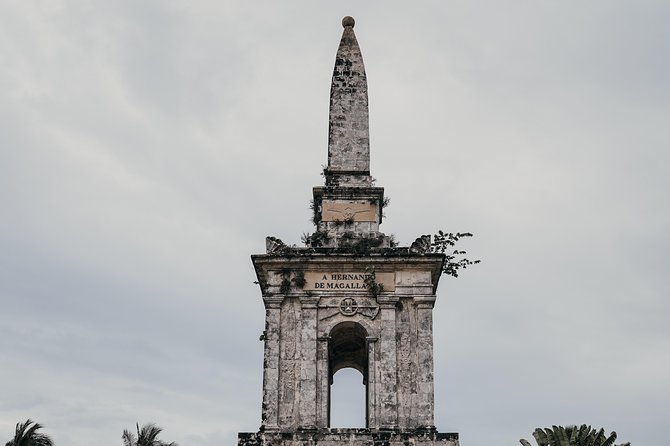
Magellan’s Cross follows, with about 15 minutes at this historic site. The cross marks one of the best-known points in Cebu’s story and connects directly to the Santo Niño tradition.
The two stops work well together. The basilica shows the living religious importance of the Santo Niño, while the cross points to the early Spanish and Catholic chapter of Cebu’s past. I would pay attention to the connection rather than treating them as two unrelated photo stops.
Fort San Pedro and the old city center
Fort San Pedro receives about 20 minutes. It is described as the oldest and smallest fort in the Philippines, built by Spanish and indigenous Cebuano laborers under Miguel López de Legazpi.
The fort offers a change of mood after the church and cross. Its walls point to the military side of colonial rule, while its construction also reflects the labor and skills of Cebuano workers. That makes it more than a simple old stone structure.
Twenty minutes gives you a compact visit. You can see the fort and get the main historical context, but you should not expect a long archaeological exploration. The route is designed for breadth, and this stop fits that purpose.
The Heritage of Cebu Monument comes next for about 10 minutes. This is the shortest stop of the day, so expect a quick look at the monument and a brief explanation. It works as a visual summary of Cebu’s past, bringing several important local events and figures together in one place.



The Taoist Temple and Cebu’s Chinese influence
The Cebu City Philippines Temple stop lasts around 20 minutes and refers to the Taoist Temple, an active place of worship for Cebu’s Chinese community.
This is one of the route’s most useful contrasts. The morning’s central sites focus heavily on Catholic and Spanish-era history. The Taoist Temple shows another part of Cebu’s cultural life and reminds you that the city’s identity is not built from one tradition alone.
Because it is an active religious site, respectful behavior is important. The details do not promise a ceremony or a guided religious program, so think of this as a sightseeing visit with cultural context rather than a formal spiritual activity.
Temple of Leah, Cebu’s hillside monument
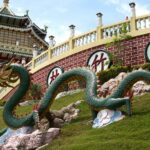
Temple of Leah is one of Cebu’s most striking modern landmarks. It is often called the Taj Mahal of Cebu because of the love story behind its creation.
You have about 20 minutes here. The attraction is known for its grand architectural style and hillside setting, but the short stop means you will mainly see the monument, take in its design, and hear the basic story behind it.
I like this addition because it breaks up the older historical sites. It also shows how Cebu continues to create monuments tied to personal memory and family devotion. If you enjoy architecture and photo stops, this will likely be one of the more memorable parts of the route.
The limitation is simple: 20 minutes goes quickly. You will not have much time for an unhurried visit if the site is busy or if you want to examine every detail.
Tops Lookout for the broad city view
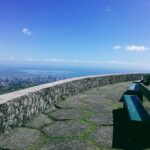
Tops Lookout gets the longest visit among the scenic stops, at about 30 minutes. From this high point, you get panoramic views of Cebu City.
This is where the route shifts from specific buildings to the shape of the city itself. After seeing Cebu’s churches, forts, and monuments from street level, the elevated view helps you understand how the urban area spreads below.
The exact visibility will depend on weather and conditions. On a clear day, the view should be the main reward. On a hazier day, the stop can still help you see Cebu from a different angle, but the panorama may be less dramatic.
Thirty minutes is a sensible amount of time. You can take photos, look across the city, and avoid the rushed feeling of the shorter stops. If views are a priority for you, this is one of the stops worth protecting in the schedule.
Sirao Pictoral Garden and the mountain finish
Sirao Pictoral Garden is the final stop, with about 20 minutes set aside for its flower fields and picture-friendly scenery.
The garden gives the tour a lighter ending after a day of churches, forts, monuments, and historical explanations. Its appeal is visual, with colorful plantings and arranged settings designed for photographs.
The short visit means you should expect a sampler, not a slow garden walk. If you enjoy taking pictures, 20 minutes may feel tight. Still, the stop adds a different texture to the day and pairs well with Tops Lookout’s wide city view.
The mountain route is a strong part of the tour because it changes the pace and setting. You move from Cebu’s dense historic core to open hillside viewpoints and garden scenery. That contrast is one reason this works well as a first-day introduction.
What the $100 price really covers
At $100 per person, the value depends on how much you would otherwise spend arranging transport and admissions on your own. The price includes an air-conditioned vehicle and all fees and taxes. Pickup is offered, and the route includes ten stops across Cebu City and its surrounding areas.
That is a fair convenience value for someone who wants the major sights handled in one day. You are paying for transport, coordination, and access to a wide route, not for long stays at each attraction.
The price does not include lunch, dinner, or alcoholic beverages. Since the day lasts 8 to 9 hours, food is the main expense you need to plan beyond the tour price. The supplied details do not identify a meal stop or say that food is provided, so do not assume meals are covered.
I would compare this tour with the cost of hiring a vehicle and arranging separate entrance fees. For a first visit, the combined route can save time and reduce planning. For someone who already knows Cebu or prefers long visits at two or three places, a shorter private plan may offer better value.
The guide can make the fast pace work
The schedule asks a lot from the guide. Ten stops require clear timing, simple explanations, and good coordination. The available five-star feedback specifically praises Elaine and describes the experience as something worth recommending to friends and family.
That praise is useful because the guide is central to the tour’s value. A short stop at the Heritage of Cebu Monument or Magellan’s Cross can feel thin without context. A good explanation can connect each place and keep the day from becoming a string of quick photographs.
The provider’s response is signed by Leila, while Elaine is the guide named in the positive feedback. If having a particular guide matters to you, ask about guide assignment before booking. The supplied details do not promise that Elaine will lead every departure.
Who should book this experience
I would choose this tour if you have limited time in Cebu and want a broad first look. It suits you especially well if you enjoy mixing history, religion, local craft, architecture, gardens, and viewpoints in one day.
It also fits visitors who prefer an organized ride. The air-conditioned vehicle and included fees remove much of the work involved in reaching distant stops.
You should think twice if you want long meals, extended church visits, or several hours at one attraction. The 10 to 30-minute stop lengths favor variety over depth. The route is also a poor match for someone who dislikes spending much of the day in transit between separated parts of a city.
Most people can participate, and the group limit is 15. Still, you should consider your own comfort with a full 8 to 9-hour schedule and confirm pickup details before paying.
Should you book the Cebu city and mountain tour?
Book it if you want one organized day covering Cebu’s main historical and scenic highlights. The combination of Santo Niño Basilica, Magellan’s Cross, Fort San Pedro, the Taoist Temple, Temple of Leah, Tops Lookout, and Sirao Garden gives you a useful overview for $100, with transport and entry costs included.
Skip it if your ideal day means lingering at one church, eating your way through the city, or exploring without a fixed timetable. For everyone else, this is a practical introduction to Cebu, especially when your schedule is short and you want both the old city and the mountain views.
FAQ
How long does the Cebu tour last?
The experience lasts approximately 8 to 9 hours.
What time does the tour start?
The stated start time is 9:00 am.
Is pickup offered?
Yes. Pickup is offered, though the supplied details do not specify all pickup locations.
How many stops are included?
The route includes ten stops, covering a guitar factory, monument, church, historical sites, temples, a lookout, and a garden.
Is transportation included?
Yes. An air-conditioned vehicle is included.
Are admission fees included?
Yes. All fees and taxes are included.
Is lunch included?
No. Lunch is not included.
How large can the group be?
The activity has a maximum of 15 participants.
Can I cancel for a full refund?
Yes, if you cancel at least 24 hours before the experience start time. Cancellations within 24 hours are not refundable, and changes made within that period are not accepted.
More Historical Tours in Cebu

More Tour Reviews in Cebu
Not for you? Here's more nearby things to do in Cebu we have reviewed





Food Tours: how the alternatives stack up

The lists this tour appears in