Home Cooked Meal with a Filipino Grandma
A good meal can open a door. This two-and-a-half-hour experience brings you into a real Filipino home for a family-style lunch, conversation, and dishes connected to regions across the Philippines. I like the personal setting and the chance to hear family stories from Oyet, the gracious grandmother who hosts the meal. I also like the small group limit of 10, which keeps the visit more personal than a standard food tour.
The main consideration is that this is not a restaurant crawl or a formal cooking class with a detailed published menu. You come for hospitality, home cooking, and conversation. People with vegan diets should also note that no vegan option is available.
In This Review
- Key Things to Know Before You Go
- Why a Filipino Home Meal Feels Different
- Meeting Oyet and Entering the Neighborhood
- A Family-Style Filipino Lunch
- Cooking, Stories, and Filipino Hospitality
- How the Two and a Half Hours Work
- Is $60 a Fair Price?
- Who Will Enjoy This Most?
- Practical Booking Advice
- Should You Book This Filipino Home Meal?
- FAQ
- Where does the experience start?
- How long does the home meal experience last?
- What is included in the price?
- How many people can join the experience?
- Are vegan options available?
- What happens if I need to cancel?
Key Things to Know Before You Go
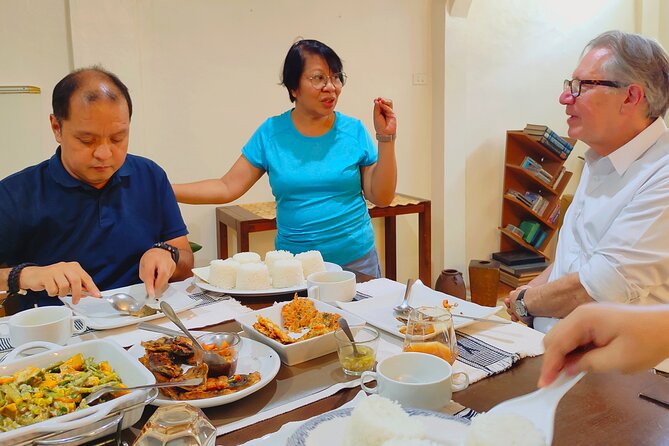
- Lunch is served family-style, so you can try several Filipino dishes in one sitting rather than ordering one plate.
- Grandma Oyet is part of the experience, sharing cooking, conversation, laughter, and stories about family life.
- The setting is a colorful local neighborhood that most visitors would not see through a typical sightseeing route.
- The small group has a maximum of 10 people, a useful limit for a home visit and a better setup for conversation.
- The price is $60 per person, including lunch and coffee or tea, with group discounts available.
- The visit begins at 11:00 a.m. and lasts about two and a half hours, ending back at the meeting point.
Why a Filipino Home Meal Feels Different
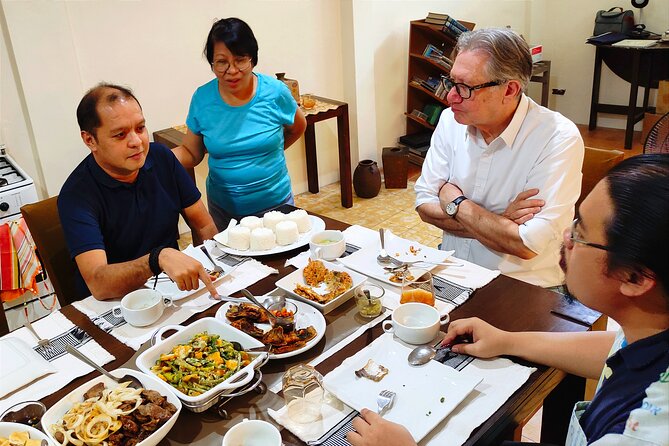
Food tours often focus on markets, restaurants, and street stalls. Those are worthwhile, but a home meal offers a different kind of connection. You are not simply sampling Filipino food. You are entering the setting where food is prepared, served, and shared as part of family life.
That distinction matters in the Philippines, where a meal can be an act of welcome. A family-style table encourages you to pass dishes, ask questions, and take your time. The food is still the main event, but the conversation around it gives the meal its meaning.
I especially like that this experience presents Filipino cuisine as something broader than a short list of familiar dishes. The meal draws on food traditions from different parts of the country, giving you a chance to compare flavors and preparation styles in one sitting. The exact menu is not provided in advance, so you should arrive ready to try what is served rather than expecting a fixed restaurant menu.
This uncertainty can be a plus or a drawback. It makes the lunch feel more like a genuine invitation, but it also means you cannot plan around particular dishes. If you have allergies or dietary restrictions, contact the provider before booking.
You can also read our reviews of more tours and experiences in Luzon.


Meeting Oyet and Entering the Neighborhood
The experience starts at 11:00 a.m. near airobedz BGC at 1051 General G. Del Pilar Street, Makati, Makati City. The meeting point is near public transportation, which helps if you are getting around Manila without a private car.
From there, you head into a colorful neighborhood that is not usually part of a standard sightseeing program. That setting is important. You are not being shown a staged dining room built for visitors. The point is to see a more ordinary part of local life before sitting down to eat.
The supplied information does not give a detailed route from the meeting point to the home, so I would allow enough time to reach the address without rushing. Manila traffic can make even a short trip take longer than expected, and the experience begins at a specific time.
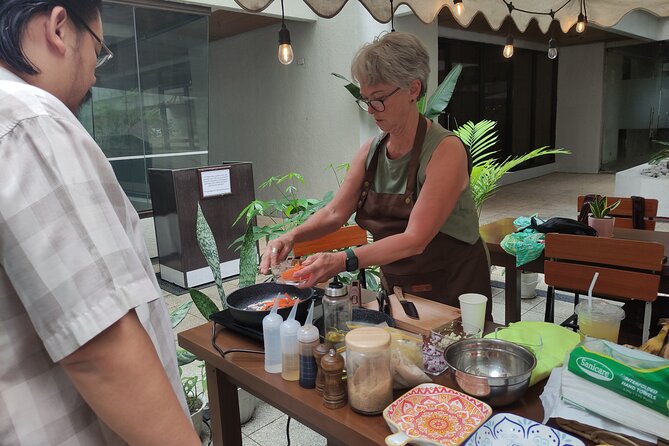
Oyet is central to the appeal. Her role goes beyond serving food. The visit includes cooking, conversation, laughter, and stories about life and history. One especially appealing detail is the sense of learning alongside her, rather than listening to a rehearsed talk delivered from a distance.
You should think of this as a hosted home visit with a food focus. The experience may suit you best if you enjoy asking questions and taking part in conversation. If you prefer to eat quietly and move quickly from stop to stop, the relaxed pace may feel slow.
A Family-Style Filipino Lunch
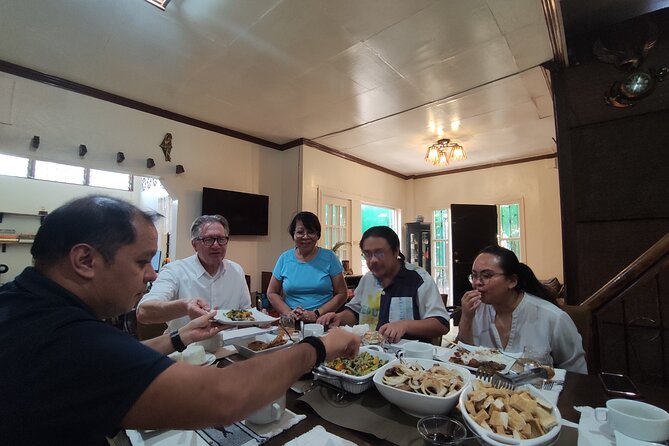
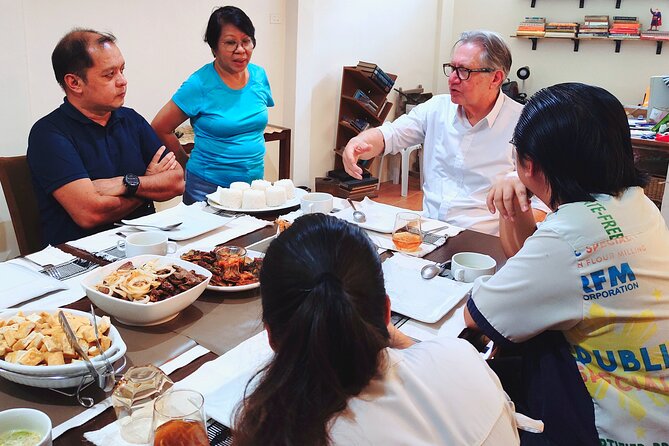
The meal is generously served family-style. That means you receive a range of dishes for the table, with the freedom to sample different flavors instead of choosing only one entrée.
For someone new to Filipino food, this is a smart format. Filipino cooking varies from region to region, and one dish cannot show you the full range. A shared meal lets you notice contrasts in seasoning, texture, and preparation as you go.
The menu is described as multi-course and connected to different regions of the Philippines, but no individual dishes are named. I would not book this expecting a guaranteed serving of a specific favorite. Instead, see the meal as an introduction to the country’s food traditions through the host’s choices.
A home meal also gives the food a different frame. In a restaurant, you may focus on presentation and service. Here, you can ask how a dish is made, why it matters, or when it might appear at a family gathering. Those small explanations are often what turn a meal into a memory.
Lunch includes coffee and/or tea. These drinks help round out the meal, though any additional food or drink not listed should not be assumed to be included.
The meal should also be approached with ordinary courtesy. Because this is a private home rather than a public dining room, your host’s time and space are part of what you are receiving. A patient, respectful attitude will make the experience better for everyone at the table.
Cooking, Stories, and Filipino Hospitality
The strongest feature here is the human side. The experience presents cooking as a way to share life, not just a method for producing food. Oyet’s cooking and conversation create a bridge between what is on the plate and how food fits into Filipino family culture.
You may hear stories tied to family life and the history of dishes from across the Philippines. The information provided does not promise a formal lesson on every region, so the amount of detail may depend on the conversation and the dishes served. That is worth understanding before you book.
I like this less scripted approach. A formal presentation can be polished, but a home meal can reveal small details that would not fit into a standard tour. You might learn why a certain dish is served at family gatherings, how cooking has changed over the decades, or what foods carry special meaning for the host.
The setting also makes it easier to ask simple questions. You can ask about ingredients, cooking methods, or the difference between home food and restaurant food. Those exchanges are likely to be more useful than a long list of facts delivered without context.
One description of the experience highlights cooking, talking, laughing, and sharing life and history with Oyet. That combination explains why this visit has earned a five-star rating and a 100 percent recommendation record from the available feedback. The praise is directed at the personal connection, not only the meal.
Still, the warmth of a hosted experience depends partly on your own participation. You do not need to be outgoing, but showing interest will help. Bring a few questions, listen closely, and give the meal time to unfold.
How the Two and a Half Hours Work
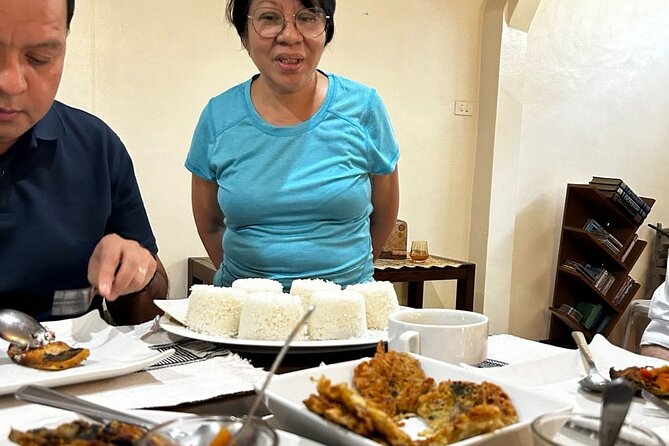
The schedule is compact but unhurried. You meet at 11:00 a.m., make your way into the neighborhood, and settle in for lunch and conversation. The total duration is approximately two hours and 30 minutes, with the activity ending back at the meeting point.
That length gives you enough time for several courses and conversation without taking the entire day. You can still plan an afternoon in Manila afterward. At the same time, the visit is long enough to avoid the rushed feeling of a quick tasting stop.
The experience is best understood as one connected visit rather than a series of separate attractions. There are no listed restaurant stops, museum visits, or market walks. The neighborhood, home, meal, and host all form one experience.
Because the group is limited to 10 people, the atmosphere should be easier for conversation than on a large coach-style tour. A smaller group also matters inside a home. Ten is still enough for varied conversation, but it is not so large that the host must repeat every answer several times.
Group discounts are available, which may improve the value if you are booking with family or friends. Solo visitors can also fit comfortably into the format, particularly if they enjoy meeting people over a shared meal.




Is $60 a Fair Price?
At $60 per person, this is priced above a basic Filipino lunch. You are paying for more than food, though. The fee covers the hosted setting, a multi-course meal, coffee or tea, the time spent with Oyet, and the organization needed to bring a small group into a local home.
I think the value is strongest for people who want personal contact and cultural context. If your goal is simply to eat as cheaply as possible, you can find less expensive meals in Manila. If you want a carefully arranged home visit without having to find a local connection yourself, the price makes more sense.
The maximum group size of 10 supports the value. A smaller group gives you a better chance to speak with the host and understand what you are eating. Group discounts may also make the cost easier to justify for couples, families, or friends.
Lunch is included, but gratuity is not. Plan to leave money for a tip if you feel the host and organizer provided good service. Since this is a hosted home experience, tipping should be considered part of your budget even though it is not included in the price.
The experience is commonly booked about 10 days ahead. That is useful planning information, especially if your Manila schedule is tight. I would not leave it until the last minute if this is one of the food experiences you most want to fit in.
Who Will Enjoy This Most?
I would recommend this for solo visitors, couples, friends, and families who prefer a slower meal with a personal story behind it. It is also a good choice if you have already seen the major sights and want time around a local table.
Families may appreciate the welcoming tone and shared format, though parents should decide if a two-and-a-half-hour meal suits their children. The description says most people can participate, but it does not give specific information about child ages or special arrangements.
Food lovers will get the most from the experience if they are curious about regional Filipino cooking rather than focused on ticking off a list of named dishes. The lack of a published menu makes this a poor choice for someone who needs exact food details before booking.
Vegetarians should ask questions before reserving. Vegan options are specifically not available, and food allergies or other restrictions should be discussed with the provider in advance. Do not wait until the meal begins to explain an important dietary need.
This is also not the best match for someone looking for an active, hands-on cooking workshop. There is a cooking element, but the information describes a home-cooked lunch and shared time with the host, not a step-by-step class with recipes, equipment, or a dish you are guaranteed to prepare yourself.
Practical Booking Advice
You receive confirmation when you book, and the activity is offered with a mobile ticket. The meeting point is near public transportation, but I would still check your route carefully and allow extra time for Manila traffic.
The experience requires good weather. If poor weather causes cancellation, you are offered another date or a full refund. You can cancel for a full refund up to 24 hours before the start time. Changes or cancellations inside that 24-hour window are not accepted, so check your schedule before the deadline.
Since the activity returns to the meeting point, it is easy to plan around. You can arrange a later afternoon activity, but leave yourself breathing room rather than scheduling something immediately afterward. A home meal is meant to be enjoyed at a human pace.
Bring an appetite and a willingness to try unfamiliar dishes. You should also expect conversation to be part of the meal, not background entertainment. A few thoughtful questions about Filipino food, family gatherings, or regional cooking can help you get more from the visit.
Should You Book This Filipino Home Meal?
Book it if you want food with a personal story, a small group, and a genuine home setting. The strongest reasons are Oyet’s warm hosting, the chance to share cooking and conversation, and the opportunity to taste several Filipino dishes in one relaxed lunch.
Skip it if you need vegan food, a fixed menu, or a formal cooking class. You should also choose another activity if your main goal is a fast tour of many restaurants.
For the right person, $60 is a reasonable price for a hosted cultural meal rather than just lunch. I would book this about 10 days ahead, confirm any dietary needs, and arrive ready to treat the table as an invitation, not a performance.
FAQ
Where does the experience start?
It starts at 11:00 a.m. at airobedz BGC, 1051 General G. Del Pilar Street, Makati, Makati City, 1214 Metro Manila, Philippines.
How long does the home meal experience last?
The experience lasts approximately two hours and 30 minutes.
What is included in the price?
Lunch and coffee and/or tea are included. Gratuity is not included.
How many people can join the experience?
The activity has a maximum capacity of 10 people. Group discounts are available.
Are vegan options available?
No. The activity does not offer vegan options. You should contact the provider about food allergies or other dietary restrictions.
What happens if I need to cancel?
You can cancel up to 24 hours before the start time for a full refund. If poor weather causes the activity to be canceled, you are offered another date or a full refund.