
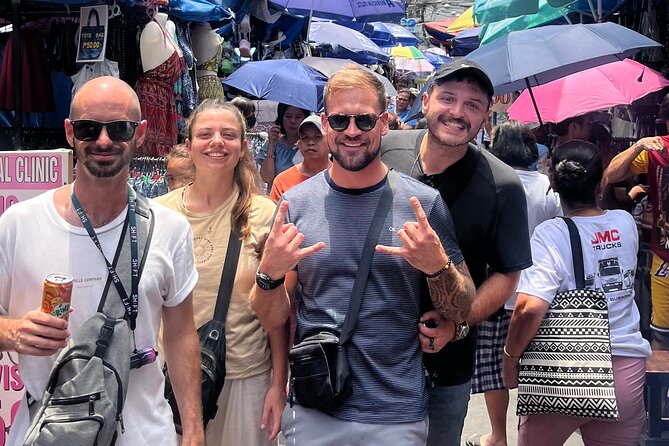
Manila Street food and Drinks with local guide
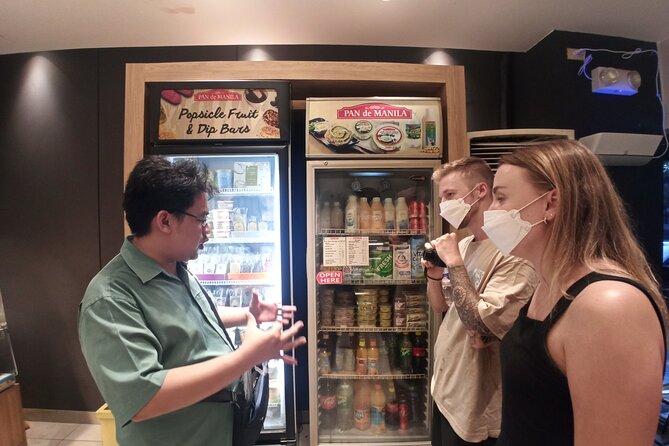
Come hungry, leave curious. This 2.5-hour walking tour links Manila’s Chinatown, Escolta, and Quiapo through Filipino street food, local stories, and short rides on public transport. I like the mix of bold foods, from chicken intestine and black pudding to halo-halo, and I like the small group limit of 10 people, which should make it easier to ask questions and keep up with the guide.
The tour also begins and ends at the atmospheric Grand Cafe 1919 in Binondo, a useful meeting point in one of Manila’s oldest districts. The main drawback is that the experience moves through crowded city streets, so you should expect a lively, sometimes hectic outing rather than a calm restaurant meal. Some dishes, especially isaw, dugo, and balut, may test cautious eaters.
A previous guest gave special praise to the food selection and to Mari, the guide, for connecting each bite with Manila’s culture and history. That detail matters. This is not simply a snack crawl. It is a short introduction to how food, markets, old commercial streets, and daily city life fit together.
In This Review
- Key points at a glance
- Starting with coffee, Chinatown, and a sense of place
- Binondo Chinatown: sweet, sour, and street-side Manila
- Escolta Street and the boldest bites
- The long walk toward Quinta Market and Quiapo
- Halo-halo: the cool finish to a savory route
- Returning by the Filipino tricycle
- What $70 means for the value
- Who will enjoy this food walk?
- Practical details before you book
- Should you book Manila Street Food and Drinks?
- FAQ
- Where does the tour begin?
- Where does the tour end?
- How long does the experience last?
- What food is included?
- What is isaw?
- What is dugo?
- Is halo-halo included?
- How many people can join?
- Is the tour near public transportation?
- Can I cancel for a full refund?
Key points at a glance
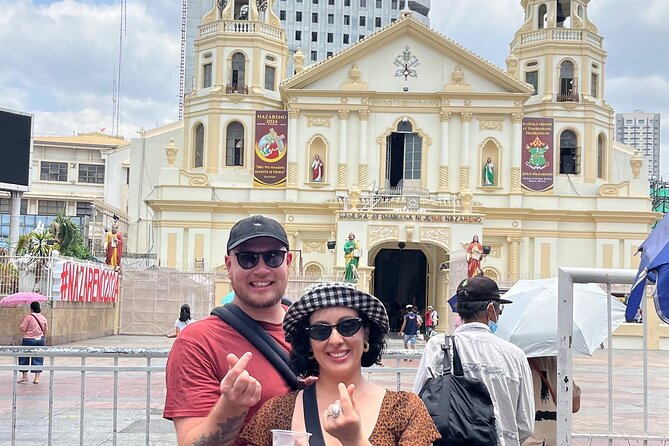
- Start at Grand Cafe 1919 in Binondo: The tour begins at 117 Juan Luna Street, a practical base for exploring Chinatown.
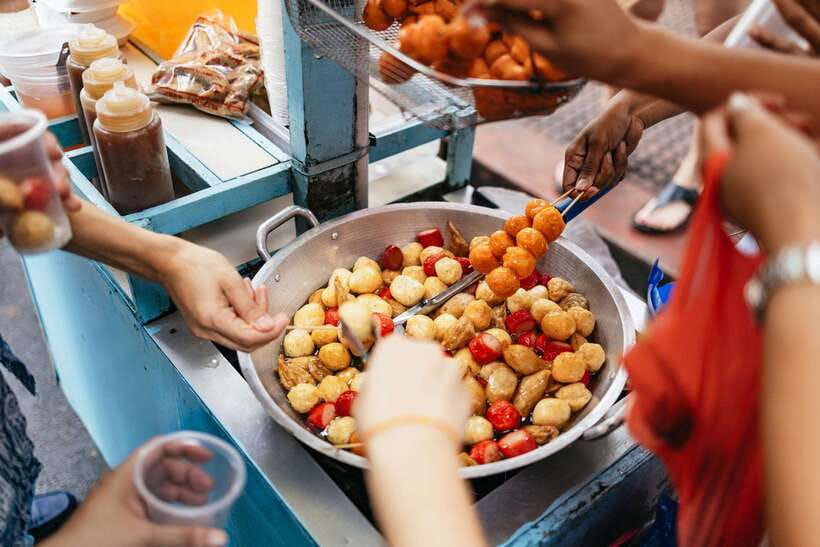
- Taste classic Filipino street food: Planned samples include isaw, dugo, balut, sweet and sour flavors, and halo-halo.
- Walk through three distinct districts: Binondo, Escolta, and Quiapo each give the food stops a different setting.
- Keep the group small: The maximum is 10 people, helpful on narrow or crowded streets.
- Finish with a local ride: A Filipino tricycle, described as a Lamborghini Tricycle, carries you back to the starting point.
- Pay for guidance, not just food: At $70 per person, the value rests on the guide’s explanations, route, tastings, and transportation experience.
Starting with coffee, Chinatown, and a sense of place
Your meeting point is Grand Cafe 1919 at 117 Juan Luna Street in Binondo, Manila. The first stop lasts about 15 minutes and has no separate admission charge. This gives you a clear place to meet before heading into Chinatown.
That opening matters because Binondo is not just a backdrop for food. It is the first clue to Manila’s layered identity. You begin in a district tied to commerce, Chinese Filipino life, and busy street eating, then move outward into older business streets and market areas. The guide helps turn the route into a connected story rather than a series of random snacks.
The cafe itself received strong praise as a meeting spot. It was described as a very cool place to begin, which makes it more appealing than meeting beside an anonymous curb or outside a large shopping center. You should still arrive ready to walk soon after the meeting time, since the main activity is on foot.
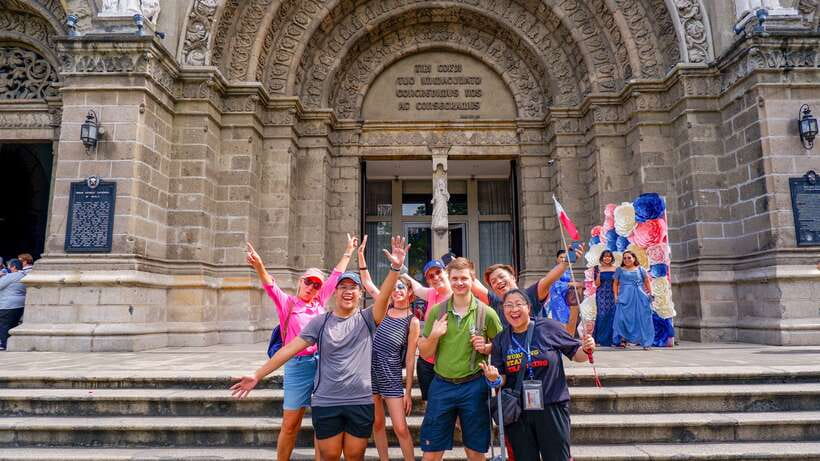
Because the group can include up to 10 people, this is intimate enough for a guide to explain unfamiliar dishes and answer questions. It is not a private tour, so the pace and food choices are shared with the rest of the group.
You can also read our reviews of more guided tours in Luzon

Binondo Chinatown: sweet, sour, and street-side Manila
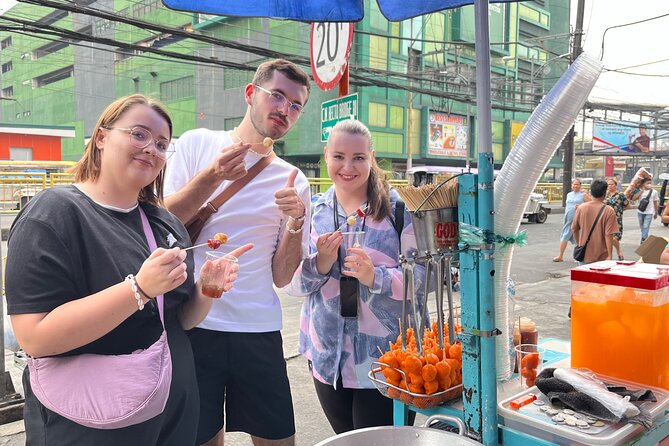
The Chinatown section lasts about 30 minutes. You will walk through the oldest Chinatown in Manila, described in the tour material as the oldest Chinatown in the world, while stopping for Filipino street food with sweet and sour flavors.
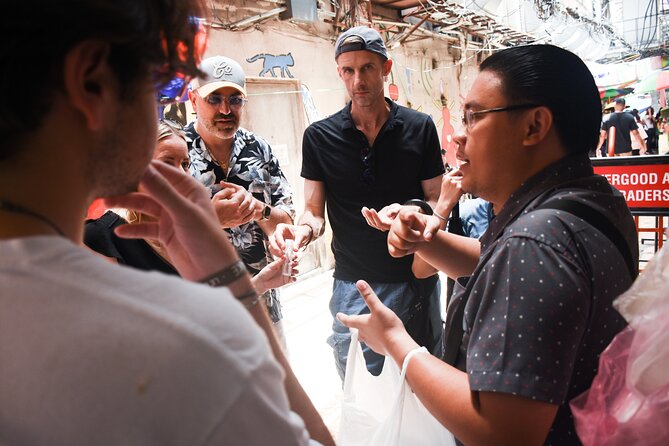
The appeal here is the setting. Food tastes different when you eat it near the stalls and streets where people actually gather for quick snacks. You can watch the rhythm of the district while the guide explains what you are trying. This makes the first food stop a gentle introduction before the more challenging items later in the route.
The sweet and sour focus also gives you a useful starting point. Filipino cooking often plays with contrast, and these flavors can be easier for a first-time visitor than more unusual textures. If you are unsure about unfamiliar dishes, ask the guide what each item contains and how it is normally eaten.
One point to keep in mind is the timing. Thirty minutes is enough for a few tastes and a short walk, but it is not enough for a long meal or a full tour of Chinatown. Think of this as a snapshot of the district, not a complete exploration.
Escolta Street and the boldest bites
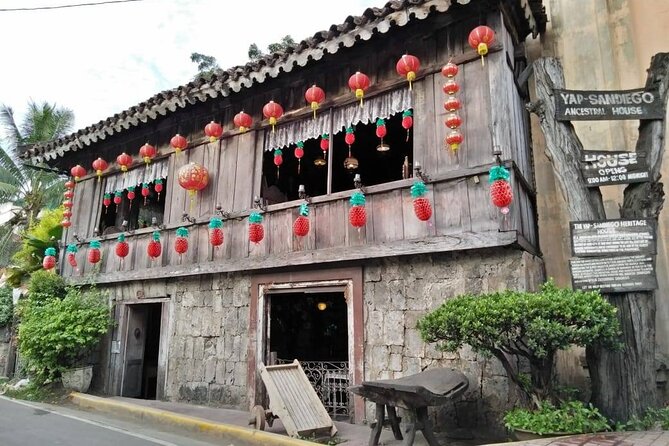
The next 30-minute stop takes you to Escolta Street. In the late 1800s and early 1900s, Escolta served as a major business center, with grand buildings, upscale shops, and heavy trade. Its past gives the food walk a change of mood. You are no longer focused only on stalls and snacks. You are also seeing one of the streets that helped shape Manila’s commercial and cultural life.
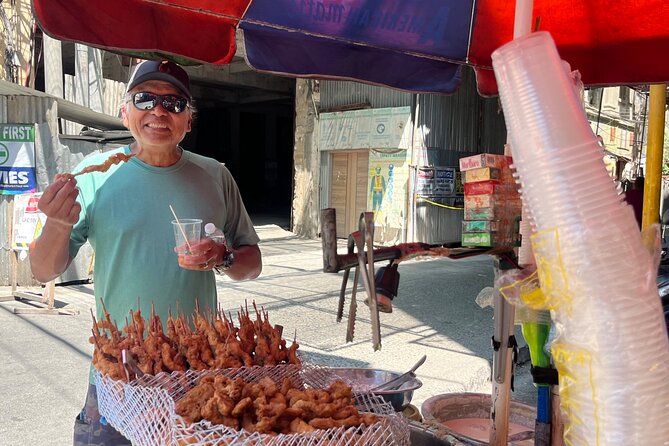
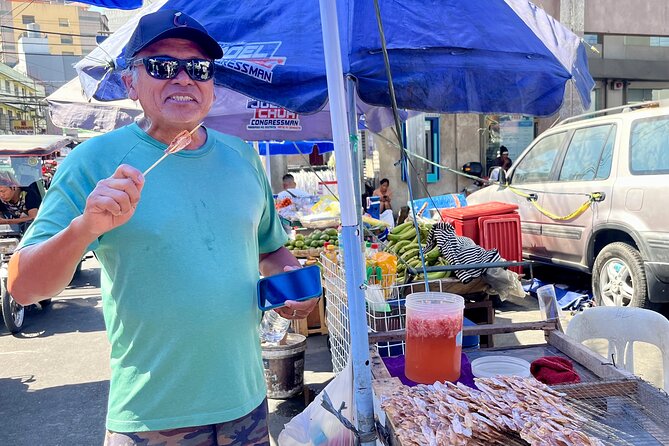
This is where the tour introduces two of its most distinctive foods: isaw, grilled chicken intestine, and dugo, a black pudding. These are classic examples of Filipino street food that use ingredients many visitors may not normally order. They are also the foods most likely to separate an adventurous eater from a hesitant one.
I like that the tour does not hide from the unusual dishes. A food tour that offers only familiar fried snacks would be easy, but less revealing. Isaw and dugo show how Filipino street food makes practical use of ingredients and turns them into popular snacks.
You should not feel pressured to eat something you do not want. The value here is also in learning what the dish is, how it fits local food culture, and why people seek it out. If you are comfortable trying new textures, this may be the most memorable part of the food selection. If you are a cautious eater, this is the point where you will want to ask questions before taking a bite.
Escolta also adds visual interest to the route through its older commercial identity. Since the stop lasts only half an hour, you will get an introduction rather than a long architectural walk. The street’s past works best as context for the guide’s stories between food tastings.
The long walk toward Quinta Market and Quiapo
From Escolta, the route continues on foot toward Quinta Market and Quiapo. This section lasts about an hour, making it the longest part of the tour. It is also where the experience shifts from historic street to working marketplace.
Quiapo is known for its crowded market and wide range of goods, including religious items, textiles, electronics, and street food. The district can become especially packed during religious festivals and events. That atmosphere is part of the point, but it also means you should wear comfortable shoes and stay alert to the group as you walk.
The market gives you a different view of Manila food. Instead of tasting in a carefully arranged restaurant, you see snacks within a larger web of everyday buying and selling. The surroundings may feel noisy and crowded, but that is precisely what makes the stop feel connected to local city life.
The one-hour timing allows room for walking, market observation, food, and conversation. It is still a short visit, so do not expect to inspect every section of Quinta Market. The guide’s route helps you focus on the parts that fit the food theme.
This section may suit curious visitors who want more than a checklist of dishes. You can ask about the religious items, market goods, and neighborhood as you move along. The supplied details do not promise a fixed list of every snack at Quinta Market, so the exact selection may depend on what is available that day.
Halo-halo: the cool finish to a savory route
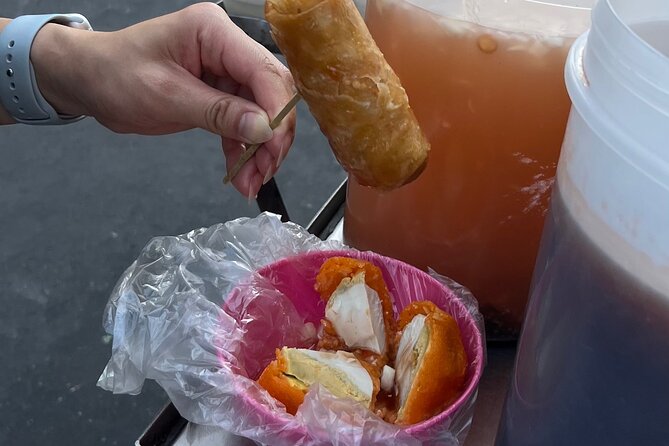
The final food highlight is halo-halo, a famous Filipino dessert served in the Quinta Market and Quiapo portion of the tour. After savory and more challenging tastes, a sweet dessert offers a natural finish.
Halo-halo is especially useful on a food tour because it shows a different side of Filipino eating. The itinerary describes the tour’s flavors as ranging from savory to sweet and spicy to tangy, and halo-halo brings the sweet side into focus. It also gives you a familiar direction after isaw and dugo, even if you are still deciding how adventurous to be.
The dessert stop is included within the one-hour market section, not presented as a separate restaurant visit. That means the setting remains part of the experience. You are eating in the district rather than leaving the market environment for a formal dining room.
If you have a sweet tooth, this may be the item you most look forward to. If you prefer savory food, it still works as a palate change before the final ride. Since the exact ingredients are not specified, ask the guide to explain what is in the serving you receive.


Returning by the Filipino tricycle
The tour ends back at Grand Cafe 1919 after a short 15-minute return section. This final leg includes a ride on a local Filipino tricycle, referred to here as a Lamborghini Tricycle and described as a form of transportation unique to the Philippines.
That ride adds a small but useful transport experience to the walk. You are not only eating and hearing stories. You are also getting a brief look at one of the country’s recognizable local vehicles. Since the tour ends at the starting point, you do not need to work out a separate route back to your hotel from an unfamiliar neighborhood.
The ride is short, so it should be treated as a closing touch rather than a major transport adventure. Still, it gives the tour a more distinct ending than simply walking back to the cafe.
What $70 means for the value
The price is $70 per person. That is a noticeable amount for a 2.5-hour food activity, especially if you are comparing it with buying individual street snacks on your own. The key question is what you want your money to do.
If you only want to eat cheaply, you can likely spend less without a guide. But that approach leaves you to identify stalls, understand the dishes, find your way between Binondo, Escolta, and Quiapo, and make sense of the city’s history on your own. This tour packages the route, explanations, tastings, and return transportation into one short outing.
I see the best value for a first visit to Manila. You get several districts in a compact period, along with foods that may be hard to identify or order without help. The small maximum group size also adds value. A group of 10 is easier to manage in crowded streets than a large coach group, and it gives you a better chance to speak with Mari or another assigned guide.
Group discounts may reduce the cost for people booking together. A mobile ticket makes the booking process convenient, and free cancellation is available if you cancel at least 24 hours before the start time. If you cancel later, the payment is not refunded, and changes made inside that window are not accepted.
Who will enjoy this food walk?
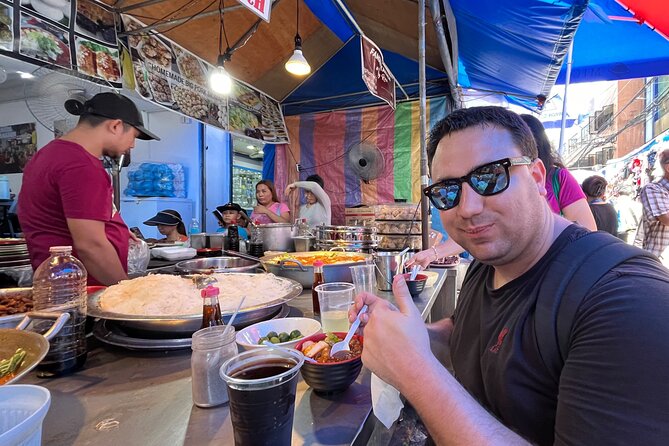
I would recommend this experience to you if you like trying local food in the places where people actually buy it. It is a good match for first-time visitors who want an introduction to several central Manila districts without arranging separate walks and tastings.
It also suits food lovers who want a few bold choices. Isaw, dugo, and balut are not safe picks for everyone, but they give the tour a stronger identity than a simple dessert-and-snack outing. The previous guest who praised the selection even tried balut, which suggests that the guide can help make the more unusual food feel approachable.
History-minded visitors should also find enough context to make the route worthwhile. Escolta’s former role as a business center and Quiapo’s market life give the tour more shape than a string of food samples.
You may want to choose another activity if you need a quiet, seated meal, dislike crowded markets, or prefer to know every dish in advance. The route is active, street-based, and partly dependent on what is available during the visit. Anyone with food allergies or strict dietary limits should ask the operator for current food details before booking, since the supplied information does not list substitutions or allergy arrangements.
Practical details before you book
The experience lasts approximately 2 hours and 30 minutes. The listed stops add up to that same length: 15 minutes at the meeting point, 30 minutes in Chinatown, 30 minutes on Escolta Street, one hour around Quinta Market and Quiapo, and 15 minutes for the return.
The starting address is Grand Cafe 1919, 117 Juan Luna Street, Binondo, Manila, 1006 Metro Manila, Philippines. The activity ends there as well. It is near public transportation, and most people can participate.
Wear shoes suited to walking and come hungry, but not so hungry that you rush through the first tasting. You will want room for several different flavors and enough energy for the long market section. Keep your group close in crowded areas, particularly around Quiapo.
The tour is offered as a group experience, with a maximum of 10 people. Confirmation arrives at booking, and a mobile ticket is accepted. These details make it fairly easy to add to a Manila itinerary.
Should you book Manila Street Food and Drinks?
Book it if you want a guided first taste of Manila’s street food and you are open to trying dishes that may be unfamiliar. The strongest reasons are the route through Binondo, Escolta, and Quiapo, the small group size, the connection between food and local history, and Mari’s praised ability to explain the culture behind the dishes.
Skip it if your main goal is the lowest possible food cost, a relaxed sit-down dinner, or a fully predictable menu. At $70, you are paying for guidance and context as much as for the food itself.
For an adventurous eater who has only a short time in Manila, I think the mix is worthwhile. You get sweet and sour tastes, isaw, dugo, balut, halo-halo, old commercial streets, a crowded market, and a final tricycle ride in one compact outing. That is a lot of Manila in 150 minutes.
FAQ
Where does the tour begin?
It begins at Grand Cafe 1919, 117 Juan Luna Street, Binondo, Manila, 1006 Metro Manila, Philippines.
Where does the tour end?
The activity ends back at the Grand Cafe 1919 meeting point.
How long does the experience last?
The tour lasts approximately 2 hours and 30 minutes.
What food is included?
The planned food experiences include sweet and sour Filipino street food, isaw, dugo, balut, and halo-halo. The exact selection may depend on availability.
What is isaw?
Isaw is chicken intestine served as Filipino street food.
What is dugo?
Dugo is a black pudding included during the Escolta Street portion of the tour.
Is halo-halo included?
Yes. Halo-halo is the dessert featured during the Quinta Market and Quiapo portion.
How many people can join?
The activity has a maximum of 10 participants.
Is the tour near public transportation?
Yes. The meeting point is near public transportation.
Can I cancel for a full refund?
Yes, if you cancel at least 24 hours before the experience start time. Cancellations made less than 24 hours before the start are not refunded.
More Guided Tours in Luzon

More Tour Reviews in Luzon
Not for you? Here's more nearby things to do in Luzon we have reviewed




Food Tours: how the alternatives stack up


The lists this tour appears in