Express Bamboo Bike Tour inside Intramuros
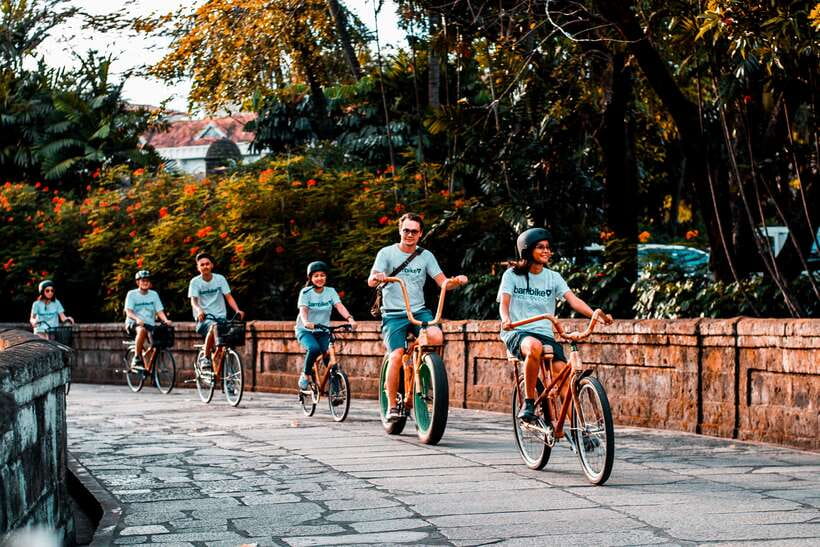
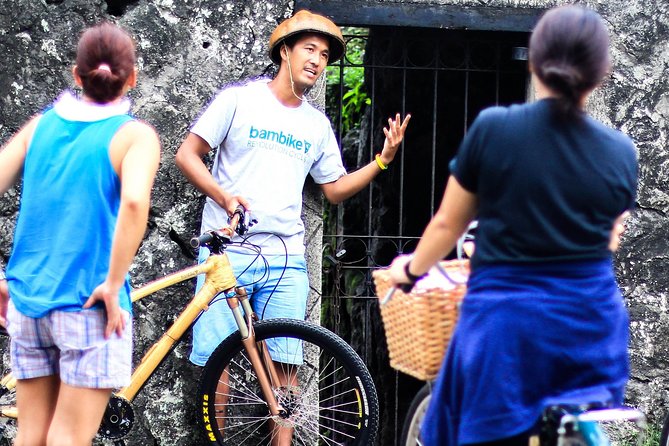
History moves better on two wheels. This Bambike tour gives you a quick, active way to see Intramuros, Manila’s old walled district, without spending half a day on foot. I like the included bamboo bicycle and helmet, and I like the local guide’s mix of stories, trivia, and practical care. Guides such as Anj and Josh have earned praise for being friendly, informative, and good at keeping the mood light.
The main catch is the timing. The tour is described as about two hours, yet the listed stops add up to roughly 90 minutes, and some recent departures have run closer to 1.5 hours. That is fine if you want a brisk introduction, but you should not book it expecting a slow, detailed tour of every church, gate, and street in Intramuros.
In This Review
- What Makes This Short Bambike Tour Worth Considering
- Starting at Casa Manila with the Right Bike
- Casa Manila: A Spanish Colonial Home in Replica Form
- The Japanese Cannon and Intramuros During World War II
- Puerta Real Gardens and the Defensive Walls
- Puerta del Parian and the Chinese Influence on Manila
- Aduana Building and the Work of Colonial Government
- Plaza Roma and the Center of Intramuros
- Manila Cathedral and the Catholic Heart of the Philippines
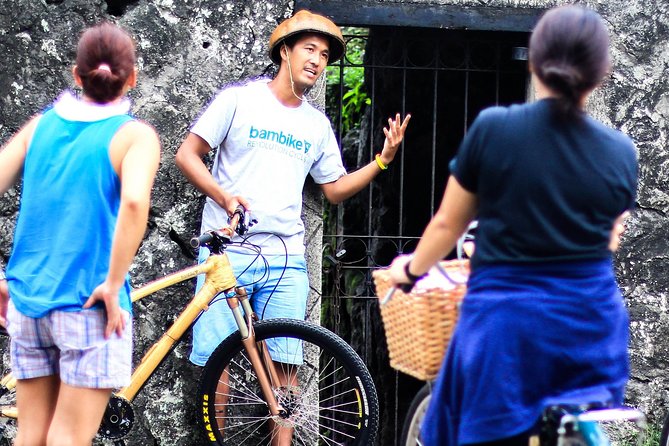
- What the Guides Add to a Fast Route
- Price, Pace, and What You Get for $22.40
- Weather, Clothing, and Small Practical Matters
- Who Will Enjoy This Ride Most
- Should You Book the Intramuros Express Bambike Tour?
- FAQ
- How long does the Bambike Intramuros tour take?
- What is the price?
- What is included in the tour?
- Where does the tour start and finish?
- How many people can join?
- Do children need an adult with them?
- Does the tour operate in bad weather?
- What is the cancellation policy?
What Makes This Short Bambike Tour Worth Considering
- You ride a locally made bamboo bicycle rather than taking a standard walking tour or vehicle ride.
- You cover eight important Intramuros stops, including Casa Manila, Puerta Real, Plaza Roma, and Manila Cathedral.
- You get a small-group format, with no more than 15 people and personal bike selection at the start.
- You hear both Spanish colonial and wartime stories, including the role of Chinese communities and the Japanese Occupation.
- Practical extras are included, such as a helmet, sunscreen or rain poncho when needed, and tour gratuities.
- The tour works well for a short Manila visit, especially if you want movement and sightseeing in the same two-hour window.
Starting at Casa Manila with the Right Bike
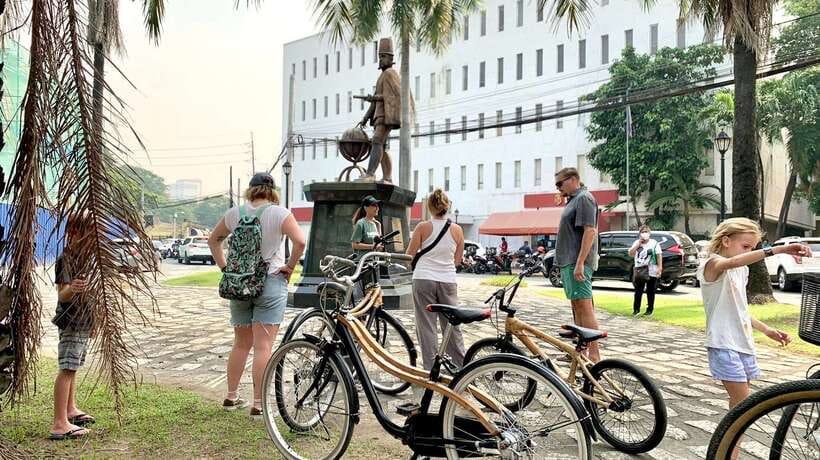
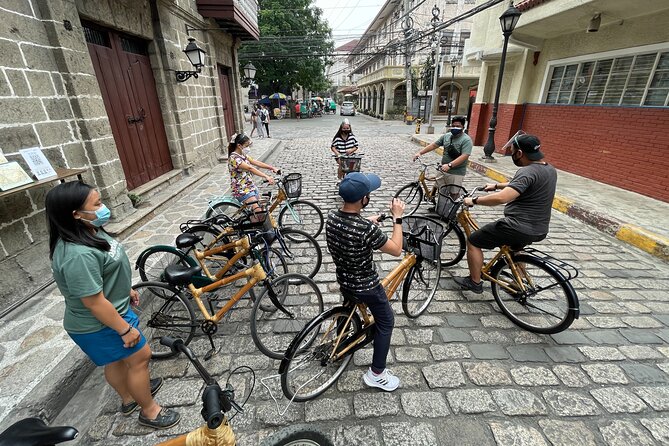
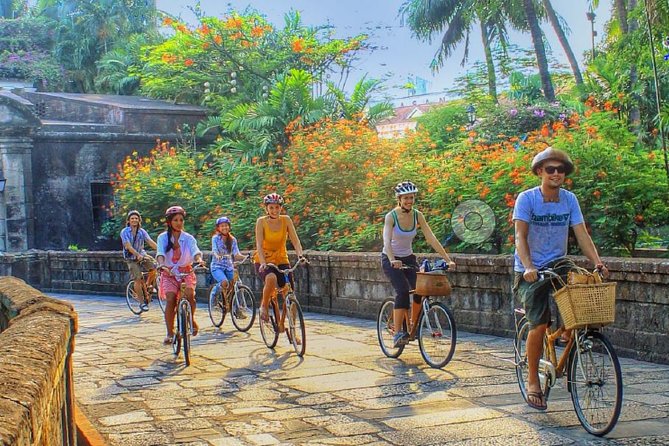
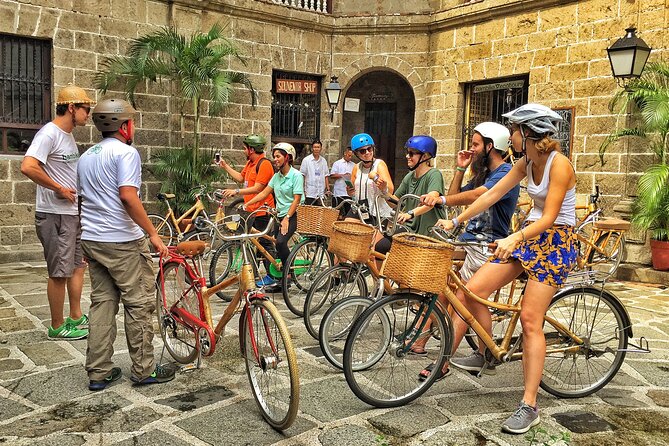
The meeting point is Bambike Ecotours Intramuros at Real Street, inside the Casa Manila area. You fill out a waiver, then choose a bamboo bicycle according to your comfort and preference. That small step matters. A bike that fits reasonably well makes a hot ride through old streets far more pleasant.
A helmet is included, and sunscreen or a rain poncho may be supplied when conditions call for it. One highly praised departure also included drinking water, mosquito repellent, a rain coat, and a cool towel at the end. Those extras can make a real difference in Manila’s heat and sudden rain, though you should still dress for all-weather conditions.
The group limit is 15 people. That is not a private tour, but it is small enough for a guide to answer questions and keep an eye on the group. Children must be accompanied by an adult, and most people can take part. Service animals are allowed.
The ride is not presented as a hard cycling challenge. It is better understood as a gentle workout mixed with sightseeing. You will spend time riding between stops, but the tour also pauses often for explanations and photos. If you rarely cycle, tell the guide about your comfort level when choosing your bike.
You can also read our reviews of more tours and experiences in Luzon.
Casa Manila: A Spanish Colonial Home in Replica Form
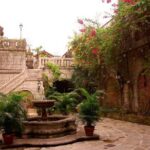
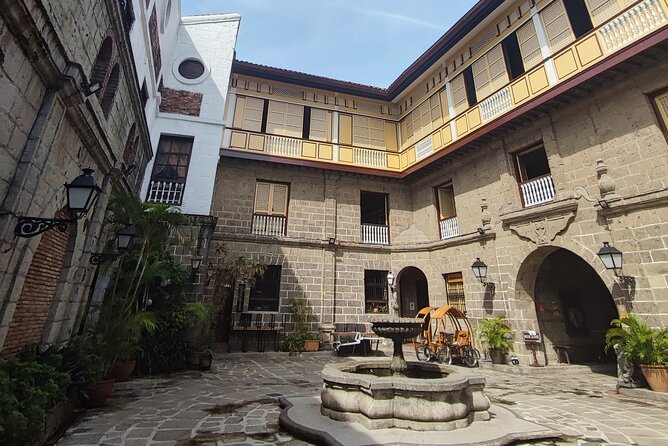
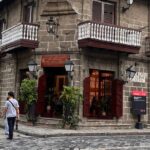
Casa Manila is the natural place to begin because it gives you a quick look at the kind of home associated with the Spanish Colonial Period. It is a copy of a traditional house, so the value is not that you are entering an untouched residence. Instead, you get a visual guide to the period’s architecture and domestic style.
The planned stop lasts about 15 minutes. That is enough for an introduction, but not enough for a long architectural study. I would pay attention to the building’s shape, details, and sense of space, then let the guide explain how this style fits into Manila’s colonial past.
Because the tour starts here, Casa Manila also serves as a useful orientation point. You are not simply being handed a bicycle and sent into the streets. You begin with a place that helps frame the rest of the ride.
The Japanese Cannon and Intramuros During World War II
The stop at the Japanese Cannon shifts the subject from colonial architecture to wartime Manila. Along Muralla Street, you pause to learn about the Japanese Occupation of the Philippines and the wider events of World War II.
This is one of the short tour’s most useful contrasts. Intramuros is often treated as a Spanish colonial district, but its story did not end with Spain. The cannon gives the guide a physical object around which to explain a much later and painful period.
You have about 10 minutes here. That means you should expect a concise account rather than a full military history. Still, a good guide can make a brief stop meaningful by connecting the object to the city’s wartime experience. Josh has been especially praised for using jokes and trivia while teaching Philippine history, a style that can help keep a fast tour from feeling like a string of dates.
Puerta Real Gardens and the Defensive Walls
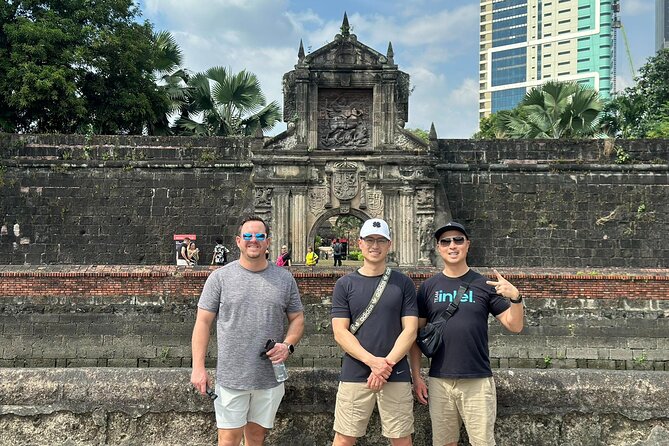
Puerta Real Gardens introduces the defensive side of Intramuros. You learn about one of the district’s main gates and how Spanish authorities planned fortifications beyond the walls.
The stop is scheduled for about 15 minutes, making it one of the longer pauses. That gives you time to look at the gate and surrounding area instead of hearing the explanation while still straddling your bicycle. The guide can show how an entrance was also part of a wider defensive plan.
I like this stop because it gives purpose to the walls. Without that context, the gates can look like attractive old structures. With it, you begin to see Intramuros as a planned fortified district, shaped by concerns about control, access, and defense.
Puerta del Parian and the Chinese Influence on Manila
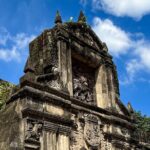
Puerta del Parian is another major gate, but the subject here changes again. The guide explains the importance of Chinese people and Chinese influence in Philippine history, using the gate and its public plaza as the setting.
This is an important inclusion. A quick tour of Intramuros could easily focus only on Spanish power and Catholic monuments. This stop adds another part of Manila’s past and reminds you that the city’s story includes trade, migration, and cultural exchange.
The stop lasts about 15 minutes. That is enough to give you a clear outline of the area’s importance, though anyone seeking a detailed account of Chinese Filipino history will need a longer tour or a museum visit afterward.


Aduana Building and the Work of Colonial Government
The Aduana Building, also called the Intendencia, is a brief five-minute stop. It is a Spanish colonial structure that housed government offices at different points in its history.
You will not spend long here, so think of it as a visual pause and a piece of the larger civic story. Casa Manila shows a colonial home. The Aduana Building shows the machinery of administration.
Short stops like this are where the express format reveals both its strength and its limit. You see more buildings than you could comfortably cover on foot in the same period, but you must be ready to absorb information quickly. If government architecture is a major interest, you may want to return later for a closer look.
Plaza Roma and the Center of Intramuros
Plaza Roma is also given about five minutes. Here, the guide explains the public plaza and the buildings around it, including Manila Cathedral.
This is a useful moment to understand how public space worked inside Intramuros. The plaza is not just a place to pass through on a bicycle. It helps connect the district’s civic, religious, and social functions.
The short stop also prepares you for the final major visit. You get the setting first, then move to Manila Cathedral itself. That order helps the cathedral feel like part of the city’s structure rather than a separate attraction.
Manila Cathedral and the Catholic Heart of the Philippines
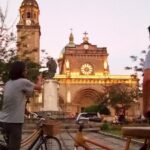
The final listed stop is Manila Cathedral, described as the heart of Christianity in the Philippines. You have about 15 minutes to see the church, its interior, and its long history.
This is the tour’s main religious landmark. The guide can explain why the cathedral matters nationally as well as locally, while you take in the building itself. Since the visit is short, do not expect a full examination of every chapel, artwork, or rebuilding period. The goal is a focused introduction.
The tour ends back at the meeting point on Real Street. That makes the route simple for your next stop in Intramuros. You are not left across town, and you can continue exploring the district on foot if the fast ride has shown you places worth revisiting.
What the Guides Add to a Fast Route
A two-hour sightseeing ride depends heavily on the guide. The route includes good locations, but the guide turns those locations into a connected story.
Anj has been praised for being friendly and informative, with a stop at a cafe and ice cream included on one departure. Josh has been praised for jokes, trivia, and a fun way of explaining Philippine history. These details suggest a relaxed guiding style rather than a formal lecture.
The experience also includes a tour escort or host. Gratuities are covered, so you do not need to calculate a tip at the end. Food and drinks are not generally included, although one departure ended with non-dairy ice cream and a cool towel. Treat that as a possible finishing touch, not something to rely on as part of the fixed program.
Price, Pace, and What You Get for $22.40
At $22.40 per person, this is a fair price for a guided introduction to Intramuros. The cost includes the bamboo bicycle, helmet, guide, escort, possible sunscreen or rain poncho, and gratuities. You are paying for both transport between sights and interpretation at the stops.
The value is strongest if you have limited time in Manila or do not want to spend your first visit walking in the heat. A bicycle lets you cover a wider section of Intramuros while still stopping at important sites. It also gives the outing a clear physical element, which many standard history tours lack.
The value is weaker if you want long interior visits or a highly detailed account of each building. The schedule is tight, and the route is designed for highlights. You may leave with a good framework and a list of places to explore later, not with every question answered.
The 4.7 rating from 66 reviews and 94 percent recommendation rate support the idea that the balance works for most people. The praise focuses on friendly guides, good organization, humor, and the simple pleasure of riding the bamboo bikes. The main thing to understand is that this is an express route, not a full-day study of Intramuros.
Weather, Clothing, and Small Practical Matters
The tour operates in all weather conditions, so dress appropriately. The cancellation terms make an important distinction: if the operator cancels because of poor weather, you can receive a full refund or choose another date. If you cancel, you must do so at least 24 hours before the start time for a full refund.
Wear clothing suitable for cycling and Manila’s heat. The operator may provide sunscreen or a rain poncho, but it is sensible to arrive prepared. Water, mosquito repellent, and a rain coat have been provided on at least one well-organized departure, but those items should not be treated as guaranteed inclusions beyond the stated equipment and weather supplies.
The tour has mobile ticketing and is near public transportation. Confirmation arrives at booking. Since the activity begins and ends at the same meeting point, it is easy to fit into a wider Intramuros plan.
Who Will Enjoy This Ride Most
I would recommend this tour to you if you want a quick first look at Intramuros, enjoy light exercise, and prefer stories delivered in an informal way. It is also a good fit for families with older children, provided an adult accompanies each child and everyone is comfortable on a bicycle.
It suits people who have only a short stay in Manila. In roughly two hours, you get colonial architecture, wartime history, defensive gates, Chinese Filipino context, government buildings, a public plaza, and Manila Cathedral.
I would be more cautious if you dislike cycling, need long indoor visits, or want a quiet, unhurried pace. The group can include up to 15 people, and the stop lengths are short. You should also allow for weather, street conditions, and the possibility that the actual route may run closer to 1.5 hours than two.
Should You Book the Intramuros Express Bambike Tour?
Book it if you want an efficient and enjoyable orientation to Manila’s walled city. The bamboo bike is more than a novelty: it turns a hot walking route into a moving history lesson, and the small-group setup gives the guide room to keep the ride personal.
I would especially choose it for a first visit, a short Manila stop, or a day when you want sightseeing with some exercise. Choose a longer Intramuros tour instead if you want extended time inside churches and historic buildings. At $22.40, this express ride offers solid value, as long as you accept its quick pace and treat it as an introduction rather than the final word on Intramuros.
FAQ
How long does the Bambike Intramuros tour take?
The tour is advertised as approximately two hours. The listed stop times total about 90 minutes, and some departures have taken around 1.5 hours.
What is the price?
The price is $22.40 per person.
What is included in the tour?
The tour includes a local guide, tour escort or host, bamboo bicycle, helmet, gratuities, and sunscreen or rain ponchos when needed.
Where does the tour start and finish?
It starts at Bambike Ecotours Intramuros on Real Street, Intramuros, Manila. It ends back at the same meeting point.
How many people can join?
The maximum group size is 15 people.
Do children need an adult with them?
Yes. Children must be accompanied by an adult.
Does the tour operate in bad weather?
The tour operates in all weather conditions, so you should dress appropriately. If the activity is canceled because of poor weather, you will be offered another date or a full refund.
What is the cancellation policy?
You can cancel at least 24 hours before the start time for a full refund. Cancellations or changes made less than 24 hours before the start time are not refunded or accepted.