Manila Highlights & Hidden Gems: Private Tour with a Local
Manila rewards curious walkers. This private tour pairs Intramuros and Quiapo with quieter courtyards, old streets, art spaces, gardens, and places of worship, so you see more than the usual postcard view. I especially like the personal route planning and the chance to explore free cultural sites at your own pace. The main drawback is simple: Manila walking can be tiring, especially in heat, and transport between distant areas costs extra.
The tour lasts anywhere from two to eight hours, which makes it useful for both a quick introduction and a full day of city exploring. I also like that your host contacts you before the tour and asks what interests you, although the flexible format means your final route depends on your answers, timing, and the guide you are matched with.
In This Review
- Key points at a glance
- Why this private Manila tour works
- Entering Intramuros at Plaza Roma
- Escolta, old commerce, and new creative life
- Quiapo and Manila’s living faith
- Mehan Garden and the value of a quiet pause
- National Museum of Anthropology and free culture
- Jones Bridge and Manila’s changing views
- Luneta Park and the country’s past
- How the questionnaire changes the day
- Two hours or eight hours?
- Price, transport, and what you actually get
- Who should book this Manila walk?
- Should you book it?
- FAQ
- Where does the tour begin?
- How long does the tour last?
- Is this a private tour?
- Which languages are available?
- Is transportation included?
- Are food and drinks included?
- Are attraction tickets included?
- Can I choose what I see?
- Is the tour wheelchair accessible?
- Can I cancel for a refund?
Key points at a glance
- Start at Plaza Roma: Meet beside Intramuros landmarks, then adjust the meeting point after booking if another location works better.
- Build your own Manila day: Tell your host if you prefer history, food, faith, art, architecture, or less-visited corners.
- Walk through three different Manilas: Intramuros offers Spanish-era streets, Escolta shows older commercial Manila, and Quiapo brings a strong dose of everyday religious life.
- Look for free cultural stops: Mehan Garden and the National Museum of Anthropology may fit the route without adding admission costs.
- Expect a flexible walking tour: A private vehicle is not included, and local taxis or public transport may be needed between areas.
- Best for independent-minded visitors: You get conversation and local insight rather than a fixed script or a large group.
Why this private Manila tour works
Manila can feel confusing at first. Its districts are spread out, its streets shift quickly from grand buildings to crowded lanes, and the city’s past is often layered directly over modern daily life. A fixed sightseeing route can show you major landmarks, but it may not leave room for the things you actually care about.
This tour takes a different approach. After booking, you complete a short questionnaire about your interests, preferred pace, and must-see places. Your host then contacts you to shape the day. That matters because a history enthusiast and a visitor interested in folklore should not get the same two-hour walk.
You can ask for a route centered on Intramuros and Manila’s past. You can also request a mix of old architecture, religious traditions, art, open spaces, and local street life. The tour description gives examples rather than promises a fixed route, so treat the following stops as possible building blocks.
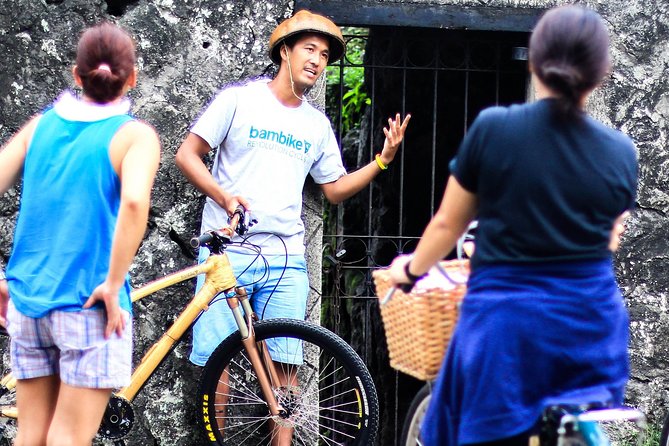
The private format is a major advantage. You can pause for questions, shorten a stop, spend longer on a building that catches your eye, or change the pace when the streets become tiring. You are not waiting for a large group to take photographs or keeping up with strangers.
The tradeoff is that the experience may feel less polished than a standard sightseeing circuit. You are buying flexibility, not a guaranteed list of every major landmark. If you want a precise historical lecture with fixed timing, this may feel loose. If you want to follow your curiosity, the loose structure is the point.
You can also read our reviews of more private tours in Manila

Entering Intramuros at Plaza Roma
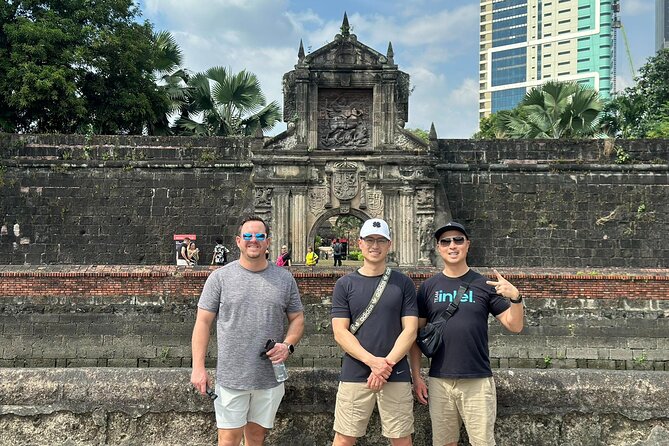
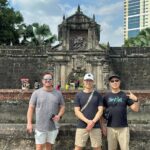
Plaza Roma is the stated meeting point, and it is a practical place to begin. You are already inside the historic district, where cobblestone streets, old walls, churches, and courtyards give the walk a clear sense of place from the first few minutes.
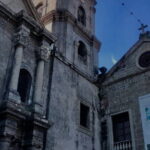
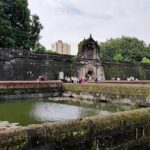
Intramuros is the strongest anchor for the tour. Its walls point to Manila’s colonial past, while the streets and religious buildings show how that past remains part of the city today. Your host may lead you through quieter lanes rather than simply stopping at the most obvious monuments.
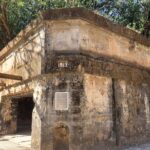
Look for the small details: vine-covered courtyards, worn stone, doorways, religious symbols, and the way old buildings sit beside present-day homes and businesses. These details help you understand Intramuros as a lived district, not just an outdoor museum.
The pace matters here. A rushed visit can turn Intramuros into a checklist of walls and churches. With a private guide, you have a better chance to stop when a courtyard, façade, or side street catches your attention. Ask questions about architecture, faith, and how the district fits into Manila today.
There is also a practical issue. Cobblestones and long walking stretches can be hard on your feet, and the heat can build quickly. Wear comfortable shoes, carry water, and tell your host early if you need more sitting breaks.
Plaza Roma may not be the best starting point for every visitor, especially if your hotel or interests are elsewhere. The meeting point can be adjusted after booking with help from the experience planners, so ask about that rather than assuming you must begin there.
Escolta, old commerce, and new creative life
From Intramuros, your route may continue toward Escolta. This district once served as Manila’s main commercial heart, and its older buildings give the area a different look from the walled city.
Escolta is useful for travelers who enjoy architecture and urban change. Instead of one preserved historical zone, you see a district where older façades, vintage shops, art spaces, and current creative activity share the same streets. The contrast helps explain how Manila has changed over time.
I would ask your host to point out architectural details and explain what made Escolta important. A good conversation here can turn a walk past old buildings into a lesson about commerce, city growth, and the changing use of urban space.
Do not expect every building to be restored or every street to feel polished. That is part of the appeal, but it also means the experience may be more observational than attraction-based. You are seeing a district in transition, not entering a neatly packaged heritage site.
Escolta also shows why a local host can be useful. A guide can help you notice the art spaces and vintage shops that are easy to miss when you are simply moving from one major sight to another. If you prefer photography, design, and architecture to formal museum visits, tell your host before the walk.
Quiapo and Manila’s living faith
Quiapo brings a very different mood. The district is known for religious energy, folklore, candles, amulets, and the symbolism surrounding Quiapo Church. Here, faith is not confined to a quiet interior. It appears in the street, in objects for sale, in gestures, and in the way people move through the area.
This is one of the tour’s most distinctive possibilities. You might stop to discuss the meaning of candles and amulets, or ask how religious practice and local folklore overlap. The value lies less in looking at a church from outside and more in understanding what the place means to people.
Approach this part with respect. Ask before photographing people, religious items, or worshippers. A private host gives you a chance to ask sensitive questions quietly, without turning the area into a spectacle.
Quiapo may also be the most demanding section of the walk. The streets can feel crowded and intense, and the sensory load is greater than in a quiet garden or museum. If you prefer a calmer route, say so. The itinerary is meant to reflect your pace, not force you through every district.
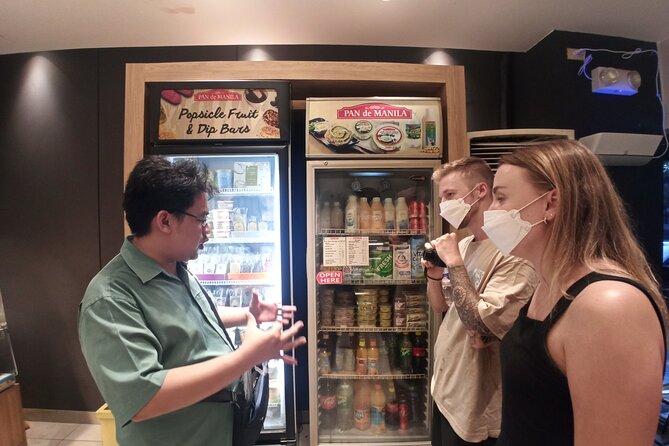
If your main goal is food, Quiapo may be a natural request, but food and drinks are not included. You pay separately for anything you buy, and the tour description does not promise a food tasting program. Ask your host what can fit into the time and budget you have.
Mehan Garden and the value of a quiet pause
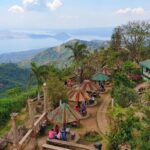
Mehan Garden offers a useful change of rhythm. After the stone streets and busy districts, a green public space gives you room to slow down and take stock of what you have seen.
I like this kind of stop because it keeps the tour from becoming a chain of landmarks. Manila’s character is not only in churches, museums, and old commercial buildings. It is also in the spaces where people pause, cross through, or take a break from city traffic.
The garden may suit you if you want a gentler section of the route or need time away from crowds. It is also a sensible request for a longer tour, especially if you choose a six or eight-hour option. A two-hour walk may not allow time for every district, a garden, and a museum without rushing.




National Museum of Anthropology and free culture
The National Museum of Anthropology is another possible stop. Its cultural focus can add context to the city’s faith, folklore, and architecture, giving you a wider view of the Philippines beyond Manila’s colonial chapter.
Because the tour highlights free cultural sites, a museum visit can be a strong value. You can add substance without paying an extra attraction fee, although food, drinks, and any tickets required for other attractions remain your responsibility.
The museum is most useful when you tell your host what you want to understand. If you are interested in local traditions, ask for connections between what you see in the galleries and what you encounter in Quiapo or Intramuros. If your interest is mostly architecture, you may prefer to spend more time outdoors.
Do not assume the museum is guaranteed. The tour is personalized, and the route depends on your questionnaire, conversation with your host, available time, and interests. Ask for it directly if it is a must-see.
Jones Bridge and Manila’s changing views
Jones Bridge can provide a scenic pause and a chance to see Manila from a different angle. River views and the changing skyline help connect the historic districts to the larger city.
This is a good place to ask your host how the different neighborhoods relate to one another. From street level, Manila can seem like a series of separate worlds. A bridge view gives you a broader sense of the city’s shape and movement.
The view itself may not justify a long detour if you have only two hours. On a longer tour, though, it can be a welcome change from narrow streets and interiors. Tell your host if you would rather spend time on views, photographs, and architecture than add another formal attraction.
Luneta Park and the country’s past
The experience can also include Luneta Park, a major historical space in Manila. A stop here gives the walk a broader national frame and helps connect the city’s streets to the Philippines’ past and resilience.
For many visitors, Luneta is especially memorable because it is not just another old building. It is a public place tied to national memory. The park can make sense near the beginning or end of a longer itinerary, depending on where your host starts and how much time you have.
One practical point is important: Luneta and Intramuros are not the same compact stop. If both are priorities, request them clearly and choose a longer duration. Trying to cover them, Escolta, Quiapo, a museum, and a garden in two hours would make the day feel rushed.
A past participant described the walking portion as tiring, particularly because it was their first walking tour in Manila. That is useful advice even if you are fit. Plan for regular pauses and be realistic about how much ground you want to cover.
How the questionnaire changes the day
The pre-tour questionnaire is more than a formality. It is your chance to say what kind of Manila you want to see.
Be specific. Instead of writing history, say you want colonial architecture, churches, national memory, or the story of Manila’s older commercial districts. Instead of saying culture, mention folklore, candles and amulets, museum collections, faith, or daily street life.
You should also explain what you do not want. If you dislike long walks, crowded areas, or shopping stops, say so. If you want time for photographs or a slower pace, include that too.
The tour is available in English and Tagalog. It is a private group experience, so you can ask for explanations at your level and avoid the pressure of a large group. Wheelchair access is listed, but because this is primarily a walking tour through historic streets, discuss your route needs with the host before the day.
Two hours or eight hours?
The broad duration range is one of the tour’s best features, but it also requires honest planning.
A two-hour tour works as a focused introduction. Choose one main area, such as Intramuros, and perhaps add a nearby cultural or religious stop if the timing allows. This option suits a short Manila visit or a first orientation.
A four-hour tour gives you room for two connected themes. You might combine Intramuros with Escolta, or focus on Intramuros and nearby historical sites without racing.
A six to eight-hour tour is better if you want several districts, a museum, a garden, Luneta, or Jones Bridge. Even then, do not treat the maximum duration as a promise that every place will fit comfortably. Manila’s streets, heat, and transfers all take time.
Your start time is flexible, subject to availability. Ask for a time that matches your energy and other plans. A private walk is most enjoyable when you are alert, hydrated, and not watching the clock for a flight.
Price, transport, and what you actually get
At $59 per person, the tour is priced as a private experience rather than a basic group walk. The value depends heavily on group size. For one person, the cost buys personal attention but is less economical. For a couple or small private group, it can compare well with paying separate admission and transport costs while following a fixed route.
Your payment covers the private walking experience, local host, planning questionnaire, direct communication, and local suggestions. It does not cover food, drinks, attraction tickets, or transportation.
That last point deserves attention. This is not a private car tour. You may walk most of the time, but public transport or local taxis may be needed between districts. Discuss the likely route and transport costs with your host after booking so there are no surprises.
The strongest value is not the number of sights. It is the ability to spend your limited time on the parts of Manila that fit you. If you want a quick photo stop at every major landmark, a fixed sightseeing tour may be simpler. If you want conversation, local context, and flexibility, $59 can be reasonable.
Free cancellation up to 24 hours before the tour and reserve-now, pay-later terms also make the booking easier to fit into a changing schedule.
Who should book this Manila walk?
I would recommend it most to first-time visitors who want help making sense of Manila without joining a large group. It also suits repeat visitors who have seen the main sights and now want architecture, faith, art spaces, gardens, or local stories.
It is a good match if you enjoy asking questions and making small changes during the day. The less certain you are about a fixed checklist, the more useful the private format becomes.
You should think twice if you dislike walking, need a vehicle between every stop, or want guaranteed entry to a long list of attractions. The experience is flexible, but flexibility means some choices remain open until you plan them with your host.
The only published score is five out of five, based on one rating, so treat that as encouraging but limited evidence. The clearest practical lesson is to ask for enough historical stops and context. A past participant especially valued Luneta Park and Intramuros but wished for more stops and historical points. If that sounds like your style, choose at least four hours and state your priorities clearly.
Should you book it?
Book this tour if you want Manila explained through places, people, faith, architecture, and small discoveries rather than a memorized list of sights. Ask for Intramuros, Luneta, or the National Museum of Anthropology by name if they matter to you, and request breaks if you are not used to long walks.
Skip it if you need a private vehicle, a fixed schedule, or all-inclusive pricing. For everyone else, the private format, adjustable length, and local conversation offer a useful way to meet Manila on your own terms.
FAQ
Where does the tour begin?
The stated meeting point is Plaza Roma, a central landmark in Intramuros. You can request a different meeting point after booking with help from the experience planners.
How long does the tour last?
The tour can last from two to eight hours. Starting times depend on availability.
Is this a private tour?
Yes. The experience is for a private group rather than a shared group.
Which languages are available?
The live tour guide speaks English and Tagalog.
Is transportation included?
No. This is primarily a walking experience, and a private vehicle is not included. Public transport or local taxis may be used between sites at an additional cost.
Are food and drinks included?
No. Food and drinks are not included in the price.
Are attraction tickets included?
No. Tickets to attractions are not included. The tour may include free cultural sites, depending on your personalized route.
Can I choose what I see?
Yes. After booking, you complete a questionnaire about your interests, preferences, and must-see places. You can discuss the route directly with your host.
Is the tour wheelchair accessible?
The activity is listed as wheelchair accessible. Since it is mainly a walking tour through different city areas, discuss your specific route needs with your host before the tour.
Can I cancel for a refund?
You can cancel up to 24 hours in advance for a full refund. You can also reserve now and pay later.