Manila: Fort Santiago Guided Tour
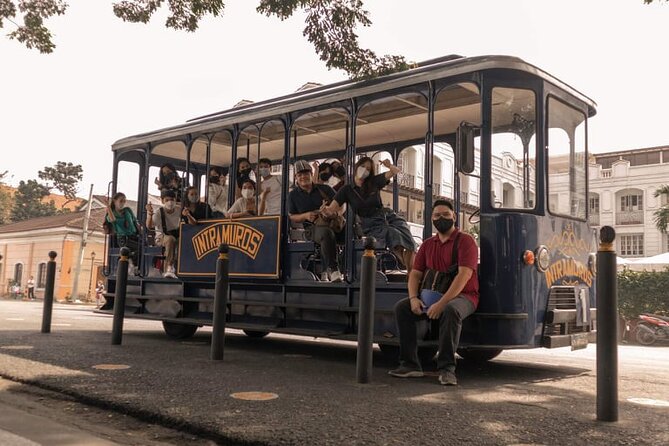
Walls here carry painful stories. This guided Fort Santiago tour brings Manila’s Spanish colonial past into focus through the prison cell of Dr. Jose Rizal, the wartime dungeons, and the old military defenses of Intramuros. I especially like the attention given to lesser-known uprisings and the chance to hear the story in Filipino, which guide Jerome used for much of one highly praised tour. The main drawback is the amount of walking, often under the sun, and the site is not suitable for children under seven, wheelchair users, or people with mobility impairments.
At $20 per person, I see good value if you want context rather than a quick walk around old walls. You get a guided visit to Fort Santiago, the dungeons, Rizal’s cell, the American barracks, and the baluartes, with a history that reaches from Rajah Sulayman’s settlement to modern Manila. Just note that hotel pickup, food, and drinks are not included, and the supplied location information says Nueva Vizcaya even though the experience is presented as a Manila and Intramuros tour, so confirm the meeting point before setting out.
In This Review
- Key points to know before you go
- Why Fort Santiago makes a strong starting point
- The fortress, baluartes, and old American barracks
- Dr. Jose Rizal’s cell and the final days of a national hero
- The dungeons and the cost of war
- The uprisings that shaped Intramuros
- What the guide adds to the experience
- Is $20 per person good value?
- Who should book this Fort Santiago tour?
- Should you book the Manila Fort Santiago tour?
- FAQ
- Where does the Fort Santiago tour take place?
- What does the $20 price include?
- Are hotel pickup, meals, and drinks included?
- Which languages are available?
- Is the tour suitable for wheelchair users?
- What should I bring?
Key points to know before you go
- Dr. Jose Rizal’s prison cell gives the tour a personal focus through the final imprisonment of the Philippines’ national hero.
- The wartime dungeons are a sober stop connected to the deaths of about 600 people during the end of the Japanese occupation.
- The history goes beyond Spanish rule, covering Rajah Sulayman, the Novales revolt, the Sangley Uprising, and the 1896 Philippine Revolution.
- Guide Jerome received especially strong praise for his broad command of Philippine history and for leading much of the tour in Filipino.
- The tour involves substantial walking, so bring comfortable shoes, water, a hat, and sunscreen.
- The $20 price covers the guided Fort Santiago experience, but not hotel pickup, meals, or drinks.
Why Fort Santiago makes a strong starting point
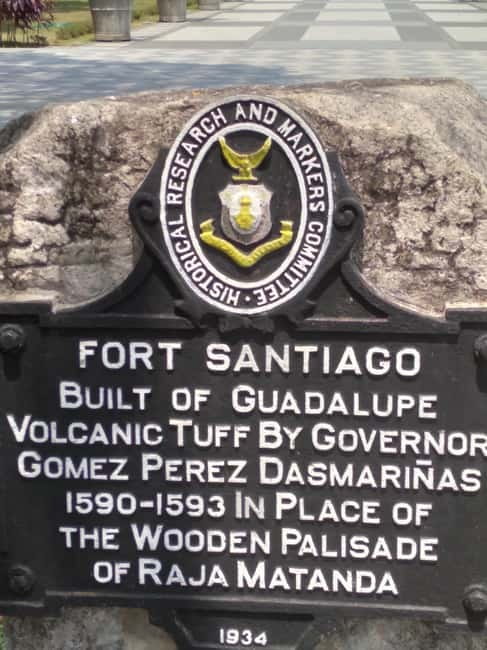
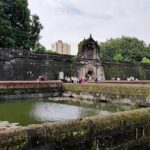
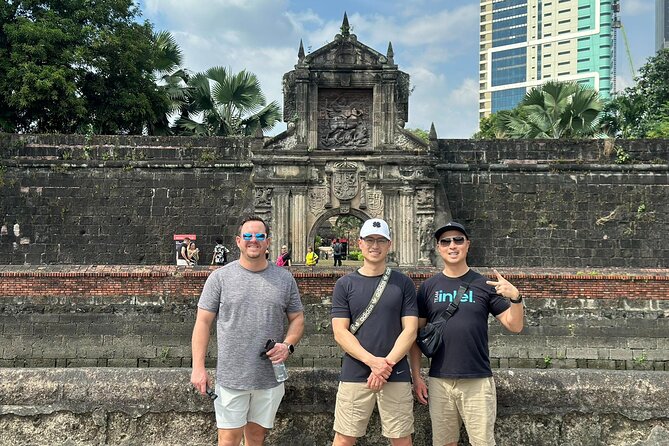
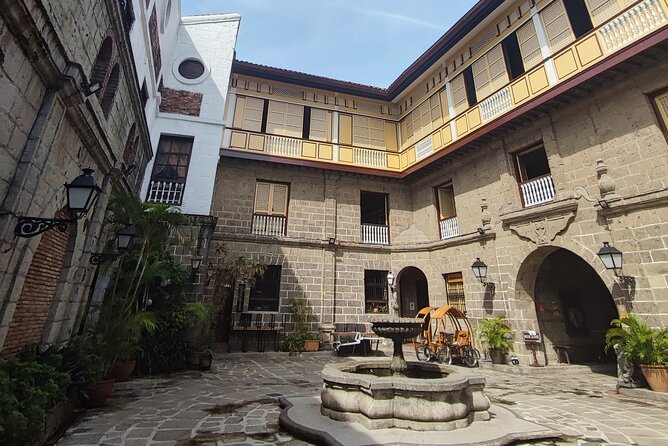
Fort Santiago sits within Intramuros, the walled core of Spanish Manila. A visit here is not simply a look at old stonework. The fortress brings together several periods of Philippine history, including the pre-colonial settlement connected with Rajah Sulayman, Spanish rule, the Philippine Revolution, American military use, and the Japanese occupation.
I like that this tour treats the fort as a place shaped by conflict, not as a polished monument separated from the people who lived and died there. The walls, gates, barracks, dungeons, and defensive platforms all connect to a different part of Manila’s story.
The word medieval describes the fortress’s old-world appearance, but the tour’s time frame reaches well beyond the medieval period. You move through a site that continued to matter as political control changed hands. That broader view helps you understand why Intramuros is often called Spanish Manila, while also showing that its story began before the Spanish arrived and continued after Spanish power ended.
The guide matters here. Fort Santiago has enough plaques and stone structures to occupy a casual visitor, but the political details are harder to piece together alone. A guide can explain why each section matters and connect separate events into a single account of Manila.
You can also read our reviews of more guided tours in Manila

The fortress, baluartes, and old American barracks
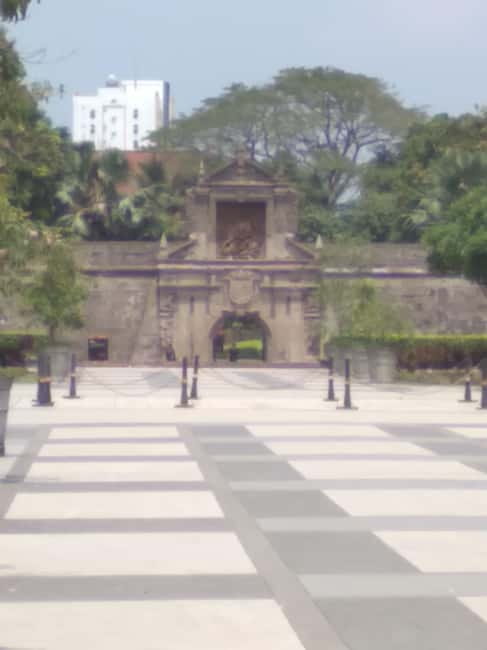
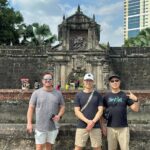
The first part of the experience focuses on the military character of Fort Santiago. You can expect to see the old American barracks and the baluartes, the fortified platforms built into the defensive system.
These structures help you picture Intramuros as a working military camp rather than a quiet historical quarter. The baluartes show how the walled city was defended, while the barracks point to the later American period and the continued military use of the site.
I find this part most useful when you pay attention to changes in power. The same area was shaped by Spanish colonial rule, American administration, and the violence of the Japanese occupation. A walk through the fort becomes a lesson in how one strategic place can be reused by different governments.
Do not expect a long, relaxed stroll through gardens or a museum-style visit with everything indoors. The tour includes plenty of walking, and outdoor sections can be hot. Comfortable shoes are essential, while a hat, sunscreen, and water will make the visit much easier.
Food and drinks are not allowed inside the historical areas, so take care of refreshments before or after the tour. Smoking is prohibited throughout the experience.
Dr. Jose Rizal’s cell and the final days of a national hero
The prison cell of Dr. Jose Rizal is one of the clearest reasons to choose a guided visit. Rizal is the Philippine national hero, and his imprisonment at Fort Santiago gives the site a direct link to the national movement against Spanish rule.
A cell can look like a small, plain room. Its importance comes from the person held there and the events connected to him. With a guide, you can place Rizal’s imprisonment within the wider struggle that led to the 1896 Philippine Revolution.
This stop gives the tour an important human scale. The fortress is made of walls and military structures, but Rizal’s cell turns those broad political events into the story of one person. I appreciate that balance. You are not only hearing about colonial systems and armed uprisings. You are also considering the choices, fears, and sacrifices behind them.
The supplied experience does not promise a long theatrical presentation or a staged reenactment, so expect interpretation from the guide rather than a show. That is a plus if you prefer history explained in a direct way. It also means the quality of the visit depends partly on how well the guide connects the room to the larger story.
Jerome is the guide name associated with the strongest praise for this experience. His command of Philippine history was singled out, along with his use of Filipino for much of the tour. If you are comfortable with Filipino, that language choice may make the history feel more immediate and natural. English and German are also listed as available languages.
The dungeons and the cost of war
The dungeons are the tour’s most difficult stop. About 600 people died there during the end of the Japanese occupation, and the cramped underground setting forces you to confront the human cost of the fighting.
This is not a light sightseeing stop. I would approach it with respect and allow time for the subject matter to sink in. The dungeons are valuable because they correct the easy habit of seeing Fort Santiago only as a Spanish fort. They show how the site remained tied to imprisonment and death centuries after its original construction.
The contrast with Rizal’s cell is also important. His imprisonment connects the fort to the anti-colonial struggle of the nineteenth century. The dungeons connect it to the destruction and suffering of the twentieth century. Together, the two stops show how the fortress continued to serve as a place of confinement under very different regimes.
Photography is allowed, but flash photography is not permitted in certain areas. Follow the guide’s instructions, especially in the dungeons and other enclosed spaces. A camera can help you remember the architecture, but the subject calls for restraint. The experience is better when you treat the site as a place of memory rather than a backdrop for quick pictures.
The uprisings that shaped Intramuros
One of the most useful parts of the tour is its attention to uprisings within the Walled City. The program includes the Novales revolt and the Sangley Uprising, as well as the role of Intramuros in the 1896 Philippine Revolution.
These names may not be familiar to every first-time visitor. That is precisely why a guide helps. A standard walk around the walls can leave you with a general impression of Spanish Manila, but these events show that Intramuros was also a place of resistance, tension, and competing loyalties.
The Novales revolt adds another layer to the story of opposition within the Spanish colonial system. The Sangley Uprising points to the complex social and political pressures faced by Chinese communities in Manila. The tour’s focus on these events keeps the history from becoming a simple story of Spain ruling a passive colony.
I like that the route follows a trail of struggle through the walls. It encourages you to see the buildings as part of a living political setting. A gate, barracks, or defensive platform can tell you about military planning, but the uprisings tell you how people responded to that power.
The tour also traces Manila from Rajah Sulayman’s pre-colonial settlement to the modern city. That long view matters. It helps you understand that Intramuros is not the whole of Manila, even though it represents one highly visible colonial chapter.




What the guide adds to the experience
Fort Santiago is the sort of place where a guide can make the difference between recognition and understanding. You can see a fort without knowing why a particular wall, prison, or barracks matters. A good explanation gives each stop a purpose.
The strongest indication here is the praise for Jerome. His broad command of Philippine history and his mostly Filipino presentation were particularly appreciated. That detail is useful if you want a tour that feels connected to the national language rather than delivered only as a standard English lesson.
Language can shape the mood of a history tour. Filipino may make familiar names, places, and political ideas easier to grasp for some visitors. English and German are listed as options, but you should confirm your preferred language when booking.
The experience provider is Manila Revolution Tour, a name that fits the tour’s focus on resistance and political change. The visit does not limit itself to architecture. It gives attention to the 1896 Revolution and earlier uprisings, helping you understand why Intramuros remains tied to the country’s struggle for self-rule.
The group size and exact duration are not provided, so I would not assume a private tour or a short, fixed visit. Plan enough time for walking, listening, and pauses at the more serious locations.
Is $20 per person good value?
At $20, the tour offers a reasonable way to add meaning to a Fort Santiago visit. You are paying for a guide-led experience that includes the fortress, Rizal’s cell, the dungeons, the American barracks, and the baluartes, plus historical explanation from the pre-colonial era through modern Manila.
The value is strongest if you are unfamiliar with Philippine history. The guide can save you from moving through Intramuros with only a vague sense of what happened there. The tour also covers topics that are easy to miss when you visit only the most obvious structures.
The price is less compelling if you want only a quick architectural walk or prefer to read everything independently. It does not include meals, beverages, or hotel pickup. You also need to handle your own transport to the meeting point.
The reserve-and-pay-later option keeps your plans flexible, and cancellation is available up to 24 hours in advance for a full refund. Those terms are useful for a changing itinerary, but they do not remove the need to confirm the meeting location. The information supplied lists Nueva Vizcaya as the location, while the experience itself is clearly described as a Fort Santiago and Intramuros tour in Manila. That mismatch should be checked before payment.
Who should book this Fort Santiago tour?
I would recommend it to you if you want a serious introduction to Manila’s colonial and revolutionary past. It suits first-time visitors who want help connecting the fort’s physical remains with the Novales revolt, the Sangley Uprising, the Philippine Revolution, and the Japanese occupation.
It also suits anyone interested in Dr. Jose Rizal. His prison cell gives the visit a clear emotional center, while the dungeons provide a second, darker reminder of how the fort was used.
The tour may work especially well for Filipino visitors or anyone who wants to hear Philippine history presented partly in Filipino. Jerome’s use of the national language was a major strength, and it may give the experience a more local feel than a strictly formal English tour.
I would skip it if you have difficulty with extended walking or need wheelchair access. The experience is not suitable for people with mobility impairments or wheelchair users. It is also not suitable for children under seven, and the dungeons may be too heavy for very young children even beyond that age.
Bring comfortable shoes, water, sunscreen, a hat, and a camera. Dress for walking and sun exposure, and be ready to follow site rules about smoking, food, drinks, and flash photography.
Should you book the Manila Fort Santiago tour?
Book this tour if you want Fort Santiago to mean more than old walls. The prison cell of Dr. Jose Rizal, the wartime dungeons, the American barracks, and the baluartes create a strong route through Manila’s political and military past.
I especially like the focus on uprisings inside Intramuros and the guide’s use of Filipino. Those details give the tour more character than a basic sightseeing circuit. At $20, it is a fair choice for anyone who values explanation and historical context.
Skip it if you want a short, casual visit, cannot manage a lot of walking, or prefer to explore entirely alone. Before booking, confirm the meeting point because of the conflicting location information. For the right visitor, this is a thoughtful and sobering way to understand why Fort Santiago remains one of Manila’s most important historic sites.
FAQ
Where does the Fort Santiago tour take place?
The experience is presented as a guided tour of Fort Santiago in Intramuros, Manila. The supplied location information also lists Nueva Vizcaya, so confirm the exact meeting point before you go.
What does the $20 price include?
The price includes a guided tour of Fort Santiago, a visit to Dr. Jose Rizal’s prison cell, exploration of the dungeons, and historical insight into Manila and the Philippine Revolution.
Are hotel pickup, meals, and drinks included?
No. Hotel pickup, meals, and beverages are not included.
Which languages are available?
English and German are listed as available languages. One highly praised tour led by Jerome was conducted mostly in Filipino.
Is the tour suitable for wheelchair users?
No. The experience is not suitable for wheelchair users or people with mobility impairments.
What should I bring?
Bring comfortable walking shoes, a hat, a camera, sunscreen, and water. Food and drinks are not allowed inside the historical sites, smoking is prohibited, and flash photography is not allowed in certain areas.