Cebu: Exploring Cebu City’s rich history and Uphill Tour
Cebu’s past fits into one busy day. This eight-hour outing links Fort San Pedro, Magellan’s Cross, and the Basilica Minore del Santo Niño with hilltop sights such as the Temple of Leah and Taoist Temple, giving you a broad look at Cebu City without arranging separate rides. I especially like the included hotel pickup and private air-conditioned transport, and I like that the route mixes serious historical places with city views and quieter temple grounds.
The main drawback is that this is a self-guided tour, with the English-speaking driver acting as your guide. You will get help moving from place to place, and drivers such as Joey have been praised for safe driving, good humor, early arrival, photos, and practical help. But you should not expect a specialist historian leading every stop.
In This Review
- Key points at a glance
- Why this Cebu tour works well in one day
- Fort San Pedro: a compact start in Cebu’s colonial chapter
- Magellan’s Cross and Santo Niño
- The Heritage of Cebu Monument and Yap-SanDiego Ancestral House
- Sirao Garden and the uphill route
- Temple of Leah: grand scale above Cebu City
- Taoist Temple: a quieter final hill stop
- National Museum of the Philippines, Cebu
- What the driver-guide arrangement is really like
- Timing, lunch, and comfort
- Who should book this Cebu sightseeing day?
- Should you book the Cebu City History and Uphill Tour?
- FAQ
- How long does the Cebu City tour last?
- What is the price per person?
- Is hotel pickup included?
- Which areas have pickup options?
- Is lunch included?
- Is the National Museum of the Philippines in Cebu open every day?
- Is this a guided or self-guided tour?
- What should I bring and wear?
Key points at a glance
- Fort San Pedro begins the day with Cebu’s Spanish colonial past, and the compact visit keeps the morning moving.
- Magellan’s Cross and the Basilica Minore del Santo Niño sit close together, making this an efficient walk through two major religious landmarks.
- The Heritage of Cebu Monument and Yap-SanDiego Ancestral House offer a more local look at Cebu’s past than a simple list of famous sights.
- Temple of Leah and Mt. Busay provide the tour’s biggest change of scenery, with broad views over Cebu City.
- Taoist Temple adds a calm, reflective stop after the city’s busy historic center.
- The $59 price includes transport, pickup, drop-off, and admissions, but lunch is extra and the day can feel full.
Why this Cebu tour works well in one day
Cebu City can be awkward to cover on your own when the sights are spread between the old center and the uphill roads toward Busay. This tour solves the basic transport problem with a private air-conditioned car or van, hotel pickup, and hotel drop-off.
You can start from several areas: Cebu City, Lapu-Lapu City, Mandaue City, Lahug, or Mabolo. The return options cover the same general areas. That flexibility matters if you are staying in Mactan or outside the central hotel district.
The route has a clear rhythm. The morning focuses on forts, churches, monuments, and an ancestral home. After lunch, you move toward the National Museum and then uphill for grand views and temple gardens. It is not a slow, specialist tour. It is a practical survey of Cebu’s major sights.
At $59 per person, the value depends on your group size and priorities. The fee covers transport in a private air-conditioned vehicle, entrance fees, and pickup and drop-off. Once you factor in a full day of transport between central Cebu and the hilltop sites, the price is reasonable for someone who wants convenience.
You still pay for lunch, and insurance is not included. The cost also makes more sense for a couple, family, or small group sharing a private vehicle than for someone who enjoys exploring by public transport and spending a long time at one museum.
You can also read our reviews of more historical tours in Cebu City
Fort San Pedro: a compact start in Cebu’s colonial chapter
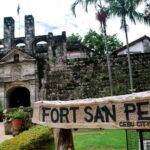
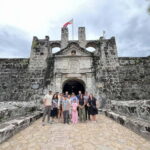
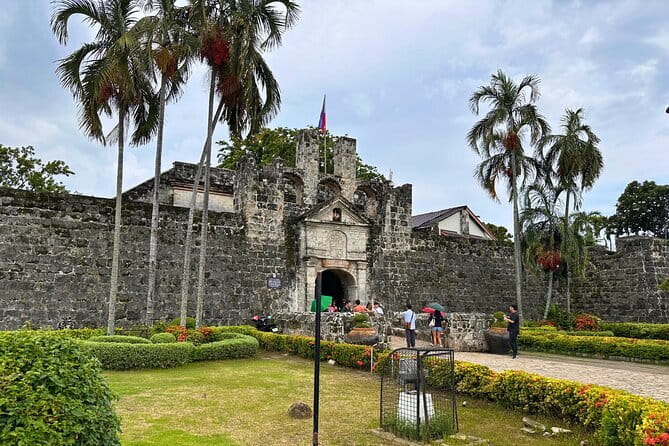
Fort San Pedro is the opening sight, with about 30 minutes for a visit and self-guided exploration. It is described as the oldest Spanish fort in the Philippines, so it gives the day an immediate sense of Cebu’s place in the country’s colonial past.
This is a good first stop because it is contained and easy to understand at a glance. You can see the fortifications, take photographs, and get your bearings before the route moves into Cebu’s religious center.
Do not expect a long guided lecture here. The driver will help with the schedule, but the stop is mainly yours to explore. If you like reading displays and examining details, you may want to use the time carefully rather than treating it as only a photo stop.
Magellan’s Cross and Santo Niño
The next two stops are among the most important religious sites in Cebu, and their closeness makes the morning efficient.
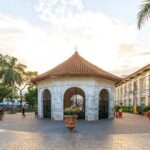
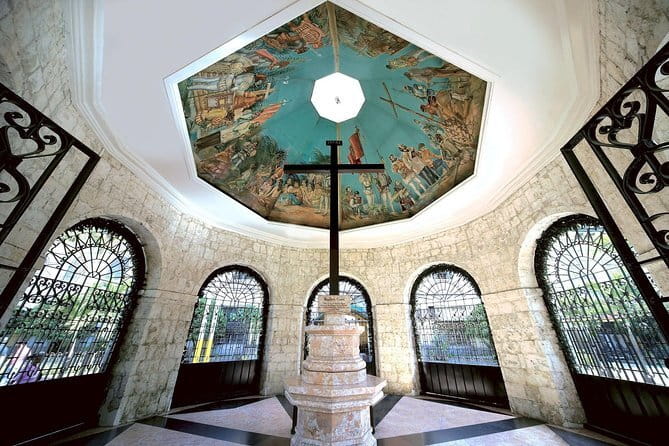
Magellan’s Cross receives about 15 minutes. It is presented as a symbol of Christianity’s arrival in the Philippines. The short visit gives you time to see the landmark and reflect on the major cultural change it represents.
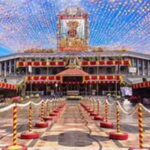
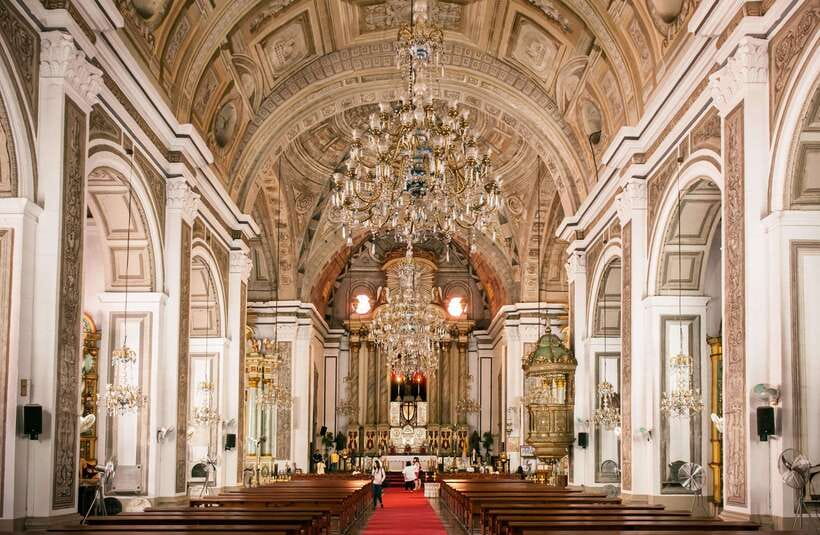
The Basilica Minore del Santo Niño follows, with about 30 minutes. It is described as the oldest Roman Catholic church in the Philippines. Together, the cross and basilica show how Christianity became part of Cebu’s public and cultural life.
I like this pairing because you are not simply checking off two unrelated buildings. The stops connect to one another. The cross marks the arrival of Christianity, while the basilica shows the continuing importance of that faith in Cebu.
The schedule is brisk, so dress respectfully and be ready to move. The tour information specifically advises wearing pants during the day. That is useful guidance for religious sites and also practical protection from the sun.
The Heritage of Cebu Monument and Yap-SanDiego Ancestral House
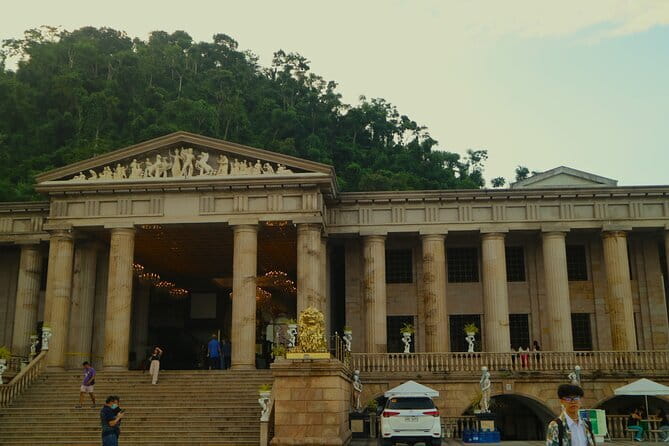
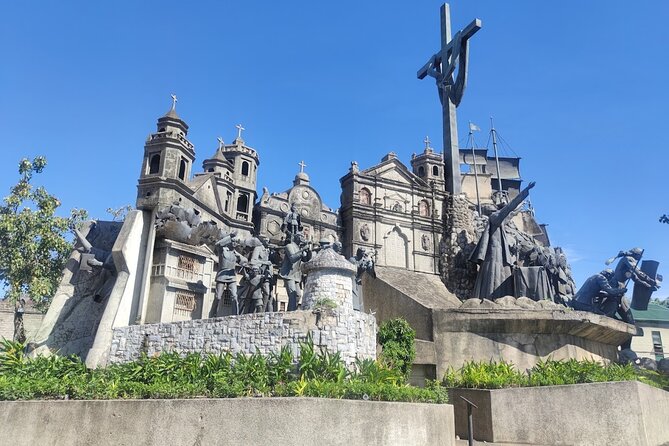
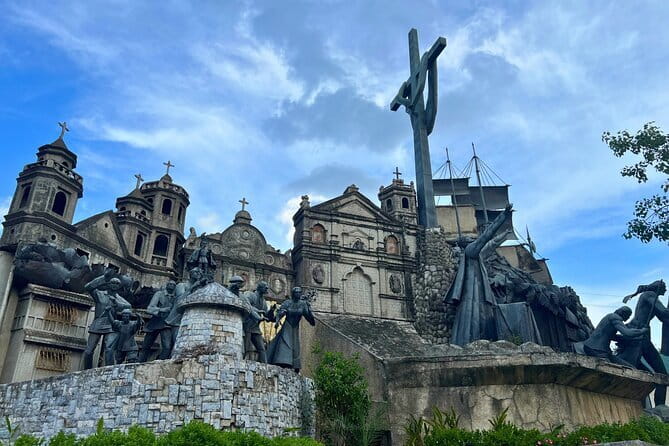
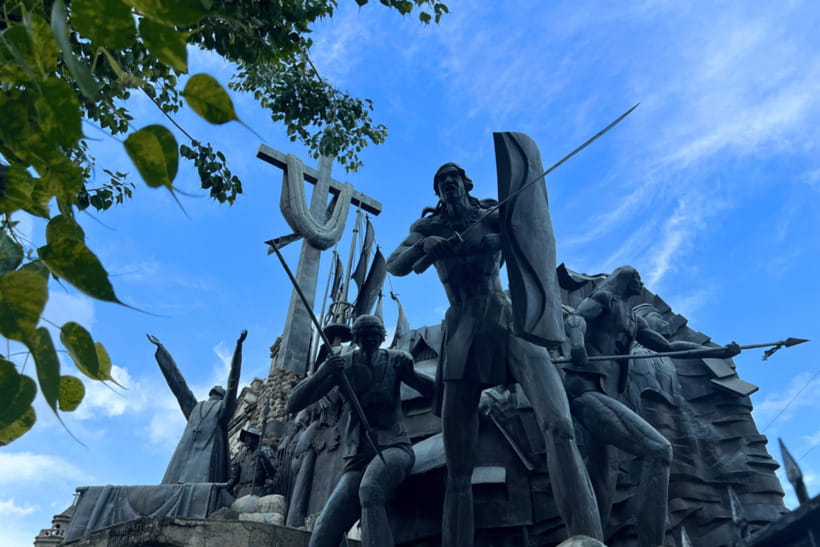
The Heritage of Cebu Monument is one of the more useful stops for understanding how several parts of Cebu’s past fit together. Its scenes visually narrate the city’s development, giving you a compact way to see important figures, events, and cultural influences represented in one place.
You have about 30 minutes here. This is a stop where I would slow down enough to study the details rather than only take a quick photograph. The monument works best as a visual introduction, especially if you are still trying to place Cebu’s Spanish, religious, and local traditions in context.
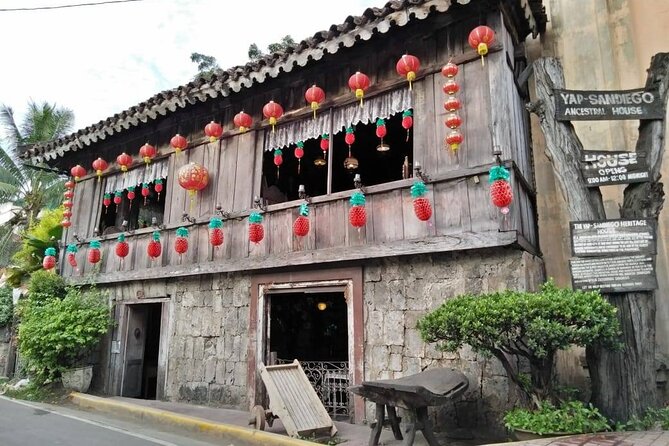
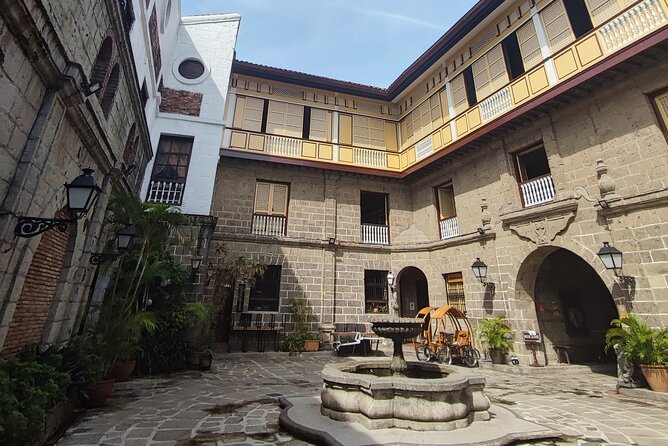
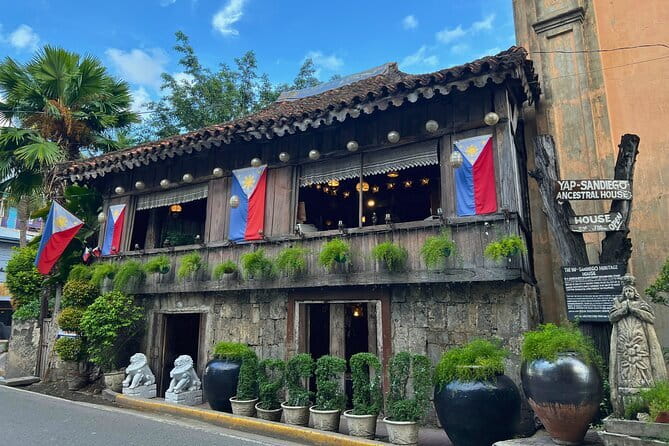
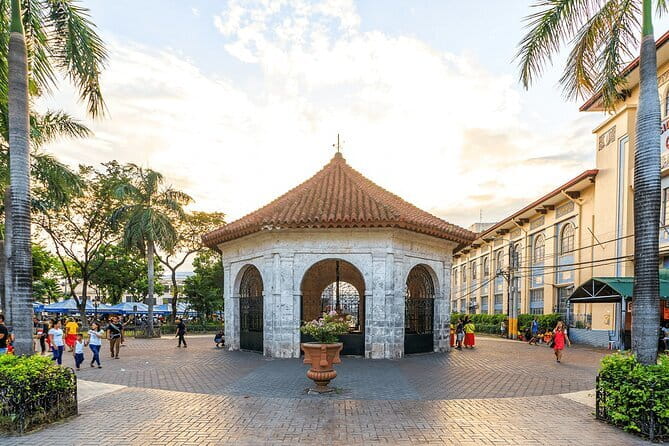
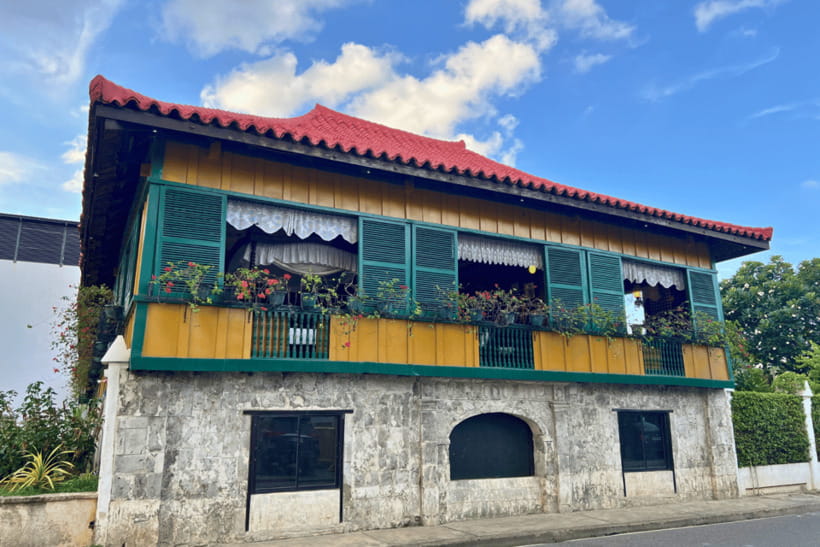
The Yap-SanDiego Ancestral House offers a different kind of historical view. Instead of a public monument, you get a glimpse of Filipino-Chinese life during the Spanish colonial period. The half-hour visit makes it possible to see the house without turning the entire day into an architectural tour.
The contrast between these two stops is valuable. The monument gives you a broad public story. The ancestral house brings that story down to household scale. You can see how history is not only recorded in forts and churches, but also in homes and family life.
Sirao Garden and the uphill route
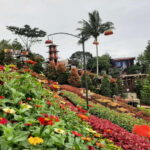
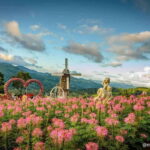
Sirao Garden is listed as a 15-minute sightseeing stop. It adds a lighter, more decorative break to a day that otherwise leans heavily toward churches, museums, and old buildings.
The short timing tells you how to approach it. This is a quick stop for views and photographs, not a leisurely garden visit. If you enjoy taking pictures, you will likely appreciate the change of pace. If you prefer historical sites, you may find the stop less essential than the fort, basilica, or museum.
The uphill portion then continues toward the Temple of Leah and Mt. Busay. The route changes from Cebu’s historic center to higher ground, where the appeal is the view across Cebu City and the chance to sit near the summit of Mt. Busay.



Temple of Leah: grand scale above Cebu City
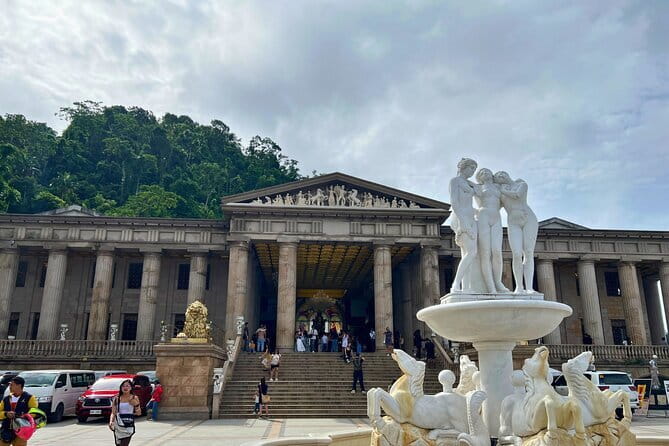
The Roman-style Temple of Leah is described as a grand monument of love. It is one of the tour’s strongest visual stops, especially after the tighter streets and indoor visits of the morning.
You get panoramic views of Cebu City from the uphill setting. The monument itself is imposing, so you are seeing two attractions at once: a large personal memorial and a high viewpoint over the city.
This is also where weather matters most. On a clear day, the views should be the main reward. In rain or heavy cloud, the panorama may be limited, though the tour continues in all conditions. Bring an umbrella and water, as advised, and wear clothing suited to a warm day with time outdoors.
The tour information also refers to sitting at the summit of Mt. Busay. That suggests a pause rather than a strenuous mountain hike. You should think of this as an uphill sightseeing stop, not a walking expedition.
Taoist Temple: a quieter final hill stop

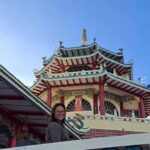
The Taoist Temple gives the uphill section a calmer ending. With about 30 minutes for a self-guided visit, you can take in the temple grounds, the peaceful atmosphere, and the views over Cebu.
After a morning of major landmarks and a drive through the city, the temple provides a useful change in mood. It is less about a single historical event and more about quiet surroundings, religious architecture, and looking out over the city from above.
Because this is self-guided, you should treat the visit with care and respect. The schedule is not long, so there is time to appreciate the setting but not to linger for hours.
National Museum of the Philippines, Cebu
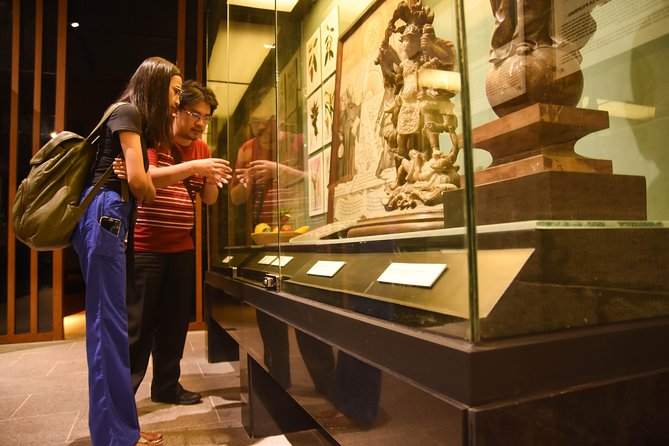
The National Museum of the Philippines in Cebu is scheduled for about 30 minutes. This is a valuable stop because it gives the day a formal museum setting after the outdoor monuments, churches, and historic house.
Thirty minutes is enough for a focused visit, but not enough to examine every display in detail. I would use the stop to look for material that helps connect the places you have already seen. The museum can give structure to the day, especially if the earlier sites felt like a rapid succession of landmarks.
There is one important planning point: the museum is closed every Monday. Check the day of your tour before booking or be prepared for a change in the route. Since the day includes several other stops, the schedule may still offer plenty to see, but the museum will not be available on Monday.
What the driver-guide arrangement is really like
The driver serves as the guide, and the tour is described as self-guided. That arrangement can work very well if you want a private ride, flexible help, and basic direction rather than a formal history lesson.
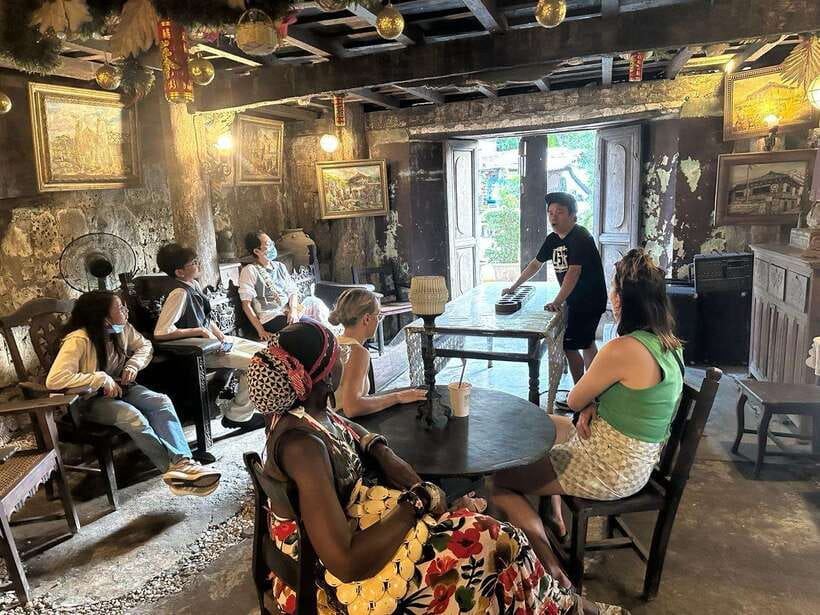
Joey has received especially strong praise for arriving early, driving safely, showing a good sense of humor, helping with small practical needs, and taking pictures of couples together. That kind of service can make a long sightseeing day easier. It is useful when you want someone to help with timing, directions, and photographs without having to ask a stranger.
You should still set your expectations correctly. The available information does not promise a dedicated guide at each site or detailed commentary inside every building. If you want extensive historical explanation, you may need to read the displays yourself or ask the driver what he can explain during the drive.
The private or small-group format is another advantage. A private car gives you more personal space and avoids the larger-group feel of a standard coach. The vehicle may be a car or van, depending on the number of people booked.
Timing, lunch, and comfort
Eight hours is a full day, but the schedule makes good use of it. Several stops last only 15 or 30 minutes, so you cover many places without spending too long at any single one.
Lunch is not included. You should plan for that cost and expect a break during the day, although a specific restaurant or lunch menu is not provided. One useful detail from Joey’s service is that he even stopped at a 7/11 so passengers could pick up items for later. That suggests practical flexibility, but you should not treat a convenience-store stop as a formal part of the tour.
The tour runs rain or shine. Bring water and an umbrella. Air conditioning in the vehicle will help between stops, but you will still spend time outdoors at forts, gardens, hilltop viewpoints, and temple grounds.
Wear pants, as requested. Comfortable shoes are sensible because the day includes walking at several sites, even though it is not described as a strenuous walking tour.
Who should book this Cebu sightseeing day?
I would recommend this tour to you if you have one free day in Cebu and want the main historical sights plus the uphill viewpoints without working out the transport yourself.
It suits:
- First-time visitors who want a broad introduction to Cebu City
- Couples or families who value private transport
- Small groups staying in Cebu, Mandaue, Lahug, Mabolo, or Lapu-Lapu City
- People who want hotel pickup and drop-off
- Anyone who prefers a mixed day of churches, museums, monuments, gardens, and views
I would be more cautious if you prefer slow travel. The schedule is packed, several stops are short, and the driver is not presented as a specialist guide. History fans who want long explanations at each site may find the format too quick.
The tour is also less suitable if your main goal is a full museum day, a serious mountain hike, or an extended visit to one church. It offers range rather than depth.
Should you book the Cebu City History and Uphill Tour?
Book it if you want efficient coverage, private air-conditioned transport, and a mix of old Cebu and hilltop scenery. The strongest parts are the connected morning route through Fort San Pedro, Magellan’s Cross, Santo Niño, the Heritage of Cebu Monument, and the ancestral house, followed by the views at Temple of Leah and Mt. Busay.
The $59 price is fair when you value included admissions, hotel transfers, and a vehicle for the full day. Just remember that lunch costs extra, the tour runs in all weather, and the driver-guide format requires you to explore many stops independently.
If you want a friendly and practical driver, Joey’s record of early arrival, safe driving, humor, photo help, and small favors is encouraging. If you want an academic guide with detailed commentary at every landmark, choose a different format. For a first look at Cebu’s major sights in one organized day, this is a sensible and useful choice.
FAQ
How long does the Cebu City tour last?
The tour lasts eight hours.
What is the price per person?
The price is $59 per person.
Is hotel pickup included?
Yes. Pickup and drop-off are available within Cebu City and Lapu-Lapu City, also called Mactan. You should provide your preferred pickup location when booking.
Which areas have pickup options?
Pickup options include Lapu-Lapu City, Cebu City, Mandaue City, Lahug, and Mabolo.
Is lunch included?
No. Lunch is not included in the tour price.
Is the National Museum of the Philippines in Cebu open every day?
No. The museum is closed every Monday.
Is this a guided or self-guided tour?
It is a self-guided tour, with the English-speaking driver serving as the tour guide.
What should I bring and wear?
Bring water and an umbrella. You are also advised to wear pants during the tour.