Cebu: Heritage Half-Day Tour: Explore Historic Landmarks
Ancient Cebu fits into a few busy hours. This private tour brings you from Magellan’s Cross and the Basilica del Santo Niño to Fort San Pedro, the Heritage of Cebu Monument, and Colon Street, giving you a clear introduction to the city’s past without a long day on the road. I especially like the hotel pickup and the fact that an English or Tagalog-speaking driver-guide handles the transport between sites.
I also like the compact route. You can see several major landmarks in one morning, and the vehicle reportedly parks close to each stop, which saves your feet and your time. The main consideration is pace: the church and fort each receive about 30 minutes, so you will get an introduction rather than a slow, detailed study of every building.
The tour costs $74 per person and includes private transport, entrance fees, bottled water, and pickup and drop-off in Cebu City, Mactan Island, and Lapu-Lapu City. For a first look at Cebu’s historic center, that can be good value, especially if you want a simple visit with no transport planning.
In This Review
- Key points to know before you book
- Why this short Cebu tour works
- Starting at Magellan’s Cross and the Santo Niño
- Reading Cebu’s past at Fort San Pedro
- Seeing the story carved into the Heritage of Cebu Monument
- Walking Colon Street, the oldest street in the Philippines
- Pickup, timing, and the private format
- What the $74 price includes
- Who will get the most from this experience?
- Should you book the Cebu Heritage Half-Day Tour?
- FAQ
- How long does the Cebu Heritage tour last?
- Where can I be picked up?
- What landmarks are included?
- Is the tour private?
- What languages are available?
- Are entrance fees included?
Key points to know before you book
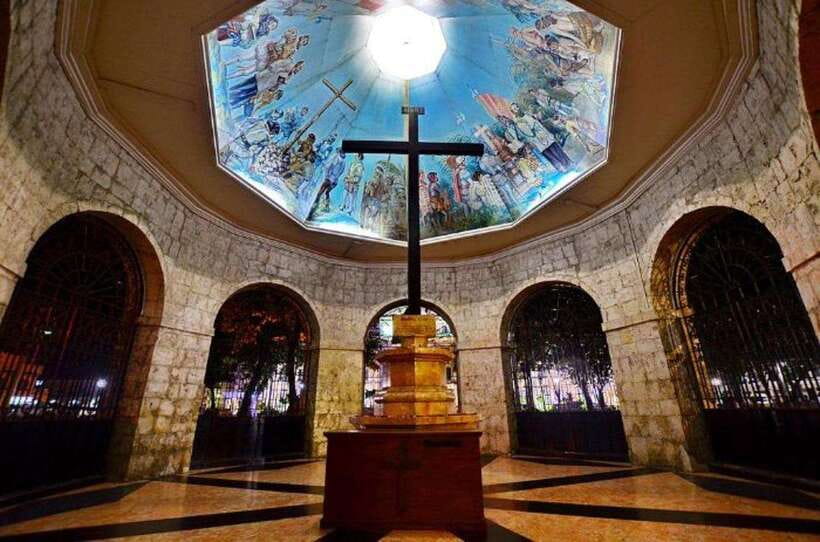
- Magellan’s Cross marks Cebu’s 1521 turning point: The small chapel holds one of the city’s best-known symbols of the arrival of Christianity.
- The Basilica del Santo Niño remains the spiritual heart of the route: You see the Santo Niño image associated with Magellan’s gift to Queen Juana of Cebu.
- Fort San Pedro gives the tour its strongest colonial-era setting: Its stone walls, cannons, and museum connect Cebu’s past to Spanish military control.
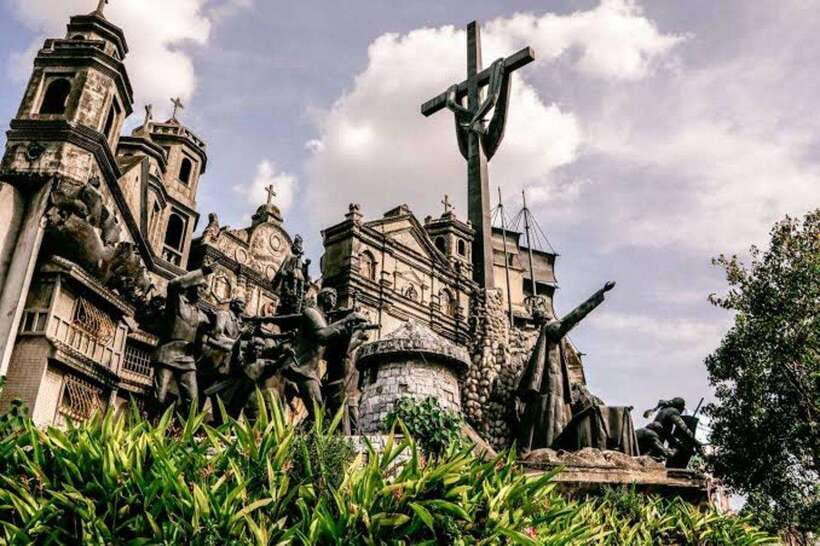
- The Heritage of Cebu Monument works like a history lesson in sculpture: Its detailed scenes show major events from pre-colonial Cebu through later periods.
- Colon Street adds present-day city life: The oldest street in the Philippines is not preserved as a quiet museum piece. Old and new sit side by side.
- Private pickup makes the tour easy to arrange: Collection is available from hotels and areas in Cebu City and the Mactan area, with return to Cebu, Mandaue, or Lapu-Lapu City.
Why this short Cebu tour works
Cebu is a city where major landmarks can appear close together on a map but feel less simple once traffic and transport enter the picture. This tour solves the practical problem by linking the main historic sites in one private outing.
You are not signing up for a full-day cultural program. Think of it as a focused introduction, lasting a few hours, with enough time to see the key places and hear the basic story behind them. That makes it useful at the beginning of a Cebu stay, especially if you want context before exploring more on your own.
I like the way the route moves from religious symbols to military architecture, then to public art and an old commercial street. Each stop shows a different side of Cebu. The result is more useful than visiting several churches or several colonial buildings that all tell roughly the same story.
The private format is another advantage. You do not have to wait for a large group at every stop, and your driver-guide can manage the short transfers. The available languages are English and Tagalog. The tour has a listed rating of 4.3 from three verified bookings, with the strongest praise directed toward the sights, the early history, and punctual pickup.
You can also read our reviews of more historical tours in Cebu City

Starting at Magellan’s Cross and the Santo Niño
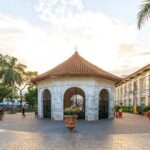
The historic core begins with Magellan’s Cross, the landmark connected with Ferdinand Magellan’s arrival in Cebu in 1521. The cross is housed in a small chapel, so this is a brief stop rather than a large open complex.
Its importance comes from what it represents. This is presented as the point where Christianity began its lasting connection with the Philippines. Even if the structure itself takes only a few minutes to see, the guide’s explanation helps place Cebu in the wider story of Spanish contact and religious change.
You should listen for the difference between seeing a famous object and understanding why it matters. Magellan’s Cross is not simply a photo stop. It represents a meeting of cultures, beliefs, and political interests that shaped the country for centuries.
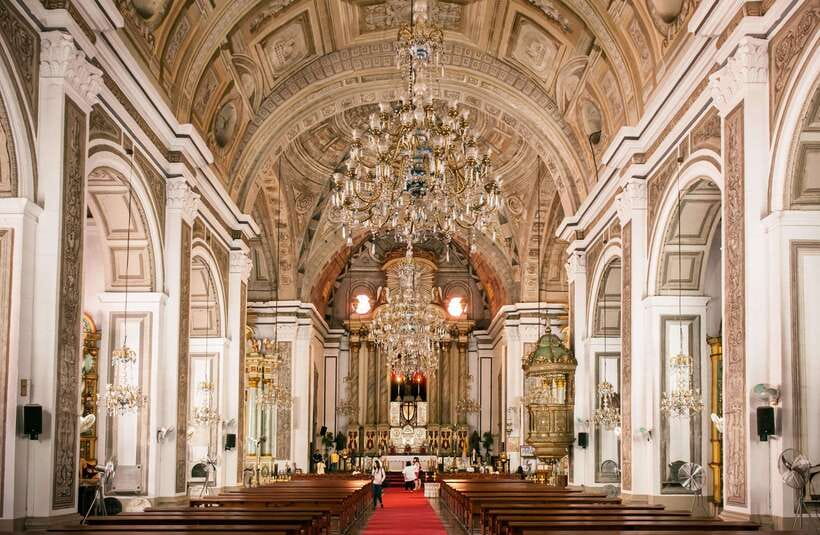
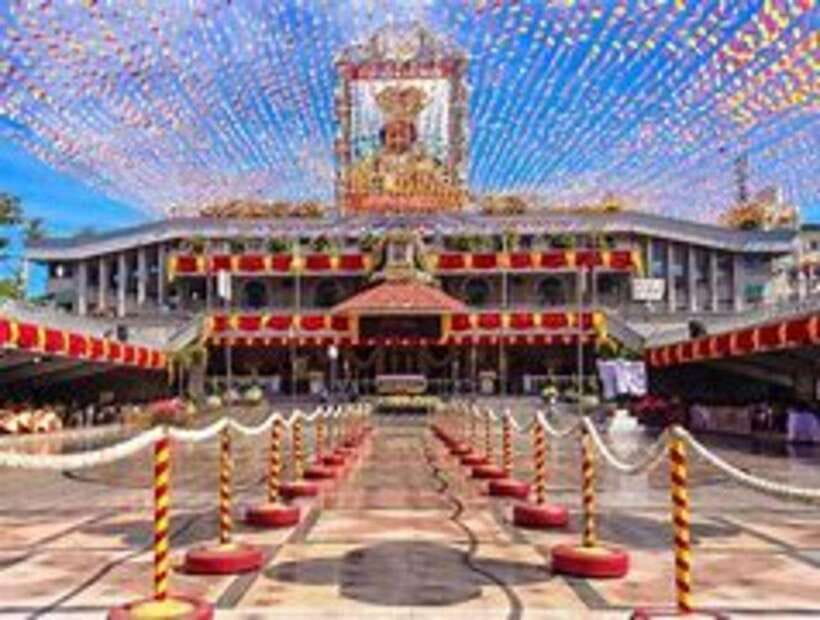
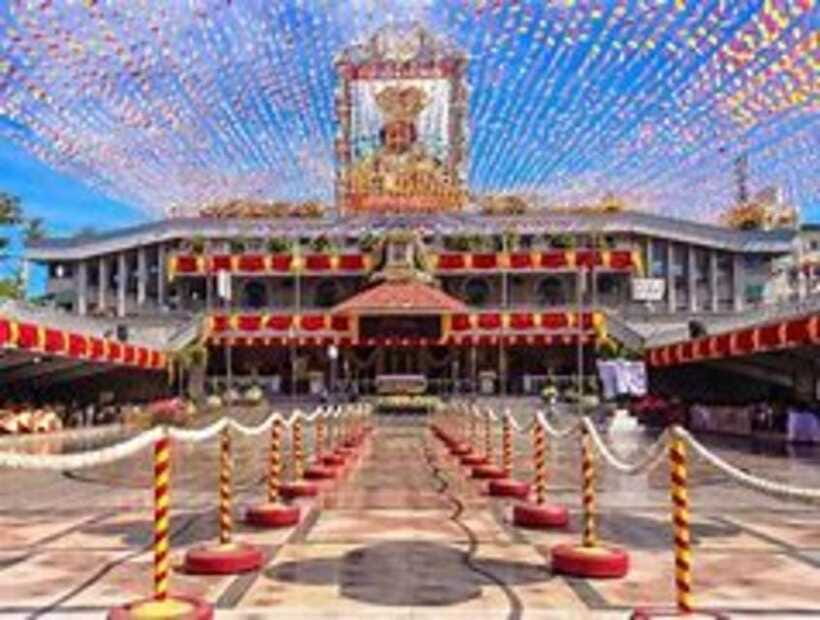
The next stop is the Basilica Minore del Santo Niño de Cebu, identified as the oldest Roman Catholic church in the Philippines. You have about 30 minutes here for a guided visit, photos, and some free time.
The basilica’s main draw is the Santo Niño image, said to have been given by Magellan to Queen Juana of Cebu. That connection gives the visit a personal focus. Instead of looking only at colonial walls or religious decoration, you are seeing an object tied to the earliest Christian chapter described by the tour.
Allow for the fact that this is an active sacred place, not merely a sightseeing stop. You will need to keep your voice and behavior respectful, and the time can pass quickly. The 30-minute allowance is enough for an introduction, but not for a long, quiet examination of the interior.
I would place this stop near the top of the tour’s highlights. It connects the symbolic cross, the church, and the Santo Niño image in one compact part of the morning. If you have a strong interest in church art or Philippine religious practice, you may want extra time here after the tour ends.
Reading Cebu’s past at Fort San Pedro
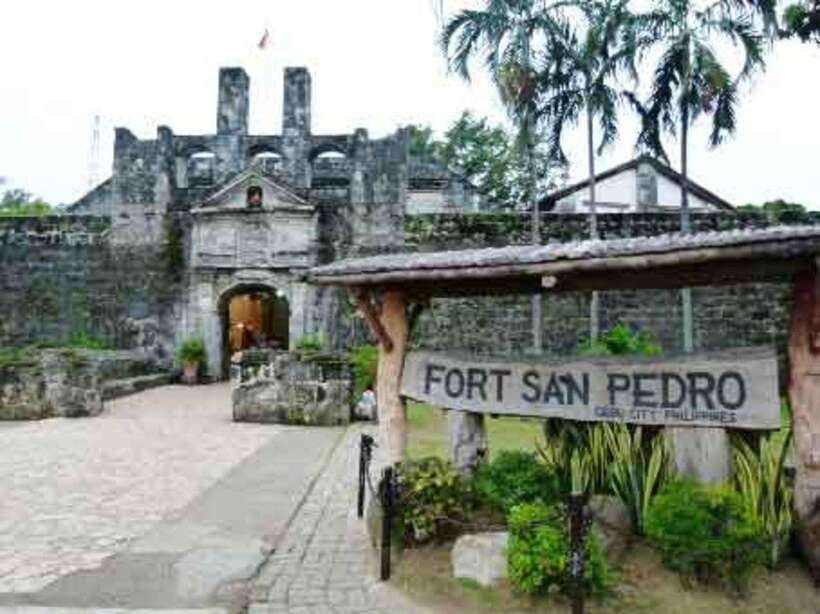
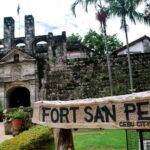
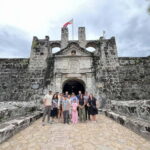
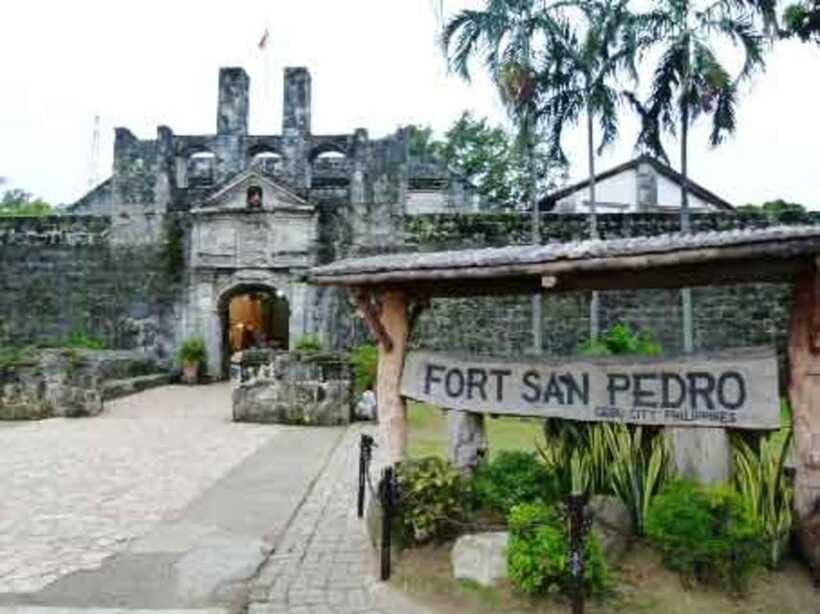
Fort San Pedro changes the mood. Instead of entering a church, you walk through one of the country’s oldest military defense structures from the Spanish era.
The fort’s stone walls and cannons make the colonial past easier to picture. A guide can explain the practical purpose of the defenses, while the museum adds objects and information about Cebu’s earlier years. You are not just looking at a wall. You are seeing how the city’s position and importance led to military protection.
The planned visit is about 30 minutes, including photos, free time, sightseeing, and walking. That is a reasonable amount of time for a first visit, but it will feel short if you want to read every display in the museum.
This is one of the places where a private tour helps. The driver-guide can bring you close to the entrance, and one recent booking specifically praised the fact that the vehicle parked near each site. That matters in a compact city tour, since you spend more time inside the fort and less time looking for parking or walking from a distant drop-off point.
Fort San Pedro may be the most visually satisfying stop for anyone who likes old masonry, military sites, and straightforward physical reminders of the past. The drawback is that the visit does not appear designed for a long specialist tour. You get the broad story, the structure, and a look at artifacts, then move on.
Seeing the story carved into the Heritage of Cebu Monument
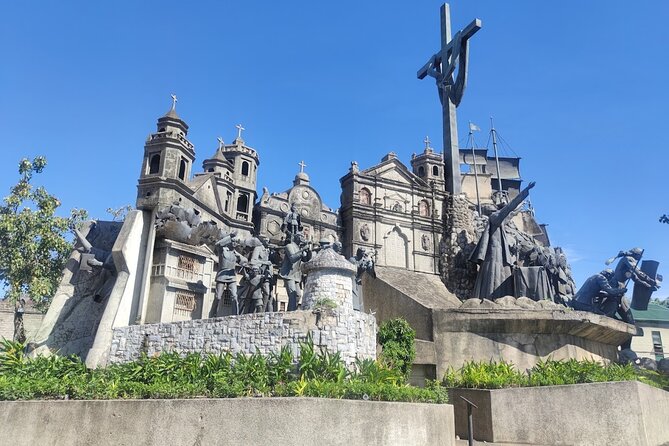
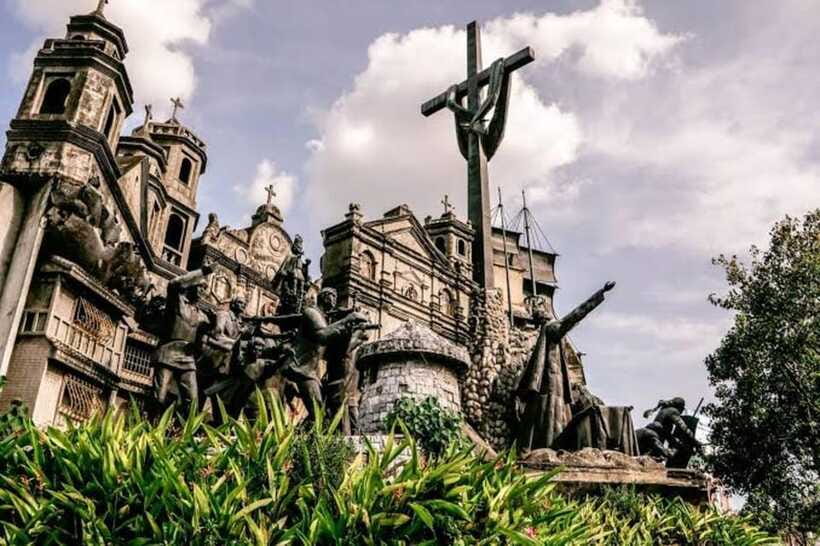
The Heritage of Cebu Monument offers a different way to understand the city. Rather than presenting history in a church or fort, it uses a large, detailed sculpture to show key events that shaped Cebu.
The monument covers a broad span, from pre-colonial times to the modern period. Its value is visual. You can see people, scenes, and symbols brought together in one place, which gives you a quick sense of how Cebu’s story is often told.
This is a good stop for you if dates and names are hard to remember when presented in a long lecture. The sculpture gives the guide something concrete to point toward. You can ask questions while looking at the scenes, and the monument helps turn a timeline into something easier to follow.
The information provided for the tour does not give a separate timed stop for the monument. It appears to fit into the final Cebu city section, which allows about one hour for a break, photos, sightseeing, walking, and shopping. That flexible block is useful, but it also means the exact time at each final stop may depend on traffic, the pace of the group, and your interests.
I would use this part of the tour to connect the earlier visits. Magellan’s Cross and the basilica show the arrival and spread of Christianity. Fort San Pedro shows military power. The monument gives you a broader view of how those events fit into Cebu’s long story.
Walking Colon Street, the oldest street in the Philippines
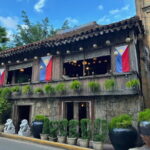
The final featured stop is Colon Street, described as the oldest street in the Philippines. This is not a polished colonial corridor where every building has been preserved for sightseeing. Its appeal is the mixture of old and new, with daily city life continuing around a historic route.
That difference matters. You get a glimpse of Cebu as a living city rather than a collection of protected monuments. The street provides a useful contrast to the basilica and fort, where the past is easier to isolate. Here, history shares space with shops, traffic, and ordinary urban activity.
The planned city section lasts about an hour and includes free time, walking, sightseeing, shopping, photos, and a break. This is the most flexible part of the experience. You may prefer to stay focused on the street and nearby sights, or use the time for a quick purchase and a rest.
I would not book this tour expecting a leisurely architectural walk along Colon Street. The supplied details promise a stroll and sightseeing, but not a dedicated specialist commentary on every building. If you want a quick feel for the city’s oldest street, it fits well. If you want a long walking tour of historic urban design, you may need to explore again independently.
A few more Cebu City tours and experiences worth a look
Pickup, timing, and the private format
Pickup is available from Cebu City, Mandaue City, and Lapu-Lapu City, with specific service for hotels and areas in Cebu City and Mactan. Drop-off options include Cebu, Mandaue City, and Lapu-Lapu City.
That coverage is a major practical benefit. You do not need to arrange a separate taxi to reach a central meeting point, and you can return to a different supported area after the tour. Confirm your exact hotel or pickup area when booking, since the stated coverage refers to Cebu City and the Mactan area rather than every location on Cebu Island.
The tour is private, so your party has the vehicle and driver-guide rather than joining a large shared group. The driver-guide speaks English and Tagalog. All entrance fees and bottled water are included, which makes the $74 price easier to judge.
At this price, the value depends on how much you value convenience. If you are staying outside central Cebu, private pickup and close parking can save a good deal of hassle. If you are already near the historic district and are comfortable arranging local transport, you may find the price less compelling.
The tour is listed as valid for one day, with starting times based on availability. It is described as a morning-friendly experience, and the available feedback points to an on-time morning pickup. That timing is useful because it leaves the rest of your day open for another activity, a meal, or time at your hotel.
The schedule is compact enough to suit a short Cebu visit, a cruise stop with limited time, or a first morning in the city. It is less suitable if you dislike moving quickly or want long periods at each landmark.
What the $74 price includes
The price covers:
- Private hotel pickup and drop-off in Cebu City, Mactan Island, and Lapu-Lapu
- An English or Tagalog-speaking driver-guide
- Entrance fees
- Bottled water
The inclusion of entrance fees removes a common source of small delays. You do not need to stop at each site to work out separate admission arrangements, and the skip-the-ticket-line feature may make the compact schedule easier to manage.
The strongest value comes from combining transport and guiding. A basic sightseeing list is easy to create. Getting between sites, finding parking, and understanding why each place matters takes more effort. This tour handles those parts in one booking.
Still, keep your expectations sensible. The price does not turn a half-day outing into a private, full-length museum study. You are paying for a clear route, a private vehicle, entry, and a guide who can introduce Cebu’s main historic sights.
Free cancellation is available up to 24 hours before the activity for a full refund. You can also reserve now and pay later, which helps if your Cebu schedule is still changing.
Who will get the most from this experience?
I would recommend this tour to first-time visitors who want the essential historic stops without building a route themselves. It also suits families, couples, and small private groups who prefer their own vehicle and a flexible city pace.
It is a good choice if you are staying in Cebu City, Mactan, or Lapu-Lapu and want door-to-door service. The driver’s ability to park close to the sights is particularly helpful when you have limited time or do not want to spend the morning negotiating city transport.
You will also like it if you want a broad introduction to Cebu’s religious, military, artistic, and urban past. The route gives each category its own stop, which makes the city easier to understand after only a few hours.
I would hesitate if you want an in-depth academic tour, long museum visits, or extended time inside the basilica and fort. The two main heritage stops receive about 30 minutes each, and the final city segment must cover several points within roughly an hour. This is an efficient overview, not a slow study visit.
Should you book the Cebu Heritage Half-Day Tour?
Book it if you want the main historic landmarks in one private, well-organized outing. The best reasons are the included pickup, entrance fees, bottled water, and the practical route through Magellan’s Cross, the Santo Niño basilica, Fort San Pedro, the Heritage of Cebu Monument, and Colon Street.
The tour is especially useful when you are short on time. A recent rating of 4.3 from three verified bookings reflects a generally positive experience, with punctual pickup, good site coverage, and strong appreciation for the historical content. The only real caution is the limited time at individual stops.
If you want more than a first look, treat this tour as your orientation. Take note of the places that interest you most, then return to the basilica, fort, or Colon Street later at your own pace. For a compact introduction to Cebu’s past with transport taken care of, $74 is a fair price.
FAQ
How long does the Cebu Heritage tour last?
It is a half-day tour, although the activity is listed as valid for one day depending on the available starting time.
Where can I be picked up?
Pickup is available from areas and hotels in Cebu City and the Mactan area, including Cebu, Mandaue City, and Lapu-Lapu City.
What landmarks are included?
The tour includes Magellan’s Cross, the Basilica Minore del Santo Niño de Cebu, Fort San Pedro, the Heritage of Cebu Monument, and Colon Street.
Is the tour private?
Yes. This is a private group experience with a driver-guide.
What languages are available?
The driver-guide can conduct the tour in English or Tagalog.
Are entrance fees included?
Yes. All entrance fees and bottled water are included in the $74 price.