Manila: Taste and See Authenticity
Manila opens up away from the malls. This 2.5-hour walk through Sta. Ana mixes heritage homes, a church, local snacks, public transport, and ordinary neighborhood life. I like the small group size, limited to six people, and I like that the route ends at Circuit Makati, where you can eat, shop, or arrange your next ride.
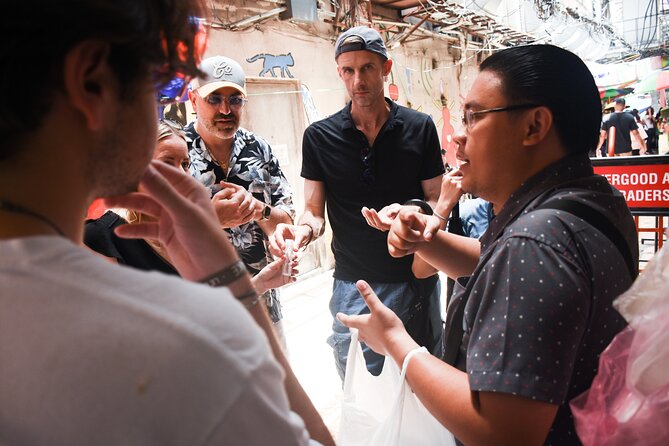
The tour’s strongest point is its personal feel. Guide Bernadette has a connection to the area and explains the old buildings and local customs in a direct, friendly way. You should also expect a real community rather than a polished attraction, which means narrow lanes, busy streets, heat, and some uncomfortable sights. The experience is rewarding, but it is not designed for anyone seeking an easy, air-conditioned afternoon.
In This Review
- Key points before you book
- Why Sta. Ana gives you a different Manila
- Starting at Plaza Hugo
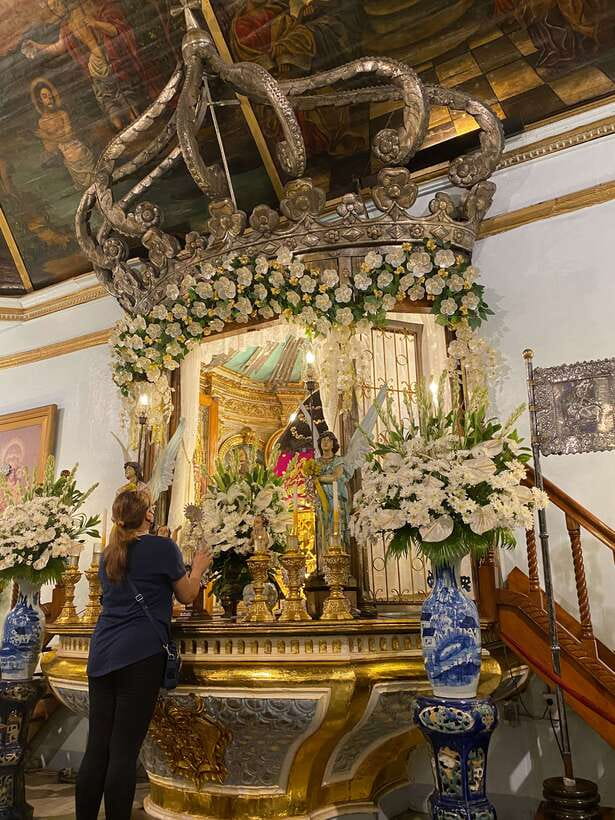
- Our Lady of the Abandoned Church
- Ancestral houses and Sta. Ana’s old structures
- Walking through Barangays and alleyways
- The tuk-tuk ride and public transport
- Snacks, drinks, and a local food stop
- Sunset and the final walk
- Is $63 a fair price?
- Who should book this experience?
- My verdict on the Sta. Ana tour
- FAQ
- Where does the tour begin?
- Where does the tour finish?
- How long does the experience last?
- How large is the group?
- What languages does the guide speak?
- Is public transportation included?
- What food and drinks are included?
- Is this mainly a walking tour?
- What should I bring?
- Can I cancel the booking?
Key points before you book
- Sta. Ana Heritage District: See ancestral houses and old structures in one of Manila’s less familiar historic areas.
- Local transport included: Public transportation fares are covered, including a tuk-tuk ride and a jeepney experience mentioned by past participants.
- A personal guide: Bernadette offers local views of her old neighborhood and helps you understand conversations and daily life.
- Food along the way: Drinks, a snack, local tastings, and a food-market stop are included.
- Very small group: With no more than six people, it is easier to ask questions and keep together on foot.
- A practical finish: The route ends at Circuit Makati, not back at Plaza Hugo, so plan your return journey.
Why Sta. Ana gives you a different Manila
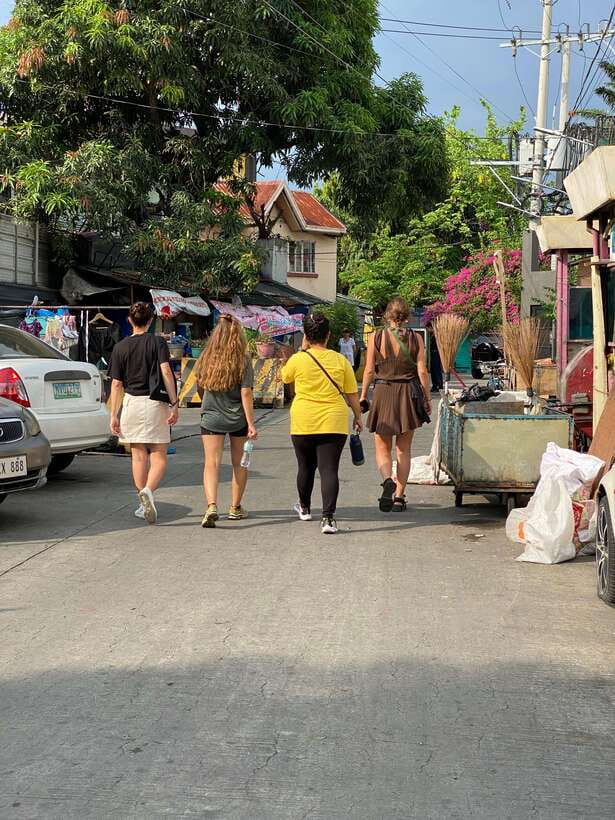
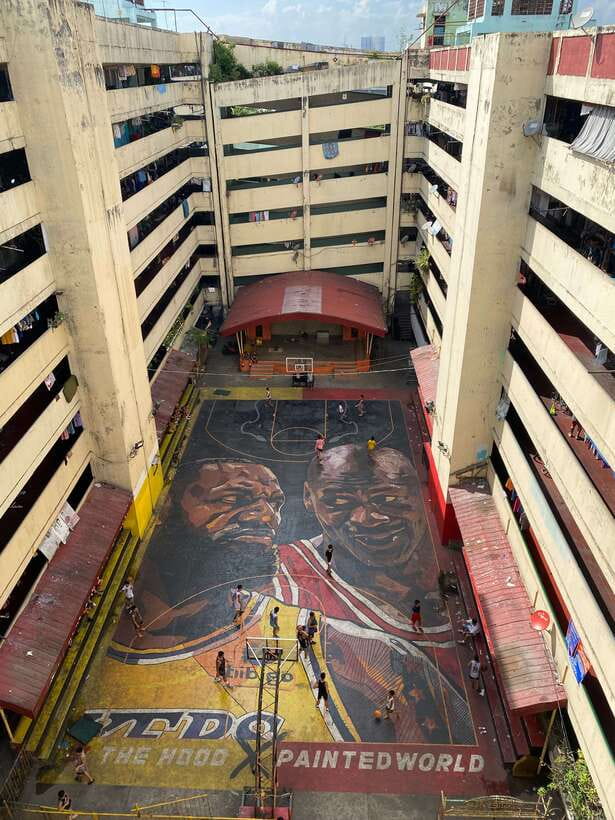
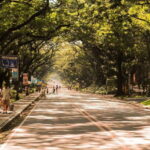
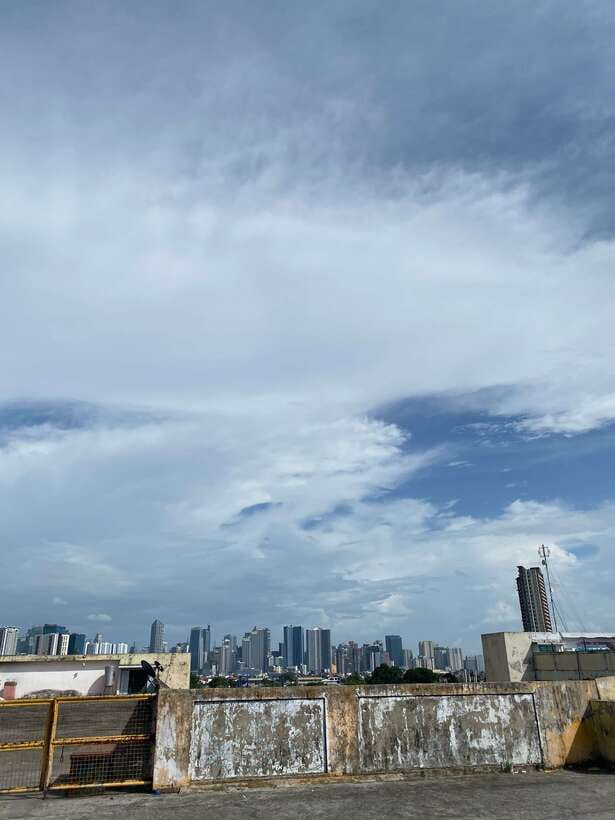
Sta. Ana sits close to Makati, Mandaluyong, and San Juan, yet it feels far removed from the office towers and hotel districts many people associate with Manila. That contrast is the point. You see a part of the city where heritage buildings share space with homes, alleyways, neighborhood shops, basketball courts, and the everyday movement of Barangay life.
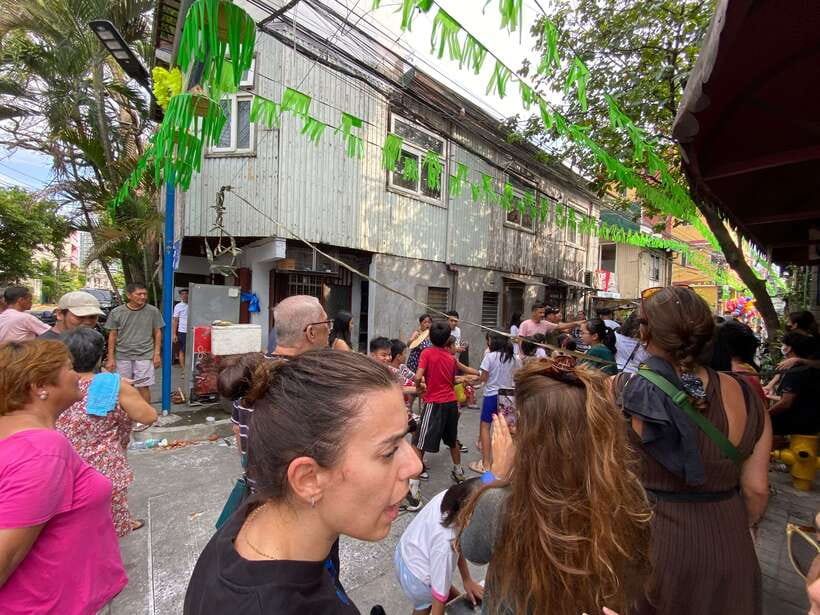
I like this setting because it gives you a more grounded view of Manila. You are not simply looking at monuments from a distance. You pass through places where people live, children may greet you, and local families go about their routines. One participant described friendly locals, children offering high fives, and a strong sense of welcome. That kind of contact cannot be scheduled like a museum stop.
Still, you should approach the tour with respect. This is someone’s home community, not a stage built for sightseeing. The route can expose poverty, cramped living conditions, and crowded public spaces. One person described the experience as intense and uncomfortable in several ways, but also valuable because it opened a window onto a different way of life. I think that is a fair description.
You can also read our reviews of more tours and experiences in Manila.


Starting at Plaza Hugo
You meet at Plaza Hugo, an outdoor basketball court beside a small stage and mini park. This is a useful meeting point, but do not expect a formal tourist office or a large sign. Give yourself time to identify the court and arrive ready to walk.
The tour begins with an introduction to Sta. Ana and its place in Manila. Because the group is small, you can ask for context right away. If you are curious about the buildings, family life, or local transportation, this is the time to tell Bernadette what interests you.
The first section is on foot. Wear shoes that can handle uneven pavement and ordinary neighborhood streets. The tour takes place rain or shine, so a compact rain jacket or other rain gear is sensible even if the forecast looks clear.
Our Lady of the Abandoned Church
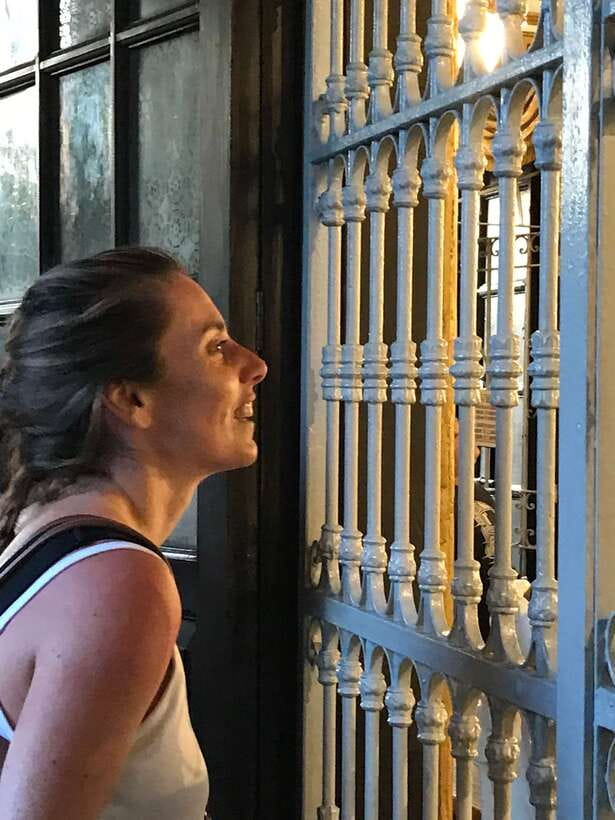
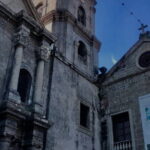
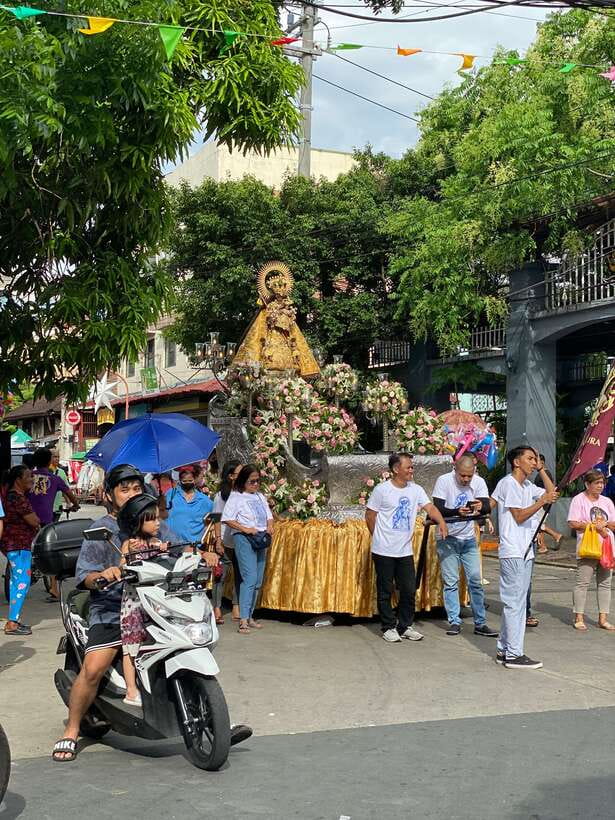
The church is one of the early anchors of the route. The visit helps connect Sta. Ana’s present-day community with its older religious and civic life. You are not only checking off a church. You are seeing how a historic structure fits into a living neighborhood.
The exact amount of time at the church is not specified, so expect a guided look rather than a long formal visit. Bernadette’s explanations are likely to matter more here than a printed display. She provides background on the area and points out details you might pass without noticing on your own.
This is also a good early photo stop. Ask before photographing people, homes, or worshippers. A respectful approach matters more on a residential route than it does at a major public monument.
Ancestral houses and Sta. Ana’s old structures
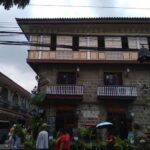
For roughly the first hour, the focus is on the heritage houses and older buildings of the Sta. Ana Heritage District. This is the part for travelers who enjoy architecture but do not need a grand palace or a fully restored historic center.
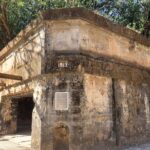
The appeal is in the mixture. Old houses appear within an active community, rather than behind a museum fence. You see how the area’s past sits beside present-day streets and homes. Bernadette explains the buildings and adds the local perspective that turns a row of old facades into a story about the neighborhood.
Do not expect every structure to look freshly preserved. The tour is about seeing heritage in context, including the signs of ordinary use and change. That makes the visit less tidy than a conventional heritage walk, but also more honest.
I would bring a phone or small camera for personal photographs, since the route offers photo opportunities. Professional cameras are not allowed, and large bags or luggage are also prohibited. Keep your belongings light and close.
Walking through Barangays and alleyways
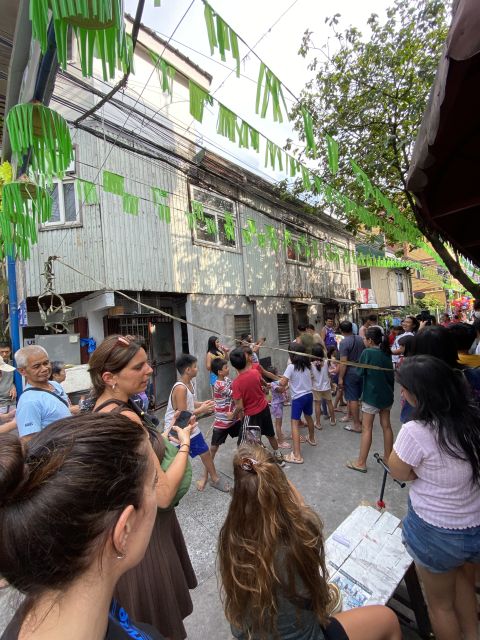
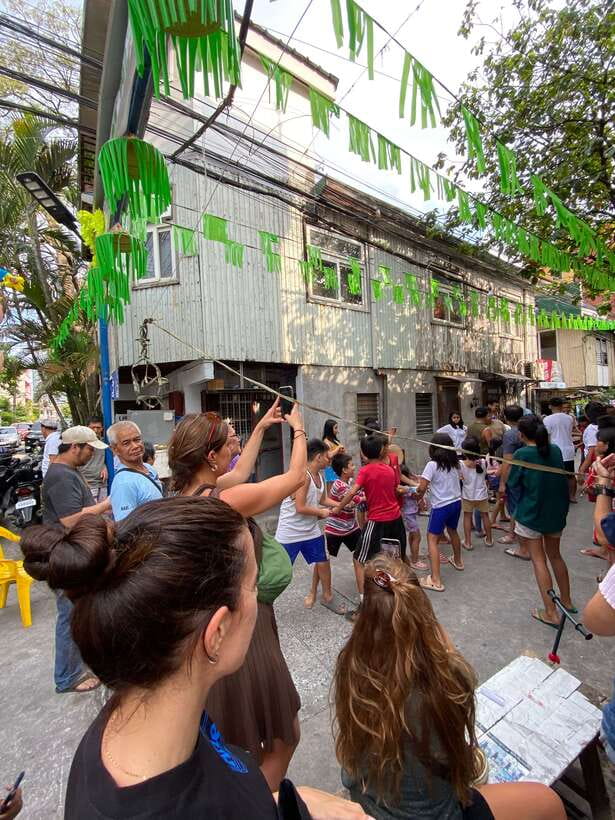
The most revealing part comes after the headline sights. You walk through different Barangays, including narrower lanes and community spaces where Filipino families live their daily lives. This is where the tour moves beyond architecture.
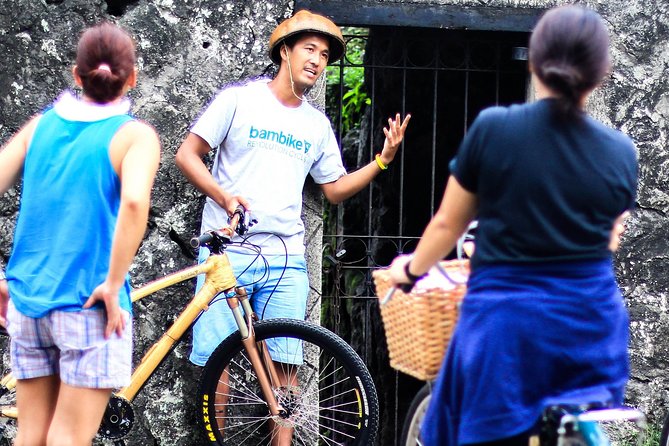
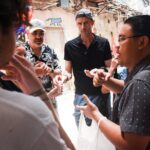
You may see children, neighbors, family homes, local activity, and the practical details of urban life. The guide helps explain what you are seeing, which is important. Without that local voice, it would be easy to reduce the neighborhood to a series of snapshots. With it, the experience becomes more thoughtful and personal.
A past participant appreciated having time to take photographs and speak with local people, with Bernadette helping bridge language and cultural gaps. English and Tagalog are used on the tour. That makes it easier for you to ask questions and understand the setting, though the route still depends on respectful interaction.
This is not the right choice if you want privacy from the local environment or a polished cultural show. It is a good choice if you are curious, patient, and willing to accept that ordinary life can look untidy, noisy, and crowded.

The tuk-tuk ride and public transport
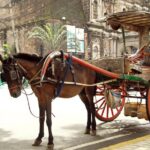
The itinerary includes about 35 minutes by tuk-tuk, and public transportation fares are included in the price. One person also specifically enjoyed riding a jeepney. These are not just ways to save your feet. They show how people move around Manila beyond private cars and tourist vans.
The public transport portion adds a practical layer to the tour. You get a taste of the city’s shared movement, with its stops, traffic, and close quarters. It also keeps the route connected to daily life instead of turning the afternoon into a string of isolated sights.
Conditions can vary. Public transportation is not controlled like a private vehicle, and the tour takes place in real city traffic. If you prefer a smooth ride with no waiting or crowding, this may feel tiring. If you want to understand Manila through the way people actually get around, it is one of the most useful parts.
Keep cash with you even though fares are included. The practical information asks you to bring cash, and you may want it for personal purchases beyond the included refreshments.
Snacks, drinks, and a local food stop
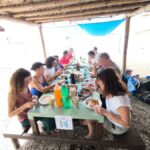
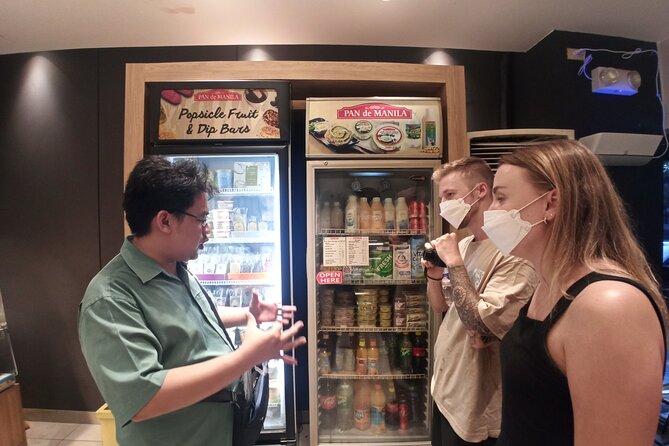
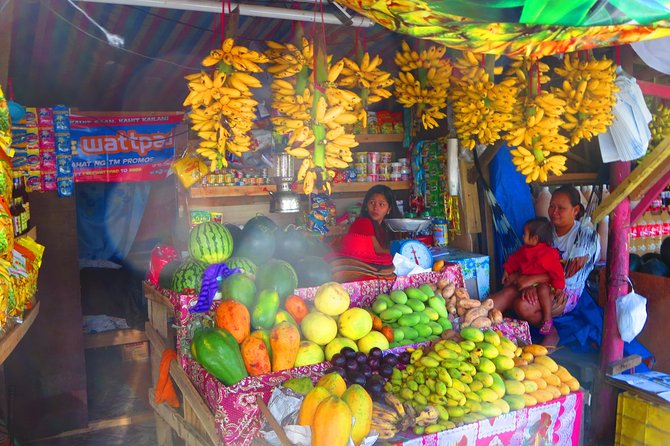
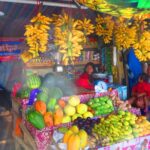
Food is worked into the route rather than treated as a separate restaurant meal. The experience includes drinks, a snack, local tastings, and a food-market visit. The route also includes a refreshment stop as you go.
This is a nice touch because food gives you another way to read a place. A local snack can reveal more about daily habits than a long lecture. Bernadette’s role is important here, since she can help explain what you are eating and how it fits into local life.
Do not book this expecting a full meal or a carefully planned food tour. The supplied details describe refreshments and snacks, not lunch or dinner. Bring cash in case you want to buy something extra, and tell the guide about any food concerns before you start if you need clarification.
One practical lesson comes from a Christmas Day departure when the participant felt thirsty and had to ask for a water stop midway. Drinks are included, but I would still carry a refillable bottle if possible. Manila’s heat, walking, and public transport can make hydration important.
Sunset and the final walk
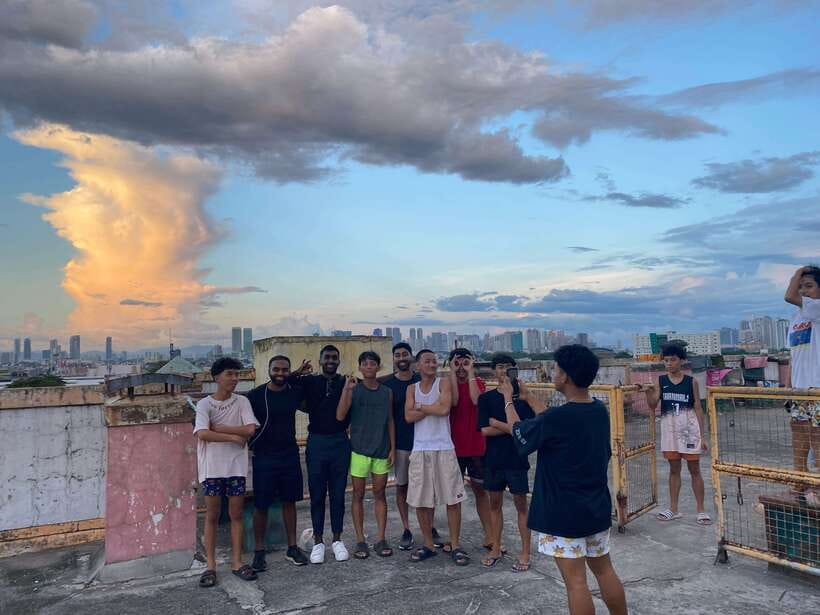
The later part of the route includes a photo stop, more walking, local food, and sunset. Timing will depend on the starting time and the day’s conditions, so do not treat the sunset reference as a guarantee of a dramatic viewpoint. It is better understood as a pleasant part of the route’s atmosphere.
The final walking segment lasts about 35 minutes and gives you more time to ask questions or look back at what you have seen. After that, Bernadette drops you at Circuit Makati, an indoor and outdoor mall with shops, restaurants, and other activities.
Circuit Makati is a useful ending because you can continue your evening there. You can eat, browse, or arrange your next transport from a place with plenty of choices. The finish is not the same as the meeting point, and one participant found the stated ending difficult on Christmas Day when transport was less convenient. Confirm the drop-off details on the day, especially during holidays or unusual traffic.
Is $63 a fair price?
At $63 per person, this is not the cheapest way to walk through Manila. You are paying for a small group, a live guide in English or Tagalog, public transport fares, refreshments, a snack, local tastings, and a souvenir.
The value depends on what you want. If you only want to see a church and a few old houses, you could spend less by exploring independently. But doing the same route alone would not give you Bernadette’s personal connection, explanations of the neighborhood, help with local conversations, or a structured way to enter an area that may feel unfamiliar.
The group limit of six matters. A larger group would be harder to manage in alleyways and on public transport. In a small group, you can ask direct questions and remain closer to the guide. For me, that is the main reason the price can make sense.
The current rating is 3.3 out of 5 from seven ratings, so the experience is not without rough edges. The strongest praise centers on Bernadette, the local insight, the food, and the chance to get away from standard tourist areas. The main concerns involve waiting, thirst, included items not always matching expectations, and the final drop-off. Go in with realistic expectations and the value improves.
Who should book this experience?
I would recommend it to an adventurous first-time visitor who wants to understand Manila through ordinary neighborhoods, not only malls and famous landmarks. It also suits repeat visitors who have already seen the usual central sights and want a more personal afternoon.
It works well for people who enjoy walking, street food, local transport, photography, and conversation. The small group is helpful for solo participants and couples who want guidance without joining a large bus tour.
I would hesitate to recommend it to anyone with limited walking ability unless the operator confirms that the route can be adjusted. The available information describes the tour as mainly walking, with alleyways and public transportation. It may also frustrate visitors who need a fixed schedule, guaranteed comfort, or a fully predictable finish.
Bring comfortable, breathable clothing, sturdy shoes, sunscreen, a hat, rain gear, and cash. Leave luggage and large bags behind. A professional camera is not allowed, so use a phone or small personal camera instead.
My verdict on the Sta. Ana tour
Book this if your idea of sightseeing includes meeting a neighborhood on its own terms. The heritage houses and church give the route a clear starting point, but the real value is the combination of family life, alleyways, snacks, public transport, and Bernadette’s personal explanations.
Do not book it for comfort or polish. Book it because you want a direct look at Manila that can feel surprising, crowded, warm, and emotionally demanding. The tour’s best moments seem to come from simple things: a friendly greeting, a local snack, a jeepney ride, or a story about a building that you might otherwise walk past.
FAQ
Where does the tour begin?
The tour begins at Plaza Hugo in Sta. Ana, Manila. The meeting point is an outdoor basketball court with an adjacent stage and mini park.
Where does the tour finish?
The tour finishes at Circuit Makati in Makati, Metro Manila. It does not include drop-off at your hotel.
How long does the experience last?
The experience lasts 2.5 hours. Starting times vary, so you need to check availability when booking.
How large is the group?
The group is limited to six participants, making it a small-group experience.
What languages does the guide speak?
The live tour guide speaks English and Tagalog.
Is public transportation included?
Yes. Public transportation fares are included. The route includes a tuk-tuk ride, and the experience may also include a jeepney ride as part of the local transport portion.
What food and drinks are included?
Drinks, a snack, local tastings, and refreshments are included. The experience also includes a food-market visit. It is not described as a full meal.
Is this mainly a walking tour?
Yes. The tour is mainly on foot, with walking through Sta. Ana, Barangays, and alleyways. Comfortable shoes are recommended.
What should I bring?
Bring comfortable and breathable clothing, comfortable shoes, sunscreen, a sun hat, rain gear, and cash. You should not bring luggage or large bags.
Can I cancel the booking?
You can cancel up to 24 hours in advance for a full refund. A reserve-now, pay-later option is also available.