2 Days Private Bataan Tour with Corregidor
History here feels painfully close. This two-day private tour links the Bataan Death March memorials with Corregidor, giving you a clear path through the Philippines’ major World War II sites. I especially like the private car and guide, which let you spend more time at places that matter to you. I also like the chance to hear extended battlefield discussions on Corregidor rather than simply taking a quick bus loop. The main drawback is the price: at $1,150 per person, this is a major splurge, and the long first day may feel heavy if wartime history is not your main reason for visiting the Philippines.
The tour is best for you if names, dates, surrender stories, and military sites bring a trip to life. One guest with a grandfather who walked the Death March found the experience deeply emotional, while another praised guide JB for creating a very personal visit and arranging what felt like a VIP day on Corregidor. You should also expect an early start, a full schedule, and subject matter that is often grim rather than light sightseeing.
In This Review
- Key points to know before booking
- Why this private format matters in Bataan
- Capas National Shrine and the Camp O’Donnell story
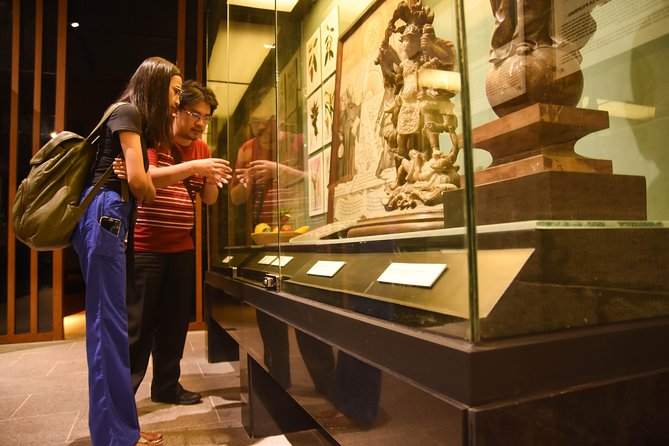
- Bamban Museum and a personal collection of wartime objects
- Bataan World War II Museum and the surrender site
- Zero Kilometer marker, where the Death March began
- Corregidor Island, a seven-hour battlefield day
- Mount Samat and the final battle of Bataan
- San Fernando railway station and the prisoner route
- What the $1,150 price really buys
- Who should book this two-day history tour?
- My verdict on the Bataan and Corregidor experience
- FAQ
- Where does the tour begin?
- How long does the experience last?
- Is this a private tour?
- Is transportation included?
- How long is the Corregidor visit?
- Is admission included at every stop?
- Is the tour suitable for most people?
- Can I cancel for a full refund?
- Who provides the tour?
Key points to know before booking
- Two days connect the Death March route with Corregidor: You see memorials, prison camp sites, a surrender site, and the island fortress tied to the defense of Manila Bay.
- A private guide and driver shape the day: You can ask to focus on particular sites and adjust attention to your interests, as one guest did.
- Corregidor gets about seven hours: The island portion is not a quick photo stop. You travel by boat and tour bus, with time for detailed battlefield discussion.
- Day one covers several serious memorials: Capas, Bamban, Bataan, and the Zero Kilometer marker each present a different part of the wartime story.
- The schedule begins at 7:00 a.m.: Early departures matter, especially with a long first day and a 7:00 a.m. pier arrival for Corregidor.
- This is a high-cost private experience: The value comes from personal service, private transport, and subject depth, not from a low group-tour fare.
Why this private format matters in Bataan
Bataan and Corregidor are not places I would rush through. Their importance can be easy to flatten into a list of dates, but a guide can connect a prison camp, a surrender point, a railway station, and a fortified island into one human story.
That is the real purpose of this trip. You are not simply collecting monuments. You are following the movement of Filipino and American prisoners after the fall of Bataan, then examining the military setting around Corregidor. The private format gives you room to ask questions, pause at a memorial, or request more attention at a site that has personal meaning.
The vehicle is a private car, with a guide and driver accompanying only your group. That matters in two ways. First, you avoid being tied to the interests of a large coach party. Second, the price can make more sense for a small group that values privacy and specialist attention, though it remains expensive for a solo visitor or couple.
JB received particular praise for the overall trip. His role was not limited to getting people from one stop to the next. The strongest description of his service was personal and highly flexible, with a guest able to see and learn as much as possible. If you book, ask in advance about your priority sites and questions so the guide can shape the discussions around them.
You can also read our reviews of more private tours in Manila


Capas National Shrine and the Camp O’Donnell story
The first stop is Capas National Shrine, also known as Camp O’Donnell. This former concentration camp held Filipino and American prisoners of war after the Battle of Bataan.
You have about an hour here, with admission included. The value of the stop comes from its role in the sequence of events. The Death March did not end the prisoners’ suffering. Capas helps you understand what followed after the march, when prisoners reached a camp under harsh conditions.
This is a memorial stop, not a playful attraction, and you should give it the attention it deserves. An hour is enough for a focused visit, but it may feel short if you want to read every marker or spend quiet time reflecting.
For anyone with a family connection to the Death March, this can be one of the most affecting parts of the day. The tour’s emotional force comes from placing the broad military story beside the fate of individual prisoners.
Bamban Museum and a personal collection of wartime objects
Next comes Bamban Museum of History, a private World War II museum assembled by a war historian. The visit lasts about an hour, and admission is free, though donations are appreciated.
This stop adds a personal scale to the memorials. Instead of seeing only official monuments, you encounter a collection built around artifacts and a historian’s interest in the war. That can make the past feel more tangible, especially for you if equipment, documents, and military objects help you understand events.
Because it is a private museum, the experience may feel less formal than a national institution. That is part of its appeal, but it also means you should treat the visit as a specialist stop rather than expecting a large public museum with extensive visitor facilities.
The donation request is modest compared with the overall tour cost, but carrying some Philippine pesos may be sensible if you wish to support the museum. The provided details do not specify the exact objects on display, so ask your guide what the current collection emphasizes.
Bataan World War II Museum and the surrender site
The Bataan World War II Museum gives you another hour of focused history. It marks the surrender site of American General Edward King to Japanese forces on April 9, 1945, as described in the tour details.
This stop is important because surrender is often treated as a single line in a textbook. Standing at the stated site gives that moment a physical setting. Your guide’s explanations can help connect the military defeat with the prisoner experience that follows.
Admission is included. Since the schedule allows one hour, use the time for the museum’s main displays and for questions about the fall of Bataan. If you have a particular interest in command decisions, surrender terms, or the experience of Filipino forces, this is a good place to raise it.
The supplied date should be checked with the operator if exact historical chronology matters to you. The tour describes the surrender site as April 9, 1945, so a serious history student may want clarification before departure.
Zero Kilometer marker, where the Death March began
The Zero Kilometer Death March Marker is a shorter stop, about 30 minutes, and admission is free. It marks the starting point of the Death March.
Do not mistake the brief visit for an unimportant one. A starting marker can carry more weight after you have seen Capas and learned what happened to the prisoners later. The stop gives you a point on the ground from which to imagine the route, even though the tour does not provide a full walking experience along the march.
Thirty minutes should be enough for the marker, photographs, and a short talk. If the site has particular meaning for your family, tell the guide before arriving. The private structure gives you a better chance of receiving the context you need instead of being hurried along with a large group.
Taken together, the first four stops create a strong opening day. You move from the prison camp, to a private collection, to a surrender site, and finally to the beginning of the march. The order gives you several angles on the same campaign, though the subject matter can be emotionally draining.





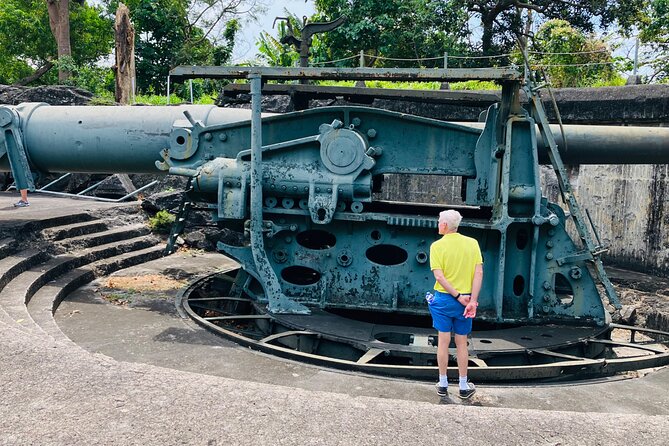
Corregidor Island, a seven-hour battlefield day
Day two begins early. You go to the pier at 7:00 a.m., take a 20-minute boat ride to Corregidor, and then use a tour bus to travel around the island. The island visit lasts about seven hours, with admission listed as free.
This is the centerpiece for many people. Corregidor is not just another memorial stop. It is the setting for extended battlefield discussion, and the generous time allowance lets you treat the island as a major part of the trip rather than a brief add-on.
The tour bus provides the practical way to cover the island. You should expect transportation between sites rather than a full walking tour. The details supplied do not identify every stop on Corregidor, so ask the operator which locations the bus route currently includes.
The strongest reason to pay for this private trip is the time and attention here. One guest described having Corregidor almost to the group alone and receiving a VIP-style visit. That does not promise an empty island every day, but it points to the advantage of traveling privately: your guide can give the island more attention than a rushed standard excursion.
The boat crossing is short, but the morning is not. You need to be ready for a 7:00 a.m. pier start after a full first day. The schedule rewards people who want serious interpretation. If you prefer a slow morning, casual stops, and lots of unplanned time, Corregidor may feel demanding.
Mount Samat and the final battle of Bataan
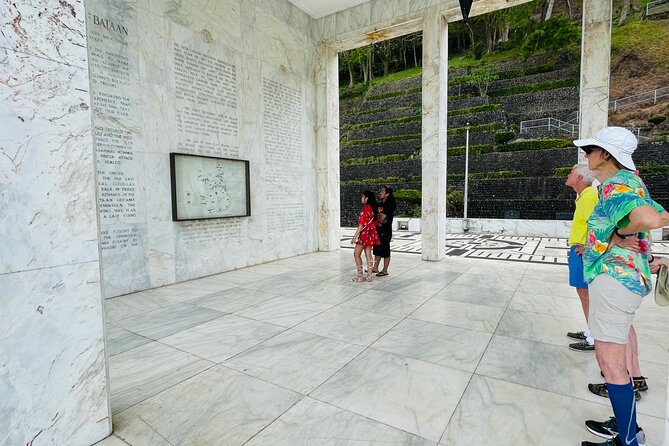
The plan then includes two hours at Mount Samat National Shrine, also called Dambana ng Kagitingan. This is the mountain where the final battle of Bataan took place before the American surrender.
Two hours gives this stop more breathing room than the 30-minute marker visit. You can listen to the battlefield explanation, take in the memorial setting, and ask how the mountain fits into the wider campaign.
The importance of Mount Samat is tactical as well as symbolic. It helps you see the terrain connected to the final fighting, rather than treating Bataan as a collection of unrelated monuments. The tour’s private format is useful here because battlefield questions often lead to follow-up questions, and you are not sharing every minute with a large coach group.
The schedule places Mount Samat after the Corregidor visit. Since the full sequence involves early starts and several major sites, confirm the day-by-day timing with the provider before booking, especially if you need to know exactly when you will return to Manila or move between locations.
San Fernando railway station and the prisoner route
San Fernando is a shorter 30-minute stop. Its railway station is where prisoners of war were loaded before being taken to the concentration camp.
This location gives the Death March story another practical link. A march ends at a camp, but the journey continued through transport and forced movement. The station helps you picture that next stage.
Half an hour is suitable for a quick visit and explanation. It is not enough for an unhurried museum session, but the stop works well as part of the larger chain of sites. Your guide can explain how San Fernando connects with Capas and the prison camp, turning separate locations into a continuous route.
For me, this is the kind of stop that makes a history tour worthwhile. It may not be the most visually dramatic location, but its role is direct and human. You see where prisoners were loaded for the next part of their ordeal.
What the $1,150 price really buys
At $1,150 per person, this is not a budget way to see Bataan and Corregidor. The price needs to be judged against the format: two days, private transportation, a guide and driver, pickup offered, a boat trip, admission to included sites, and long periods of personal historical discussion.
The value is strongest for a small group with serious interest in World War II. If you are traveling with relatives, have a family connection to the Death March, or want a guide to adapt the day around your questions, the private setup may justify the cost.
The value is weaker if you only want to see Corregidor’s main sights quickly. A shared excursion or a shorter island visit could be a better fit, though this tour’s exact alternatives are not specified here. You are paying for depth and control, not simply transport.
The tour is often reserved about 159 days ahead. That suggests you should plan early if your dates are fixed, though advance booking does not change the need to confirm current schedules and availability with Jb Quemado.
Who should book this two-day history tour?
I would point this experience toward:
- World War II history enthusiasts
- People researching Filipino or American family wartime stories
- Visitors who want Bataan and Corregidor in one organized trip
- Small groups that value a private guide and car
- People comfortable with early mornings and serious subject matter
I would think twice if you have only a short stay in Manila, dislike long touring days, or want a relaxed sightseeing program. The schedule has several stops, and the emotional weight is real.
Most people can participate, according to the supplied details, but the tour does not provide a specific accessibility assessment. Ask the operator about the walking and boarding requirements for your group before paying.
Booking confirmation is provided at the time of booking, and a mobile ticket is available. Pickup is offered, but the exact pickup area is not stated, so confirm that detail directly.
The cancellation terms are strict near departure. You can receive a full refund if you cancel at least six full days before the start time. Cancellation two to six days ahead brings a 50 percent refund, while cancellation less than two full days ahead brings no refund. Poor weather can lead to a different date or a full refund.
My verdict on the Bataan and Corregidor experience
Book this tour if you want a serious, personal account of the Philippines in World War II and can afford private service. Its best qualities are the connected route, the long Corregidor visit, and the freedom to shape discussions around your own interests.
I would especially consider it for a family group or history buff. A guide such as JB, paired with a private car and driver, can turn a difficult subject into a clear and meaningful two-day experience. Just budget for the early starts, confirm the exact schedule, and recognize that $1,150 per person buys specialist attention rather than a cheap day out.
FAQ
Where does the tour begin?
The stated start time is 7:00 a.m. Pickup is offered, but the exact pickup point is not specified.
How long does the experience last?
The tour lasts approximately two days.
Is this a private tour?
Yes. Only your group participates in the private activity.
Is transportation included?
The tour uses a private car with a driver and guide. The Corregidor portion includes a 20-minute boat ride and a tour bus around the island.
How long is the Corregidor visit?
The Corregidor Island portion lasts about seven hours.
Is admission included at every stop?
Admission is included at Capas National Shrine, the Bataan World War II Museum, and Mount Samat National Shrine. Bamban Museum, the Zero Kilometer marker, San Fernando, and Corregidor are listed as free admission, though donations are appreciated at Bamban Museum.
Is the tour suitable for most people?
The supplied details state that most travelers can participate. Specific accessibility information is not provided, so ask the operator about your group’s needs.
Can I cancel for a full refund?
Yes, if you cancel at least six full days before the experience start time. Poor weather cancellation may also result in a different date or a full refund.
Who provides the tour?
The experience provider is Jb Quemado. One guide specifically praised in the supplied information is JB.