
Manila: Street Food and Drinks Walking Tour with Tastings
Come hungry, leave happily full. This two-hour food walk through Binondo and nearby old Manila neighborhoods gives you a direct taste of Filipino daily life, from kwek kwek and turon to halo-halo, with local transport folded into the outing. I especially like the guide-led access to small food stalls and the chance to ride a jeepney or the tour’s playful Lamborghini tricycle. The main drawback is that the food is strongly meat-focused, so vegetarians and vegans will miss several of the main tastings.
I also like the human scale of the experience. Groups are limited to about 10 participants, with some information describing a maximum of 12, and guides such as Mari, Tess, Jessie, and Chai have been praised for their warmth, humor, and care. You should also know that two hours can pass quickly, especially when crowds, heat, and food stops all compete for your attention.
In This Review
- Key points at a glance
- Starting at Grand Cafe 1919 in Binondo
- Walking through Binondo’s crowded food streets
- What lands on the tasting table
- Banana cue, kamote fries, and turon
- Kwek kwek, siomai, and other savory bites
- Soup, pancit, and palabok
- Grilled squid and mango with shrimp paste
- Halo-halo and drinks to finish
- Riding a jeepney or the Lamborghini tricycle
- How much food and walking should you expect?
- Is $68 a fair price?
- Group size, guides, and the feel of the outing
- Best for curious eaters, not selective diets
- Should you book the Manila street food tour?
- FAQ
- Where does the Manila street food tour meet?
- How long does the tour last?
- How many people can join the group?
- What food is included?
- Is balut included?
- Is transportation included?
- Is the tour suitable for vegetarians or vegans?
- What should I bring?
- Can children join?
Key points at a glance
- Six to 10 Filipino tastings: Expect a generous run of snacks, noodles, soup, grilled seafood, fruit, sweets, and drinks.
- Binondo as your dining room: The route leads through side streets, markets, and areas where locals shop and eat.
- A guide makes the difference: Mari is frequently singled out for her energy, cultural explanations, photos, and careful handling of busy streets.
- Local transport included: Depending on conditions, you may ride a jeepney, bus, boat, or tricycle, though the advertised transport is not guaranteed every time.
- Not a light snack crawl: Several people found the portions generous enough to skip breakfast.
- Bring the right expectations: This is a walking tour in rain or shine, and it is not suitable for vegetarians, vegans, wheelchair users, or pregnant women.
Starting at Grand Cafe 1919 in Binondo
The meeting point is Grand Cafe 1919 on Juan Luna Street in Manila’s Binondo district. It is a sensible place to begin because you can meet the guide, settle in with a drink, and use the facilities before heading into the streets.
I like this start more than a random curbside meeting. Food tours work better when you have a few minutes to find the group and ask questions before the pace picks up. Since you are asked to arrive hungry, that short pause is useful.
There is one geographic detail worth checking before booking. The supplied location information names Nueva Vizcaya, while the meeting point and tour description clearly place the experience in Manila, particularly Binondo and nearby old districts. Confirm the exact meeting details before you pay, especially if the booking page still displays Nueva Vizcaya.
You can also read our reviews of more walking tours in Manila

Walking through Binondo’s crowded food streets
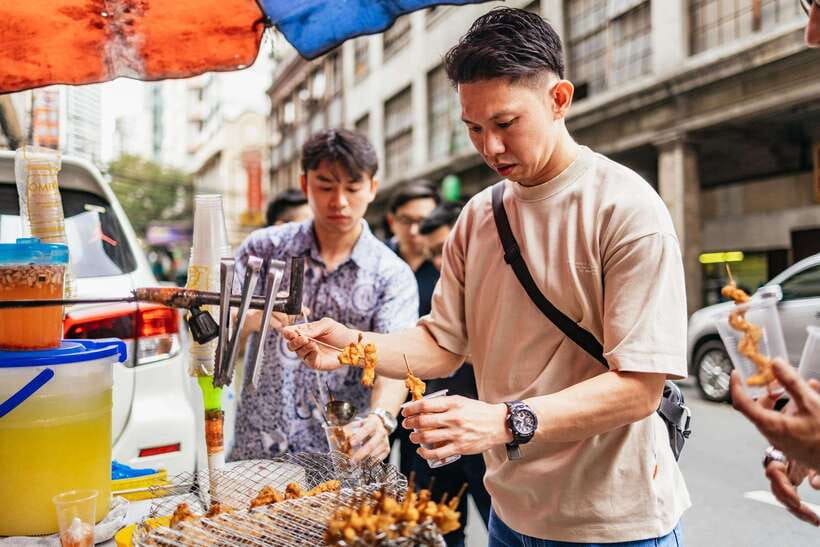
The heart of the tour is not a polished restaurant district. You move through narrow streets, open market areas, and crowded stretches of Chinatown where people are shopping, commuting, and eating at ordinary stalls.
That setting is part of the value. A guide can point out where locals eat, explain unfamiliar dishes, and help you move through streets that may feel confusing on your first visit. I would not book this only for a neat list of dishes. The stronger experience is seeing how food fits into everyday Manila.
The walking can be busy. Chinese New Year crowds once made the route harder to manage, although the guide kept the group together. Heat and congestion may also slow the pace. Wear comfortable shoes, keep your belongings close, and expect a real city walk rather than a relaxed stroll.
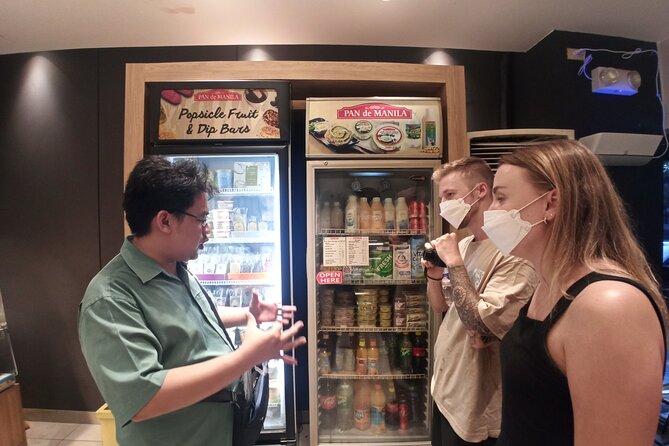
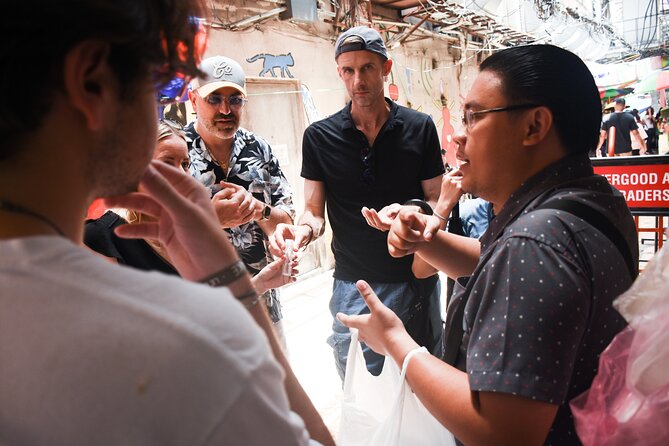
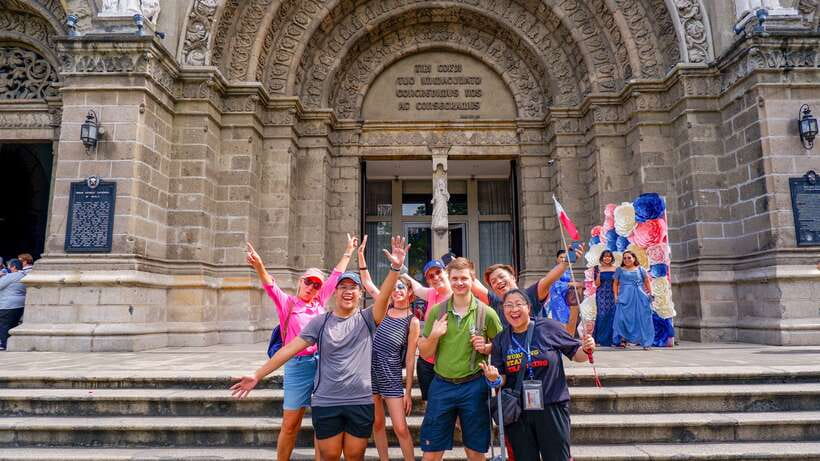
The guides are a major reason this tour earns such strong marks. Mari is often described as warm, funny, energetic, and careful with the group. One solo participant particularly valued her help with photos, while another appreciated the hand sanitizer she provided and the way she guided people safely through chaotic crossings.
You can also ask questions as you go. The tour is not just a food handout. Guides explain the dishes, the neighborhood, Filipino customs, and the history of the areas you pass. The best guides keep this light, personal, and conversational rather than turning the walk into a lecture.
What lands on the tasting table
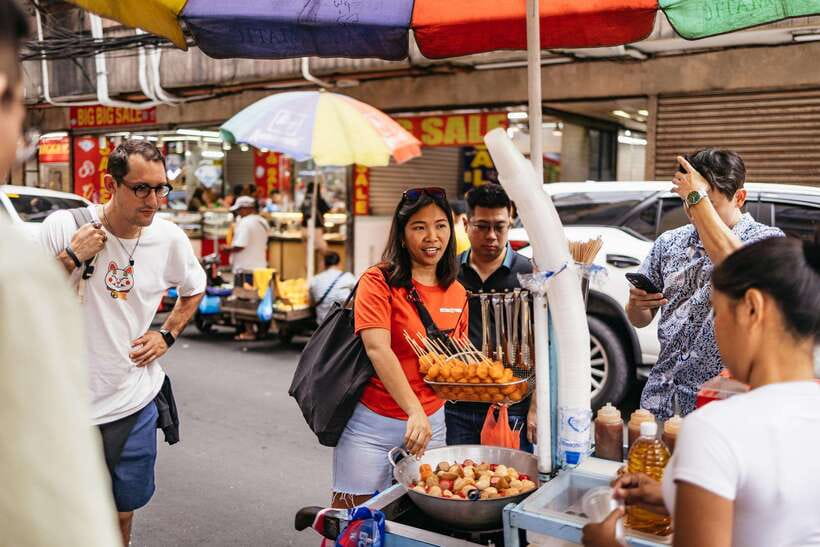
The exact menu depends on what is available from street vendors that day. That flexibility is normal for street food, but it also means you should treat the advertised list as a guide rather than a fixed promise.
The planned selection can include:
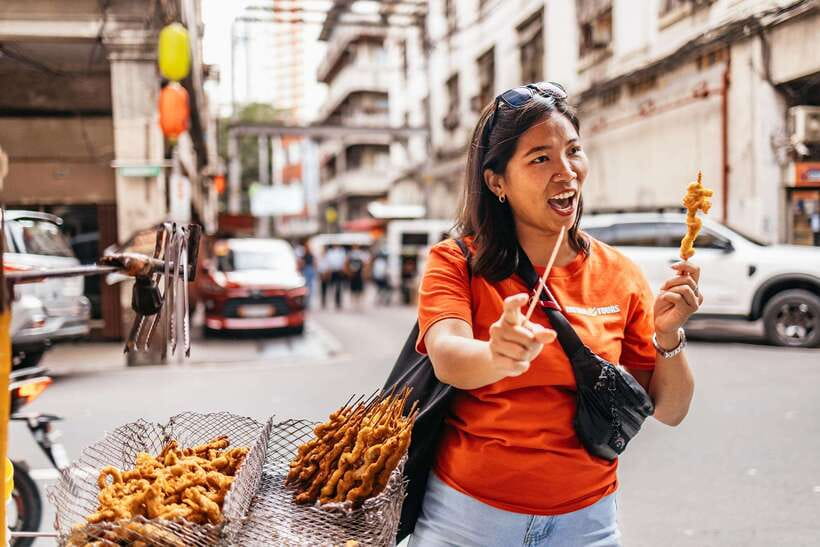
- Banana cue, fried banana coated with brown sugar
- Kamote fries, made with sweet potato
- Turon, a fried banana spring roll
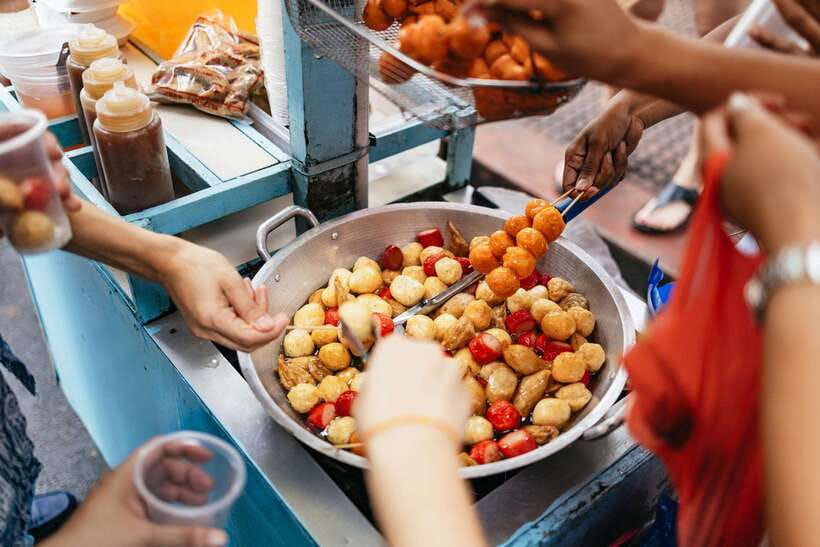
- Kwek kwek, quail eggs in orange batter
- Siomai
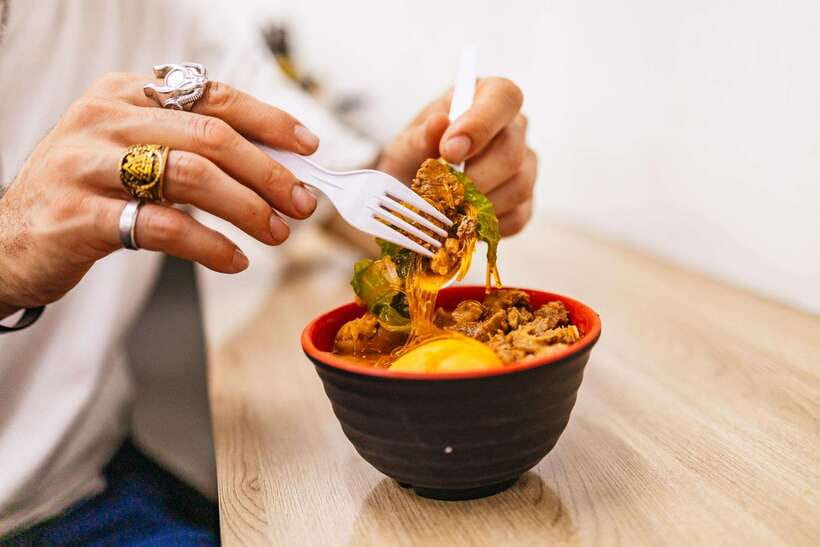
- Sotanghon soup
- Palabok
- Filipino pancit
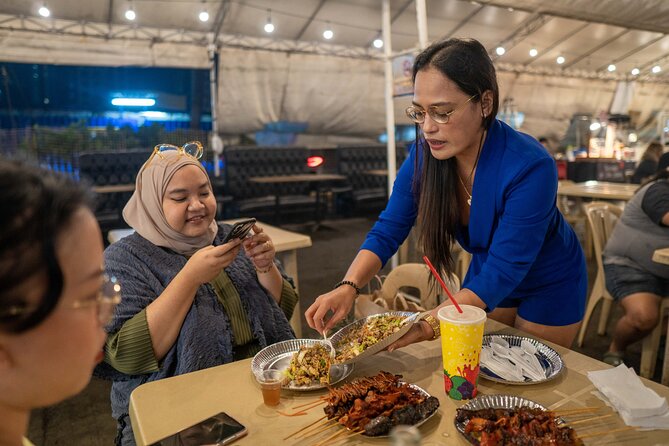
- Grilled squid
- Mango with shrimp paste
- Halo-halo
- Water or a refreshing juice
This is a wide spread for a two-hour outing. You move from sweet fried snacks to savory noodles, soup, seafood, fruit, and dessert. I like that range because Filipino food is not reduced to one famous dish. You get a feel for the contrast between salty, sour, sweet, smoky, chewy, crisp, and cold.
Banana cue, kamote fries, and turon
The sweet fried foods are an easy introduction. Banana cue pairs banana with caramelized brown sugar, while turon places banana inside a crisp wrapper. Kamote fries bring a more earthy sweetness.
These are approachable choices if you are cautious about street food. One person particularly enjoyed the fried banana with brown sugar, and turon has also been a favorite for people familiar with Filipino cuisine. I would pay attention to these early stops because they are filling, and the tour still has plenty more to come.
Kwek kwek, siomai, and other savory bites
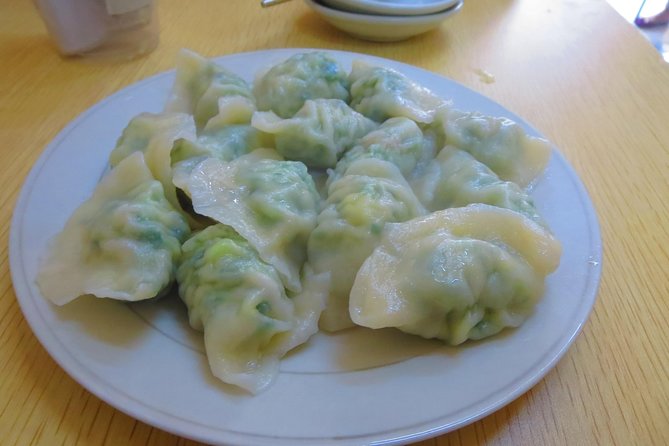
Kwek kwek is one of the tour’s more recognizable street snacks, with quail eggs covered in orange batter and fried. Siomai gives you a familiar dumpling-style bite, but the sauces and setting make it feel different from the version you might order at home.
Depending on availability, more adventurous foods can appear. Balut has been included on some outings, though it is not guaranteed in the stated food list. It is a duck embryo egg and can be a challenge even for curious eaters. You never need to force yourself to try it, but this is the kind of moment that makes a guide useful. You can ask what you are eating, how locals approach it, and decide for yourself.
The tour is not a good fit if you want to avoid meat, eggs, or seafood. It is specifically unsuitable for vegetarians and vegans, and the food list includes several animal-based dishes. Pregnant women are also listed among those who should not join.


Soup, pancit, and palabok
The noodle and soup stops add substance. Sotanghon soup offers a warm, savory break, while pancit and palabok show different sides of Filipino noodle cooking.
Palabok was a favorite for one participant, and another called the soup especially good. These dishes also help you understand why the tour can feel like a full meal rather than a collection of samples. If you eat a large breakfast, you may struggle to appreciate the later stops.
Grilled squid and mango with shrimp paste
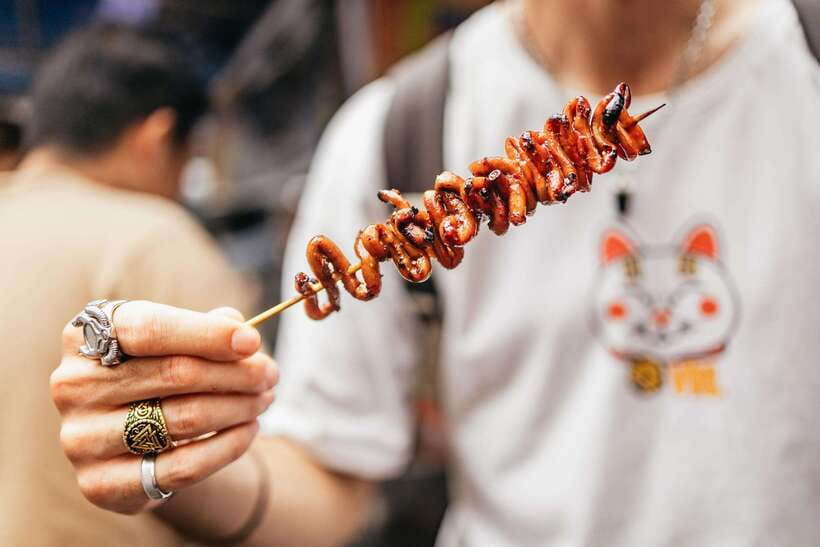
Grilled squid brings smoke and seafood to the route. Mango with shrimp paste provides a sharp sweet-salty contrast that may be new to many first-time visitors.
I like this kind of pairing because it shows how Filipino snacks often balance sweetness with savory or fermented flavors. You may love the contrast, or you may find the shrimp paste too strong. That is part of the point. The guide can explain the flavor and suggest how to try it without making a fuss if it is not for you.
Halo-halo and drinks to finish
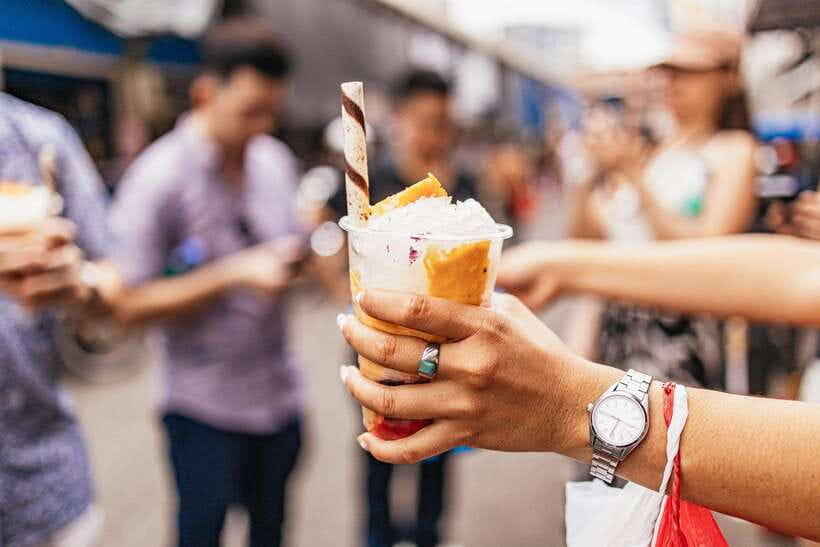
Halo-halo is the natural grand finale: a cold Filipino dessert with a mixture of ingredients, textures, and sweetness. It is a welcome finish after walking through warm streets and eating fried and savory foods.
Drinks are included too, with water or a refreshing juice depending on the stop. Some outings have included coconut juice and other cool refreshments. The pacing matters here. A good guide uses drink breaks to let you cool down, talk, and recover before the next tasting.
Riding a jeepney or the Lamborghini tricycle
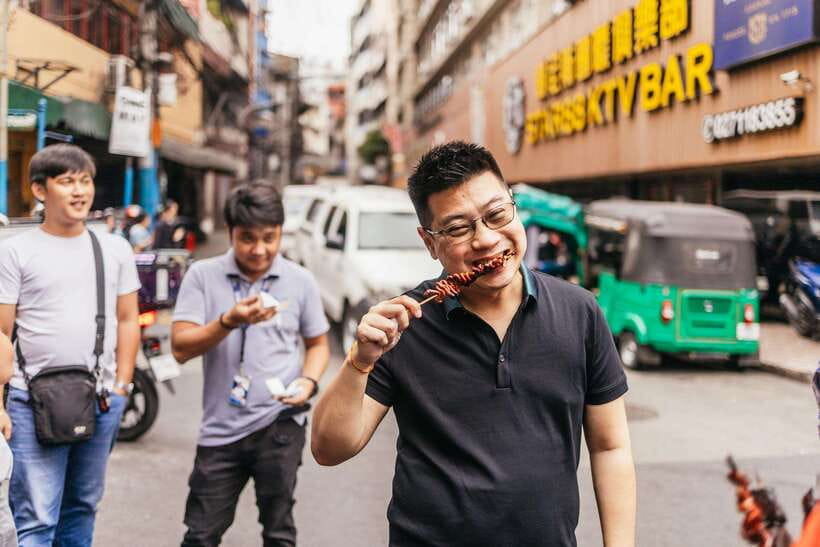
Transport adds character to the tour. The included experience may involve a jeepney ride or the tour’s colorful tricycle, sometimes called the Lamborghini tricycle or limousine tricycle. The ride back toward the cafe can be a fun way to close the route.
Jeepneys are difficult to arrange confidently when you are on your own, so even a short ride gives you a small piece of everyday city life. The tricycle is more compact and playful, and it makes a good photo moment without turning the tour into a vehicle sightseeing trip.
Keep your expectations flexible. One outing did not include the promised jeepney ride, while another included several types of transport, including a tuk-tuk, bus, and boat. The stated inclusion is a jeepney ride or tricycle, but street conditions and availability can change the plan.
How much food and walking should you expect?
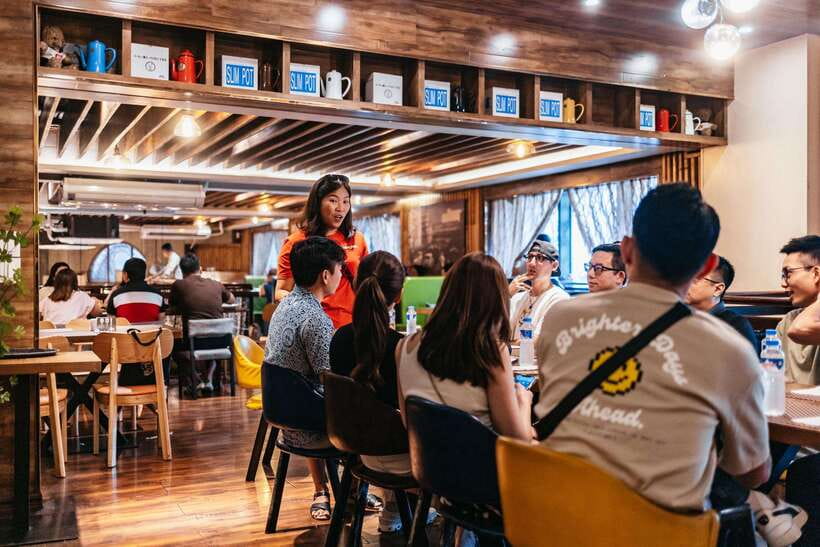
The tour lasts two hours, but it packs a lot into that time. You are walking between several food stops, tasting six to 10 selections, hearing neighborhood and cultural information, and possibly using local transport.
The quantity is one of the most repeated practical points. Several people advise skipping breakfast because there is a lot to eat. One person felt the tasting portions could be smaller, even while enjoying the experience. That is useful advice if you dislike waste or have a small appetite.
I would plan this as a main meal, not an appetizer before dinner. If you have dietary restrictions, food allergies, or a low tolerance for fried food, ask the operator for current menu details before booking. The supplied information does not promise substitutions.
The route also has a physical side. You need comfortable shoes, and the tour runs rain or shine. It is not suitable for wheelchair users, and crowded streets may be difficult for anyone who needs extra space or steady surfaces.
Is $68 a fair price?
At $68 per person, this is not the cheapest way to buy Filipino snacks. You could spend less by choosing a few stalls yourself. The question is what the extra money buys.
Here, the price covers a small-group guide, six to 10 tastings, drinks, walking, and local transportation. More important, it covers help with choices and navigation. The guide takes you to vendors you might not find alone, explains what is on the plate, helps you keep track of the group, and adds context about Manila and Filipino culture.
For a first visit, that can be good value. The tour also makes sense if you are a solo visitor who wants company or if you are hesitant about choosing street food without local advice. A couple or small group could spend two hours wandering without finding as much variety.
The value is weaker if you already know Binondo well, speak the local languages, and prefer to choose every bite yourself. It is also less attractive if you cannot eat most of the menu. Since the duration is short and the food list is generous, you are paying for access and guidance more than for a leisurely meal.
Group size, guides, and the feel of the outing
The group is advertised as limited to 10 participants, with another description giving a maximum of 12. Either way, this is smaller than a large bus tour, but it is not a private walk.
A small group matters in narrow streets. It is easier to hear the guide, share food explanations, and move between vendors. It also helps create the friendly mood many people enjoyed, with one participant comparing the pace to walking around with friends.
Mari receives the most praise, but Tess, Jessie, and Chai are also named as guides on different outings. The style may vary by guide. Mari is often praised for her enthusiasm and personal approach, while Tess is described as friendly and informative. I would consider the guide a central part of the experience, not a minor detail.
The tour is also suitable for children aged three to seven with guidance. That does not mean every child will enjoy the crowds, heat, walking, or unfamiliar foods. Parents should decide based on the child’s comfort and ability to stay close to the group.
Best for curious eaters, not selective diets
I would recommend this tour most strongly to you if you:
- Want a guided first taste of Filipino street food
- Enjoy trying unfamiliar dishes
- Like local neighborhoods more than polished attractions
- Want cultural explanations while you eat
- Are comfortable walking through crowded streets
- Appreciate a guide who can help with photos and transport
- Have only a short time in Manila
I would skip it if you are vegetarian or vegan, pregnant, a wheelchair user, or looking for a quiet sit-down meal. I would also think twice if you dislike eating on the move or need a guaranteed fixed menu.
The adventurous side deserves honest mention. Balut may appear, and dishes can include pork, chicken, seafood, eggs, shrimp paste, and other ingredients that are not always obvious to a first-time visitor. Ask questions. The tour encourages curiosity, not reckless eating.
A few people enjoyed every bite but still experienced an upset stomach afterward. That does not prove the food was unsafe, and the guide takes the group to stalls considered suitable for visitors, but unfamiliar food and a hot city can affect anyone. Eat sensibly, use the provided sanitizer if offered, and do not feel obliged to finish every item.
Should you book the Manila street food tour?
Book it if your idea of seeing Manila includes eating where locals eat, walking through Binondo’s side streets, and asking a cheerful guide what is in front of you. The strongest part is the combination of food, neighborhood access, and local transport. You get more than a checklist of snacks.
I would especially choose it early in a Manila stay, since it can introduce you to dishes and areas you might revisit later. Arrive hungry, wear good shoes, confirm the Manila meeting point, and keep your schedule flexible for crowds and transport changes.
Skip it if the menu conflicts with your diet or if you want a precise restaurant-style tasting. For everyone else, $68 is a reasonable price for a compact, personal introduction to Filipino street food, with the guide’s local knowledge doing much of the heavy lifting.
FAQ
Where does the Manila street food tour meet?
The meeting point is Grand Cafe 1919 in Binondo, on Juan Luna Street in Manila.
How long does the tour last?
The walking tour lasts two hours.
How many people can join the group?
The tour is described as a small group limited to 10 participants. Another description gives a maximum of 12, so confirm the current group limit when booking.
What food is included?
The tasting can include banana cue, kamote fries, turon, kwek kwek, siomai, sotanghon soup, palabok, Filipino pancit, grilled squid, mango with shrimp paste, halo-halo, and water or refreshing juice. The selection depends on what is available that day.
Is balut included?
Balut has appeared on some outings, but it is not included in the stated standard food list and is not guaranteed.
Is transportation included?
Yes. The experience includes a jeepney ride or a tricycle, described in the tour information as a Lamborghini or limousine tricycle. Transport can vary with conditions and availability.
Is the tour suitable for vegetarians or vegans?
No. The tour is specifically listed as unsuitable for vegetarians and vegans because several dishes contain meat, eggs, seafood, or other animal products.
What should I bring?
Bring comfortable shoes. You should also arrive hungry, since the tour includes six to 10 tastings and can amount to a full meal.
Can children join?
Children aged three to seven may join with guidance. The tour is a walking experience in crowded streets, so children need to stay close to their accompanying adult.
More Walking Tours in Manila

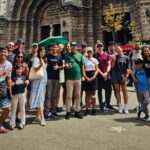
More Tours in Manila
More Tour Reviews in Manila
Not for you? Here's more nearby things to do in Manila we have reviewed





Food Tours: how the alternatives stack up


The lists this tour appears in