Shared Half-Day Shore Excursion in Manila
Manila rewards a tight morning plan. This four-hour shore excursion packs the capital’s key sights into a small-group ride from Pier 15, making it useful when your ship allows little time ashore. I like the air-conditioned transport and the fact that pickup and drop-off are handled at the pier. I also like the sensible mix of major landmarks, religious sites, and less expected stops such as the Chinese Cemetery.
The main consideration is pace. Fifteen minutes at Rizal Park and Intramuros is enough for a quick look and photographs, not a slow wander. At $111.54 per person, the price makes the most sense if you value a guide, direct port transport, and an efficient route over independent exploration.
In This Review
- Key points to know before booking
- Why this Manila shore excursion works for cruise passengers
- Rizal Park begins the morning with a national hero
- Intramuros offers a quick look at Manila’s walled center
- San Agustin Church brings the longest cultural visit
- Casa Manila shows a recreated 19th-century home
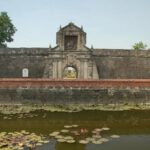
- Fort Santiago adds a defensive side to Intramuros
- Quiapo gives the route a modern city pulse
- The Chinese Cemetery is an unusual final stop
- What the $111.54 price includes
- Timing, group size, and the rules that matter
- Who will get the most from this four-hour route?
- Should you book this Manila shore excursion?
- FAQ
- Where does the tour begin?
- How long does the shore excursion last?
- How many people can join the tour?
- Which admissions are included?
- Is transportation included?
- Are food and drinks included?
Key points to know before booking
- Pier 15 pickup at 8:00 am: You meet at the entrance or exit gate, so there is no need to arrange your own ride into central Manila.
- Four hours of sightseeing: The route covers Rizal Park, Intramuros, San Agustin Church, Casa Manila, Fort Santiago, Quiapo, and the Chinese Cemetery.
- Small maximum group of eight: A group this size can keep the morning more manageable than a large coach outing.
- San Agustin Church is the main interior visit: Your admission includes the church and its collection of religious art, clothing, and objects.
- Quiapo is a drive-through district stop: You pass its market, pilgrimage church, jeepney terminals, and bazaars, rather than receiving a listed walking visit.
- The tour requires at least four people: It can be canceled after confirmation if that minimum is not reached, with an alternative or full refund offered.
Why this Manila shore excursion works for cruise passengers
A port day can make Manila tricky. You have a fixed return time, limited hours, and no interest in losing half the morning arranging transport. This tour removes that problem with pickup at Pier 15 and a vehicle that stays with the group as you move between central sights.
The route is built for first-time visitors. You get the main colonial-era sights in Intramuros, a national memorial at Rizal Park, a famous church, a reconstructed historic house, a major fort, a look at Quiapo, and a distinctive cemetery. It is not a slow, specialist tour. It is a broad first look.
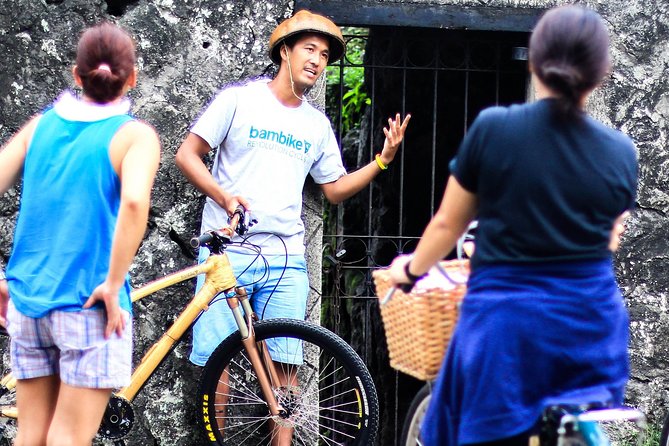
I especially like the size limit of eight people. That gives the guide a better chance to answer questions and keep everyone moving, though the experience still depends on the pace of the group. The published feedback praises the guide and the balance of the morning, noting that the excursion covered what the group wanted without taking the whole day.
That balance matters on a cruise. You can see a good slice of Manila and still have time left for the ship, a later activity, or a quiet break. The tradeoff is that several stops are short, so you should arrive ready to see, listen, photograph, and move on.
A few more Manila tours and experiences worth a look

Rizal Park begins the morning with a national hero
The tour starts after pickup at the entrance or exit gate of Pier 15. The first stop is Rizal Park, named for Dr. Jose Rizal, the Philippines’ national hero.
You have about 15 minutes here, with no admission charge. That is enough for a brief introduction and photographs, but not enough for a full walk through the park. I would treat this as a useful orientation stop rather than a major sightseeing block.
The park gives the tour an important national context before you head into Intramuros. You are not simply ticking off old buildings. You are beginning with a place linked to one of the country’s most important historical figures.
Bring your camera and keep an eye on the time. With only 15 minutes, the practical goal is to listen to the guide’s introduction, take a few photographs, and return promptly to the vehicle.
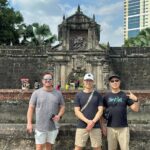
Intramuros offers a quick look at Manila’s walled center
After Rizal Park, you continue to Intramuros, Manila’s historic Walled City. The listed stop lasts about 15 minutes and is also free.
That short visit gives you a first feel for the old district before the longer stops at San Agustin Church, Casa Manila, and Fort Santiago. The route takes you through cobbled streets, which adds a change of pace from the modern city outside the walls.
Do not expect a long walking tour here. The time is better understood as a brief introduction and picture stop. If you want to study the street layout, browse slowly, or linger over architectural details, you will need more time than this excursion allows.
Still, Intramuros is central to the day. Three later visits take place within or around this historic area, so the initial stop helps you understand where the morning is headed.
San Agustin Church brings the longest cultural visit
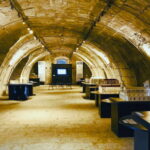
San Agustin Church receives 30 minutes, making it one of the more substantial stops. It is described as the oldest stone church in the Philippines, and admission is included.
Inside, you can view ecclesiastical icons, vestments, and other religious objects. This is more than a quick exterior photograph. The collection gives you a chance to see how religious life and material culture are presented in a historic Manila setting.
I would save questions for the guide here. A short visit can feel much more rewarding when you know what you are looking at, especially when the room contains unfamiliar religious objects or garments. The guide is part of the value of this tour, since the included commentary helps turn a rapid stop into a more useful one.
The time limit remains real. Thirty minutes is enough for a focused visit, but not for reading every display at length. If church art is your main interest, you may wish you had more time. For a shore excursion, though, this is a strong use of half an hour.
Casa Manila shows a recreated 19th-century home
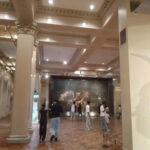
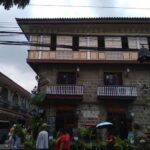
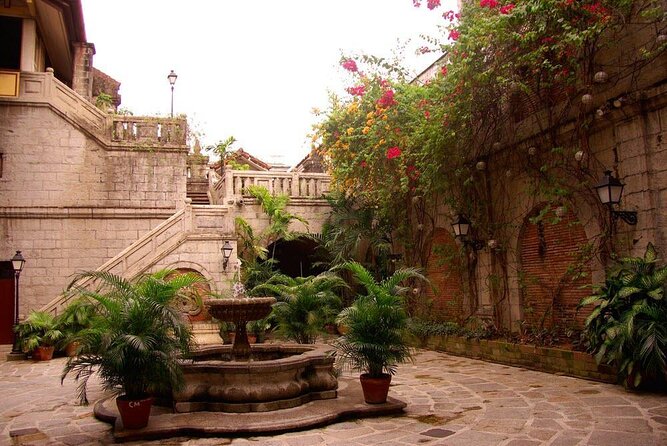
Next comes Casa Manila, another 30-minute stop with admission included. This house is a reproduction of a 19th-century home, furnished with Oriental and European decor and Philippine antique furniture.
Casa Manila adds a domestic angle to the morning. San Agustin Church shows religious objects and architecture. Casa Manila shifts the focus to household life, interiors, furniture, and the way different design traditions appear together.
Because it is a reproduction, you should not approach it as an untouched original residence. Its value lies in the picture it creates of a 19th-century Philippine home. The mix of furnishings also gives the guide plenty to explain during the visit.
Half an hour is enough for a guided look through the rooms. You will probably appreciate having a set time here because the excursion still needs to reach Fort Santiago, Quiapo, and the cemetery before returning to the pier.
A few more Manila tours and experiences worth a look


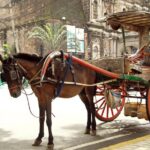

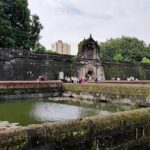
Fort Santiago adds a defensive side to Intramuros
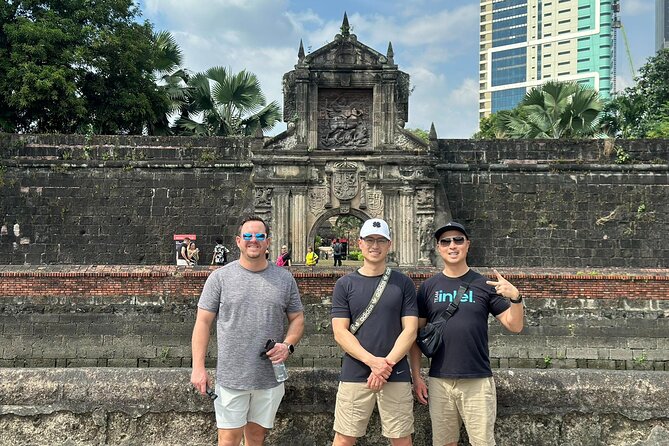
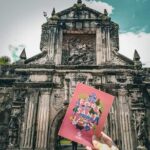
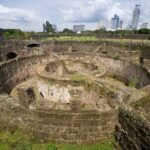
The tour then continues to Fort Santiago, identified as Manila’s main line of defense against invaders from the sea. You have about 30 minutes, with admission included.
This stop broadens the story of Intramuros. Instead of seeing only churches and houses, you also visit a military site designed to protect the city. The fort helps explain why the walled district was built as a defended center rather than simply a residential quarter.
Thirty minutes gives you a focused visit, not an extended exploration of every corner. Stay close to the guide and use the time for the main viewpoints and explanations. If you enjoy military architecture, you may find the schedule tight. If you want a clear introduction to the fort before returning to the ship, the time is workable.
Fort Santiago is also a useful point to judge the tour’s overall rhythm. By this stage, you have seen a park, a walled district, a church, a historic house, and a fort, all without arranging separate taxis or entrance tickets.
Quiapo gives the route a modern city pulse
From Fort Santiago, the vehicle drives to Quiapo, Manila’s central district. The description identifies it as the heart of Manila, with a market, the pilgrimage church of the Black Nazarene, jeepney terminals, and bazaars.
This part of the route is different from the earlier planned visits. You are moving through an active central district rather than entering a museum or monument for a scheduled 30-minute visit. The information provided does not list a separate admission or a fixed stop length, so you should expect this to be a drive-through look rather than a long walking exploration.
That is still useful. Quiapo gives you a glimpse of everyday city movement and commercial life, while the earlier Intramuros stops focus on Manila’s historic core. You get a wider view of the capital instead of spending all four hours among monuments.
Keep your expectations practical. If you hope to shop in the bazaars, visit the pilgrimage church at length, or spend time watching the jeepney terminals, this excursion does not provide a separate block for those activities. The benefit is seeing Quiapo without giving up the scheduled landmarks.
The Chinese Cemetery is an unusual final stop
The last listed visit is the Chinese Cemetery, with about 15 minutes and admission included. Its mausoleums are described as large and elaborate, often comparable in size to houses, with Buddhist and Christian influences visible together.
This is an unusual choice for a short Manila tour, and I like it for that reason. Many quick city excursions stop only at the most familiar landmarks. The cemetery gives you a look at Manila’s Chinese cultural presence and at the way different religious traditions can appear side by side.
The 15-minute limit makes this a compact introduction. You will not have time to examine the entire cemetery in detail, but you can see the scale of the mausoleums and hear why the site is different from a standard cemetery visit.
Afterward, the vehicle returns to the ferry terminal. Since the tour is built around ship pickup and return, that final transfer is a major practical advantage. You are not left to find your own way back across the city.
What the $111.54 price includes
The cost is $111.54 per person. That is not the cheapest way to see Manila, but price alone does not tell the full story on a port day.
Your fee covers the local English-speaking guide, transport for the route, admission to San Agustin Church, Casa Manila, Fort Santiago, and the Chinese Cemetery, plus taxes, fees, and handling charges. Pickup and return at the pier are also part of the setup.
I see the value in three areas:
- You avoid car hire and the work of planning a multi-stop route.
- You have a guide to connect the sights and keep the morning moving.
- You reduce the risk of missing your ship by returning through the organized excursion plan.
Food and drinks are not included, and the four-hour schedule does not list a meal break. Bring anything you need for the morning according to your own ship’s rules and comfort, but do not book this expecting a food-focused experience.
For a couple or family that wants a simple first look, the price can be fair. For an independent visitor comfortable arranging transport and choosing only one or two sights, it may feel high. The tour earns its cost through convenience, admissions, and time control rather than through a long duration.
Timing, group size, and the rules that matter
The start time is 8:00 am. You should plan to be at the Pier 15 entrance or exit gate early enough to identify the pickup point without rushing. The tour description does not provide a later start option.
The experience lasts about four hours. Its maximum group size is eight, which is a meaningful benefit for a shore excursion because small groups can usually move between the vehicle and sights more easily than large groups. The minimum booking requirement is four people.
That minimum is important. Even after confirmation, the tour may be canceled if enough passengers are not available. In that case, an alternative or full refund is offered. If your cruise day is especially important or you are traveling with a tight schedule, keep this condition in mind before committing.
The child rate applies only when a child shares with two paying adults. Children must be accompanied by an adult, and the tour is described as suitable for most participants.
The cancellation policy is strict. The experience is non-refundable and cannot be changed for any reason, so check your ship schedule and port plans carefully before booking.
Who will get the most from this four-hour route?
I would choose this excursion if you are visiting Manila for the first time and want a broad introduction without spending the entire day ashore. It suits cruise passengers who value a guide, included transport, and a return to the ferry terminal.
It is also a good fit if you want more than one kind of sight. The route includes national memory at Rizal Park, colonial architecture in Intramuros, religious collections at San Agustin Church, domestic interiors at Casa Manila, military history at Fort Santiago, urban life in Quiapo, and Chinese Filipino cultural elements at the cemetery.
You may want another option if you prefer a slow day. The 15-minute stops are quick, and even the 30-minute visits are tightly scheduled. Independent visitors who want to linger, shop, or spend a full morning in one museum may find the group format restrictive.
I would also be cautious if your main goal is food, markets, or local shopping. Quiapo appears as part of the route, but the scheduled program centers on sightseeing and transport, not time to browse.
Should you book this Manila shore excursion?
Book it if you want an efficient first look at Manila with pier pickup, air-conditioned transport, and a small group capped at eight. The best part is the balance: you see the city’s headline sights, plus Quiapo and the Chinese Cemetery, without giving up the whole cruise day.
Skip it if you need long visits, flexible timing, or a meal stop. At $111.54, you are paying for convenience and a guided route, not an unhurried exploration.
For the right cruise passenger, this is a practical choice. The morning moves quickly, but it covers a surprising range of Manila and returns you to the ferry terminal without the usual transport guesswork.
FAQ
Where does the tour begin?
Pickup is offered at the entrance or exit gate of Pier 15 in Manila. The listed start time is 8:00 am.
How long does the shore excursion last?
The tour lasts approximately four hours.
How many people can join the tour?
The maximum group size is eight travelers. A minimum of four people per booking is required.
Which admissions are included?
Admission is included for San Agustin Church and Museum, Casa Manila, Fort Santiago, and the Chinese Cemetery. Rizal Park and the initial Intramuros visit are listed as free.
Is transportation included?
Yes. The tour includes transport between the port and the scheduled sights, with pickup and drop-off at the ferry terminal. The vehicle is air-conditioned.
Are food and drinks included?
No. Food and drinks are not included. Personal expenses are also excluded.