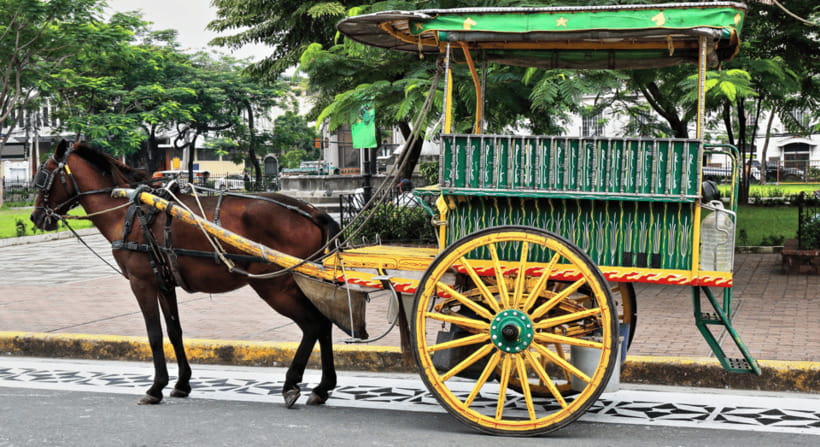
MANILA: HISTORICAL KALESA RIDE TOUR EXPERIENCE IN INTRAMUROS
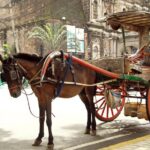
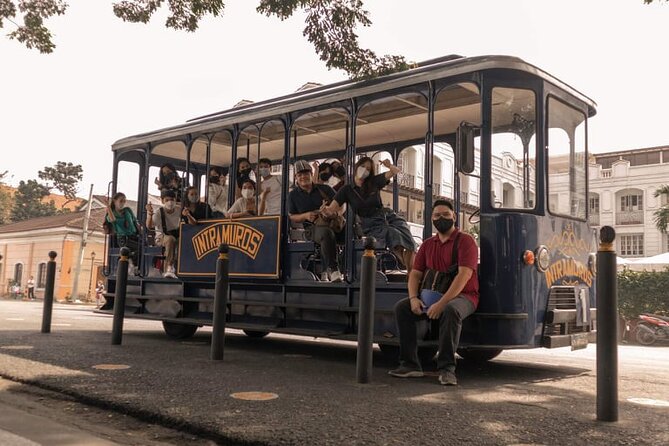
Old Manila is best seen slowly. This four-hour private tour takes you through Intramuros in a traditional kalesa, a horse-drawn carriage that gives the old walled city a fitting pace. I like the easy mix of carriage travel and short guided walks, and I like how the route covers major landmarks rather than stopping at just one church or fort. The main drawback is practical: traffic noise can make the guide hard to hear from the carriage, especially when the driver is moving.
You begin at Fort Santiago and continue through Plaza Roma, Manila Cathedral, San Agustin Church, Plaza San Luis, Casa Manila, and Baluarte de San Diego Gardens. The tour includes the kalesa, driver, English-speaking guide, and Fort Santiago admission, but other entrance fees and meals cost extra.
The private format is useful if you are traveling with family or a small group. The price is $135 for up to four people, so the value improves sharply when shared. Joseph, who took the tour with his elderly mother, found the guide patient and helpful. Carlos Yebra also praised the guide’s respectful manner and strong command of local history. Those are good signs, though you should ask your guide to repeat points when street sounds take over.
In This Review
- Key points at a glance
- Why a kalesa works so well in Intramuros
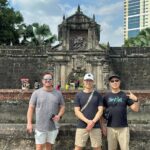
- Starting at Fort Santiago
- Plaza Roma and the colonial center
- Manila Cathedral in fifteen minutes
- San Agustin Church, the tour’s strongest church stop
- Plaza San Luis and Casa Manila
- Baluarte de San Diego Gardens to finish
- How the four-hour schedule feels
- Price, inclusions, and practical value
- Who should book this kalesa tour?
- Should you book the Manila kalesa ride?
- FAQ
- Where does the tour start?
- How long does the tour last?
- How many people can join the private group?
- What language does the guide speak?
- Is the kalesa included in the price?
- Is Fort Santiago admission included?
- Are other entrance fees included?
- Are meals included?
- How early should I arrive?
- Can I cancel for a full refund?
Key points at a glance
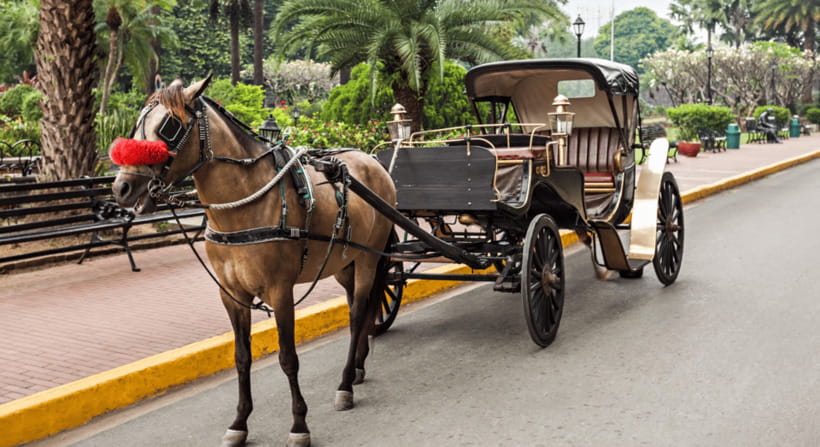
- Traditional kalesa travel: You move through Intramuros in a horse-drawn carriage instead of a standard vehicle, making the old quarter feel more connected to its colonial setting.
- Seven important stops: The route includes Fort Santiago, Plaza Roma, Manila Cathedral, San Agustin Church, Plaza San Luis, Casa Manila, and Baluarte de San Diego Gardens.
- Private group of up to four: You are not sharing the carriage with a large tour party, which makes the experience more personal and easier to adjust.
- Fort Santiago admission included: This is the main included entrance fee. Admission to other sites is not included.
- Four hours with an English guide: Expect a mix of riding, guided walks, sightseeing, and photo stops.
- Sound can be an issue: Traffic and the open carriage may make the guide difficult to hear, so stay alert and ask questions.
Why a kalesa works so well in Intramuros
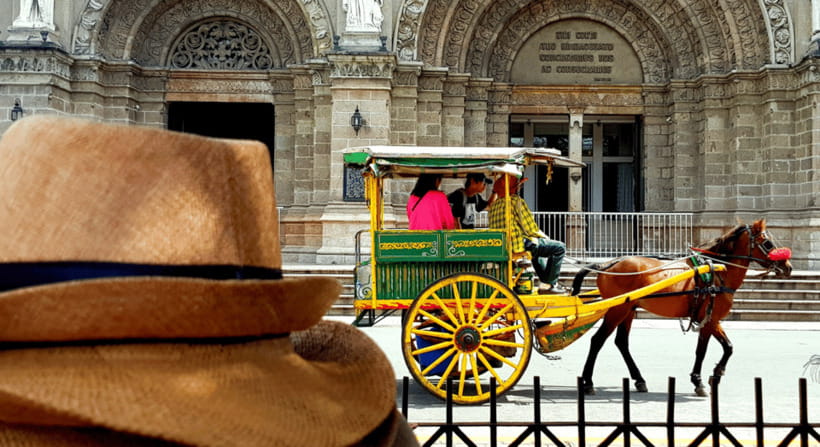
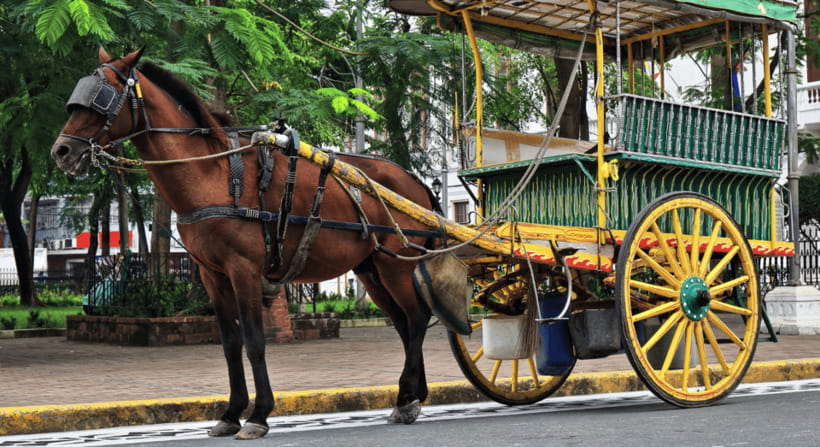
Intramuros is a place where the means of transport matters. A modern van would get you from one stop to another, but a kalesa gives the visit a slower rhythm. You have time to look at old walls, gates, church facades, and colonial-style buildings as you move between sites.
This is not simply a scenic carriage ride. The kalesa is the central part of the experience, while the guide supplies the story that connects the buildings. You will spend part of the tour seated and part of it walking, so you should not think of this as a ride with no effort.
The tour is private for your group, with a limit of four people. That is a good arrangement for couples, families, or friends who want to ask questions without holding up a larger party. It also gives you more room to manage the pace, although the published itinerary remains subject to change.
One practical point deserves attention before booking. The activity information identifies the destination as Intramuros in Manila, with pickup in front of Fort Santiago, while the location summary says Nueva Vizcaya. Because those places are not the same destination, confirm the exact pickup point and city before you pay.
You can also read our reviews of more historical tours in Manila

Starting at Fort Santiago
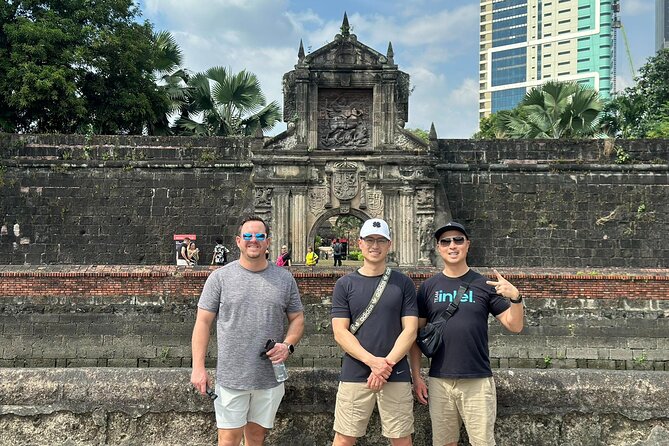
The tour begins at Fort Santiago, where pickup is in front of the fort or around the Fort Santiago parking area. You should arrive at least 10 minutes early. The fort receives the longest scheduled visit, about one hour, and it is the only included admission fee.
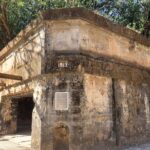
Inside, the route covers the fort’s chambers, dungeon, and ruins of the American Barracks. You will also see the White Cross memorial and the iMake History Lego Museum, which offers a more playful way to approach the past. That combination gives the stop a useful range: serious memorial spaces, military remains, and a creative museum for younger visitors or anyone who prefers hands-on displays.
Fort Santiago is also a good place to pay close attention to the guide. The buildings alone cannot explain how the site fits into Manila’s story. Since the carriage commentary may be difficult to hear later, use this first stop to ask questions and get your bearings.
The one-hour visit is substantial, but the fort may feel like a full historical session before you even climb back into the kalesa. Wear comfortable shoes. You will be walking over historic surfaces and moving between several areas rather than remaining in one room.
Plaza Roma and the colonial center
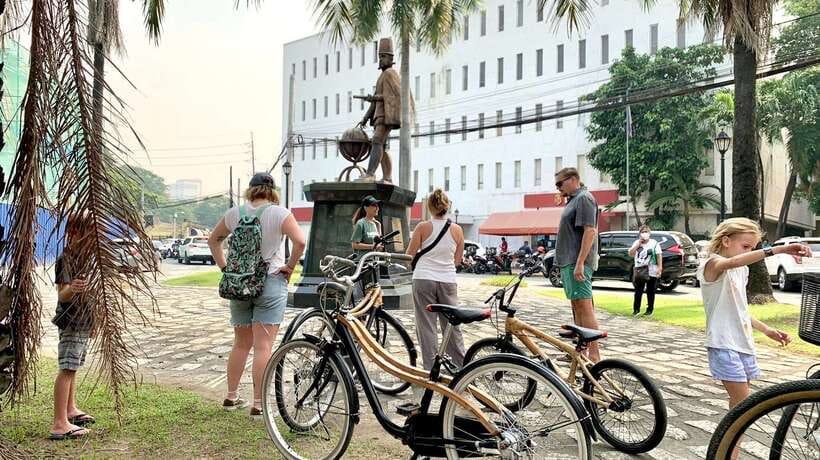
The next stop is Plaza Roma, with about 15 minutes of guided explanation. The square is associated with Manila’s Spanish colonial period, and the Statue of King Carlos IV gives the guide a clear object around which to explain that past.
This is a short stop, so expect a focused look rather than a long walk. It works as a transition between Fort Santiago and the churches that follow. If you enjoy architecture and public squares, you will probably want to use the time for photographs as well as listening.
Because this stop is brief, do not expect a detailed museum-style visit. The value comes from seeing how the plaza connects the surrounding landmarks. Your guide can help you read the square as part of the larger old city instead of treating it as an isolated monument.
Manila Cathedral in fifteen minutes
Manila Cathedral is scheduled as a 15-minute photo stop and sightseeing visit. Its Romanesque Revival design gives the tour a change of architectural mood after the fort’s military setting. You may have time to admire the facade and see the interior, depending on conditions and the day’s schedule.
The cathedral is not allotted a long guided visit, so keep your expectations realistic. This is a quick architectural and photographic pause, not a detailed church tour. If religious services or other restrictions affect access, the itinerary can change without notice.
I like this part of the route because it shows how compact Intramuros can feel. Fortifications, civic spaces, and major churches appear within the same short circuit. The kalesa helps you make those connections without turning every transfer into another tiring walk.
San Agustin Church, the tour’s strongest church stop
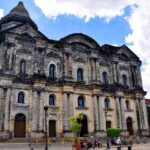
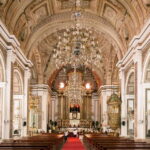
San Agustin Church receives about 30 minutes, twice as long as Manila Cathedral. It is the oldest stone church in the Philippines and is known for its Baroque design and long association with Manila’s colonial period.
This is one of the stops where a guide adds real value. Look closely at the church’s design, details, and interior atmosphere rather than rushing through for a single photograph. Your guide can point out features that are easy to miss when you are moving independently.
Thirty minutes is enough for a meaningful look, but not enough for an exhaustive visit. If church architecture is a major reason for your trip, you may wish you had more time here. Still, the schedule gives San Agustin more weight than the cathedral and marks it as a central stop.
The church also gives you a useful contrast with Fort Santiago. One site speaks through walls, chambers, and military remains. The other speaks through worship, design, and religious art. Taken together, they show several sides of Intramuros without requiring a full day.


Plaza San Luis and Casa Manila
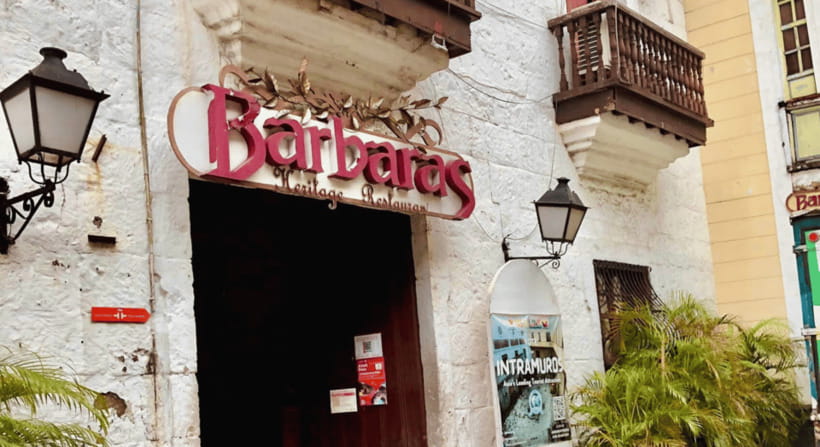
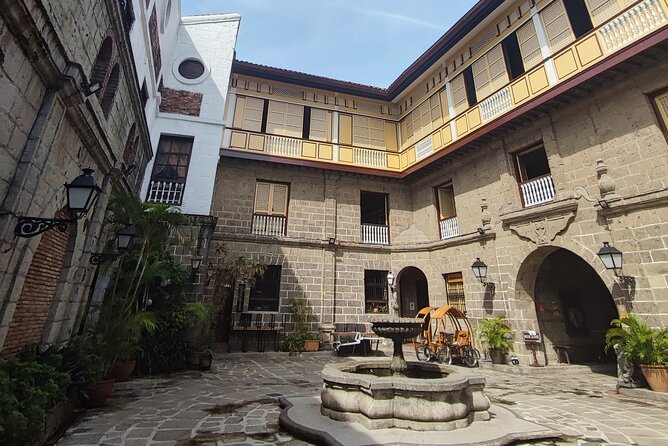
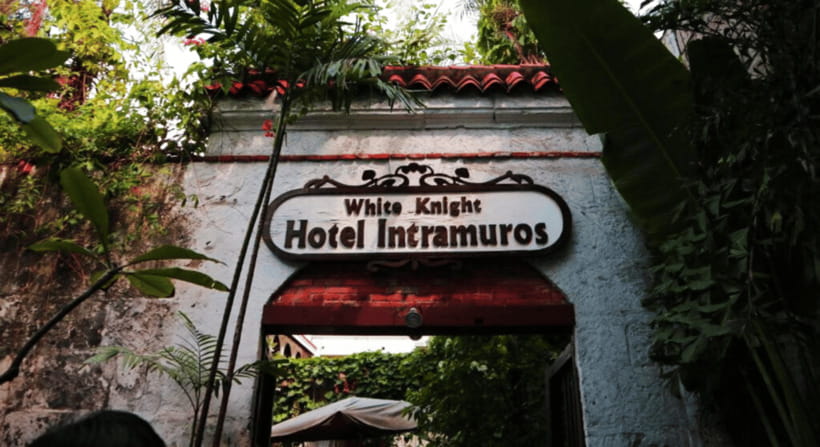
The Plaza San Luis Complex is scheduled for 30 minutes. The complex includes Barbara’s Restaurant, White Knight Hotel, and the Patio Wedding Reception Area. These spaces are presented as a window into 19th-century Manila life, so the stop is less about one grand monument and more about domestic and social settings.
This is a good place to notice the difference between official colonial buildings and the spaces where people ate, lived, entertained, and held ceremonies. The complex may appeal to you if you enjoy period interiors and reconstructed or preserved settings.
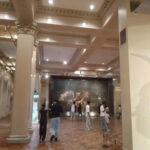
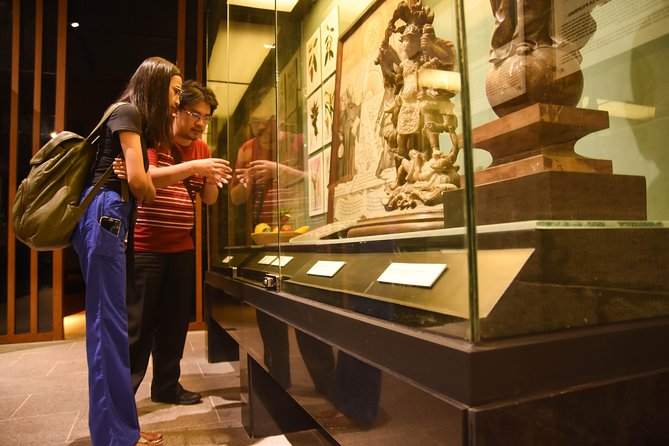
Casa Manila follows with another 30-minute guided visit. The museum presents the opulent lifestyle of Manila’s colonial elite. Here, the focus shifts toward furniture, rooms, household details, and the way wealth shaped daily life.
Casa Manila is likely to be one of the most visually accessible stops for families. Rooms and objects can make social history easier to understand than dates alone. At the same time, the emphasis is on the upper class, so the museum does not present every part of life in old Manila.
Entrance fees are not included for these additional locations. The tour information specifically includes Fort Santiago admission, while other entrance fees are listed as extra. Ask the provider which buildings you will enter on your date and how much admission will cost, since the schedule can change.
Baluarte de San Diego Gardens to finish
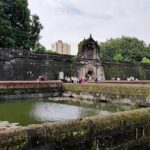
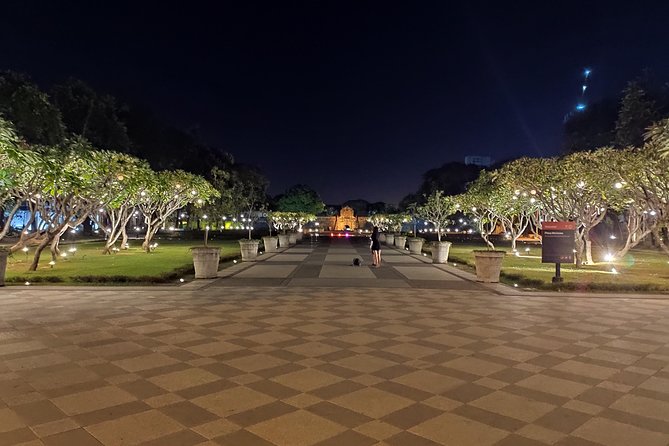
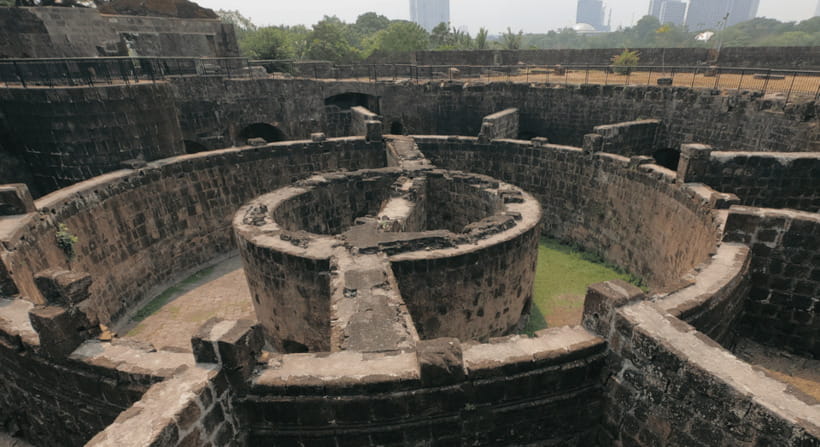
The final stop is Baluarte de San Diego Gardens, scheduled for about 30 minutes. The site combines old fortification ruins with green outdoor space, giving the tour a quieter ending after the churches, museums, and city streets.
This is a sensible place to finish. You can look back on the route and see how Intramuros has layered military, religious, residential, and public spaces into one compact district. The gardens also give you a chance to slow down before the tour ends.
The word gardens should not make you expect a large botanical attraction. The appeal here is the mix of ruins and planted areas. If you want a calm final stop and a few photographs, it fits the route well. If you prefer nonstop history talks, this portion may feel less packed with information.
How the four-hour schedule feels
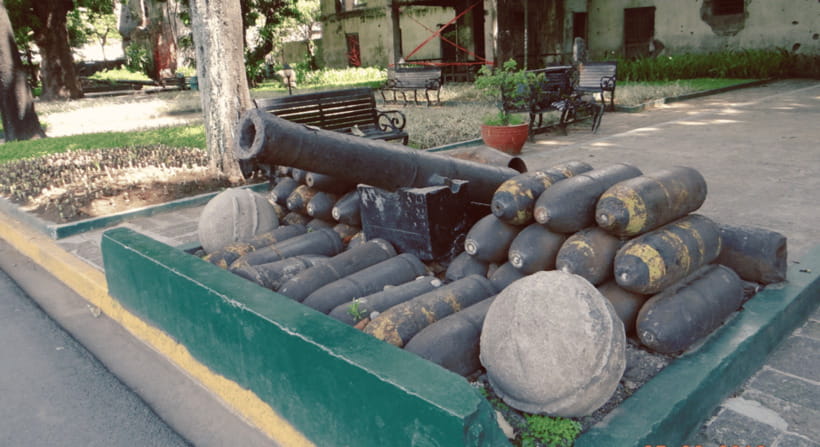
The listed visits add up to about three and a half hours: one hour at Fort Santiago, 15 minutes at Plaza Roma, 15 minutes at Manila Cathedral, and 30 minutes each at San Agustin, Plaza San Luis, Casa Manila, and Baluarte de San Diego. The remaining time allows for carriage travel, boarding, transitions, and small changes in pace.
That timing is fairly efficient. You see many important places, but you do not receive unlimited time at any of them. I would approach this as an introduction to Intramuros, not a complete study of every building.
The schedule also explains why the private format matters. With only your group, you can use short stops well and ask the guide to clarify details. But you still need to watch the clock. A long photo session at one site could reduce time elsewhere.
The open carriage has one clear weakness: sound. Joseph found the guide patient with him and his elderly mother, but said it was hard to hear when the guide faced forward and traffic noise surrounded the kalesa. I would sit where you can see the guide’s face when possible, and I would not hesitate to ask for a repeat.
Price, inclusions, and practical value
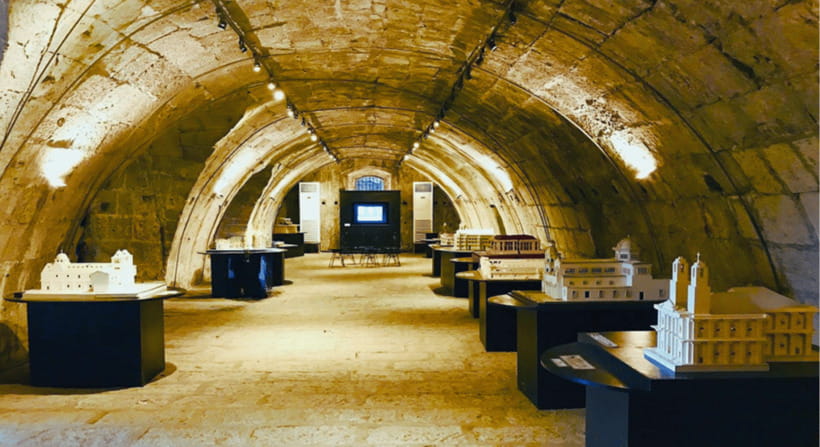
At $135 per group of up to four, the price works out to $33.75 per person if four people join. For two people, it becomes $67.50 each, and a solo booking would carry the full group price. The tour offers its best value to a small party that wants private transport and a guide rather than an open group experience.
The included package covers the kalesa, kalesa driver, tour, and Fort Santiago entrance fee. Meals, personal spending, and other entrance fees are not included. That last point matters because the route contains several churches, museums, and historic sites, and you should budget for any admissions beyond Fort Santiago.
The four-hour length also has value. You can cover much of Intramuros without arranging separate transport between each stop. You are paying for the carriage, driver, guide, and convenience, not just for entry to attractions.
Free cancellation is available up to 24 hours before the start time, and you can reserve now and pay later. Those terms help if your Manila schedule is still shifting, but they do not remove the need to verify the starting location.
Who should book this kalesa tour?
I would recommend this experience to first-time visitors who want a broad introduction to Intramuros. It suits you especially well if you like history but do not want to walk between every site in the heat or city traffic.
Families may also find it useful. The kalesa is memorable for children, the iMake History Lego Museum adds a different format, and the private group keeps the outing manageable. Keep children’s passport or ID cards available, since identification is listed as required for children.
This tour can also work for older adults, provided the physical requirements and age rules fit. Joseph’s experience with his elderly mother suggests that the guide can be patient and considerate, but the carriage ride and walking portions still require care. Comfortable shoes and clothes are sensible, and bringing a towel is specifically recommended.
The tour is not suitable for wheelchair users, people using electric wheelchairs, babies under one year, or people above the listed weight limits. The information also gives several different upper age limits, including 70, 75, and 95 years. Because those figures conflict, ask the provider to confirm the rule that applies to your group before booking.
Smoking, vaping, alcohol, drugs, feeding animals, and alcohol drinks in the vehicle are not allowed. Electronic devices and explosive substances are also listed among the prohibited items, so follow the provider’s instructions closely.
Should you book the Manila kalesa ride?
Book it if you want the atmosphere of old Manila as much as the sights themselves. The route is well chosen, the private group size is a plus, and the carriage makes the four-hour visit feel different from a standard walking circuit. The strongest reasons to go are the broad selection of stops, the included Fort Santiago admission, and the guide’s reported patience and clear command of local history.
Think twice if you need long, quiet explanations at every site, want all admissions included, or have mobility and age concerns. The open kalesa can be noisy, and the schedule moves quickly.
For a group of four, I consider $135 a fair price for a private introduction to Intramuros. Confirm the pickup city, ask about additional entrance fees, arrive 10 minutes early, and request that the guide speak up when traffic gets loud. Do that, and this can be a pleasant way to meet Manila’s old walled city at a human pace.
FAQ
Where does the tour start?
Pickup is in front of Fort Santiago, where the tour begins. The listed pickup options include Fort Santiago and the Fort Santiago parking area in Metro Manila.
How long does the tour last?
The tour lasts four hours.
How many people can join the private group?
The price covers a private group of up to four people.
What language does the guide speak?
The live tour guide speaks English.
Is the kalesa included in the price?
Yes. The package includes the kalesa and the kalesa driver.
Is Fort Santiago admission included?
Yes. The Fort Santiago entrance fee is included.
Are other entrance fees included?
No. Entrance fees for other locations are not included.
Are meals included?
No. Meals and personal expenses are not included.
How early should I arrive?
You should be at the pickup point 10 minutes before the scheduled pickup time.
Can I cancel for a full refund?
Yes. You can cancel up to 24 hours in advance for a full refund.