Private Half-Day Manila with Rizal Park and Fort Santiago
Manila’s past is packed into four busy hours. I like the way this private tour joins major landmarks with a guide and air-conditioned vehicle, so you can see far more than you could on foot in the same time. I also like the personal format, especially for a first visit or a long airport layover. You get hotel pickup in Manila or Makati, plus a guide who can explain the country’s difficult wartime past and the life of national hero José Rizal.
The main drawback is the pace. A four-hour tour covering Makati, the American Cemetery, Rizal Park, Intramuros, San Agustin Church, Casa Manila, and Fort Santiago leaves little room for lingering. At $121.80 per person, the price makes the most sense for a private group that values convenience and focused sightseeing more than a slow, full-day exploration.
In This Review
- Key points to know before booking
- Why this four-hour route works for a first look
- American Cemetery: a quiet start with World War II context
- Rizal Park and the story of the national hero
- Intramuros: Manila behind the old walls
- San Agustin Church and Casa Manila: two close but different windows
- Fort Santiago: the tour’s strongest historical stop
- The private vehicle and guide: where the price earns its keep
- Who should book this Manila tour?
- Practical details that affect your decision
- Should you book Private Half-Day Manila with Rizal Park and Fort Santiago?
- FAQ
- How long does the tour last?
- What time does the tour start?
- Is hotel pickup included?
- Is this a private tour?
- What attractions are included?
- Are food and drinks included?
Key points to know before booking
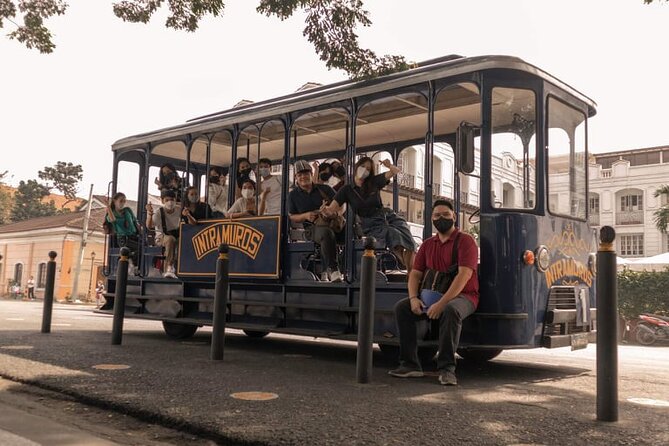
- Private transport keeps a tight schedule practical: Your group travels in an air-conditioned vehicle between Makati, Fort Bonifacio, and central Manila.
- José Rizal is central to the story: Rizal Park and Rizal’s former prison site at Fort Santiago help connect Manila’s monuments to the country’s national identity.
- Intramuros supplies the Spanish colonial setting: Cobblestone streets, San Agustin Church, and Casa Manila give the tour its strongest architectural character.
- The American Cemetery adds a powerful World War II stop: Its grounds provide a very different mood from the old walled city.
- Casa Manila receives the longest listed visit: You have about 30 minutes to see its period rooms, antique furniture, and mixed European and East Asian decor.
- The tour works best for short visits: It is especially useful if you have only a morning, a long layover, or one free block in Manila.
Why this four-hour route works for a first look
Manila can feel sprawling and difficult to read at first. This tour gives you a useful framework: modern Makati and Fort Bonifacio, the memorial grounds of the American Cemetery, the civic space of Rizal Park, and the Spanish-era center of Intramuros.
The private format matters here. You are not waiting for a large group at every gate or trying to work out traffic connections between distant districts. Your guide can keep the visit moving, adjust explanations to your interests, and answer questions as the city changes outside the vehicle.
The tour begins at 8:30 am, with pickup from hotels in Manila or Makati. The schedule lists a visit of roughly 15 minutes at the American Cemetery, 15 minutes at Rizal Park, a short Intramuros photo stop, 15 minutes at San Agustin Church, 30 minutes at Casa Manila, and 30 minutes at Fort Santiago. The remaining time is used for driving, traffic, pickup, and transitions.
That timetable tells you exactly what kind of experience this is. It is a highlights tour, not a deep exploration of any one district. You will see the major names and get an introduction to their meaning. You will not have much time to sit, wander, shop, or inspect every room and display.
You can also read our reviews of more private tours in Manila


American Cemetery: a quiet start with World War II context
The Manila American Cemetery and Memorial, in the Fort Bonifacio area, is a striking change from the busy streets of the capital. Admission is included at no extra cost, and the stop is one of the tour’s most serious moments.
The cemetery connects Manila to the Pacific War and the destruction that affected the Philippines during World War II. The setting gives your guide a chance to explain the war in a place designed for remembrance rather than spectacle. One visitor especially valued the memorial as a strong part of the tour, and I can see why it gives useful context before you enter old Manila.
The listed visit lasts about 15 minutes. That is enough for an introduction and photographs, but not a long, reflective visit. If memorial sites matter greatly to you, you may want to tell your guide early that you would appreciate a little extra time here, if traffic and the rest of the schedule allow it.
The route begins in the financial district of Makati, including Fort Bonifacio, before moving toward Manila proper. This opening also shows you that Manila is not one uniform city. Modern business districts and older historic quarters sit within the same broad urban area.
Rizal Park and the story of the national hero
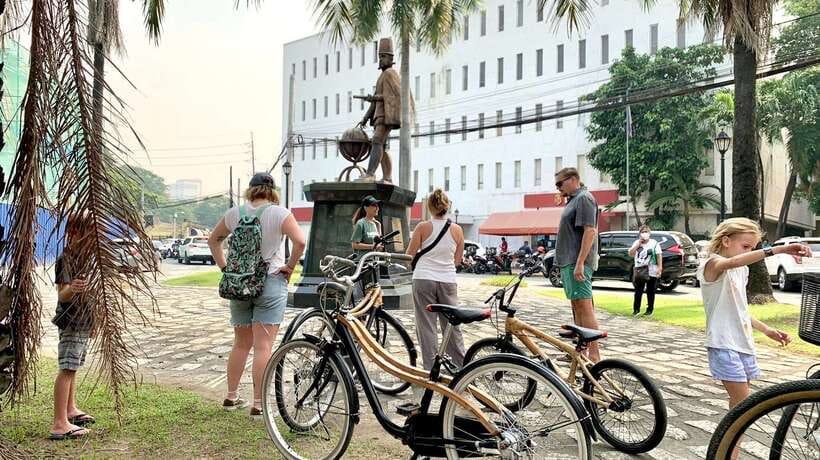
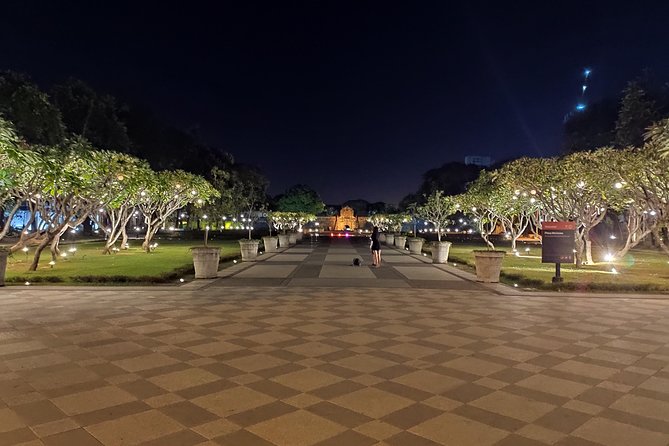
Rizal Park is named for Dr. José Rizal, the writer, physician, and national hero whose life and execution helped shape Philippine national identity. The stop is brief, around 15 minutes, but it gives the rest of the tour a clear human focus.
Your guide can place Rizal’s story within the wider setting of Spanish colonial rule and the Philippine struggle for self-determination. This is more useful than simply taking a photograph beside a monument. One guest found the discussion of Rizal a major learning point, especially because it connected the places on the route to the country’s political story.
You should expect an overview rather than a museum visit. The park is an outdoor stop, and the itinerary does not promise an extended walk through every section. Wear comfortable shoes and keep your camera ready, since the schedule moves quickly.
Intramuros: Manila behind the old walls
Intramuros is the historical core of the tour. Its name means within the walls, and the district offers the strongest sense of Spanish colonial Manila through its old streets, churches, and surviving buildings.
The itinerary allows about 15 minutes for an initial picture stop before moving deeper into the area. That is short, but it helps you get oriented. The private vehicle is useful here because you can reach several separate sights without spending your limited morning figuring out directions.
The cobblestone streets give Intramuros a different feel from Makati and the modern parts of Manila. The contrast is one of the tour’s strengths. You are not simply visiting isolated monuments. You are seeing how the city’s old colonial center relates to the newer capital around it.
Still, do not expect a long walking tour of every lane. If you want extended time inside Intramuros, this half-day experience should be treated as an introduction. You might choose to return on your own later, using what you learned during the visit to decide which sites deserve more time.
San Agustin Church and Casa Manila: two close but different windows
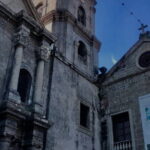
San Agustin Church is described as the oldest stone church in the Philippines, and its age gives the stop real weight. The church contains ecclesiastical icons, vestments, and other religious objects. The listed visit lasts about 15 minutes.
The church is also an active religious place, not simply a museum. A baptism was taking place during one visit, which made the stop feel connected to daily life rather than sealed off as a historic display. If a service or ceremony is underway, your guide will need to balance sightseeing with respect for worshippers. That can make the visit less predictable, but it is also part of seeing a living place.
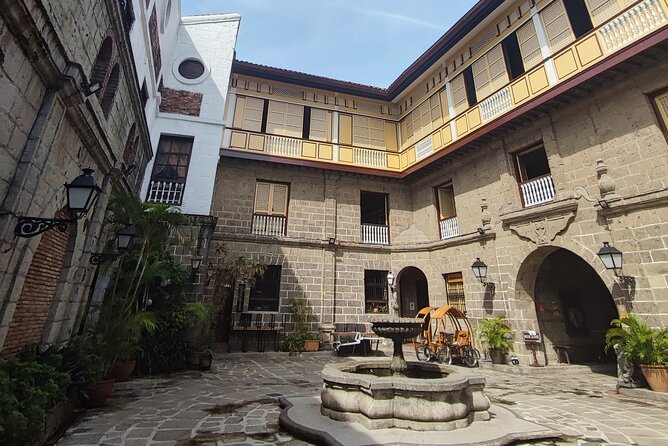
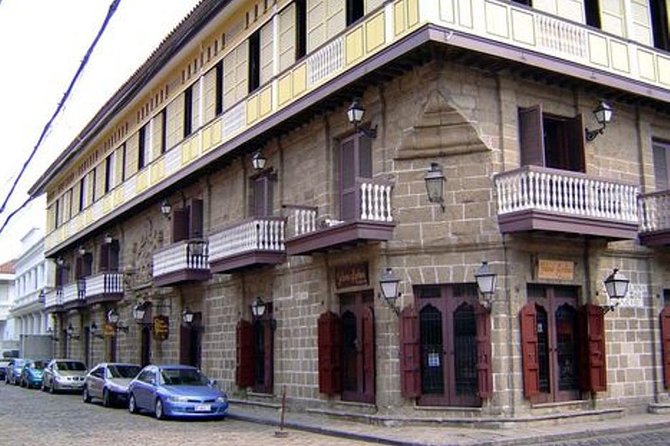
Across from the church, Casa Manila recreates a 19th-century home. It contains East Asian and European decorative elements alongside Philippine antique furniture. This is the longest scheduled stop, at about 30 minutes, and that extra time is welcome.
Casa Manila helps you picture domestic life during the colonial period. Instead of focusing only on forts and public monuments, it shows how interiors, furnishings, and outside influences shaped elite urban life. I especially like this part of the route because it adds texture to the larger political story.
The house is a reproduction, so you should not treat every room as an untouched survivor from the 19th century. Its value comes from the way it presents period design and material culture. For many visitors, Casa Manila may be the most enjoyable stop because it is visually varied and easy to understand in a short visit.
A few more Manila tours and experiences worth a look



Fort Santiago: the tour’s strongest historical stop
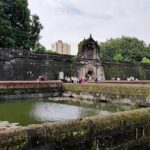
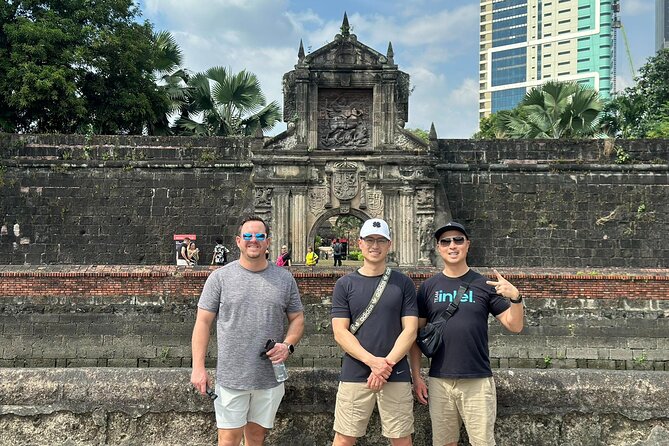
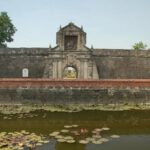
Fort Santiago guards the entrance to Manila from Manila Bay and was built as the city’s main defense against sea-borne invaders. Its thick stone walls and strategic location make it one of the clearest places to understand Manila’s military past.
The fort also carries painful memories. It was connected to tragic periods in Philippine history and to José Rizal, who was imprisoned there before his execution. That link brings together the tour’s two main themes: colonial power and the making of a national hero.
The schedule gives Fort Santiago about 30 minutes, matching Casa Manila for the longest stop. Even so, you will be seeing selected areas rather than every corner of the complex. The fort rewards a guide who can explain what you are looking at, since bare walls and gateways do not tell the whole story by themselves.
Guides named Joan and Jonas have been singled out for lively explanations, strong English, and a good sense of humor. Guide assignments are not guaranteed, but those comments point to an important strength of the experience: the quality of the interpretation can make the difference between a quick monument checklist and a meaningful introduction to Manila.
One past route also included the Chinese Cemetery, described as an unusual and memorable place. It is not listed among the scheduled stops here, so you should not assume it is included. If that site interests you, ask the operator before booking rather than counting on an extra detour.
The private vehicle and guide: where the price earns its keep
At $121.80 per person, this is not a budget sightseeing option. The value depends heavily on how many people are in your group and how much you value door-to-door transport.
For one person, or a couple traveling alone, the cost is high for four hours with several short stops. For a family or small group, the private arrangement becomes easier to justify, especially if the group discount applies. You are paying for the guide, vehicle, hotel pickup and drop-off, included admissions, and the ability to avoid arranging separate transport across Manila.
The air-conditioned vehicle is more than a small comfort. Manila traffic and heat can make a tightly timed route tiring. Having a cool place between stops helps you arrive at the next site ready to listen instead of simply looking for shade.
The guide is the other major part of the value. The strongest feedback focused on clear English, friendly service, humor, and strong explanations of Philippine history. The driver and guide were also praised for being personable. That combination is important because the vehicle handles the distances, while the guide gives meaning to the places you see.
Food and drinks are not included, and personal expenses are yours to cover. Since the tour lasts about four hours and begins in the morning, plan any meal around the pickup and return time.
Who should book this Manila tour?
I would recommend it most strongly to:
- First-time visitors with only one morning in Manila
- People on a long airport layover who want a structured introduction
- Families or small groups who prefer a private vehicle
- Visitors interested in José Rizal, Spanish colonial Manila, and World War II
- People staying in Manila or Makati hotels who want pickup and drop-off
- Anyone who finds Manila traffic intimidating and prefers a guide to handle the route
It is less suitable if you want a relaxed walking day in Intramuros. It is also not the best choice for someone who wants extensive museum time, a food-focused visit, or a broad look at modern Manila. One assessment of the route found that it delivered what it promised but left the wider city underexplored. That is a fair criticism.
The tour concentrates on official landmarks and historic sites. You might find other parts of Manila more revealing if you have extra days, but this experience gives you a practical starting point and helps you understand the city’s major stories.
Practical details that affect your decision
Pickup and drop-off are free only at Manila and Makati hotels. If you are staying elsewhere, confirm arrangements before booking rather than assuming the service covers your address.
Confirmation is provided at booking. Children must be accompanied by an adult, and the child rate applies only when sharing with two paying adults. Most people can participate, and because the activity is private, only your own group joins the tour.
The experience cannot be refunded or changed after booking. That makes it important to confirm your date, hotel, start time, and group size before paying.
The overall rating is 4.4 from five assessments, which suggests strong satisfaction but not a flawless experience. The most consistent positives are the guides, the historical explanations, the private transport, and the easy introduction to Manila’s main sights.
Should you book Private Half-Day Manila with Rizal Park and Fort Santiago?
Book it if you have limited time and want Manila’s key historic landmarks handled in one private morning. The American Cemetery, Rizal Park, San Agustin Church, Casa Manila, and Fort Santiago create a solid introduction, while the guide can connect them through the stories of Rizal, colonial rule, and World War II.
Skip it if you have several days and prefer to explore slowly. The four-hour schedule is tight, and the short stops limit spontaneous wandering. At $121.80 per person, the tour earns its price through convenience and private guidance, not through the number of hours.
For a layover, a first morning, or a small group that wants a clear introduction without transport worries, I would consider it a sensible choice. Just book it knowing you are getting Manila’s historical headlines, not the whole newspaper.
FAQ
How long does the tour last?
The tour lasts approximately four hours.
What time does the tour start?
The scheduled start time is 8:30 am.
Is hotel pickup included?
Yes. Free hotel pickup and drop-off are included for hotels in Manila and Makati.
Is this a private tour?
Yes. Only your group participates in the activity.
What attractions are included?
The route includes the Manila American Cemetery and Memorial, Rizal Park, Intramuros, San Agustin Church, Casa Manila, and Fort Santiago.
Are food and drinks included?
No. Food, drinks, and personal expenses are not included.