Private Half-Day Shore Excursion Old Manila
Manila’s past is packed into a small area. This private four-hour outing makes good use of limited port time by keeping you around Old Manila, where Spanish forts, churches, grand houses, and Chinatown sit close together. You get a local English-speaking guide, port pickup, and included entrance fees without spending the whole morning crossing the city in traffic.
I especially like the private format, which keeps the outing focused on your own group, and the chance to ride a traditional calesa into Binondo. The main consideration is time: several stops receive only 15 or 30 minutes, so this is a quick introduction rather than a slow, museum-heavy visit.
For cruise passengers, the plan is practical. Pickup is set for 8:30 a.m. at the entrance or exit gate of Pier 15, and the route covers a strong set of Manila landmarks. You will see a lot, but you will need to stay aware of the clock.
In This Review
- Key Points at a Glance
- Why This Works for a Short Port Visit
- Rizal Park: A Short Introduction to Jose Rizal
- Intramuros: Entering Old Manila
- Fort Santiago and the Pasig River
- San Agustin Church and Its Ecclesiastical Collection
- Casa Manila: A Recreated Colonial Home
- The Calesa Ride to Binondo
- The Guide Makes the Difference
- Is $175.65 Per Person a Fair Price?
- Who Will Get the Most from This Tour?
- Should You Book Old Manila in Four Hours?
- FAQ
- Where does the tour begin?
- What time does the tour start?
- How long does the excursion last?
- Is this a private tour?
- How many people are required to book?
- Are entrance fees included?
- Is a guide provided in English?
- Are food and drinks included?
Key Points at a Glance
- Pier 15 pickup at 8:30 a.m. makes this a useful choice for cruise passengers with a short port call.
- Rizal Park and Intramuros give you a quick introduction to Philippine national identity and Spanish colonial Manila.
- Fort Santiago adds the strongest historical stop, with its location at the mouth of the Pasig River.
- San Agustin Church and Casa Manila show two different sides of the Spanish period, one religious and one domestic.
- A horse-drawn calesa ride to Binondo adds a change of pace and links Old Manila with Chinatown.
- All entrance fees and taxes are included, but food, drinks, and personal spending are not.
Why This Works for a Short Port Visit
Manila traffic can eat up a morning. This tour makes a sensible choice by concentrating on Old Manila rather than trying to cover distant parts of the city. The route moves through a compact historical area, allowing you to spend your limited time looking at landmarks instead of sitting in a vehicle.
You will have a private tour, meaning only your group participates. That matters when your ship’s departure time is fixed. You are not waiting for a large group to finish shopping or rounding up people at every stop. The guide can also keep the explanations at a pace that suits your party, although the supplied details do not promise a custom route or extra time at any one site.
The tour begins at 8:30 a.m. at the entrance or exit gate of Pier 15. If you are arriving by cruise ship, confirm the exact pickup instructions before the morning of the tour. A port pickup is offered, but the meeting point is specific, and a busy pier is not the place to guess.
At roughly four hours, the excursion fits neatly into a morning. It is best for someone who wants a broad introduction to Manila’s oldest districts, not for someone hoping to explore every church, fort room, and market stall at leisure.
You can also read our reviews of more private tours in Manila

Rizal Park: A Short Introduction to Jose Rizal
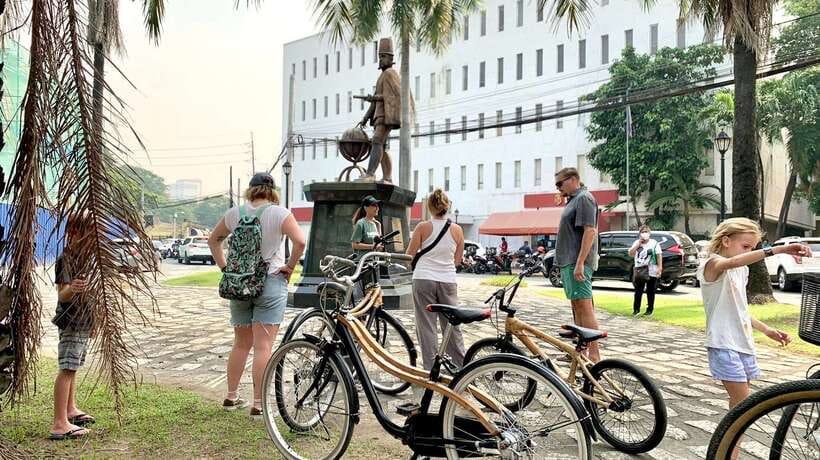
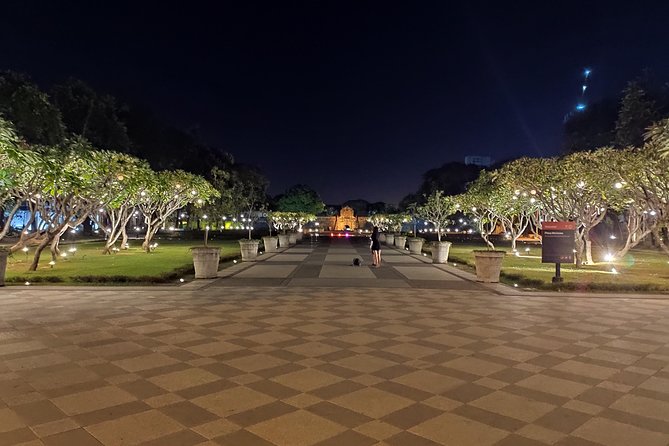
The first stop is Rizal Park, named for Dr. Jose Rizal, the Philippines’ national hero. You have about 15 minutes here, and admission is free.
That short visit is useful because it places Manila’s later sights in a national context. Rizal is closely tied to the country’s story, and the park provides an early reminder that this is not simply a tour of Spanish buildings. Philippine identity was shaped by Spanish rule, resistance, reform, and the long process of defining the nation that followed.
Do not expect a long walk through the park in 15 minutes. Think of this as a photo stop and a brief orientation. Your guide can help explain why Rizal matters before you move into Intramuros and the Spanish colonial quarter.
Intramuros: Entering Old Manila
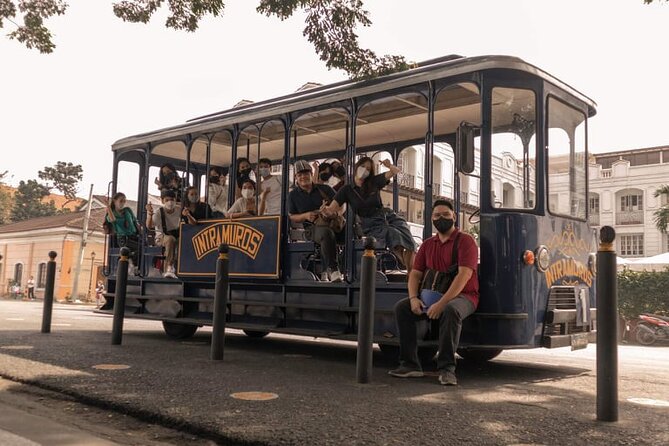
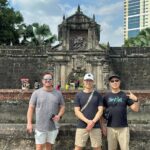
After Rizal Park, you head to Intramuros, the walled district associated with Spanish colonial Manila. The scheduled stop is about 15 minutes, including a picture stop, so you will only get a first look at the area.
Intramuros is important because it gives the rest of the tour a physical setting. Cobblestone streets, old walls, churches, forts, and colonial buildings make this part of Manila feel distinct from the modern city outside it. The short visit prepares you for Fort Santiago, San Agustin Church, and Casa Manila.
The limit here is clear. Fifteen minutes is enough for an introduction and photographs, but not for a detailed walk through the district. I would pay close attention to the guide during this section, since the context will make the following stops easier to understand.
Fort Santiago and the Pasig River
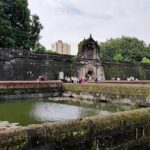
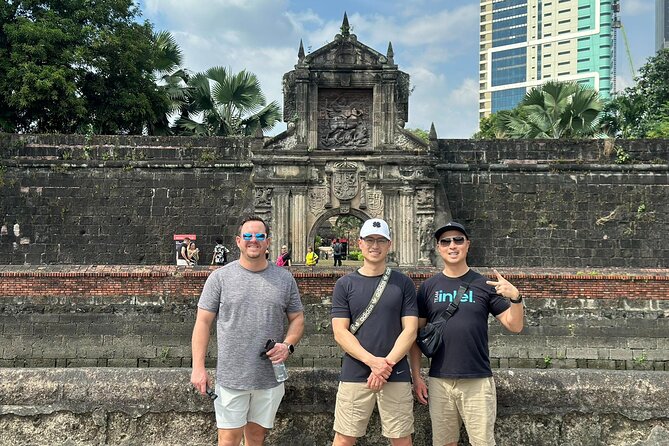
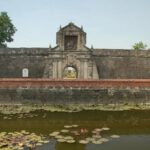
Fort Santiago receives about 30 minutes and includes admission. The old Spanish fortress sits at the mouth of the Pasig River, a location that helped make it important to Manila’s defense and political life.
This is likely the tour’s most powerful historical stop. A fortress at the river entrance tells you something about how the city developed: control of water access meant control of movement, trade, and the approach to Manila. The fort also witnessed major moments in Philippine history, so your guide’s explanations are an important part of the visit.
Thirty minutes gives you enough time to see the fort and hear its main story without turning the stop into a long museum session. You should expect an overview rather than a room-by-room study. If military architecture or Philippine history is your main interest, you may wish the schedule allowed more time here.
The tour’s strongest praise concerns the guide’s English and thorough explanations. That is especially valuable at Fort Santiago, where the walls alone cannot explain why the site matters. A clear guide helps connect the stonework to the events that took place there.
San Agustin Church and Its Ecclesiastical Collection
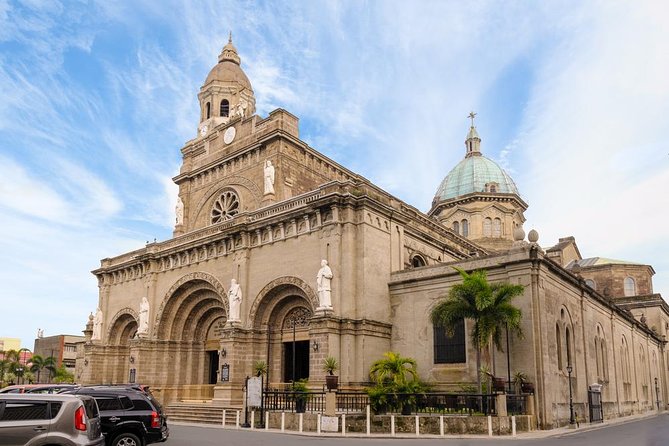
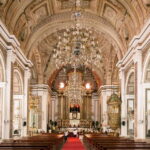
The route continues along Intramuros’ cobbled streets to San Agustin Church, described as the country’s oldest stone church. You have about 30 minutes, and admission is included.
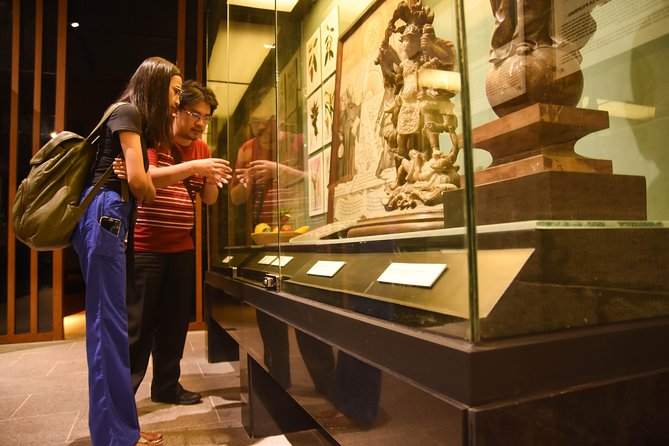
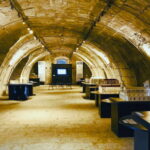
This stop gives the tour a different focus. Fort Santiago is about defense and power, while San Agustin Church shows the role of Catholic institutions during the Spanish period. Inside, you can view ecclesiastical icons, vestments, and other religious articles. The collection gives you something concrete to look at beyond the building itself.
I like the pairing of the fort and the church. Together, they show how colonial Manila was organized around both military authority and religion. The church is also a useful stop for visitors who prefer art and architecture to fortifications.
Again, the timing is brisk. Thirty minutes should allow you to look around and listen to the guide, but it may not satisfy anyone who wants to inspect every religious object in detail. Wear comfortable shoes, since the tour includes movement through old streets and several stops in succession.
A few more Manila tours and experiences worth a look
Casa Manila: A Recreated Colonial Home
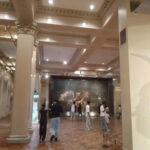
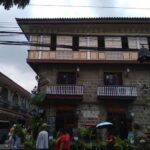
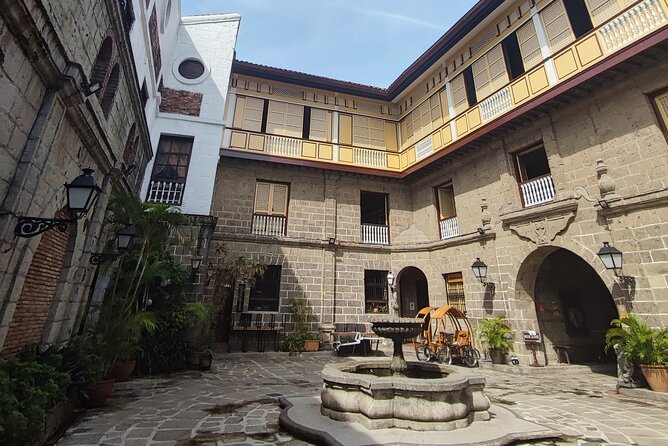
Across the street, Casa Manila offers a change from public buildings and religious spaces. It is a reproduction of a 19th-century house, furnished with Oriental and European décor and Philippine antique furniture. The visit lasts about 30 minutes, with admission included.
Casa Manila helps you picture domestic life during the colonial era. A church can show public faith, and a fort can show military control, but a house gives you a sense of how people arranged rooms, furniture, and decorative objects. The mix of Oriental and European influences also points to Manila’s place in wider trade and cultural exchange.
Because Casa Manila is a reproduction, you should approach it as an interpretation of a period home rather than an untouched residence. That does not make it unhelpful. It simply means the house works best as a visual aid, supported by the guide’s explanation.
The stop is well placed in the route. After the fort and church, you get a more personal look at the period. Thirty minutes is enough to understand the style and purpose of the house without spending the rest of the morning indoors.
The Calesa Ride to Binondo
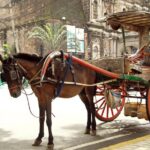
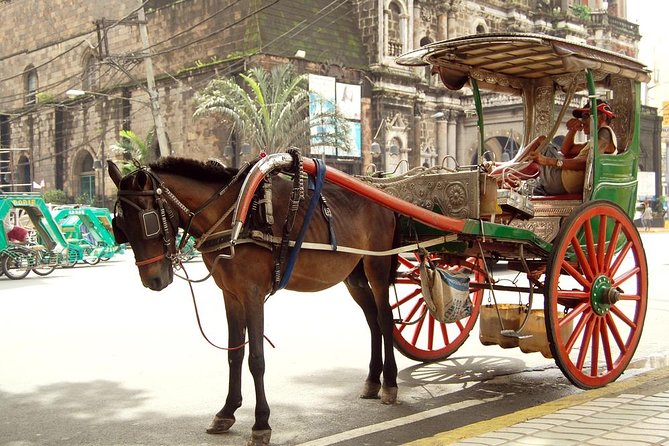
The tour then changes character. You board a horse-drawn carriage called a calesa and travel toward Binondo, crossing the Pasig River and heading through an alley toward Binondo Church.
This is one of the experience’s most distinctive touches. The calesa is not just another vehicle transfer. It gives you a traditional way to move between two old Manila districts, and it breaks up the walking and driving portions of the tour. The ride also helps connect Spanish colonial Manila with the Chinese community and commercial center of Binondo.
At Binondo Church, you get off at the entrance for a brief stop. The church was built by the Spaniards in 1596, adding another layer to the city’s long religious and colonial story. From there, you walk toward Ongpin Street, marked at its entrance by Chinese-style arches.
The supplied schedule allows about 30 minutes for Binondo. That is enough for a quick look at the church and a short walk along Ongpin, but not enough to explore the whole district. The description notes shops selling Chinese curios, delicacies, textiles, jewelry, and construction materials, along with banks and wholesale and retail businesses.
You may also see gold jewelry shops near the other end of Ongpin and an old Spanish fountain. These details show why Binondo is more than a final landmark. It is a working commercial district where historical buildings sit alongside everyday trade.
Food is not included, and this part of the route is not presented as a food tour. You may see delicacies and shops, but you should not assume that tasting or a meal is part of the schedule. If you want to buy something, personal expenses are your responsibility, and the short timing means you should keep an eye on the group and the clock.
The Guide Makes the Difference
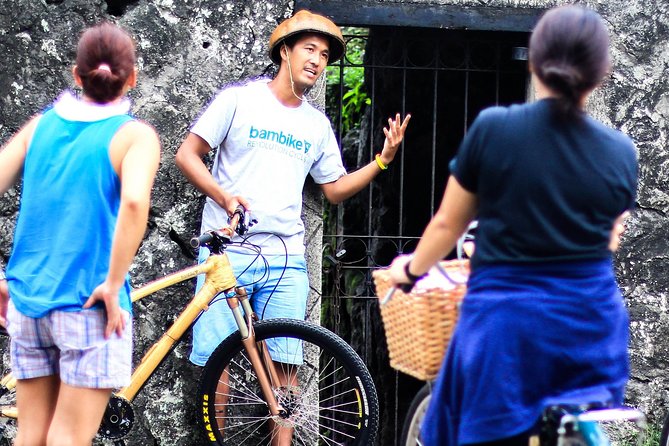
The tour includes a local English-speaking guide, and the guide is central to its value. Several stops are brief, so you need clear explanations rather than long periods of unsupervised looking.
The guide is expected to explain Manila from the Spanish colonial era through the present. That broad time span matters because the buildings do not tell the entire story by themselves. Rizal Park, Fort Santiago, San Agustin Church, Casa Manila, and Binondo each represent a different part of Manila’s past.
The strongest praise available focuses on a guide who spoke English well, explained things thoroughly, and provided informative commentary. Since no guide’s name is provided, you should not expect a named specialist in advance. Still, the stated strengths are exactly what this compact route requires.
Because this is private, you can ask questions without worrying about slowing down a large group. The total time remains fixed, however. A private tour gives you more control over attention and conversation, not necessarily more time at every site.
Is $175.65 Per Person a Fair Price?
The price is $175.65 per person. That is not a budget excursion, especially for a four-hour tour, but the cost includes several practical advantages: private participation, port pickup, a local English-speaking guide, entrance fees, taxes, fees, and handling charges.
For two people, the price applies per person, and the booking requires at least two participants. The value improves if you place a high price on saving time and avoiding the uncertainty of arranging separate transport from the pier. You are paying for a prepared route through several major sites, not simply admission to one attraction.
The included entrance fees also make the price easier to assess. You do not need to keep calculating extra tickets at Fort Santiago, San Agustin Church, or Casa Manila. Food, drinks, and personal expenses are separate, so budget for those only if you plan to buy something in Binondo.
Group discounts are offered, but no discount amount is specified. If you are traveling with a larger family or party, check the final price before booking. Since the tour is private, a bigger group may make the per-person cost more appealing, provided everyone is comfortable with the brisk schedule.
The non-refundable policy deserves careful attention. You cannot change or cancel the booking for a refund, so this is best reserved once your port plans are firm.
Who Will Get the Most from This Tour?
I would choose this excursion if you have one morning in Manila and want the city’s main Old Manila sights explained in plain English. It suits cruise passengers particularly well because pickup is arranged at Pier 15 and the route stays focused on one historical area.
It also works well for first-time visitors who want an introduction before deciding what deserves a longer return visit. The calesa ride adds local character, while the included admissions remove some of the usual planning work.
You may want another option if you prefer slow photography, extended museum visits, or time to eat and shop in Binondo. The four-hour schedule moves quickly, and several stops last only 15 or 30 minutes.
Most people can participate, according to the tour information, and children must be accompanied by an adult. The child rate applies only when sharing with two paying adults. A minimum of two people is required, and the operator may cancel after confirmation if too few passengers meet the requirement, offering an alternative or full refund in that situation.
Should You Book Old Manila in Four Hours?
Book it if your priority is efficient sightseeing from the port. You will see Rizal Park, Intramuros, Fort Santiago, San Agustin Church, Casa Manila, Binondo Church, and part of Ongpin in one carefully packed morning. The private setup, included admissions, and English-speaking guide make the arrangement simple.
Skip it if you want an unhurried day or a food-centered exploration of Chinatown. The route is an overview, not a deep examination of every site, and the strict cancellation policy means you should be certain about your plans before paying.
For the right visitor, this is a useful first meeting with Manila: compact, historically focused, and practical for a cruise schedule. Just keep your expectations realistic. You are getting a well-filled introduction to Old Manila, not four hours at one landmark.
FAQ
Where does the tour begin?
Pickup is offered at the entrance or exit gate of Pier 15 in Manila.
What time does the tour start?
The scheduled start time is 8:30 a.m.
How long does the excursion last?
The tour lasts approximately four hours.
Is this a private tour?
Yes. Only your group participates in the activity.
How many people are required to book?
A minimum of two people per booking is required.
Are entrance fees included?
Yes. Entrance fees, taxes, fees, and handling charges are included.
Is a guide provided in English?
Yes. The tour includes a local English-speaking guide.
Are food and drinks included?
No. Food and drinks are not included, and personal expenses are also separate.