Manila Intramuros Walking tour with Local Tour Guide
History has sharp edges here. This compact Intramuros tour brings Manila’s Spanish colonial past, World War II story, churches, and old homes together in one walk. I like the strong historical context, especially the short introduction that helps you understand the Philippines before entering the walled city. I also like the small group limit of 10 people, which makes it easier to ask questions and keep up with the guide.
The main thing to consider is the heat and weather. You will walk outdoors for much of the tour, and rain can affect the schedule. San Agustin Church and Casa Manila are closed every Monday, so Monday bookings do not include those interiors.
In This Review
- Key points at a glance
- Why Intramuros is worth your time
- Meeting at Figaro Coffee
- Manila Cathedral and Plaza de Roma
- San Agustin Church and its quiet details
- Fort Santiago and the Battle of Manila
- Casa Manila and the Filipino elite
- The guide makes the difference
- The unusual Lamborghini bike
- Is $55 a fair price?
- Who should book this walk?
- FAQ
- How long does the Intramuros walking tour last?
- How much does the tour cost?
- Where does the tour begin?
- Where does the tour end?
- What is the maximum group size?
- Is a local guide included?
- Is bottled water included?
- Are admission fees included?
- Are San Agustin Church and Casa Manila open on Mondays?
- What happens if bad weather cancels the tour?
- Should you book the Intramuros walking tour?
Key points at a glance
- A short history lesson sets the scene: Guide Mari is praised for giving a useful introduction to Philippine history before the walk begins.
- Fort Santiago adds the darkest chapter: The tour focuses on World War II and the Battle of Manila, not just Spanish architecture.
- Casa Manila is a highlight: Its detailed colonial interiors offer a look at the lifestyle of Manila’s Filipino elite.
- The group stays small: A maximum of 10 people means a more personal feel than a large coach tour.
- Practical touches help: Bottled water is included, and guides have provided umbrellas when rain arrived.
- The Monday schedule matters: San Agustin Church and Casa Manila are closed every Monday.
Why Intramuros is worth your time

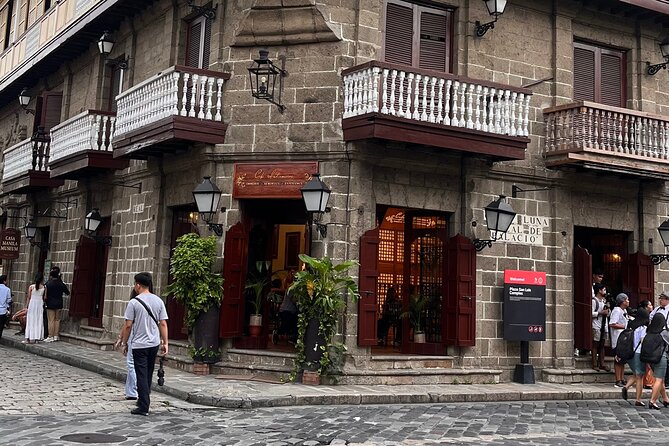
Intramuros means within the walls, and that name tells you how to approach the place. This is not simply an old quarter with attractive buildings. It is a compact record of Spanish rule, Catholic power, Filipino life, colonial privilege, wartime destruction, and the making of modern Manila.
The tour covers a period described as roughly 700 years, giving you a broad frame before the individual sites. That matters because the walls alone can be hard to read. Without context, you may see a cathedral, a fort, and an old house as separate sights. With a guide, those places begin to form one story.
I especially value the focus on both the greatest and darkest moments of Intramuros. The walk does not stop at grand churches and colonial design. It also deals with what happened during the Battle of Manila and the suffering connected with World War II.
The experience lasts about two to three hours. That is enough time for a useful introduction without turning the day into a long historical lecture. The listed stops add up to a fairly full route, so you should expect a steady pace and plenty of time on your feet.
You can also read our reviews of more walking tours in Luzon


Meeting at Figaro Coffee
The tour begins at Figaro Coffee in the FEMII Building on Soriano Avenue, inside Intramuros. This is a practical starting point because you meet inside the historic district rather than spending part of your paid tour reaching it.
You return to the same meeting point at the end. That makes the outing easy to fit around other Manila plans, particularly if you want to continue exploring Intramuros on your own afterward.
The tour is near public transportation, according to the supplied details. No hotel pickup is included, so you need to make your own way to Figaro Coffee. Confirmation is provided when you book, which should give you the meeting information you need.
The group can include up to 10 people. That is small enough for conversation but not necessarily a private tour. Group discounts are available, making the $55 price easier to assess for families or friends booking together.
Manila Cathedral and Plaza de Roma
The first major stop is Manila Cathedral, a free-admission visit that gives you an immediate sense of Intramuros as a center of Catholic life during the Spanish period.
The cathedral is more than a photo stop. It helps explain why the walled district became such an important center of authority. Your guide can connect the building to the larger story of Spanish Manila and the place religion held in colonial society.
Plaza de Roma is also part of the stated route, even though the timing is presented under the cathedral portion. This square helps you read the surrounding district as a planned colonial center rather than a loose collection of landmarks.
Expect about 35 minutes for this part of the walk. That should give you time to look around and hear the background without lingering so long that the rest of the route feels rushed.
You should dress modestly and comfortably inside the church. The advice is simple but important: wear clothing suitable for a religious site, while also choosing shoes and clothes that work for outdoor walking.
San Agustin Church and its quiet details
San Agustin Church, also known as the Immaculate Conception Parish, is one of the most important stops. It is described as one of the oldest stone churches in the Philippines, and its architectural details give the tour a different mood from the military history at Fort Santiago.
The church has particular value for anyone who enjoys older interiors, religious art, and construction details. One guide also takes visitors through the church as part of a wider historical explanation, so you are not left to admire the building without knowing why it matters.
Allow about 35 minutes here. That is a good amount of time for a guided visit, though the exact experience may depend on church activity and the pace of the group.
San Agustin Church is closed every Monday. This is the most important scheduling warning in the entire tour. If you book for Monday, you should expect the church portion to be unavailable rather than assuming the guide can simply adjust the timing.
The church is also a reminder that Intramuros is still a living religious district, not an open-air museum built only for sightseeing. Modest clothes and respectful behavior are essential.
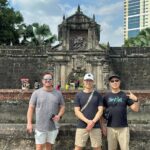
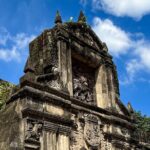
Fort Santiago and the Battle of Manila
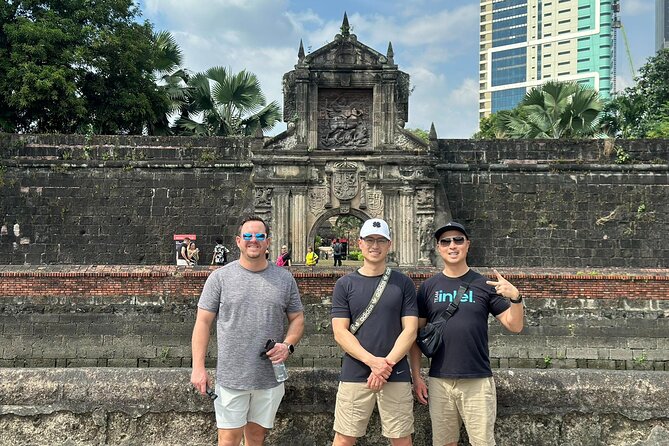
Fort Santiago receives the longest listed visit at about 45 minutes. That extra time makes sense because this is where the tour turns toward military history, imprisonment, World War II, and the Battle of Manila.
The stated focus is on the past and present, with particular attention to World War II. This is one of the strongest reasons to choose a guided visit rather than simply walking through the fort alone. The surviving walls and spaces do not explain themselves, and the guide helps connect them to the events that shaped modern Manila.
The tour also includes the Dr. Jose Rizal Shrine, the White Cross, and the dungeon among its planned subjects. These locations add a more personal and somber side to the fort. The story is not only about soldiers and walls. It also concerns imprisonment, national identity, and the human cost of conflict.
You should not expect a light sightseeing stop here. The Fort Santiago section deals with some of Intramuros’s darkest events. That may be uncomfortable, but it gives the walk its moral weight and prevents the old city from being reduced to attractive Spanish-era scenery.
The fort is also where the guide’s storytelling matters most. Guide Mari is praised for making difficult history clear while keeping the afternoon engaging. Guide Victor is described as attentive and informative, especially for people coming from outside the Philippines. If having a particular guide matters to you, you can ask about availability, but the supplied information does not guarantee a specific guide.
You can also read our reviews of more guided tours in Luzon






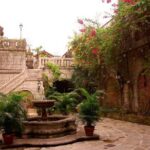
Casa Manila and the Filipino elite
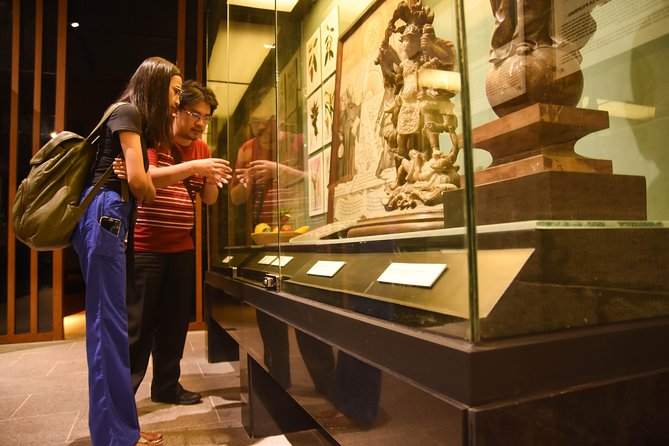
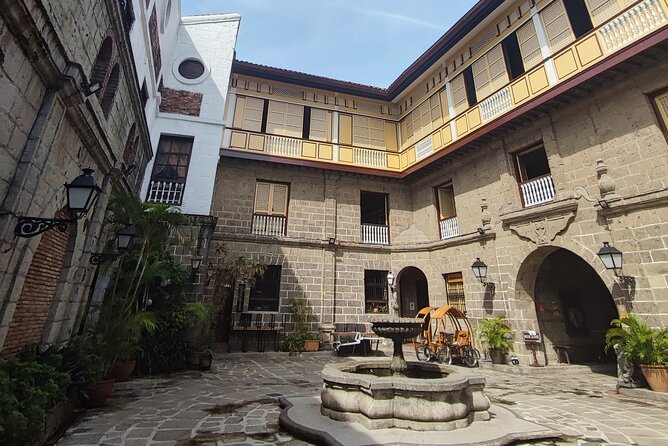
Casa Manila is a replica of a Spanish colonial mansion. Its rooms and decoration show how the Filipino elite lived during the Spanish colonial period.
This is often the most immediately enjoyable stop because it lets you see domestic life rather than only public buildings and defensive structures. Intricate decoration and colonial-era furnishings help you picture how power and social class worked inside the walls.
The stop lasts about 35 minutes. That is enough time to appreciate the interior and hear how the house fits into Manila’s colonial society.
I would not treat Casa Manila as a minor extra. It provides a useful counterpoint to Fort Santiago. The fort shows control, conflict, and suffering. Casa Manila shows comfort, status, and the habits of people who benefited from the colonial system.
The museum is closed every Monday, alongside San Agustin Church. If those two interiors are important to you, choose another day. Since Casa Manila is a particular highlight for many people who enjoy detailed interiors, a Monday booking would leave a noticeable gap in the experience.
The guide makes the difference
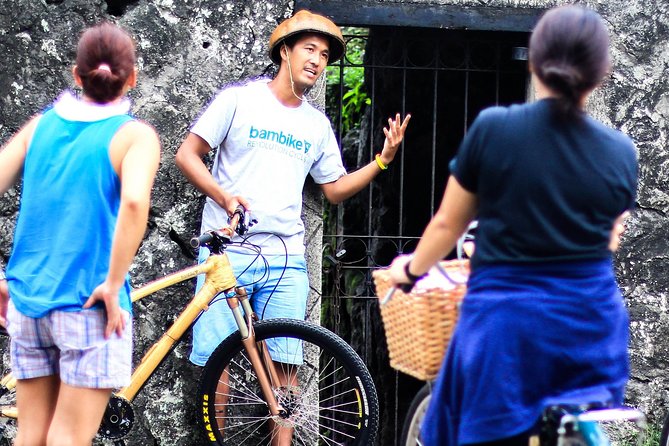
A walking tour of Intramuros can be useful even with an ordinary guide, but the quality of the storytelling determines how much you take away. The strongest praise for this experience goes to the guides, especially Mari and Victor.
Mari begins with a short history lesson, reported as about 15 minutes, before the route gets moving. That is a smart choice. You get a basic timeline first, then the buildings and streets have a place in the story.
Her approach is described as engaging, funny, enthusiastic, and capable of making several centuries of Philippine history understandable in a short time. That combination suits Intramuros, where a dry list of dates would quickly become tiring.
Victor is described as informative and attentive. His help is particularly useful if you are unfamiliar with Manila and would not otherwise recognize the importance of certain places or know how to find them.
The guides also appear to be practical. On one rainy outing, the guide provided umbrellas and water. Bottled water is included for everyone, and a welcome drink is part of the package. These are small benefits, but they matter in Manila’s heat and changeable weather.
The unusual Lamborghini bike
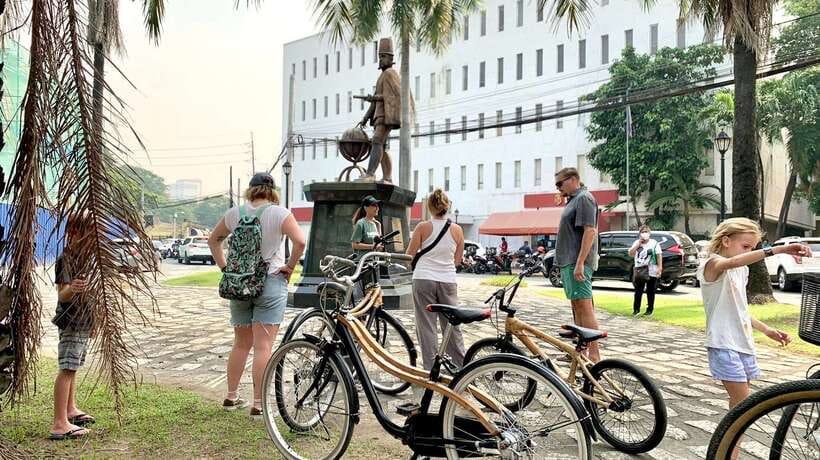
The tour includes a brief experience with what is described as a Lamborghini bike. Despite the name, this is a three-wheeled paddle bike rather than a luxury car or a serious cycling activity.
You do not need to pedal because someone can do it for you. Think of it as a short, playful ride included in the walking route. It is not the reason to book this tour, and the experience is brief, but it adds a bit of local character and gives your feet a short break.
The wording suggests this is a small extra, not a major transportation segment. If you are expecting a long bike ride, you may find it underwhelming. If you see it as a fun novelty between historical stops, it fits the tour well.
Is $55 a fair price?
At $55 per person, this is not the cheapest way to enter Intramuros. You can walk through parts of the district independently, and several of the listed stops have no separate admission charge.
The value comes from the guide, the structure, and the amount of history packed into two to three hours. You are paying for someone to explain why the cathedral matters, connect Fort Santiago with World War II, point out the importance of the dungeon and shrine, and make sense of Casa Manila’s colonial interiors.
Admission fees, a local guide, and bottled water are included. Group discounts may lower the cost for people booking together. The small maximum group of 10 also helps justify the price, since you are not being folded into a large crowd with limited access to the guide.
I think the price works best for a first visit to Manila, especially if you want a clear introduction rather than a self-guided walk. It is less compelling for someone who already knows Intramuros well and prefers to spend hours exploring at a slow, independent pace.
The tour’s 5 rating from 33 reviews and 100 percent recommendation point to a consistently strong experience, with the guide and Casa Manila receiving particular praise. Still, a high rating cannot remove the practical drawbacks: the walk is weather-dependent, Monday excludes two major interiors, and you need to reach the meeting point yourself.
Who should book this walk?
I would choose this tour if you are visiting Manila for the first time, have only a few hours, or want help placing Philippine history in context.
It also suits people who like a mix of architecture, religion, military history, and domestic interiors. The route is varied enough that you are not looking at churches for the entire morning or hearing only about wartime events.
Families and small groups may appreciate the maximum of 10 people and the group discount. The guide’s friendly style also makes the subject easier to approach for people who are not normally history enthusiasts.
You should think twice if you dislike walking in warm weather, need a highly flexible schedule, or want a private experience guaranteed to include every interior. The tour is also a poor Monday choice if San Agustin Church and Casa Manila are priorities.
Wear comfortable clothing, choose modest attire for the church, bring protection from the sun, and keep an eye on the weather. The experience may be canceled in poor weather, in which case you are offered another date or a full refund.
FAQ
How long does the Intramuros walking tour last?
The tour lasts approximately two to three hours.
How much does the tour cost?
The listed price is $55 per person. Group discounts are available.
Where does the tour begin?
It begins at Figaro Coffee in the FEMII Building, 1002 Soriano Avenue, Intramuros, Manila.
Where does the tour end?
The activity ends back at the same meeting point.
What is the maximum group size?
The tour accepts a maximum of 10 travelers.
Is a local guide included?
Yes. A local tour guide is included.
Is bottled water included?
Yes. Bottled water and a welcome drink are included.
Are admission fees included?
Yes. Admission fees are included in the tour.
Are San Agustin Church and Casa Manila open on Mondays?
No. Both San Agustin Church and Casa Manila Museum are closed every Monday.
What happens if bad weather cancels the tour?
You are offered a different date or a full refund if the experience is canceled because of poor weather.
Should you book the Intramuros walking tour?
Book it if you want Manila’s old city explained rather than simply photographed. The combination of Mari or Victor’s historical guidance, Fort Santiago’s wartime story, San Agustin Church, and Casa Manila gives you a useful first look at how the Philippines moved from colonial rule through war and into the present.
The best booking choice is a non-Monday date with a reasonable weather forecast. If you can make the meeting point at Figaro Coffee and handle a few hours of walking, $55 buys a focused, personal introduction to Intramuros that is difficult to match by wandering without context.