Intramuros: Guided Tours by a Historian and Academic
History feels close here. This private Intramuros walk pairs Fort Santiago and San Agustin Church with the sharp storytelling of Alvin Campomanes, a University of the Philippines Manila historian and faculty member. I like the serious academic grounding, and I like that the tour uses old photographs to show how familiar places changed over time. The main drawback is the heat: three and a half hours on foot, with outdoor stops, can feel long without water, sunscreen, and good shoes.
I also like the private format for a group of up to five. You can ask questions, pause for discussion, and focus on the parts of Philippine history that interest you most. The tour is in English and costs $288 per group, so it offers its best value when five people share the fee.
In This Review
- Key points to know before you book
- Why Alvin Campomanes changes the usual Intramuros walk
- Fort Santiago begins the story at Maynila
- Plaza Roma shows how colonial power was organized
- Memorare Manila 1945 brings a painful chapter into view
- The tranvia adds a welcome change of pace
- San Agustin Church is the architectural high point
- Casa Manila closes with domestic life
- The price makes sense for the right group
- What to bring for three and a half hours outside
- Who will enjoy this Intramuros experience most
- Should you book Alvin Campomanes Historical Tours?
- FAQ
- Where does the tour meet?
- How long does the tour last?
- What language is the tour in?
- Is the tour private?
- What is included in the price?
- Can I cancel the booking for a refund?
Key points to know before you book
- Historian Alvin Campomanes leads the walk: You get a university educator rather than a guide relying only on memorized dates.
- Old Manila unfolds in layers: Fort Santiago, Plaza Roma, San Agustin Church, and Casa Manila show military, political, religious, and domestic life.
- Historical photographs add unusual depth: Alvin uses images to explain how sites looked and what happened there, including locations without clear markers.
- The tour includes a tranvia ride: This breaks up the walking and gives you another way to see Intramuros.
- The group is private and limited to five: The format suits families, students, educators, and small groups who want conversation.
- Plan for tropical weather: Bring water, an umbrella, rain gear, sunscreen, insect repellent, and comfortable clothing.
Why Alvin Campomanes changes the usual Intramuros walk
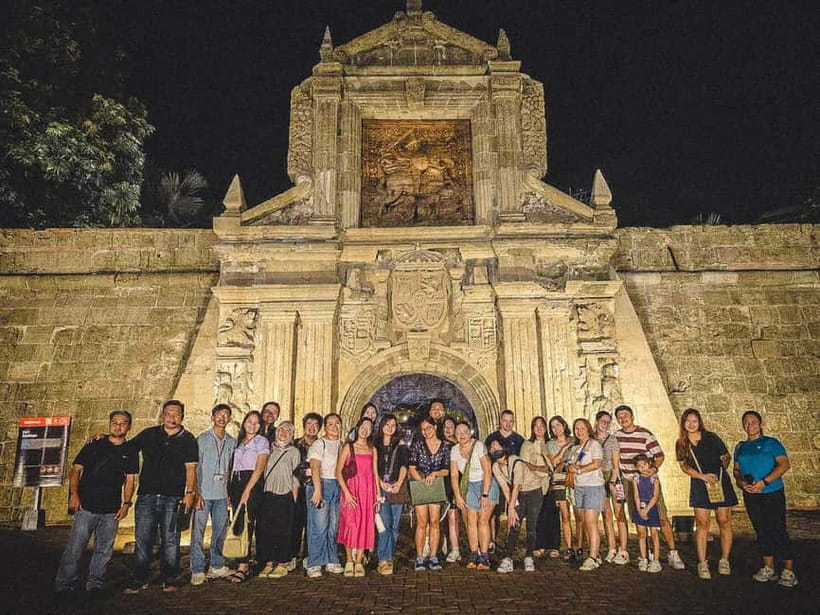
Intramuros is easy to visit on your own. You can enter a church, walk across a plaza, and take photographs of old walls. The harder part is understanding how the district connects to precolonial Manila, Spanish rule, the Second World War, and the Philippines today.
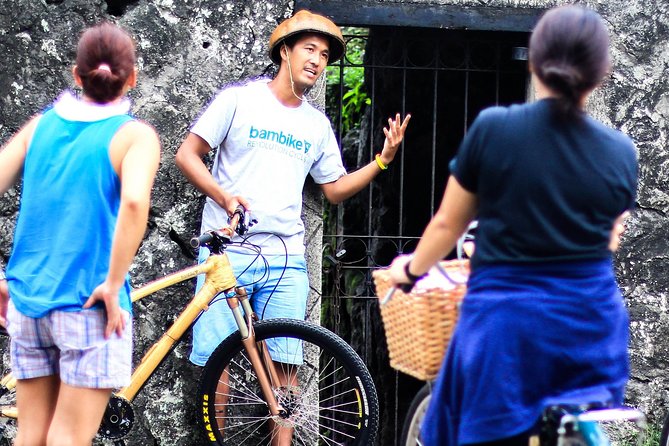
That is where Alvin Campomanes adds real value. He teaches history at the University of the Philippines Manila, and his approach is built around explanation rather than simple narration. You are not just told that a building is old. You learn why it mattered, who used it, how it changed, and what its survival or destruction says about Philippine history.
A particularly useful part of his method is the use of historical photographs. Alvin can place an earlier image beside the present site, helping you see details that a plaque may not explain. He also points out locations that are not clearly marked, then connects them to photographic evidence and past events.
I value that kind of guiding because it keeps the tour from becoming a parade of famous names. It also encourages questions about heritage, national identity, colonial power, and memory. You can enjoy the architecture while still thinking about whose story has been preserved and whose has been left out.
The private format helps. With only your own group, the pace can feel more personal, and you have room to stop for a question instead of saving it for later. This should appeal especially to students, educators, heritage advocates, and anyone who wants more than a quick photo stop.
You can also read our reviews of more guided tours in Manila

Fort Santiago begins the story at Maynila
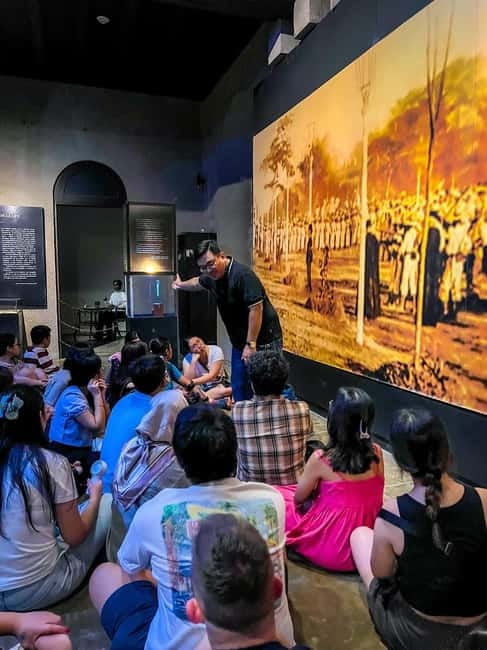
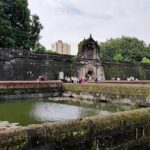
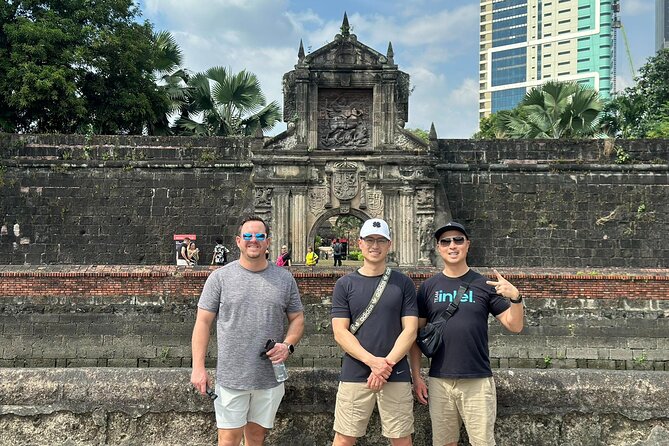
The tour starts at the entrance gate of Fort Santiago. This is an important starting point because the fort was built on the site of a precolonial settlement called Maynila. Before Intramuros became the walled Spanish center, this area already belonged to an older political and trading world.
That opening matters. It places Spanish Manila within a longer Philippine story rather than treating colonization as the beginning of everything. You get a sense that the walls and military buildings sit on ground with an earlier identity.
Fort Santiago later served as a military headquarters for Spanish, British, American, and Japanese forces. That list alone shows why the site is so useful for an introductory tour. Its history is not limited to one colonial period. Different powers used the same strategic location, each leaving another layer behind.
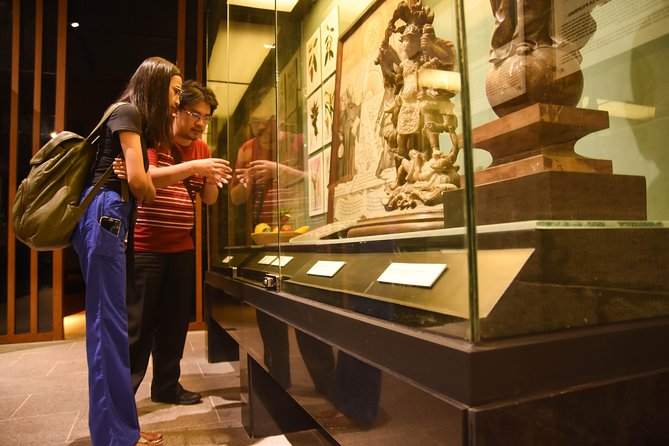
You should expect a mix of open areas, historic structures, and museum space. The fort is also home to the Rizal Shrine, a modern museum devoted to José Rizal, the Philippines’ most venerated hero and patriot.
The Rizal Shrine gives the tour a more personal center. Instead of discussing national history only through governments and armies, the visit brings in a Filipino writer, physician, and political thinker whose life remains closely tied to the country’s sense of identity. The shrine helps connect the larger political story to one individual and his role in the struggle for national consciousness.
Fort Santiago is also where the walking portion begins in earnest. Wear shoes that can handle several hours of sightseeing, and keep water within reach. The tour includes outdoor spaces, and Manila’s heat can make even a moderate walk tiring.
Plaza Roma shows how colonial power was organized
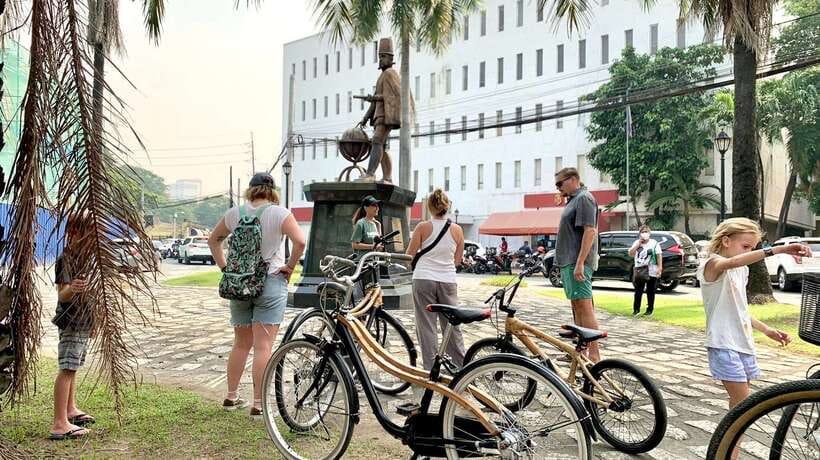
From Fort Santiago, the route continues to Plaza Roma, the main public square of Intramuros. Three major buildings surround it: the Manila Cathedral, Ayuntamiento, and Palacio del Gobernador.
This is one of the best places to understand how Spanish authority was arranged. Religious power, civic administration, and colonial government met around the same square. You can look at the buildings as separate landmarks, but the larger point is their relationship to one another.
The Manila Cathedral represents the religious center of the colonial city. Ayuntamiento and Palacio del Gobernador point to civil government and official administration. Plaza Roma was not simply a pleasant open space. It was the nerve center of Spanish political and religious life in Manila.
Alvin’s academic background is especially useful here because the buildings can otherwise seem like a collection of grand facades. A guide who explains the system behind them helps you read the square as a working center of authority.
This stop also gives you a chance to consider how public spaces communicate power. The arrangement of buildings, the scale of the square, and the institutions around it all shaped how people experienced colonial Manila. You do not need to be a history specialist to appreciate the place, but you will get more from it if you are willing to think beyond architecture.
Memorare Manila 1945 brings a painful chapter into view
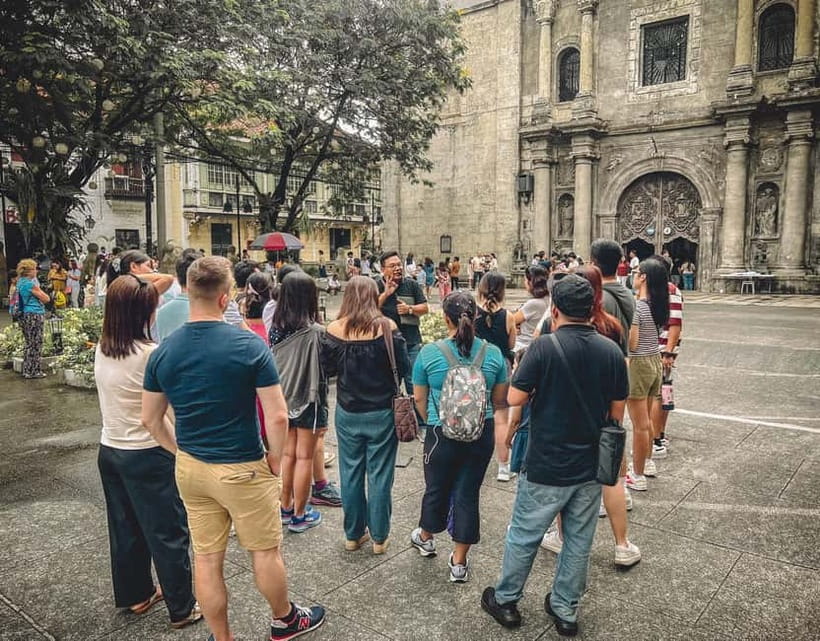
The tour pauses at the Memorare Manila 1945 monument, which commemorates the devastating Battle of Manila in 1945. This is a quieter and more reflective part of the route.
The battle caused a huge loss of civilian life and left much of Manila destroyed. In Intramuros, the wartime damage helps explain why the district contains both surviving landmarks and reconstructed or recreated buildings. The old city is not an untouched colonial scene. It is a place shaped by war, loss, rebuilding, and decisions about what should be remembered.
I appreciate that the tour includes this stop rather than presenting Intramuros as a charming old quarter without difficult history. The monument asks you to slow down and consider the human cost behind the streets and structures.
This may be one of the more serious moments of the experience. If you prefer a sightseeing tour focused only on architecture, the historical reflection may feel heavy. For me, it makes the rest of the visit more honest. The beauty of Intramuros exists beside painful memories, not apart from them.
The tranvia adds a welcome change of pace
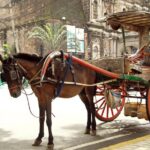
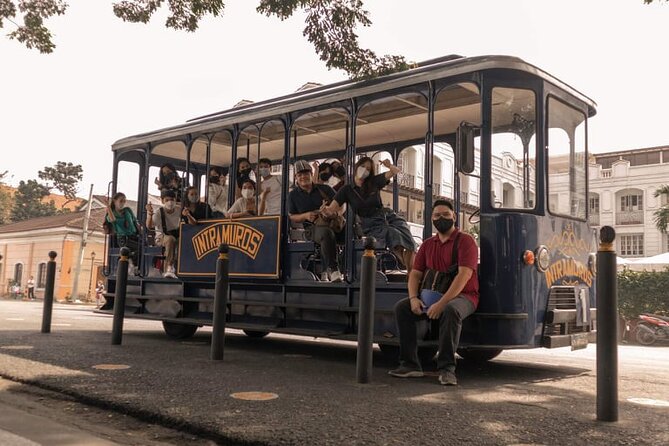
At some point, you board a tranvia, or streetcar, to see Intramuros from another angle. After walking through forts, plazas, and monuments, this short ride gives your feet a break and changes the rhythm of the afternoon.
The tranvia also fits the character of Intramuros. You are moving through a historic district while seeing the present-day life around it. That combination of old walls and modern activity is part of what makes the area worth visiting.
Do not expect the ride to replace the walking. The tour remains a walking experience, and the most detailed explanations happen at specific sites. Still, the tranvia provides variety and can be helpful in Manila’s warm weather.
I would treat it as a practical part of the route rather than a major attraction by itself. Its value comes from the contrast: you get time to look around, rest briefly, and continue the story without spending every minute on foot.




San Agustin Church is the architectural high point
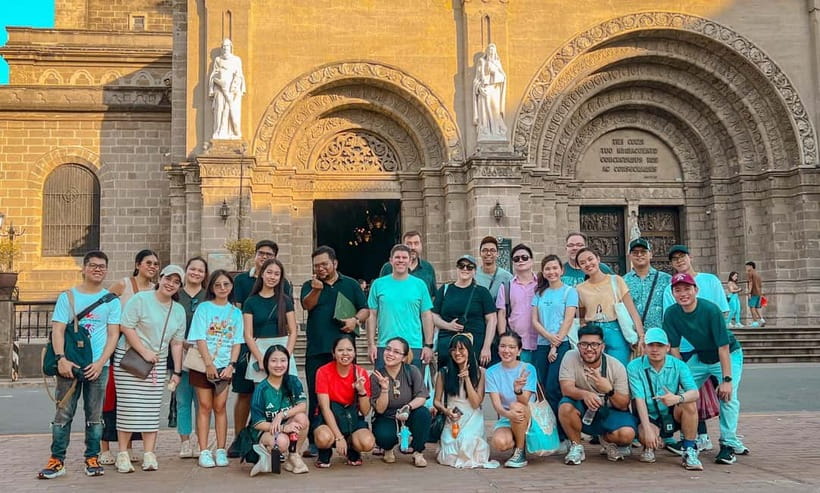
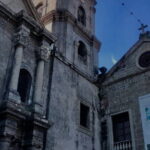
San Agustin Church is the oldest stone church in the Philippines and a UNESCO World Heritage Site. It is also the only Intramuros church to survive the Second World War.
That survival gives the church unusual importance. Much of Intramuros was damaged during the Battle of Manila, yet San Agustin remained. Its presence offers a direct link to the Spanish colonial period, while the surrounding destruction reminds you that the link is fragile.
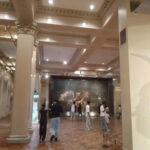
Inside, you can expect baroque architecture and ecclesiastical treasures. The building is not valuable only because it is old. Its design, religious art, and continued place in the city show how Catholic institutions shaped life in colonial Manila.
Alvin’s interpretation can help you notice more than the obvious visual details. With a guide, you can consider how the church functioned as a religious space and as part of the wider colonial order. That broader context makes the visit more useful than simply admiring the interior.
The church may be a highlight for architecture lovers, but it also suits visitors who want a clearer sense of the role religion played in Philippine history. If you are particularly interested in sacred buildings, allow yourself time to look carefully rather than rushing through for a few photographs.
Casa Manila closes with domestic life
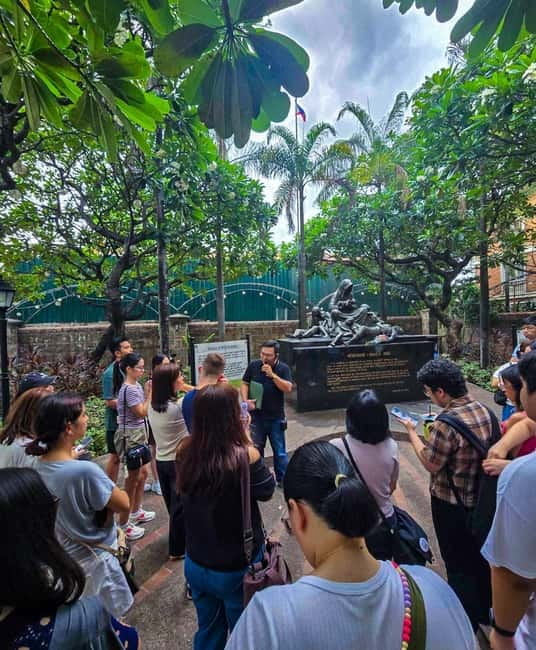
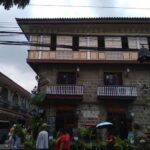
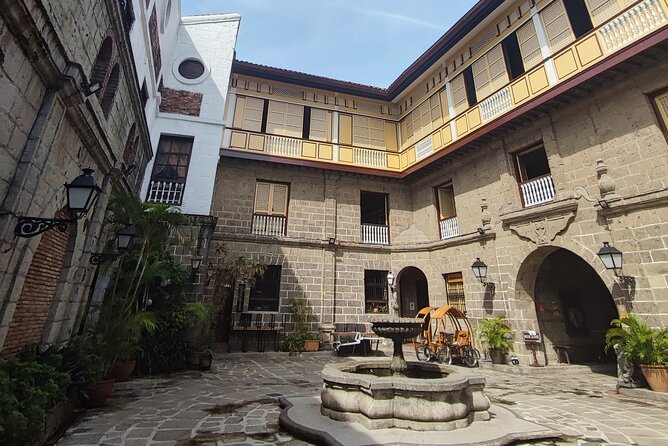
The final stop is Casa Manila, a faithfully recreated 19th-century bahay na bato, or stone house. It offers a glimpse into the domestic life of Manila’s colonial elite.
This is a smart way to finish because it brings the story down from forts, churches, and government buildings to the home. You have seen where power was defended, administered, and worshipped. Casa Manila shows how elite family life was arranged within that colonial society.
The building is a recreation rather than an untouched original. That distinction is worth keeping in mind. It is designed to present a historical setting, so you are looking at an interpretation of 19th-century domestic life rather than a completely preserved household.
Even so, the stop adds an important social dimension. History is not only about battles, governors, and national heroes. Homes, furniture, routines, and social customs also tell you how people lived and how status was expressed.
Entrance fees to Fort Santiago and Casa Manila are included. San Agustin Church is part of the route, but the supplied details do not specify a separate entrance fee, so you should confirm any current arrangements when booking.
The price makes sense for the right group
The cost is $288 per private group of up to five people. At full capacity, that works out to $57.60 per person for three and a half hours. That is a fairer calculation than looking only at the total price, especially when the group wants a private academic-led experience.
The value comes mainly from Alvin’s role and the small-group format. You are paying for interpretation, access to a historian and educator, and the ability to ask questions throughout the route. The included entrance fees to Fort Santiago and Casa Manila, photography, a souvenir, tour coordinators, and an e-certificate upon request add useful extras.
If you are alone or traveling as a couple, the per-person cost is much higher. In that case, you should decide how much you value a private guide with university teaching experience. A standard group walk may cost less, but it is unlikely to offer the same level of conversation and flexibility.
For a family, school group, or party of five friends, the price is easier to justify. Students and educators may find the scholarly approach especially worthwhile, while heritage-minded visitors can use the time to discuss preservation and national identity.
Food and transportation are not included. You also need to reach the meeting point at the Fort Santiago entrance in Intramuros, Manila. One practical note: the supplied location information identifies Nueva Vizcaya, but every tour detail, meeting point, and landmark refers to Intramuros in Manila. Confirm the city and meeting instructions before paying.
What to bring for three and a half hours outside
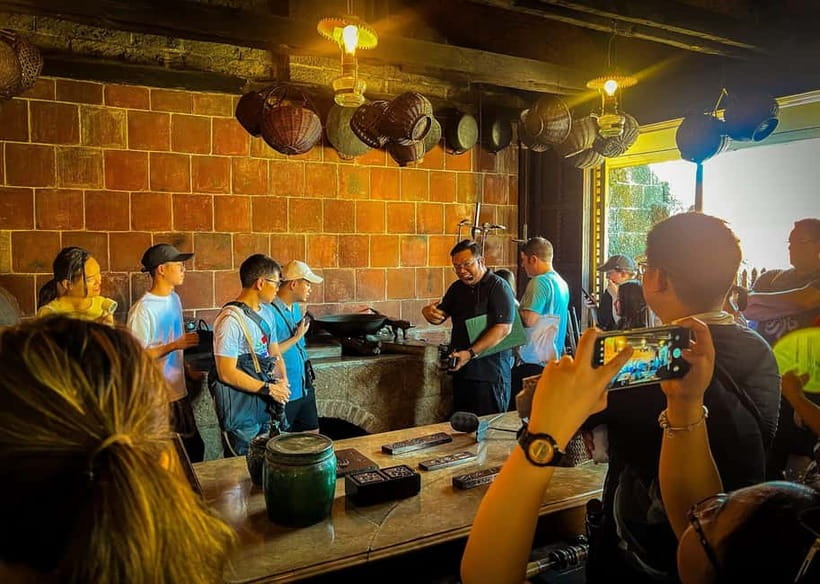
Manila weather deserves planning. Bring comfortable shoes, sunscreen, an umbrella, rain gear, comfortable clothes, insect repellent, and personal medication. Food and drinks are not included, so carry water and a snack.
Internet access is also listed among the recommended items. That may be useful for coordinating with the tour team or accessing information while you are out, though the core guiding is live and in English.
The tour is not automatically cancelled for ordinary rain. Cancellation occurs in extreme weather when a Tropical Cyclone Wind Signal has been raised. In that case, you can request a refund or reschedule.
The activity is not suitable for children under two, babies under one, wheelchair users, or people over 95. The route includes walking and historic sites that may not provide the access or comfort some visitors need. If mobility is a concern, ask for current route details before booking.
Who will enjoy this Intramuros experience most
I would choose this tour if you want historical context and enjoy asking questions. Alvin’s teaching background makes it a strong fit for anyone who wants to understand how Manila developed, how colonial institutions worked, and how wartime destruction changed the city.
It is also a good choice for Filipino visitors looking for reflection on national identity and cultural heritage. The tour does not treat the past as a frozen display. It connects the sites to questions about memory, loss, colonialism, and the meaning of preservation.
Foreign visitors can use it as a serious introduction to the Philippines. You will encounter military history, Catholic history, government, domestic life, and the wartime experience within one compact route.
I would hesitate only if you dislike walking, prefer a very light sightseeing talk, or want a food-focused or nightlife-focused experience. Intramuros can offer those things elsewhere, but this particular tour is built around history and discussion.
Should you book Alvin Campomanes Historical Tours?
Book it if you want the most thoughtful version of an Intramuros visit. The route covers the essential landmarks, but the real strength is Alvin Campomanes himself: a historian and university educator who uses photographs, evidence, and lively storytelling to reveal details you could easily miss.
The best value comes with five people sharing the $288 group price. Bring water, prepare for the weather, and confirm that your meeting point is in Manila’s Intramuros district. If those conditions suit you, this is a strong choice for turning a walk through old walls into a clearer understanding of the Philippines.
FAQ
Where does the tour meet?
The meeting point is at the entrance gate of Fort Santiago in Intramuros, Manila.
How long does the tour last?
The tour lasts three and a half hours.
What language is the tour in?
The live tour guide conducts the experience in English.
Is the tour private?
Yes. It is a private group experience for up to five people.
What is included in the price?
The price includes entrance fees to Fort Santiago and Casa Manila, a tour guide, tour coordinators, photography, a souvenir, and an e-certificate upon request.
Can I cancel the booking for a refund?
You can cancel up to 24 hours in advance for a full refund. In extreme weather, defined as a raised Tropical Cyclone Wind Signal, you can request a refund or reschedule.