
Manila Social and Political Walk
Manila has more than postcard views. This 2.5-hour evening walk connects luxury towers, nightlife streets, working urban districts, and the troubled Pasig River while explaining how Philippine society and politics took shape. I like the documentary-style storytelling, and I like that the route looks at both the country’s achievements and its serious problems. The main consideration is simple: this is an information-heavy experience, not a relaxed sightseeing stroll.
Guide Alex brings a strong personal interest in Manila and its people, with attention to subjects that ordinary city tours often skip. I would choose this walk if I wanted context and honest discussion, but I would not book it if I mainly wanted monuments, food stops, or a quick list of photo opportunities.
In This Review
- Key points to know before booking
- Why this Manila walk is different
- Starting at Rockwell Center at 6:00 pm
- Trump Tower and the language of luxury
- P Burgos Street after dark
- Poblacion, old character and newer energy
- The Pasig River and Manila’s harder questions
- Mandaluyong and the modern city
- What you get for $45.75
- Who will enjoy this experience most
- Practical advice for the evening
- Should you book the Manila Social and Political Walk?
- FAQ
- Where does the Manila Social and Political Walk start?
- What time does the walk begin?
- Where does the experience end?
- How long does the walk last?
- How much does the experience cost?
- What places are included on the route?
- Is the tour focused only on sightseeing?
- How many people can join?
- Can most people participate?
- What happens if the weather is poor?
Key points to know before booking
- Starts at 6:00 pm at Starbucks One Rockwell, making the evening timing useful for seeing Manila after work hours.
- Links six sharply different areas, from Rockwell Center and Trump Tower to Poblacion, Mandaluyong, and the Pasig River.
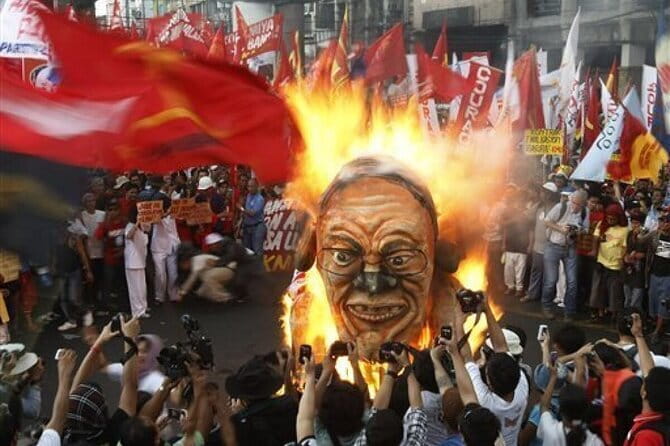
- Focuses on social and political ideas, including the creation of the Filipino state and events affecting modern life.
- Uses interactive storytelling, with a flow closer to a documentary than a standard sightseeing commentary.
- Costs $45.75 per person, a fair price if you value discussion and local context more than included admissions.
- Returns to the starting point after about two and a half hours, with a maximum group size of 30.
Why this Manila walk is different
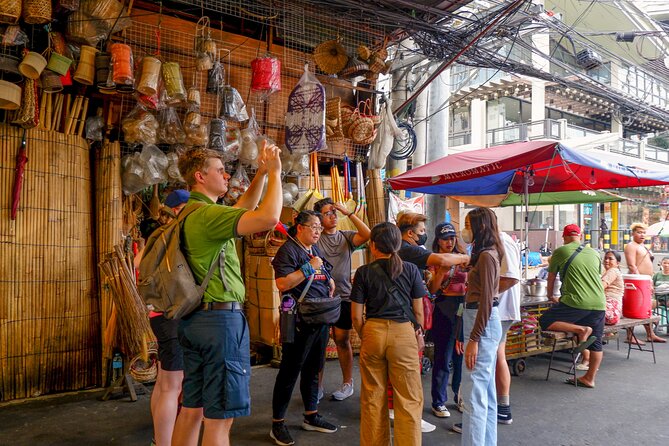
Many Manila tours focus on churches, colonial buildings, markets, or food. This one takes a wider look at how power, money, class, urban growth, and public problems shape daily life.
That gives the walk a clear purpose. You are not simply moving from one attraction to the next. You are asked to compare different parts of Metro Manila and think about what each area says about the country.
The experience covers the Philippines from the formation of the Filipino state to present-day concerns. The stated aim is balance, so you should expect discussion rather than a single political message. That matters in a country where history and current affairs can be complicated, contested, and closely tied to personal experience.
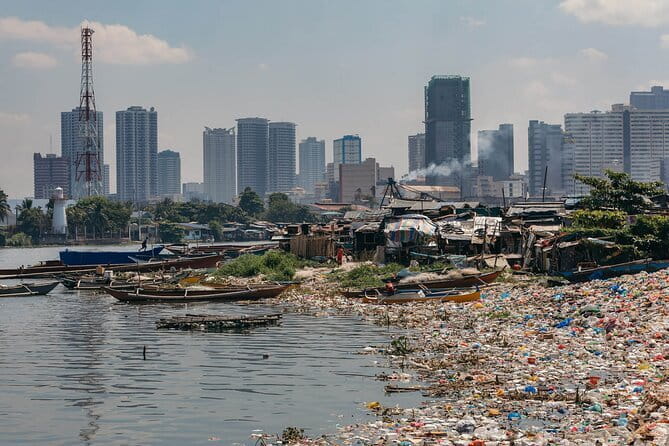
I especially like the idea of seeing polished commercial districts alongside places that reveal pressure on public services and the environment. The contrast is not treated as a quick photo trick. It is the backbone of the walk.
The format also suits people who enjoy asking questions. Because the experience is interactive, you can engage with the material rather than simply listen to a memorized speech. The published feedback describes Alex as passionate about Manila and able to connect historical events with the challenges faced by its people. That personal energy seems to be one of the walk’s strongest assets.
You can also read our reviews of more walking tours in Luzon

Starting at Rockwell Center at 6:00 pm
The meeting point is Starbucks One Rockwell on Rockwell Drive in Makati City. The walk begins at 6:00 pm and ends back at the same meeting point.
Rockwell Center is a useful place to begin because it represents one polished side of modern Manila. It is an upscale urban district with an orderly, high-end feel. You will spend about 15 minutes here, enough to set the scene without turning the opening stop into a long architectural tour.
The value of this first stop is not admission to a particular attraction. Nothing is included because there is no paid entry. Instead, the area gives the guide a visual starting point for discussing wealth, development, and the kind of city Manila is trying to become.
I would arrive early enough to find the Starbucks and settle in before the 6:00 pm start. Since the whole group meets at one fixed location and returns there later, the arrangement is easy to understand. The mobile ticket also means you should keep your booking details available on your phone.
Trump Tower and the language of luxury
The next stop is Trump Tower at Century City, also scheduled for about 15 minutes. The building is presented as a striking luxury residential tower, and its presence adds another clear marker of wealth to the route.
You should not expect a tour inside the tower. The stop is about what the building represents and how luxury housing fits into Manila’s changing urban life. Its polished image provides a useful comparison with the less protected and less affluent parts of the city seen later.
This is where the walk’s social focus becomes clear. A conventional city tour might point out the height or design of a skyscraper and move on. Here, you are encouraged to consider who benefits from this kind of development, how it affects the city, and how it sits beside other realities in Metro Manila.
The short time allocation works well for that purpose. I would see this as a discussion stop, not a sightseeing highlight in the usual sense.
P Burgos Street after dark
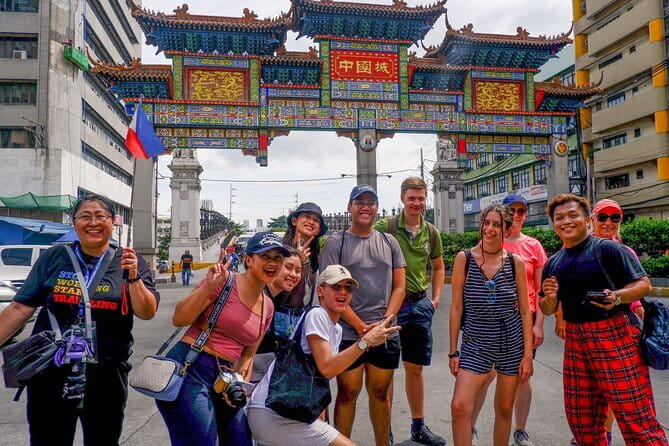
P Burgos Street in Makati is known for restaurants, bars, and nightlife. The walk allows about 15 minutes here, giving you a look at a very different kind of urban activity from the controlled setting of Rockwell Center.
The timing matters. At 6:00 pm and later, the route is not showing Manila as a quiet daytime business district. It is showing how the city changes as people finish work and nightlife begins.
P Burgos Street can help explain the relationship between commerce, entertainment, and public space. It is also a reminder that Manila cannot be understood through offices and shopping centers alone. The social life of the city happens in streets like this, where businesses, workers, residents, and visitors share the same limited space.
I would keep expectations realistic. Fifteen minutes is enough for an overview and conversation, but not enough to explore the area in detail or sample several venues. No food or drink is listed as included, so budget separately if you want to return for dinner or a drink after the walk.
Poblacion, old character and newer energy
Poblacion receives another 15-minute stop. The district combines older local character with cafes, street art, restaurants, and nightlife.
That mix makes Poblacion one of the more useful parts of the route for understanding change in Manila. It reflects how older neighborhoods can attract new businesses and new audiences without losing every trace of their earlier identity.
The walk’s political and social themes fit naturally here. You might consider questions about redevelopment, rising costs, changing businesses, and who gets to enjoy a neighborhood as its reputation changes. The available information does not promise a detailed treatment of each issue, so I would treat this as a starting point for discussion rather than a complete study of Poblacion.
Poblacion also adds visual variety. After upscale towers and nightlife streets, you get a district where historic elements, art, cafes, and evening activity sit close together. If you want a tour that stays focused on major monuments, this may feel indirect. If you want to see how a city changes at street level, it is a worthwhile stop.



The Pasig River and Manila’s harder questions
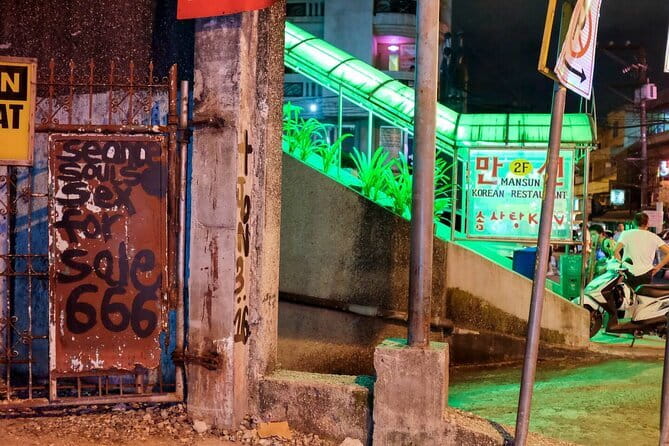
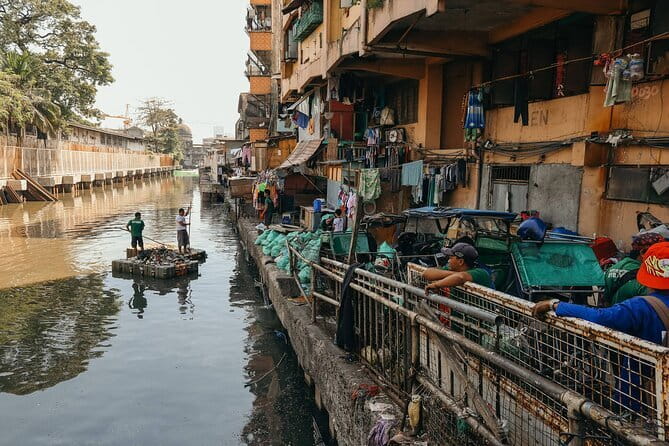
The Pasig River is likely to be the most serious stop on the walk. The river runs through the center of Manila and was once an important route for trade and transport. It now faces pollution and neglect, though traces of its earlier importance remain.
The visit lasts about 15 minutes, but the subject carries more weight than the clock suggests. The river gives the guide a way to discuss public infrastructure, environmental damage, economic growth, and the gap between national ambition and everyday conditions.
I like this part of the route because it moves the conversation beyond buildings and neighborhoods. A city’s river can show how it treats shared resources. It can also reveal how past decisions continue to affect people in the present.
Do not expect a nature walk or a scenic river cruise. The point is not beauty. The point is to look at a major urban waterway and understand its place in Manila’s story. If you prefer upbeat sightseeing, this section may feel uncomfortable. That is also its value. The tour does not present the Philippines as paradise alone.
Mandaluyong and the modern city
The final listed stop is Mandaluyong, another 15-minute section of the route. The city is part of Metro Manila’s dense urban area and is associated with high-rise buildings, business activity, and a busy city atmosphere.
Mandaluyong helps round out the walk’s comparison between different kinds of urban development. You have seen an upscale enclave, a luxury tower, nightlife districts, and a river facing environmental problems. Here, the focus turns again to the working, commercial city.
Because the stop is brief, you should not expect a full tour of Mandaluyong. Instead, it works as a final piece in the larger argument: Manila is not one single place with one single identity. It is a connected urban area shaped by wealth, work, public policy, private development, and long-running social pressures.
The itinerary lists the stops as separate 15-minute visits, but the walk itself takes about two and a half hours. That leaves time for movement and explanation between locations. The total duration is long enough to build an argument, yet short enough to fit into an evening in Makati.
What you get for $45.75
At $45.75 per person, this is not the cheapest way to spend an evening in Manila. You are paying for a guided interpretation of the city, not for admission tickets, a meal, transport, or a show.
That makes the value depend on your interests. If you want a local guide to connect places with political and social ideas, the price is reasonable. The walk covers six distinct areas and offers a focused discussion over roughly 150 minutes. For someone doing independent research into the Philippines, it may save considerable time and help organize difficult subjects.
If you prefer a simple orientation tour, the price may feel high. You could walk around parts of Makati and Poblacion on your own, though you would miss the planned comparisons and the political framework.
The maximum group size is 30. That is not a tiny group, so the experience may feel less personal when fully booked. Still, a capped group is better than an open-ended crowd, and the interactive format suggests that questions are part of the design.
The tour is booked an average of five days ahead. I would not wait until the last minute if your schedule is tight, especially since the experience runs on a specific evening start.
Who will enjoy this experience most
I would recommend the walk to you if you:
- Want to understand the Philippines beyond beaches and resort advertising
- Enjoy politics, modern history, and social questions
- Prefer discussion and observation to formal museum visits
- Are willing to examine both achievements and serious problems
- Want to see several contrasting parts of Metro Manila in one evening
- Like asking questions and forming your own opinion
I would be more cautious if you:
- Want a relaxed stroll with little commentary
- Expect famous monuments or interior visits
- Need a food-focused experience
- Prefer a private, highly personal tour
- Find political subjects tiring while on holiday
The walk is also better suited to adults and older students than to young children. The stated information says most people can participate, but the subject matter is the key factor. A child who enjoys asking about cities and government may be fine. A child hoping for constant visual entertainment may lose interest.
Practical advice for the evening
Wear comfortable shoes and expect to spend the full two and a half hours moving between urban stops. The exact timing is approximate, so I would leave some flexibility before any later dinner reservation.
The experience requires good weather. If poor weather causes cancellation, you will be offered another date or a full refund. It also requires a minimum number of participants, so a cancellation is possible if that number is not reached.
You can cancel for a full refund up to 24 hours before the start time. Changes or cancellations made less than 24 hours before 6:00 pm are not accepted for a refund.
I would keep water with you and check the forecast before leaving. Since the route is outdoors and the itinerary includes busy city areas, a light layer or rain protection could make the evening more comfortable. Those are general walking precautions, not listed inclusions.
Should you book the Manila Social and Political Walk?
Book it if you want Manila explained, not simply displayed. The strongest reason to go is the way the route puts luxury districts, nightlife areas, business zones, and the Pasig River into one connected conversation.
I particularly value the emphasis on subjects that regular sightseeing may leave out. Guide Alex is described as passionate about Manila and its people, and that matters here because the tour depends heavily on clear explanation and human insight.
Skip it if your ideal evening means food, shopping, or famous sights with minimal commentary. At $45.75, the walk earns its price only when you take part in the ideas.
For an open-minded visitor who wants to look past the paradise image and make a personal judgment about the country’s gains and challenges, this is a thoughtful use of one evening in Makati.
FAQ
Where does the Manila Social and Political Walk start?
It starts at Starbucks One Rockwell on Rockwell Drive in Makati City, Metro Manila, Philippines.
What time does the walk begin?
The scheduled start time is 6:00 pm.
Where does the experience end?
The activity ends back at the meeting point at Starbucks One Rockwell.
How long does the walk last?
The experience lasts approximately 2 hours and 30 minutes.
How much does the experience cost?
The listed price is $45.75 per person.
What places are included on the route?
The route includes Rockwell Center, Trump Tower at Century City, P Burgos Street, Poblacion, the Pasig River, and Mandaluyong.
Is the tour focused only on sightseeing?
No. It examines social and political elements of the Philippines, from the creation of the Filipino state to modern events, using interactive storytelling.
How many people can join?
The maximum group size is 30 participants.
Can most people participate?
Yes. The activity information says most people can participate.
What happens if the weather is poor?
The experience requires good weather. If it is canceled because of poor weather, you will be offered another date or a full refund.
More Walking Tours in Luzon

More Tour Reviews in Luzon
Not for you? Here's more nearby things to do in Luzon we have reviewed





Walking Tours: how the alternatives stack up
The lists this tour appears in