
Manila Private Walking Tour With A Local Guide (Private Tour)
Manila rewards a closer look. This private walking tour gives you a local guide, a flexible route, and a useful first pass through the city’s major historic districts. I like the one-group format, which keeps the pace personal, and I like that the guide contacts you before the tour to shape the day around your interests.
The route can include the National Museum of Fine Arts, Manila Cathedral, San Agustin Church, Rizal Park, and Binondo Church. The main catch is important: this is chiefly an outside walking tour, not a package of museum or monument admissions. At $78.28 per person, the value depends on how much you want help with context, routing, and local advice.
In This Review
- Key points to know before booking
- What this private Manila tour actually offers
- National Museum of Fine Arts: a useful starting point
- Manila Cathedral and the heart of Intramuros
- San Agustin Church and the one building that survived
- Rizal Park and Manila’s public center
- Binondo Church and a change of tone
- The guides are the main reason to consider it
- How much time should you book?
- Price and what the $78.28 buys you
- Walking, transport, and practical limits
- Who will get the most from this experience?
- Cancellation and booking details
- Should you book the Manila private walking tour?
- FAQ
- How long does the Manila private walking tour last?
- Which sights are included in the suggested route?
- Does the tour include entry inside the museums and monuments?
- Is transportation included?
- Where does the tour start and finish?
- Can the tour be adapted for physical restrictions or personal interests?
Key points to know before booking
- Five strong Manila sights: The suggested route links the National Museum of Fine Arts, Intramuros, Rizal Park, and Binondo.
- Private means flexible: Only your group takes part, and the guide can adjust the plan for your interests or physical limits.
- The guide matters most: Alvin, Jonas, JoeMarie, and Perlie received especially warm praise for their warmth, local insight, and ability to adapt.
- Expect an exterior-focused visit: Monument entry is not built into the standard tour, though the team can help arrange tickets if you want museum time.
- The timing is adjustable: You can book a tour lasting roughly two to eight hours, with a shorter three-hour version also possible.
- Plan for extra costs: Food, drinks, public transport, personal spending, and attraction tickets are not included.
What this private Manila tour actually offers
Manila can be hard to read at first. Its major sights are spread across districts with very different identities, and the distance between a church, a park, a museum, and a food quarter is not always obvious from a map. A local guide helps turn those separate places into a sensible story.
The tour lasts approximately two to eight hours. That wide range tells you this is not a fixed, tightly timed group outing. A short version can focus on the main historic sights, while a longer booking gives you more room for conversation, a possible museum visit, or another place that matters to you.
You meet at your accommodation if it is in the city, or at the cruise terminal. The listed meeting point is in Manila, and the activity ends back there. Confirm the exact arrangement with the provider before the day, especially if you are arriving by ship or staying outside the central area.
The tour is private and exclusive. Nobody outside your party joins, so you can ask questions without holding up a busload of people. That also makes the tour useful for families, couples, solo visitors, and anyone who prefers a slower or more direct route.
The guide can speak English, Spanish, or French. Beforehand, you are asked about your interests. If you want to see a museum rather than only view it from the outside, tell the team early. The guide can help arrange the desired tickets, but those tickets cost extra.
You can also read our reviews of more walking tours in Luzon

National Museum of Fine Arts: a useful starting point
The National Museum of Fine Arts sits between Intramuros and Rizal Park on P. Burgos Street. It is described as the Philippines’ most important museum, making it a sensible place to begin a Manila introduction.
The standard stop allows about 30 minutes and includes no admission charge for the listed visit. Still, the tour description makes clear that the normal experience is a city tour around the exterior of monuments and museums. If you want time inside, you need to arrange that ahead of time.
That distinction matters. Thirty minutes can give you orientation, a look at the building, and an explanation of its place in Manila. It is not enough for a serious museum visit. Ask for a customized plan if Filipino art is a main reason for your trip.
I like this stop because it connects two parts of Manila that can otherwise feel separate: the civic center around Rizal Park and the old Spanish quarter of Intramuros. Your guide can explain how the museum fits into the city rather than treating it as an isolated photo stop.
Manila Cathedral and the heart of Intramuros
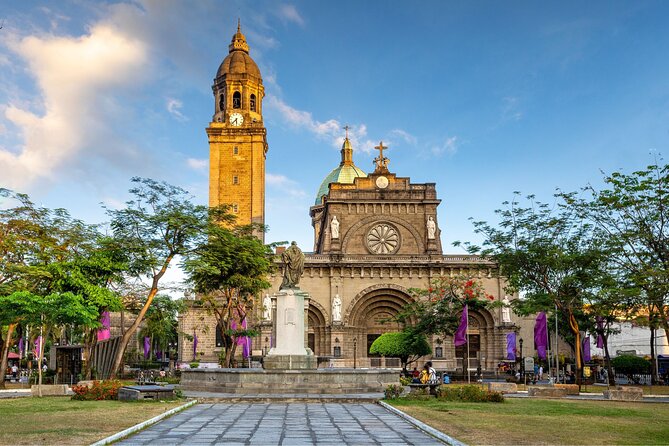
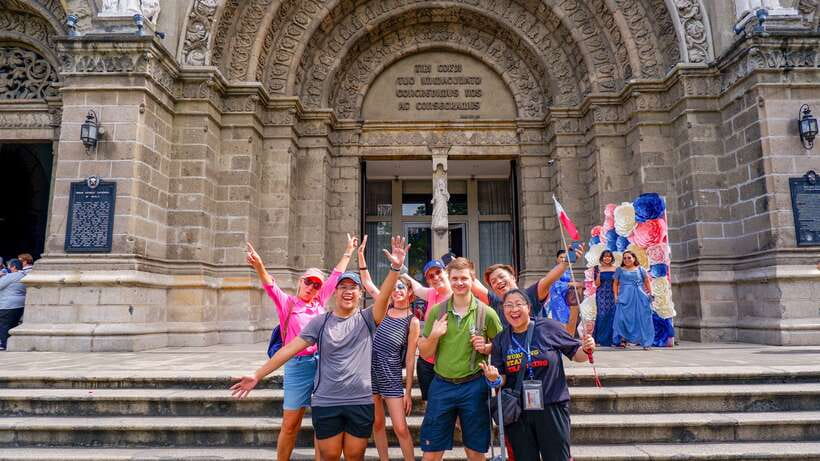
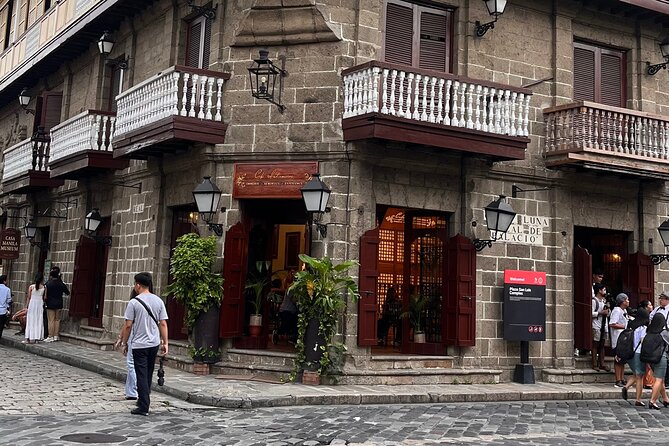
Manila Cathedral occupies the central square of Intramuros, the old Spanish city fortress. It is one of the city’s minor basilicas and the seat of the Archdiocese of Manila.
The planned visit lasts about 30 minutes. That gives you time to see the cathedral from outside and hear why its location matters. Because the tour is not normally conducted inside monuments, confirm in advance if you want an interior visit or a closer look at the church’s religious art.
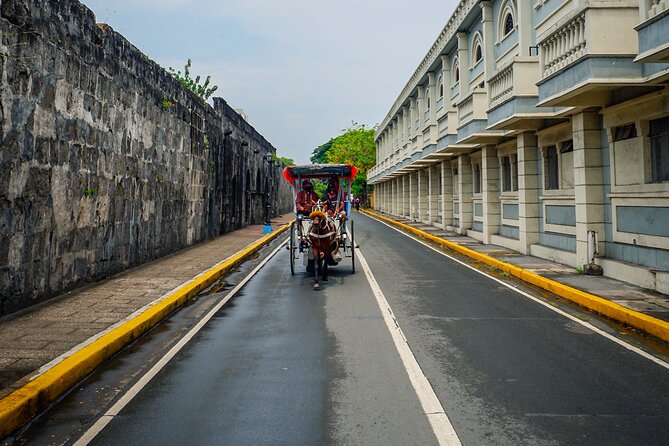
This part of the route is valuable because Intramuros is more than a collection of old walls. The cathedral helps you understand the district as the center of Spanish colonial Manila and as a place where religion and government once shaped daily life.
A guide can also help you read the city’s layers. The area has been rebuilt and changed over time, so a polished facade does not tell the whole story. Ask direct questions about what survived, what was restored, and how modern Manila uses the old fortress today.
San Agustin Church and the one building that survived
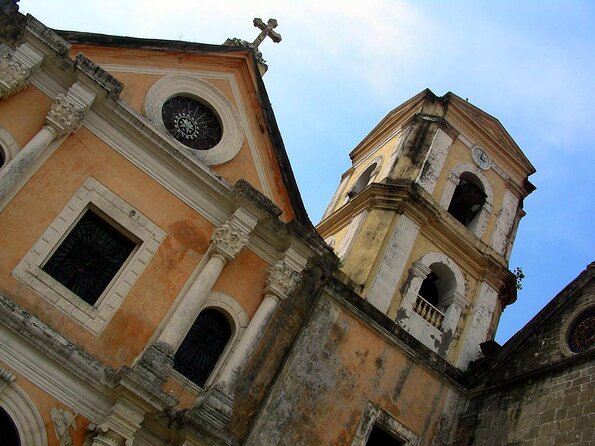
San Agustin Church is the oldest church foundation in the Philippines. The first church was built in 1571, and the present church is noted as the only building in Intramuros to escape destruction during the Battle of Manila.
That fact gives this 30-minute stop unusual weight. You are not simply looking at another historic church. You are seeing a rare survivor in a district shaped by war and rebuilding.
The attraction is especially strong for visitors who want a concise explanation of Manila’s past. The church provides a clear link between the city’s early Spanish period and the destruction that changed Intramuros. Your guide’s explanation is likely to be more useful than a quick photograph and a plaque.
Again, check the arrangement if you want to go inside. The standard activity focuses on the outside of the monuments, and entrance tickets are not included. The provider can assist with booking desired visits, but you should raise the request before the tour begins.
Rizal Park and Manila’s public center
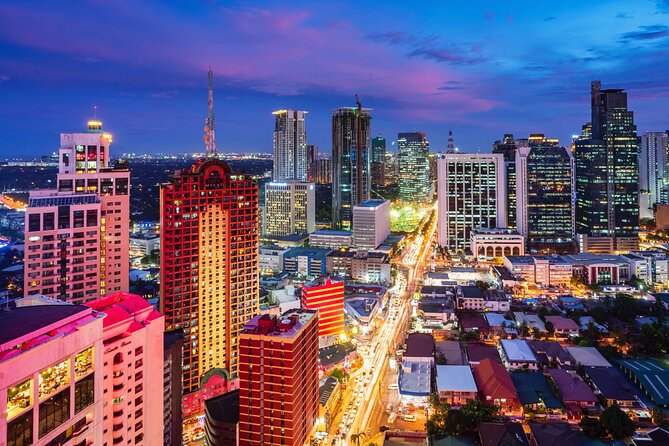
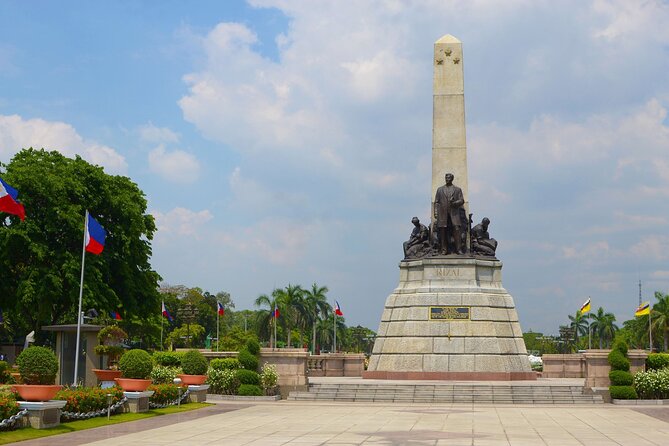
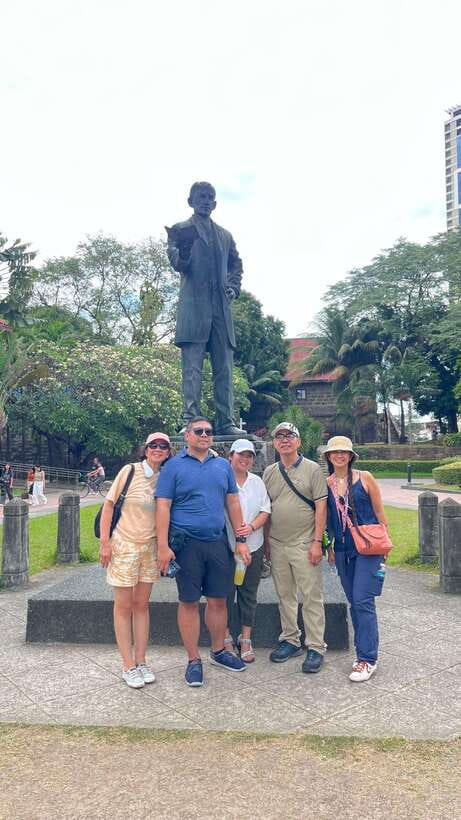
Rizal Park, also called Luneta and Bagumbayan, lies south of Intramuros at the northern end of Roxas Boulevard. Its central location makes it an easy link between the old fortress, the museum district, and the wider capital.
The suggested stop lasts about 30 minutes. That is enough for a guided walk through the park and an explanation of its place in Philippine public life. It is also a useful break from the tighter streets and church facades of Intramuros.
Rizal Park helps broaden the tour beyond colonial Manila. The park carries national meaning, and its location in the capital makes it a natural place to discuss the country’s identity, public memory, and the role of Manila as a political and cultural center.
I would not treat this as filler between bigger sights. The park gives you breathing room and a different view of the city. If you are booking a shorter tour, ask the guide how much time will be spent here and what can be reduced elsewhere.
You can also read our reviews of more guided tours in Luzon





Binondo Church and a change of tone
Binondo Church is on Ongpin Street in Binondo and is another of Manila’s minor basilicas. The suggested stop is longer, at about 40 minutes, which makes sense because Binondo adds a different side of the city to a route focused on Intramuros.
The district is often associated with Manila’s Chinese Filipino community, and the church helps show how several cultural traditions meet in one part of the capital. The tour information does not promise a food stop, and food and drinks are not included, but you can ask whether the route can allow a break if that is important to you.
This is where customization can make the experience more useful. You may want to focus on the church, the surrounding neighborhood, or nearby places you already hope to visit. One guide, Perlie, was especially helpful with suggestions for other things to do in Manila and even accompanied a visitor to another desired location before leaving them at the door.
That kind of local advice may be worth as much as the formal sightseeing. If you are new to Manila, ask for practical suggestions at Binondo rather than rushing through the stop.
The guides are the main reason to consider it

The strongest part of this experience is not a particular monument. It is the quality and flexibility of the guide you receive.
Alvin was praised for knowing a great deal about Manila and the Philippines and for making the visitor feel fortunate to have him. JoeMarie led a three-hour tour described as informative, friendly, and enjoyable, with history explained in a light and engaging way.
Jonas received especially strong praise for adapting the route to a physical restriction. The visitor could not walk far, and Jonas changed the plan to suit that limitation. This is a useful sign for anyone who needs a gentler pace, fewer stops, or shorter walks between sights.
Perlie was valued not only for the historic route but also for practical Manila advice. A guide who can point you toward another place and help you get there can make the tour more useful than a standard list of monuments.
The guide assignment is not guaranteed. You should not book on the assumption that you will receive a particular person, but you can ask whether Alvin, Jonas, JoeMarie, or Perlie is available. More important, state your interests and walking limits clearly before the day.
How much time should you book?
The suggested stops add up to roughly 160 minutes: 30 minutes each at the National Museum of Fine Arts, Manila Cathedral, San Agustin Church, and Rizal Park, plus 40 minutes at Binondo Church. That is close to a three-hour sightseeing plan before any added transport, food break, delays, or interior visits.
A three-hour tour suits someone who wants a first look at the city’s main historic points. It should feel focused rather than exhausting, provided the route and meeting point are practical for your group.
Choose a longer booking if you want to include a museum, take breaks, ask many questions, or add another neighborhood. The maximum listed duration is eight hours, but you should agree on the exact plan before booking. A long private tour can offer much more value when the guide is helping you make decisions for the rest of your stay.
The two-hour option is best for a narrow goal. You might choose it for Intramuros and one nearby sight, or for a gentle introduction after arriving at the cruise terminal. Do not expect to cover every listed stop thoroughly in such a short window.
Price and what the $78.28 buys you
At $78.28 per person, this is not the cheapest way to look at Manila. A private guide costs more than joining a large group or arranging your own walk. One direct criticism described the tour as too expensive compared with local options.
That concern is fair. The price does not include attraction tickets, public transport, food, drinks, or personal expenses. If your main goal is to photograph the outside of several buildings, you may feel you are paying a lot for a route you could partly follow yourself.
The value improves when you use the private format well. You are paying for a guide who can explain the sites, adjust the pace, answer questions, help plan a museum visit, and suggest what to do next. For a family with mixed interests, a couple with limited time, or a visitor arriving by cruise ship, that personal help can save effort.
I would compare the cost against your group size and tour length. For one person on a short outing, it is a substantial spend. For a private group splitting the guide fee across several people, group discounts may improve the calculation. Ask about the discount before confirming.
Walking, transport, and practical limits
This is a walking tour, but the listed route covers several parts of central Manila. The provider does not include transportation, and any public transport used during the tour is at your own expense. That means you should not assume the guide will cover every transfer as part of the quoted price.
Your guide can modify the route. Jonas’s handling of a visitor with limited mobility shows why you should discuss walking ability in advance. The tour welcomes most participants, and service animals are allowed, but the information does not promise a fully accessible route or specify walking distances.
Wear practical shoes and bring enough time between this activity and another fixed appointment. Manila’s streets, crossings, and distances can make a short sightseeing schedule take longer than the stop times suggest. If you need a low-walking plan, ask for fewer sites rather than trying to squeeze in all five.
A food break is possible only as an extra arrangement. Drinks and food are not included, so tell the guide if you need a pause. This is particularly important for families or anyone booking the longer version.
Who will get the most from this experience?
I would recommend this tour most strongly to first-time visitors who want context without joining a large group. It also fits solo visitors who want local guidance, couples who prefer a private pace, and families that need the freedom to change plans.
It is a good choice after a cruise arrival, since pickup at the cruise terminal is included. It can also work early in a Manila stay, when you want a local introduction before exploring alone.
Visitors with a strong interest in museums should request an interior visit before booking. The regular format focuses on exteriors, and the free admission noted for the National Museum of Fine Arts does not mean a full museum visit is automatically included.
I would be more cautious if you want the lowest possible price or prefer to explore every attraction inside. You may find a self-guided route or a local alternative cheaper. The tour earns its price through the guide’s time and personal help, not through included admissions.
Cancellation and booking details
You receive confirmation when you book, and free cancellation is available if you cancel at least 24 hours before the start time. Cancellations or changes made inside that 24-hour window are not refunded or accepted.
The activity is provided by Guydeez. Since the tour is customized, give the team useful information before the day: your preferred sights, desired duration, language, walking ability, and any museum you want to enter.
The tour is private, so only your own group participates. That is the key booking advantage, but it also means you should take an active role in shaping the plan.
Should you book the Manila private walking tour?
Book it if you want a personal introduction to Manila, clear explanations at major sights, and the freedom to adjust the route. The best evidence from the experience is the guide service: Alvin, JoeMarie, Jonas, and Perlie were praised for warmth, local insight, good timing, and practical help.
Book with care if you expect an all-inclusive sightseeing package. You will pay extra for transport, food, drinks, and attraction tickets, and the normal tour views monuments from outside. At $78.28 per person, it makes the most sense when you use the private guide for planning and interpretation, not just for escorting you between buildings.
My advice is simple: request a three-hour plan for the main sights, ask for a shorter route if walking is difficult, and name any museum or extra neighborhood before the tour. Done that way, this can be a useful and human-scale way to get your bearings in Manila.
FAQ
How long does the Manila private walking tour last?
The tour lasts approximately two to eight hours. A three-hour version is also possible, and the exact length can be customized.
Which sights are included in the suggested route?
The route can include the National Museum of Fine Arts, Manila Cathedral, San Agustin Church, Rizal Park, and Binondo Church.
Does the tour include entry inside the museums and monuments?
No. The activity is a city tour focused on the exteriors of monuments and museums. If you want to visit a museum or another attraction, the guide can help arrange tickets in advance, but attraction tickets are not included.
Is transportation included?
No. Transportation is not included. If public transport is used during the tour, you pay that cost yourself.
Where does the tour start and finish?
Pickup is available at your accommodation if it is located in the city, or at the cruise terminal. The activity ends back at the meeting point.
Can the tour be adapted for physical restrictions or personal interests?
Yes. The tour is private and customizable. You can discuss your interests and walking needs with the team beforehand, and the guide can modify the route. English, Spanish, and French-speaking guides are available.
More Walking Tours in Luzon


More Tours in Luzon

More Tour Reviews in Luzon

Not for you? Here's more nearby things to do in Luzon we have reviewed







Walking Tours: how the alternatives stack up

The lists this tour appears in