Intramuros Walking Tour: Explore the Manila’s Walled City|Private
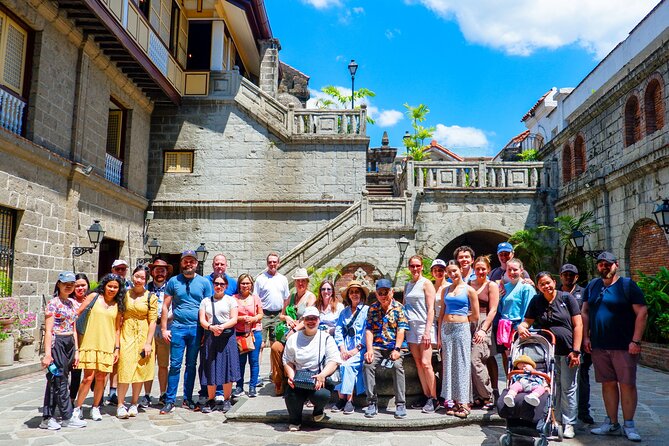
Ancient walls, hard stories, and a sweet finish. This private Intramuros tour packs more than 400 years of Manila history into about three and a half hours. I like the private format, which lets your group stay with the guide’s story instead of following a large crowd, and I like that the price includes entry fees, water, snacks, ice cream, and a kalesa or Tranvia ride.
The main trade-off is pace. You cover Fort Santiago, several major sites, and the final Casa Manila museum in a short time. Hot weather and long stretches on foot may also test you, though the included ride and refreshments help.
In This Review
- Key points to know before booking
- Why Intramuros works best with a guide
- Fort Santiago puts Manila’s history behind walls
- The Rizal Shrine adds a personal story
- Manila Cathedral shows the city’s religious center
- The 20-minute ride gives your feet a break
- Memorare Manila explains the cost of liberation
- San Agustin Church brings you back to Spanish Manila
- Casa Manila finishes with colonial domestic life
- What the $37.58 price really includes
- Timing, meeting point, and practical comfort
- Who will get the most from this tour
- Should you book the Intramuros private walking tour?
- FAQ
- How long does the Intramuros walking tour last?
- Where does the tour begin?
- Where does the tour end?
- Is this a private tour?
- What is included in the price?
- Is the kalesa ride included?
- Does the tour include Fort Santiago admission?
- Can I cancel for a full refund?
- What happens if bad weather cancels the tour?
Key points to know before booking
- Fort Santiago anchors the story: You begin with Manila’s defensive citadel and the political history of the walled city.
- The tour covers four major eras: Your guide connects pre-colonial Manila with Spanish rule, American annexation, Japanese Occupation, and the postwar years.
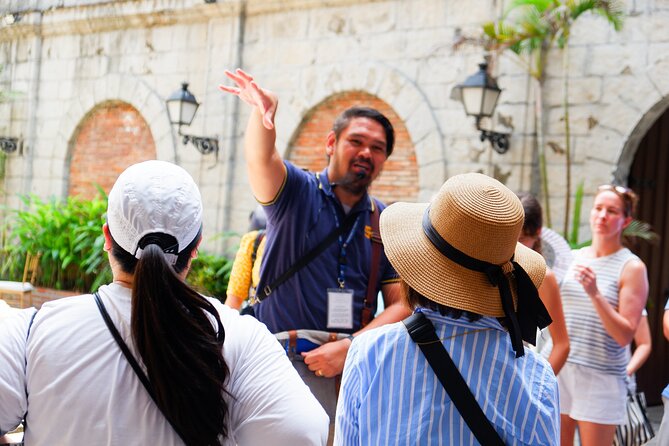
- A private guide makes the history personal: Guides including Denji, Anne, Orlando, and Andre are praised for clear storytelling and strong command of the subject.
- The kalesa or Tranvia ride breaks up the walking: You get a short 20-minute ride through Intramuros rather than spending all three hours and 30 minutes on foot.
- Casa Manila is the finishing stop: The tour ends inside a Spanish colonial-style home, giving you a look at daily life beyond churches and fort walls.
- The price covers more than admission: At $37.58 per person, you also get guide service, refreshments, donations, and the included ride.
Why Intramuros works best with a guide
Intramuros is not simply a collection of old buildings. It is a compact record of Manila’s changing rulers, faith, military defenses, wartime suffering, and attempts to rebuild. You can walk its streets alone, but the meaning of each stop is easier to grasp when someone connects the dates and events.
This tour is designed for that connection. The guide begins with Manila before Spanish colonization, then moves through Spanish rule, American annexation, Japanese Occupation, and the postwar city. That broad sweep is useful if you have limited time in Manila and want more than a few attractive photographs.
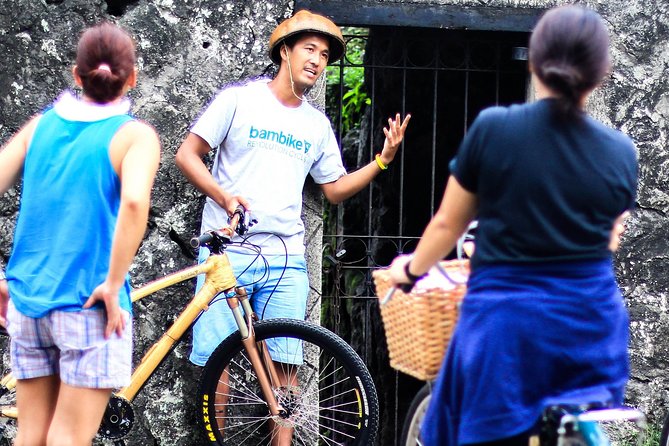
I especially like the emphasis on storytelling. Anne is praised for using a well-prepared set of images to add context, while Denji is described as enthusiastic and clear. Orlando is noted for keeping the information at a comfortable pace, and Andre is praised for friendly, effective explanations of Intramuros and Fort Santiago.
Because the activity is private, only your group takes part. That matters here. History tours can become a lecture if the guide talks without pause, but a small group gives you more room to ask about a family connection, a monument, a church, or a particular period in Philippine history.
You can also read our reviews of more walking tours in Luzon

Fort Santiago puts Manila’s history behind walls
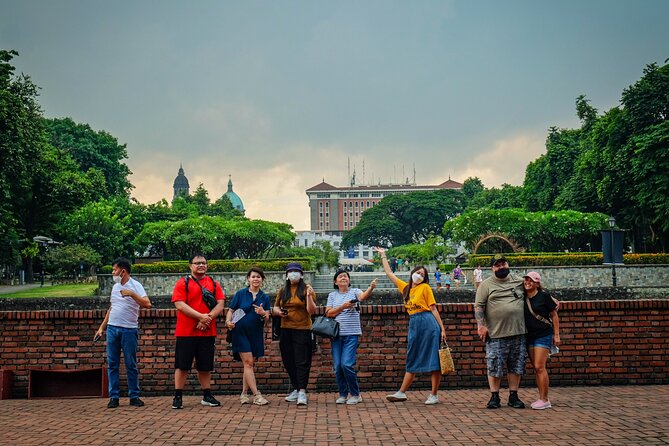
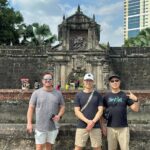
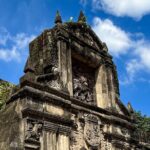
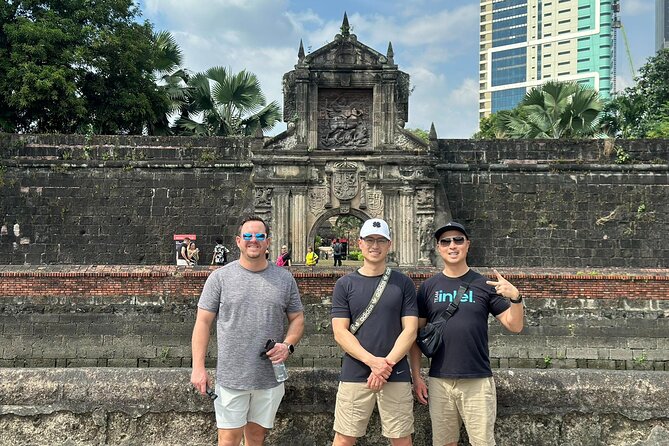
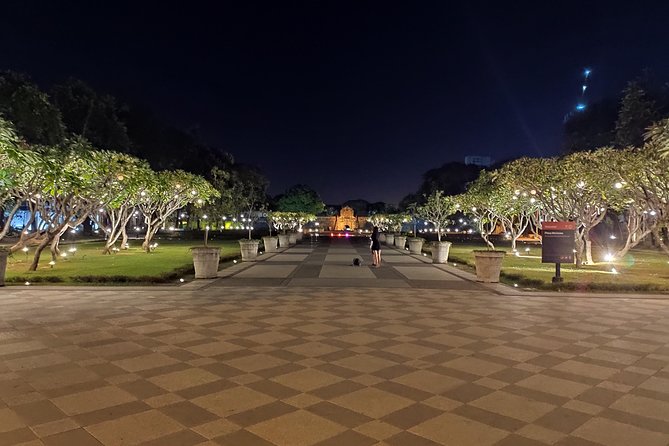
Your first major stop is Fort Santiago, where you spend about an hour. The citadel was first built by Spanish navigator and governor Miguel López de Legazpi for the newly established city of Manila. Its walls helped defend the settlement and now provide the physical setting for the opening chapter of the tour.
An hour is a sensible amount of time here. The fort is important enough to deserve more than a quick photograph, and its grounds give the guide space to explain how Manila developed as a Spanish colonial center. You should expect the history to move beyond military architecture and into the wider story of control, religion, trade, and government.
The fort also carries a darker weight. Its dungeons are described as deeply upsetting, and that part of the visit may stay with you long after the tour ends. This is not a polished heritage stop with only grand façades. It presents the suffering tied to Manila’s wartime and colonial past.
Fort Santiago can be the most emotionally demanding part of the morning. If you prefer a light sightseeing outing, take note. If you want history presented honestly, this stop is one of the strongest reasons to book.
The Rizal Shrine adds a personal story
The 30-minute visit to the Rizal Shrine follows the fort’s larger political story with the life of one individual. José Rizal, a Philippine national hero, was imprisoned here before his execution in 1896.
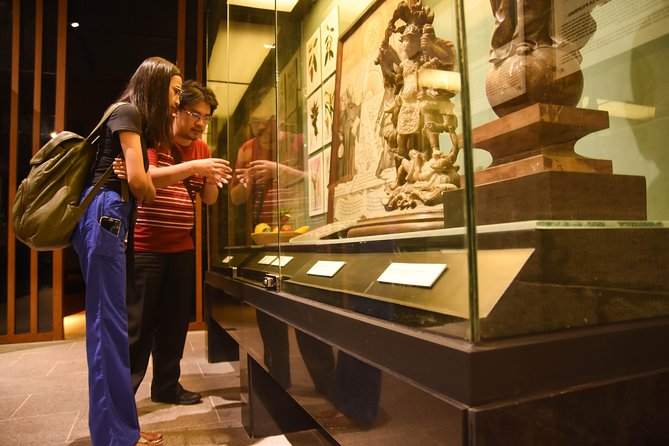
The shrine museum displays memorabilia connected with Rizal. That gives you something more specific to focus on after hearing about empires and wars. Personal objects can make a national story easier to understand, especially if you are still getting familiar with Philippine history.
The guide’s role is important at this stop. The value is not only in looking at museum pieces, but in understanding why Rizal matters and how his imprisonment and execution fit into the wider struggle of the period.
Thirty minutes is enough for a focused visit, but not for a slow museum study. I would treat it as a concentrated introduction rather than a full museum afternoon.
Manila Cathedral shows the city’s religious center
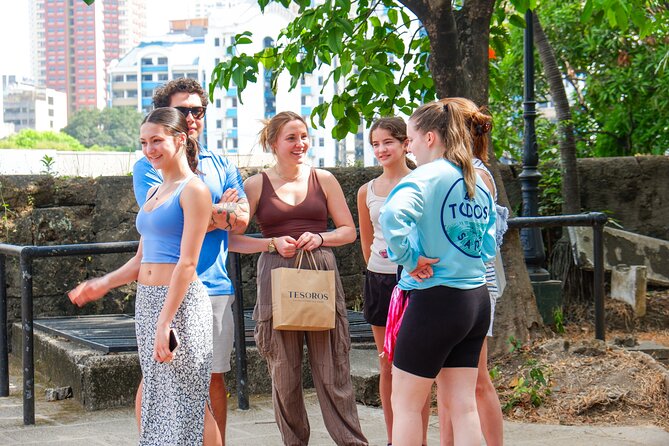
The Manila Cathedral visit lasts about 15 minutes. Officially named the Minor Basilica and Metropolitan Cathedral of the Immaculate Conception, it is the cathedral of Manila and sits inside Intramuros.
The short stop lets you see one of the district’s most important religious buildings without turning the tour into a church-heavy program. The cathedral helps explain the role of Catholicism during Spanish colonial rule and the lasting place of the church in Manila’s public life.
Admission is listed as free, while the tour includes entrance fees and donations overall. A 15-minute visit is brief, so you should expect an exterior and interior orientation rather than a detailed architectural study.
For many people, this is a useful pause between the heavier Fort Santiago material and the remaining sites. It gives the tour a change of tone and shows that Intramuros was a living religious and civic center, not only a fortress.
The 20-minute ride gives your feet a break
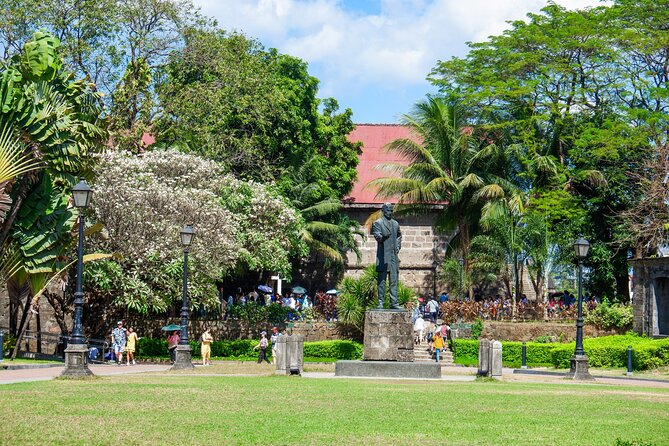
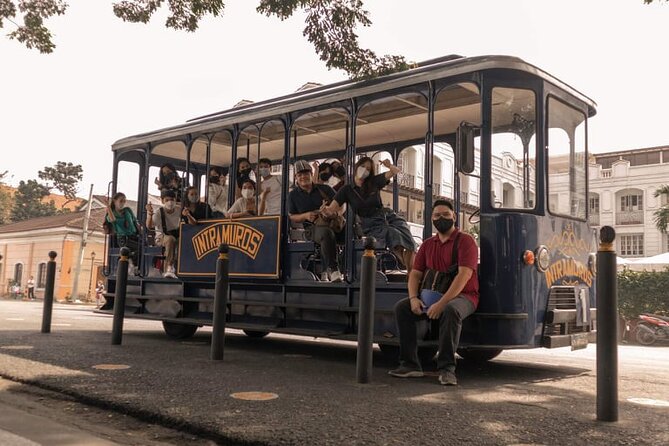
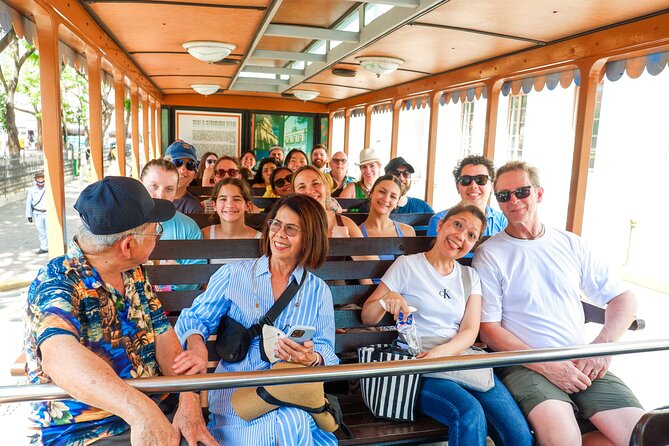
The tour includes either a kalesa, a horse-drawn carriage, or a Tranvia ride around Intramuros. The ride lasts about 20 minutes and is included in the price.
This is a practical feature, not just a novelty. Manila can be hot, and the full tour includes several walking stops. A short ride gives you time to rest while still seeing more of the walled city.
The choice between kalesa and Tranvia may depend on availability. Since the description presents them as alternatives, you should not assume you will receive both. The ride also helps you understand Intramuros as a district rather than a line of isolated attractions.
Andre is specifically praised for making the kalesa portion enjoyable, with sorbetes treats adding a local touch. The tour includes snacks, water, and ice cream, so the food element is a small but welcome part of the outing. It is not a meal, and you should still plan your day around proper meals if needed.
You can also read our reviews of more private tours in Luzon




Memorare Manila explains the cost of liberation
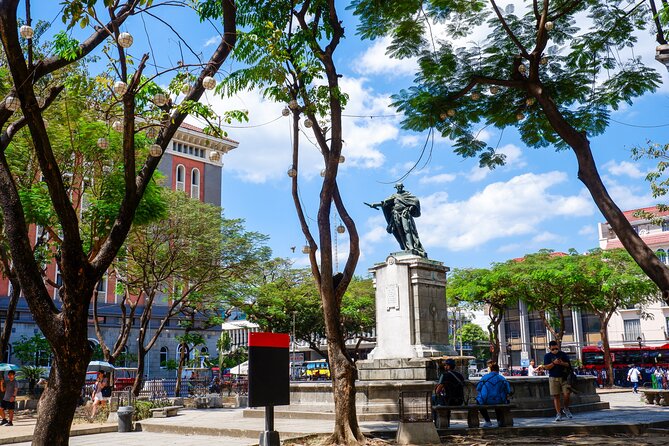
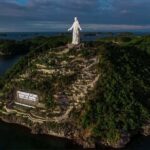
The Memorare Manila 1945 Monument is a 15-minute stop dedicated to the lives lost during the Battle for the Liberation of Manila. That battle was fought by Filipino and American forces against Imperial Japanese troops from February 3, 1945.
The monument gives the tour a direct link to the city’s wartime destruction and civilian suffering. It also helps explain why Intramuros cannot be understood only through Spanish buildings. The district’s story continues into the 20th century, with the Battle of Manila marking one of its most painful chapters.
The stop is short, so the guide’s explanation will do much of the work. This is a good example of why the private format has value. A clear account of the battle can turn a brief monument visit into a meaningful part of the wider story.
San Agustin Church brings you back to Spanish Manila
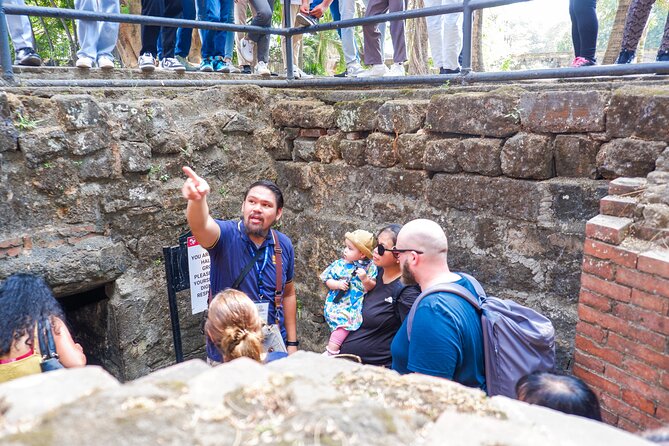
The next 15-minute visit is San Agustin Church, also called the Immaculate Conception Parish. Completed in 1607, it is one of the great churches built during the Spanish colonial period and is recognized by UNESCO under the collective title Baroque Churches of the Philippines.
The church gives you a direct sense of the age of Intramuros. It is not simply old by Manila standards. Its completion in 1607 places it near the beginning of the Spanish colonial era, making it a useful counterpoint to the later wartime monument.
Again, the time is limited. You can appreciate the church’s historical and religious importance, but this is not a dedicated architecture tour. If church interiors are your main interest, you may want additional time in Intramuros after the tour ends.
Casa Manila finishes with colonial domestic life
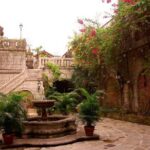
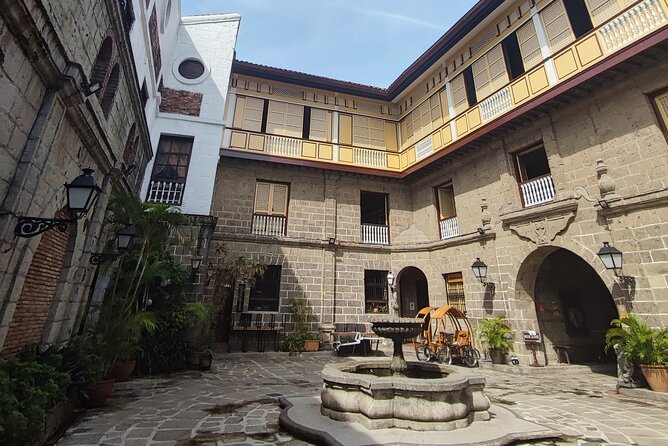
The tour ends at Casa Manila, with about 30 minutes inside the museum. This stone-and-wood structure, dating to around 1850, presents the colonial lifestyle of Spanish-era Philippines.
Casa Manila is a smart final stop because it changes the scale of the story. Fort Santiago shows power and defense. The cathedral and San Agustin Church show religion. Casa Manila turns your attention to the home, furnishings, and daily habits associated with colonial society.
The museum is located in the Plaza San Luis Complex on General Luna Street, and it is also the end point of the tour. That makes the final location useful if you want to continue exploring Intramuros afterward, though the tour itself ends there.
Thirty minutes allows for a clear introduction to the house and its contents. You should not expect every room to receive a long explanation, but the stop rounds out the tour well. It reminds you that history also lives in ordinary spaces, not only in forts and monuments.
What the $37.58 price really includes
At $37.58 per person, this is not the cheapest way to walk around Intramuros, but the comparison should include what you receive. The fee covers all entrance fees and donations, English-speaking guide services, water, snacks, ice cream, and the horse-drawn carriage or Tranvia ride.
The private setup is the biggest value factor. If you are traveling with family or friends, you are paying for a guide focused only on your group. Group discounts may also be available, which could improve the price for a larger party.
I would consider the tour good value if your goal is historical context rather than independent wandering. You are paying to organize several important sites into one story, avoid sorting out admission details, and add a short ride and refreshments.
The value is less clear if you already know Philippine history well or want to linger at each site. The scheduled visits are short, and the route covers a lot. Independent visitors may prefer to spend an hour at one church or museum rather than follow a broad introduction.
Timing, meeting point, and practical comfort
The tour starts at 1 Sta. Clara Street in Intramuros and ends at Casa Manila Museum in the Plaza San Luis Complex on General Luna Street. The total duration is approximately three hours and 30 minutes.
A mobile ticket is available, and confirmation is sent within 48 hours of booking, subject to availability. The meeting point is near public transportation, which makes it easier to reach than a remote starting point.
The activity requires good weather. Manila’s heat and rain can affect a walking tour, so light clothing, comfortable shoes, and sun protection are sensible choices. The included water, snacks, ice cream, and ride help, but they do not remove the need to prepare for outdoor conditions.
Most people can participate, according to the tour information. Since this is a walking route with several stops, you should still consider your own comfort with walking and standing. The short ride breaks up the route, but it does not turn the activity into a fully vehicle-based tour.
You can cancel for a full refund if you do so at least 24 hours before the start time. Changes or cancellations inside that window are not accepted for a refund. If poor weather or an insufficient number of participants causes the tour to be canceled, you are offered another date or experience, or a full refund.
Who will get the most from this tour
I would recommend this tour to first-time visitors who want a clear introduction to Manila’s past. It suits families, couples, and small groups who prefer a guide’s explanation to reading signs and piecing the story together alone.
It is also a good choice if you have less than four hours for Intramuros. The route covers the fort, Rizal Shrine, Manila Cathedral, the city streets, a wartime monument, San Agustin Church, and Casa Manila. You get breadth without giving up the most important stops.
The tour may suit Filipino visitors interested in connecting with national history and heritage. The focus on Rizal, the Battle of Manila, and the changing periods of Philippine history gives the outing more depth than a simple old-city walk.
I would be more cautious if you dislike heat, have limited walking tolerance, or want unhurried museum time. The schedule is efficient, and that means some stops will feel like introductions. You can stay afterward in Intramuros if you want to look more closely at the final area.
Should you book the Intramuros private walking tour?
Book it if you want a compact history lesson with real places attached to it. The strongest features are the private guide, the broad historical coverage, the included admissions, and the mix of walking with a kalesa or Tranvia ride.
The guides are a major part of the value. Denji brings energy, Anne is praised for clear storytelling and useful images, Orlando keeps the pace comfortable, and Andre adds warmth to the Fort Santiago and kalesa portions. Those qualities matter because Intramuros rewards explanation.
Skip it if you want to explore at your own speed or spend most of your time studying one building. But for a first visit, a small group, and a limited schedule, $37.58 buys a well-organized introduction to Manila’s walled city, including some of its proudest and most painful chapters.
FAQ
How long does the Intramuros walking tour last?
The tour lasts approximately three hours and 30 minutes.
Where does the tour begin?
It begins at 1 Sta. Clara Street, Intramuros, Manila, 1002 Metro Manila, Philippines.
Where does the tour end?
The tour ends at Casa Manila Museum in the Plaza San Luis Complex on General Luna Street, Intramuros.
Is this a private tour?
Yes. Only your group participates in the private activity.
What is included in the price?
The price includes entrance fees and donations, English-speaking guide services, snacks, water, ice cream, and either a horse-drawn carriage ride or a Tranvia ride.
Is the kalesa ride included?
Yes. A horse-drawn carriage ride, called a kalesa, or a Tranvia ride is included. The tour description presents these as alternatives.
Does the tour include Fort Santiago admission?
Yes. Admission to Fort Santiago is included.
Can I cancel for a full refund?
Yes, if you cancel at least 24 hours before the experience start time. Cancellations made less than 24 hours before the start time are not refunded.
What happens if bad weather cancels the tour?
You are offered a different date or experience, or a full refund. The tour requires good weather and may also be canceled if the minimum number of participants is not met.