A Step Back in Time: Intramuros Walking Tour
History comes alive on foot here. This three-hour walk through Intramuros links Fort Santiago, the Rizal Shrine, Manila Cathedral, San Agustin Church, and Casa Manila in one well-paced route. I like the strong mix of major landmarks and personal storytelling, especially with guide Russell Leyco, whose humor and empathy help turn dates and battles into human stories.
I also like the value. For $25 per person, you get a Department of Tourism-accredited guide and admission to the paid sites. The main consideration is the heat: you will be outdoors for much of the morning, and a group of up to 30 people can make the walk feel less personal than a private tour.
In This Review
- Key points to know before you book
- Why Intramuros works best as a walking tour
- One hour inside Fort Santiago
- The Rizal Shrine and the life of a national hero
- Manila Cathedral in a short but useful stop
- Memorare Manila and the memory of wartime Manila
- San Agustin Church, a major architectural highlight
- Casa Manila and the final look at old Manila life
- What the $25 price really includes
- Russell’s storytelling style and group size
- Who should book this Intramuros walk?
- Practical details that affect your morning
- Should you book A Step Back in Time?
- FAQ
- How long is the Intramuros walking tour?
- What time does the tour begin?
- Where does the tour begin?
- Where does the tour end?
- Is admission included?
- Is food included?
- Is hotel pickup or private transportation provided?
- What is the cancellation policy?
Key points to know before you book
- Fort Santiago leads the morning: You spend about an hour exploring one of Intramuros’ most important sites, including its dungeon and Lego museum.
- Jose Rizal’s final days add emotional weight: The Rizal Shrine explains the life and sacrifice of the Philippines’ national hero.
- The route covers several major landmarks: Manila Cathedral, Memorare Manila, San Agustin Church, and Casa Manila follow in a compact three-hour circuit.
- Russell Leyco is the main guide to look for: His storytelling, humor, and practical tips receive especially strong praise.
- The tour ends at Casa Manila: That makes it easy to continue exploring Intramuros or stop for lunch nearby.
- The group may reach 30 people: You get a lower price, but not the intimacy of a private walk.
Why Intramuros works best as a walking tour
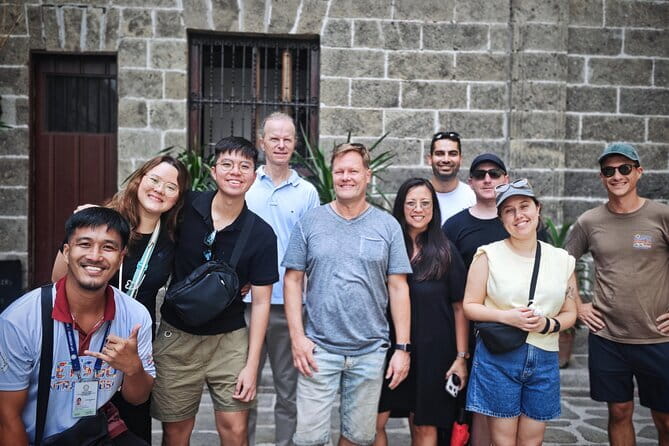
Intramuros is a district best understood at street level. Its stone walls, plazas, churches, and surviving Spanish-era buildings are not isolated sights. They make more sense when you move between them and hear how religion, colonial rule, war, and national identity shaped the area.
That is the useful idea behind this tour. Instead of visiting one church and one fort as separate stops, you follow a story across the old walled city. The route also shows different kinds of history: military power at Fort Santiago, religious authority at the Manila Cathedral and San Agustin Church, domestic life at Casa Manila, and wartime memory at Memorare Manila.
The walk begins at United Philippine Lines, at One Fort Santiago on Sta. Clara Street. The scheduled start is 9:00 a.m., a sensible time for a walking tour in Manila. You should still expect sun, warm pavement, and some standing. Wear comfortable shoes, bring sun protection, and carry water unless the guide confirms that it will be supplied.
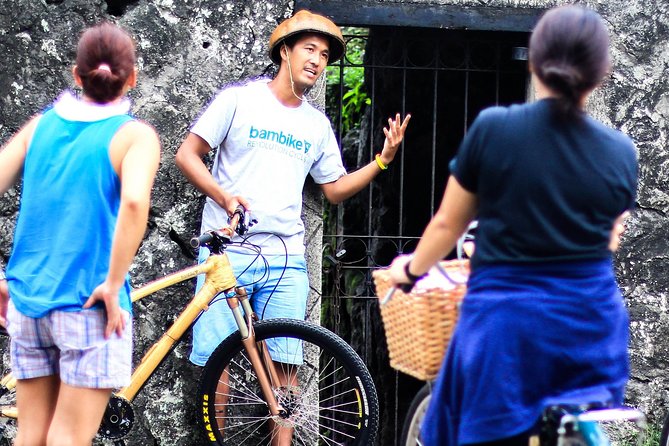
Russell Leyco is identified as the storyteller behind the experience. The strongest praise for him centers on his delivery rather than on facts alone. He uses humor, empathy, and historical interpretation to keep the pace lively. That matters in Intramuros, where a less engaging guide could turn a beautiful old church into a list of construction dates.
You can also read our reviews of more walking tours in Luzon

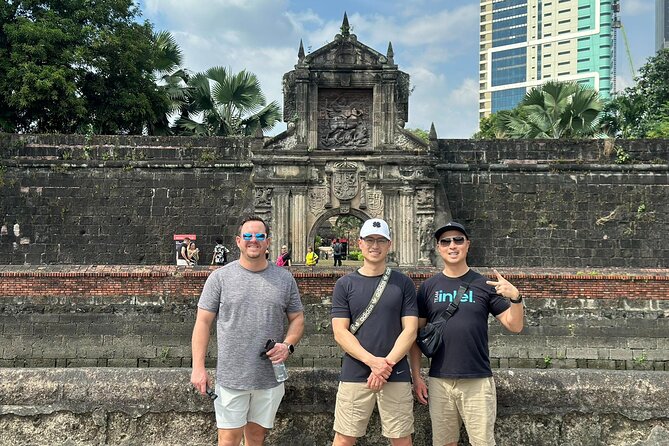
One hour inside Fort Santiago
Fort Santiago gets the largest block of time, and that is the right choice. You have about an hour to explore this major section of Intramuros, with admission included in the tour price.
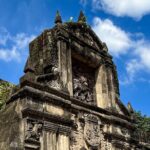
The fort is connected with the military and political story of old Manila. Inside, you hear about its past from a Department of Tourism-accredited guide while visiting attractions such as the dungeon and the Lego museum. The combination may sound unusual, but it gives the stop different layers. The dungeon points to the fort’s darker history, while the Lego museum offers a more accessible visual way to look at Philippine heritage.
I appreciate the fact that the tour does not rush through Fort Santiago in ten minutes for a quick photograph. An hour gives your guide time to provide context and gives you room to look around. You should still understand that this is a guided overview, not a private archival tour. With up to 30 people, you may need to stay close and listen carefully when the group pauses.
Fort Santiago is also the point where the tour’s subject becomes personal. The next stop, the Rizal Shrine, is inside the fort and adds a direct connection to the country’s independence story.
The Rizal Shrine and the life of a national hero
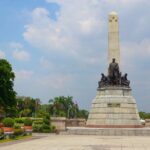
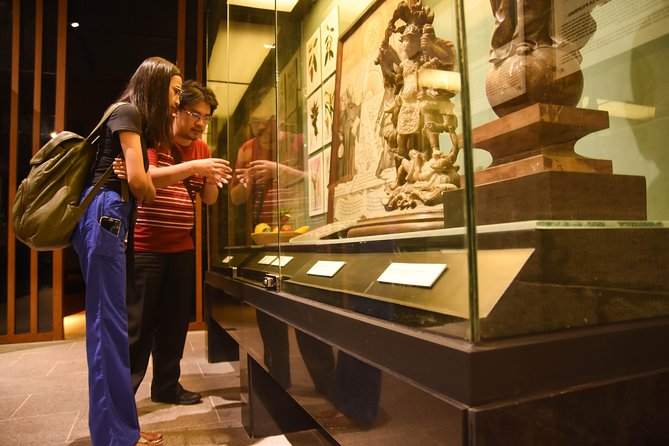
The Rizal Shrine receives about 20 minutes, with no separate admission fee. This museum is devoted to Dr. Jose Rizal, the Philippines’ national hero, and displays personal items, photographs, and artwork connected with his life and writing.
The museum also explains Rizal’s time at Fort Santiago before his execution. His death helped inspire the Philippine revolution, so this stop gives the earlier fort visit a clearer human focus. You are not simply looking at walls and military spaces. You are learning how one person’s ideas and fate became part of a national movement.
Twenty minutes is enough for an introduction, but you should not expect to study every display at length. If Rizal is a major reason you want to visit Intramuros, you may want extra time in the area after the scheduled walk ends. The tour gives you the essential setting and story, then continues to the religious center of old Manila.
Manila Cathedral in a short but useful stop

The Manila Cathedral comes next, with about 20 minutes devoted to the Philippines’ mother church. Admission is free as part of the visit.
This stop helps explain the role of Catholicism in Manila’s colonial past and present. Your guide provides background on the cathedral, so the visit is more than a quick look inside. Still, the short time means you should think of it as a focused introduction rather than a full architectural study.
The benefit of moving through several landmarks in one morning is the connection between them. Fort Santiago represents military control. The cathedral represents religious influence. Together, they show why Intramuros became such an important center of power.
The exact experience inside a church can vary according to services or other activity, so the guide’s talk is an important part of this stop. Listen for the historical explanation, then use your brief time to notice the building itself.
Memorare Manila and the memory of wartime Manila
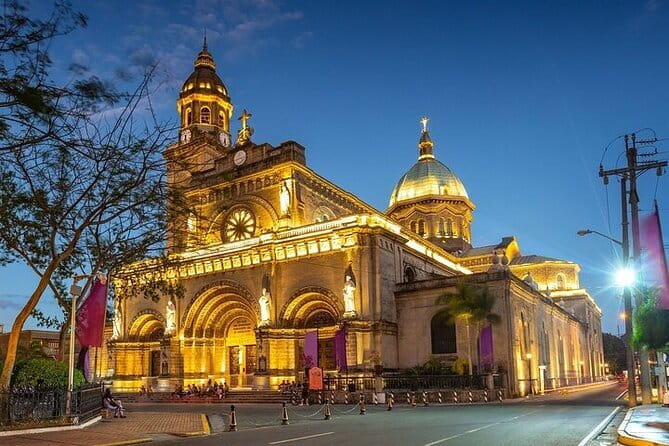
The Memorare Manila Monument is a short 15-minute stop. It recalls the Japanese invasion and the Manila Massacre, one of the most painful chapters in the city’s wartime story.
This is not a long museum visit. It is a pause for remembrance, and the guide’s explanation gives the monument its meaning. The stop adds modern wartime history to a route that might otherwise focus mainly on Spanish colonial buildings and churches.
I consider this one of the most important parts of the walk because it prevents a polished old district from becoming a postcard version of the past. Intramuros carries memories of destruction as well as preservation. Hearing about the Manila Massacre helps you understand that the district’s history did not end with the Spanish period.
The 15-minute timing is appropriate for a memorial stop, though some people may want more time for reflection. If you prefer a tour that stays light and architectural, this section will feel more serious. If you want a fuller picture of Manila, it is essential.





San Agustin Church, a major architectural highlight
The route then reaches San Agustin Church, also called the Immaculate Conception Parish. You have about 20 minutes here, with admission included.
San Agustin is a UNESCO World Heritage baroque church, making it one of the clearest highlights on the walk. Its importance is not only religious. The building represents the Spanish colonial influence that shaped Intramuros’ streets, institutions, and public life.
A short visit lets you appreciate the church’s broad historical role, but it is not enough for every detail. I suggest listening to the guide first, then using your remaining time to look closely at the interior and the decorative work. The guided explanation can help you notice features you might otherwise pass without understanding.
This stop also gives the morning a change of rhythm. After the fort, museum, cathedral, and memorial, the church offers a quieter space. You will still be walking and standing, but the pace feels more reflective.
Casa Manila and the final look at old Manila life
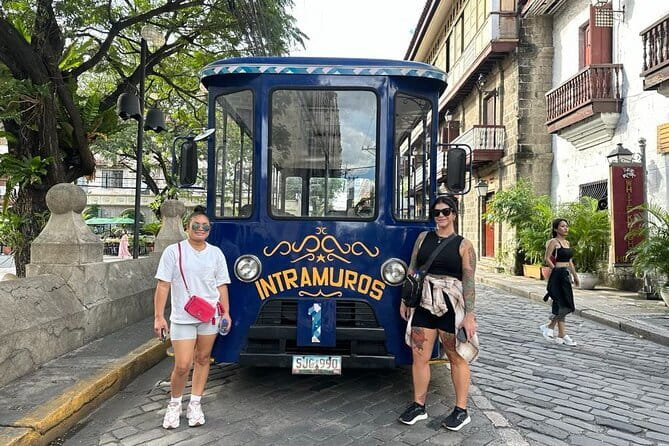
Casa Manila is the final stop and the endpoint of the tour. You spend about 20 minutes inside the museum, with admission included.
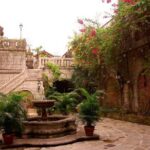
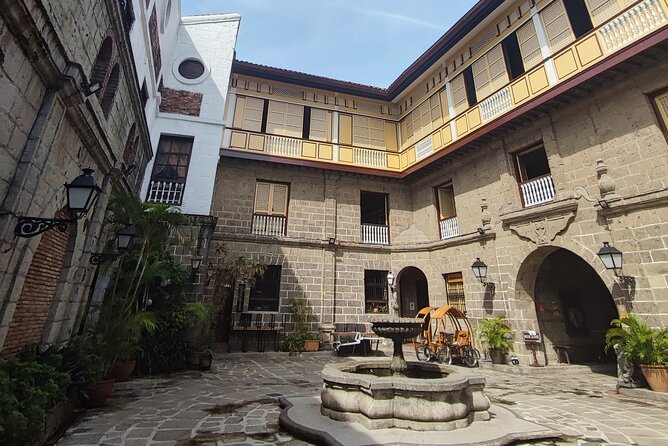
The museum offers a glimpse of domestic life in old Manila. That makes it a useful counterpoint to Fort Santiago and the churches. Those sites show public power, faith, and national struggle. Casa Manila turns your attention toward interiors and the way people lived.
The 20-minute visit is brief, but it completes the tour’s range. You have seen a fort, a shrine, a cathedral, a memorial, a UNESCO-listed church, and a historic home. The route does not try to explain every corner of Intramuros. Instead, it gives you a strong first framework for understanding the district.
The tour ends at Casa Manila Museum in the Plaza San Luis Complex on General Luna Street. This is practical because you do not have to return to Fort Santiago after the final stop. You can continue exploring from the southern part of Intramuros, arrange your own meal, or simply take a break after the walk.
What the $25 price really includes
At $25 per person, the tour offers good value if you want several admission-based sites in one morning. The price includes a Department of Tourism-accredited guide and admission fees to the sites listed in the route. You are paying for organization and interpretation as much as for entry tickets.
The guide is the key part of that value. You can walk through Intramuros on your own for less, but you would need to research the fort, Rizal, the Manila Massacre, the churches, and Casa Manila yourself. You would also have to coordinate the route and admissions. This tour puts those pieces into one three-hour plan.
Food and drinks are not included, and neither is private transportation. Hotel pickup and drop-off are also not provided. The meeting point is near public transportation, and you need to make your own way to Fort Santiago by 9:00 a.m.
One former participant specifically praised the tour for including water, but water is not listed among the official inclusions. I would bring your own rather than count on it. The same practical caution applies to lunch. A recommendation has been made for Barbara’s as a way to finish the visit, but lunch there is separate from the tour.
Russell’s storytelling style and group size
The guide can make or break a history walk, and Russell receives especially strong praise for keeping people interested across all three hours. His style is described as lively, considerate, funny, and empathetic. That combination suits Intramuros, where the subject matter shifts from grand churches to executions and wartime tragedy.
The tour also appears to be comfortable for people with different levels of background knowledge. If you know little about Philippine history, the route gives you a clear starting point. If you have lived in the Philippines for years, you may still find fresh interpretations and connections between familiar places.
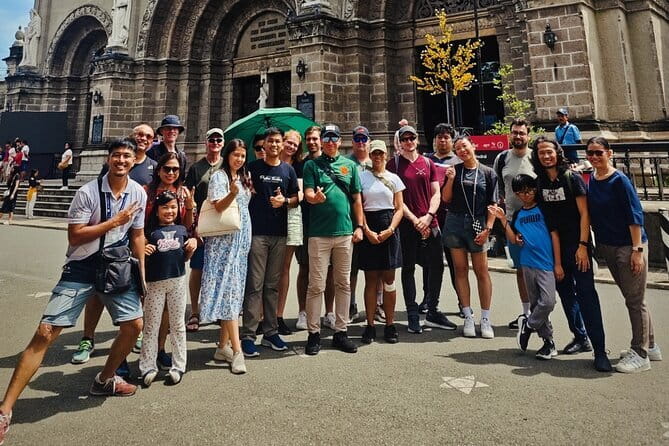
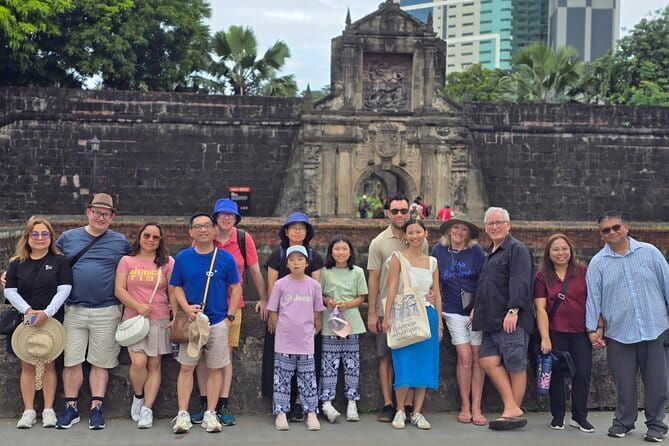
The group limit is 30 people. That is not a tiny walking group, so you should not expect constant one-on-one conversation with Russell. The upside is the modest price and a shared experience. Stay near the guide when the group moves, especially inside busy or echoing sites.
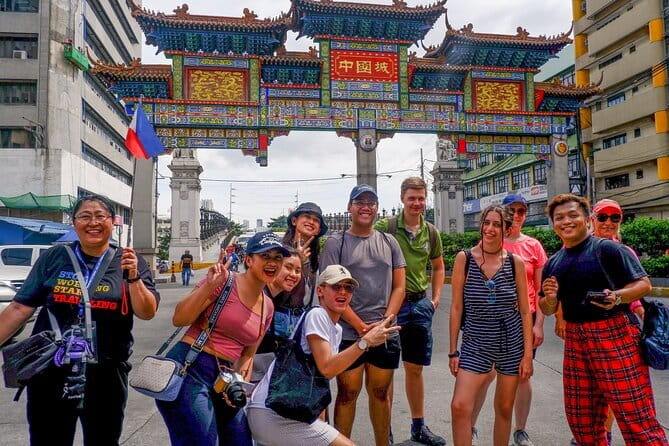
The tour has received a perfect rating from seven submitted reviews, with repeated praise for Russell’s storytelling and the way he keeps the three hours from feeling dull. That is a small sample, so I would treat it as encouraging rather than final proof. Still, the praise is consistent enough to make the guide a central reason to book.
Who should book this Intramuros walk?
I would recommend this tour to first-time visitors who want a clear introduction to Manila’s old walled district. It also suits history enthusiasts, families with older children, and people who prefer a guide to explain what they are seeing rather than simply hand over a map.
It is a good fit if you want to connect several major sites in one morning. The route covers military history, national identity, religion, wartime memory, and home life without requiring a full-day commitment.
You may want a different option if you dislike walking in warm weather, need a private pace, or want long museum visits. The schedule gives each stop a defined window, and the group can include as many as 30 people. This is a structured introduction, not an unhurried private exploration.
The tour is also useful for residents or long-term foreigners who have spent time in the Philippines but have not yet examined Intramuros closely. One especially useful feature is the guide’s practical advice for the rest of your stay in the country. You get history, but also a chance to ask for ideas beyond the formal route.
Practical details that affect your morning
Confirmation is provided when you book, and the experience uses a mobile ticket. Most people can participate, according to the available details, and the meeting point is near public transportation.
The walk begins at 9:00 a.m. at United Philippine Lines, One Fort Santiago 1, Sta. Clara Street, Intramuros, Manila. It ends at Casa Manila Museum, Plaza San Luis Complex, General Luna Street. Check the exact map pin before leaving, since old districts can have several nearby entrances and street names.
Free cancellation is available up to 24 hours before the start time for a full refund. Changes or cancellations made less than 24 hours before the start are not accepted, and the cutoff uses local time.
Should you book A Step Back in Time?
Book it if you want a well-priced, story-led introduction to Intramuros rather than a self-guided walk. Fort Santiago receives enough time to feel substantial, Casa Manila gives the route a fitting finish, and the stops between them cover more than colonial architecture. Russell Leyco’s personal delivery is the main attraction, especially if you enjoy humor and human stories along with historical facts.
Skip it if you want private guiding, a slow photographic walk, or extended time in each museum. For most people with one morning in Intramuros, though, this is a sensible choice. Bring water, dress for the heat, arrive ready to walk, and consider adding lunch afterward so the morning does not end the moment you leave Casa Manila.
FAQ
How long is the Intramuros walking tour?
The tour lasts approximately three hours.
What time does the tour begin?
It starts at 9:00 a.m.
Where does the tour begin?
The meeting point is United Philippine Lines, One Fort Santiago 1, Sta. Clara Street, Intramuros, Manila, Metro Manila, Philippines.
Where does the tour end?
The tour ends at Casa Manila Museum in the Plaza San Luis Complex on General Luna Street, Intramuros.
Is admission included?
Yes. Admission fees to the included sites are covered, including Fort Santiago and Casa Manila.
Is food included?
No. Food and drinks are not included in the tour price.
Is hotel pickup or private transportation provided?
No. Private transportation and hotel pickup or drop-off are not included.
What is the cancellation policy?
You can cancel at least 24 hours before the start time for a full refund. Cancellations or changes made less than 24 hours before the start time are not accepted.